Help African Wild Dogs 

Donate today  

Why the IPBES Business and Biodiversity Assessment Matters

Why the IPBES Business and Biodiversity Assessment Matters

Why the IPBES Business and Biodiversity Assessment Matters

By Suzanne Powell and Catherine Kuhn of the EWT’s Biodiversity and Business Unit


natural ecosystem supporting economic activity

We can no longer afford to overlook nature on a continent where many economies are expanding, infrastructure investment is accelerating, and global markets are demanding stronger environmental performance across value chains. At the same time, the Kunming-Montreal Global Biodiversity Framework (GBF) calls on governments and businesses to take coordinated, transformative action to halt biodiversity loss while strengthening resilience and development outcomes.

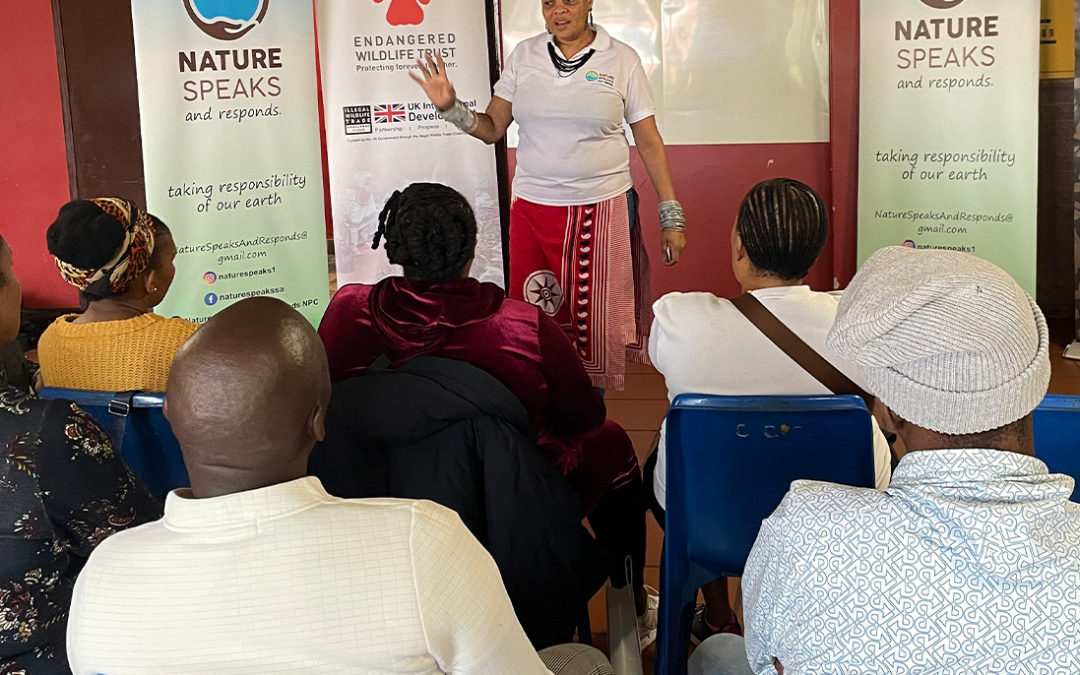
Hosted by the Secretariat of the Convention on Biological Diversity (CBD), in collaboration with the South Africa Department of Forestry, Fisheries and the Environment (DFFE), the South African National Biodiversity Institute (SANBI) and the Endangered Wildlife Trust (EWT), the two-day forum provided delegates with an opportunity to exchange ideas, learn from each other and create future collaborative opportunities to solve problems related to the inclusion of environmental practices into business in line with, amongst other, the Global Biodiversity Framework’s Target 15. This target aims to progressively reduce the negative impacts and increase the positive impacts of business on biodiversity and to encourage more sustainable patterns of production.

Among the key presentations was the unpacking and evaluation of a recently released report that highlighted the fact that the cost of the growth of the global economy has been at the cost of immense biodiversity loss. This now poses a critical and pervasive systemic risk to the economy, financial stability and human well-being.

The landmark global assessment places biodiversity firmly at the centre of business risk, responsibility and opportunity. The Intergovernmental Science-Policy Platform on Biodiversity and Ecosystem Services (IPBES) released the Business and Biodiversity Assessment: Summary for Policymakers.  Among its authors was the EWT’s head of Sustainability, Kishaylin Chetty.  His involvement reflects the growing contribution of African expertise to global conversations on the biodiversity-business interface.

The assessment comes at a critical time when evidence shows that biodiversity and nature’s contributions to people are declining across the globe.

Prepared under IPBES by 79 experts from 35 countries, and drawing on more than 5,000 references, this assessment carries significant scientific and policy weight as the first global IPBES assessment dedicated specifically to business and biodiversity. The report was approved through the IPBES Plenary by representatives of the Platform’s more than 150 member Governments on 9 February 2026, giving the assessment particular international authority.

So what does the assessment reveal?  Here are five key insights that show why this report matters:

  1. Nature is a systemic part of the economy

All businesses depend on biodiversity, whether directly or indirectly. Extensive evidence indicates that more than 50% of global GDP depends on nature. While sectors like agriculture, forestry, fisheries and tourism depend directly on biodiversity, other industries are indirectly dependent through their value chains. Raw materials, energy sources, and ecosystem services are all part of modern economies.

As awareness grows, biodiversity loss is increasingly recognised as a systemic risk to economies and financial systems, with serious consequences for financial stability and human wellbeing.

  1. Money is still flowing in the wrong direction

Estimates suggest that globally, only around US$220 billion per year is directed toward biodiversity conservation and restoration, while a staggering US$7.3 trillion flows into nature-negative activities annually.  At the same time, current economic incentives continue to lock in harmful activities, reinforcing this stark imbalance. More broadly, today’s business environment is not always compatible with a just and sustainable future, with unsustainable outcomes structurally embedded through perverse incentives, harmful subsidies and the failure to account for biodiversity impacts.

  1. Momentum is growing

Globally, fewer than one percent of publicly listed companies disclose their impacts and dependencies on biodiversity. While this number is growing as awareness increases and frameworks such as the Taskforce on Nature-related Financial Disclosures (TNFD) gain wider adoption, it raises a more fundamental question: what is actually changing for nature on the ground?

If most companies are not yet measuring or disclosing their impacts, it becomes difficult to know where biodiversity is being lost, and whether actions are contributing to positive conservation outcomes. Compounding this is the lack of independent verification which makes it hard to distinguish between meaningful action and tangible and credible improvements for biodiversity. Businesses need to ask themselves: Are ecosystems recovering? Are pressures on ecosystems being reduced? Are our actions contributing to harm or to positive outcomes? And how are we tracking this to ensure credibility and to avoid greenwashing?

  1. The tools to act are already in place

A common assumption is that limited data is the main reason businesses are not acting on biodiversity. The report challenges this. While biodiversity measurement is complex, many methods already exist to help businesses understand their impacts and dependencies. The real challenge lies in using the correctly aligned approach method.

The report provides a robust guidance table to help companies select the correct method for a particular purpose at the appropriate decision-making level, whether for risk screening, comparing options or assessing impacts on the ground.

The assessment also identifies more than 25 actions businesses can take across strategy, operations, value chains and investment decisions. This includes embedding biodiversity into strategy, reducing impacts, improving supply chain transparency and shifting capital toward nature-positive outcomes.

  1. Transforming the system will require collective effort

Many current incentives still reward activities that harm nature. While business action has historically been driven by regulation, real change requires shifting the system itself. Businesses can help shape an enabling environment by influencing suppliers, partners and markets. Governments are also central to this shift, setting the rules through policy, regulation and incentives. Civil society plays a vital role in building capacity, monitoring progress and holding actors accountable.

Ultimately, transforming the system requires collective action to ensure that positive outcomes for nature become the norm.

In closing, the message is clear: what is good for biodiversity is also good for long-term economic stability and business resilience. Through collaboration, shared responsibility, and an enabling environment, businesses can become part of the solution to shaping a just and sustainable future.

Cross-border collaboration supports the rewilding of orphaned cheetahs

Cross-border collaboration supports the rewilding of orphaned cheetahs

Cross-border collaboration supports the rewilding of orphaned cheetahs

By Olivia Sievert, Project coordinator, Cheetah Conservation Project


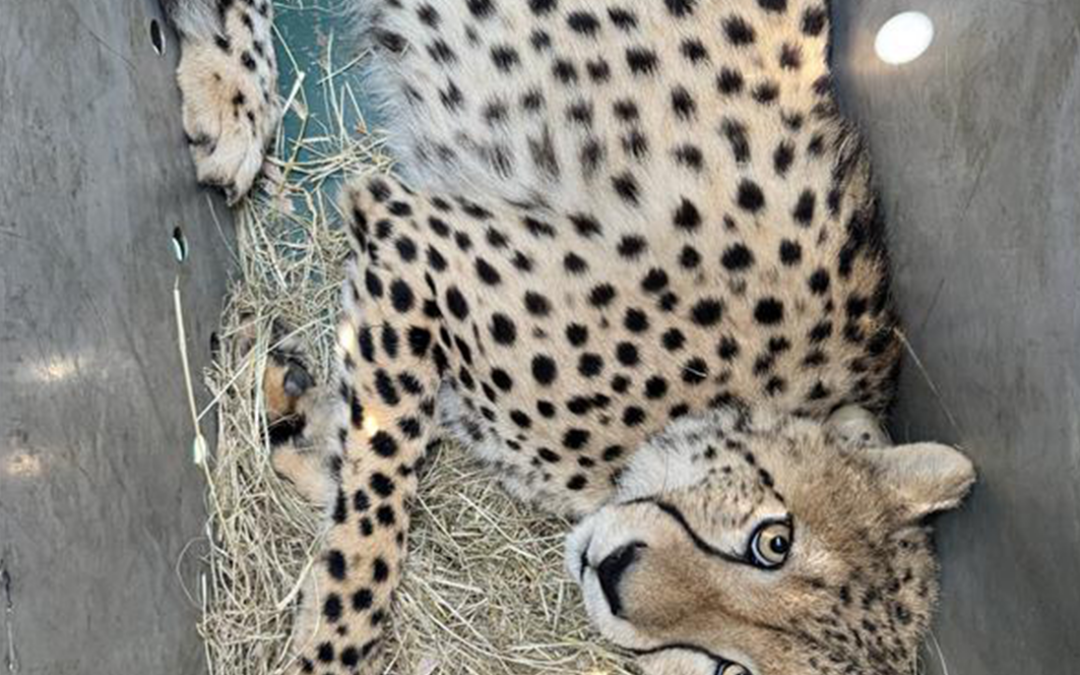
conservation team preparing cheetahs for release back into Liwonde National Park

In conservation, success often depends on collaboration, careful planning, and the ability to respond quickly to unexpected events. Over the past year, the EWT, together with partners including The Bateleurs and the Ukuzwana Foundation, has been involved in a cross-border effort to give two orphaned cheetah cubs a second chance. What began as two unrelated incidents in Malawi and South Africa became a coordinated project to return both animals to the wild.

In July 2025, a female Cheetah that had been introduced to strengthen the population in Liwonde National Park was killed by Lions, leaving behind two female cubs estimated to be around six-months-old. At this age, cubs are still dependent on their mother, and survival without intervention is unlikely. Because the female represented important genetic contributions to both the park and the broader managed Cheetah metapopulation, park management, with support from the EWT, initiated a hands-off rehabilitation and rewilding plan. When the cubs were found and subsequently rescued, however, they were severely malnourished, and only one survived.

At roughly the same time in South Africa, a separate incident resulted in another orphan. A female Cheetah sustained a severe hunting injury on a reserve in Limpopo and had to be humanely euthanised, leaving behind a female cub of approximately seven-months-old, later named Mara.

In the wild, Cheetah cubs typically remain with their mother for more than a year, after which siblings stay together for several months while learning to hunt independently. These sibling associations can play an important role in early survival. For this reason, a plan was developed to attempt to form a social bond between the two orphaned females. If successful, the intention was to rewild them together and ultimately return them to Malawi to boost the population there.

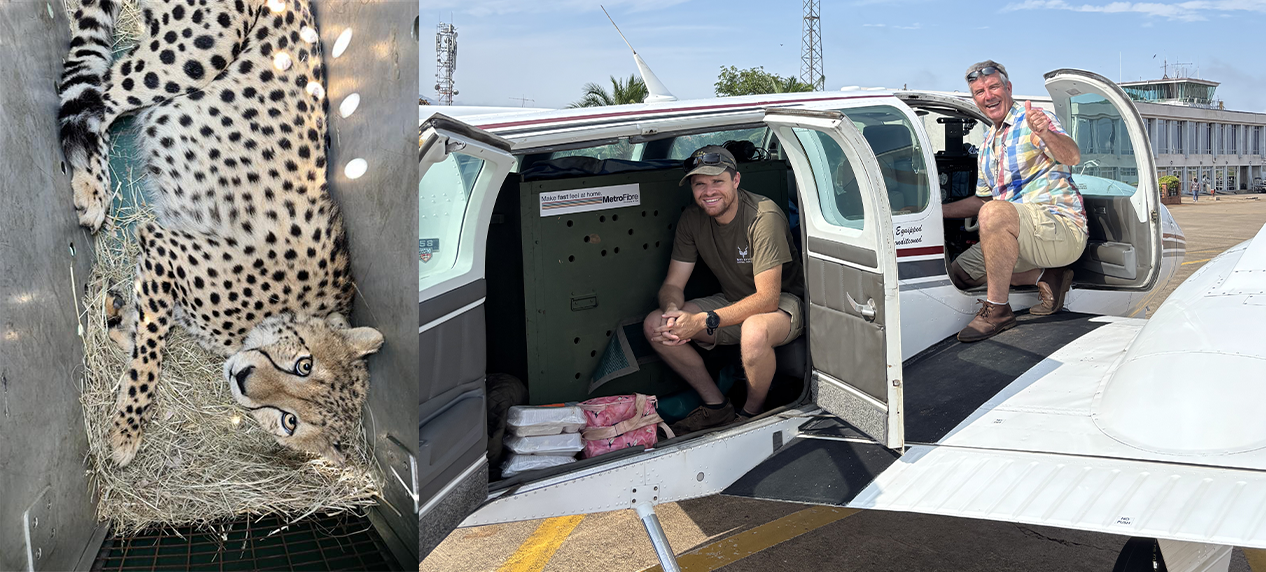
International translocation of Cheetahs is not an easy feat; it requires multiple permits, veterinary clearances, and coordination between the authorities of both countries. Over several months, the EWT worked with both government and non-government partners to facilitate the movement. Once ready, The Bateleurs provided essential aviation support, enabling our team to travel to Malawi, collect the orphaned cub, and transport her safely to South Africa for bonding and rewilding.

Given their age, both females were taken to a specialised veterinary facility near Nelspruit, where they were gradually introduced. Introductions between unfamiliar Cheetahs must be managed carefully, but in this case, the two females quickly accepted each other, allowing the project to proceed to the next phase.

Following veterinary care, the pair were moved to a reserve managed by the Ukuzwana Foundation in Mpumalanga for rewilding. The reserve supports suitable prey species while maintaining relatively low densities of large predators, with Leopard and Brown Hyena present but no Lions. This provides an excellent environment for the young Cheetahs to develop their hunting skills with reduced risk compared to more predator-dense systems.

Rewilding requires close monitoring to ensure the animals are hunting successfully and maintaining condition while remaining fully independent. Therefore, both females have been fitted with satellite-tracking collars, allowing the team to monitor their movements, assess hunting attempts, and confirm kills. The collars will remain on the Cheetahs when they are relocated back to Malawi so that post-release monitoring can continue.

If progress continues as expected, the rewilding phase will run through mid-year, after which the aim is to move the pair back to Liwonde National Park before the onset of the hot season. Their return will contribute to the genetic and demographic stability of the park’s Cheetah population and will provide further insight into the use of hands-off rewilding for orphaned individuals.

This project highlights the importance of cooperation between conservation organisations, protected area authorities, and technical partners. The rapid response in Malawi, aviation support from The Bateleurs, and the rewilding environment provided by the Ukuzwana Foundation have all been essential to the process.

Orphaned cheetah cub being transported by conservation team

South Africa’s Managed Cheetah Metapopulation: A Collaborative Conservation Model

South Africa’s Managed Cheetah Metapopulation: A Collaborative Conservation Model

South Africa’s Managed Cheetah Metapopulation: A Collaborative Conservation Model

By Kelsey Brown, senior data scientist, Carnivore Conservation Unit


Cheetah being released into fenced reserve in South Afric

Once widespread across much of Africa and southwestern Asia, the Cheetah (Acinonyx jubatus) has experienced dramatic range contraction over the past century. Today, the species occupies only a fraction of its historical distribution, with most remaining populations confined to eastern and southern Africa.

Globally, Cheetah numbers are estimated at approximately 6,500 mature individuals, and the population continues to decline. The species is listed as Vulnerable on the IUCN Red List due to its small population size and ongoing habitat and prey pressures. Over the past 15 years, global numbers are estimated to have declined by about 37%, driven by habitat loss, human-wildlife conflict, illegal wildlife trade, and declining prey populations.

Equally concerning is the species’ fragmentation. Of the 33 remaining Cheetah populations worldwide, only two contain more than 1,000 mature individuals. Such isolation increases the risk of inbreeding and reduces the species’ resilience to local declines.

Southern Africa remains one of the Cheetah’s most important strongholds. The southern African subspecies (Acinonyx jubatus jubatus) occurs across Namibia, Botswana, Zimbabwe, Zambia, Mozambique, and South Africa. However, even here, populations face increasing pressure from habitat fragmentation and expanding human land use.

conservation team transporting cheetah for

The status of cheetahs in South Africa

In South Africa, Cheetahs occur in four management contexts: the free-roaming population, the unmanaged free-ranging population in large protected areas such as Kruger National Park and the Kgalagadi Transfrontier Park, the managed metapopulation on fenced reserves, and the captive population.

The free-roaming population occurs primarily in northern South Africa and historically occupied around 28,900 km², supporting an estimated 196 mature individuals. A large-scale Free-Roaming Cheetah Census, led by Ashia Cheetah Conservation and the Cheetah Outreach Trust, is currently reassessing the status of this population.

Within protected areas, Kruger National Park (19,623 km²) supports approximately 116 mature Cheetahs, while the South African section of the Kgalagadi Transfrontier Park (9,591 km²) hosts around 80 resident cheetahs.

Alongside these populations is the managed Cheetah metapopulation, a conservation initiative that has become a cornerstone of Cheetah conservation in South Africa. As of December 2025, Cheetahs have been reintroduced to 70 fenced reserves covering 14,204 km², supporting approximately 298 breeding individuals aged 24 months and older.

South Africa also hosts the world’s largest captive Cheetah population, with roughly 600 animals across 68 facilities.

conservation team transporting cheetah for translocation

What is a metapopulation?

A metapopulation is a “population of populations”. These are geographically separated groups that remain connected through movement among habitat patches.

In natural landscapes, this connectivity occurs through dispersal. However, in South Africa’s network of fenced reserves, movement is often restricted. Without intervention, many Cheetah populations in small reserves would become isolated, increasing the risk of inbreeding and local extinction.

To address this challenge, the EWT and its partners manage Cheetahs across fenced reserves as a single connected system. Carefully planned translocations between reserves simulate natural dispersal, maintaining genetic diversity and stabilising small populations.

The concept of managing Cheetahs as a metapopulation was first proposed in 2009, with a formal management framework established by the EWT in 2011. Today, the initiative depends on close collaboration between conservation organisations, reserve managers, provincial authorities, and the national government.

A growing conservation success

Since the metapopulation project was formalised, the managed Cheetah population has grown steadily, demonstrating the value of coordinated, long-term management. Between 2012 and 2025, the population increased at an average annual rate of approximately 8.8%, despite the challenges associated with managing small, fenced populations.

By the end of 2025, the metapopulation comprised roughly 540 Cheetahs across all age classes, including adults, dispersers, and cubs. In 2025 alone, around 90 individuals survived to the disperser and early adult age classes (18-30 months), the cohort most likely to contribute to future population growth.

Maintaining this growth requires continuous oversight. The EWT’s Cheetah Conservation Project works closely with reserve management teams to monitor births and deaths, assess genetic representation, and coordinate translocations to ensure that no single reserve becomes isolated. Each movement is carefully planned to mimic natural dispersal while minimising stress on the animals and disruption to existing populations.

Since 2012, more than 700 translocations have been coordinated as part of the metapopulation project. Alongside this work, we have built a long-term dataset documenting the life histories of more than 2,000 individual Cheetahs across the managed system. These records allow us to track survival, reproduction, and movement patterns, and to identify emerging risks before they affect the population as a whole.

These data also play an important role beyond day-to-day management. They form the scientific basis for the Non-Detrimental Findings required under CITES, which assesses whether regulated international trade can occur without negatively affecting the species in the wild. In South Africa, our population data help demonstrate that carefully managed exports for conservation purposes do not reduce national population viability and can support efforts to restore the species in its historic range.

The same dataset feeds into Population Viability Analyses, which allow us to model how the metapopulation may change under different scenarios. By incorporating information on births, deaths, age structure, and translocations, these models help guide management decisions and evaluate potential risks before actions are taken.

researchers monitoring cheetah population data in field

Looking beyond South Africa

Although South Africa’s managed metapopulation represents only 4-5% of the global Cheetah population, it is playing an increasingly important role in the species’ conservation.

Through coordinated management and strong partnerships, the EWT and its partners have established a growing, genetically managed population across a network of reserves. This population now serves as an important source for reintroductions and restoration efforts, both within South Africa and elsewhere in the cheetah’s historical range.

In a landscape where large, connected ecosystems are becoming increasingly rare, the managed metapopulation demonstrates that fragmented protected areas can still contribute meaningfully to species conservation when they are managed cooperatively.

With continued commitment, collaboration, and science-based decision-making, this model provides a practical framework for maintaining viable Cheetah populations and supporting the species’ long-term future.

Lion Population Survey in Kruger National Park shows continued species decline

Lion Population Survey in Kruger National Park shows continued species decline

Lion Population Survey in Kruger National Park shows continued species decline

By Eleanor Momberg


Lion photographed for whisker spot identification in Kruger National Park

The Greater Limpopo Transfrontier Conservation Area, spanning South Africa, Mozambique and Zimbabwe is one of the few remaining strongholds for Lions (Panthera leo) in southern Africa.

Central to the cross-border conservation area is the Kruger National Park which serves as a key source population of Lion for neighbouring reserves.   However, in the past decade, poaching has started taking a toll on the species, either through bushmeat snaring or the deliberate poisoning of carnivores, in certain areas.

In the first park-wide survey in 2005 the lion population was estimated at 1,803 individuals. With that survey now a decade old and reports of increased poaching—particularly in the northern Kruger National Park— the report states that concerns about the present status of Lions in the region are justified.

Partnering with South African National Parks (SANParks) and the Lion Recovery Fund, the Endangered Wildlife Trust (EWT) in 2024 undertook a Lion population survey in the northern half of the Kruger National Park to obtain robust estimates of Lion populations to inform future Lion management policies and practices.

During a similar Lion population survey in the Nxanatseni north region of the Kruger National Park over three months in 2023, the population was estimated at 105 individuals. Two field protocols had been used to collect the 2023 data – search encounters and camera traps.

In 2024, a three-month Lion population survey was conducted in the Nxanatseni south region of the Park using spatial capture-recapture models to obtain more reliable and comparable estimates of the abundance and density of lions.   Spatial capture-recapture entails taking photographs of a Lion’s whisker spots to identify individuals.  Some are seen more than once, thus the recapture of their information and avoiding counting the same lion twice.

Between July and September 2024, the members of the EWT’s Carnivore Conservation team drove 10,446 km in search of Lions, resulting in 182 detections of 74 individuals—22 males and 52 females. Because of the high mortality among Lions less than a year old, these were excluded from the survey.

Using this dataset, it is estimated that there are 144 lions in Nxanatseni South;  a density of 3.5 lions per 100 km².  Besides the higher number of Lion in the southern Nxanatseni area, the survey again found that Lion density decreased the further the carnivores were away from water.  Out of the 247 lions detected, 182 could be positively identified, while 65 could not.  Identifying more individuals would have improved precision without necessarily changing the estimated

The report states that Lion densities varied across the study area, with the highest estimates in sections, which support large herds of herbivores due to productive soils and grazing grounds. It adds that lower densities were found in the western sections, where mopane woodland, proximity to communities, and conflict with poaching may limit Lion populations. In another area, which had an intermediate density, poor soils, low rainfall and the hilly terrain were found to be constrains on the species.

Although poaching was not directly assessed during the study, poached Lion were found within the research area, on the western boundary of the Park, and the Limpopo National Park in Mozambique.

The report concludes that the observations are concerning given the conservation importance of the Kruger Lion population, adding additional research needs to be done to determine what effect water management and increasing human pressures may have on the species.


** The EWT would like to thank SA National Parks for permission to carry out the survey, AHA Hotels and Lodges and Singita for their logistical support,  LexEDA Infra Bharat Pvt. Ltd. for advanced computing support and the Lion Recovery Fund for their generous support.

Raptors in Decline: What One Researcher’s Roadside Observations Revealed

Raptors in Decline: What One Researcher’s Roadside Observations Revealed

Raptors in Decline: What One Researcher’s Roadside Observations Revealed

By Ronelle Visagie, Birds of Prey Unit


Left: Jackal Buzzards in Middelburg district. Right: Data tracking

Left: Jackal Buzzards in Middelburg district. Right: Data tracking

A study of long-term road surveys undertaken by Ronelle Visagie, field officer in the Birds of Prey Unit, has been referenced in a new research report revealing widespread declines in South Africa’s raptors and other large birds.  Ronelle co-authored the report published by the University of Cape Town.

How did the survey come about?  Here is Ronelle’s story:

I was recently asked to share the story behind a study I co-authored that revealed widespread declines in raptor numbers across South Africa. The data behind the research came from an unexpected source: the many kilometres I’ve driven while working for the Endangered Wildlife Trust (EWT).

My work involves a lot of time on the road. I regularly travel long distances to investigate power line incidents involving birds, and in 2019 I began monitoring 400 vulture nests in the Kalahari. From my home to Askam—where that fieldwork begins—is about 600 km. Much of the monitoring takes place along the Kuruman and Molopo Rivers and near Van Zylsrus. I’ve also spent years travelling through the region for the Vulture Safe Zone project.

Because I often drove the same long routes, I started looking for something productive to do while travelling. I realised that I could record the raptors I saw along the roads. Using the CyberTracker app on my phone, I began logging every bird of prey I encountered. The system is simple and effective: it allows you to record the species, age class and behaviour of each bird, while automatically storing the GPS coordinates.

From that point on, every work trip became an opportunity to collect data. Whenever I drove anywhere, I recorded the raptors I saw along the way. I also noted roadkills, which can provide insight into wildlife populations and threats. Interestingly, I’ve noticed that roadkills seem to have decreased over time, possibly because people increasingly collect them for food.

Over the years, the kilometres added up. Between 2009 and 2025, I drove over 500,000 km for my work with the EWT. Along the way, I built up a large dataset of roadside raptor observations.

A few years ago, I presented this dataset at the EWT’s Birds of Prey Conference in Swadini, Limpopo. In the audience was Assistant Professor Arjun Amar from the University of Cape Town. After the talk, he approached me and asked whether one of his students, Santiago Zuluaga, could analyse the data and develop it into a scientific paper.

Red-necked Falcon in KNP and Secretary birds drinking water in the road

Left: Red-necked Falcon in KNP. Right: Secretary birds drinking water in the road

The results were sobering. The analysis showed that half of the raptor species I recorded had declined over the study period.

This matters because raptors play a critical role in ecosystems. They help regulate populations of animals such as rodents and dassies, preventing these species from becoming overly abundant. Vultures perform an equally essential service by removing carcasses from the landscape, helping to limit the spread of disease.

Some of the declines we observed are likely linked to human activities. In parts of the Northern Cape and Free State, certain raptors are persecuted because they occasionally catch chickens or lambs. Poisoning is also a growing threat, and unfortunately poisons are often easy to obtain. Owls appear to be particularly affected by this.

Addressing these challenges requires working with the people who share the landscape with these birds. When I travel through farming areas, I spend time talking with farmers to understand their concerns and look for ways to help reduce conflict. I also visit schools to talk to children about why raptors are important and the threats they face.

Studies like this help highlight the scale of the problem. Raptors are declining, and yet they provide vital services that keep ecosystems functioning. The more we understand these trends, the better we can work together to protect these remarkable birds.

The article can be accessed here: https://doi.org/10.1016/j.biocon.2026.111764.

Left: Gabar Goshawk in KNP. Right: Pygmy Falcon in KNP

Left: Gabar Goshawk in KNP. Right: Pygmy Falcon in KNP

Breeding of Blue Cranes lower in intensive agricultural landscapes

Breeding of Blue Cranes lower in intensive agricultural landscapes

Breeding of Blue Cranes lower in intensive agricultural landscapes

By Eleanor Momberg


Blue Crane breeding Western Cape wheatlands habitat

Blue Cranes breed less successfully in the Western Cape Wheatlands than in their traditional range, highlighting a potential ecological trap for South Africa’s national bird.

This is concerning for this stronghold of the Blue Crane (Grus paradisea) population, and might explain why numbers have been declining for the last decade,  a paper entitled Reduced Blue Crane Grus paradisea breeding productivity in intensive agricultural landscapes, states.

The research, published in the Journal of African Ornithology, Ostrich, compared the breeding of Blue Cranes in the Western Cape wheatlands in the Overberg and Swartland, Karoo and eastern grasslands of South Africa.  It found that the birds bred more frequently in the grasslands and the Karoo than in the Overberg or Swartland.

The Swartland pairs were found to fledge chicks half as often as Overberg, grasslands and Karoo pairs indicating that low breeding productivity and recruitment could explain the declining Blue Crane population in the Western Cape wheatlands and that the region has become “an ecological trap for the species”.

By engaging with landowners to reduce nest disturbances, promoting chick-safe water troughs to prevent drownings and reducing fence entanglements by improving fence designs could result in more efficient and successful breeding, the report states.

The findings, the report states, highlight the challenges and complexities with conserving the remaining biodiversity in transformed or novel landscapes where species, such as the Blue Crane, require sustained and intensive management to maintain their population.

In 2025, the Blue Crane was uplisted from Near Threatened to Vulnerable in the Red Data Book of Birds reflecting growing concern about the future of the species, and underscoring the critical role of the Overberg region in renewed efforts to protect the birds.

The uplisting states that the reasons behind the dramatic decline in the Overberg over the past 14 years included disturbance during the breeding season, collisions with power lines, entanglement in farm fencing and baling twine and poisoning – often from substances intended for other species. In addition, shifts in agricultural practices over the past decade, including minimum till and increased canola production, altered the landscape, reducing the availability of suitable feeding and breeding areas for cranes.

As a result of the uplisting, the Endangered Wildlife Trust (EWT), through its partnership with the International Crane Foundation (ICF), has increased its efforts to conserve the Blue Crane, with a strong focus on the Western Cape and Karoo.

Decades of successful conservation interventions yielded positive results in KwaZulu-Natal and the Northern Cape, thus the shift in attention to populations in the Western Cape.

Blue Cranes are endemic to South Africa, with a small population found in Namibia, making these the world’s most range-restricted crane. There are less than 30,000 of these birds left in the world.

Efforts to safeguard the Blue Crane in the Western Cape include intensifying work with communities and farmers to restore habitats, and addressing threats posed by energy infrastructure.

This research in the Western Cape was made possible by support from Leiden Conservation Foundation & Hall Johnson Fellowship


Link to article: https://doi.org/10.2989/00306525.2025.2604223

** Christie A Craig, , Bradley K Gibbons, Tanya Smith, Glenn I Ramke and Peter G Ryan