Donate today: support our k9's 
 mission

South Africa’s Managed Cheetah Metapopulation: A Collaborative Conservation Model

South Africa’s Managed Cheetah Metapopulation: A Collaborative Conservation Model

South Africa’s Managed Cheetah Metapopulation: A Collaborative Conservation Model

By Kelsey Brown, senior data scientist, Carnivore Conservation Unit
 

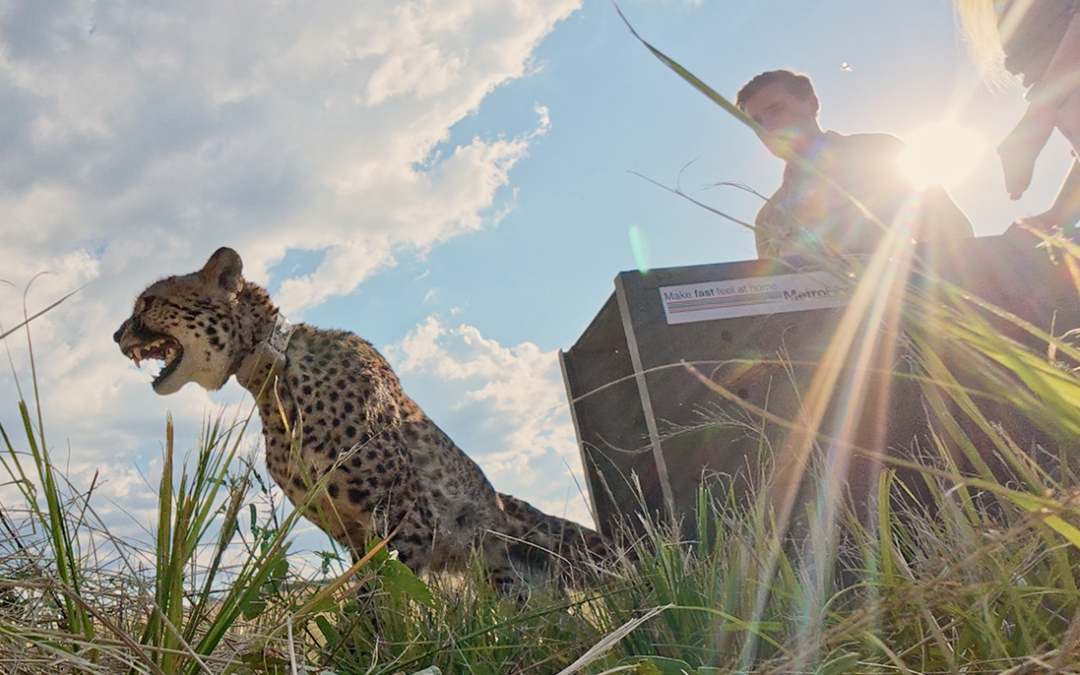
Cheetah being released into fenced reserve in South Afric

Once widespread across much of Africa and southwestern Asia, the Cheetah (Acinonyx jubatus) has experienced dramatic range contraction over the past century. Today, the species occupies only a fraction of its historical distribution, with most remaining populations confined to eastern and southern Africa.

Globally, Cheetah numbers are estimated at approximately 6,500 mature individuals, and the population continues to decline. The species is listed as Vulnerable on the IUCN Red List due to its small population size and ongoing habitat and prey pressures. Over the past 15 years, global numbers are estimated to have declined by about 37%, driven by habitat loss, human-wildlife conflict, illegal wildlife trade, and declining prey populations.

Equally concerning is the species’ fragmentation. Of the 33 remaining Cheetah populations worldwide, only two contain more than 1,000 mature individuals. Such isolation increases the risk of inbreeding and reduces the species’ resilience to local declines.

Southern Africa remains one of the Cheetah’s most important strongholds. The southern African subspecies (Acinonyx jubatus jubatus) occurs across Namibia, Botswana, Zimbabwe, Zambia, Mozambique, and South Africa. However, even here, populations face increasing pressure from habitat fragmentation and expanding human land use.
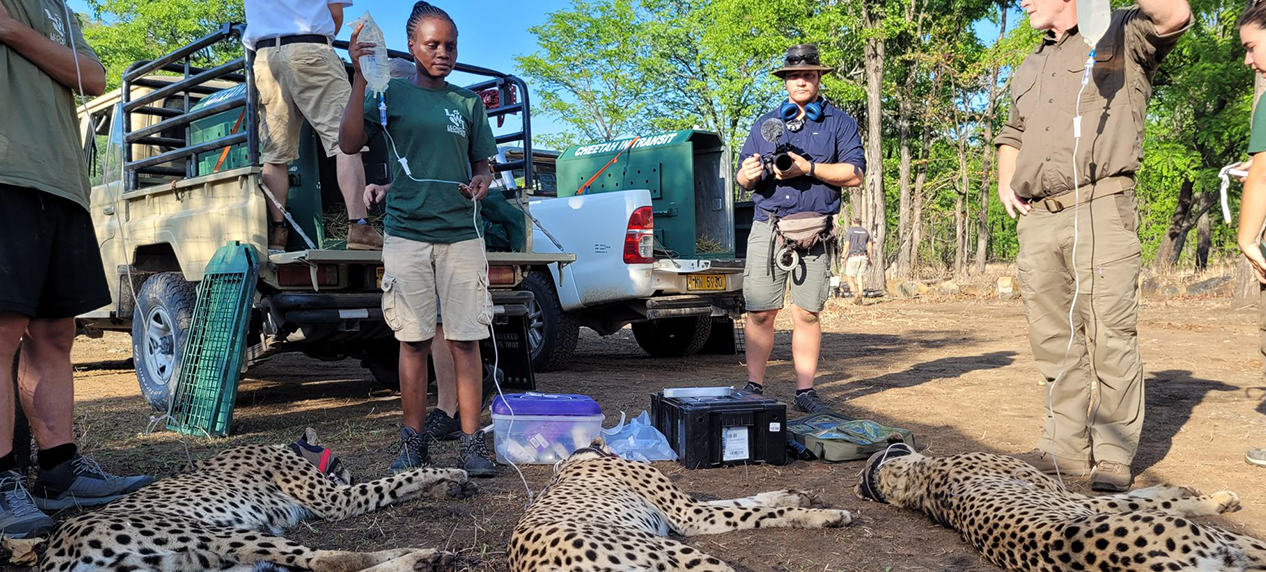
conservation team transporting cheetah for

The status of cheetahs in South Africa

In South Africa, Cheetahs occur in four management contexts: the free-roaming population, the unmanaged free-ranging population in large protected areas such as Kruger National Park and the Kgalagadi Transfrontier Park, the managed metapopulation on fenced reserves, and the captive population.

The free-roaming population occurs primarily in northern South Africa and historically occupied around 28,900 km², supporting an estimated 196 mature individuals. A large-scale Free-Roaming Cheetah Census, led by Ashia Cheetah Conservation and the Cheetah Outreach Trust, is currently reassessing the status of this population.

Within protected areas, Kruger National Park (19,623 km²) supports approximately 116 mature Cheetahs, while the South African section of the Kgalagadi Transfrontier Park (9,591 km²) hosts around 80 resident cheetahs.

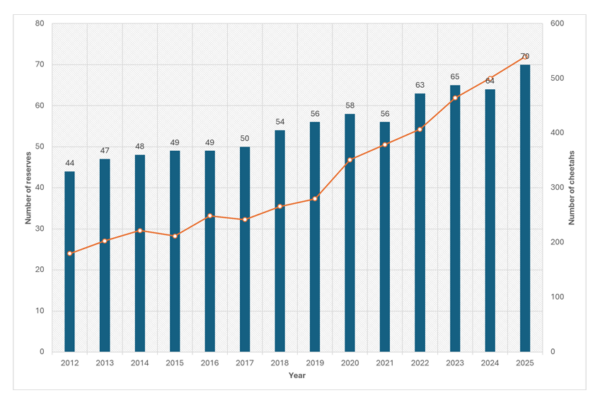
Alongside these populations is the managed Cheetah metapopulation, a conservation initiative that has become a cornerstone of Cheetah conservation in South Africa. As of December 2025, Cheetahs have been reintroduced to 70 fenced reserves covering 14,204 km², supporting approximately 298 breeding individuals aged 24 months and older.

South Africa also hosts the world’s largest captive Cheetah population, with roughly 600 animals across 68 facilities.
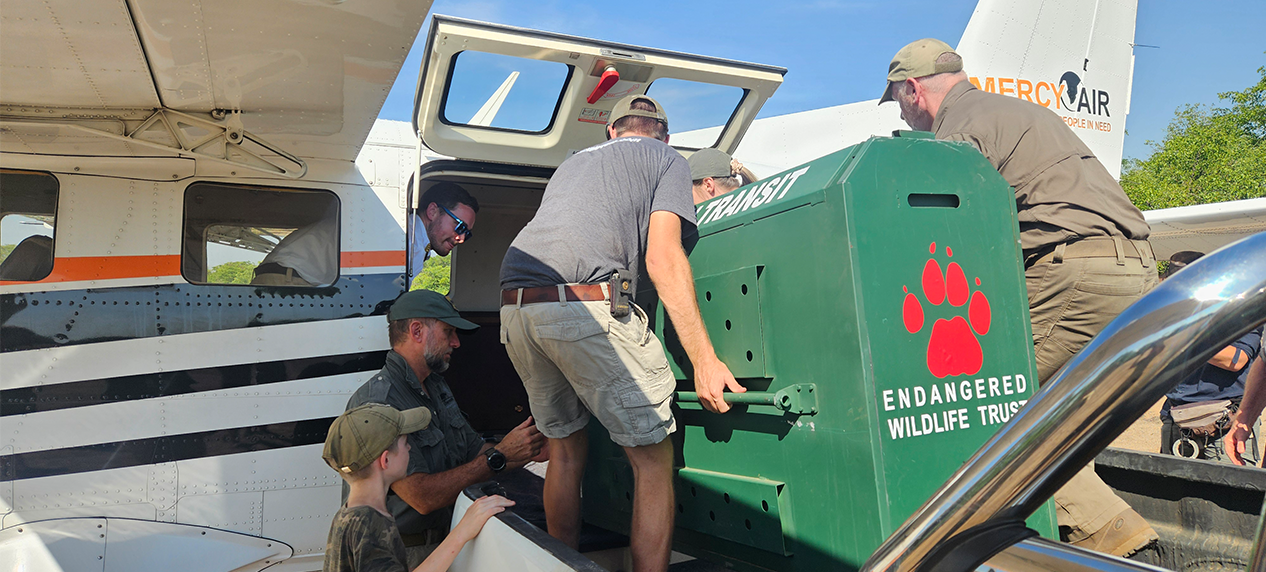
conservation team transporting cheetah for translocation

What is a metapopulation?

A metapopulation is a “population of populations”. These are geographically separated groups that remain connected through movement among habitat patches.

In natural landscapes, this connectivity occurs through dispersal. However, in South Africa’s network of fenced reserves, movement is often restricted. Without intervention, many Cheetah populations in small reserves would become isolated, increasing the risk of inbreeding and local extinction.

To address this challenge, the EWT and its partners manage Cheetahs across fenced reserves as a single connected system. Carefully planned translocations between reserves simulate natural dispersal, maintaining genetic diversity and stabilising small populations.

The concept of managing Cheetahs as a metapopulation was first proposed in 2009, with a formal management framework established by the EWT in 2011. Today, the initiative depends on close collaboration between conservation organisations, reserve managers, provincial authorities, and the national government.

A growing conservation success

Since the metapopulation project was formalised, the managed Cheetah population has grown steadily, demonstrating the value of coordinated, long-term management. Between 2012 and 2025, the population increased at an average annual rate of approximately 8.8%, despite the challenges associated with managing small, fenced populations.

By the end of 2025, the metapopulation comprised roughly 540 Cheetahs across all age classes, including adults, dispersers, and cubs. In 2025 alone, around 90 individuals survived to the disperser and early adult age classes (18-30 months), the cohort most likely to contribute to future population growth.

Maintaining this growth requires continuous oversight. The EWT’s Cheetah Conservation Project works closely with reserve management teams to monitor births and deaths, assess genetic representation, and coordinate translocations to ensure that no single reserve becomes isolated. Each movement is carefully planned to mimic natural dispersal while minimising stress on the animals and disruption to existing populations.

Since 2012, more than 700 translocations have been coordinated as part of the metapopulation project. Alongside this work, we have built a long-term dataset documenting the life histories of more than 2,000 individual Cheetahs across the managed system. These records allow us to track survival, reproduction, and movement patterns, and to identify emerging risks before they affect the population as a whole.

These data also play an important role beyond day-to-day management. They form the scientific basis for the Non-Detrimental Findings required under CITES, which assesses whether regulated international trade can occur without negatively affecting the species in the wild. In South Africa, our population data help demonstrate that carefully managed exports for conservation purposes do not reduce national population viability and can support efforts to restore the species in its historic range.

The same dataset feeds into Population Viability Analyses, which allow us to model how the metapopulation may change under different scenarios. By incorporating information on births, deaths, age structure, and translocations, these models help guide management decisions and evaluate potential risks before actions are taken.
researchers monitoring cheetah population data in field

Looking beyond South Africa

Although South Africa’s managed metapopulation represents only 4-5% of the global Cheetah population, it is playing an increasingly important role in the species’ conservation.

Through coordinated management and strong partnerships, the EWT and its partners have established a growing, genetically managed population across a network of reserves. This population now serves as an important source for reintroductions and restoration efforts, both within South Africa and elsewhere in the cheetah’s historical range.

In a landscape where large, connected ecosystems are becoming increasingly rare, the managed metapopulation demonstrates that fragmented protected areas can still contribute meaningfully to species conservation when they are managed cooperatively.

With continued commitment, collaboration, and science-based decision-making, this model provides a practical framework for maintaining viable Cheetah populations and supporting the species’ long-term future.

Lion Population Survey in Kruger National Park shows continued species decline

Lion Population Survey in Kruger National Park shows continued species decline

Lion Population Survey in Kruger National Park shows continued species decline

By Eleanor Momberg


Lion photographed for whisker spot identification in Kruger National Park

The Greater Limpopo Transfrontier Conservation Area, spanning South Africa, Mozambique and Zimbabwe is one of the few remaining strongholds for Lions (Panthera leo) in southern Africa.

Central to the cross-border conservation area is the Kruger National Park which serves as a key source population of Lion for neighbouring reserves.   However, in the past decade, poaching has started taking a toll on the species, either through bushmeat snaring or the deliberate poisoning of carnivores, in certain areas.

In the first park-wide survey in 2005 the lion population was estimated at 1,803 individuals. With that survey now a decade old and reports of increased poaching—particularly in the northern Kruger National Park— the report states that concerns about the present status of Lions in the region are justified.

Partnering with South African National Parks (SANParks) and the Lion Recovery Fund, the Endangered Wildlife Trust (EWT) in 2024 undertook a Lion population survey in the northern half of the Kruger National Park to obtain robust estimates of Lion populations to inform future Lion management policies and practices.

During a similar Lion population survey in the Nxanatseni north region of the Kruger National Park over three months in 2023, the population was estimated at 105 individuals. Two field protocols had been used to collect the 2023 data – search encounters and camera traps.

In 2024, a three-month Lion population survey was conducted in the Nxanatseni south region of the Park using spatial capture-recapture models to obtain more reliable and comparable estimates of the abundance and density of lions.   Spatial capture-recapture entails taking photographs of a Lion’s whisker spots to identify individuals.  Some are seen more than once, thus the recapture of their information and avoiding counting the same lion twice.

Between July and September 2024, the members of the EWT’s Carnivore Conservation team drove 10,446 km in search of Lions, resulting in 182 detections of 74 individuals—22 males and 52 females. Because of the high mortality among Lions less than a year old, these were excluded from the survey.

Using this dataset, it is estimated that there are 144 lions in Nxanatseni South;  a density of 3.5 lions per 100 km².  Besides the higher number of Lion in the southern Nxanatseni area, the survey again found that Lion density decreased the further the carnivores were away from water.  Out of the 247 lions detected, 182 could be positively identified, while 65 could not.  Identifying more individuals would have improved precision without necessarily changing the estimated

The report states that Lion densities varied across the study area, with the highest estimates in sections, which support large herds of herbivores due to productive soils and grazing grounds. It adds that lower densities were found in the western sections, where mopane woodland, proximity to communities, and conflict with poaching may limit Lion populations. In another area, which had an intermediate density, poor soils, low rainfall and the hilly terrain were found to be constrains on the species.

Although poaching was not directly assessed during the study, poached Lion were found within the research area, on the western boundary of the Park, and the Limpopo National Park in Mozambique.

The report concludes that the observations are concerning given the conservation importance of the Kruger Lion population, adding additional research needs to be done to determine what effect water management and increasing human pressures may have on the species.


** The EWT would like to thank SA National Parks for permission to carry out the survey, AHA Hotels and Lodges and Singita for their logistical support,  LexEDA Infra Bharat Pvt. Ltd. for advanced computing support and the Lion Recovery Fund for their generous support.

Raptors in Decline: What One Researcher’s Roadside Observations Revealed

Raptors in Decline: What One Researcher’s Roadside Observations Revealed

Raptors in Decline: What One Researcher’s Roadside Observations Revealed

By Ronelle Visagie, Birds of Prey Unit


Left: Jackal Buzzards in Middelburg district. Right: Data tracking

Left: Jackal Buzzards in Middelburg district. Right: Data tracking

A study of long-term road surveys undertaken by Ronelle Visagie, field officer in the Birds of Prey Unit, has been referenced in a new research report revealing widespread declines in South Africa’s raptors and other large birds.  Ronelle co-authored the report published by the University of Cape Town.

How did the survey come about?  Here is Ronelle’s story:

I was recently asked to share the story behind a study I co-authored that revealed widespread declines in raptor numbers across South Africa. The data behind the research came from an unexpected source: the many kilometres I’ve driven while working for the Endangered Wildlife Trust (EWT).

My work involves a lot of time on the road. I regularly travel long distances to investigate power line incidents involving birds, and in 2019 I began monitoring 400 vulture nests in the Kalahari. From my home to Askam—where that fieldwork begins—is about 600 km. Much of the monitoring takes place along the Kuruman and Molopo Rivers and near Van Zylsrus. I’ve also spent years travelling through the region for the Vulture Safe Zone project.

Because I often drove the same long routes, I started looking for something productive to do while travelling. I realised that I could record the raptors I saw along the roads. Using the CyberTracker app on my phone, I began logging every bird of prey I encountered. The system is simple and effective: it allows you to record the species, age class and behaviour of each bird, while automatically storing the GPS coordinates.

From that point on, every work trip became an opportunity to collect data. Whenever I drove anywhere, I recorded the raptors I saw along the way. I also noted roadkills, which can provide insight into wildlife populations and threats. Interestingly, I’ve noticed that roadkills seem to have decreased over time, possibly because people increasingly collect them for food.

Over the years, the kilometres added up. Between 2009 and 2025, I drove over 500,000 km for my work with the EWT. Along the way, I built up a large dataset of roadside raptor observations.

A few years ago, I presented this dataset at the EWT’s Birds of Prey Conference in Swadini, Limpopo. In the audience was Assistant Professor Arjun Amar from the University of Cape Town. After the talk, he approached me and asked whether one of his students, Santiago Zuluaga, could analyse the data and develop it into a scientific paper.

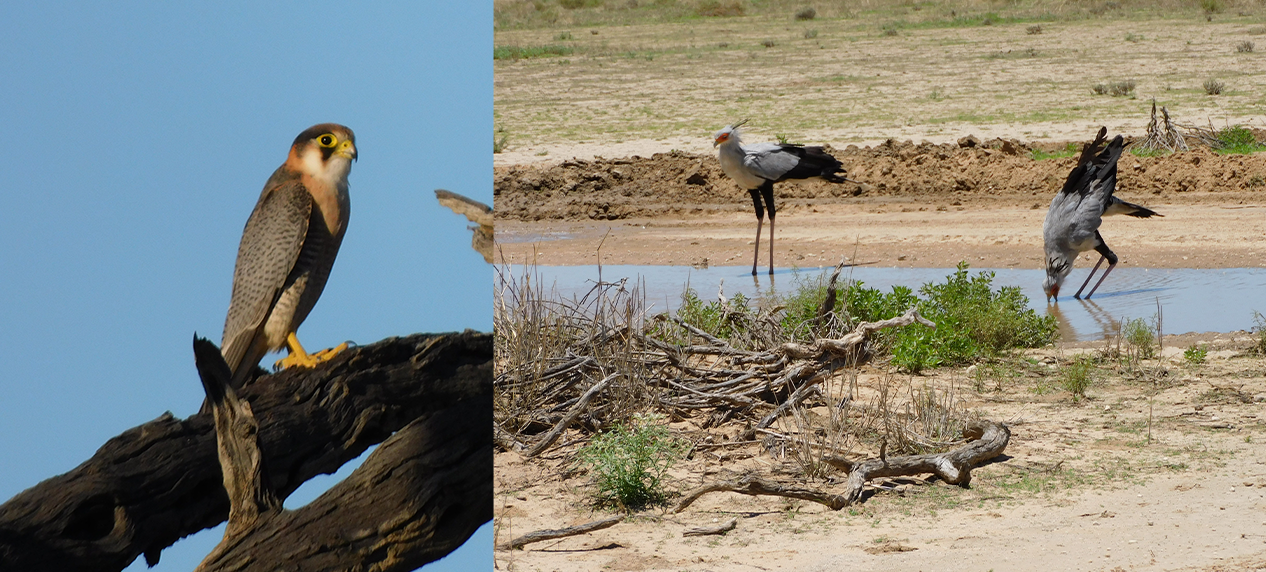
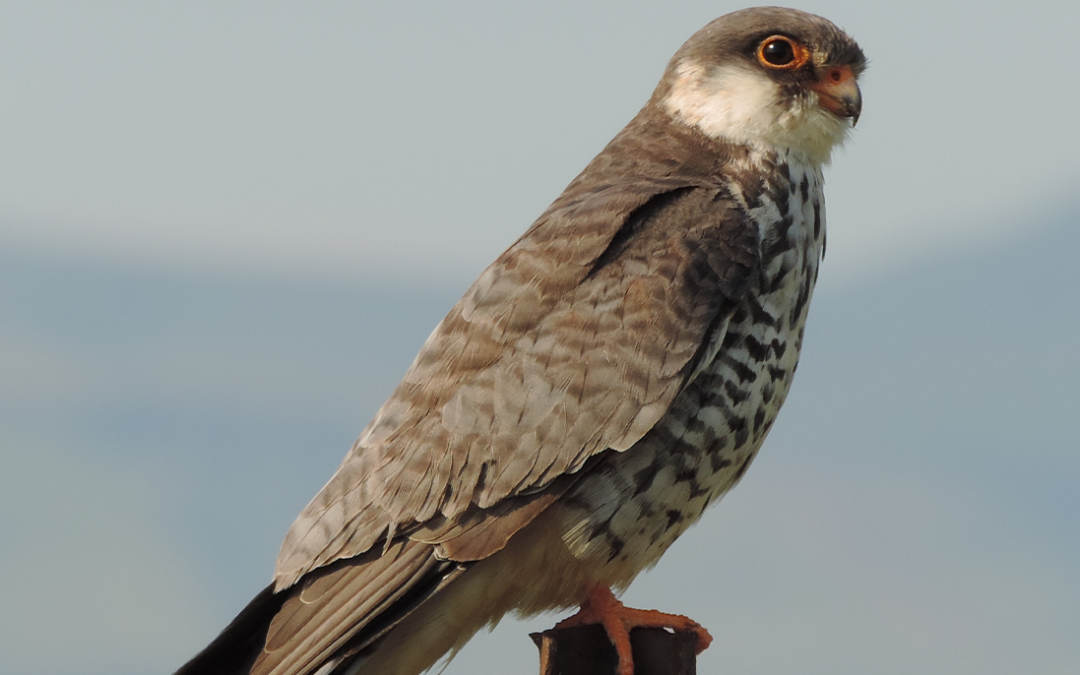
Red-necked Falcon in KNP and Secretary birds drinking water in the road

Left: Red-necked Falcon in KNP. Right: Secretary birds drinking water in the road

The results were sobering. The analysis showed that half of the raptor species I recorded had declined over the study period.

This matters because raptors play a critical role in ecosystems. They help regulate populations of animals such as rodents and dassies, preventing these species from becoming overly abundant. Vultures perform an equally essential service by removing carcasses from the landscape, helping to limit the spread of disease.

Some of the declines we observed are likely linked to human activities. In parts of the Northern Cape and Free State, certain raptors are persecuted because they occasionally catch chickens or lambs. Poisoning is also a growing threat, and unfortunately poisons are often easy to obtain. Owls appear to be particularly affected by this.

Addressing these challenges requires working with the people who share the landscape with these birds. When I travel through farming areas, I spend time talking with farmers to understand their concerns and look for ways to help reduce conflict. I also visit schools to talk to children about why raptors are important and the threats they face.

Studies like this help highlight the scale of the problem. Raptors are declining, and yet they provide vital services that keep ecosystems functioning. The more we understand these trends, the better we can work together to protect these remarkable birds.

The article can be accessed here: https://doi.org/10.1016/j.biocon.2026.111764.

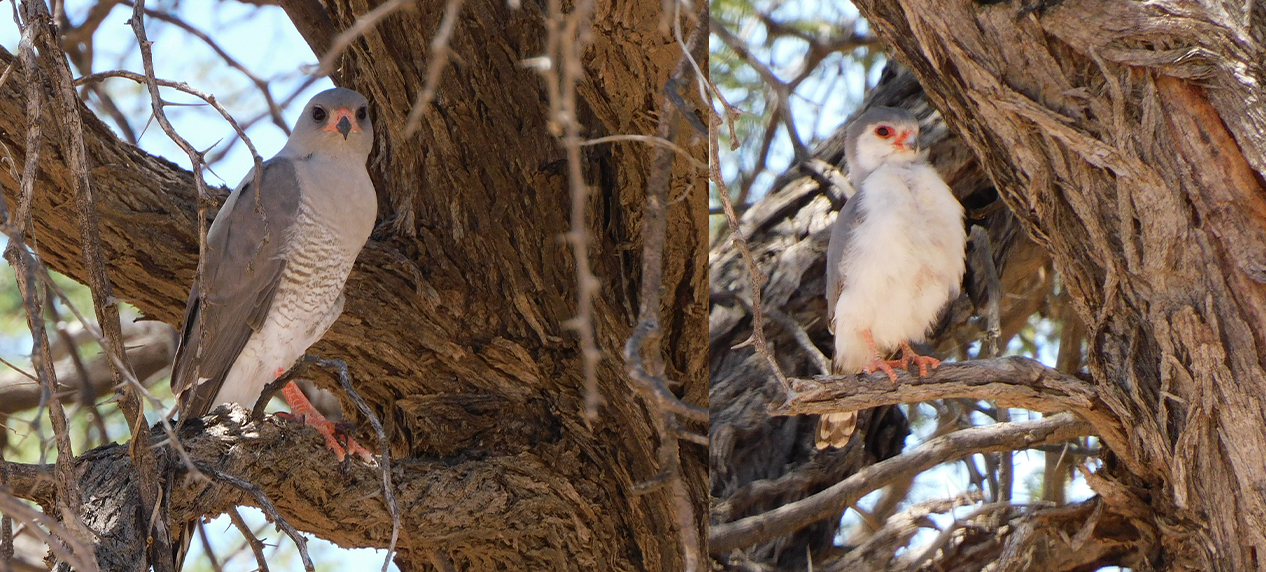
Left: Gabar Goshawk in KNP. Right: Pygmy Falcon in KNP

Left: Gabar Goshawk in KNP. Right: Pygmy Falcon in KNP

Breeding of Blue Cranes lower in intensive agricultural landscapes

Breeding of Blue Cranes lower in intensive agricultural landscapes

Breeding of Blue Cranes lower in intensive agricultural landscapes

By Eleanor Momberg


Blue Crane breeding Western Cape wheatlands habitat

Blue Cranes breed less successfully in the Western Cape Wheatlands than in their traditional range, highlighting a potential ecological trap for South Africa’s national bird.

This is concerning for this stronghold of the Blue Crane (Grus paradisea) population, and might explain why numbers have been declining for the last decade,  a paper entitled Reduced Blue Crane Grus paradisea breeding productivity in intensive agricultural landscapes, states.

The research, published in the Journal of African Ornithology, Ostrich, compared the breeding of Blue Cranes in the Western Cape wheatlands in the Overberg and Swartland, Karoo and eastern grasslands of South Africa.  It found that the birds bred more frequently in the grasslands and the Karoo than in the Overberg or Swartland.

The Swartland pairs were found to fledge chicks half as often as Overberg, grasslands and Karoo pairs indicating that low breeding productivity and recruitment could explain the declining Blue Crane population in the Western Cape wheatlands and that the region has become “an ecological trap for the species”.

By engaging with landowners to reduce nest disturbances, promoting chick-safe water troughs to prevent drownings and reducing fence entanglements by improving fence designs could result in more efficient and successful breeding, the report states.

The findings, the report states, highlight the challenges and complexities with conserving the remaining biodiversity in transformed or novel landscapes where species, such as the Blue Crane, require sustained and intensive management to maintain their population.

In 2025, the Blue Crane was uplisted from Near Threatened to Vulnerable in the Red Data Book of Birds reflecting growing concern about the future of the species, and underscoring the critical role of the Overberg region in renewed efforts to protect the birds.

The uplisting states that the reasons behind the dramatic decline in the Overberg over the past 14 years included disturbance during the breeding season, collisions with power lines, entanglement in farm fencing and baling twine and poisoning – often from substances intended for other species. In addition, shifts in agricultural practices over the past decade, including minimum till and increased canola production, altered the landscape, reducing the availability of suitable feeding and breeding areas for cranes.

As a result of the uplisting, the Endangered Wildlife Trust (EWT), through its partnership with the International Crane Foundation (ICF), has increased its efforts to conserve the Blue Crane, with a strong focus on the Western Cape and Karoo.

Decades of successful conservation interventions yielded positive results in KwaZulu-Natal and the Northern Cape, thus the shift in attention to populations in the Western Cape.

Blue Cranes are endemic to South Africa, with a small population found in Namibia, making these the world’s most range-restricted crane. There are less than 30,000 of these birds left in the world.

Efforts to safeguard the Blue Crane in the Western Cape include intensifying work with communities and farmers to restore habitats, and addressing threats posed by energy infrastructure.

This research in the Western Cape was made possible by support from Leiden Conservation Foundation & Hall Johnson Fellowship


Link to article: https://doi.org/10.2989/00306525.2025.2604223

** Christie A Craig, , Bradley K Gibbons, Tanya Smith, Glenn I Ramke and Peter G Ryan

Celebrating Africa’s Medicinal Plant Heritage

Celebrating Africa’s Medicinal Plant Heritage

Celebrating Africa’s Medicinal Plant Heritage

By Jenny Botha, People in Conservation unit manager


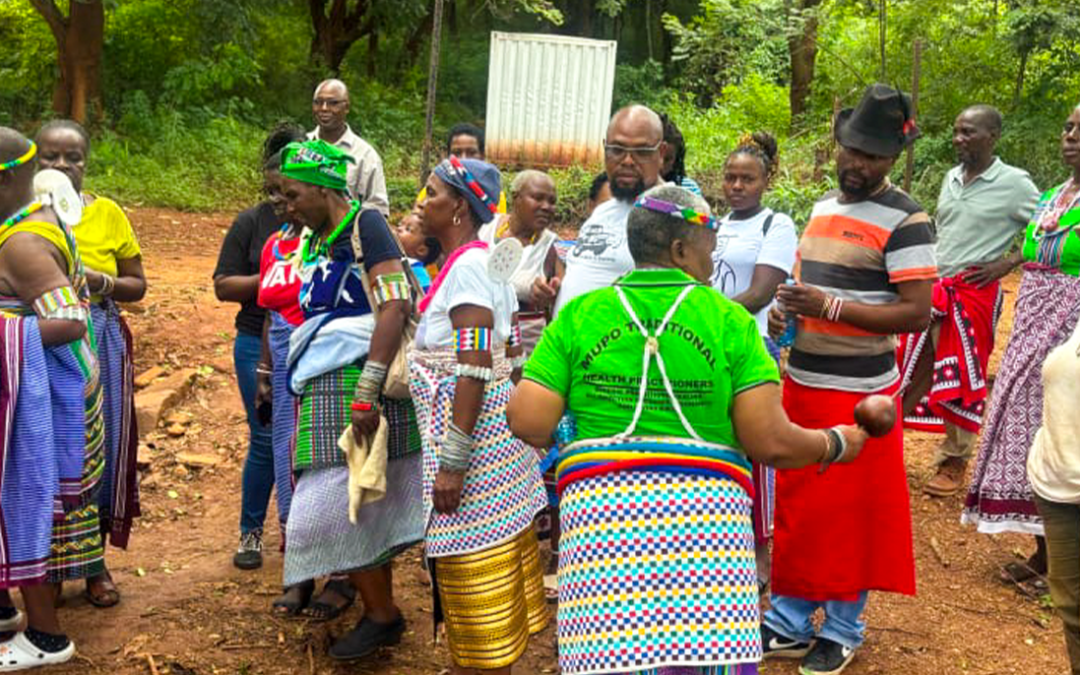
indigenous knowledge medicinal plants Africa

Africa’s landscapes are home to some of the world’s most powerful medicinal plants. The Pepper‑bark Tree, Wild Ginger, Fever Tree, and African Potato are just some of the many species within a rich African pharmacopeia that has evolved over thousands of years of accumulated knowledge and wisdom and shared across generations to support Traditional Health Practitioners to heal their patients.

Today, human activities threaten the survival of hundreds of medicinal plant species worldwide. Plants are often lost in the wild through high harvesting levels and the transformation of habitats through agriculture, mining and other human activities. The slower, less visible impacts of climate change are also increasingly affecting wildlife.

The good news is that there is a resurgence of support to conserve medicinal plants with people across sectors contributing to their improved protection and long-term survival. To succeed, these efforts need to be embedded not only in the conservation of biodiversity but also in culture, sustainability, and community empowerment. We also need to recognise that meaningful change requires sustained effort over time.

The Endangered Wildlife Trust’s contribution

To protect this biocultural heritage, the Endangered Wildlife Trust is working alongside Traditional Health Practitioners, communities, traders, and harvesters to develop sustainable, legal sources of medicinal plants. Our starting point is to explore the challenges we all face through biodiversity loss and by sharing ideas and potential strategies to address them, in this case focusing on medicinal plants.

Cultivation has the potential to reduce the volumes of plants that are harvested from the wild if we can achieve scale and minimise production costs. In collaboration with the South African Biodiversity Institute and regional conservation agencies, the EWT has hosted seven training courses since March 2025, reaching nearly 350 participants in both rural and urban areas. Because medicinal plants hold deep cultural and spiritual meaning, cultivation needs to be carried out with care, recognising and honouring the cultural and spiritual protocols that are traditionally carried out when these plants are handled and used.

We also need to ensure that we adhere to both international and national legislation. Many medicinal plant species are protected by law due to the significant threats to their long‑term survival. Since regulations governing medicinal plants can be complex, we work with national and regional conservation authorities to support Traditional Health Practitioners and other stakeholders understand legislation and navigate legal compliance.

We are also supporting communities and Traditional Health Practitioners to monitor wild medicinal plant populations growing in their areas and, over time, exploring approaches to strengthen controls. This includes working with South African police officials and local leaders, as well as engaging with communities to raise awareness of wildlife legislation and explore options to address the underlying drivers of illegal wildlife activities where possible.

While the challenges are significant, we are encouraged by the growing support and renewed collaboration between conservation organisations, Traditional Health Practitioners, and other stakeholders. By working together to protect medicinal plants while ensuring they remain accessible for traditional medicine, we can help secure a thriving African pharmacopeia for the health and well‑being of people now and for generations to come.

** Funded by the UK Government through the Illegal Wildlife Trade Challenge Fund.

Cash, Corruption, and Creatures: The Hidden Economy of Wildlife Crime in South Africa

Cash, Corruption, and Creatures: The Hidden Economy of Wildlife Crime in South Africa

Cash, Corruption, and Creatures: The Hidden Economy of Wildlife Crime in South Africa

By Gerald Byleveld, Volunteer at the Endangered Wildlife Trust’s Wildlife in Trade Unit


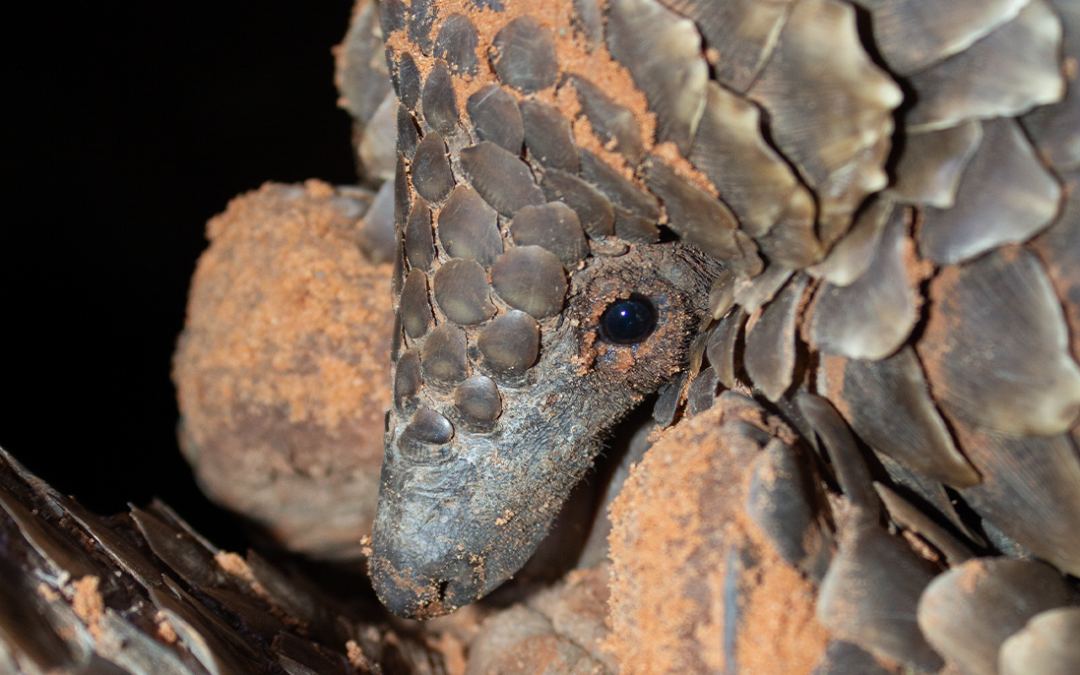
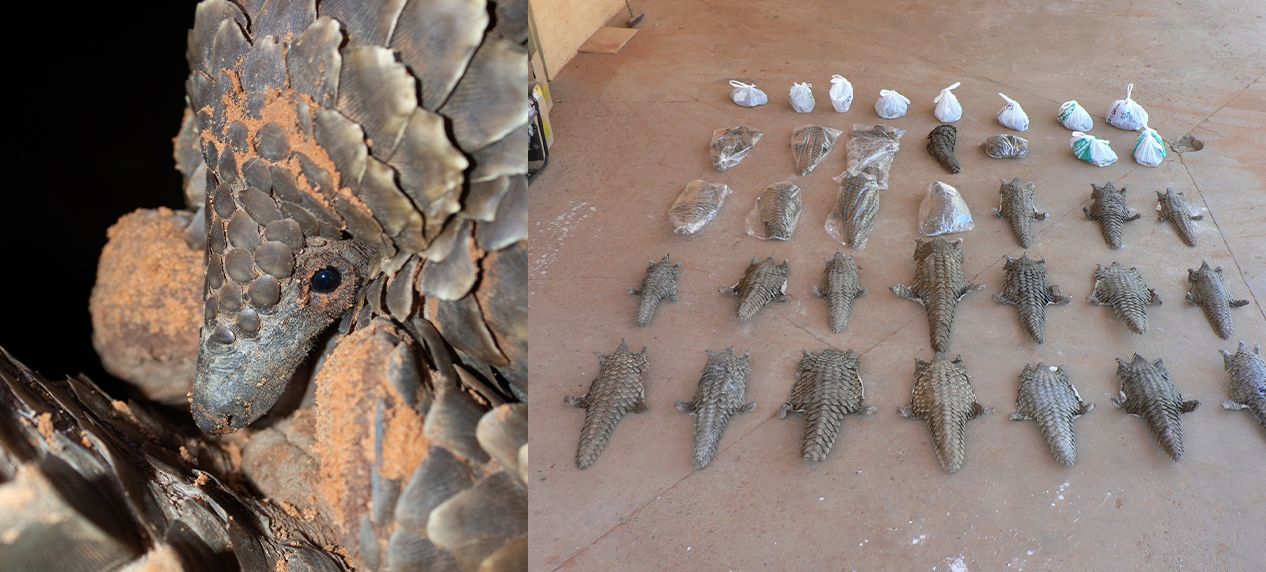
Confiscated wildlife products in South Africa

South Africa’s developed transport infrastructure, sophisticated financial system, and extensive wildlife resources make it both a prime source and a transit point for illegal wildlife trade (IWT).  But poachers and smugglers are only one layer of a multi-billion-rand enterprise.  Behind them are financiers, exporters, lawyers and money managers who ensure that illicit proceeds can circulate undetected through the legitimate economy.  These financial facilitators are the invisible scaffolding of the IWT industry.  Yet only a fraction of such cases result in charges being brought against  financial facilitators.  A 2023 UNODC/Asia–Pacific study found that only 1% of wildlife crime cases involved a money laundering investigation, and only 7% led to prison sentences.

Money laundering – the process of disguising the origins of illegally obtained funds – enables traffickers to convert cash from wildlife products into what appears to be legitimate income.  In wildlife crime, laundering typically occurs through several overlapping techniques.

Cash smuggling and layering are the simplest and most common methods.  Syndicates collect large amounts of physical cash from buyers in Asia or local intermediaries and move it across borders in small increments, often through informal financial systems.  Once split and layered through multiple transactions, the trail becomes difficult to trace.

Front companies and shell businesses also play a central role.  Entities registered as export firms, tourism operators, or hunting outfitters can easily disguise illicit transactions as part of ordinary business operations.  A legitimate game farm, for example, can hide illegal horn sales within a web of legal animal product exports.  Legitimate cash-intensive businesses, such as casinos, knowingly or unknowingly, allow syndicates to launder their ill-got cash into apparently legitimate “winnings” – often in large quantities.

Trade-based money laundering – the manipulation of invoices to hide value transfers – is another favoured method.  A company may overstate or understate the value of goods shipped abroad, effectively moving money under the guise of trade.  This technique exploits weaknesses in customs oversight and is especially effective in sectors such as seafood, leather, and curios, which overlap with wildlife products.

Finally, traffickers invest laundered profits in tangible assets such as real estate, luxury vehicles, or guest lodges.  Once the money is tied to visible property, it appears legitimate.  The result is a criminal economy that seeps into the formal one, distorting local markets and shielding offenders behind layers of ownership and paperwork.

If money laundering cleans dirty profits, bribery ensures the system continues undisturbed.  Bribes lubricate nearly every stage of the wildlife trafficking chain – from poaching in source countries to import into destination countries.

At the source, game and field rangers are often bribed or coerced into turning a blind eye.  Syndicates may offer payment or protection in exchange for information on patrol routes, security gaps, or the locations of high-value animals.  The same pattern extends to customs and border officials, who can falsify documentation or permit consignments to pass unchecked.

Corruption also infects investigative and judicial processes.  There have been repeated instances where charges against traffickers are delayed, evidence is misplaced, or penalties are reduced due to alleged bribery or political interference.  Such manipulation erodes public confidence and signals to criminal groups that enforcement can be negotiated.

Bribery is not limited to the public sector.  Private-sector enablers – freight companies, shipping agents, and financial intermediaries – may also accept payment to mislabel goods or overlook suspicious transactions.  This blend of private complicity and public corruption creates a powerful shield of impunity.

The costs of money laundering and bribery extend well beyond biodiversity loss.  Financially, laundered wildlife proceeds are often reinvested into other illicit markets, including narcotics and human trafficking.  Organised crime groups exploit wildlife trafficking networks as low-risk, high-reward ventures that diversify their revenue streams.

Institutionally, corruption undermines governance.  When the officials tasked with protecting wildlife or enforcing the law are compromised, public trust collapses.  Communities dependent on tourism or sustainable wildlife use lose confidence in the government, while honest businesses face unfair competition from actors funded by criminal capital.

Economically, the influx of illicit money can inflate property prices and distort local economies, particularly in regions adjacent to parks or coastal areas.  The environmental, social, and fiscal consequences are interlinked — weakening the state’s ability to deliver services, conserve biodiversity, and attract ethical investment.

In response to the massive scale of the challenge, South Africa now explicitly recognises wildlife crime as a form of organised financial crime.  The Financial Intelligence Centre Act (FICA) provides a framework for tracking suspicious financial transactions, and inter-agency cooperation between the Financial Intelligence Centre, SARS, DFFE and the Hawks has improved.  The National Integrated Strategy to Combat Wildlife Trafficking (2022–2030) (NISCWT) explicitly calls for the “follow-the-money” approach.

The arrest of Francis Kimpampa in 2023 and subsequent convictions for rhino trafficking and money laundering showcase what can be achieved through inter-agency and private-public collaboration. Internationally, the USA’s Operation Apex dismantled a decade-long wildlife and drug money laundering operation. In Malawi, the Lin-Zang network was convicted in April 2023 for money laundering derived from trafficking rhino horn, ivory and pangolin scales.

Yet formidable challenges remain. Many wildlife transactions occur in cash-heavy rural areas, beyond the reach of formal banking oversight.  Investigations into financial flows require specialised skills and coordination across agencies that often operate in silos.  Prosecutorial capacity to investigate complex financial crimes is limited, and asset forfeiture proceedings can be lengthy and contested.

To dismantle trafficking networks, enforcement must pivot from catching foot soldiers like poachers to targeting financial and institutional enablers.  Priority reforms include strengthening financial-intelligence sharing among banks, regulators, and conservation agencies; building asset-tracing and recovery expertise; improving transparency around company ownership; and investing in communities to reduce the allure of IWT and corruption by creating viable livelihoods and equitable conservation benefits.  Because trafficking is inherently transnational, regional and global collaboration is essential – from harmonising regulations to tracing cross-border financial flows.

The illegal wildlife trade is not only an ecological crisis but a financial and governance one.  Every seized horn or intercepted wildlife shipment represents only a tactical win.  Lasting success depends on making wildlife crime unprofitable by exposing financial trails, prosecuting facilitators, and restoring integrity to the institutions designed to protect society and the natural world.

Until the money stops flowing, the killing will not stop.