How Cheetahs got their spot in the EWT’s history

How Cheetahs got their spot in the EWT’s history

How Cheetahs got their spot in the EWT’s history

Emily Taylor


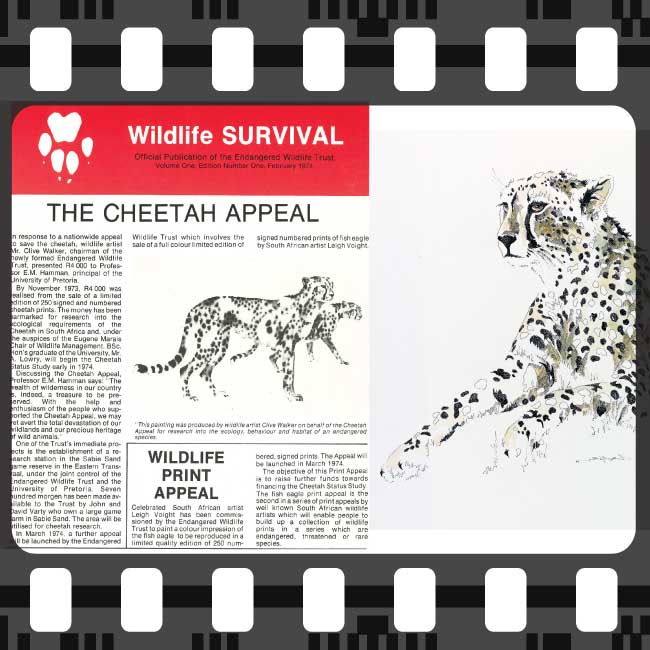
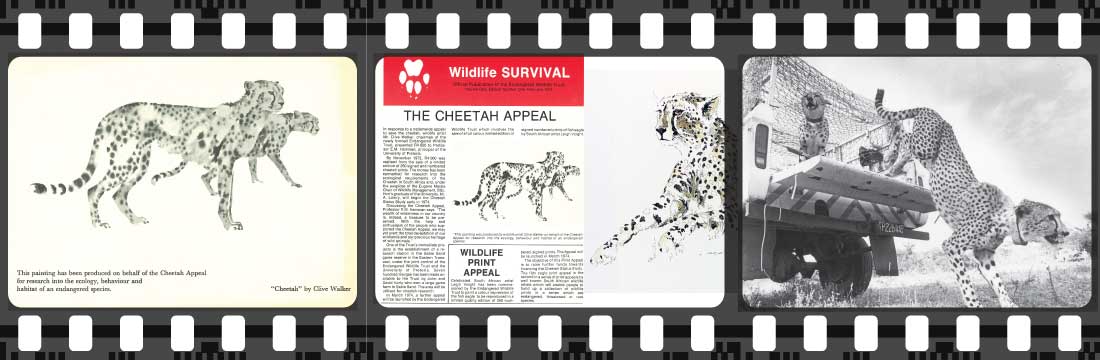
When Clive Walker raised funds for Cheetah conservation through the sale of his painting of two Cheetahs, he asked Koos Bothma, then associate professor of the Eugene Marais Chair of Wildlife Management at the University of Pretoria, if he would like to use the money for a Cheetah study. In 1973, the species was recognised as Endangered, both locally and internationally, and Koos quickly accepted. Clive was happy that the money could be channelled into a recognised institution.

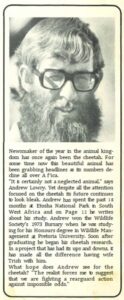
Profile of Andrew Lowry

Profile on Andrew Lowry featured on the contents page of an article about his research in African Wildlife, Volume 30, No. 6

Andrew Lowry was born and raised in Cape Town, South Africa. Having completed his BSc in Botany and Zoology at the University of Cape Town, Andrew went north to study for his Honour’s degree in Wildlife Management at Pretoria University, during which he won the Wildlife Society’s 1973 Bursary. Andrew was itching to get out into the bush and work with wildlife. He was available and in need of a research project, describing himself as a “spare” – someone without a specific project to focus on and thus available for any assignment by the department. Thus, the “spare” student was the perfect choice to be dispatched to Namibia for Cheetah research sponsored by the fledgling EWT.

At first, there was no specific location or Cheetah population to be prioritised for research. Andrew initially focused on farmland in Namibia where Cheetahs and other stock-raiding predators were being captured or killed. A game capture operator who was often called to remove Cheetahs from farms offered to share the information about where each Cheetah had come from. Andrew could then conduct Cheetah surveys in areas where Cheetahs were regularly seen. However, because farmers persecuted these predators, they were highly mobile and travelled large distances by night. It was also difficult for Andrew to cover the whole of Namibia on his own. In the three months that Andrew spent there, he saw not a single Cheetah and sought advice from James Clarke, co-founder of the EWT and wildlife expert, saying that the study was not viable, and he had nothing to show for his time and efforts. Instead, Andrew proposed a Cheetah study in Etosha National Park in Namibia. He had recently visited the park and seen Cheetahs as close as 300 metres from the gate. Etosha boasted the world’s largest free-living Cheetah population, and the then South West African (Namibian) Division of Nature Conservation and Tourism was eager to maintain this population and welcomed a formal research study in the park. Predator conservation is no easy task in a stock farming country like Namibia. Still, the awareness and concern of the authorities, coupled with information from field investigations such as this one, can help to ensure these animals’ survival. And so Andrew was tasked with conducting a census of the Cheetahs in the park, and in his words: “I rode through the gates of Etosha, and I landed in Paradise”.

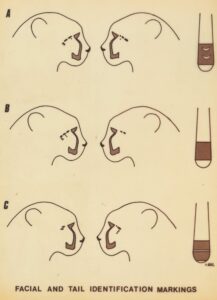
For an accurate census, the first thing to do is to develop a reliable way to ensure that, when counting individual animals, you only count them once. Fortunately, each Cheetah’s spots are unique – like a human fingerprint, and once you have a record of their coat pattern, you can avoid recounting them. It is also a good way to identify animals when studying their behaviour and genetic diversity. Once an animal’s markings had been recorded, Andrew created the identity kit featured in Figure 1 to differentiate between individual animals. The EWT and other organisations still use similar methods to identify Cheetahs today. However, photos of animals are now run through software called Wildbook, ensuring identification is even more accurate than a human eye can achieve.

A cheetah identikit

An identikit used by Andrew Lowry in his Cheetah study in Etosha in 1974-1976


Wildlife researchers are often advised not to give study animals names to maintain a level of objectivity. While this may work in theory, we often get attached to some or all of our subjects when we follow their lives so intimately. Andrew cheated a little. He did name each of the Cheetahs that he followed using a letter of the alphabet but then gave them names starting with these letters. In an article he wrote for the Wildlife Society of Southern Africa publication at the time, African Wildlife, Volume 30, No. 6, he explained: “For ease of recording in the field, I have allocated each animal a letter of the alphabet and have then given them a name meaning Cheetah, which begins with the same letter. Duma is the Swahili word for Cheetah. Others are Chita (the original Hindu word meaning “spotted one”), Etotongwe (Ovambo), Hlosi (Zulu), and Jubatus (the Latin species name). And let’s not forget Intermedius. Acinonyx intermedius is an extinct species of Cheetah which ranged in Europe and Asia during the middle Pleistocene.”.

In addition to his investigations and observations, Andrew appealed to visitors to the park to complete surveys describing any Cheetahs they came across and where in the park they were seen (Figure 2). This information supplemented his findings when he was unable to monitor the whole park. The appeal, in the form of a pamphlet visitors received at the entrance to the park, also served as an education and awareness-raising tool. The pamphlet provided some key facts about Cheetahs and sparked a new level of engagement among visitors – enriching their experience of the wildlife they came across. The use of non-scientists to collect data is more common now than it was then. Still, it has always been a valuable tool when conducting studies like Andrew’s. The Cheetah and Wild Dog Censuses that the EWT runs in the Kruger National Park, for example, are only made possible with the help of citizen scientists.

Pamphlet and survey form visitors received at the entrance to the park to provide additional data for the Cheetah study in Etosha National Park

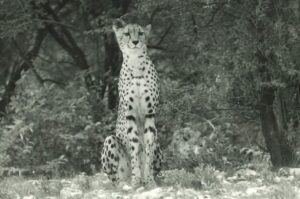
During his two-year study of Cheetahs in Etosha, Andrew Lowry was immersed in their world, and when speaking of his time there, much of his focus, fascination, and awe was on the role of the female animal. She faces tremendous pressure alone once mating has taken place, and the male Cheetah leaves her to fend for herself and for her helpless cubs when they are born. Not only must she provide for them – she is responsible for teaching them to hunt and survive in treacherous surroundings. One female in Etosha, named Duma, impressed Andrew above others. In his article, Andrew writes:

Duma has proved to be an exemplary mother. Not only does the survival rate of her litters appear higher than the Etosha average, but her offspring are capable hunters on parting company with her. We watched Acinonyx and her two brothers from shortly after they left Duma. If one of these Cheetahs began to initiate a hunt, the other two would perform outflanking stalks on either side of the potential prey animal. A more efficient trio I have yet to watch.”

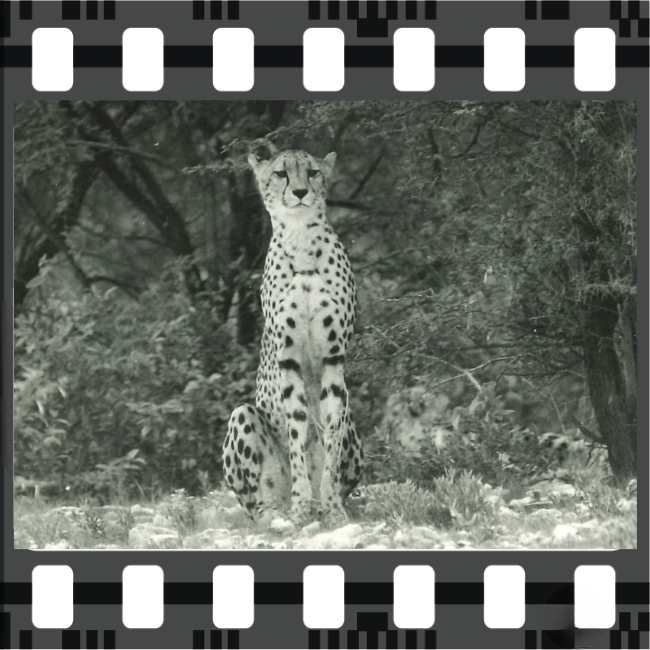
Cheetah sitting black and white

Duma, a particularly effective Cheetah mother studied by Andrew Lowry in Etosha in 1974 and 75

Read more about these cats in the full article here.

Learning much about Etosha’s Cheetahs, Andrew agrees with carnivore expert Dr R F Ewer that studies of predators are often only relevant to the time and place in which they occurred. He believes that studies of predators are usually only relevant to the time and place in which they occur and advised that the Cheetah numbers in the park were optimal at between 50 and 100 and that the low-density population would not benefit from further reintroductions – reiterating the original consensus that one of the largest remaining strongholds for Cheetahs in southern Africa should not be interfered with.

By the end of the study, the EWT had expanded. It was focused on rhino and elephant conservation while supporting other organisations also working on Cheetah conservation, such as the De Wildt Cheetah Centre. Andrew had for some time been increasingly concerned about the larger issues at play that were endangering all species, including humans. He knew where a difference needed to be made and went on to do so in the lecture halls of the Tshwane University of Technology. For 30 years, Andrew taught 21 subjects to around 3,000 students, six of whom currently work for the EWT, with many more doing so in the past. I was one of these students, inspired to work for the organisation within a month of my first year because Andrew believed in the work the EWT does so much that he included it in his coursework.

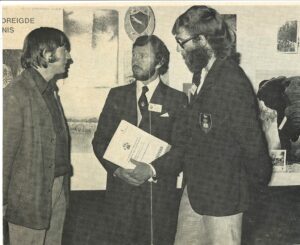
Clive Walker (centre), founder of the EWT, speaking to EWT carnivore researchers Gus Mills (left) and Andrew Lowry (right)

Now retired, Andrew makes an effort to follow the careers and personal journeys of his students, whom he considers family and fondly speaks of with pride. Refusing to have a cell phone, Andrew checks Facebook regularly, wishing students well in their personal and professional milestones. He was excited to hear from us and to visit the EWT Conservation Campus and tell us his story and catch up with those whose lives he touched so profoundly. A two-year study of a single population of Cheetahs in Etosha may not have had a significant short-term conservation impact, but it led both Andrew and the EWT to make unmeasurable and invaluable conservation impacts through their cultivation of countless conservationists who have and will still protect forever, together.


Why the Cheetah?

Why the Cheetah?

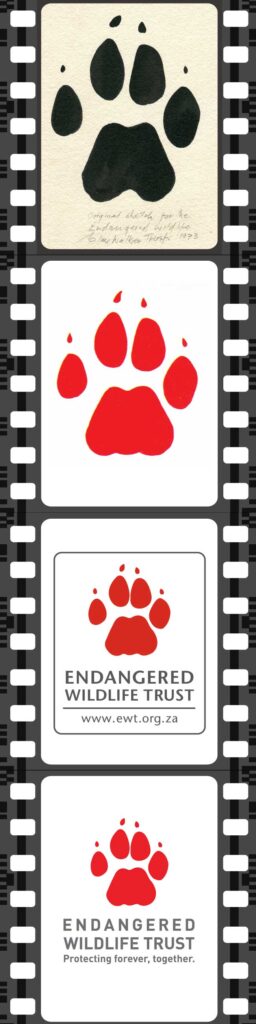
Why the Cheetah Paw?

Clive Walker, Founder of the EWT


Cheetah (Acinonyx jubatus)

“An Endangered species which has declined through loss of range, the insidious fur trade and shooting due to stock predation.”

The choice of the Cheetah as the EWT’s logo was an obvious one for me. My first encounter with this graceful, swift feline was as a game ranger in Bechuanaland in 1966. I came across a young, tame female in the garden of a farmer. Her mother had been killed because of predation on the farmer’s sheep before he realised she had a young cub with her. The cheetah was on a chain attached to a long wire, and she had the run of the large lawn. I got right up close to her and was deeply struck by the beautiful large eyes and the continuous purring sound.

My next encounter was after visiting the Africana Library on Diagonal Street in downtown Johannesburg one Saturday afternoon in 1972. I was horrified to spot cheetah skins hanging like washing on a line in a ‘muthi’ shop. Even more so when the owner was happy to sell me one and advised me he could get more. The memory of it was etched in my brain as I thought back to my first encounter in Bechuanaland. I continued to prepare for an exhibition scheduled for October of the same year and included in my subjects a pair of cheetahs with the objective of following David Shepherd’s idea of a print appeal and at my own cost had 250 prints produced and announced as a CHEETAH APPEAL as James Clarke of the STAR newspaper opened the exhibition at the Lister Art Gallery in Bree street, Johannesburg on 1 October 1973. James was later to become a founding trustee of the Endangered Wildlife Trust. All numbered prints were sold at R20.00 each. After printing expenses, the appeal raised a nice sum of R4,500 to be donated for cheetah conservation.

As I write this today, in 2023, the cheetah is considered vulnerable, and with the transformation of the wildlife industry, it is in a far better position today than back in 1973, thanks in no small part to the work of the EWT and private landowners.

The original logo was adapted from the publication by the Late Dr Rheay Smithers, Mammals of Southern and Northern Rhodesia. Whilst accurate in dimension, the original paw lacked the small indentation between the back pad. This was rectified during Dr Ledger’s time after I retired in 1985.

Filmstrip with EWT logos over 50 years
The historical role of women in the ewt

The historical role of women in the ewt

Celebrating women in conservation

National Women’s Day draws attention to the challenges African women still face but also the ever-increasing opportunities for them to empower themselves.

In South Africa, August (Women’s Month) acknowledges these challenges and celebrates the many achievements of women in South Africa. It encourages others to learn from those who came before them and how they overcame the limitations they encountered.  Women now have louder and more powerful voices, playing a necessary role in highlighting many issues, including environmental degradation, women and child abuse, unequal pay, lack of good education for their children, and many more.

During this Women’s Month, the EWT pays homage to women in the conservation space who do their bit to save species, conserve habitats, and benefit people.

Meet these amazing women here and on social media under #EWTWomanCrushWednesday.

The historical role of women in the EWT

Clive Walker, Founder and Former Director of the EWT

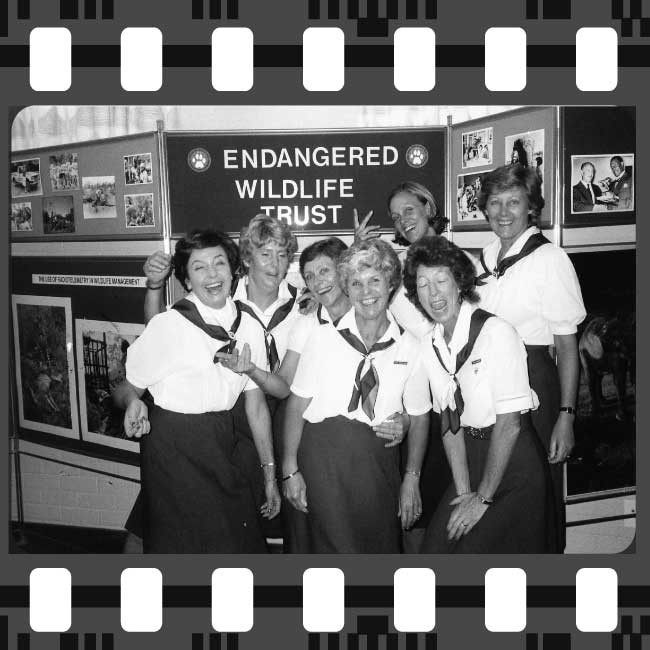
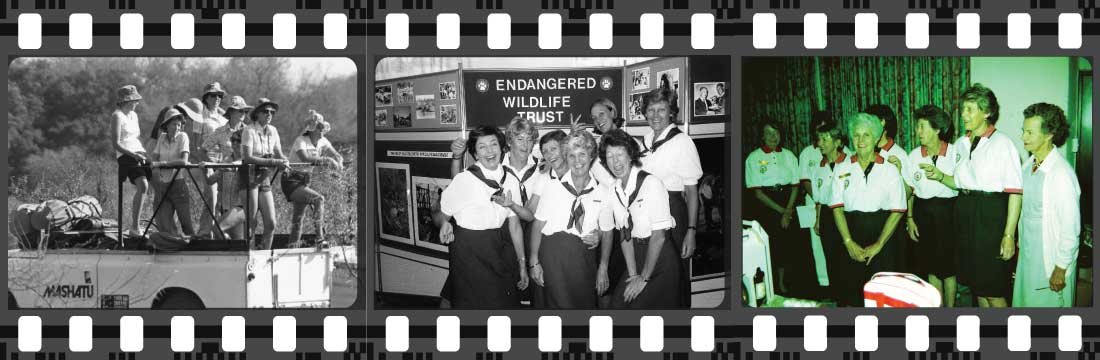
In 1975, I took a group of eight women on a walking trail in the Mashatu Game Reserve in northeastern Botswana. They had told their husbands they were off to the bush for five days, and their husbands had to take care of their kids while on ‘trail’. Among them were Wendy Farrant, whose husband was an EWT trustee, and her friend Joy Cowan. Both husbands were accountants who made up a number of the professionals who made up the board of directors. The very first afternoon, we encountered on foot some 100 elephants standing in the dry Shashe river bed that borders Zimbabwe. One can only imagine the experiences that were to follow over the next four days. On the last night around our campfire, a number asked what they could do to help the EWT as they had become so fired up by their experiences, and my response was why don’t we form a ‘ladies’ committee’ and, after discussing it with the board, we did just that. The committee consisted of Wendy Farrant, Jill Morrison, Felicity Street, Joy Cowan, Maureen McCall, Jenny Doak, and Conita Walker. As volunteers, they contributed 100s of hours in administration work, ran all the fundraising functions, organised three symposiums and various workshops during my tenure and became the flag bearers of the Trust’s work. I must commend my secretary, the late Petra Mengal, who ran the zoo office, and my PA, Jane Zimmerman, who were the only two permanently employed staff and were a tower of strength to the organisation.


Ladies accompanying Clive Walker on a wilderness trail in the Mashatu Game Reserve in northeastern Botswana in 1975 (Left) and The Endangered Wildlife Trust’s Ladies Committee , formed in 1975. As volunteers, they contributed hundreds of hours in administration work, ran all the fundraising functions, organised three symposiums and various workshops, and became the flag bearers of the Trust (Right).

FAST FORWARD TO 1999

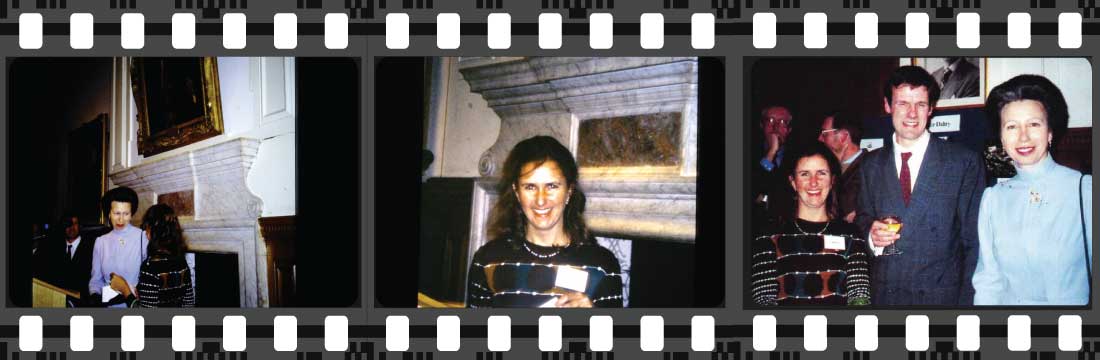
Twenty years later, another woman was trailblazing through conservation – the conservation of cranes in particular. Lindy Rodwell cofounded the EWT’s  South African Crane Working Group (SACWG) with Kevin McCann, having established and grown the Highlands Crane Group two years prior. The SACWG was formed to coordinate all crane conservation efforts across South Africa. In 1999, Lindy was the first person from the EWT, and from South Africa, to win the Whitley Award, often referred to as the ‘Green Oscars’. The award is awarded annually to individuals from the Global South by UK-based conservation charity the Whitley Fund for Nature.


Lindy Rodwell, Edward Whitley Junior, and HRH Princess Anne at the 1999 Whitley Awards at the Geographical Society in London. Lindy won a Whitely Award for her work conserving cranes.


Getting fired up for frogs

Getting fired up for frogs

Getting fired up for frogs


A novel approach to conserving a Critically Endangered frog

Alouise Lynch, Bionerds PTY Ltd.


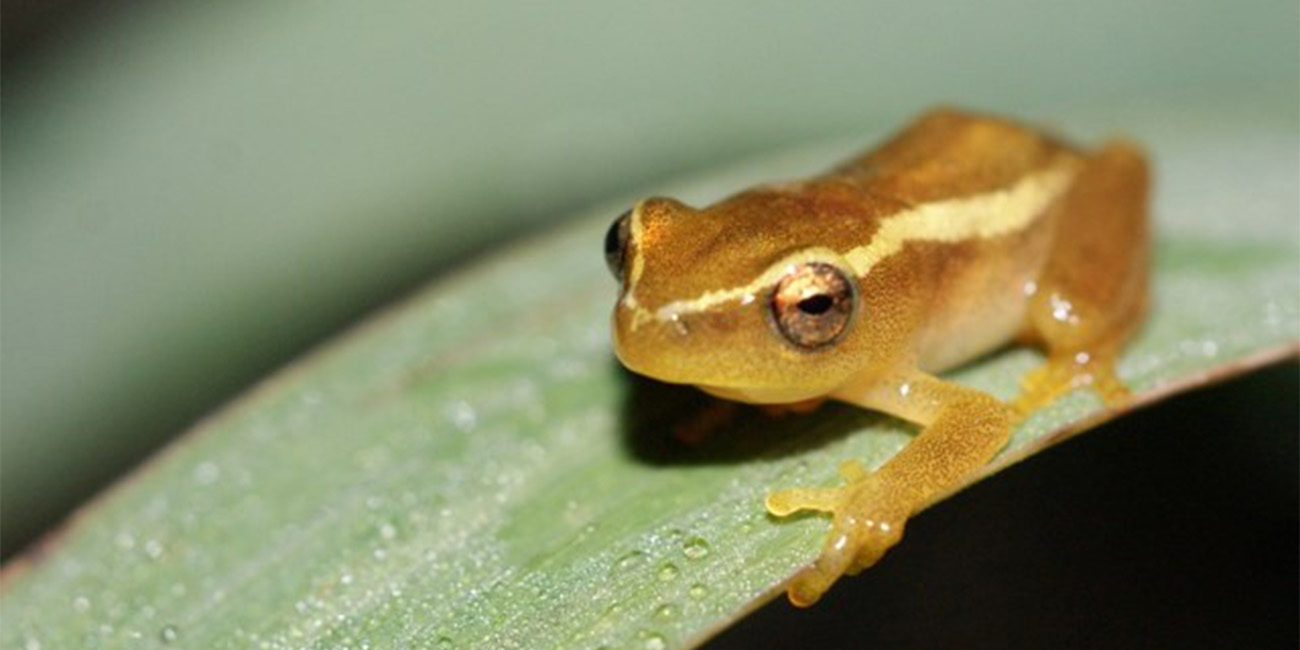
Amidst a field of agricultural development, the Klein Swartberg Mountain towers above the town of Caledon in South Africa’s Western Cape Province. This lone mountain is home to the only known populations of the Critically Endangered (IUCN Red List 2016) Rough Moss Frog (Arthroleptella rugosa), an amphibian species restricted to this mountain. For this reason, the mountain was deemed an Alliance for Zero Extinction Site in 2017.

The Alliance for Zero Extinction (AZE) is a joint initiative of biodiversity conservation organisations from around the world working to prevent extinctions by promoting the identification and ensuring the safeguard and effective conservation of key sites that are the last remaining refuges of one or more Endangered or Critically Endangered species.

Alliance for Zero Extinction website, July 2023

Bionerds have been implementing this project for the Endangered Wildlife Trust since 2019. The Endangered Wildlife Trust’s (EWT) Threatened Amphibian Programme (TAP) Conserving Threatened Frogs of the Western Cape  Project includes the Rough Moss Frog as a species of conservation concern given its restricted range. Furthermore, it still faces grave threats within this range, including habitat loss caused by alien invasive plants and frequent unplanned fires, which have led to a severe population decline (IUCN Red List 2016). Long-term acoustic monitoring by Cape Nature and Stellenbosch University documented this decline categorically, showing how the type (original) population had all but disappeared completely.

During our surveys in May 2020, a marching forest of alien vegetation, mostly Pine, was observed engulfing the then-only known populations of Rough Moss Frogs. It became evident that rapid intervention was needed to save and secure these populations. Unfortunately, the Covid-19 epidemic halted all efforts to implement interventions in 2020.

In 2021, the project was awarded a Rapid Action Grant from the IUCN Save Our Species fund and the European Union. This grant enabled us to create a firebreak around the Rough Moss Frog populations. We had limited time to implement this burn because the pine trees were starting to cone, and we had to act hastily to prevent another season for them to set seed. In March 2022, we worked with the local conservancy and landowners to implement a controlled ecological fire – the first time globally that prescribed fire was used as a management tool to reduce alien invasive vegetation threatening a frog species from extinction.

The Overberg District Municipality Fire Department and the Greater Overberg Fire Protection Association oversaw the burn and did a sterling job of ensuring all possible precautions were taken for the implementation of the burn, all permits were issued, and on the day, all hands were on deck to start, maintain, and close off the burn. Unfortunately, unforeseen windy conditions developed late in the day and the fire managed to break through several points and burnt a larger section of the mountain than was planned. Over 4,000 hectares were burnt, which is good news for pine eradication efforts but requires carefully planned follow-up management over a larger area. Bionerds have assisted with this through drone-mapping of priority areas.

A site visit following the fire in April 2022 confirmed the presence of Rough Moss Frogs, and in July 2022, we were relieved to hear the species calling at the sites of all known populations. In May 2023, multiple individuals were heard in an area where none were heard or recorded before the fire. During subsequent surveys, we discovered numerous additional populations of this species across the mountain – a big win for the project and the species!

This year, between July to September-  the coldest and wettest months– when these frogs breed, we will implement acoustic surveys to determine the presence or absence of Rough Moss frogs in all previously recorded sites. These surveys use three audio devices called Song Meters – a six-microphone array deployed at each population site for roughly an hour per site. The arrays record all frog calls during that period, and we can then use the audio file to estimate density and determine how many Rough Moss Frogs are present in each specific population at that specific time. We will be doing this for five years, each breeding season, to determine the effectiveness of the fire on the preservation of the sites, as well as capturing the rate of recovery of the frog populations at each site.

The landowners that are part of the Klein Swartberg Conservancy all support the protection of this species – and Bionerds and the Fynbos Trust have developed an alien clearing plan to guide the clearing of alien invasive vegetation from the mountain over the next decade. This alien vegetation clearing operation across the mountain creates jobs for local people from the Caledon area. This project is challenging, but we are positive and excited about the future of this tiny frog due to multiple partners working together towards protecting the species and its important fynbos habitat.

This project is funded by the IUCN Save Our Species and the European Union. The IUCN Save Our Species aims to improve the long-term survival prospects of threatened species. It also focuses on supporting the species’ habitats and working with the communities sharing this habitat. It achieves success by funding and coordinating conservation projects across the globe. The Member States of the European Union have decided to combine their know-how, resources, and destinies. Together, they have built a zone of stability, democracy, and sustainable development whilst maintaining cultural diversity, tolerance, and individual freedoms. The European Union is committed to sharing its achievements and values with countries and peoples beyond its borders.

Umgavusa Protected Environment

Umgavusa Protected Environment

Umgavusa Protected Environment

The Heart of Community-Based Conservation

Cherise Acker, the EWT’s Threatened Amphibian Programme

Umgavusa Protected Environment lies in the area surrounding the small town of Gingindlovu. Although small, Gingindlovu has a rich cultural heritage attributed to the Battle of Ndonkakusuka, in which King Cetshwayo won the struggle over his brother Mbulazi for the Zulu throne in 1856. Gingindlovu, meaning “The place of he who swallowed the elephant”, was named by King Cetshwayo in honour of his victory. In 1879, King Cetshwayo faced another battle against the British troops. This time, however, King Cetshwayo’s army did not claim victory and was defeated by the British, after which Ginginglovu was placed under colonial rule.

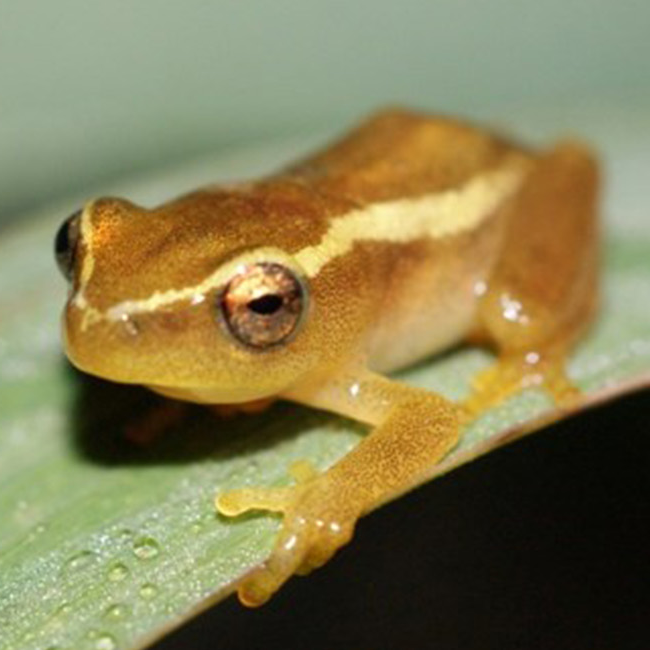
Today, the now peaceful community of Gingindlovu farms extensively in the area where generations of farming families have forged a close-knit community with a passionate appreciation for their community and environment, knowingly safeguarding future generations. One local farmer, Ian Johnson, tracked the EWT’s Cherise Acker-Cooper to a parking lot in Nyoni, where she was working with local teams clearing invasive alien plants. Ian’s curiosity to identify a ‘Mystery Frog’ he had recently photographed in a reedbed on his farm spurred his eager pursuit. From a picture on Ian’s phone, the ‘Mystery Frog’ was confirmed to be the Endangered Pickersgill’s Reed Frog, known to occur exclusively along a narrow band along the KwaZulu-Natal coastline. Ian’s excitement of knowing that his farm was home to this KZN endemic frog led him to report the record to the local Environmental Committee. Subsequently, the chair of this committee, Mr Ashton Musgrave, invited Cherise to present at their November 2019 committee meeting so they could learn not only of Pickersgill’s Reed Frog but the importance of amphibians and their conservation.

It was during this presentation and the resulting acknowledgement of the plight for amphibian conservation in South Africa that four local farmers (Mr Ashton Musgrave, Mr Jonathan Saville, Mr Bret Arde and Mr Jonu Louw) banded together and asked Cherise to visit their farms to determine if the Pickersgill’s Reed Frog was present on their farms. Song meters were rotated among the farms, followed by careful listening to hours of recordings until the Pickersgill’s Reed Frog’s quiet but distinctive call was confirmed by the EWT’s Threatened Amphibian Programme Manager, Dr Jeanne Tarrant.

Confirming their presence was enough for these enthusiastic farmers, who were keen to ‘do the right thing’ and protect them to ensure their continued presence. In this spirit, the farmers keenly agreed to pursue formally declaring the habitat of the Endangered Pickersgill’s Reed Frog as a Protected Environment through the Biodiversity Stewardship Process in 2020. However, the journey of declaration, led by Cherise, was not an easy route. Despite the numerous bends along the way, including COVID-19, the social unrest in July 2021, and the April 2022 floods, KZN MEC formally declared the Umgavusa Protected Environment from the Department of Economic Development Tourism and Environmental Affairs, Honorable Mr Siboniso Armstrong Duma, on 25 May 2023. It is the first protected area we have declared to conserve the Endangered Pickersgill’s Reed Frog and its habitat, but it won’t be the last!

The infectious drive for amphibian conservation by these local frog conservation pioneers has awakened a love for frogs and frogging within the community, who have flocked to the Umgavusa Protected Environment to catch a glimpse of the diminutive Endangered Pickersgill’s Reed Frog.

It is not just frogs that these farmers are enthusiastic about. They work tirelessly to rehabilitate wetlands, clear and maintain watercourses from invasive alien plants, and support student research on the abundant wildlife that inhabits the area. These initiatives are driven by their innate love for their environment, and it is through this that the heart of community-based conservation offers enormous opportunities towards securing the biodiversity and cultural heritage of South Africa for all.

Mr Ashton Musgrave and his son enjoying their piece of the Umgavusa Protected Environment.

Thank you to our partners, Conservation Outcomes and Ezemvelo KZN Wildlife, and to Rainforest Trust and Synchronicity Earth for supporting the project.

A word from the CEO May 2023

A word from the CEO May 2023

Word from the CEO

Yolan Friedmann

Sometimes we need to be reminded of what we know. We need this a lot. Since the discovery of PVC – the world’s third-most widely produced synthetic polymer of plastic – in 1876 and its development into a plastic compound ready for use in pipes, bottles, packaging, medical devices, cards and with wide application in building and construction industries in around 1926, PVC accounts for about 43 million metric tons of the total 390 million metric tons of plastic produced every year. This number may be a small (ish) fraction. Still, the trouble with PVC is that it is not biodegradable, which means that PVC waste can remain in the environment for hundreds of years, causing significant harm to wildlife and ecosystems. The manufacturing process of PVC is harmful, using toxic chemicals like chlorine and dioxin. But its real danger lies in the fact that it never ever breaks down, and even when disposed of, the harmful chemicals can still leach into water and soil systems, killing millions of organisms.

I was reminded of this stark reality on a recent trip to an island on South Africa’s west coast. Over a few decades, the sea air had taken its toll on an old pickup truck on the island and made for a fascinating photograph of how metal, paint, and iron can eventually succumb to the ravages of nature’s demolishers in the form of wind, salt, air, and water. However, lying next to what was once the car’s engine was an almost perfectly preserved, ready-to-reuse PVC water tank. Furthermore, the car’s dashboard was also almost reusable – black, shiny, and ready to go and the rubber linings were still in good nick. One may argue that this is why nearly non-destructible materials are used, as cars must be robust and safe. But the stark reality is that humans are creating toxic materials to last, which may put our futures at risk.

It is widely known that plastic, in its various forms, can be found in every ecosystem, on every surface and in every corner of the planet. To all depths of every ocean and river, in our air, forests, grasslands, and mountains, and eventually into our food and water. It leaches toxins and strangles wildlife; it chokes waterways and animals. Microplastics negatively affect all life, humans included. Yet we keep manufacturing them; worse, we keep discarding them recklessly and frivolously, as if they were leaves on the wind.

Every single human being has a role to play here. We all need to buy less plastic, use less plastic, demand less plastic, and, most important, discard it responsibly. We also ALL need to pick it up wherever we go, take (recyclable) bags with us when we walk in parks, on our beaches, through our forests, when you walk the dog and run with mates, go for a ride and paddle on our dams. Please pick it up, pick it up, and pick it up. Remove as much plastic from the environment as possible, and never ever walk over that bottle top or plastic wrapper again. That one action of NOT picking it up can lead to the direct death of an insect, a bird, a seabird or a fish. The many actions of NOT picking it all up will almost certainly lead to the end of life on earth for many species and what we need it to be for all life.

Let’s all play our part and Pick It Up. Saving one life at a time

To help us celebrate 50 Years of Conservation in Action, send us your thoughts on #50YearsOfEWT to help us create the next 50. Like the Marula, the EWT is here to serve our environment and has thousands more sunsets to share and sunrises to welcome. Help us craft #TheNext50 together.

Drop us a line at ewt@ewt.org.za or visit www.ewt.org.za, where you can share your vision for our planet 2073 and what the EWT will have achieved by then.

To help us celebrate 50 Years of Conservation in Action, send us your thoughts on #50YearsOfEWT to help us create the next 50. Like the Marula, the EWT is here to serve our environment and has thousands more sunsets to share and sunrises to welcome. Help us craft #TheNext50 together.

Drop us a line at ewt@ewt.org.za or visit www.ewt.org.za, where you can share your vision for our planet 2073 and what the EWT will have achieved by then.

Happy Birthday, EWT.

Yolan Friedmann