The unfinished journey:  capturing Wattled Cranes for conservation

The unfinished journey: capturing Wattled Cranes for conservation


The unfinished journey: capturing Wattled Cranes for conservation

By Dr. Lara Fuller, Drakensberg Project Coordinator, South Africa for the African Crane Conservation Programme

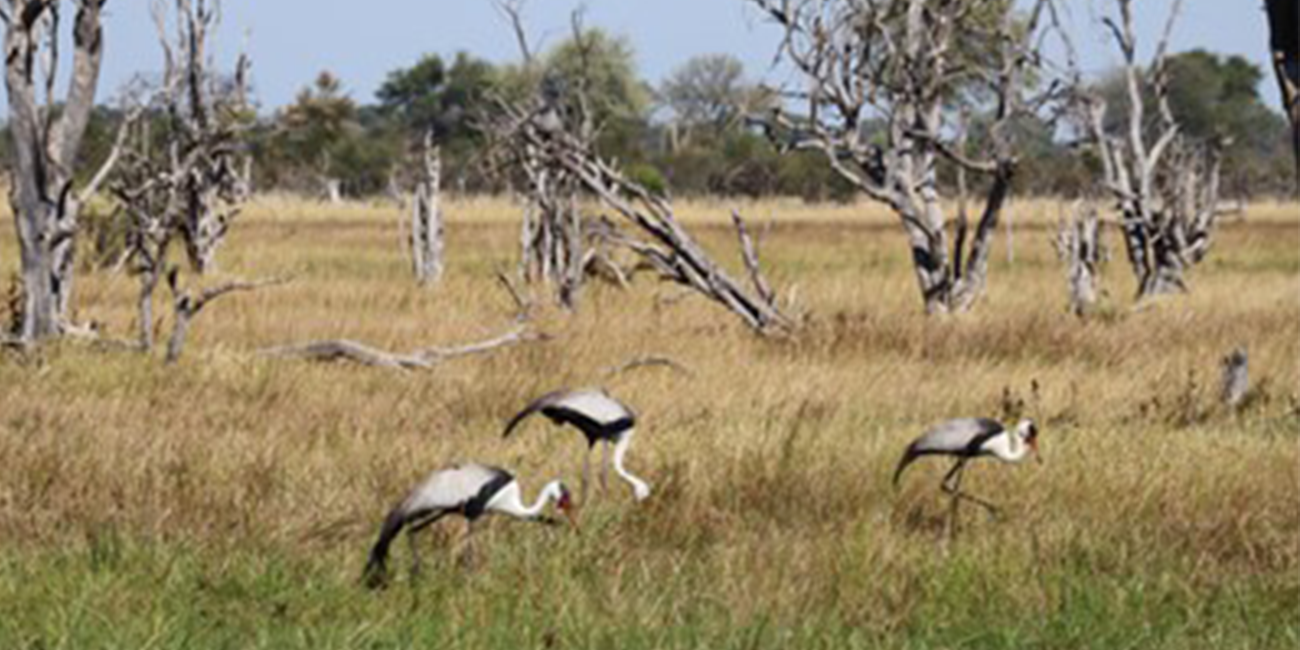
Wattled Cranes close to the camp site

Wattled Cranes are globally Vulnerable. They move with the available waters in large floodplains across south-central Africa through several countries including Botswana, Zambia, Angola, Zimbabwe, Tanzania and Malawi. It is this movement that is vital for conservationists to understand so that conservation goals can be impactful.

Wattled Cranes are notoriously difficult to catch as they have excellent vision and they are not easily coerced into an area, which most capture techniques rely on.

Charles Mpofu of Botswana Wild Bird Trust (WBT)/Okavango Wilderness Project recently approached the EWT for assistance in capturing and handling cranes. Given the synergies between our work, we accepted and I travelled to Botswana to start work on a project that will take some time to complete.

Our first step on the journey was to test the transmitter and harness design by trialling them on captive Wattled Cranes. Out of this work some modifications were made to the transmitter by its developer SpoorTrack to design the dimension specifically for the species. The second step was to understand the best technique to capture Wattled cranes in the Okavango Delta. As the environment is a wilderness with multiple natural dangers, we spoke to the only people who had attempted to catch the species in the Delta — Pete Hancock and Ralph Bousefield in Maun, and Kevin Mcann who had joined the team based in South Africa.

After much discussion the main technique advised was light trapping at a roost site. This approach allows for opportunistic capture in a dynamic and changing environment and allows a capture team to avoid predatory dangers. We had not previously used this technique and learning a new procedure in the wilderness was never going to be easy.

The third step was to find the birds in the vast flood plains of the delta. Charles narrowed this down with aerial surveys to identify a flock in accessible reach, and he spoke to lodge owners and field guides in that area.

On 13 May we started a two-week expedition on the Gomoti River, amply equipped with two Mokoros (a traditional canoe for traveling on the shallow flood plains), two Landcruisers, solar charging battery and remote camping equipment. The first two days were spent ground surveying for Wattled Cranes and learning from a local NPO ‘Connect Trust’ where the accessible roads and river crossings were. Travelling from base camp to the capture site took three to four hours a day due to the difficulty of sandy roads. Understanding where the cranes roosted was vital, and because we were losing important hours on the road, we moved to a new camp in the bush from where we could easily monitor the cranes dawn to dusk. Despite the campsite move the Wattled Cranes were incredibly elusive in sharing details of their roost sites. Flying in and out of foraging grounds in the dark, a mechanism to protect them from predators.

After a few days of 6am mornings and 9pm evenings we had identified a daylight foraging space to which the birds returned to every day. This site had recently been burned and would mark our capture attempts for the remaining expedition. Establishing safe passage across the river for night capture we set up a system using the mokoros so that we could reach the grounds safely. At this site we made numerous attempts to capture the cranes using bird hides, toe noose matts, and using the flashlight technique. Although we came within a few meters of the cranes, numerous difficulties were encountered. Lechwe hampered our attempts to capture during daylight hours by threatening to beat the cranes into the traps.

Wattled Cranes close to the camp site

During the night hours hippos were out foraging, and lions could be heard hunting. Not an ideal scenario when you’re travelling on foot. Other aspects obstructing capture was the unhelpful moon cycle, and although there were numerous breeding elephant herds they were very regimented in their movements and were easily avoided.

With a lot of experience and lessons learned we attempted our second expedition on the Boro River from 7 July 2024 for 10 days. This time we armed ourselves with some camouflaged toe noose traps, some very bright flashlights and a FLIR. One of the most difficult aspects we found during the night captures was that we could only see as far as a flashlight. This is a little discouraging when running into the night after a crane. The FLIR proved to be a valued member of the team and was excellently designed for its purpose.

The second expedition was supported by the prestigious game lodge Xigera in the heart of the Okavango permanent wetland. As we explored the reserve we were delighted to find over 20 pairs of Wattled Cranes, enabling a number of capture attempts on the same night at different sites. We were hopeful. However, although we were spending up to 19 hours in the field, observing where the pairs moved to during the day and attempting captures at night, we found that there were only four pairs that had steady territories. This was because these birds were starting to breed. Despite this the expedition attempted eight night captures. We came as close as four meters to one crane before the mud tied up Charles and the Landcruiser. We even came within couple of meters of capturing with toe noose matts, until the Buffalo and Impala decided to race the cranes to the traps.

It was T.S. Elliot who said: “It is the journey not the arrival that matters”.

As we reflect on these expeditions and consider the way forward, Charles will be joining us in South Africa along with colleagues in the African Crane Conservation Programme (ACCP) from Uganda, Kenya and Zambia, an American colleague from the International Crane Foundation and a number of South African colleagues from ACCP and Wildlife Energy Programme, to attempt to capture Grey Crowned and Blue Cranes in Mpumalanga. This will form a part of a workshop where we will share our knowledge and experience in Crane and other bird captures to create more innovative approaches to captures in especially the difficult flood plains of the south-central Africa. These will include questionnaires that will draw out the why, when, where and how Crane captures are performed across the globe. This will be compiled under the auspicious IUCN Crane Specialist Group to develop best practice guidelines for captures. In addition, we have through this process bridged a gap between generations of experienced crane catches enabling us to build on the knowledge of the past and not reinventing old new techniques. Conservation relies on collaboration and working together, and these attempts are creating a stronger team of skilled conservationist across Africa for the benefit of crane species. What better example could we have of conservation in action!


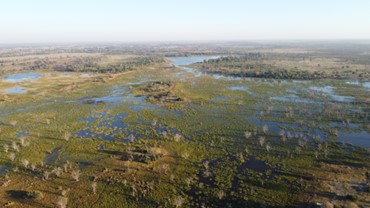
Chales Mpofu of the Wild Bird Trust Okavango Wilderness Project using a drone to survey the vast area of the Delta.

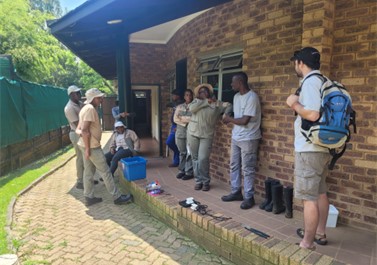
Johannesburg City Park and Zoo team with Charles Mpofu of the Botswana Wild Bird Trust and Matt Pretorious EWT who assisted with training on applying a harness.

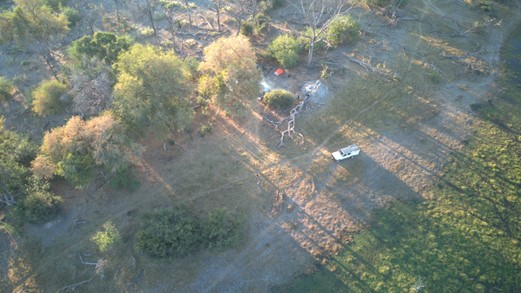
The remote campsite adjacent to the capture site.

Capture site where 10 Wattled Cranes were inhabiting

African Conservation Forum emerges with united voice on conservation and biodiversity

African Conservation Forum emerges with united voice on conservation and biodiversity


African Conservation Forum emerges with united voice on conservation and biodiversity

By Eleanor Momberg


The African Conservation Forum (ACF), hosted by Kenya in June this year, was an important opportunity for the continent to develop a unified and collaborative position related to its conservation requirements ahead of the 2025 IUCN World Conservation Congress.

Endangered Wildlife Trust CEO Yolan Friedmann, Head of Conservation Ian Little, Head of the African Crane Conservation Programme Kerryn Morrison and the ICF/EWT Partnership’s East African Regional Manager Adalbert Aineo-mucunguzi were among the NGO’s representative at the International Union for Conservation of Nature (IUCN) Africa Conservation Forum.

Held in Nairobi, Kenya, under the theme “African Solutions for Nature and People: Creating transformative responses to the biodiversity and climate crisis in Africa,” the three-day forum was attended by governments, IUCN members, international and African NGO’s, business representatives, Indigenous Peoples and scientific experts gather to discuss biodiversity, conservation and the sustainable development challenges faced by the continent.

This was the first time that the three IUCN sub-regions in Africa, had gathered under one roof to discuss the significant challenges facing the continent as a result of biodiversity loss and climate change.

Speaking after the Forum, the EWT’s Dr Ian Little said within the ACF the role of governments and NGO’s are equally important. Unlike some other international conventions and forums, the NGO sector is welcomed in ACF high-level forums and are able to make a constructive contribution.

Within Africa, he said, governments play a huge role in setting policies and laws, but it is often the NGO sector that implement the work on the ground. This is largely due to a shortage of dedicated conservation funding and capacity on a continent that is faced with numerous other social challenges.

The ACF’s role in setting the global agenda for conservation has been elevated through the hosting of a united meeting for the African sub-regions. All countries that attended are members of the global IUCN, but, because Africa is usually poorly represented at many global meetings, the 2024 ACF had allowed Africa, as a continent, to consolidate its thinking and expectations ahead of such meetings.

Kerryn Morrison, who is also the International Crane Foundation’s (ICF) Africa director, agreed, saying Africa emerged from the ACF with a coordinated voice.

“In so many global organisations the African voice is lost and we often only hear the North American and European voice. Having a stronger voice that represents Africa means that the continent will play a more solid role at the table,” she said. “This Forum provided a platform for Africa to come together, talk about issues and show more cohesiveness. This could assist the continent in accessing financing and the capacity needed for conservation.”


The sub-regions did, however, hold separate meetings during the ACF in order to compare regionally relevant notes and then produce a clear position of what the continent requires to achieve the goals of the Global Biodiversity Framework, especially Target 3, which requires the conservation of at least 30 percent of terrestrial, inland water and coastal marine areas by 2030.

“We were able, as a continent to determine how one should approach trying to achieve this ambitious goal, which has strategic thinking, funding and capacity requirements. It was about formulating positions and identifying synergy and resultant partnership opportunities,” said Little.

“With regard to greater collaboration to reach our conservation goals, Africa is in a position where a significant amount of the driving force in conservation is in the NGOs, whether national or international, so it is important to pull them together, with government support, to achieve what needs to be done,” he said.

In a post forum statement, the IUCN said the ACF had concluded with a call for inclusive, cross-sector action to preserve nature and biodiversity.

Delegates had agreed that cooperation across countries, governments, communities and sectors was vital to effectively address the significant challenges facing the continent due to the dual crisis of climate change and biodiversity loss.
Among the key outcomes was a new call for action in preparation for the next IUCN World Conservation Congress to be held in the United Arab Emirates in 2025. The IUCN Congress in turn sets the global conservation agenda for the years ahead.

IUCN Vice President and Regional Councillor Imèn Meliane said: “We’ve run out of time: existing actions are inadequate and true transformation means moving from transformation rhetoric to integrated actions in the biodiversity-climate-energy nexus now.”

Dr Alfred Mutua, Kenya’s Cabinet Secretary for Tourism and Wildlife committed to the hosting of all future African Conservation Forums in Kenya.

Going, going… Gone…  EWT working to reverse habitat loss in South Africa’s drylands

Going, going… Gone… EWT working to reverse habitat loss in South Africa’s drylands

Going, going… Gone… EWT working to reverse habitat loss in South Africa’s drylands

By Zanne Brink, Drylands Conservation Programme Manager


“The eye of the beholder” has always been an interesting emotional sense that has dictated a person’s view or outlook on the Dry Lands of South Africa, and further afield.  Those individuals drawn to vast open spaces with its unique endemic biodiversity and specialist species, versus those individuals who dread the “nothingness”.

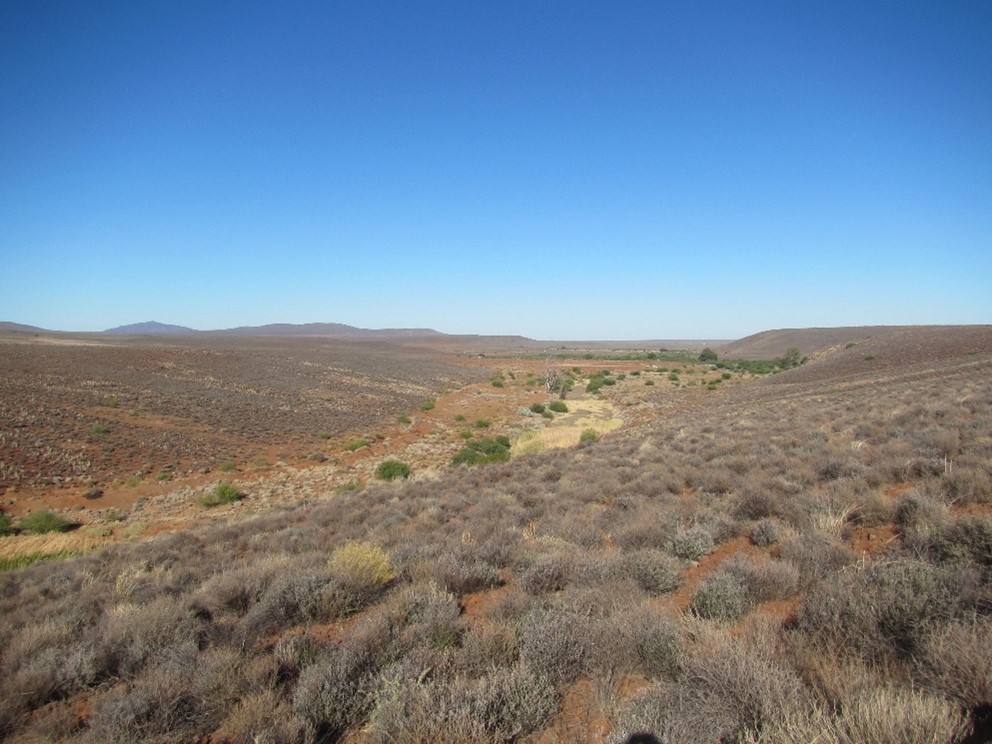
For the most part, “arid”, or “dry” areas are characterised by limited natural water resources and, to the layman, large open areas with plants growing relatively low to the ground, and very little cellphone reception. These arid areas receive on average between 50 to 300 mm of rain per annum, making the arid regions very sensitive to climate variability with big impacts on endemic plants and animals adapted to this environment. Survival is dependant on evading drought or harsh periods through migration or endurance in the form of soil, water and vegetation management.  No matter how you look at it, the arid areas are exposed to extreme weather and climatic occurrences, such as droughts and heatwaves. This results in these landscapes being vulnerable to rapid and devastating environmental change and land degradation.

The vast open landscapes of southern Namibia, the Western and the Northern Cape Provinces of South Africa are home to three significant arid biomes: the Namib Desert, Nama Karoo, and the Succulent Karoo. Despite the harsh conditions experienced in these biomes, it is a fact that not only species, but biodiversity, and dare I say communities living in these biomes, are highly adapted and diverse.

In arid environments, mobility is the most important adaptation to extreme conditions. Animals and people can move from one area to another when plants do not spread fast enough. Increasing temperatures, shifting rainfall patterns, and more frequent extreme weather events are altering ecosystems and placing additional stress on already vulnerable ecosystems and communities. Temperatures in southern Africa are expected to rise at a rate 1.5 to 2 times that of the rest of the world, exacerbating the possibility of biodiversity loss and climate change challenges for communities.  Arid areas are also known as the most sparsely populated areas of South Africa, and in recent years these communities have been shrinking due to socio-economic drivers.

Ongoing research allows us to understand these changes brought on by both short-term droughts and climate-induced shifts. This is very important, as natural and social responses to an ever-increasing changing environment due to increased frequencies in drought occurrences is vital.  South Africa’s meat and wool ‘breadbasket’ depends on changes implemented at a farm level and through legislation, to include a different style of farming to adapt to less water and increased temperatures over extended periods.

But, it must also be understood that arid regions have a slow response rate, with long-term monitoring over several years needed to understand impacts on fauna, flora, avians and invertebrates.  Even with stringent monitoring, it does not provide answers to feed into the need for livelihood protection for communities and biodiversity.  With growing economic needs, the search for renewable energies have started focussing on areas seen as low productivity areas, and slowly started desertification through development-related damage in a sensitive landscape.


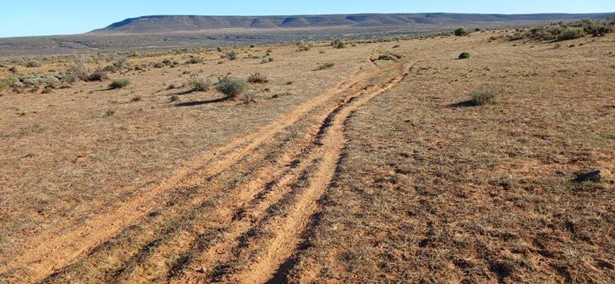
Traditionally, small livestock farming was the most widespread economic opportunity in the arid areas. However, rampant overgrazing in some areas has caused severe land degradation, leading to a compromise in the ecological resilience of the areas. Poor rural communities in these areas have a particularly high dependency on well-functioning ecosystems, and currently, their resilience to climate change impacts is very low. A recent surge in renewable energy production has fuelled development across much of the landscape, which, in most cases, has left a shameful legacy of environmental degradation in the form of vegetation clearing, water abstraction and pollution, soil compaction and road development, all in the name of growth.

There is an urgent need to manage the arid regions of South Africa more effectively, to benefit both the landscape and people living off it. This includes injecting much-needed support for ecologically based adaptation (EbA), sustainable land management (SLM) and climate-smart agricultural practices, while tackling the negative impacts of land degradation.

The EWT Drylands Conservation Programme is working with landowners to champion the conservation of this spectacular landscape. We collaborate with all stakeholders to promote alternative economies and sustainable agriculture over unsustainable developments, such as hydraulic fracturing and uranium mining.  We focus on enhancing habitat protection and improvement, and driving innovative research, to better understand the unique species in the Karoo. This has allowed us to “rediscover” lost species such as De Winton’s Golden Mole (Cryptochloris wintoni).

Through our work, it allows us to collaborate with the communities within the landscape and to undertake activities that achieve specific conservation goals in each of these. By providing guidance in Sustainable Land Management (SLM), the EWT ensures that communities in landscapes benefit along with the ecosystems and wildlife that share these spaces through the responsible use of the available natural resources.  The Karoo Forever website was developed for the Drylands of South Africa to provide a knowledge-sharing platform with downloadable resources focused on sustainable land management (Welcome to Karoo Forever).

It is not all doom and gloom, but a realistic look at our beloved fragile arid environments is crucial to allow for a united focus on how to balance nature and development.  As financial constraints impede the application and implementation of ecological practices across this arid landscape, industry and conservation along with all communities and stakeholders need to find common ground to benefit man and environment.

The need, and the potential to do things better, must be emphasised.  This can only be done through our own actions and allowing locally led research to show the way to sustainability, allowing nature to benefit, and does not limit people’s wellbeing.  We, as a community, must make climate change and associated concerns a part of our day to day thinking and planning to build resilience in livelihoods and economies, to reduce our vulnerabilities, and the associated conflict.

Give our arid regions a chance and break the cycle of nature loss. We do have huge potential to enable nature and people to thrive together in a changing climate.


Financial Support and Collaboration Key to Saving Species from Extinction

Financial Support and Collaboration Key to Saving Species from Extinction

Financial Support and Collaboration Key to Saving Species from Extinction

By Eleanor Momberg

Greater financial support and collaboration between all stakeholders is needed to save the world’s endangered species from extinction.

That was the message from participants in the first World Species Congress Satellite Event on 14 May 2024 co-hosted by the Endangered Wildlife Trust (EWT), South African National Biodiversity Institute (SANBI), Department of Forestry, Fisheries and the Environment (DFFE), the Botanical Society of South Africa (BotSoc), BirdLife SA and the Two Oceans Aquarium Foundation.

The World Species Congress is a virtual 24-hour congress hosted by Reverse the Red. It offers a forum for collaboration and the chance to develop a roadmap for success for anyone striving to create a healthier planet.

The South African event held ahead of the 24-hour World Species Congress on 15 May 2024 showcased a number of examples of species recovery. Participants in the virtual event also discussed the country’s global commitments towards species recovery, including the Kunming-Montreal Global Biodiversity Framework. For South Africa, the inputs received are an important contributor to the national targets to be set in the National Biodiversity Strategy and Action Plan.

Mukondi Matshusa of the DFFE said the South African event provided the government with an opportunity to shape and quantify its collective conservation efforts through collaboration, inclusiveness and partnership.

Collaboration between government, NGOs and communities as the people who live with the species is what was needed for conservation and recovery to make implementation of the White Paper, and the development of the GBF, workable, she said.

Target 4 of the GBF aims to Halt Species Extinction, Protect Genetic Diversity, and Manage Human-Wildlife Conflicts. This means ensuring urgent management actions to halt human induced extinction of known threatened species and for the recovery and conservation of species, in particular threatened species. The aim is to significantly reduce extinction risk, as well as to maintain and restore the genetic diversity within and between populations of native, wild and domesticated species to maintain their adaptive potential. This can be done through in situ and ex situ conservation and sustainable management practices, and effectively manage human-wildlife interactions to minimise human-wildlife conflict for coexistence.

Domitilla Raimondo, SANBI’s Programme Manager of the Threatened Species Unit, pointed out the conservation in South Africa is a whole of society approach. South Africa is unique in the number of citizens, including community members and traditional healers, that help to monitor species, assisting scientists with data on the health of species.

“We do things together and will continue to do things like that,” she said.

Raimondo stated that in South Africa a landscape approach is used to conserve species. The country has intricate spatial biodiversity planning and in that targets are set for every type of ecosystem which allows for the conservation of common and threatened species. By doing this, unchecked development can be halted to protect vulnerable and threatened species.

The Red List assessments done for 12 taxonomic groups in SA indicate that 25 species are faced with extinction. The highest level of threat is to 30% of freshwater fish for which a huge increase in funding is required to intervene in their conservation and management. Eleven amphibian species, including the Desert Rain Frog which is facing collapse because of climate change and mining, 14 mammal species of which 50% are small mammals, 16 bird species including the Botha’s Lark, Blue Swallows and Vultures, as well as numerous marine species and 109 plant species, are in need of urgent recovery.

“We will require significant upscaling of investment to reach Target 4. We have the know-how, we have the people, we just need the financing, said Raimondo.

The EWT’s Senior Manager Sustainable Financing and Business Partnerships Kishaylin Chetty said although the landscape approach is central to species conservation, and there is a focus on stewardship and large intact areas, the EWT remains a species-focused conservation NGO.

“We understand that funding is absolutely critical for us to take our work forward, and that collaboration is key. For us to achieve conservation impact at a national and international scale we need to collaborate with the right types of partners to make sure that we have action on the ground,” he said.

The EWT has a vision in terms of a healthy planet, and an equitable world that values and sustains the diversity of all life. It is mainly dedicated to conserving threatened species in southern and East Africa to the benefit of all. With 12 programmes and over 110 employees the EWT’s paw print has touched 21 countries within the African continent. Although species-led, the EWT equally recognises the value of conserving habitats and benefiting people.

Reaching the Global Biodiversity Framework targets of conserving 30 percent and land and water by 2030 and 50% by 2050 is still within reach. While parts of the world, the African continent and parts of South Africa have been highly impacted by environmental destruction, there are also parts that are still largely intact.


But, to achieve these goals, would require reversing species decline by determining which opportunities exist to restore what has been lost, and to focus on conserving what we have, and more specifically reversing declines. To address this, the EWT has a multitude of programmes directed at reducing habitat loss, engaging in regards to poaching, trying to adequately address the issues and concerns around disease and poison, particularly around impacts to vultures, the intersection between human-wildlife conflict and how we can actively and positively work with communities. Also being addressed pro-actively and reactively is the illegal wildlife trade.

Chetty said because developing infrastructure is a key to the development of the South African economy, the EWT works to ensure this is done responsibly through support to entities within this space.

Proactively, the EWTs Conservation and Science Planning Unit contributes towards helping and guiding South Africa minimise or mitigate the impact of development on species. This is done through the National Environmental Screening Tool which the EWT provides with information about species. This has included the development of a threatened species node mapping tool, and Red List work related to mammals. In progress is the development of a tool for the renewable energy sector linked to support for the just transition and the approach towards mitigation against climate change. By utilising a tool that looks at landscape planning and the intersection between conservation, agriculture and renewable energy will actively support renewable energy development across the country.

One of the other tools that is critical is protected area expansion. The EWT is working across the country looking at the intersection between the National Environmental Management Protected Areas Act and the opportunities that exist in terms of conservation stewardship or conservation servitudes and Other Effective Conservation Measures (OECMs). The EWT has secured large portions of protected areas and are in the process of trying to secure more land to protect species.

“A lot of our focus of late has been around buffer areas and trying to work with entities like SANParks to better help them to create those buffer areas around the national parks,” he said.

Chetty said the EWT’s selection of species for conservation and research was based on science. Besides looking at the global threat to a species, whether it is locally threatened, endemic and whether another organisation is already addressing concerns around a species, a decision to work to conserve a species also takes into account what the conservation impact for the species would be.

Collaboration, said Chetty, is “absolutely key” when it comes to species conservation.

The EWT works very closely with DFFE, the provinces, a lot of conservation agencies and a number of NGOs to ensure that it can actively contribute toward species conservation in southern Africa.

One of the greatest challenges faced by the NGO is unlocking new funding for conservation. The GBF highlighted that there is a biodiversity financing gap of close to $711 billion. The EWT supports the country’s biodiversity agenda and has been trying to contribute towards enabling the country to become a nexus between socio-economic development and conservation so that. The organisation has thus had to brush up on the green economy, the wildlife economy, sustainable use, the circular economy and the just transition to ensure that it has a good take of how these areas can be utilised to drive species conservation.

“We have also looked at conservation market-based instruments … quantity based and market friction instruments to ensure that we can be innovative in this space and really try to bring in different types of funding to stimulate the growth of our species conservation work in South Africa and throughout Africa,” he said.

In order to drive conservation around particularly Wild Dogs and Lions, the EWT is working with Rand Merchant Bank to develop Wildlife Bonds for both species with the aim of bringing in between R100 million to R150 million in funding for the conservation of Wild Dogs and Lions, including the collaborative work on Lion being done with the Peace Parks Foundation.

A Wildlife Bond is a sustainable finance instrument that enables large funding to come from asset management investment to drive outcomes-based conservation that speaks to species-related work.

“Hopefully this can be the catalyst for further Wildlife Bonds in South Africa.”

EWT leads in vulture conservation at 14th COP to the Convention on the Conservation of Migratory Species of Wild Animals

EWT leads in vulture conservation at 14th COP to the Convention on the Conservation of Migratory Species of Wild Animals

EWT leads in vulture conservation at 14th COP to the Convention on the Conservation of Migratory Species of Wild Animals

By Johan Botha and Eleanor Momberg

The 14th Conference of the Parties to the Convention on the Conservation of Migratory Species of Wild Animals (CMS), recently held in Uzbekistan, saw the launch of a number of reports, most notably the first analysis on the Status of the World’s Migratory Species and the review of the Mid-Term Implementation Action Plan to Conserve African-Eurasian Vultures (Vulture MsAP).


The landmark UN report on the World’s Migratory Species showed that animals are on the decline increasing the global extinction risk. The report provides a global overview of the conservation status and population trends of migratory animals, combined with the latest information on their main threats and successful actions to save them.


It reveals that while some of the 1,189 migratory species listed under CMS are improving, nearly half (44 per cent) are showing population declines, and that more than one-in-five (22 per cent) of CMS-listed species are threatened with extinction. Globally, 399 migratory species that are threatened or near threatened with extinction are not listed under CMS.

Over the past 30 years, 70 CMS-listed migratory species – including the steppe eagle, Egyptian vulture and the wild camel – have become more endangered. This contrasts with just 14 listed species that now have an improved conservation status – these include blue and humpback whales, the white-tailed sea eagle and the black-faced spoonbill.


“The extinction risk is growing for migratory species globally, including those not listed under CMS. Fifty-one percent of Key Biodiversity Areas identified as important for CMS-listed migratory animals do not have protected status, and 58 per cent of the monitored sites recognized as being important for CMS-listed species are experiencing unsustainable levels of human-caused pressure,” the report states.

It adds that the two greatest threats to both CMS-listed and all migratory species are overexploitation and habitat loss due to human activity. Three out of four CMS-listed species are impacted by habitat loss, degradation and fragmentation, and seven out of ten CMS-listed species are impacted by overexploitation (including intentional taking as well as incidental capture). Climate change, pollution and invasive species are also having profound impacts on migratory species.

Until now, no such comprehensive assessment on migratory species has been carried out. The report provides a global overview of the conservation status and population trends of migratory animals, combined with the latest information on their main threats and successful actions to save them.

The report’s findings underline the need for greater action, for all migratory species. Among the recommendations are the strengthening and expansion of efforts to tackle illegal and unsustainable taking of migratory species, as well as incidental capture of non-target species; increased actions to identify, protect, connect and effectively manage important sites for migratory species; and the need to not only urgently address those species most in danger of extinction, but also scaling up efforts to tackle climate change, as well as light, noise, chemical and plastic pollution.


It was in the compilation of the review of the Mid-Term Implementation Action Plan to Conserve African-Eurasian Vultures (Vulture MsAP) that the Endangered Wildlife Trust (EWT) played a significant role after the organisation was contracted through a CMS Raptors Memorandum of Understanding in April 2023 to lead the process. The EWT’s Vultures for Africa Program Manager, Andre Botha being appointed as project leader. He was joined by the EWT’s Jane Doherty, representatives from BirdLife International, the Royal Society for the Protection of Birds and the Vulture Conservation Foundation, supported by the Coordinating Unit of the CMS Raptors MoU. Jane Doherty was appointed as project intern in the employ of the EWT and was invaluable during the engagement with focal points, analysis of data and drafting of the report.


The Vulture MsAP was tabled by Andre Botha at a side-event attended by about 60 delegates from Range States, Observer Groups as well as 6 members of the drafting team on 14 February 2024.

Among its key findings are that although the threats affecting vultures have not changed in recent years problems related to intentional poisoning for belief-based use, bushmeat and trade is a more severe problem than appreciated in the past, especially in West Africa. It also found that collision risk for vultures will increase as the global shift to renewable energy increases and that mortalities from electrocution partly associated the switch to green energy is also on the rise.

Among the new threats identified are climate change, Highly Pathogenic Avian Influenza which can seriously impact critically endangered and endangered species already under pressure from other known threats.

Although some vulture populations are increasing in Europe, many are declining at a precipitous rate in Africa where data remains scant.

The report states that the amount of work done towards achieving the Results envisaged by the Vulture MsAP is testament to the efforts of many stakeholders, including the many NGOs working in the field.

The main recommendations emerging for Range States, donors and other stakeholders from this report are:

  1. Strengthen political engagement and financial support
  2. Build capacity to implement conservation actions
  3. Focus on the implementation of Essential Actions
  4. Enable the establishment of the Implementation Framework proposed by the Vulture MsAP
  5. Continue facilitating the Vulture Working Group and monitoring the Vulture MsAP
  6. Commence the review and update of the CMS Vulture MsAP – 2028/2029

The MsAP was adopted at the CMS CoP12 and is now halfway through its 12-year implementation timeframe. It is set to conclude in 2029.

The side-event was also used to announce the West African Vulture Conservation Action Plan that specifically focuses on reducing the impact of the threat of belief-based use poisoning of vultures in 15 countries in West Africa where this is the most important driver of vulture declines. The plan follows a process of engagement subsequent to the mass-poisoning of more than 2,000 vultures in Guinea-Bissau in March 2020 and a regional workshop that was held in Nigeria in 2022.

There were also a number of vulture-focused resolutions tabled for consideration, discussion and adoption by the plenary of COP14 and all of these resolutions were adopted after deliberation in the Avian Working Group of CMS.

Additionally, Botha represented the EWT at two side-events focused on mobilising conservation resources and sustained funding where he delivered presentations on achieving financial viability over time from a range of donors and other funding institutions and also reflected on the benefits, challenges and lessons learnt from four EWT projects that benefitted from funding granted by the SOS Fund.

“The COP also afforded an opportunity to meet formally and informally with a range of stakeholders from Range States, NGO’s and other institutions and also afforded the MsAP-team to discuss future plans such as the review and update of the CMS Vulture MsAP for another 12-year timeframe from 2029. These discussions often lead to opportunities for future projects and other engagements,” said Botha at the conclusion of the CoP.

Future work is mostly focused on supporting and promoting the action of the CMS Vulture MsAP in Africa and beyond with fieldwork and training that will be conducted in Chad, Malawi, Namibia, Zimbabwe, Zambia, Mozambique and Ethiopia in the coming months. The next wider international engagement will be the attendance of a workshop focused on the establishment of a population of critically endangered Rüppell’s Vultures in southern Europe which will be held in Málaga, Spain in mid-May 2024.

Botha said after the CMS CoP that about 20 delegates arranged their own field trip which saw them travel into the mountains to the south of Samarkand “where we enjoyed a number of views of Bearded Vultures and also saw Eurasian- and Himalayan Griffon, as well as Cinerous Vulture and Golden Eagle among an array of birds”.

A couple of shots of one of the Bearded Vultures we found on the field-trip yesterday. This bird was circling over the town of Kitob and obligingly approached us to circle above us after gliding by a distant cliff-face with the Uzbekistan flag planted on top. It was amazing to see these birds seemingly successfully living and breeding in close proximity to human settlements. Still can’t help but liken the effortless flight of these large birds to that of albatrosses over the ocean.

First Cheetah swop in the EWT-led Cheetah Range Expansion Project

First Cheetah swop in the EWT-led Cheetah Range Expansion Project

First Cheetah swop in the EWT-led Cheetah Range Expansion Project


 The Cheetah Range Expansion Project has recorded a major success with the relocation of three male Cheetah from Malawi to South Africa.

The success has also included the introduction of two female Cheetah to Malawi. These translocations are part of a project to ensure the genetic diversity of a species that is listed on Appendix I of the Convention on the International Trade in Endangered Species of Wild Fauna and Flora (CITES).

This is the first time since the start of the project to reintroduce Cheetah populations to neighbouring range states that one of these protected areas has been able to contribute back to the source population in South Africa.

The Cheetah Range Expansion Project (formally the Cheetah Metapopulation Project), launched by the Endangered Wildlife Trust in 2011, aims to increase Cheetah numbers, reduce Cheetah-human conflict and create genetically diverse Cheetah populations while protecting the demographic integrity of these populations.  The project’s focus was expanded in 2017 to include other southern African countries and, by working with African Parks to return Cheetah to Liwonde National Park in Malawi. Since then, the Cheetah metapopulation in southern Africa has recovered from only 274 cats in December 2012 to over 400 individuals in 2023.

The introduction of Cheetah to Liwonde National Park marked a return of these special cats to Malawi following their local extinction 20 years before.   Since reintroduction, the population has flourished and now sits at 21 individuals. This makes it one of the largest Cheetah populations within the Cheetah metapopulation.

In fact, Liwonde’s population has done so well that they’ve been able to send Cheetah to help build additional populations in Malawi and Mozambique.
However, managing the demographics and genetics is an ongoing job. That is why in December the EWT brought two new females from South Africa to Liwonde National Park and removed a group of 3 brothers who were at high risk of inbreeding, bringing them back to South Africa.

The two female Cheetah were donated by the Manyoni Game Reserve and the Tswalu Kalahari Reserve through the EWT’s Cheetah Range Expansion Project. The three male Cheetah were born in Liwonde National Park and were donated to the Greater Makalali Nature Reserve.

During the relocations in December 2023, the Cheetah were flown to and from Malawi by The Bataleurs. On this occasion, the plane was piloted by Mercy Air’s David Schumacher.

This first continues to be a proud moment for the EWT team, given that this successful introduction and relocation of these Cheetah has set a precedent for the future of the Cheetah metapopulation. It is a testament to the success of our reintroduction efforts as well as, the ongoing management and protection of this population.

We are happy to report that the females were released on 30 December 2023 into Liwonde National Park and have settled in well. The males are soon to be released into the Greater Makalali Nature Reserve and are part of a larger Cheetah restoration effort for the reserve which hasn’t seen population growth or breeding in many years. This larger restoration project is being conducted in partnership with Ashia Cheetah Conservation and together a total of eight Cheetah will be introduced into Makalali in the next few months.
The EWT would like to thank Paul King, the Ford Wildlife Foundation, the Tandy Foundation and MetroFibre for your support of this momentous translocation.