Turning around the threat of extinction, one species at a time

Turning around the threat of extinction, one species at a time

Turning around the threat of extinction, one species at a time

By Yolan Friedmann – CEO, Endangered Wildlife Trust


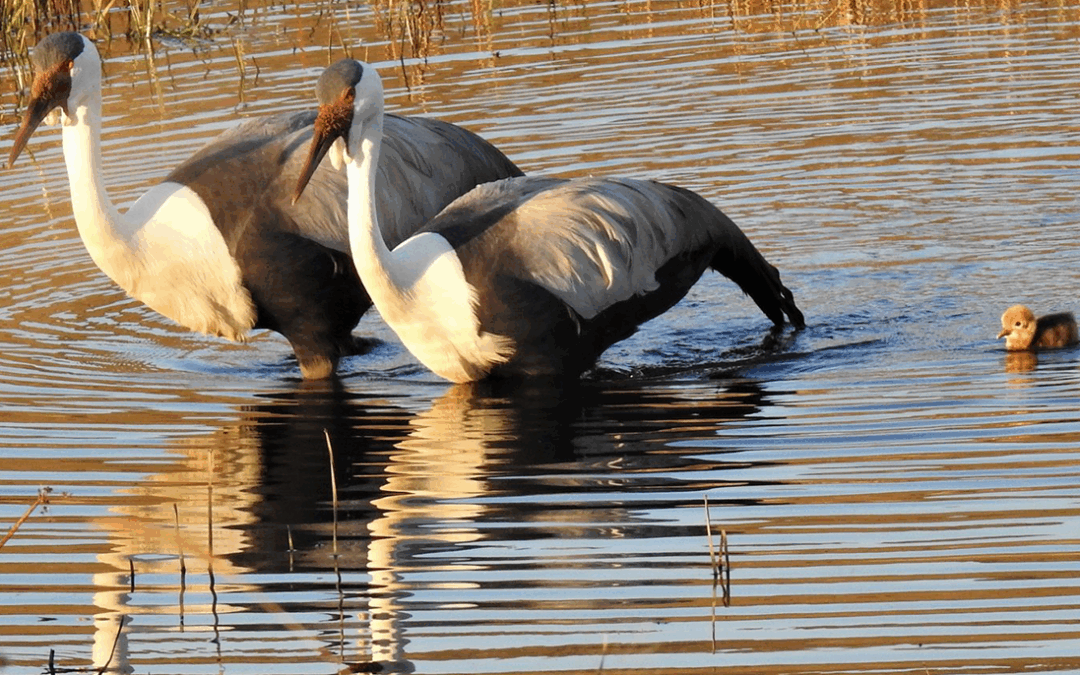
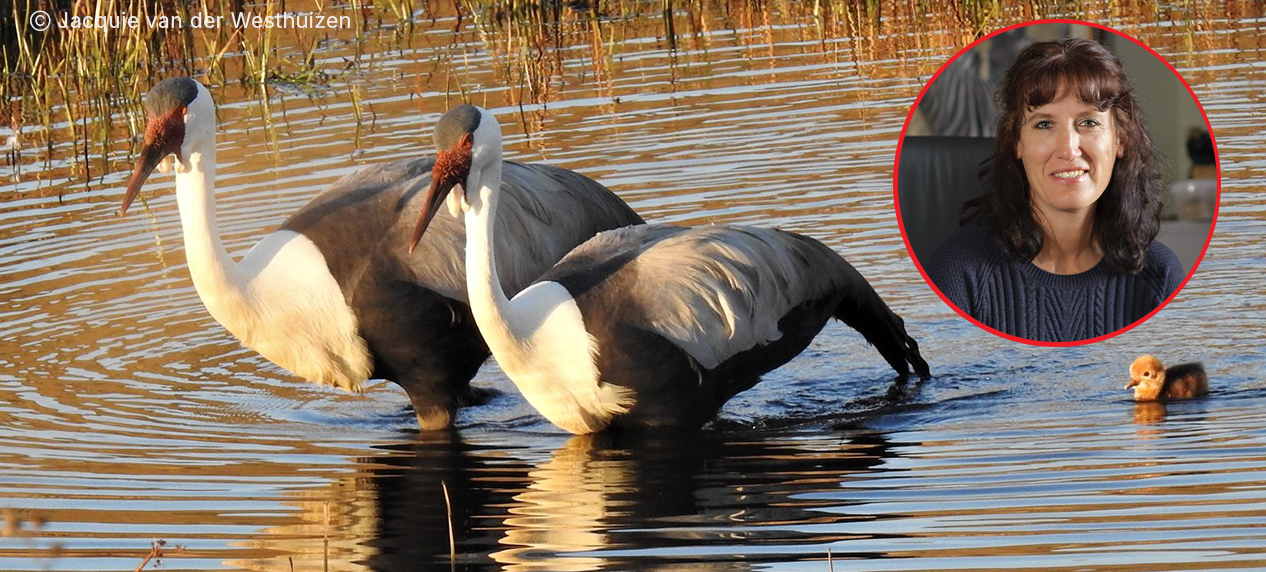
EWT field team monitoring endangered species (Wattled Cranes)  in South African wetlands

Since our founding in 1973, the Endangered Wildlife Trust (EWT) has established itself as a leader in wildlife conservation, focusing on the African species under greatest risk of extinction. Over the decades, so-called “species conservation” became frowned upon, with a view that only ecosystem and large habitat conservation is worth the funding, focus and energy. This view is not incorrect, and the EWT has spent considerable recourse successfully conserving large tracts of grasslands, mountains, wetlands, riparian systems and drylands.

The value of this work cannot be understated, as space, intact biodiversity and ecosystem function forms the basis of all life on earth. However, there is no doubt that a strong focus on saving species, with research, monitoring and specific activities focussing on the needs to individual species or their families is just as important if we are to stem the tide of extinction that threatens to overtake numerous species whose future survival requires more than just saving their habitat.

The threats facing the survival of individual species have amplified in recent years and include targeted removal from the wild for illegal trade (dead, alive or in parts), poisoning (direct or indirect), snaring, infrastructural impacts, alien invasive species, unsustainable use, and today, more than 48,600 species face the risk of extinction at varying levels. In response, the EWT has broadened our focus and our expert teams of specialists to ensure that we cover lesser-known, but equally important and often more at-risk species that include insects, reptiles, amphibians, trees and succulent plants. This makes the EWT the most diverse and extensive biodiversity conservation organisation in the region. And, if too little is known about the species in a particular area or what may be at risk, we have a specialist team that undertakes rapid biodiversity assessment, or bioblitzes, to quickly reveal the natural secrets that may be hiding in understudied areas, but may be facing a great risk of being lost to this generation or the next.

The IUCN’s Species Survival Commission issued the Abu Dhabi Declaration in 2024, emphasising the critical importance of saving species to save all life, calling on “… diverse sectors – including governments, businesses, Indigenous peoples and local communities, religious groups, and individuals – to prioritise species conservation within their actions, strategies, and giving, recognising that protecting animals, fungi, and plants is fundamental to sustaining life on earth.”

In October 2025, as nearly 10,000 members of the world’s conservation community gathered again in Abu Dhabi for the 5th IUCN World Conservation Congress, the message was clear: Save Species, Save Life. The congress featured very powerful calls for more urgent work to be done to stem the illegal wildlife trade, halt unsustainable use and prioritise funding, research and action in order to prevent mass extinction rates. Of the 148 motions that were adopted by the IUCN Members’ Assembly, a large number focussed on the need for intensified action and policy to address the issues facing species such as:

  • Holistically conserving forests, grasslands, freshwater ecosystems and coral reefs and other marine ecosystems
  • Species recovery for threatened taxa
  • Sustainable use and exploitation of wild species
  • Invasive alien species prevention
  • Combatting crimes like wildlife trafficking and illegal fisheries
  • One Health

Species can only survive and thrive within larger, functioning and healthy ecosystems, and more space is desperately needed for our ailing planet to retain its viability as a healthy host for all life. But the life that exists in micro-habitats, and those that face ongoing persecution which threatens to decimate all chances of survival, needs rapid and targeted interventions now.

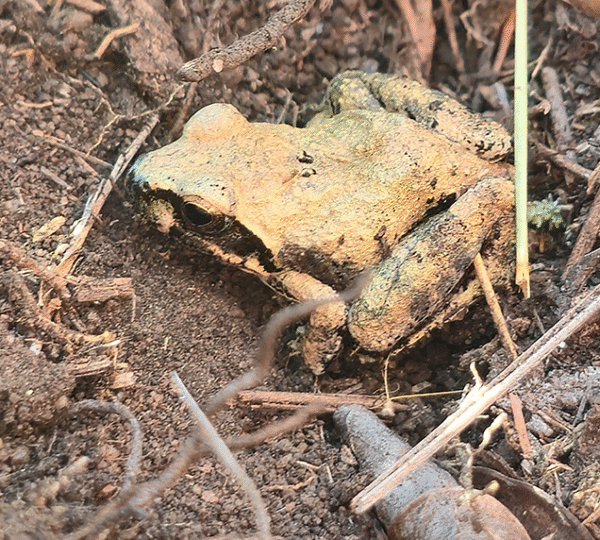
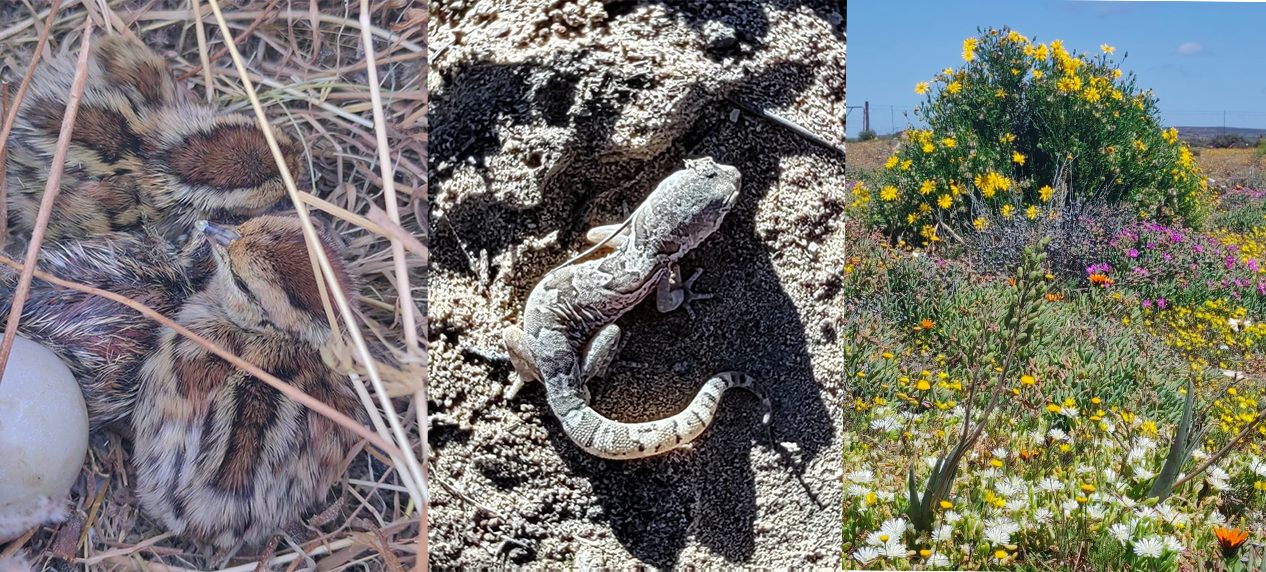
The EWT remains at the forefront of this work, having rediscovered populations of species thought to have gone extinct such as the De Winton’s Golden Mole, the Pennington’s Blue Butterfly, the Orange-tailed Sandveld Lizard, Branch’s Rain Frog and the Blyde Rondawel Flat Gecko, and effectively turning around the fate of others, such as the Cheetah, Wattled Cranes and the Pickersgill’s Reed Frog – once facing imminent risk of extinction, but now heading back to survival and expansion. Our work to discover, save, monitor and protect the most threatened, whether visible or not and whether charismatic or not, is unwavering. Together, we can turn the tide on extinction, on species at a time.

Old Salt Trail Soutpansberg: Experience Nature and Biodiversity

Old Salt Trail Soutpansberg: Experience Nature and Biodiversity

Old Salt Trail Soutpansberg: Experience Nature and Biodiversity

By Eleanor Momberg


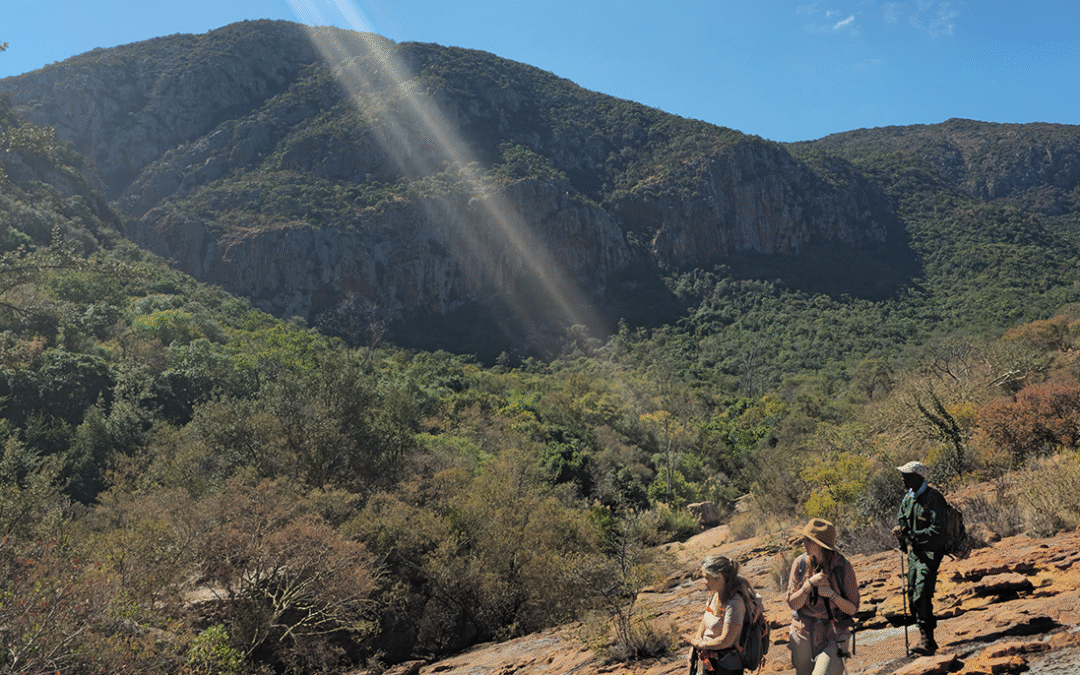
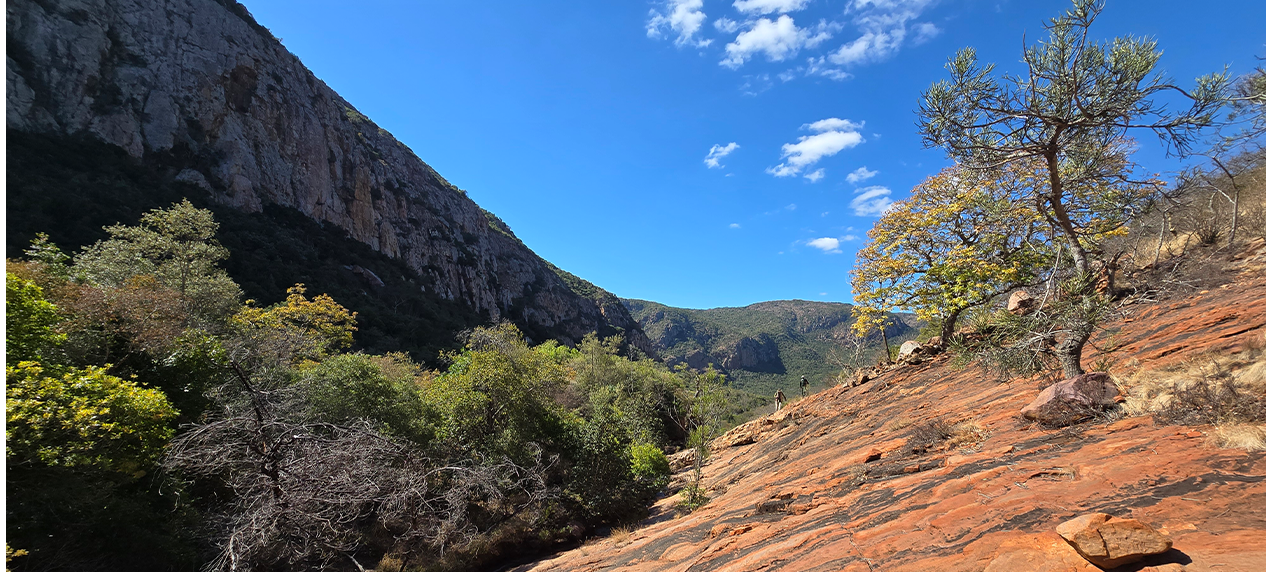
Diverse ecosystems encountered on the Old Salt Trail

Day 2: Hamasha Gorge

Amazing.  Mind-boggling.  Beautiful.

These are among the words used by Jo Bert, the Endangered Wildlife Trust’s Senior Graphic Designer, following their five-day hike of the Old Salt Trail in the Soutpansberg.

Jo had joined a group of hikers to experience the Trail that spans the upper reaches of the Soutpansberg Mountains in Limpopo.

“I did not have context of the trail.  I had been telling the story for months and all I had to go on was the information that had been supplied and the photos I had seen. A lot of the story so far has been conservation-focused, so going on the trail enables us to tell the story better from a marketing perspective and, through that, get more people to join,”  said Jo.

For someone who is largely deskbound at the EWTs Conservation Campus in Midrand, this was an ideal opportunity to get back to nature and to collect photos and video material needed for future projects.

“It was amazing.  I honestly love getting out away from my desk. It was so beautiful.  I think the best part is that I have looked at those photos so many times, and to actually be in that space, to stand where the photo was shot, puts the whole thing into a different perspective,”  they say.

The intrepid team of four hikers were led by the EWT Medike Reserve Rangers Tharollo Mthisi and Khathutshelo Mukhumeni.  The Old Salt Trail is a 73km, five-day, four-night slackpacking adventure traversing numerous private properties in an area that now largely comprises the Western Soutpansberg Nature Reserve.

The hike starts at the Medike nature reserve, which is owned and managed by the EWT.   On Day One, you climb 11.5km to Leshiba Luvhondo Camp.  On the second day, the hikers embark on a 15.5km hike to Sigurwana Lodge, followed on the third day with a trek of about 15km to Lajuma Wilderness Camp.  On the fourth day, the hike takes about 19km you back to Leshiba Venda Village Lodge from where you return via an 11km route to Medike on Day Five where the adventure ends.

Before the hikers set off from the bottom of the Sand River Gorge, Tharollo and Khathutshelo give a safety briefing and all luggage is loaded into a vehicle to be taken to the overnight accommodation at Leshiba.  All hikers carry with them are a day pack.

“You carry a day pack with you with your lunch in, maybe a spare jersey and your water,”  said Jo. “The first day I packed way too much, because I didn’t realise that we had so much food given to us, so I brought a whole bunch of snacks with me, and a whole lot of clothes because I didn’t know how wet we were going to get or if it was going to be super hot. I also had a bird book, but then realised that Therollo and Khathu have all the apps on their phones so we just identified with that. So every single night I was taking things out of my bag and by the last day I only had my lunch and my water and a very light jersey”.

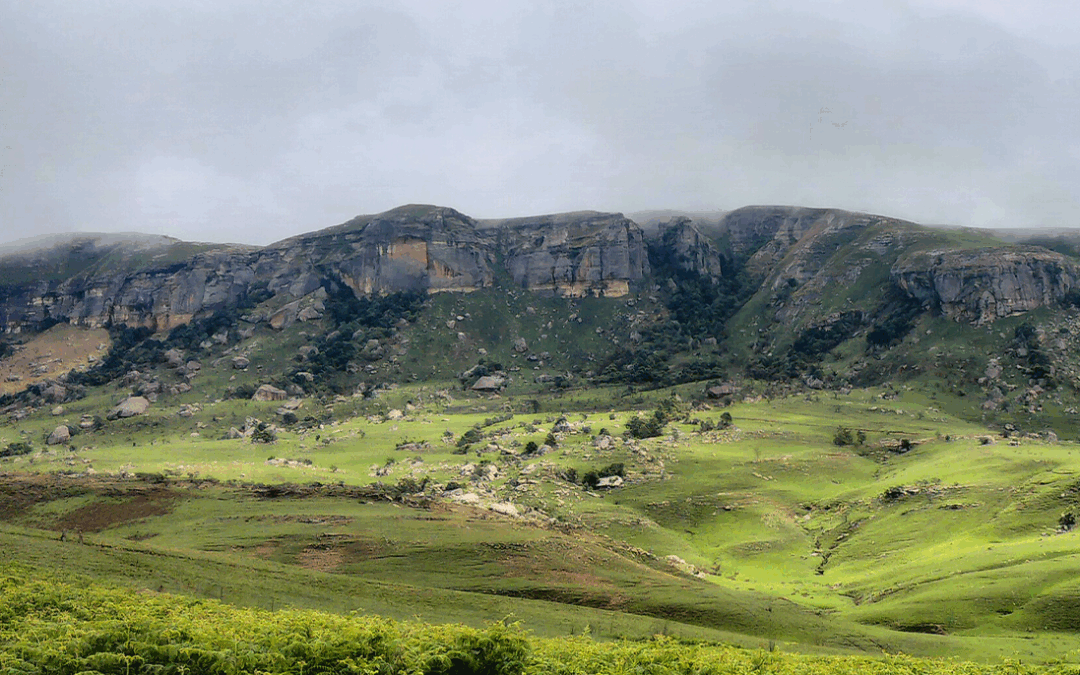
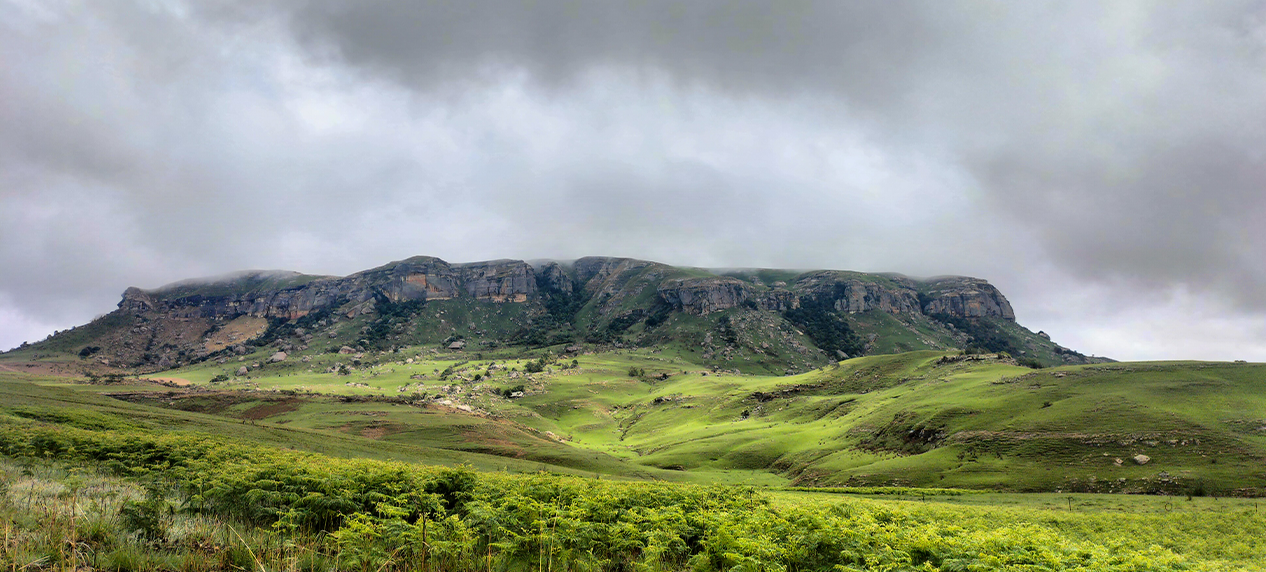
On the first two days of the Old Salt Trail hikers not only have to tend with steep and rocky slopes, but also cross bushveld, forests, grassland and savannah beside enjoying a variety of San and Khoekhoe rock art and ancient artefacts.

“The cultural heritage in that area is so amazing.  And there are so many spots where you are in the ruins of an old village where there are bits of clay or you can see the foundations of a house. And the places with the rock paintings are fascinating,” Jo explained.

For paintings that have been damaged by years of weathering, a phone APP was used to highlight the original paintings.  “A lot of people thought that the paintings were about daily activities, but they are about special occurrences and a lot of the paintings in that area are about spirits, ancestors and trances; a lot of really spiritual stuff and not just day to day things.  And there’s a lot of giants in there that you can’t really see with the naked eye, but when put through the APP you can see them and it is amazing,”  said Jo.

On Day Three hikers head straight towards a rocky cliff and a waterfall into a Fever Tree forest before climbing to the top of Mt Lajuma, the highest point of the Soutpansberg at more than 1,727m above sea level.

“It is crazy. When I got to the top of the mountain, I looked around to see everything below and realised I had forgotten that I was actually on top of the Soutpansberg. I actually only remembered we were up on the mountain when I looked out from on top of Mt Lajuma and I saw how far down everything else was,”  said Jo.

For this adventure, hikers need to be reasonably fit.

“On Day Four there is a section where you have to climb up The Chimney as they call it. I do rock climbing and I am ashamed to admit that I needed a hand in some places.  It’s not the most insane climbing, but it is fairly technical,”  said Jo.  “I think you have to be fairly fit, but I still managed even though I was a bit ill, so it’s not an impossible thing.

Hikers have to be prepared to walk long distances.  Although there is a break for lunch and several short stops in between, it is an all-day walk across sometimes flat areas, traversing unsteady and rocky terrain, rivers and other obstacles, and scrambling up some challenging cliffs.

“You do have to be fairly confident in your ability.  If you are reasonably fit, you can do it,” they said.

The main calling card for the Soutpansberg and the Old Salt Trail is the variety of ecosystems.  Jo points out that the terrain constantly changes.

“You start on Medike where it is fairly dry … and by the time you get to Leshiba it is marshy on the side of the mountain, and on the fourth day you’re in a Yellowwood forest.  Even on the first day you start to get up into the mist belt and by Day Two you’re seeing Old Man’s Beard lichen everywhere. Some days you’re walking through grasslands or marsh and then you’re in Bracken taller than you. It changes within seconds”.

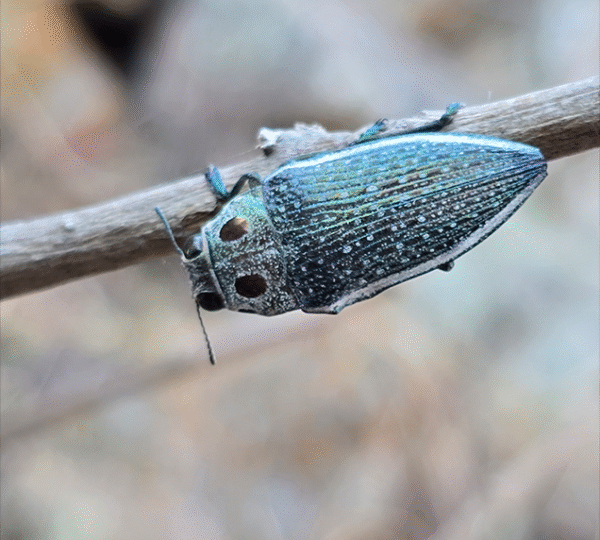
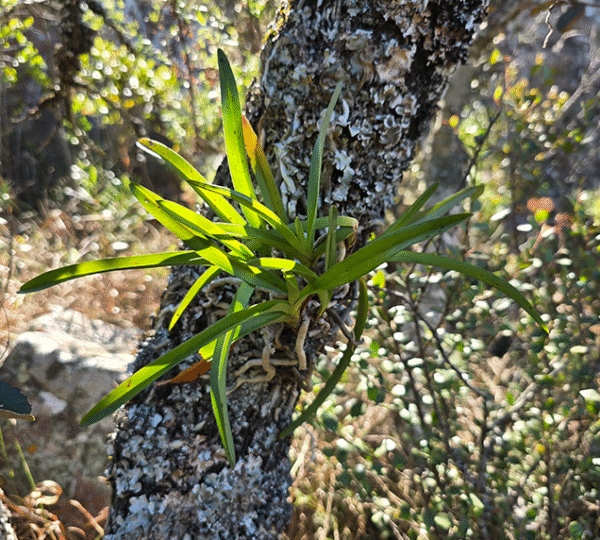
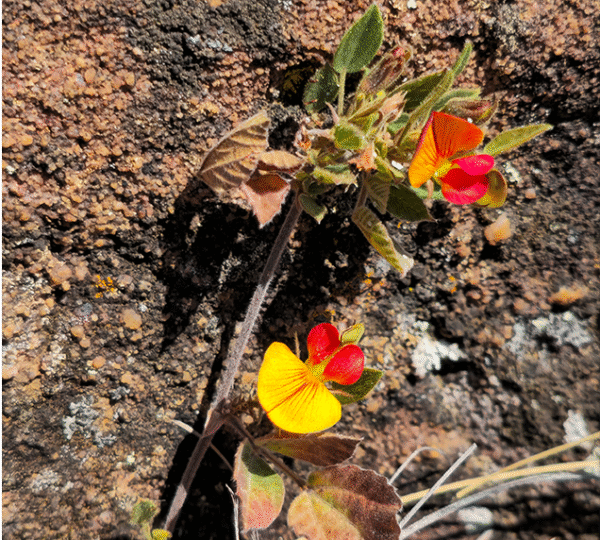
Jo added: “The amount of birds we saw was amazing.  We saw and heard birds I had never seen or heard in my life. There are so many mushrooms and there are tiny little frogs and flowers and we saw so many beautiful beetles… So many amazing things that I have never seen before, and I have seen a fair amount, but this was just blowing my mind – the amount of nature and biodiversity that I have never even seen before and it is such a small area”.

The Soutpansberg is a unique refuge.  “If you go to the Kruger National Park, you can drive for hours in the same kind of veld. Go to Soutpansberg and walk around for two hours and you have seen six different biomes, you’ve climbed a mountain, you have walked across marshy flats and it is a complete variety every five minutes.  We saw zebra and quite a couple bushbuck, klispringers, and we found several snake skins,” they said.

Jo said they did not even take much note of the iconic waterfall because there were so many butterflies and River Fever Trees.

“I was just looking at the trees and the mosses and large butterflies and the one lady that was with us knew all the species of butterfly. I learnt quite a lot.”

Accommodation

Jo has nothing but praise for the accommodation at Leshiba Luvhondo Camp and Venda Village and Sigurwana Lodge describing them as beautiful and luxurious.  Although the Lajuma Wilderness Camp was more rustic, it was comfortable, they said.

After a day of hiking, the warm facecloth at Leshiba handed to hikers and drinks and snacks served are a blessing.  Moreso the food, the comfortable huts, rondawels and tented camps with their welcoming beds—with hot water bottles—and bathrooms at the end of a day-long slog through the bush.

Jo recommends booking accommodation at Medike for the night before the start of the hike, and the last night – if you are not from nearby. This is because of the time it takes to travel there. The hike starts in the morning and ends in the afternoon.

“We stayed at the Stone Cottage at Medike, which was really nice.  If someone is coming from Joburg it is worth staying over because it is a long hike”.

Two weeks after completing the hike Jo said they were still trying to process everything seen and experienced.

“It was difficult to process in the moment and the more I think about it, I still can’t appreciate the amount we actually saw.  It was mind boggling,”  they said.


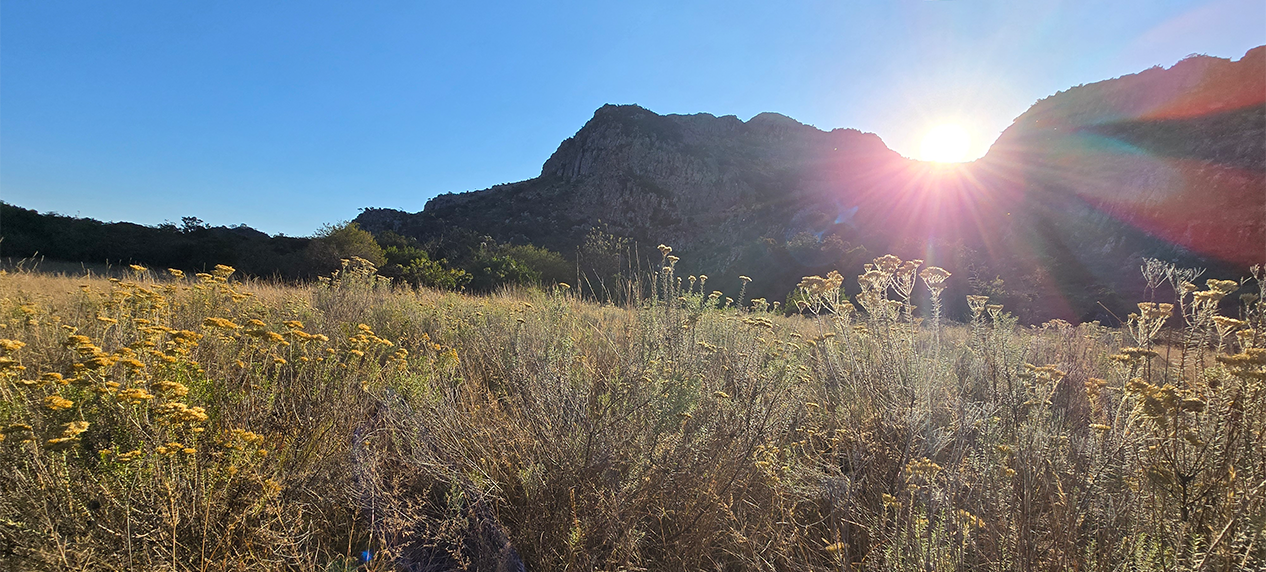
Sunset view from the Old Salt Trail Soutpansberg

Day 3: Mt. Lajuma

First Conservation Servitude Wholly Initiated by the EWT Registered in the Northern Cape

First Conservation Servitude Wholly Initiated by the EWT Registered in the Northern Cape

First Conservation Servitude Wholly Initiated by the EWT Registered in the Northern Cape

By Zanne Brink, Drylands Strategic Conservation Landscape Manager
 

Northern Cape biodiversity conservation through Lokenburg Conservation Servitude

The first Conservation Servitude initiated by the Endangered Wildlife Trust has been registered in the Northern Cape.

The registration of the Lokenburg Conservation Servitude is to ensure the long-term protection of, particularly the Speckled Dwarf Tortoise, its habitat and the associated biodiversity on a farm that has been occupied by the same family for six generations.

The protection of dwarf tortoises is critical, especially because they occur in very specific habitat types along the West Coast of South Africa, inland to Namakwaland, and while this is a large area, they actually only occur in a few tiny remnant patches of critical habitat.

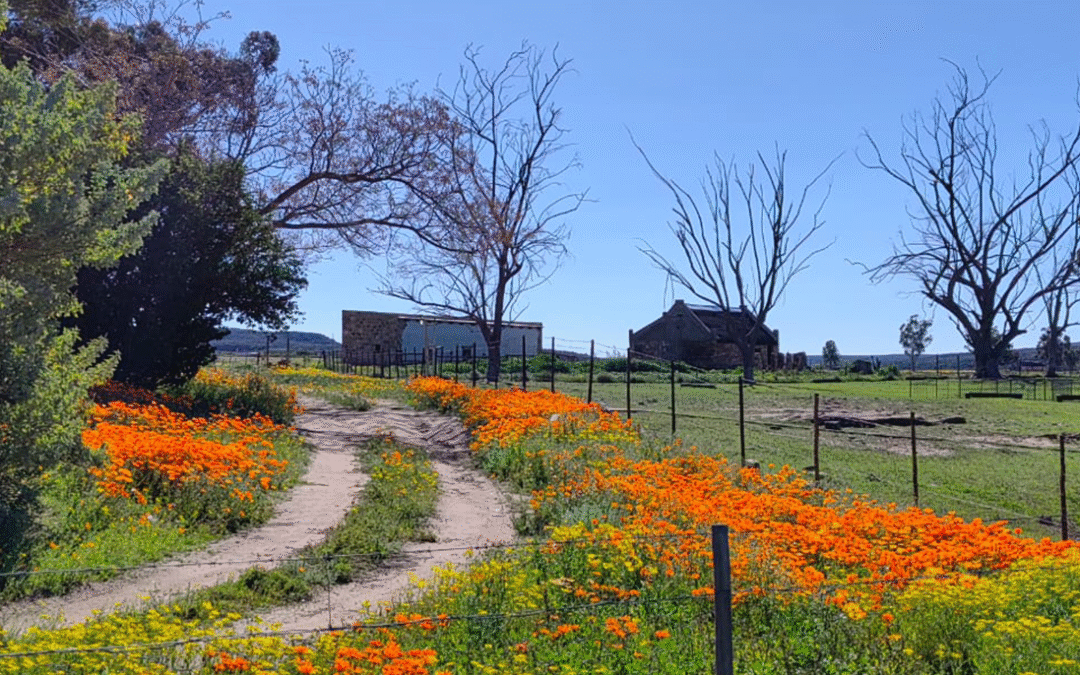
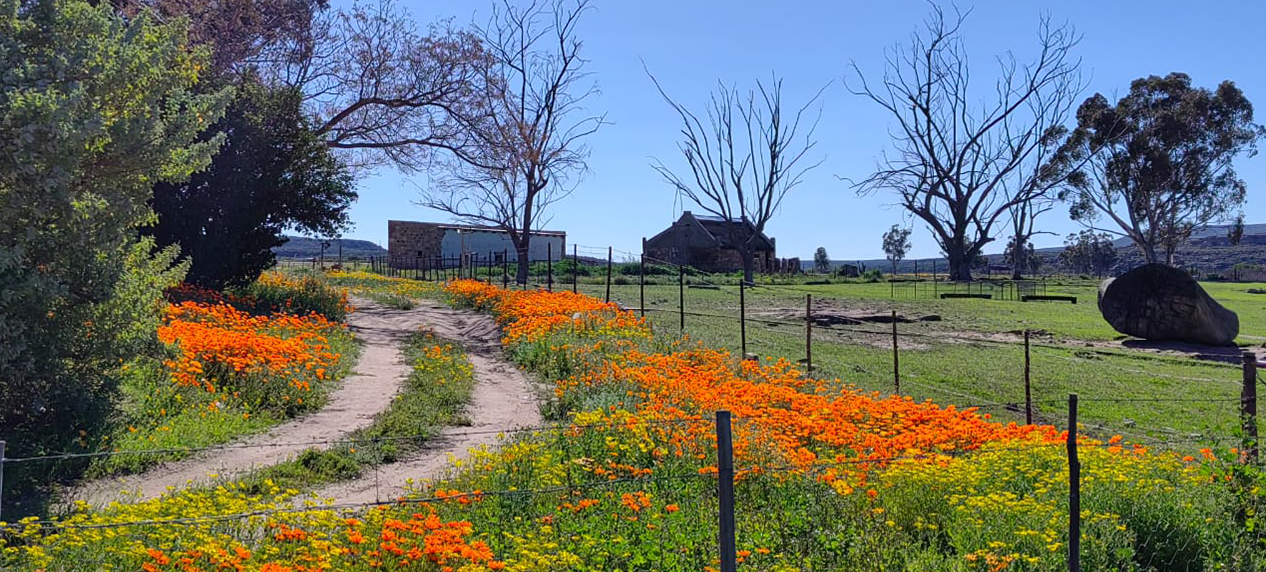
Lokenburg is situated in the district of Nieuwoudtville, widely known for its unique vegetation and springtime floral splendour. The farm is unique in two respects. It was the first farm in the area to receive Title Deeds in 1774, and it is the only farm to host a dwelling built by each one of the six generations that have lived on the property.  Situated in the Bokkeveld, an area previously known for its large Springbok population, the working farm boasts a large variety of plant species.   The owners, Nelmarie and Herman Nel, farm sheep, cattle, and rooibos tea.

It is a farm with a rich history, with numerous explorers traversing the area and documenting the rich soils and the associated fauna and flora since the mid-1700s.  The late Francois Jacobus van der Merwe (the owners’ great-grandfather) was the only one of the four van der Merwe children whose land has remained intact for his descendants. This favoured the family and ensured that the land has been occupied by the same family for six generations, all of whom have always prioritised the conservation and preservation of their area because of their love of the land.

Lokenburg is situated in the winter rainfall region and lies in the transition zone between the Fynbos and Succulent Karoo Biomes.  This makes the farm remarkable from a botanical point of view as it is also straddled by no less than four Bioregions: the North-West Fynbos Bioregion, the Western Fynbos-Renosterveld Bioregion, the Karoo Renosterveld Bioregion and the Trans-escarpment Succulent Bioregion.

Succulent Karoo Biome biodiversity at Lokenburg Conservation Servitude

The Succulent Karoo Biome, which boasts the richest abundance of succulent flora on earth, is one of only two arid zones that have been declared Biodiversity Hotspots.  The biome is home to over 6,000 plant species, 40% of which are endemic, and another 936 (17%) are listed as Threatened. This biodiversity is due to massive speciation of an arid-adapted biota in response to unique climatic conditions and high environmental heterogeneity. Lokenburg lies on the eastern edge of the Succulent Karoo Biome, within the Hantam-Tankwa-Roggeveld Subregion.

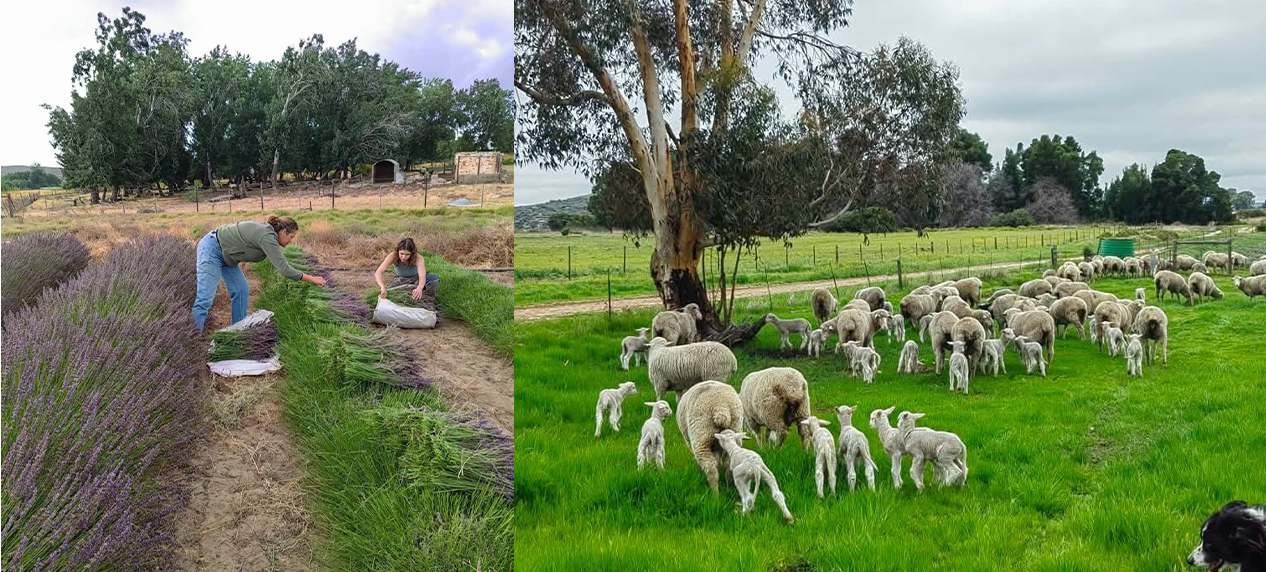
A working farm, it boasts a variety of plant species, including Iris and Ixia, as well as five springs that support the owners,  Nelmarie and Herman Nel and their son, Eduard, who farm sustainably with sheep, cattle, and rooibos tea. A more recent addition to their farming practices has been an entrance to the essential oil industry as a result of their great passion for the medicinal value of our indigenous flora.    In 2023, the owners became members of the South African Essential Oil Producers and offer products in support of indigenous essential oils, some of which are produced on the farm, such as Lavandin. Their vision is to further expand the essential oil enterprise to make it sustainable and economically viable for the benefit of the community and environment.

Over the years, the family has aimed to preserve their land for future generations through sustainable farming practices alongside the preservation of the rich biodiversity found on their land.  This has been enabled through the implementation of a Biodiversity Servitude, which ensures that the owners are not just farmers but also stewards of conservation. Through this, they can make a positive contribution to the community, economy, and environment through this step.

Sustainable farming and biodiversity protection at Lokenburg farm

Left: Lokenburg Lavender Harvest.

This Servitude has been registered across the Lokenburg farm. Specific conservation management areas have been designated within this area—a collaboration between the landowners and the EWT—and where targeted management actions and development restrictions will be in place. Additional, species-focused, conservation actions will also take place across the broader landscape and include management of the Pied Crow (Corvus albus) populations in the area, which are unnaturally high and, through excessive predation, are driving the tortoise populations to extinction.

The primary strategic management taken for the Servitude has been encapsulated in the Lokenburg Biodiversity Management Plan (LBMP).  This plan also informs the need for specific conservation actions and operational procedures, providing for capacity building, future thinking, and continuity of management, enabling the management of the Servitude in a manner that values the purpose for which it has been established. Additionally, it ensures, through collaboration, that no detrimental forms of development or agricultural activities, will take place within the designated focal areas. Key to the management plan is the conservation and protection of Chelonians (includes all tortoise and terrapin species).  These are one of the most imperilled vertebrate groups, with over 60% of the world’s 357 known species threatened with extinction. Nine of the 13 southern African tortoise species are found in the arid Karoo region where they face multiple threats, including habitat loss and degradation, predation, illegal collection and in fire-prone habits, uncontrolled fires.

This farms rich biodiversity sustains numerous other Species of Conservation Concern (SoCC) including numerous classified as Threatened in the IUCN Red List of Threatened Species.  Among these are a number of bird and plant species, such as the Non-Threatened Tent Tortoise (Psammobates tentorius) and Karoo Korhaan (Eupodotis vigorsii), and Vulnerable Species such as the Secretary bird (Sagittarius serpentarius), Southern Black Korhaan (Afrotis afra) and Verreaux’s Eagle (Aquila verreauxii), as well as the Endangered Ludwig’s Bustard (Neotis ludwigii) and Martial Eagle (Polemaetus bellicosus).

As stewards of our land, we work together to ensure long term sustainable agricultural conservation to the benefit of humans and species.  We look forward to our path together to conserve ecosystems and landscapes.

EWT and Nel family collaboration for Lokenburg Conservation Servitude

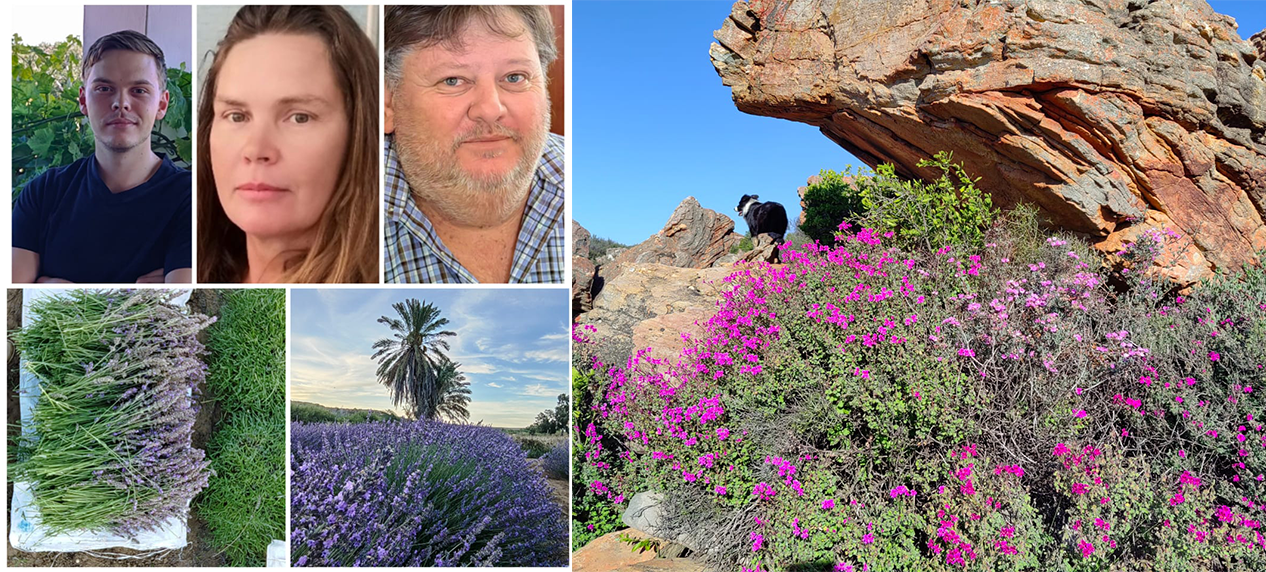
Top left: Lokenburg Family

**  The EWT’s work to secure the registration of the Lokenburg Conservation Servitude was made possible by IUCN NL, the Ford Wildlife Foundation and the Nel family.  

Saluting Rangers across the World

Saluting Rangers across the World

Saluting Rangers across the World

By Eleanor Momberg, EWT Communications Manager
 

Armed with years of experience and a lifelong passion, rangers are the boots on the ground at the forefront of conservation.

Because they spend their entire working day – and often longer – in the field, they are the eyes and ears of management. This means they are often the first to detect unauthorised entry into a protected area by poachers, medicinal plant harvesters, or even just inquisitive persons. They are also often the first to detect wildlife diseases or other potential issues, and are integral to monitoring and maintaining infrastructure such as artificial water points and pipelines.

Rangers are integral to the daily running of any protected area, and their daily tasks are as varied as apprehending poachers, burning firebreaks to safeguard infrastructure, assisting with management burns to achieve specific ecological goals, controlling alien plants, and guiding guests to ensure an absolutely unforgettable visit to nature, among a multitude of other tasks.

On 31 July, rangers across the globe take a moment to remember and pay homage to colleagues who have lost their lives in the line of duty. This year, the pause is to honour 175 colleagues in 41 countries who lost their lives in the last 12 months. 

The theme for World Ranger Day 2025 is “Rangers, Powering Transformative Conservation.” It is a reminder, says the International Ranger Foundation, that rangers are not only protectors, but changemakers.

“They are essential to achieving the world’s biggest conservation goals — from the Sustainable Development Goals to Target 3 of the Global Biodiversity Framework: protecting 30% of the planet by 2030,” says the Foundation.

Although rangers typically work in protected areas where their primary focus is conservation, law enforcement and wildlife management, the Endangered Wildlife Trust (EWT) rangers have a different, added, task – restoring the habitats needed for species and people to survive, protecting cultural heritage, and ensuring that the impact people have on the environment does not affect the ability of communities to benefit from their natural surrounds.  

Additionally, rangers’ work has become more holistic, and has seen the introduction of new technologies into their daily routines.  This includes the use of drones.  

Many rangers emanate from communities adjoining, or in close proximity to, the protected areas in which they work. As such, they are ambassadors for conservation – teaching children and adults alike why it is important to conserve both plants and animals. Rangers are a key resource with which to engage communities, ensuring that communities’ voices are also heard and, together with the protected area management, ensuring that common ground can be found and that protected areas and communities can find a mutually beneficial way forward.

As agents of transformation, rangers also look to the future addressing issues such as climate change in community education drives, highlighting the need to mitigate, and adapt to, a changing environment.  

Among the rangers at the EWTs Medike Reserve in the Soutpansberg is Shumani Makwarela, a field guide in the Savanna Strategic Conservation Landscape. He says his work largely entails protecting the biodiversity of the Soutpansberg.  “I also assist to clear alien plants and then do game counts,”  he says.

The Soutpansberg, a recognised as a Centre of Endemism and Key Biodiversity Area, is also a Strategic Water Source Area for both ground- and surface water.  To address the threat of alien invasive species, a team of rangers has been working for the past seven years to remove invasive alien trees from wetlands and mountain catchment streams. 

This has required weeks of work on-site, often camping in remote locations away from their families. Many of these invasive tree strands were in extremely inaccessible areas, making the work even more challenging. Despite these difficulties, our rangers have successfully cleared over 60 hectares of Eucalyptus and Black Wattle from remote mountain areas, resulting in an estimated 30 million litres of water being replenished to the environment annually.

As part of the project, rangers have received training in invasive plant management and received accredited qualifications in First Aid, Herbicide Application, and Intermediate Chainsaw Operation.

But, EWT rangers are not limited to people.  Among these are our vulture “rangers” who, through the use of cutting edge GPS-tracking technology, assist in the location of poisoning events in order to dramatically reduce further wildlife loss, save surviving animals, and enable law enforcement to act quickly.

The Canine Conservation rangers not only work in protected areas to combat rhino poaching, but also support the police, national and provincial environmental authorities to detect illegally traded wild species of plants and animals.  In recent months, our dogs and their handlers have searches hundreds of vehicles for illegal succulents and reptiles at roadblocks, used their noses to sniff out weapons and ammunition and other illegal wildlife products at the entrances and exits to games reserves, searched thousands of parcels and detected numerous snares.

Rangers are an important cog in the business of conservation, and this International Ranger’s Day we salute the vital role that rangers play in the conservation of our natural heritage.


Fighting for South Africa’s Drylands: Conservation Amid Challenges

Fighting for South Africa’s Drylands: Conservation Amid Challenges

Fighting for South Africa’s Drylands: Conservation Amid Challenges

By Eleanor Momberg (EWT Communications Manager) and Zanné Brink (Drylands Strategic Conservation Landscape manager)
 

Driving north from Cape Town towards Namibia you enter a landscape that looks dry, inhospitable and unforgiving—an area known as the Knersvlakte and Namaqualand, or the Drylands.

This is a sparsely populated region of South Africa, but a landscape that hides an extensive biodiversity and a high number of endemic species.   It is a landscape where drought and low rainfall are part of the people’s lives; an area pock-marked by the destruction of natural habitats by mining along the coast and inland.

The far reaches of the Western Cape bordering on the Northern Cape, stretching from coastal towns such as Doringbaai to north of  Brand-se-Baai inland to areas like Gamoep and Kliprand, you will find  numerous mines. This includes the Steenkampskraal Monazite Mine, an important producer of rare earth minerals, and uranium, as well as South Africa’s Radioactive Waste Disposal Facility at Vaalputs.  Many mines have closed over the years with little rehabilitation, leaving damaged habitats in the landscapes.

It is here that the Endangered Wildlife Trust’s Drylands Strategic Landscape is working closely with farmers, landowners and communities to identify critical biodiversity areas that need to be protected while addressing the existing scars in the landscape due to historical and current prospecting and mining activities.  It is vital to ensure the long-term conservation of the Succulent Karoo, as any scarring or damage to the top layer of soil will result in a form of erosion.   Through continued research and support, the EWT aims to provide landowners with scientifically-based evidence of the unique and endemic species found on their properties.  As the drylands have very little documented information on the unique biota, it will ensure further robust specialist studies can be conducted if prospecting and/or mining applications are encountered. Continued work in the arid lands through rehabilitation will ensure more site specific information is available to implement arid land rehabilitation, and provide accurate rehabilitation costs to be considered.  Because prospecting applications are increasing, it is important to ensure that landowners and land custodians understand the value of the biodiversity found on their properties, as this knowledge could inform the outcome of a prospecting or mining application.

Namaqualand and the Drylands, are landscapes of united communities encompassing people living in small towns, on farms, in shelters and isolated homesteads, all interdependent on each other for continued survival.  The community is dedicated to conserving and maintaining the veld, while also restoring degraded lands because of the dependence on the veld for survival alongside their relationship with the endemic species found here. Landowners understand that decisions made today will have an impact for 50 to 100 years, and that they must farm smart to ensure a life for future generations.

Despite numerous challenges related to the approval of prospecting and mining rights on private properties, farmers in the drylands are adamant that they will not be forgotten or overlooked.

Local farmer Mari Rossouw believes their community is often overlooked because outsiders often question why anyone would want to live in this “unforgiving landscape”. Often applicants for mineral rights further underestimate the local knowledge and the power of the community.

Kliprand farmer Sarel Visser feels the area is being exploited because of its low population density, the assumption that there will be no fight to protect arid lands.  He points out that mines in the landscape have a 10 to 15-year lifespan and are thus not viable.   Farming, tourism and conservation are the future, he argues.

“They are destroying our entire ecosystem and destroying the lives of the people in a community that lives in constant uncertainty. We are already the last generation able to farm with sheep in this area,” he says.


What are the challenges?

Namaqualand and the Knersvlakte are drought-prone, with an annual rainfall of between 150mm and 300mm.

It is a landscape bent under the pressure of prospecting and the threat of further mining that will permanently scar the landscape. Communities living here are not willing to sit back and accept prospecting applications that are either factually incorrect or badly translated into the predominant language spoken in the region—Afrikaans. The community has had to upskill to ensure applications were commented on as part of the public participation process, and then how to appeal mining applications on their farms. Further challenges include prospecting applications being approved despite containing incorrect geographical and environmental information.

Among the community’s concerns is the fact that the Matzikama municipality’s 150km coastline, bar one kilometre, is being mined, or has mining rights allocated; a lack of rehabilitation and restoration of historical mining areas; a lack of adequate rehabilitation funds built into prospecting applications; the removal/destruction of topsoil; and not being able to sustain restoration. Another concern is the lack of financial means available to landowners to create and register a protected area on their properties.

Since 2019, there have been 54 prospecting applications on properties owned by 20 farmers in the Kliprand area alone.  While all have been denied, and three are presently under appeal,  three new applications were received in mid-June 2025.

Landowners become emotional when they speak about how the soil and the micro-organisms found in topsoil die when this is removed.  In an area where plant growth is already vulnerable, the veld never fully recovers as the topsoil becomes sterile when removed.

Chair of the Knersvlakte Conservancy Kobus Visser says that if you drive over or step on a plant you can kill it.  The damage caused to certain plant species is unique to this environment because of its complexity. Rehabilitation can take up to 100 years “or never”.

Seventh generation farmer Christiaan Pool says his farm, on which Vaalputs is situated, is a clear example of this.  Areas damaged in 1974 have still not been restored to their former state.

Sarel says an area last ploughed by his father in 1967 has not fully recovered either, while Magarieta Coetzee says an area on their farm damaged by historical over-grazing more than 60 years ago has also not returned to its original state.

Drought and damaged soil, they say, also affect the feeding value of the Kraalbos (Galenia africana), which has a higher nutritional value for sheep than lucerne.

Farmers, landowners and community members gather together with the EWT to discuss solutions to the challenges facing the Drylands


Solving land degradation

Mari and a team of more than 60 local community members have been working closely with several mines and a State-Owned Enterprise in the last 24 years to rehabilitate degraded areas on the West Coast.

They have transplanted more than 4.5 million plants in degraded areas, in many instances augmenting the work being done by some of the mines. Rehabilitation costs are astronomical.

Once the sand has been stabilised, seeds of cultivars found in that particular area is transplanted, invasive alien species are controlled and rows of netting is installed for wind mitigation stabilisation.

Among these are succulents, a vegetation type largely threatened by illegal trade.  Saving these species is proving to be more difficult than previously thought “because we struggle to get the soil to a point where these plants will be able to survive,” says Mari.

They plant cultivars with strong rooting systems such as the Pelargonium, Wag ‘n Bietjie, Buchu, Papierblom, Pendoring (Pin Thorn) and Kapokbos between the rains in the winter to ensure they grow.  This, in turn, attracts birds and other small mammal species back to the area.

For Mari it is important that the aesthetic value of the environment “must remain for when we are not here anymore, in 30 years”.

Sarel believes that the longer-term employment and economic solution for this region is conservation, tourism and other land rehabilitation projects.

Johan Truter and Christiaan Pool add that conservation is the future, but that they don’t have sufficient funding to have their farms declared protected areas.   This is despite their properties already meeting the criteria for Biodiversity Stewardship in terms of vegetation units and the region’s unique biodiversity.

This community is calling for a moratorium on all prospecting in their landscape so that the EWT and other researchers can undertake a proper study of all the species found here.  In the past two years the De Winton’s Golden Mole, for instance, was rediscovered after an absence of 87 years.  The area is home to the Western (“Namaqualand”) tent tortoise (Psammobates tentorius trimeni), Speckled Dwarf Tortoise (Chersobius signatus)—two of the threatened reptile species in South Africa, the Endangered Black Harriers (Circus maurus), and a variety of Threatened and Endemic succulents and invertebrates.

It is also where the EWT is helping communities and landowners to explore alternative income streams to take the pressure off the natural resource base in terms of agricultural production. This includes the introduction of ecotourism activities that not only create jobs, but bring much-needed income to the region. In 2020 and 2024, we officially launched mountain biking,  trail running and the Via Ferrata routes on Papkuilsfontein, near Nieuwoudtville. These trails help diversify farming income through adventure tourism and balances nature-based income generation and farming activities.

Kobus Visser says to succeed as conservancies or protected areas, the Namaqua and Knersvlakte communities need to know what is on their land, thus the importance of working with NGOs such as the EWT.  It is through science and knowledge that success will be achieved, he says, pointing out that were it not for researchers such as Zanné Brink, or Renier Basson of the EWT they would not know that certain tortoise or insect species live on their farms.

He adds that the farmers have learned to live with global warming, adapting their farming practices to ensure the veld remains resilient to climate change.  The Knersvlakte Conservancy, he says, is an area that showcases this—the will of the community to establish something to ensure like-minded conservation outcomes.

“We have all our plans in place and are busy with a proposal to open an office before the end of the year. Then will be able to concentrate on physical projects to increase our knowledge, like insect surveys with the EWT,” he says.

Zanné, the EWTs Drylands Strategic Landscape manager, says continued efforts are ensured through working with provincial authorities to align provincial and national biodiversity legislation and regulations that would further ensure the safeguarding and extension of protected areas and informing Environmental Impact Assessment (EIA) practices.

“To establish a conservancy, other effective area-based conservation measures (OECMs) or a protected area, it starts with the land and the will to ensure the long-term protection of the environment. Within Namaqualand and the Knersvlakte, the community is ready for this opportunity that cannot be lost,” she says.

Saving 84 Vultures: A Landmark Poisoning Response in Kruger National Park

Saving 84 Vultures: A Landmark Poisoning Response in Kruger National Park

Saving 84 Vultures: A Landmark Poisoning Response in Kruger National Park

By Eleanor Momberg, Gareth Tate and John Davies

healthy vultures being release after mass poisoning event

Wildlife poisoning has become increasingly prevalent and destructive in recent years, placing pressure on conservation organisations to improve their response times in order to reduce the impact on particularly endangered species.

Because poisoning is a silent, swift, and brutally efficient killer, it not only affects specific animals but leaves a trail of collateral damage, killing thousands of unintended victims and pushing species closer to extinction.    This includes large carnivores such as lions and leopards, as well as hyenas, jackals, and avian scavengers, such as vultures.

It is because of a speedy response on 6 May that the Endangered Wildlife Trust, SANParks and our partners were able to rescue 84 vultures from a poisoning incident at the Mahlangeni Section in the Kruger National Park.

Although wildlife poisoning is an ongoing crisis, the severity of this incident was well beyond what has occurred in recent years.   When rescuers arrived at the scene, they discovered the grim reality: a mass poisoning event involving hundreds of vultures, the result of an elephant carcass laced with highly toxic poison laid by poachers.

In this specific incident, we noticed the previous evening through the EWT’s pioneering wildlife poisoning surveillance and detection system that there was suspicious activity in a high-risk area of the park.   The SANParks section ranger, who flies a Bat Hawk aircraft, was able to fly over the site at first light and immediately provide feedback, indicating that this was a serious incident.


A World-Class Wildlife Rescue Operation

Vultures found dead and alive at the scene of a mass poisoning event

Vultures found dead and alive at the scene of a mass poisoning event

EWT field officer Kyle Walker and Birds of Prey Programme intern Dembo Jatta were ready to enter the Park by 6am and immediately made their way to the scene. In the meantime, the Programme’s senior manager, Gareth Tate, hooked up the EWT’s vulture ambulance, collected vets and rehabilitation staff and raced to an area as close to the scene as possible.

By then, we had already received two immobility alerts, which meant two of the tagged vultures had already died.

The support team included colleagues from the Moholoholo Wildlife Rehabilitation Centre, Briner Veterinary Services and Wildscapes Veterinary Services, SANParks rangers and aerial support and the Hope for Wildlife helicopter.  This was the first time that SANParks helicopters were formally used in a wildlife poisoning rescue of this scale, marking the beginning of similar collaborative rescue operations in future.


First-hand account

Kyle Walker and Dembo Jatta with vultures en-route to treatment facility

Kyle Walker and Dembo Jatta with vultures en-route to treatment facility

Although this was a very traumatic experience and crisis, the timing of everything was absolutely perfect.   There was already a helicopter on the scene, and some of the birds were being treated ahead of the arrival of Gareth and the support teams.

“When we arrived, it was almost like a movie scene when this helicopter appeared on the horizon and came bolting in and banked over us. The goosebumps I had on that day – everything just came together in a way that I could never have imagined into a worldclass rescue response,” said Gareth, adding that the helicopter collected him and the team where they had parked about 3km from the scene.

“My first experience was just live birds everywhere.  I did not even see the poison source and the event, and what Kyle and Dembo and some of the rangers who had never touched a bird in their life had done,” he said.

“Everything just fell into place – vets were treating the birds, getting the poison out of their systems, fluids were being administered, and then we were getting the vultures into the helicopters, which had never been done before,” said Gareth. “Everyone had a job and a role, and that saved 84 birds.”

The live vultures were immediately treated using emergency vulture first aid: atropine, activated charcoal, and fluid therapy.

The rescued vultures were flown either to the SANParks K9 unit in Phalaborwa for stabilisation, or directly to the vulture ambulance before being transported to the Moholoholo Wildlife Rehabilitation Centre in Hoedspruit.  En route, one of the vultures died.  Two others died subsequently.


Treatment and Rehabilitation

Ewt's Vulture Ambulance - a specialised vehicle designed to stabilize vultures en route to veterinary facilities

Ewt’s Vulture Ambulance

Fortunately, treating poisoned animals it is very simplistic, explained John Davies, Birds of Prey Programme manager, detailing the process followed by the EWT team five years ago to develop protocols for incidents such as this.  It was through that work that field officers and rangers carry poisoning treatment kits in backpacks and are able to provide initial treatment until support arrives.

“The first 48 hours are the most critical.  The birds are checked every two to three hours, which is time-consuming,”  says John, adding that he and Lindy Thompson got “bitten to shreds” overnight by birds being treated in cubicles in the ICU section.

Once they were deemed healthy enough, the vultures were released into enclosures in preparation for their release back into the wild, usually within a week.   The EWT Birds of Prey Programme boasts a 96% survival rate for poisoned vultures that are found alive in the last three to four years.

Reacting to poisoning scenes speedily remains the key to success.  This, said John, remained the only stumbling block.  And the only way to effectively respond in a practical time is through the reliance on strong collaborations, as well as technology.


Releasing the birds back into the wild

Vultures being released back into the wild


By the end of May, all the vultures had been returned to the wild.

The tracked birds are doing well, and one was back on its nest in a private reserve with its mate the next morning, and several others have returned to their nests in the Kruger National Park.

Releasing the birds back into the wild is a difficult step, but a necessary one, said Gareth and John.

“We can’t be moving towards a world where vultures are kept in enclosures in the name of vulture conservation.  These birds have gone through a lot of stress and… every bird released with a tracking unit is another layer of cover and another layer of information we can utilise to prevent this from becoming more severe.  We have a full commitment to that stance,” said John.

Fortunately, we’ve already seen an increased focus on dealing with these incidents from the government, and although conservation resources are often quite stretched, it’s an important factor, as high-level support is critical for success.

“It is little things like that that matter to us at the end of the day.  The start of the breeding season is a very risky time.  Some of the vultures haven’t laid eggs, but it is on that cusp.  May is very much the beginning of their breeding season, so a poisoning event such as this is catastrophic,”  said John.


A National Wildlife Tragedy

The scale of the tragedy was staggering: 123 vultures were found dead at the scene – 102 White-backed Vultures and one Lappet-faced Vulture, all listed as endangered or critically endangered species – and 20 Cape Vultures. Of these, 116 were already deceased when the team arrived.

This marked one of the largest vulture poisoning events in Southern Africa, and the most extensive coordinated response effort and rescues to date. Over 20 individuals across conservation, veterinary, and enforcement sectors played a role in the rescue and response. Without rapid detection by the EWT’s wildlife poisoning detection and surveillance system and the unprecedented cooperation between NGOs, rangers, vets, and SANParks aerial and ranger units, many more birds would have been lost.

Gareth and John hold their praise for not only Moholoholo’s team, but also Wildscapes Veterinary Services and Dr. Jessica Briner from Briner Veterinary Services, who has guided a lot of the EWT’s treatment protocols and continues to provide input.

“Without that sort of support, we would not be able to do the job we do.  It just gets better the bigger the pool is,”  said John.


The Growing Threat of Poison Poaching

This horrific incident is part of a broader crisis unfolding across southern Africa: the escalating use of poisons in wildlife poaching. Poachers increasingly use toxins to target high-value species – not just vultures, but also lions, leopards, hyenas and jackals

Although many believe the demand for animal parts for muthi is driving the mass killing of vultures,  the killing of nature’s clean-up crew is largely attributed to the fact that they are a sentinel species, exposing poaching scenes to rangers.  These killings are indiscriminate and ecologically devastating, wiping out entire scavenger communities, contaminating food chains, and risking human health. This is compounded by the bushmeat trade and the use of snares to target wildlife in large protected areas, also closely linked to poisoning events and use.

Police, who were on the scene, are investigating.


Urgent Call to Action

This is not just a conservation issue—it is a wildlife crime emergency. The EWT and its partners call for:

  • Stronger regulations to control the sale and storage of toxic agrochemicals.
  • Harsher penalties for wildlife poisoning offenders.
  • Increased awareness about the devastating impact of using wildlife in traditional medicine.

The public must understand the reality: poison is being weaponised in our protected areas. We are losing iconic species at a terrifying pace, with the local extinction of flagship species such as vultures becoming a sad reality in the near future.

We are heartbroken—but we are not defeated. Our teams are back on the ground, and the fight continues.