
Cash, Corruption, and Creatures: The Hidden Economy of Wildlife Crime in South Africa
By Gerald Byleveld, Volunteer at the Endangered Wildlife Trust’s Wildlife in Trade Unit
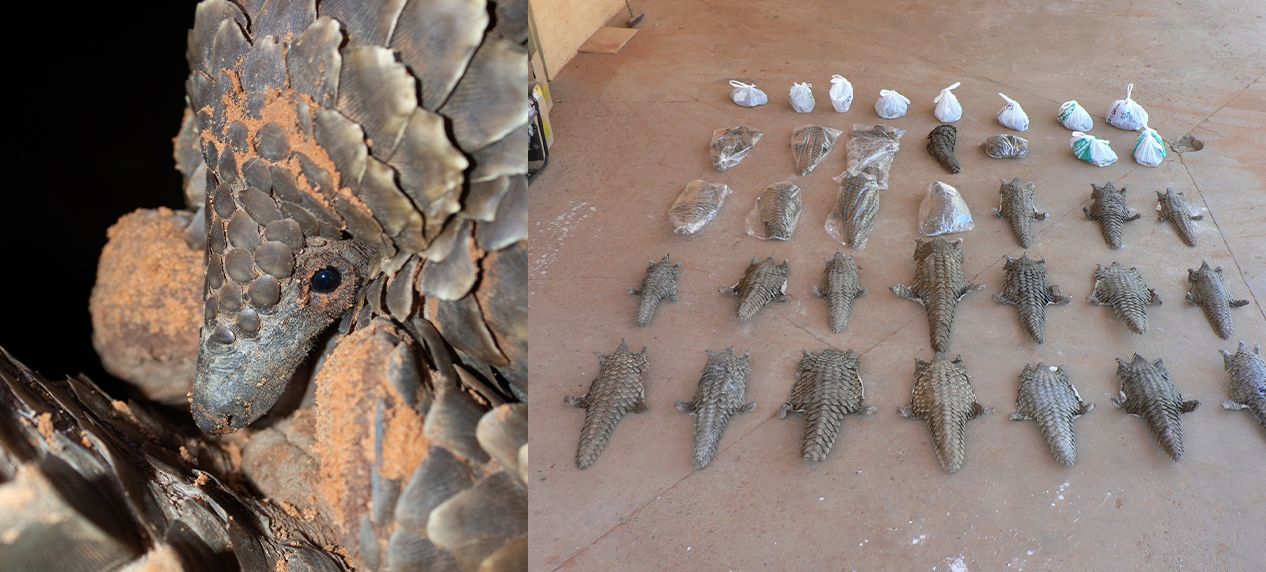
South Africa’s developed transport infrastructure, sophisticated financial system, and extensive wildlife resources make it both a prime source and a transit point for illegal wildlife trade (IWT). But poachers and smugglers are only one layer of a multi-billion-rand enterprise. Behind them are financiers, exporters, lawyers and money managers who ensure that illicit proceeds can circulate undetected through the legitimate economy. These financial facilitators are the invisible scaffolding of the IWT industry. Yet only a fraction of such cases result in charges being brought against financial facilitators. A 2023 UNODC/Asia–Pacific study found that only 1% of wildlife crime cases involved a money laundering investigation, and only 7% led to prison sentences.
Money laundering – the process of disguising the origins of illegally obtained funds – enables traffickers to convert cash from wildlife products into what appears to be legitimate income. In wildlife crime, laundering typically occurs through several overlapping techniques.
Cash smuggling and layering are the simplest and most common methods. Syndicates collect large amounts of physical cash from buyers in Asia or local intermediaries and move it across borders in small increments, often through informal financial systems. Once split and layered through multiple transactions, the trail becomes difficult to trace.
Front companies and shell businesses also play a central role. Entities registered as export firms, tourism operators, or hunting outfitters can easily disguise illicit transactions as part of ordinary business operations. A legitimate game farm, for example, can hide illegal horn sales within a web of legal animal product exports. Legitimate cash-intensive businesses, such as casinos, knowingly or unknowingly, allow syndicates to launder their ill-got cash into apparently legitimate “winnings” – often in large quantities.
Trade-based money laundering – the manipulation of invoices to hide value transfers – is another favoured method. A company may overstate or understate the value of goods shipped abroad, effectively moving money under the guise of trade. This technique exploits weaknesses in customs oversight and is especially effective in sectors such as seafood, leather, and curios, which overlap with wildlife products.
Finally, traffickers invest laundered profits in tangible assets such as real estate, luxury vehicles, or guest lodges. Once the money is tied to visible property, it appears legitimate. The result is a criminal economy that seeps into the formal one, distorting local markets and shielding offenders behind layers of ownership and paperwork.
If money laundering cleans dirty profits, bribery ensures the system continues undisturbed. Bribes lubricate nearly every stage of the wildlife trafficking chain – from poaching in source countries to import into destination countries.
At the source, game and field rangers are often bribed or coerced into turning a blind eye. Syndicates may offer payment or protection in exchange for information on patrol routes, security gaps, or the locations of high-value animals. The same pattern extends to customs and border officials, who can falsify documentation or permit consignments to pass unchecked.
Corruption also infects investigative and judicial processes. There have been repeated instances where charges against traffickers are delayed, evidence is misplaced, or penalties are reduced due to alleged bribery or political interference. Such manipulation erodes public confidence and signals to criminal groups that enforcement can be negotiated.
Bribery is not limited to the public sector. Private-sector enablers – freight companies, shipping agents, and financial intermediaries – may also accept payment to mislabel goods or overlook suspicious transactions. This blend of private complicity and public corruption creates a powerful shield of impunity.
The costs of money laundering and bribery extend well beyond biodiversity loss. Financially, laundered wildlife proceeds are often reinvested into other illicit markets, including narcotics and human trafficking. Organised crime groups exploit wildlife trafficking networks as low-risk, high-reward ventures that diversify their revenue streams.
Institutionally, corruption undermines governance. When the officials tasked with protecting wildlife or enforcing the law are compromised, public trust collapses. Communities dependent on tourism or sustainable wildlife use lose confidence in the government, while honest businesses face unfair competition from actors funded by criminal capital.
Economically, the influx of illicit money can inflate property prices and distort local economies, particularly in regions adjacent to parks or coastal areas. The environmental, social, and fiscal consequences are interlinked — weakening the state’s ability to deliver services, conserve biodiversity, and attract ethical investment.
In response to the massive scale of the challenge, South Africa now explicitly recognises wildlife crime as a form of organised financial crime. The Financial Intelligence Centre Act (FICA) provides a framework for tracking suspicious financial transactions, and inter-agency cooperation between the Financial Intelligence Centre, SARS, DFFE and the Hawks has improved. The National Integrated Strategy to Combat Wildlife Trafficking (2022–2030) (NISCWT) explicitly calls for the “follow-the-money” approach.
The arrest of Francis Kimpampa in 2023 and subsequent convictions for rhino trafficking and money laundering showcase what can be achieved through inter-agency and private-public collaboration. Internationally, the USA’s Operation Apex dismantled a decade-long wildlife and drug money laundering operation. In Malawi, the Lin-Zang network was convicted in April 2023 for money laundering derived from trafficking rhino horn, ivory and pangolin scales.
Yet formidable challenges remain. Many wildlife transactions occur in cash-heavy rural areas, beyond the reach of formal banking oversight. Investigations into financial flows require specialised skills and coordination across agencies that often operate in silos. Prosecutorial capacity to investigate complex financial crimes is limited, and asset forfeiture proceedings can be lengthy and contested.
To dismantle trafficking networks, enforcement must pivot from catching foot soldiers like poachers to targeting financial and institutional enablers. Priority reforms include strengthening financial-intelligence sharing among banks, regulators, and conservation agencies; building asset-tracing and recovery expertise; improving transparency around company ownership; and investing in communities to reduce the allure of IWT and corruption by creating viable livelihoods and equitable conservation benefits. Because trafficking is inherently transnational, regional and global collaboration is essential – from harmonising regulations to tracing cross-border financial flows.
The illegal wildlife trade is not only an ecological crisis but a financial and governance one. Every seized horn or intercepted wildlife shipment represents only a tactical win. Lasting success depends on making wildlife crime unprofitable by exposing financial trails, prosecuting facilitators, and restoring integrity to the institutions designed to protect society and the natural world.
Until the money stops flowing, the killing will not stop.