Children learn about water filters during exhibit at Joburg Zoo
By Eleanor Momberg, Communications Manager, and Jo Bert, Senior Graphic Designer, for the Endangered Wildlife Trust
On 19 February hundreds of school children visited the Johannesburg Zoo as part of a Water Day awareness campaign. The aim was to raise awareness about the importance of water in everyday life. This included speaking to children about removing waste and alien species from rivers, dams and wetlands. Some of the classes presented poems and showed off posters. Many called out Water is Life during the formal programme. The Endangered Wildlife Trust was among several exhibitors at the event. Our exhibition comprised two experiments to show the children to physically demonstrate how water collected from a river or dam can be cleaned for safe human use.
What were the experiments?
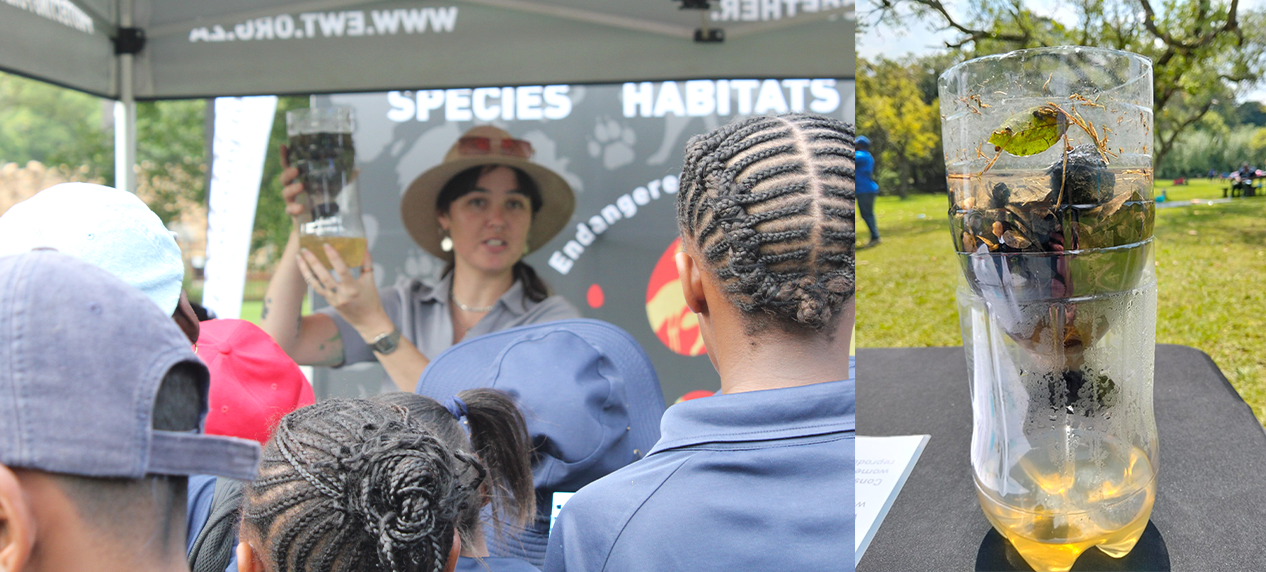
The first experiment demonstrated a simple filtration system using a two-litre plastic bottle. The bottle was cut in half, with the top section inverted and placed upside down into the bottom. Inside, several layers of material were added, starting with a layer of cloth and cotton wool at the base, followed by fine sand, charcoal, coarse sand, and finally small rocks at the top. When dirty water was poured through the system, these layers filtered out larger contaminants such as leaves, debris, and insects.
While the filtered water appeared significantly clearer, it was explained that it could still contain harmful bacteria, viruses, and other pathogens. Learners were therefore taught that this water would still need to be boiled before it is safe to drink. It was also noted that the water may retain a brownish colour due to natural substances released by plant material, similar to how tea leaves stain water, and that this does not necessarily mean the water is unsafe once properly treated.
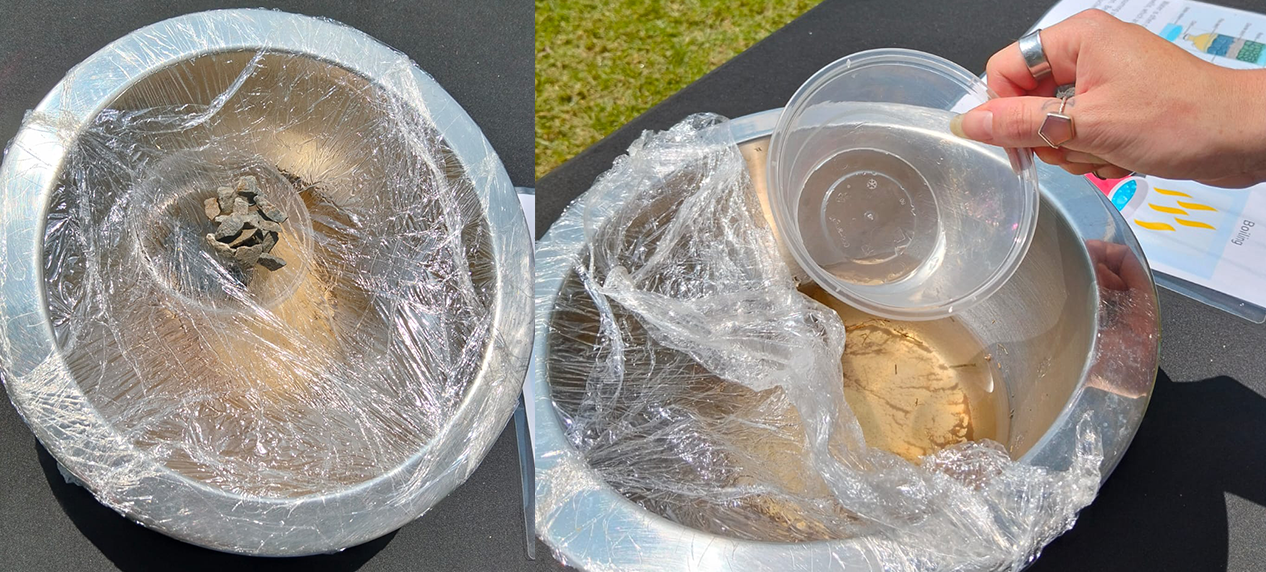
The second experiment illustrated a simple method of extracting clean water through evaporation and condensation. This setup consisted of a large bowl containing dirty or salt water, with a smaller container placed inside it. The bowl was then covered with cling wrap, with a small weight placed in the centre of the covering. As the water in the bowl warmed, it evaporated and condensed on the cling wrap. The weight caused the condensed water to collect and drip into the smaller container below.
This process effectively separated clean water from impurities such as salt, mud, and other contaminants, demonstrating a miniature version of the natural water cycle. Learners were shown how this method could be used to obtain fresh water in challenging conditions, although it was again recommended that the collected water be boiled as an added precaution before drinking.