Across borders. Across landscapes. Against the odds.
Osvaldo Abrao, senior field officer, Carnivore Conservation Unit
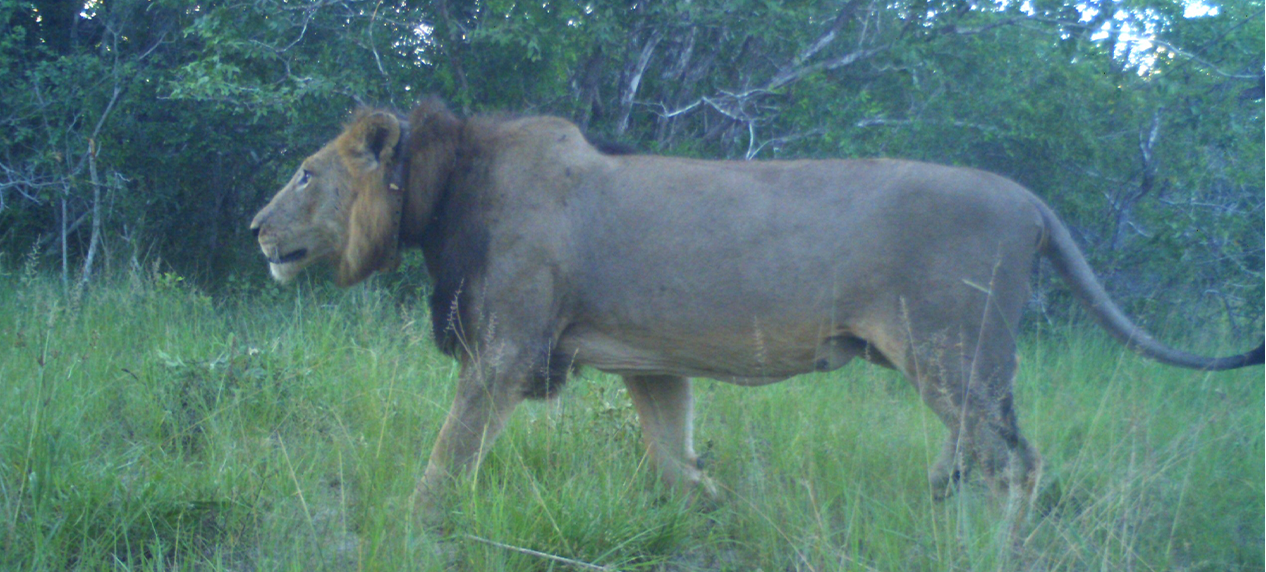
Three months ago, a male lion collared in Gonarezhou, Zimbabwe began moving – leaving the safety of a protected landscape and heading east, across vast stretches of land where people, livestock, and wildlife live side by side.
No one knew how far he would go.
His collar, fitted as part of long-term research in the Gonarezhou landscape, was failing, yet it continued to send signals as he crossed reserves, rivers, roads, and working landscapes, gradually moving toward Mozambique’s Indian Ocean coast. Each step took him further from core protection and deeper into risk.
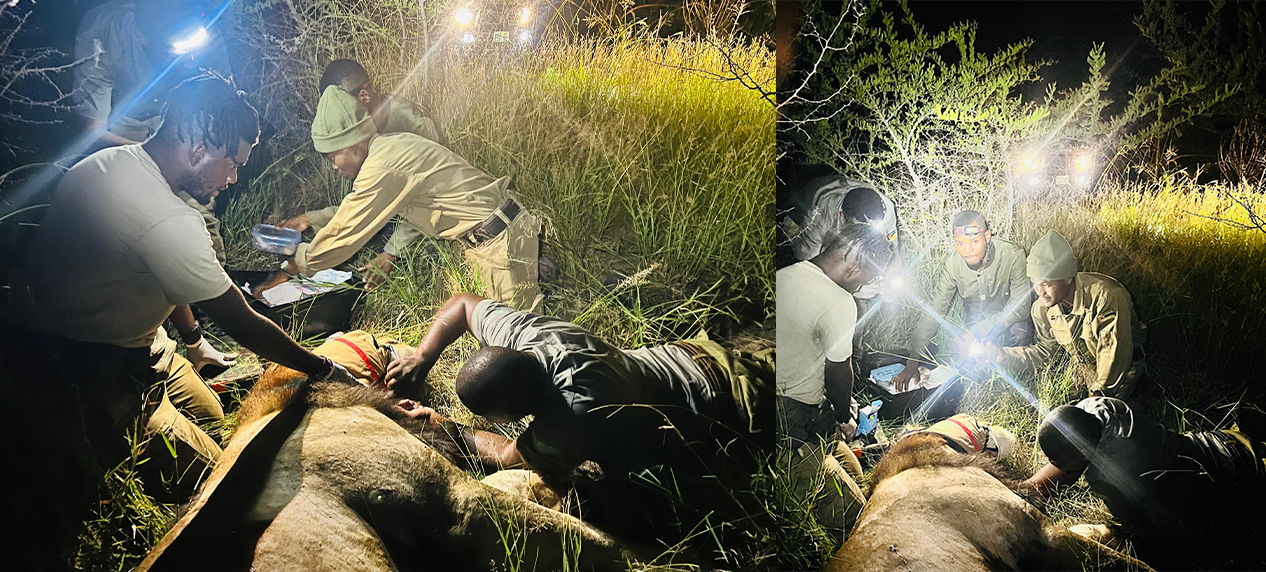
When his signal appeared in Coutada 5, Mozambique, a game reserve adjacent to Zinave National Park, teams moved quickly to locate him to replace the collar.
What they found was worrying: a wire snare was tightly caught around his neck. It was the kind of injury that, left untreated, would almost certainly have killed him.
The snare was removed in time. The lion was safely re-collared and he continues to survive in the wild.
This intervention didn’t just save one animal – it contributes to years of learning. The data from his journey helps conservation teams understand how lions still move across borders, and how connected these landscapes remain. A pride of lions currently living in Zinave National Park are believed to have followed a similar route.
In Coutada 5, early signs of recovery are already visible, from lions sited with cubs to the return of elephant, buffalo, and other large herbivores, signifying that natural dispersal is still happening across this region. This is what conservation at a landscape scale looks like: animals moving as they always have, corridors holding, and with protection in place, damaged areas beginning to recover.
This outcome was not the work of one organisation. It was made possible through close cooperation between conservation authorities, scientists, veterinarians, and field teams working across Zimbabwe and Mozambique, including Mozambique’s National Administration for Conservation Areas, Gonarezhou Conservation Trust, the Endangered Wildlife Trust, Peace Parks Foundation, Mozambique Wildlife Alliance, and Akashinga.