SCIENCE SNIPPETS
IS THE NEIGHBOURHOOD GOING TO THE DOGS?
Samantha Nicholson, Lion Database Coordinator, EWT Conservation Science Unit
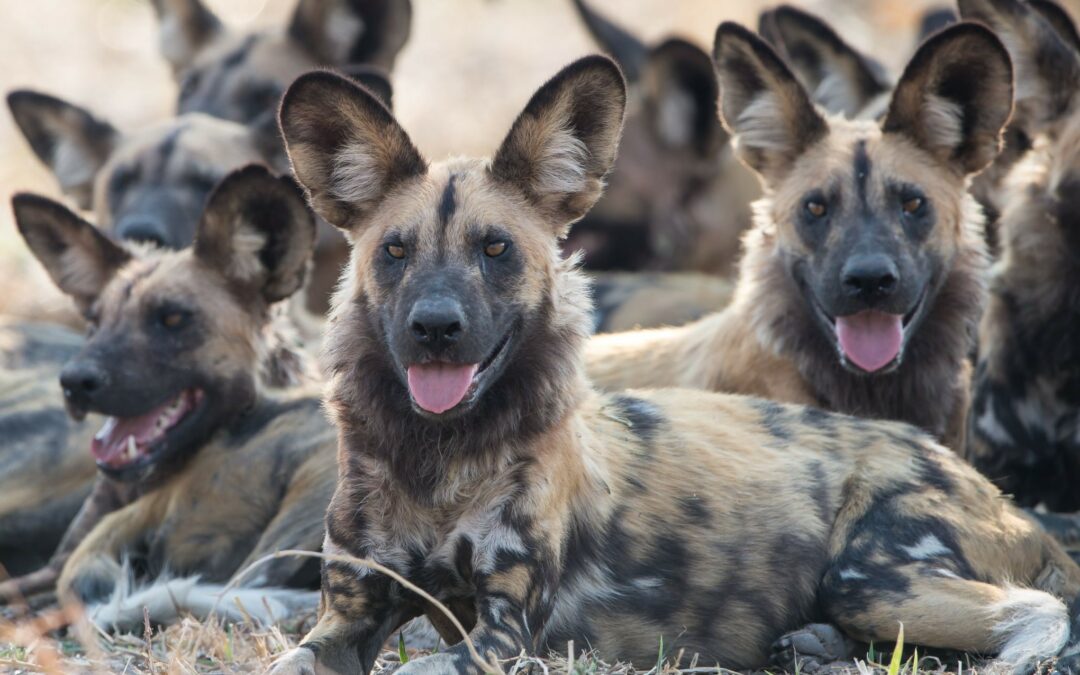
Carnivore species that overlap in their use of space, food or habitat are called sympatric carnivores, and competition for resources between these species can lead to conflict and death. To avoid this, species have adapted a wide range of different behavioural mechanisms to share resources, and to survive in their shared environment.
Spatial partitioning is one such mechanism, where one species will avoid an area based on another carnivore’s presence or population density. For example, among large carnivores, Lions will kill African Wild Dogs when they come into close contact, and as a result, Wild Dogs will actively spatially avoid areas where there is high Lion activity or density. Small carnivores will exhibit the same behaviour in avoidance of other carnivores. An example of this is Cape Foxes, which spatially avoid jackal core areas when foraging as they are often killed by jackals. However, some species will not exhibit this behaviour, even though there is competition. For example, neither Black-footed Cats nor Bat-eared Foxes avoid jackal core areas, even though jackals frequently kill them.
In this study, we set out to investigate the spatial relationship between Black-backed Jackals and large carnivores, to determine whether jackals use spatial partitioning at different scales to coexist with Lions and Wild Dogs. Our study was conducted in Venetia Limpopo Nature Reserve (VLNR) in Limpopo Province (South Africa). At the time of the study (2008) VLNR had a wide array of large carnivore species including Lion, Leopard, Cheetah, Spotted Hyena, Brown Hyena and Wild Dog. VLNR is a small reserve enclosed by an electrified predator-proof fence. Radio collars were fitted to three jackals from three different family groups to obtain location data. One jackal actually moved to another family group during the course of the study, which gave us data for an additional family group. At least one male and two females from each of the three Lion prides, and one dog from the single Wild Dog pack were collared.
Using the location data obtained from the collars, we calculated the annual home-range sizes of the study animals, as well as their core areas. We then compared the overlap between the three species at the home-range level (hereafter, broadscale) and the core areas (hereafter, fine scale). We found that the annual home-range sizes for the jackal groups ranged between 2.7 and 9.0 km2 while the annual home range of the pack of Wild Dogs was 339.5 km2. The annual home ranges of the three Lion prides ranged between 112.8 and 208.5 km2. Our data showed that the extent of spatial partitioning between jackals and both Wild Dogs and Lions depended on the scale at which we were looking. At the broadscale, jackals did not exhibit spatial partitioning with either of the large carnivores, meaning that there was extensive overlap between home ranges. However, when we looked at the fine scale, we found that jackals did appear to exhibit spatial partitioning. This was to be expected as both Wild Dogs and Lions kill jackals if presented with the opportunity.
Nonetheless, our study yields the first evidence of spatial partitioning between jackals and two large carnivores, and we hope future researchers will examine spatial partitioning between these species under a variety of environmental conditions across Africa, to help build a more complete understanding of their interactions.
Reference: Kamler, J. F., Nicholson, S. K., Stenkewitz, U., Gharajehdaghipour, T. & Davies-Mostert, H. T. 2020. Do black-backed jackals exhibit spatial partitioning with African wild dogs and lions? African Journal of Ecology.
[vc_row][vc_column][vc_row_inner css=”.vc_custom_1564132218313{margin-right: 2% !important;margin-left: 2% !important;}”][vc_column_inner width=”2/3″ css=”.vc_custom_1564134365074{padding-right: 8% !important;padding-left: 8% !important;}”][vc_column_text]
SCIENCE SNIPPET: WILD DOGS – SOUTH AFRICA’S MOST ENDANGERED CARNIVORE
[/vc_column_text][vc_single_image image=”5468″ img_size=”full” alignment=”center”][vc_column_text]Samantha Nicholson, Science Officer and African Lion Database Coordinator, EWT Conservation Science Unit
SamanthaN@ewt.org.za
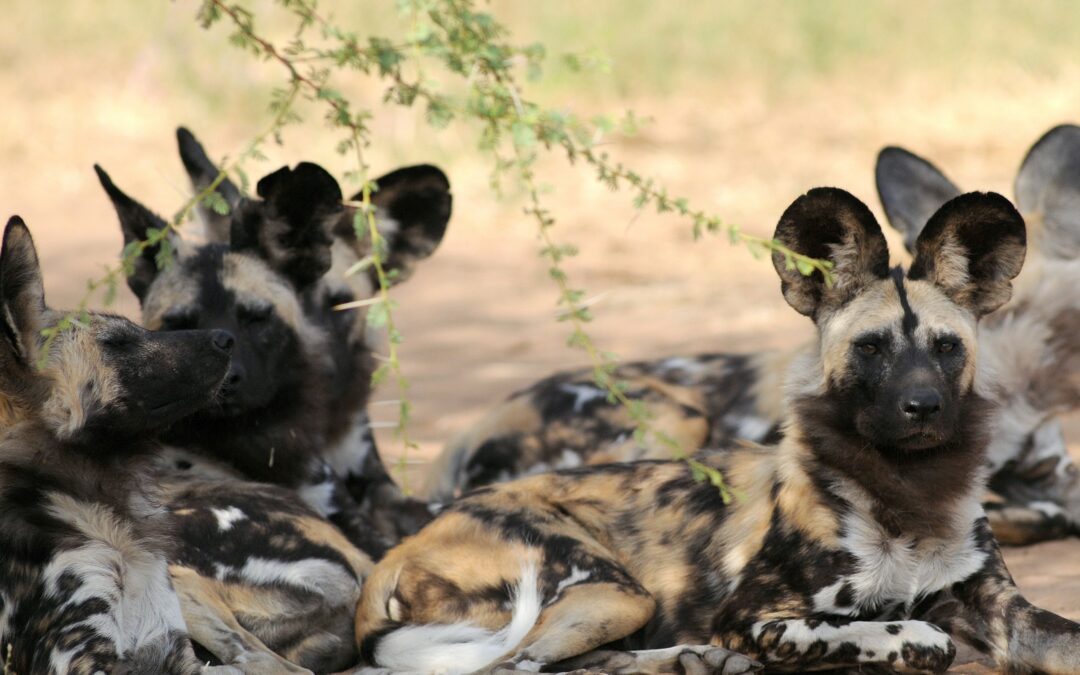
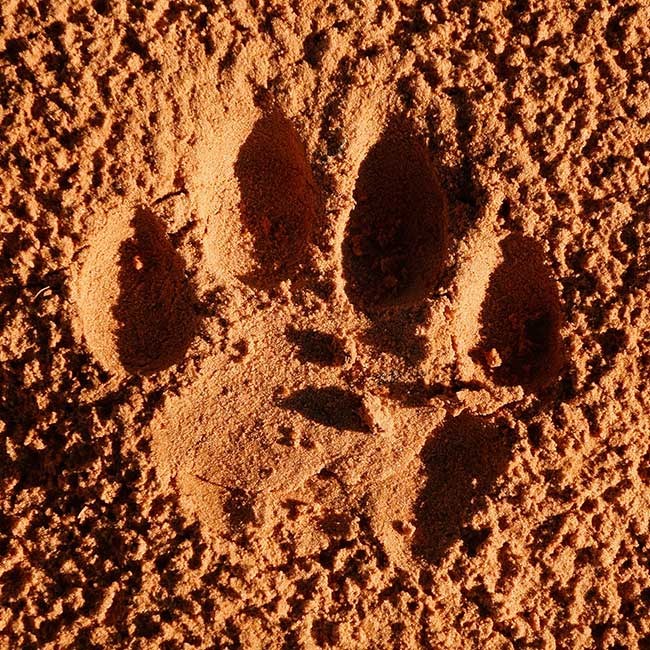
[/vc_column_text][vc_column_text]Across Africa, there are only an estimated 6,600 Wild Dogs that occur in the wild, making them the continent’s 2nd most Endangered carnivore behind the Ethiopian Wolf. In Africa, Wild Dogs inhabit only 14 of the 39 countries where they historically occurred, having lost approximately 93% of their historic range due to habitat loss and a rapidly expanding human population. Sadly, this species faces many other threats such as loss of prey, conflict-related killings, snaring and roadkill incidents.
In a recent published study (Nicholson, S. K., Marneweck, D. G., Lindsey, P. A., Marnewick, K. & Davies-Mostert, H. T. 2020. A 20-year review of the status and distribution of African Wild Dogs (Lycaon pictus) in South Africa. African Journal of Wildlife Research 50: 8-19.), we completed a national assessment of the status and distribution of South Africa’s population of Wild Dogs – the country’s most Endangered carnivore. We looked at two decades of population and distribution data for the species, from 1998 to 2017, and found some interesting results.
South Africa is considered to have three subpopulations of Wild Dogs:
1) The Kruger National Park
2) A managed metapopulation that has been established through reintroductions into isolated, fenced reserves across the country
3) A free-roaming population that occurs naturally outside protected areas – predominantly in KwaZulu-Natal, Limpopo and Mpumalanga provinces.
For the study period, the Kruger population has generally averaged 163 adults and yearlings and although the population growth has declined slightly, the population has remained stable through the years. Kruger has consistently supported the highest proportion of the national population of Wild Dogs over the last two decades.
South Africa’s managed metapopulation is made up of a series of individual reserves with intensive management among the reserves, to ensure that there is genetic flow between them. This subpopulation is managed by the Endangered Wildlife Trust and the Wild Dog Advisory Group (WAG). The number of metapopulation reserves has increased over the years, and the average annual population is 108 adults and yearlings. The metapopulation is the only subpopulation that has increased significantly over time and this is due to intensive conservation efforts and the reintroduction of Wild Dogs into 15 additional reserves since 1998. The contribution of the metapopulation to South Africa’s national population has increased significantly over time.
Free-roaming Wild Dogs make up the smallest subpopulation in the country with an average annual population of approximately 79 adults and yearlings. This subpopulation faces the largest number of threats as it is largely unprotected and generally outside of protected areas.
The overall South African population of Wild Dogs has remained stable for our study period and while it is a small population (< 500 individuals), the good news is that it is increasing.[/vc_column_text][vc_single_image image=”5469″ img_size=”large” add_caption=”yes”][vc_single_image image=”5470″ img_size=”large” add_caption=”yes”][/vc_column_inner][vc_column_inner width=”1/3″][vc_column_text css=”.vc_custom_1566891493571{margin-top: 8px !important;border-bottom-width: 6px !important;}”]
LATEST STORIES
[/vc_column_text][vc_widget_sidebar sidebar_id=”cs-1″][/vc_column_inner][/vc_row_inner][/vc_column][/vc_row][vc_row][vc_column width=”1/3″][vc_googleplus][/vc_column][vc_column width=”1/3″][vc_facebook][/vc_column][vc_column width=”1/3″][vc_tweetmeme][/vc_column][/vc_row]
CYCLING FOR A CAUSE
Tammy Baker, EWT Business Development Officer, TammyB@ewt.org.za
EWT supporter extraordinaire, and owner of the Hoedspruit Spar, Rowan Ferreira, recently took part in the Cape Town Cycle Tour 2020 to raise funds to purchase a GPS tracking collar for a pack of Wild Dogs, helping the EWT’s Carnivore Conservation Programme to continue monitoring this Endangered species.
Rowan set himself a fundraising target of R30,000 and exceeded this by R10,530, raising R40,530 in total! This is one of many events and drives that Rowan has undertaken for the EWT, making him a true Conservation Champion, and we would like to thank him for all his efforts and commitment to the conservation of Wild Dogs.
If you’d like to undertake your own fundraising effort for the EWT, please contact Tammy Baker on TammyB@ewt.org.za
AN ARTFUL APPROACH TO CONSERVATION
Grant Beverley, Lowveld Regional Coordinator, EWT Carnivore Conservation Programme
grantb@ewt.org.za
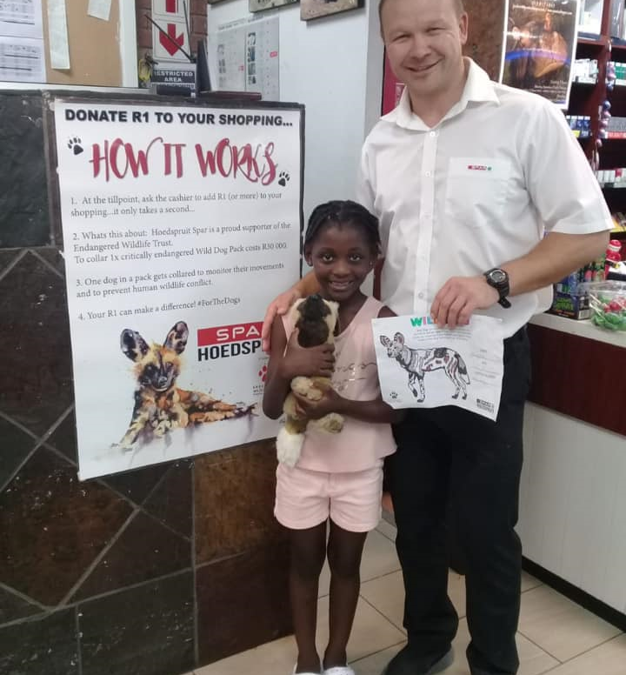
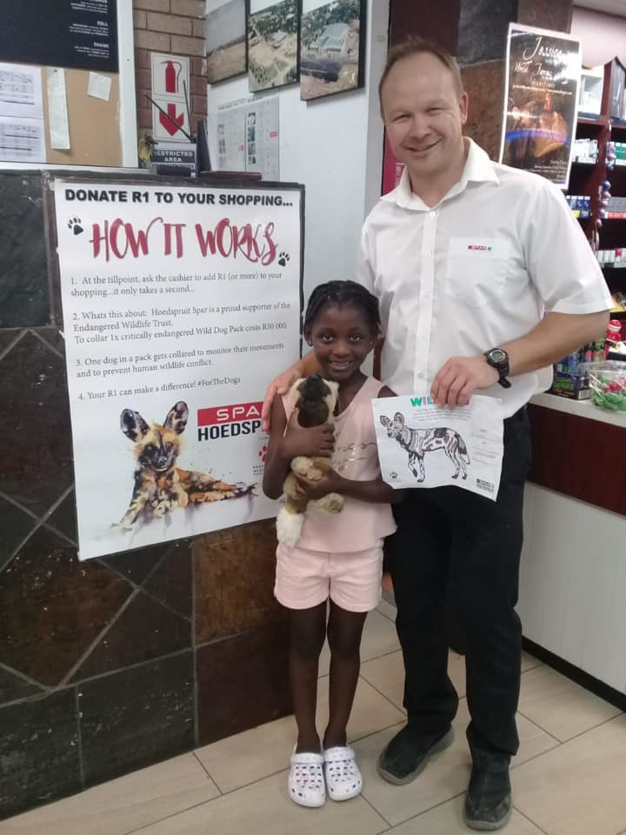
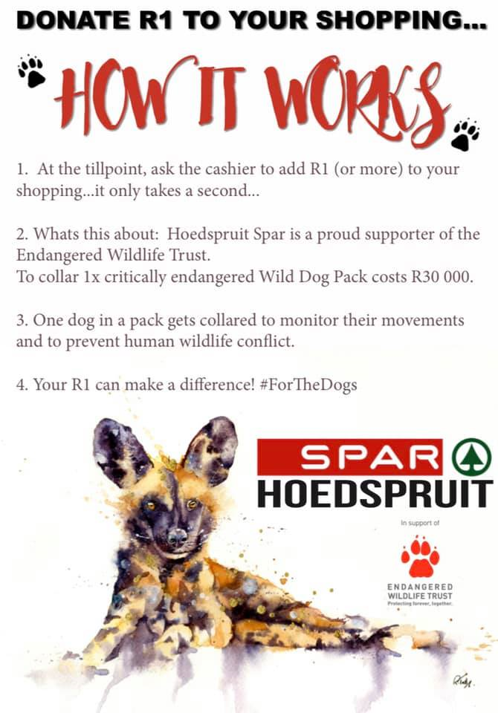
Rowan Ferreira and Hoedspruit SPAR have partnered with the Endangered Wildlife Trust to raise funds and increase awareness around the conservation of endangered species. Wild Dogs are currently the second most endangered canid in Africa, after the Ethiopian Wolf, and the most endangered carnivore in South Africa. Their behaviour is rather unique among canid species. They form incredibly strong social bonds with one another and are highly intelligent animals. Operating as a single unit, Wild Dog packs are some of the most successful predators in the world, but they need our help. Hoedspruit SPAR has encouraged customers to add R1,00 to their shopping to raise much needed funds towards the collaring of Wild Dogs in the Greater Hoedspruit area.
Hoedspruit SPAR has also launched a colouring competition for kids, where they stand the chance to win a fluffy toy and a SPAR voucher. Kulani Nyakane from the EWT recently visited Mgidi Primary School to launch the project. One hundred and ten learners from Mgidi made their voices heard through animal art, and winners were judged on the best solution to fight poaching as well as their creativity. Congratulations boys and girls!
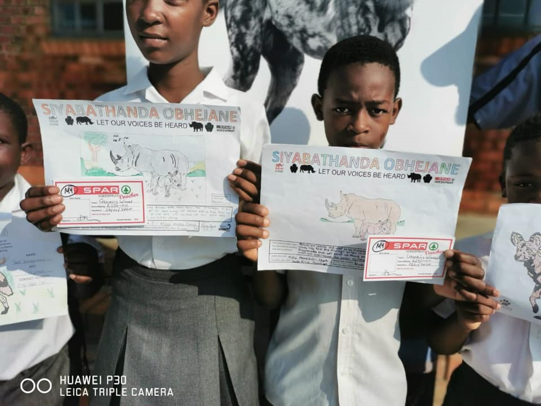
“Rhinos are special and need to be protected in order to ensure that future generations may have the privilege to see rhinos in the wild. I think there should be programmes that teach us about the importance of rhinos because the more we understand the better equipped we are to protect them.” Mnisi Mvuselelo, age 12 (grade 6)
More schools are signing up to take part, and if you would like your school to participate, please get in touch.