Join the EWT’s Giving Tuesday Online Auction. 1-3 December 2025. 

JOIN THE EWT’S GIVING TUESDAY ONLINE AUCTION.
1-3 DECEMBER 2025.

The Fragility of Africa’s Lions

The Fragility of Africa’s Lions

The Fragility of Africa’s Lions

Samantha Nicholson, the EWT’s Carnivore Conservation Programme
 

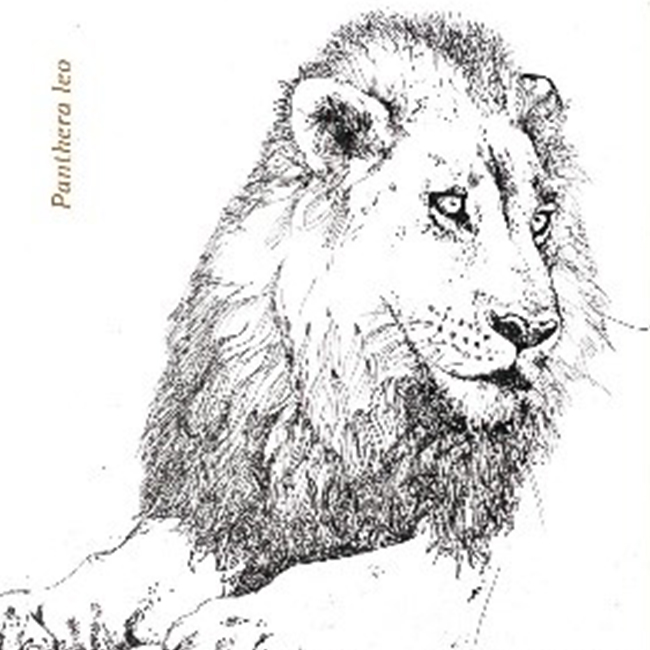
The African Lion (Panthera leo) is an iconic and culturally significant species, valued by both global public sentiment and local communities in many regions. Lions hold ecological value as apex predators, with their removal from ecosystems leading to adverse and long-lasting ecological consequences. Additionally, lions contribute to the economies of countries through tourism, attracting both photographic tourists and trophy hunters.
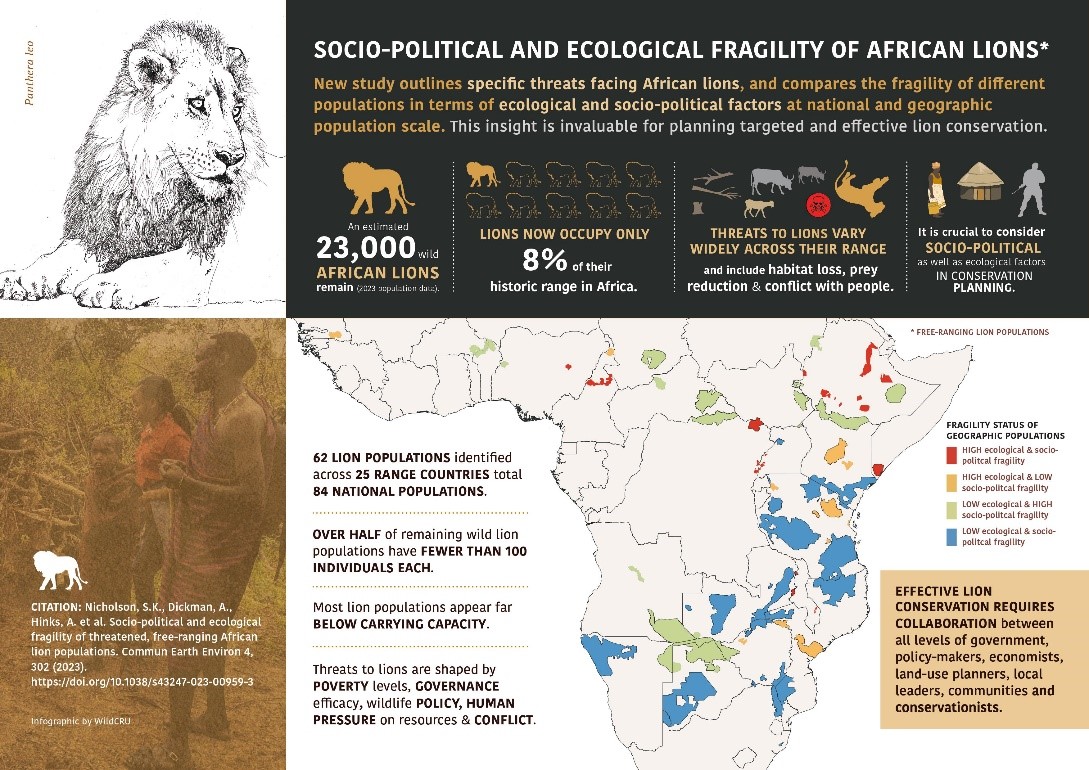
However, lion populations have dramatically declined over recent decades, with the most recent estimates suggesting 20,000 to 25,000 wild lions remaining in Africa, and they have been extirpated from 92% of their historical range. As such, effective conservation efforts are urgently needed, but the lack of comprehensive knowledge about specific threats and the socio-political contexts has hindered progress. The underlying drivers of lion threats are complex, involving socio-political factors such as poverty, governance (including corruption), wildlife policies, human pressures, and armed conflicts.
A recent study conducted a comprehensive assessment of the fragility of lion populations across their African range, considering both ecological and socio-political factors. The study first identified and mapped wild African Lion populations. The researchers then created two general categories of population fragility, ecological and socio-political, and identified factors in these two categories that may influence the survival of wild lions. For example, a smaller lion population or higher densities of people and livestock were factors contributing to higher ecological fragility, while higher corruption or lower GDP per capita would contribute to greater socio-political fragility. Once calculated, both socio-political and ecological factors were combined into a single overall fragility index, and each lion population was compared relative to all others. The fragility score does not suggest which lion populations deserve protection or funding. It does, however, highlight the varying ecological and anthropogenic pressures facing different population and which populations may require relatively more resources (financial or other) to conserve.

How you can help our cause:
DONATE VIA EFT:

The Endangered Wildlife Trust

FNB Rosebank (Branch code: 253305)

Account number: 50371564219

Use Reference: CCP LIONS


The combination of these two indices provided some interesting comparisons. Some populations may ultimately have similar fragility scores, but they are driven by different threats. Thus, while on the surface, the lone lion populations in Sudan and Benin may appear similar, they likely require different levels of investment and perhaps even different types of intervention for conservation to succeed. Pouring money into conserving Sudan’s lions may be relatively ineffective unless the socio-political factors such as the civil war are dealt with first. Thus, stakeholders, investors and conservation groups must be aware of these differences when approaching lion conservation and evaluating how much money, time or other investment may be needed to see success.
Our study revealed that Maze National Park in Ethiopia was identified as the most ecologically fragile population at both a geographic and national level. This can largely be attributed to intense edge effects from high densities of both cattle and people. When assessing at the national level, Cameroonian and Malawian lion populations were most ecologically fragile due to their small populations and isolation from other lion populations. Somalia was the most fragile lion range country from a socio-political perspective. Maze National Park and Bush-Bush (Somalia) were found to be the most fragile overall when ecological and socio-political fragility scores were combined.
Conservation is needed more than ever. Our study showed less than half of the 62 known remaining free-ranging wild African Lion populations have over 100 lions. African Lions remain in only 25 countries and nearly half of these nations have fewer than 250 individuals. Eight countries now house only a single wild lion population. Although lions are estimated at between 20,000 and 25,000 individuals, there is concern that these small populations and countries with few individuals will disappear.
These findings emphasize the need for more nuanced and precisely targeted lion conservation plans, considering both ecological and socio-political dimensions. As lions teeter on the brink of extinction, this research serves as a vital resource for informed conservation efforts. By considering ecological and socio-political factors, this model offers insights into factors affecting population persistence and successful conservation action.

Nicholson, S.K., Dickman, A., Hinks, A. et al. Socio-political and ecological fragility of threatened, free-ranging African lion populations. Commun Earth Environ 4, 302 (2023).

https://doi.org/10.1038/s43247-023-00959-3


Conservation Canine Delta

Conservation Canine Delta

A new member of the EWT Pack

Conservation Canine Delta

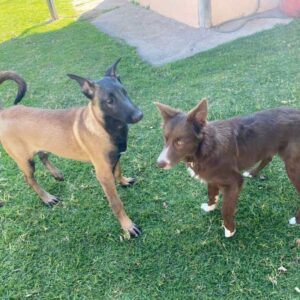
Hi, I am Delta, a six-month-old brown and white Border collie. My parents work with sheep on a farm in the Eastern Cape, so I have good working genes. I recently moved to the Nama-Karoo to train as a scent detection dog with the EWT’s Drylands Conservation Programme. I hope my nose and enthusiasm will help the EWT with their conservation research projects. My first job is to find Riverine Rabbit scat, so I have started my training on the scent. However, I am still a little bit young to start working full-time, so my human (Esther Matthew) has made it her goal to expose me to as many things as possible. These include places, people and other animals! She recently took me to the EWT head office in Johannesburg. What a great experience! After around 12 hours in the car (not my favourite part), I got to play with some of the other EWT working dogs, which was fantastic. My new buddy, Mufassa, is also a Conservation Canine Cadet in training! I also got to meet loads of new people, saw my first rabbits and chickens, and see all the new sights and smell all the different smells. It was also interesting to live in a different house for a week. I’m already looking forward to my next adventure…

Running for Lions

Running for Lions

Running for Lions

Melissa Jacobs and Sune Alexander are passionate about the plight of our wild lions and are running the Comrades Marathon to raise money for lions by supporting our lion project in the Greater Limpopo Transfrontier Park (GLTFCA).

The Endangered Wildlife Trust, SANParks, the National Administration of Conservation Areas in Mozambique, the Mozambique Wildlife Alliance, and Peace Parks Foundation have embarked on an ambitious partnership to understand and protect the GLTFCA’s population of Africa’s most iconic species. A vital project component involves monitoring lion prides across the GLTFCA using GPS satellite collars. The information provided by the collars helps anti-poaching teams to produce priority maps that show habitat, landscape features, and other resources used regularly by lions. Teams can then focus their protection efforts in high-risk areas rather than trying to secure large swathes of ‘potential’ lion habitat. Poachers sometimes use similar information to target lions more effectively, and we want to be a step ahead of them. The collars will also be used to check on the lions more frequently to identify missing individuals and track their movements to identify potential poaching activities.

The EWT will use the funds raised by Sune and Melissa to collar lions and implement relevant anti-poaching activities.

  • Satellite VHF Lion collars: R50,000 each
  • Lion monitoring for one month: R50,000
  • Vehicle payment and maintenance for 24 months: R250,000
  • 100 Camera traps: R250,000

Help us do more for our wild lions – the Pride of Africa!

To find out more and support Sune and Melissa, follow this link.

It’s a matter of pride

It’s a matter of pride

IT’S A MATTER OF PRIDE

Marnus Roodbol, EWT Carnivore Conservation Programme Field Officer, marnusr@ewt.org.za  

I am living my lifelong dream. I am part of an exciting project intended to understand and protect Africa’s most iconic species, the African Lion, within the Great Limpopo Transfrontier Conservation Area (GLTFCA). The GLTFCA, which includes Kruger National Park (KNP) in South Africa, and Limpopo National Park (LNP) in Mozambique, is one of the ten remaining Lion strongholds in Africa. I have been blessed to travel through most of southern and east Africa, but Mozambique was one for the books – the multiple police and army stops along the way, the non-existent road structures, and some of the kindest and friendliest people in the world. Everybody is just trying to make a living. Arriving at Limpopo National Park, I was rather impressed by its unique beauty which is that of raw nature. Few parks in Africa still contain that rugged beauty that requires some elbow grease and sweat to see the potential. The park is directly opposite the world-famous Kruger National Park; however, it is seen and known as the ugly sister or the “underdog”. The biodiversity is the same as in the Kruger Park, yet it doesn’t attract near as many tourists as the KNP. I like supporting the underdog though, as I tend to see similar qualities in myself at times (rough around the edges but just as full of fun).

I met many people working within this biosphere, some doing conservation research, others doing rather impressive anti-poaching work, having a significant impact in some regions of the reserve. During my time I was fortunate to spend many a night out in the bush with only a tent and two rangers, there to support and protect me from the constant threat of poacher activity within the park. We worked tirelessly daily, tracking lions on foot and searching from the sky in a tiny plane known as a “bat hawk”, and we managed to find signs and occasionally catch sight of the Lions that we were looking for.

The next chapter, however, was the one that excited me the most. I was sad to leave magnificent Mozambique but was thrilled to begin my dream job working with Lions in the Kruger National Park. But as life goes, it seems that just when you settle into a rhythm and pick up speed, it gives you some obstacles to keep you grounded. A broken-down vehicle meant that I had to attempt the rather tricky and challenging feat of driving a vehicle 400 km back to Maputo with no steering support or ABS brakes. This was a challenge, but with the fantastic support of the EWT Head Office staff who arranged contacts, accommodation, and vehicle support, and I was ready to get back on the road in a couple of days.

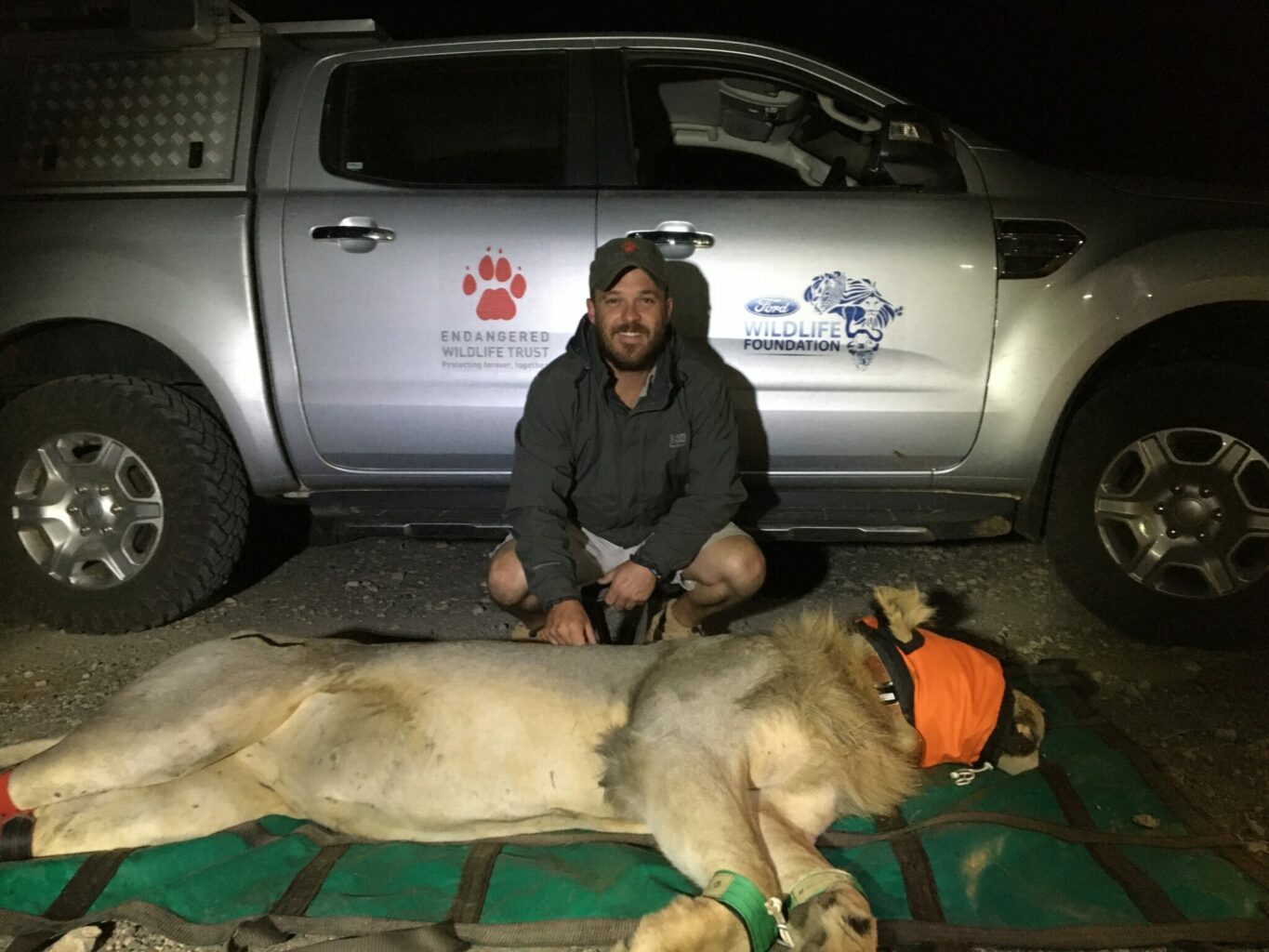
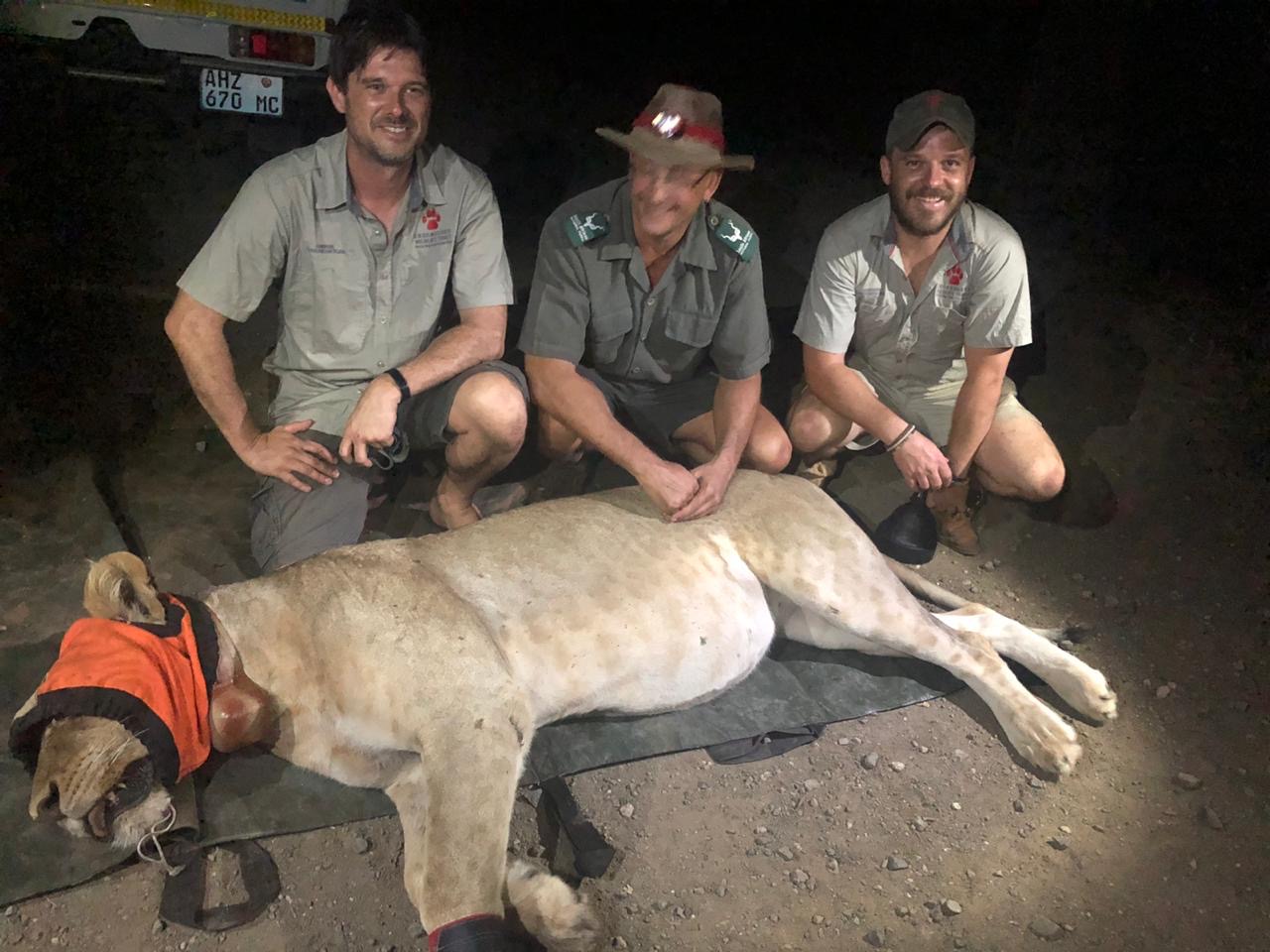
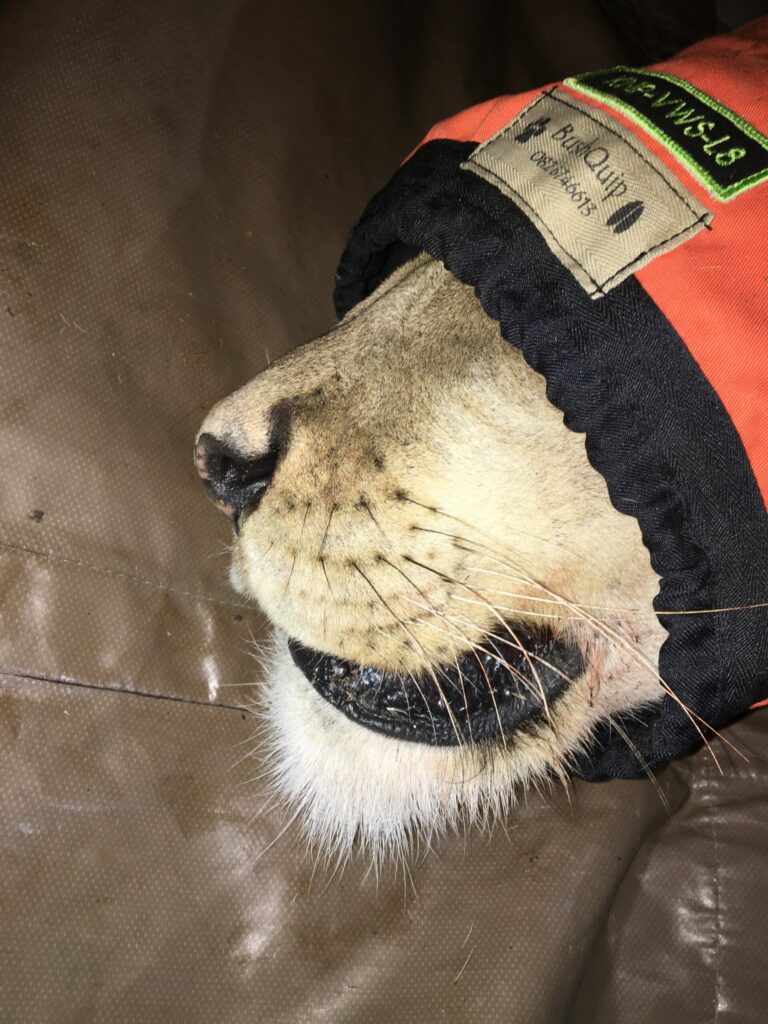
On the eagerly awaited first day of collaring Lions, I was joined by my colleagues Yolan Friedmann, David Mills, and Grant Beverley, and we were extremely fortunate to collar one large lioness in the Shingwedzi district of the Kruger Park. The following day, a much smaller team ventured out yet again during the evening but failed to collar any new lions due to heavy winds and a bit of rain. Luckily one team did manage to remove a collar that had been placed on a male lion several years before our project by a previous researcher, so this male is now free after playing his part for conservation.

There were times when the nights felt lengthy as the evenings and early mornings melted together, and it was nearly impossible to sleep in a tent during the day time in the overwhelming heat. Nevertheless, we managed to collar several more lions over the next few days, and by the last call up, which began at 23:00, I drifted off into a light sleep as the pre-recorded sound of a distressed buffalo calf echoed through the still evening air (used to call up lions). Eventually, we called it quits around 02:00 and headed home, where we then nearly had a close encounter with a vehicle sitting next to some stationary Lions next to the gravel road. The two Shingwedzi boys were resting, on what we suspected was their mission to meet up with the female we had collared on the first evening.

All in all, the beginning of the project was successful, even though there were some glitches along the way. I guess the glitches are what build tolerance, patience, as well as wisdom, and are par for the course when working with wildlife

This project is a partnership between the EWT, South African National Parks (SANParks), National Administration of Conservation Areas in Mozambique (ANAC), and the Peace Parks Foundation, with funding from the UK Government, through the International Wildlife Trade Challenge Fund.