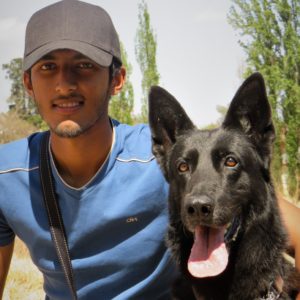
IN MEMORIAM: FAREWELL TO FURY, A CONSERVATION HERO (7 FEBRUARY 2012 – 3 JUNE 2020)
Ndifelani Mulaudzi, Trade Officer, EWT Wildlife in Trade Programme
NdifelaniM@ewt.org.za
Much-loved Conservation Canine, Fury, sadly passed away on 3 June, as a result of complications arising from a twisted spleen, despite his handler and best friend, Shay Seebran, and the vet’s every effort to save him.
Fury, a German Shepherd, was an incredible conservationist, working tirelessly to protect endangered species in many public and private game reserves in South Africa. As a detection dog, he was trained to detect wildlife products such as rhino horn and ivory, as well as arms and ammunition. Over a two-year period, he and Shay conducted 5,213 vehicle searches at 27 gates in 16 game reserves. They also conducted compound, open area and cargo searches at various airports.
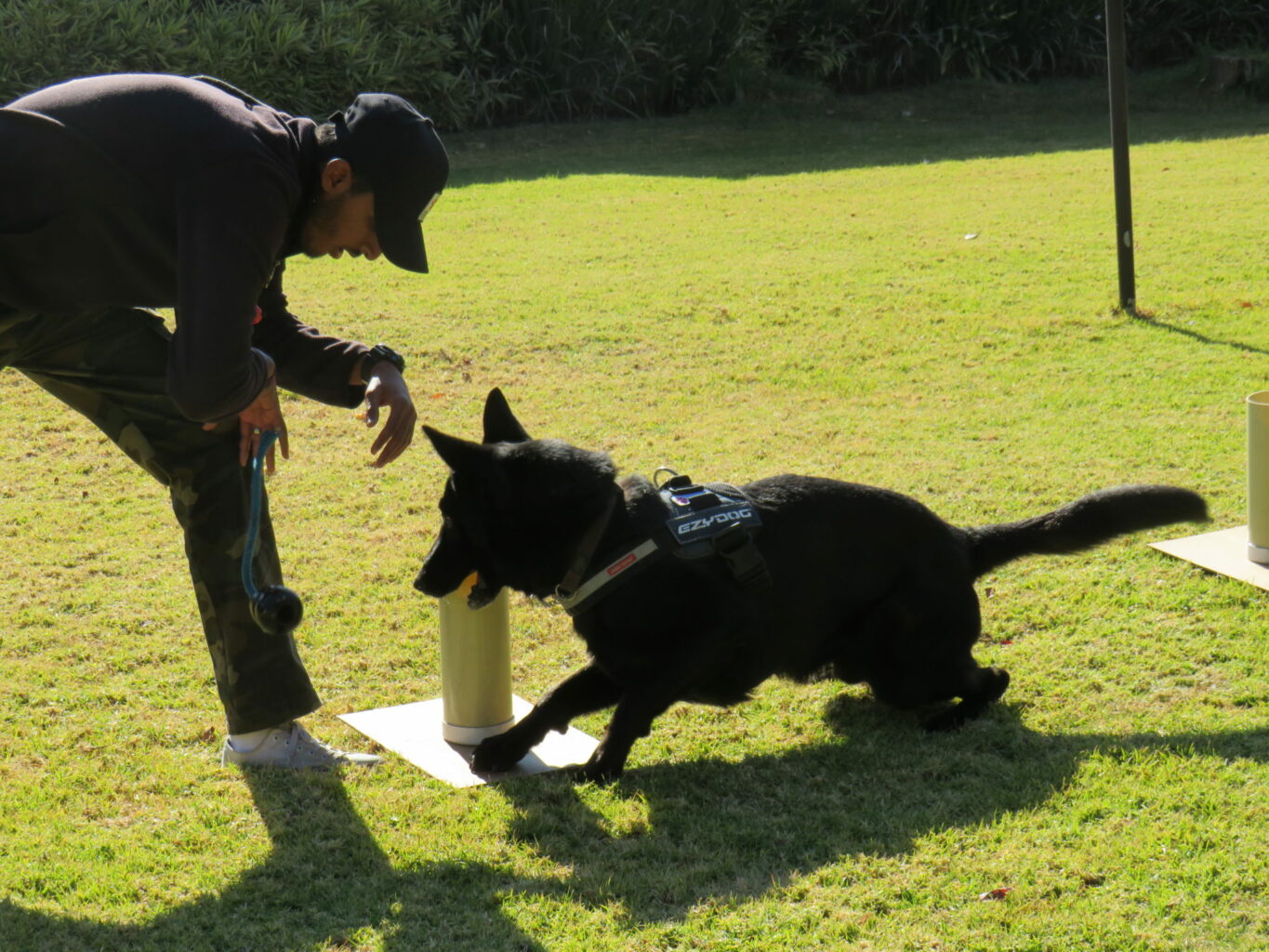
The EWT pays tribute to Conservation Canine Fury for the massive difference he has made with his successful seizures of wildlife contraband and illegal arms and ammunition, helping in the fight against illegal wildlife trade, and preventing many poaching incidents from occurring.
More than that, Fury was a constant companion and partner to Shay, whose life he saved more than once. These best friends had been working and learning together for over two years, travelling South Africa as a team, and spending every moment of their days together, trying to leave a lasting footprint in the anti-poaching world. Shay is devastated by his loss, and says, “The legend may be gone, but certainly not forgotten. I will always appreciate your service, Fury. Rest in power, son.
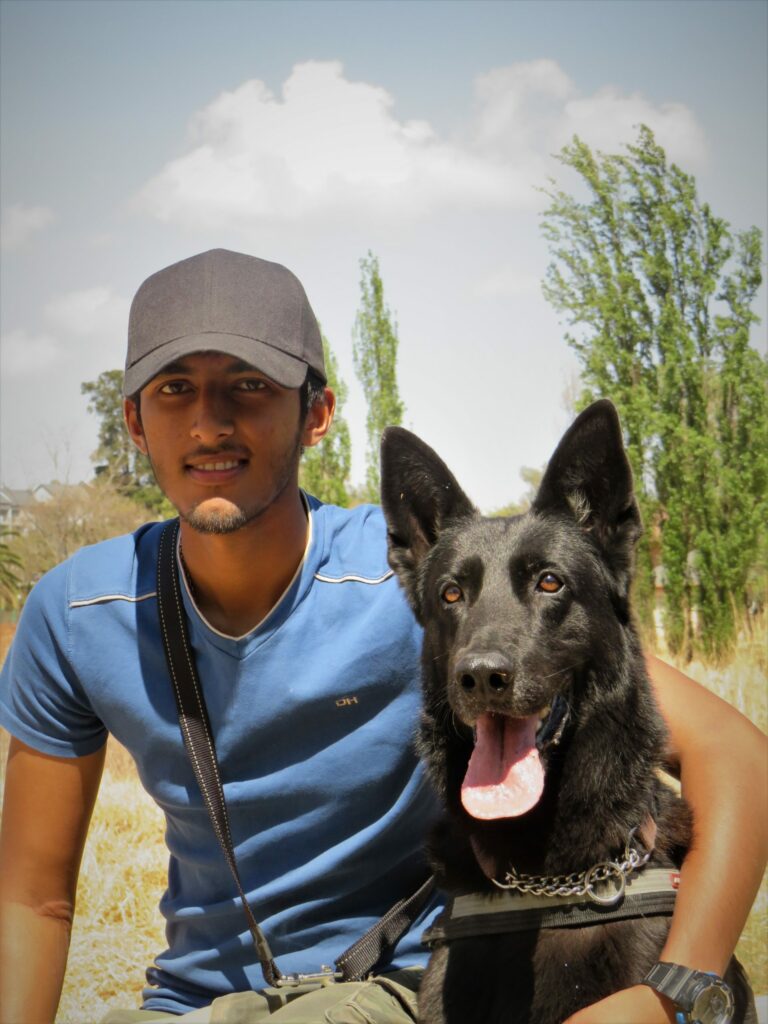
Conservation Canine Fury was indeed a legend, and well-known to many around the world. He has left an amazing legacy behind, to be carried on by many conservationists just like him. He has been laid to rest at his home, the EWT Conservation Campus.
Fury’s work was funded by U.S Fish and Wildlife Service and Tourvest, and supported by Royal Canin and Boehringer-Ingelheim.
MY JOURNEY IN CONSERVATION AND THE ROAD AHEAD
Innocent Buthelezi, Field Officer, EWT Wildlife and Transport Programme
innocentb@ewt.org.za
I was born on 27 January 1990 at Jericho Clinic. Jericho is a rural village in the North West Province of South Africa. I grew up in Johannesburg, where my mother worked as a domestic worker. During the school holidays, I would alternate between visiting my maternal family in North West and my paternal family in KwaZulu-Natal, where my parents now live in Madadeni, near Newcastle.
While my parents were growing up, neither of them had the opportunity to finish their schooling, but they were determined to build a better future for me and provide me with the opportunities that they never had. Living in Johannesburg, I was fortunate to receive a higher standard of education than many other children residing in the more rural areas of the North West or KwaZulu-Natal. At the age of seven, I discovered a love for karate, and progressed to Red Belt by the age of 13. I stopped my karate lessons when I went to high school, but continued with other sports such as soccer, rugby, and athletics. My love of rugby encouraged me to build up my strength and stamina, and I started lifting weights that I made from cement compressed into empty paint cans.
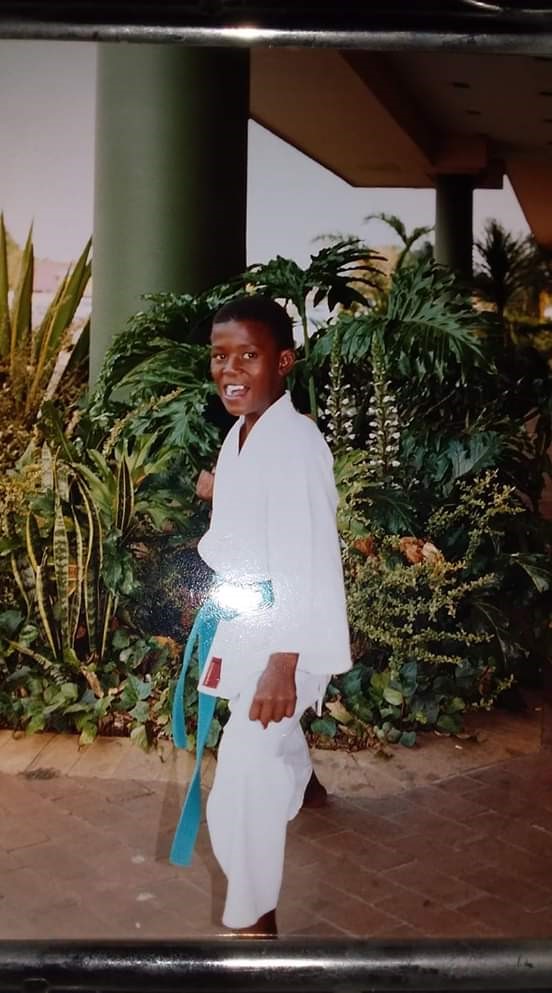
During my teenage years, while not doing sports, I developed an interest in watching National Geographic and Animal Planet on DSTV, where my passion for nature really took hold, and eventually led me to pursue a career in nature conservation. I matriculated in 2008, and I started my studies at Tshwane University of Technology (TUT) in 2009. I graduated from TUT with a National Diploma in 2012, which I would never have achieved without the generosity of my mother’s employer, who financially supported my studies. No one else in my family had completed schooling, let alone tertiary studies. After graduating I volunteered with SANBI and worked at Rand Water as an assistant until 2017, when I embarked on my current career with the Endangered Wildlife Trust’s Wildlife and Transport Programme (WTP).
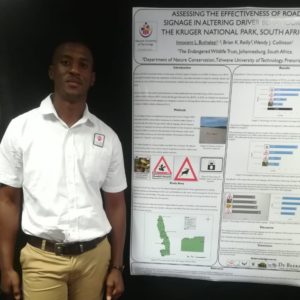
Upon joining the EWT in 2017, I felt the urge to pursue a Bachelor’s in Technology (BTech), and with support from the EWT and a generous study bursary from Trans African Concessions (TRACN4) to conduct my BTech through a research project entitled ‘Assessing the effectiveness of road signage in altering driver behaviour in the Kruger National Park (KNP), South Africa,’ based on reports on social media (specifically Facebook) that indicated levels of public concern for the number of animals being killed on the roads (i.e. roadkill) inside the KNP.
I have always been a dreamer; it is what has always kept me going throughout my conservation career, and my ultimate goal is to achieve a PhD. Despite the disruption of the academic year by the COVID-19 pandemic, I aim to complete my BTech this year and I hope to graduate in 2021.
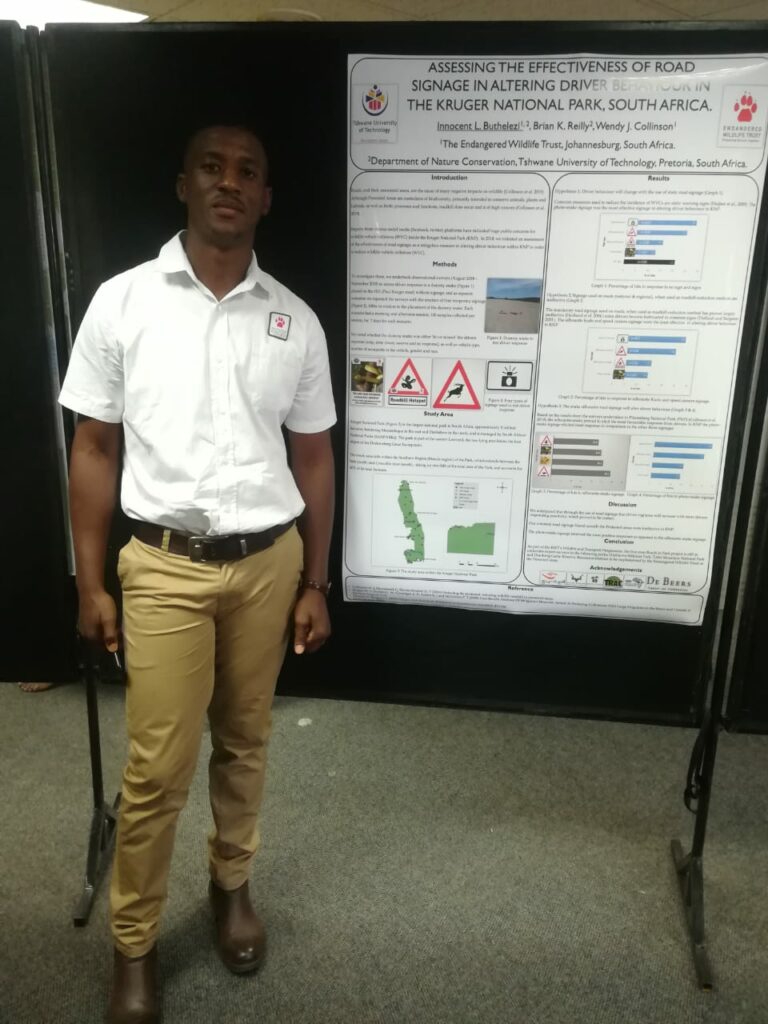
I will not deny that working full-time and studying has not been without its challenges, particularly while fulfilling the role of a husband and father. Fortunately, a lot of my studies have related directly to the work I do with TRACN4, and without the bursary it would have been extremely difficult to support my family and further my studies. I am eternally grateful for the faith they have placed in me and bringing me ever closer to my destination as a wildlife conservationist.
PAINTING A BETTER FUTURE FOR AFRICAN WILD DOGS
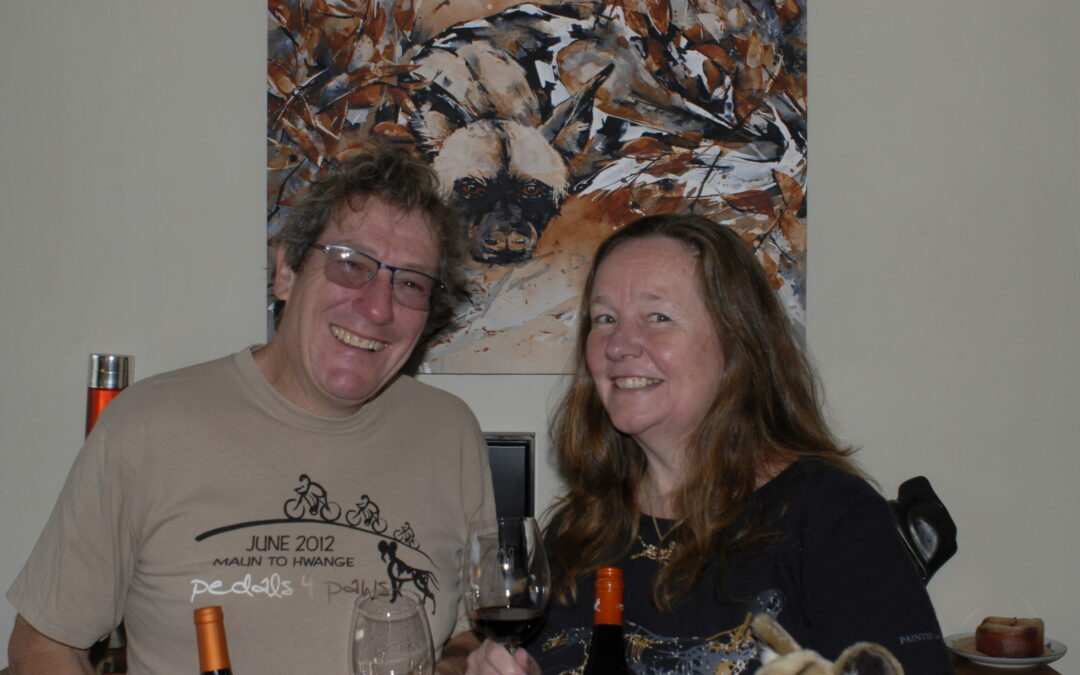
Painted Wolf Wines is based in Paarl, South Africa and was founded in 2007 by Emma and Jeremy Borg, with conservation at the core of the company. PWW is dedicated to the production of authentic, distinct, and delicious wines, and to the conservation of painted wolves (African Wild Dogs) and their natural habitat. The company donates 4–5% of their turnover to the Endangered Wildlife Trust (EWT).[/vc_column_text][vc_single_image image=”6006″ img_size=”full” add_caption=”yes” alignment=”center”][vc_column_text]The Painted Wolf Wines pack lives by the mantra ‘Remarkably persistent, persistently remarkable’. And they have once again lived up to their mantra during a very difficult time, particularly for wine makers in South Africa.
PWW received enormous support from the public during the phase four lock down period, with a significant number of orders being placed for delivery in June. Through these sales, they were able to donate R20,000 to the EWT and specifically towards our African Wild Dog project headed up by Cole du Plessis. Cole is the Wild Dog Range Expansion Project Coordinator and KZN Regional Carnivore Coordinator.[/vc_column_text][vc_single_image image=”6007″ img_size=”full” add_caption=”yes” alignment=”center”][vc_column_text]Painted Wolf Wines has been donating to conservation in southern Africa since the establishment of the company in 2007. For the past 11 years, their sales in southern and east Africa have helped to support the EWT. As a major supplier to the safari lodges and the hospitality sector, they were faced with the potential of having to reduce their donations. However, with any sales direct to the public, they were able to increase their per bottle donation, and this will be ongoing.
Cole du Plessis says “Painted Wolves (African Wild Dogs) have written their very own underdog story. A history of deliberate persecution, habitat fragmentation, snaring and disease are some of the threats that have certainly knocked away at the species, but they keep fighting back. The EWT and Painted Wolf Wines continue to work together in this fight. There are however no short-term solutions. We have to mitigate the ongoing threats, raise their profile, and expand their range to increase the population numbers. If we can create this platform for them, then we can leave it to South Africa’s most endangered carnivore to do the rest. Their intelligence, resilience and pack cohesion certainly make them capable of that. Thank you, Painted Wolf Wines, for your support in sticking by the Painted Wolves and for doing your part in saving the species.”
BIOLOGISTS COLLABORATE TO TEACH COMPUTERS TO IDENTIFY DOLPHINS
Shanan Atkins
shananatkins@gmail.com
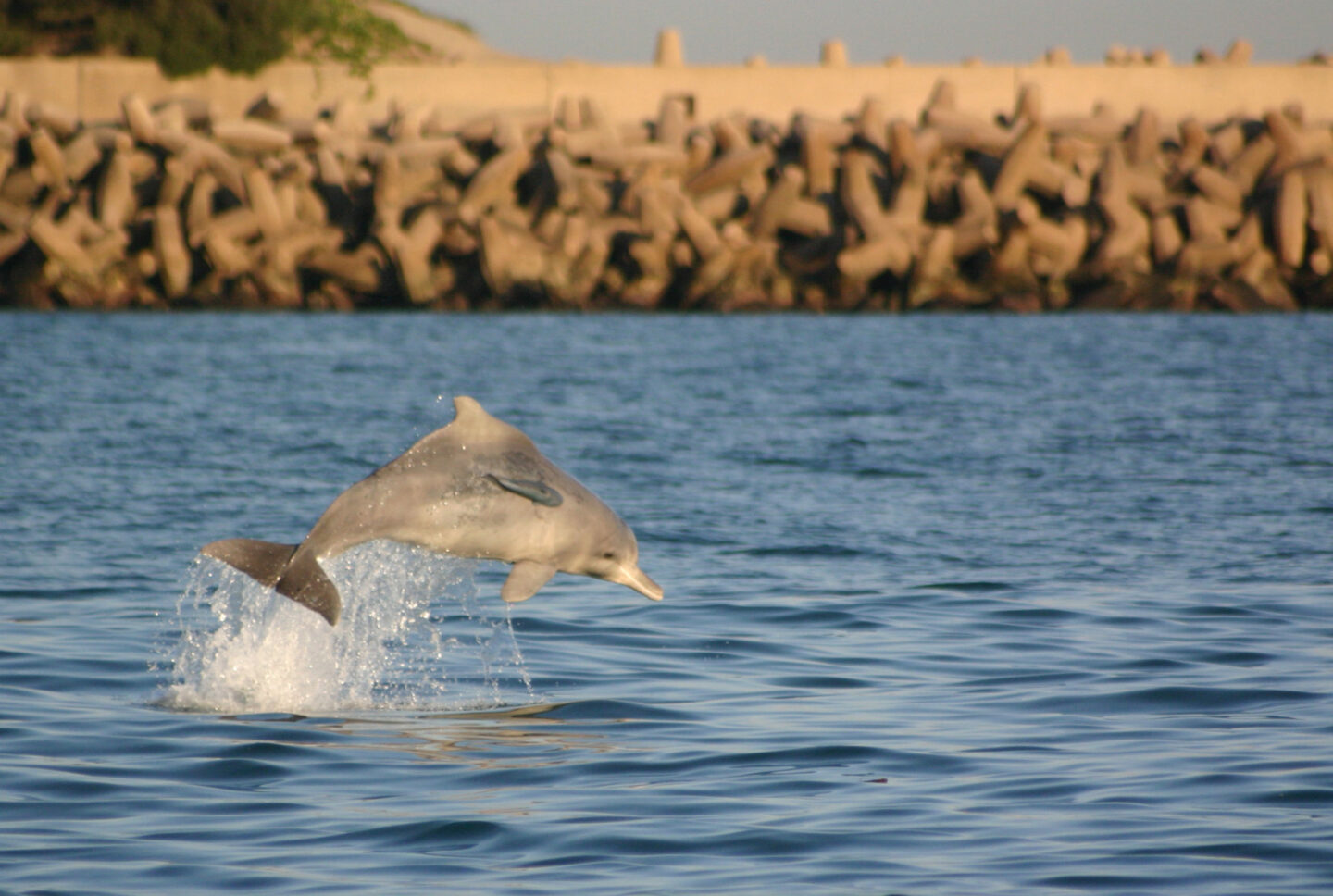
Marine biologists from South Africa are participating in an international collaboration to improve our understanding of the conservation biology of the endangered Indian Ocean Humpback Dolphin (Sousa plumbea). They are working together to expedite and automate the process of recognising individual dolphins to facilitate a better understanding of their movements and population dynamics, and to contribute to conservation efforts.
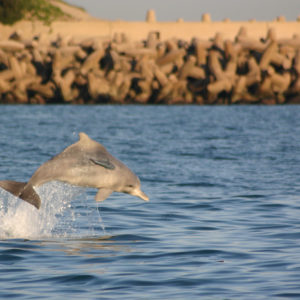
Indian Ocean Humpback Dolphins can be found from the southern tip of Africa to the southern tip of India in a very narrow strip of shallow coastal water. This restricted distribution makes them particularly vulnerable to the negative impact of human activities on the land and in the sea. For example, they die in the large number of gillnets set in this zone to catch fish, while pollution and overfishing are degrading the quality of their habitat.
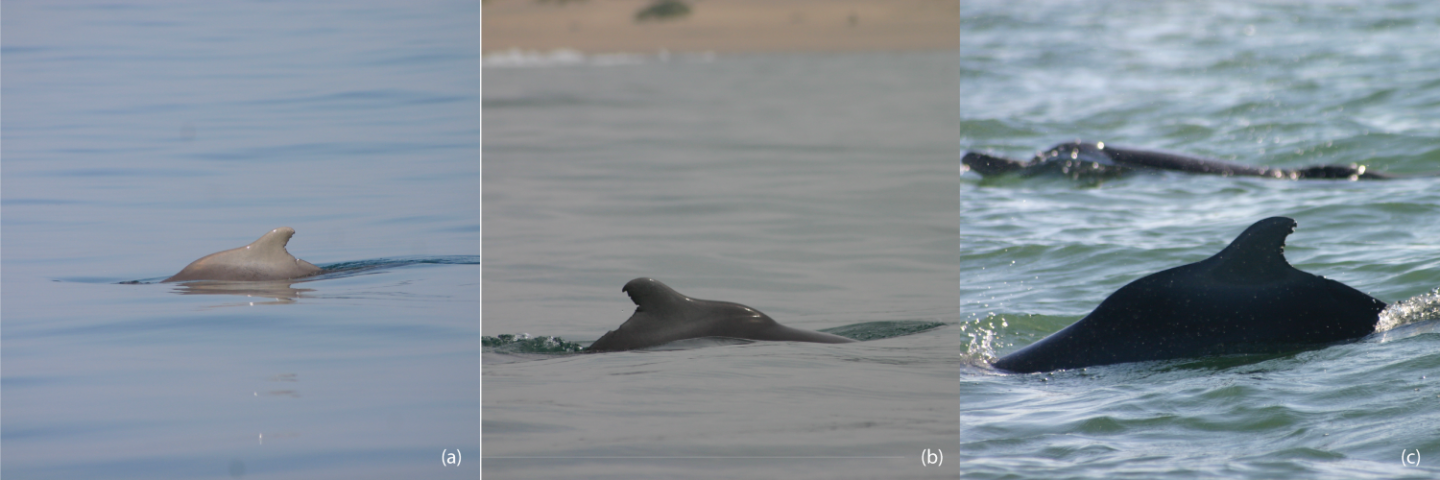
Dolphin researchers throughout their range are concerned about the extinction rate of this species and are working to understand and reverse the situation. They study the behaviour and population dynamics of these dolphins in order to contribute to the design, implementation and monitoring of conservation interventions. To do this, the biologists often need to identify individual dolphins and use a research tool called photo-ID (short for photographic-identification). They take photographs of the dolphins’ dorsal fins and use the nicks and notches, scars and colour patterns on the dorsal fin and body to tell distinctive individuals apart. Once identified, individuals like Zipper, La Linea and Finley Quaid (pictured below) who were photographed at Richards Bay can be recognised over time along the coast.
The process of photo-ID is time consuming. In recent years, photo-ID of various species, including zebras, has been automated. An automation front-runner is WildMe, a non-profit, wildlife conservation organisation, uniquely comprised of software and machine learning engineers. They have been working with leading marine mammal biologists from the Indian Ocean Network for Cetacean Research (Indocet) and the Arabian Sea Whale Network to develop Flukebook, a platform to host and match the ID photos of humpback whales, bottlenose dolphins and whale sharks. They use algorithms that examine the distinctive features of individual animals to assess similarity and identify if that particular individual has been photographed before. Humpback dolphin researchers are keen to use this platform too but for a variety of reasons, it is not so simple.
To expedite the process, they gathered all the Humpback Dolphin researchers together to share their photo-ID images. This collaboration involves 35 biologists, from 8 countries (South Africa, Madagascar, Tanzania, Kenya, Abu Dhabi, Dubai, Iran and India), who submitted more than 1,200 photographs of almost 300 distinctive humpback dolphins. This is one of the largest collaborations of its kind.
South Africa’s SouSA Consortium, a network of dolphin researchers who study Humpback Dolphins at various sites along our coastline, submitted 569 of those images (141 distinctive Humpback Dolphins). One of the dolphin research projects, the Richards Bay Humpback Dolphin Project, was initiated by the Endangered Wildlife Trust in 1998. Some of the distinctive dolphins that were photographed in that first year are still being photographed now, 22 years later.
Details of the collaboration were discussed at the recent International Whaling Commission by the Scientific Committee. They welcomed these efforts to automate photo-ID of Humpback Dolphins because they recognise the dire situation that Humpback Dolphins are in and they acknowledge the critical role that identifying individuals plays in conservation biology. They encourage funding agencies and individuals to provide support for this project.
THE SHINING STARS OF THE EWT
Belinda Glenn, EWT Marketing and Communications Manager
BelindaG@ewt.org.za
The EWT annual award ceremony is an opportunity to recognise those team members who have excelled in various ways each year. The 2019 edition took place on 27 November, and we are extremely proud of the following well-deserving winners:
- CEO Award: Constant Hoogstad (Senior Manager: Industry Partnerships)
- Programme of the Year: Soutpansberg Protected Area
- Programme Manager of the Year: Lourens Leeuwner (Wildlife and Energy Programme)
- Conservation Achiever: Amos Letsoalo (Wildlife and Energy Programme)
- Conservation Supporter: Claire Relton (Conservation Science Unit/African Crane Conservation Programme), Cynthia Chigangaidze (African Crane Conservation Programme), and Thembi Mlimi (Support Services)
- Outstanding Media Coverage: Drylands Conservation Programme
- Pawprint Brand Ambassador: Cole du Plessis (Carnivore Conservation Programme) and his dog, Lihle
- Newcomer of the Year: Khanya Peacock (Communications)
- Honey Badger Award (Fiercest Field Officer): Oscar Mohale (Wildlife and Energy Programme)
- Maloti Award (Best Conflict Resolution): Ashleigh Dore (Wildlife in Trade Programme)
- Special Recognition: Richard Berridge (Support Services)
- Long Service – 20 Years: Harriet Davies-Mostert (Head of Conservation)
- Long Service – 10 Years: Emma Chisare (Human Resources) and Grant Beverley (Carnivore Conservation Programme)
Congratulations!
A huge thank you to Trappers and Faithful to Nature who donated prizes for our worthy winners.
