A LEGACY OF LAND: PAPKUILSFONTEIN PROTECTED ENVIRONMENT
JP le Roux, Field Officer , Drylands Conservation Programme, jeanpierrel@ewt.org.za
The proposed Papkuilsfontein Protected Environment is situated in the Northern Cape Province of South Africa. The farm forms part of the Global Environment Facility (GEF) 5 Sustainable Land Management (SLM) initiative implemented by the Endangered Wildlife Trust’s Dryland Conservation Programme and funded by the United Nations Development Programme and Department of Environment, Forestry, & Fisheries.
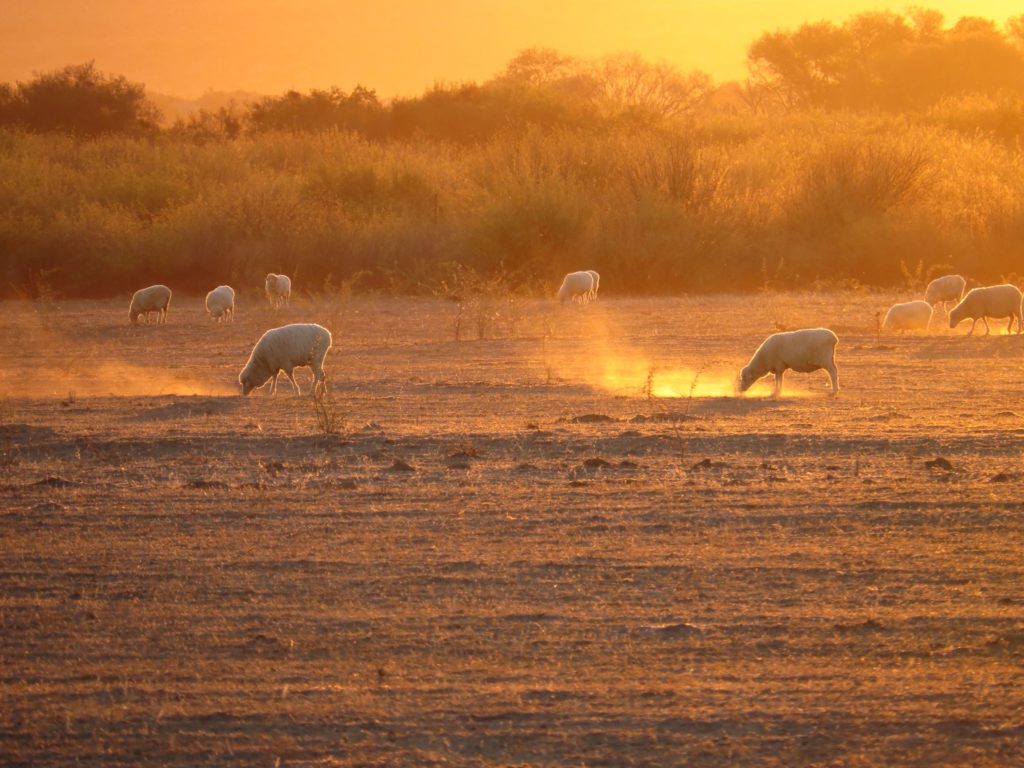
The GEF 5 project promotes innovative approaches to protecting the vulnerable ecosystems in the dryland areas. Most farms in the drylands rely solely on agricultural income, which makes them particularly vulnerable to adverse climatic conditions, such as the current drought. One of the ways the project assists farmers, is through encouraging diversification of farming activities that are not weather dependent and that can help build economic resilience in the face of negative environmental and economic conditions.
An SLM exchange is used as one of the strategies to implement projects. The latter is an arrangement where the EWT offers assistance to the farmer, in exchange for an SLM commitment. A Small Grant (SG) is made available to fund an SLM project that the farmer wishes to implement. In exchange for this, the farmer must actively contribute to the implementation of the project, usually in the form of materials or labour. In addition, the farmer must also make a land management commitment, normally this will entail the implementation of certain practices, management plans or conservation actions on the property.
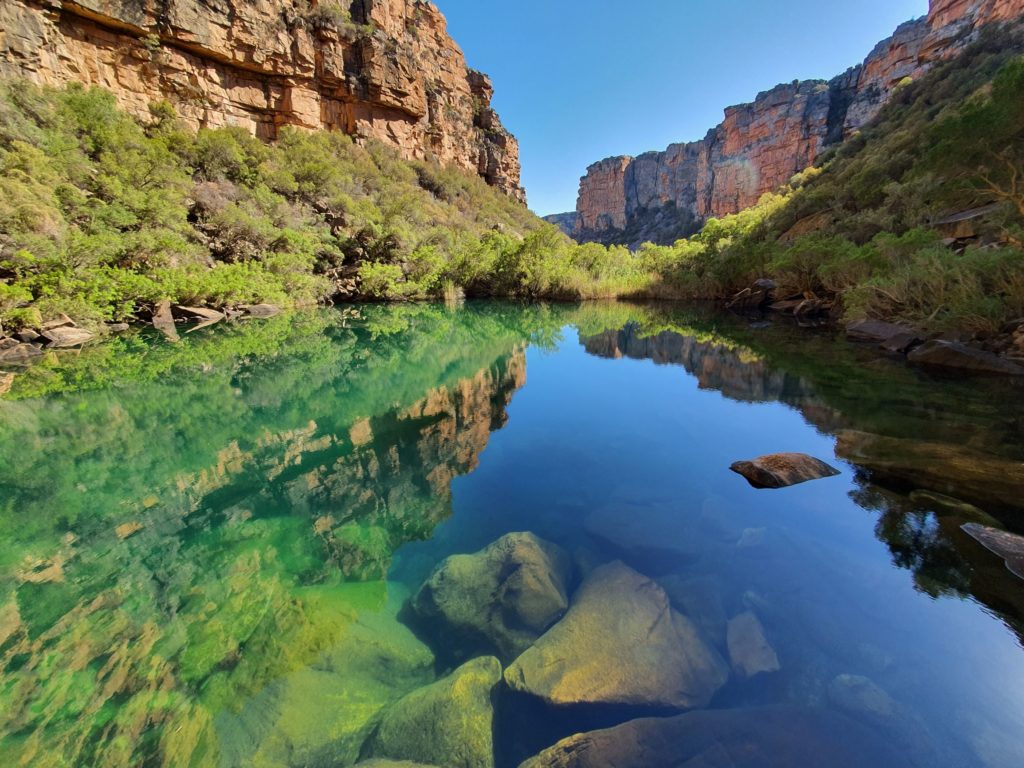
In the case of Papkuilsfontein, the Van Wyk family applied for assistance to develop a network of mountain bike trails on the farm to complement their existing guest farm accommodation. The mountain bike trails will contribute to existing activities and will draw a new tourism segment to the farm. This will bring about more visitors which will translate into economic benefits and jobs. In exchange for this benefit, enabled by the Small Grant, the Van Wyk family has agreed to declare their farm a Protected Environment. The declaration process represents a collaboration between the landowner, the Northern Cape Department of Agriculture, Environmental Affairs, Land Reform and Rural Development’s Provincial Biodiversity Stewardship Programme, and the Endangered Wildlife Trust.
Papkuilsfontein will serve as a flagship project to demonstrate the effectiveness of diversifying income streams, as well as actively integrating a biodiversity conservation approach in a living working farming landscape. The Van Wyk family has been farming on this farm for more than six generations and this has always been done with the mindset of conserving this biodiversity hotspot.
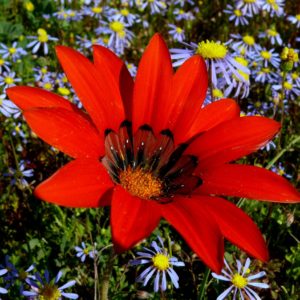
What makes Papkuilsfontein such an important area to conserve, is that it lies on the Bokkeveld Plateau, which is known as the bulb capital of the world. More than 1350 species of flowering bulbs occur here. In some areas the density of bulbs reaches more than 20,000 plant per square meter, more than anywhere else on earth.
Four main vegetation types can be found on Papkuilsfontein, Bokkeveld Sandstone Fynbos, Nieuwoudtville Shale Renosterveld, Hantam Karoo and a small area of Vanrhynsdorp Shale Renosterveld. Each of these vegetation types contains a myriad unique species. Approximately 3000 species occur on the Bokkeveld plateau, with high levels of species endemism. More than 80 endemic species can be found here, most of the endemics are geophytes, together with a few succulents and shrubs. More than 30% of the endemics are Red Data species threatened with extinction.
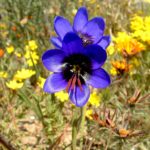
The amazing species richness of the area makes it a high priority to conserve. Looking forward, innovative approaches to protect areas like this will become more important for sustaining farming, tourism and conservation. We are proud to work with conservation champions such as the Van Wyk’s. The success of the project will encourage other farmers to diversify their activities, reduce their risk and conserve biodiversity on their farms. Watch the video of the project here
For more information visit Papkuilsfontein Website

Biodiversity gems on Papkuilsfontein
Besides the incredible botanical biodiversity, Papkuilsfontein is home to 36 mammal species recorded so far, including leopard, black backed jackal, silver fox, bat eared fox, Smith’s red rock rabbit, porcupines, duiker, Cape Clawless otter, pole cat, baboon, rock hyrax, klipspringer and kudu.
Bird species are well represented, with Blue Crane, Lesser Kestrel, Ludwig’s Bustard, Martial Eagle, Black Shoulder Kite, Jackal Buzzard, Cape Pheasant, Namaqua Grouse, Egyptian Goose, Spurwing Goose, Namaqua Pigeon, Rock Pigeon, Bokmakierie, Fiscal Shrike, and Cape Sugarbird all occurring here. Breeding pairs of Vereaux’s Eagles, Blue Cranes and Black Harriers have been recorded on Papkuilsfontein. The Rameron Pigeon, Cape Flycatcher and Southern Water Shrike may also occur along the riverine vegetation. Oorlogskloof Nature Reserve, which borders Papkuilsfontein, has recorded 152 species of birds, most of these probably occur on Papkuilsfontein as well.
Reptiles recorded on the farm include the Angulate Tortoise, Mountain Tortoise, as well as ten lizard, agama and gecko species. The most common snakes in the area include the Black Spitting Cobra, Boomslang, Cape Cobra, Rhombic Egg Eater, Skaapsteker and Whipsnake. Four frog species are found in the adjacent Oorlogskloof River and may occur in the rivers of Papkuilsfontein.
Invertebrates found on the farm include many species of bees, flies, beetles, moths, and butterflies. Many of these are important pollinators and have unique interactions with specific flowering plants. These insects include long-tongued flies that are the important pollinators of species such as Babiana.
WORLD RANGER DAY – A CELEBRATION OF OUR EWT CONSERVATION CANINE RANGERS
Megan Murison. EWT Communications Officer, meganm@ewt.org.za
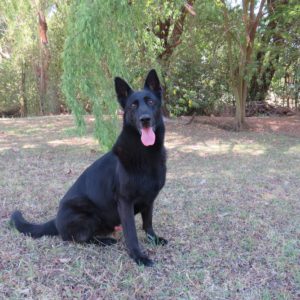
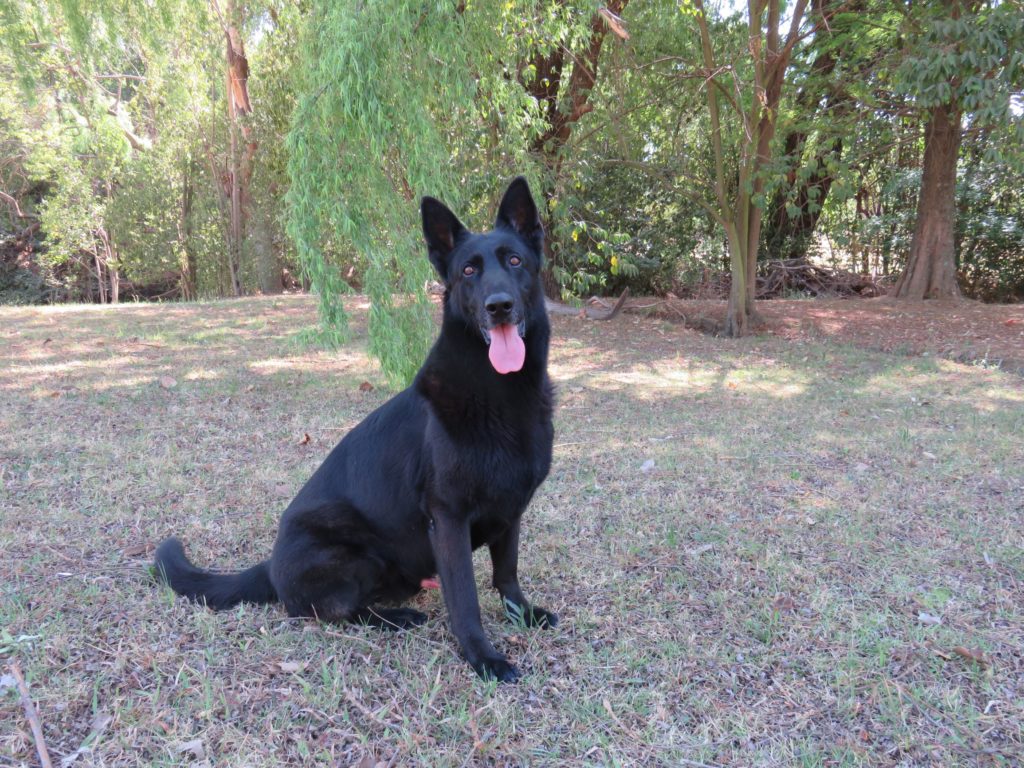
On the 31 July 2020, we celebrate World Ranger Day. This is a day to acknowledge the courageous rangers who risk their lives daily to protect our wildlife, and to commemorate the lives of those who have died fighting for this cause. This year we would like to celebrate the lives and work of our Conservation Canine rangers, particularly the two amazing dogs who passed away in June 2020, Fury and Annie.
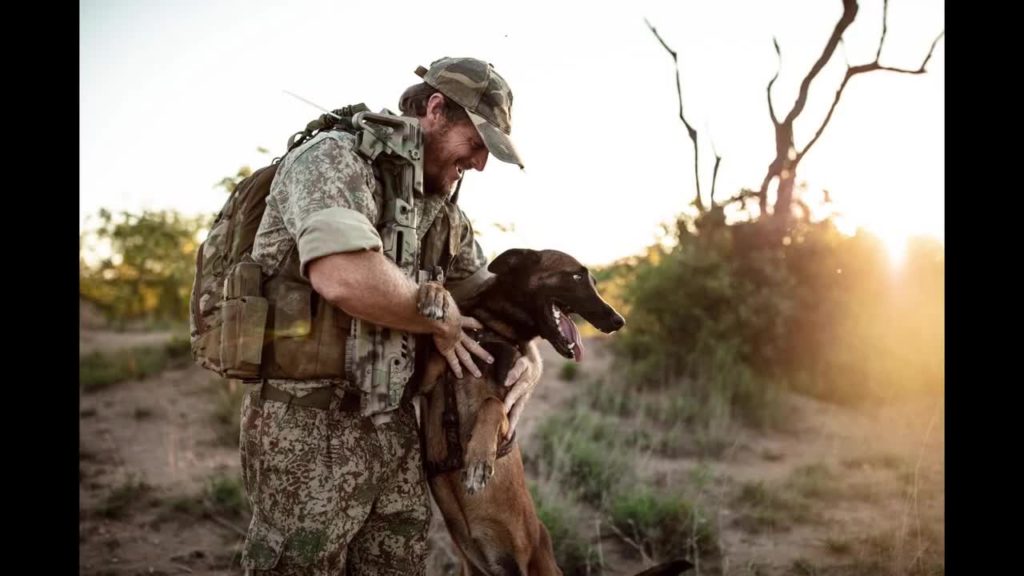
Conservation Canine Fury worked with his handler, Shay Seebran, in the screening of vehicles for wildlife products and ammunition. Their two-year partnership included many happy memories and even a few occasions where Fury saved Shay’s life, such as when they encountered an elephant in the bush on a routine antipoaching patrol:
“Fury and I were patrolling towards an observation post approximately 8 km away, when we came across a very moody bull elephant. Despite everything I tried to defuse the situation and back away, the elephant made it clear that we had been in his comfort zone for too long, and that mock charging was not an option anymore. I unclipped Fury’s lead and chased him because I knew I was not going to outrun the elephant, nor did I want to shoot the animal. I guess Fury’s instinct kicked in and despite his size he charged at the elephant charging at me, putting himself between me and the elephant, miraculously stopping the elephant in his tracks and sending him fleeing in the opposite direction, leaving me speechless and in tears, thanking my K9 for saving my life”
-Shay Seebran
Travelling across South Africa as a team, they spent every second of the day together, leaving an everlasting footprint in the fight to save African wildlife. Fury, a legend in conservation and a well-known friend to many, has left his legacy to be carried on by many conservationists just like him. Losing him was a big loss to Shay and the EWT as a family.
“The legend may be gone, but certainly not forgotten, and I appreciate your service, rest in power son.”
-Shay Seebran
Conservation Canine Annie was sponsored by the EWT and trained at the Southern African Wildlife College. This is where she met her handler, Colin Patrick. Annie was trained to track, and her job was to follow up on poacher spoor at both fence incursions and away from crime scenes. Her legacy is proof that she was a true hero. Annie and her handler Colin were one of the first K9 Conservation teams to develop the ability to track down suspects at night, which changed the game in the fight against rhino poaching, and the team became highly successful at tracking down and arresting suspects. She assisted with over 17 arrests, one of which was a 13 hour follow up, during which they tracked poachers for 43.5 km to successfully apprehend the suspects. An extremely loyal conservation canine since 2018, she never left Colin’s side and travelled with him wherever he went.
“Their bond was unbreakable and one in a million and all were amazed by their connection”.
-Becky Patrick
“It was a privilege and honour to be a part of Annie’s life, to call her my partner and friend. Thank you, Annie, for your dedication and loyalty. Your legacy is an inspiration to all conservationists.”
-Colin Patrick
Fury’s work was funded by U.S Fish and Wildlife Service and Tourvest and supported by Royal Canin and Boehringer-Ingelheim. Annie’s work was supported by the EWT through sponsorship from the Relate Trust, MyPlanetRhino, Platinum Life, Royal Canin and Boehringer-Ingelheim, and a big thanks to Tomlin’s family for their ongoing support of the EWT Conservation Canines.
COLOUR CODING FOR CONSERVATION: ASSESSING THE RED LIST STATUS AND GREEN STATUS OF THE BLUE CRANE
Christie Craig, PhD Candidate & Western Cape Field Officer, African Crane Conservation Programme (ACCP)
Our National Bird, the Blue Crane, is an interesting species in the context of modern conservation. They occur in the eastern grasslands of South Africa, Karoo, and Western Cape, with a very small isolated population in northern Namibia (less than 50 cranes). Blue Cranes were once abundant in our eastern grasslands, but in the second half of the 20th century, degradation of these habitats led to a crash in the Blue Crane population – an estimated decline of around 90%. At much the same time, areas of Fynbos in the Western Cape were being rapidly transformed for cultivation, namely wheat and pastures. Blue Cranes found these cultivated lands enticing and flocked to the Western Cape. Their numbers increased so dramatically that we now estimate that over half of all Blue Cranes live in the Western Cape.
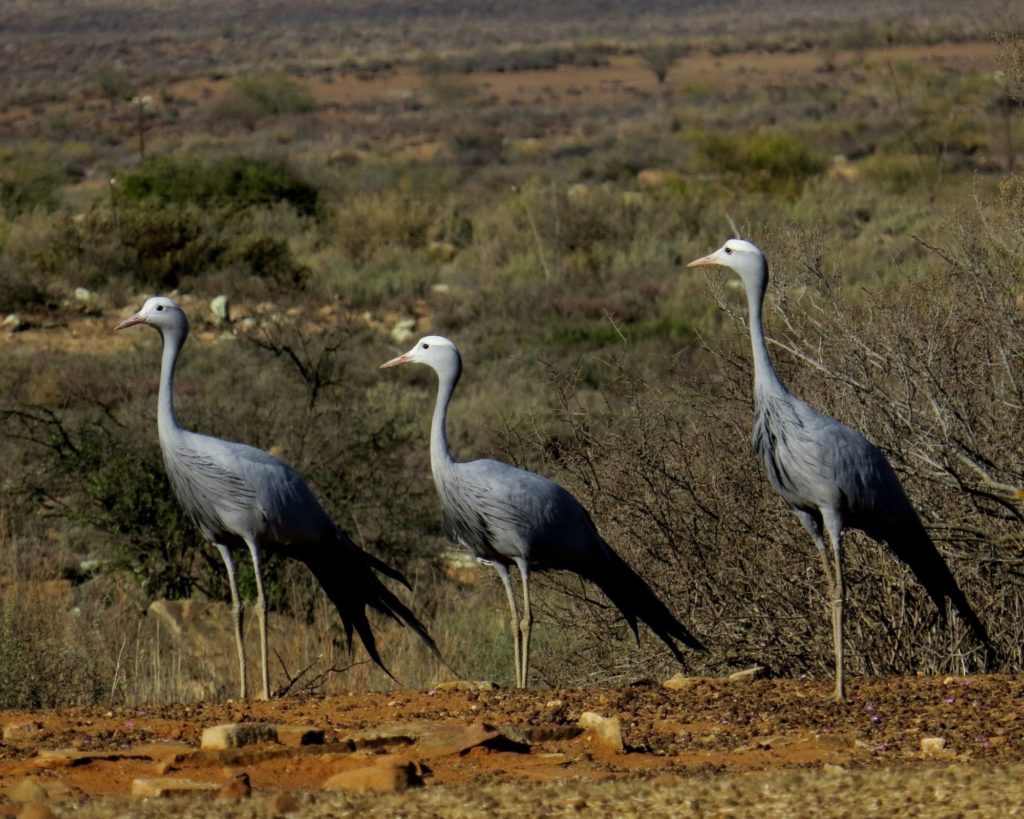
An intensively farmed agricultural landscape, such as those the Blue Cranes have chosen to occupy, can be a treacherous place for wildlife, and presents the cranes and conservationists working to protect the species with significant challenges. Threats rife in these areas include powerline collisions, fence entanglements, breeding disturbances, and occasionally conflict with farmers. Climate change and socio-economic factors placing further pressure on the agricultural landscape call into question the stability of this ‘artificial’ population. By contrast for example, the Karoo population experiences much less disturbance and as a result the population numbers have remained quite stable over the years.
The International Union for the Conservation of Nature (IUCN) Red List is a tool used to categorise the risk of extinction in species, and provides information on their range, population size, habitat and ecology, use and/or trade, threats, and existing conservation initiatives. The categories into which species are placed range in severity from Extinct, Extinct in the Wild, Critically Endangered, Endangered to Vulnerable. Species that are not yet considered threatened but have suffered some declines are categorised as Near-Threatened, while species that have healthy, stable populations are classified as Least Concern. The Red-Listing process is rigorous, and to inform the process biologists need reliable quantitative data to demonstrate actual or future declines in the species. The Blue Crane is listed on the global IUCN Red List as Vulnerable because of the declines in their grassland habitats and the rate of their population decline (30–50%) over three generations (39 years for Blue Crane).
The Red List is an incredibly useful tool for prioritising species for conservation action based on sound scientific evidence. However, it does have its limitations. As we see more positive impacts from conservation interventions, it is becoming clear that many species are in some way dependent on continued conservation efforts, and if these were to stop, the species population could once again begin to decline. These nuances are not accounted for in the red-listing process, which is what led the IUCN and other partners to establish the IUCN Green Status of Species. The Green Status is a way to categorise a species according to its recovery potential, its state of recovery, and its dependence on conservation. In December 2019, The Endangered Wildlife Trust’s African Crane Conservation Programme (EWT-ACCP) took part in a global project run by the IUCN to test the Green Status of real-world species. We ran through the process of assessing the Green Status of the Blue Crane, the results of which, as well as those for hundreds of other species across the globe, are being analysed by the IUCN and will soon be published for comment from the scientific community. We are very excited to have contributed to this exciting project, which will allow us to view threatened species not just in terms of their risk of extinction, but also of their recovery potential.
However, assessing the extinction risk of a species through the Red-List is, and will remain, an important part of understanding the conservation status of a species. In the case of the Blue Crane, with available data showing the population increasing in parts (Western Cape), and stable or slowly declining in others (Karoo and grasslands), it was proposed that the Blue Crane’s Red List status be down-listed from Vulnerable to Near-Threatened. This is every conservationist’s ultimate goal – to see species move down to less threatened categories. However, due to the population crash in the grasslands, and the uncertainty about the long-term viability of the Western Cape population, we considered the down-listing very carefully. In 2012 Sally Hofmeyr, a PhD student in the University of Cape Town’s Animal Demography Unit (ADU) undertook a detailed analysis of Blue Crane monitoring data collected by citizen scientists, which showed an increase overall for the Blue Crane population. As this data are now almost 10 years old, I worked with Sally to update this analysis up until 2019. What we found was rather concerning, as in the last 10–14 years, the Western Cape population stabilised and then began to decline. In the Overberg, where we find the highest density of Blue Cranes, the population has been declining on average by 4% per annum since 2011. More than half of all Blue Cranes are found in the Western Cape, and if we continue to see even a lower rate of decline (2% per annum), we can still expect the global population to decline in the region of 32% over the next 39 years. Given this worrying trend in the Western Cape, the EWT, the International Crane Foundation (ICF), the IUCN Crane Specialist Group, CapeNature and the Fitz Patrick Institute motivated that the Blue Crane remain listed as Vulnerable. The reasons for the decline are unclear, but my PhD project is focused on better understanding the threats and opportunities this species faces in the Western Cape. Armed with this knowledge, we are in a better position to inform and prioritise conservation action to conserve our national bird. This research is funded by the Leiden Conservation Foundation, Eskom and Dave Myers.
CONSERVATION CHAMPION: KLB ENGINEERING
Frank Jackson, Business Development Officer, EWT, Frankj@ewt.org.za
KLB Engineering (Red Rhino) is a family-run business and has been the distributor of Red Rhino products in the South African market since 1980, dedicated to achieving excellence in their service, products. and community involvement. Aside from Red Rhino, KLB’s product range includes brands such as Power Plus, Dual Power, Kreator, Pro-Pumps, Waterfall Pumps, Oleo-Mac, and Waterfall Filtration, and includes power tools, garden tools and equipment, pumps, and water filtration systems.
KLB has been a monthly donor to the EWT for over four years, contributing over R100,000 to-date. Many of the EWT’s conservation achievements have been made possible by generous contributions from regular and steadfast donors such as KLB Engineering. Claudia Kahn, from KLB’s Marketing Department had the following to say about the relationship they have with the EWT: “We believe that wildlife conservation is not only about protecting the wildlife we have now, but also preserving it for future generations to enjoy. By aiding this cause, we hope to bring excellence to the lives of South African wildlife, as well as the spectators that benefit from it. All life is precious and valuable, and deserving of a fighting chance at being conserved. It is to this end that we are proud to call ourselves donors to the Endangered Wildlife Trust.”
The EWT will forever be indebted to KLB for their ongoing support, even during the tough times of Covid-19 Pandemic. We urge our supporters to browse their product range, knowing that your purchase is also supporting the work of the Endangered Wildlife Trust.
For more information, visit www.redrhino.co.za
MANDELA DAY CAMPAIGN – 67 THINGS IN 67 DAYS – IT’S NEVER TOO LATE TO START!
In 2009, a study published in the European Journal of Social Psychology, by Phillippa Lally and colleagues from University College London, found that it took 96 subjects about 66 days for a new behaviour to become automatic.
If it takes 66 days for a new behaviour to become a habit, we will give you 67!
We know that many people were unable to venture out and help your community safely this Mandela Day and didn’t feel as though they did enough this year. For this reason, EWT created the 67 things campaign, which is a challenge to you to do one or more of 67 acts to change the world, for 67 days. If practiced regularly for 67 days, your actions can have a positive impact on people, our planet, and could become the habits that help save our future! Even though Mandela Day has passed, it is never too late to do your bit to build a better future. The acts we have identified have been categorised into the following six categories: Conservation support, Energy saving, Environmental impact, Kindness, Sustainable use, and Water saving.
If you do even one of these acts for 67 days, and this becomes a way of life, your impact can be lifelong.
You’ll never change your life until you change something you do daily. The secret to success is found in your daily routine.
– John C. Maxwell
