A WORD FROM THE CEO: AN INTERVIEW WITH OUR LEADING LADY, YOLAN FRIEDMANN
Yolan Friedmann, EWT CEO
yolanf@ewt.org.za
With all the challenges facing our country, and our environment, which ones keep you awake at night and why?
South Africa is faced with massive challenges generally and despite some of those not emanating from the environmental sector, they do spill over. So the issue of corruption means that there is less money to be spent on environmental issues and so our planet suffers; with escalating crime, our staff and colleagues are exposed to risk whilst they do their work in remote areas, or the travel, or even in their personal lives. I have seen first-hand the stress that this puts them under and the costs associated with paying for increased safety and protection. The loss of critical skills with young people emigrating also effects our sector severely and we have lost too many talented people to other countries as a result of crime in South Africa. Our future as a stable, thriving society and economy keeps me awake at night.
What unique strengths and characteristics do you believe women have, that add value to being a person of influence in the environmental sector?
By nature, women tend to be more consultative and like to work in teams. We can lead, and we can also follow, and we generally know when to do either or both. We are able and willing to ask for help and to admit when we don’t know the answers, and to show strength and leadership in finding them, together. I think that this creates a more dialogue-based approach to finding solutions, which is vital in the highly complex world of conservation. Nothing in the conservation sector can be solved with linear thinking, and one must integrate social, economic, environmental, political, cultural and ecological imperatives with science and compassion and sensitivity, and this requires continual juggling and consultation. Women tend to be better jugglers, in my opinion, and understand the need to balance shifting priorities – we tend to be able to lead from the front as well as the back. Our sector has also required massive skills and capacity development over the past years, with the need for human development being at the core of increasing environmental awareness and action. Women have thrived in this environment which is evident by the increasing number of civil society action groups caring for the earth, in almost all neighbourhoods these days, which are mostly lead by women.
Are there any women in conservation who inspire you?
They all do! Every one of them is drawn to our sector because they are passionate, want to make a difference, are willing to work long hours and sacrifice a lot personally, and care for the earth and all its inhabitants so yes, they ALL inspire me!
Do you have a female role model?
These change all the time as one learns from different people as you develop and events in your life require adaptation and growth. But I always admire my female friends that are entrepreneurs, who create jobs, who create beautiful things and change the lives of their employees and friends; who are selfless and caring and never falter; who are strong and compassionate and honest and flawed and always wonderful! They know who they are 😊
What advice would you give to young women of today?
Be willing to do anything that is required of you to make your first job really count. Don’t be stuck on what role you believe you should play and what your qualifications have prepared you to do. In today’s competitive market employers are looking for team members who are willing and able to dive in and do anything that is required and who add value to the organisation as a whole. If you add value, you will have a thriving career. Today I see too many young people asking what is in it for them, and this puts employers off. Post-COVID, we are also going to see the end of the silo employment position and the emergence of more circular, integrated roles that continually shift and form part of different teams. You must, therefore be willing to be flexible, and you must add value as a person before you can rely on your skills set alone. Other people have the same qualifications as you do so you need to offer a lot more than just your degree. In an interview, how about asking the employer what THEY need and how YOU can add value to them?
What has your time working with the EWT taught you?
Way too much to write here… I have worked in every role in the EWT – from volunteer to CEO, so every position has taught me different things. But from where I sit today I would say that I have learned to work with (and not hide) many female traits that I often used to think would work against me as a female leader in a very male-dominated sector (at the time). These traits include compassion, humility,; consultation, teamwork, the ability to lead from behind and not be ego-driven, being just as happy, if not more so, when your staff are in the limelight and get all the accolades, admitting when you are wrong, and owning up when you don’t have all the answers. I have surrounded myself with people who all know more than I do and my greatest lessons have come from working with them, listening to them, seeing things through their eyes, making them better at their jobs and serving them, and knowing that as their leader, that is my role.
Can you share a bit about what you do? What does a typical workday look like for you?
These days it’s 12 hours on a laptop, like everyone else I suppose. Under ‘normal’ conditions, I still spend a lot of time on emails and in meetings, writing documents and approving things like marketing and fundraising material, budgets, contracts etc. My role is mostly on corporate governance and strategic development, but I do get to interact with my conservation teams every day, which is good for my soul! I get into the field a few times a year, but it is never enough, but again, my role is to facilitate my staff getting to do the fieldwork as they are the experts. I come from a strong field and technical background, so I miss getting my hands dirty! I also spend a lot of time liaising with the media, our partners, stakeholders and supporters. I like to be creative, so I work closely with my fundraising and communications teams. I work closely with my Board of Trustees and am ultimately responsible for ensuring that our strategy is sound, meaningful, and implemented as planned. My role is to find the resources to get the work done, establish the partnerships that make us effective and empower the team to make the magic happen.
FLOODING ENHANCES THE VULNERABILITY OF WETLAND-DEPENDENT COMMUNITIES IN SOUTH WESTERN UGANDA
Phionah Orishaba, Project Assistant, Nature Uganda (NU), Endangered Wildlife Trust (EWT), and International Crane Foundation Partnership (ICF), PhionaO@ewt.org.za
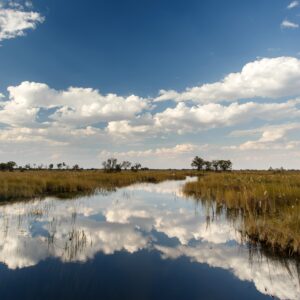
In the 1950s, as a result of the growing population and resultant increased demand for food, communities in the Kabale region of south western Uganda began draining intact wetlands for agriculture. With their rich, fertile soils, wetlands, riverbanks, and lakeshores were considered prime areas for crop production. Natural wetland resources are also harvested for food, building materials, and craft construction. Intact, functioning wetlands provide critical ecosystem services, such as water absorption and storage, which reduce flooding in the rainy season. Wetlands also release stored water during the onset of the dry season, thereby delaying water shortages during times of drought. However, extensive wetland encroachment and degradation has impacted the ecological functioning of wetlands, including the regulation of flooding.
Prolonged rainfall events from March to May of this year, resulted in excessive flooding and landslides throughout most wetland areas in south western Uganda. Floodwaters carry substrates such as soil, stones and small boulders which endanger wildlife and degrade natural ecosystems. Resultantly, the floods impacted the survival and breeding success of local Grey Crowned Cranes, as they occurred during the peak of the crane breeding season.
The floods caused other forms of devastation, including the loss of crops and animals, and the destruction of buildings and roads. Maziba Primary School in Maziba Sub-County and Kakoma Church of Uganda in Katuna Town Council are among the buildings that were destroyed during the ordeal. Roads in Rubaya Sub-County were also ravaged. According to the District Natural Resources Officer of Kabale, Mr Rogers Akatwijuka, the floods resulted from increased rainfall, coupled with wetland encroachment and poor farming practices in the upslope regions. Mr Akatwijuka recommended that wetland restoration, and soil and water conservation initiatives be implemented to minimise the impact of future flooding events.
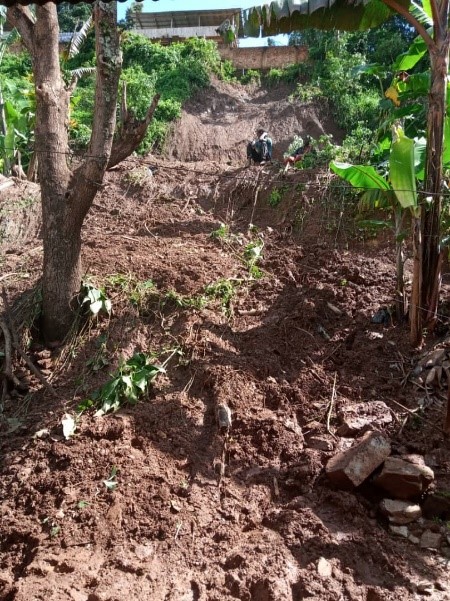
Ms Evas Asiimwe, the District Environment Officer of Kabale, said that economic activities such as agriculture, sand mining, brick making, industrialisation, infrastructure development, and wetland encroachment were the main drivers of habitat degradation. She continued, “Currently the region is facing weather-related challenges because most of the natural vegetation resources have been depleted, leaving the soils bare”. Ms Asiimwe emphasised that there is an urgent need to restore degraded habitats, guided by the national environmental policies and guidelines.
Mr John Zinkubire, the chairperson of the Kibuga Abarihamwe Community Group, and Crane Custodian Mr David Musinga reported that their crops were washed away by the floods and they are expecting that their community will face increased food insecurity and poverty. Amid the devastation, they did happily report that the six pairs of cranes, usually seen foraging in the wetland and cattle farms near their homes, survived the floods, and have been seen with juveniles. Similarly, Mr Francis Mwebesa, a community member of Mayengo Ward, Katuna Town Council, said the flooding this year was particularly extreme. The two families of cranes in the nearby wetlands are reported to have narrowly survived the floods. He witnessed the chicks floating on the water surface and navigating their way to safety.
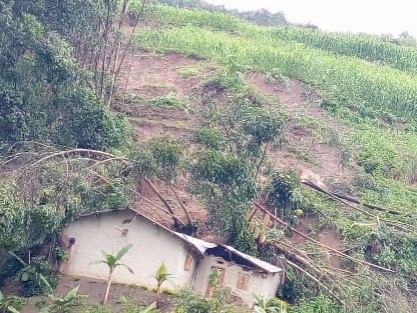
Unfortunately, not all crane families would have been so lucky. In an attempt to locate the two families of cranes in the wetland near Hakiheiga Trading Centre, Crane Custodians, Annet Tusiime and Jeniffer Tumuhimbise reported that, although the adult cranes were seen feeding near the flooded wetlands, none of their chicks were observed. They were unable to investigate further due to excessive flooding in the area. Mr Kamuzinzi Edward, a Crane Custodian from Kahungye Sub-County, reported that landslides had devasted his crops, and soil from the upland slopes had been washed into the wetlands. He feared that any eggs that had not yet hatched would have been unlikely to survive.
Lt Col Robert Nahamya of the Uganda Peoples Defence Forces and his army provided a helping hand to the families in Kaharo, whose homes had been affected by the flood. The Kabale LCV Chairperson, Mr Patrick Besigye Keihwa, extended comforting words to households whose properties were destroyed, promising to inform the office of the Prime Minister and the Ministry of Risks and Disaster Management, who would be able to provide additional relief services. Milton Kwesiga, the Executive Director of Africa Disaster Reduction Research and Emergency Missions, said that according to the constitution of Uganda, wetlands are protected areas. He continued that any agricultural activity in wetlands, except for recommended sustainable livelihoods, like apiary and harvesting of local materials for handicrafts, is illegal and should be punishable. He noted that wetlands provide essential ecological services, including water filtration, hydrological cycling, and flood control.
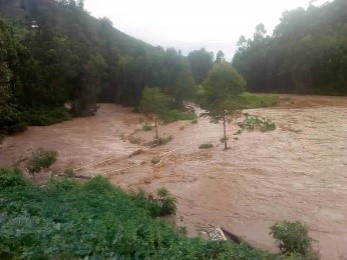
All Ugandans are called upon to curb wetland degradation by becoming conservation ambassadors and taking action to restore and conserve wetlands and reduce risks associated with climate change. There is an urgent need to implement environmental protection interventions, such as tree planting along wetland buffer zones, and soil and water conservation initiatives using bamboo and elephant grass. Most people in the Kigezi region depend on wetlands for survival and economic security. Thus, a collaborative approach between communities, government, and NGOs is essential to conserve wetland habitats for the benefit of both people and biodiversity.
BIOPIRACY: WHAT IS IT?
Megan Murison, Communications Officer, Endangered Wildlife Trust, meganm@ewt.org.za
Patent laws were designed to protect intellectual property and ensure that the rights of those involved in the development of the product or service be safeguarded. However, some use these laws to infringe upon the rights of others. Biopiracy occurs when individuals or companies take indigenous knowledge of species provided by others and patent this information without official sanction or permission. These biopirates do not acknowledge those who have taken the time to understand and nurture plants over generations (farmers, communities, traditional healers, etc.), neither do they compensate them for their contribution of knowledge and experience.
An interesting case study for biopiracy is the use of stevia. Any consumer in this day and age will have heard of the use of stevia as a sugar replacement in cooldrinks and food items. Public Eye, a global justice initiative, classifies the use of the Steviol glycosides as a classic case of biopiracy. This plant was historically used as a natural sweetener by the Guarani peoples of Brazil and Paraguay. Unfortunately, with no legislative backing, the use of stevia glycosides is uncontrolled, and many large organisations are applying for the patent. Even more concerning is that 80% of commercially used stevia is produced in China. While it is indigenous to Brazil and Paraguay, they only make up 3% of the commercial use. Moreover, the impact on the genetic biology of the plant is also worrying. As large companies quickly race to produce synthetic stevia material, small scale farmers are at risk of losing their livelihoods. And in the end, the large companies will receive the monetary benefits.
International agreements, such as the Convention on Biological Diversity, do not appear to stop large companies from conducting acts of biopiracy under the guise of bioprospecting. The legislation regulating its implementation, the Nagoya Protocol, is often improperly applied by countries, and others, including the United States, have yet to sanction them.
Africa is no stranger to cases of biopiracy, and the Hoodia cactus was the subject of a landmark biopiracy case. The San people of the Kalahari have used this plant to suppress hunger pains for centuries. The active molecule involved in this function was identified and sold to Pfizer, a massive pharmaceutical company, for use as an appetite suppressant. Following a complaint and a case brought against Pfizer by the San Council, the community was, after a fight, awarded a share of the royalties, and a precedent was set that clearly communicated the right indigenous people have to stake a claim to their knowledge and to profit from it. A South African example originates in the small Eastern Cape town of Alice. The heavyweight pharmaceutical company, Schwabe, manufactures a syrup for respiratory tract infections made from the roots of Pelargonium sidoides and Pelargonium reniforme, marketed as Umckaloabo. Not only is this the use of the plant for this purpose theft of indigenous knowledge, but there are also many cases of the exploitation of labour during harvesting, and of unsustainable farming practices, which put the plants at risk of extinction.
Patent legislation requires that the product or service in question be novel and unique. Therefore, in the fight against biopiracy, scientists and researchers are attempting to collect and publish these plants’ properties and uses on public domains. Countries are also fighting back, with India battling to prevent the patent of the wound healing capabilities of Turmeric, and Thailand has appealed the patent of Jasmine Rice. With the threats associated with climate change, even more cases of biopiracy will come to light with the increased need for medicine and food sources that are resistant to drought, heat, and salt. While finding sustainable and resilient sources is a priority, it should not come at the expense of indigenous people.
THE ROLE OF FOLKLORE IN PRESERVING WILDLIFE AND HERITAGE – A STORY ABOUT FROGS AND SWEET WATER
Samson Phakathi, Field Officer, EWT’s People in Conservation Programme, samsonp@ewt.org.za
As in most cultures, folklore has played an essential role in influencing social norms and values in most African communities. Folklore is oral history attached to a particular place, group, or activity, communicated through tales, proverbs, riddles, songs, etc.
Folklore is typically passed down by word of mouth, although sometimes people write down collections of folklore to preserve the stories of a particular community. The fundamental premise is that folklore has no author – it slowly emerges and evolves from within a culture, and is carried forward through constant retelling. Some folklore is a product of indigenous knowledge about species and natural ecosystems. In Africa, particularly in KwaZulu-Natal, many of the folklore legends relate to the environment and specific species. Folklore has both positive and negative effects on the environment and species, determined by how much species are valued in a specific tribe. For example, if a species is deemed harmful and of no use to man, folklore will prescribe that it be persecuted, whereas if it is useful to man, folklore projects a glorified image of the subject, motivating for people to care for and conserve it. Folklore sparks the imagination of children, strengthens bonds between generations, and helps to shape people’s cultural views on biotic utilisation and preservation.
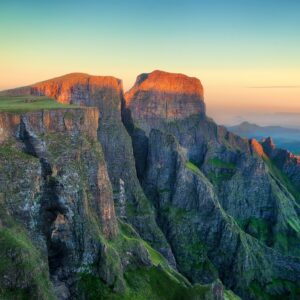
Folklore has always played an important role in preserving heritage in KwaZulu-Natal. Legends have it, for example, that upon discovery of signs of damage to Itshe LikaNtunjambili, the cliff head above the Tugela Valley, a narrative was spread warning that anyone who tampers with the cliff will develop misshapen legs, and to this day the cliff head is intact for all to see and enjoy. Older women are traditionally the narrators of folklore, and young people would sit around an open fire and enjoy stories in the dark. As we celebrate Heritage Month, we recognise the role of folklore in preserving our cultural and natural heritage. A story about the role of folklore in preserving wildlife and heritage
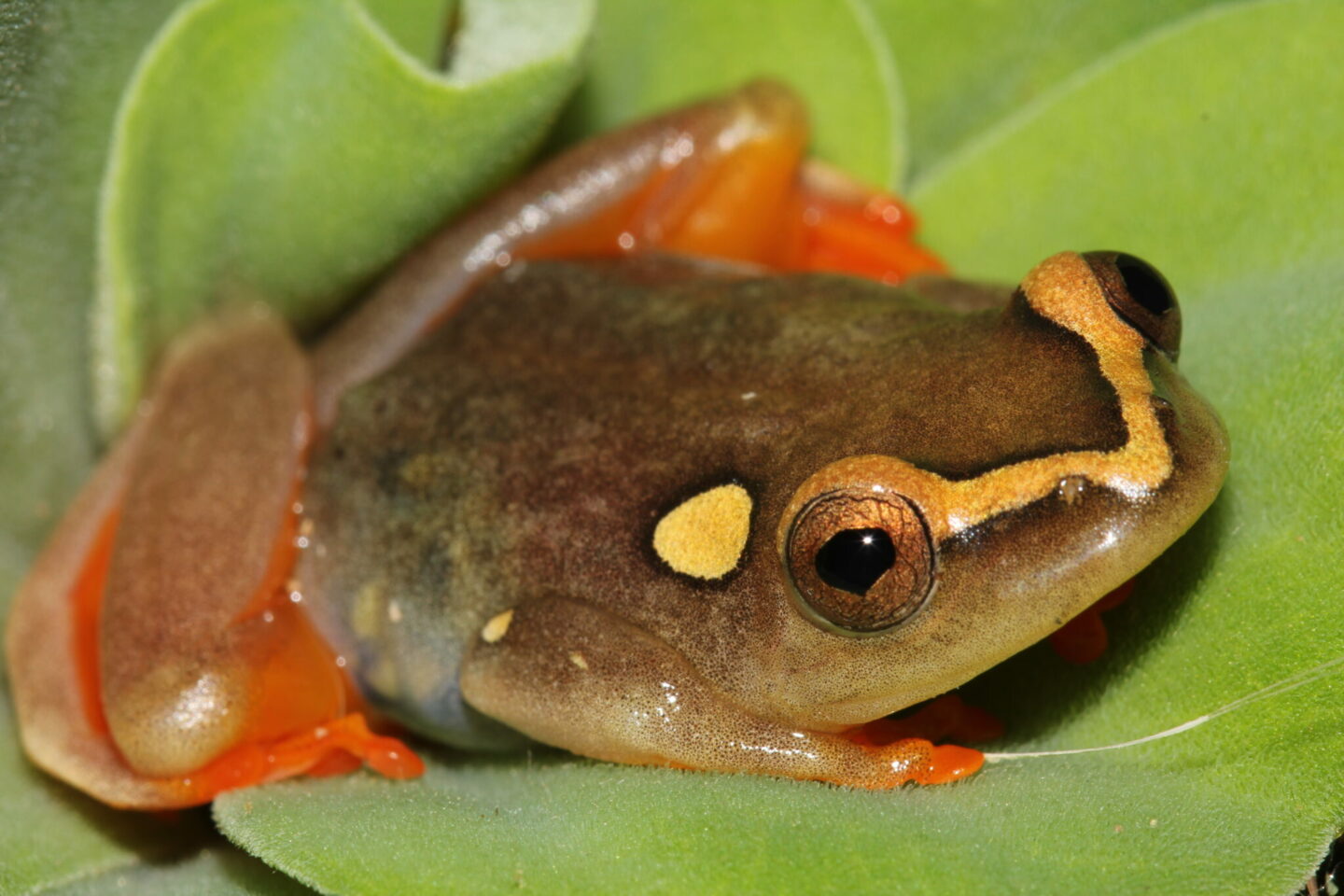
Once upon a time when people’s existence could be directly affected by how well they understood and respected their environment, Indlovukazi-the Queen Mother once embarked on a long trip from the Zululand to the South Coast in KwaZulu-Natal. She was accompanied by six warriors who were instructed by the King to ensure her safety, not only from physical dangers but also against unseen nature-related obstacles that might come to the fore. They walked gracefully for days using species like Honey Badgers, starlings, and weavers to provide signs of what lied ahead. Honey Badger would lead them to honey, starlings and weavers warned them about the presence of slippery friends (snakes). They walk for days until their supplies were beginning to run out. They had to find a suitable spring to collect water, but unfortunately, they walked for days without much luck because springs in their midst did not fit the description of a water source that is suitable for Indlovukazi.
An instruction from Indlovukazi was clear, croaking frogs and running water signalled a sign of water suitable for Indlovukazi. None of the springs they found showed signs of life, and the wise Indlovukazi decided that they would take a well-deserved break and brainstorm strategies to ensure that there is life in every stream the next time they travelled this way. They sat under a tree of great cultural significance, and as they deliberated on what to do to bring back the frogs, they heard the loud croaking sound of a frog in the distance. The Indlovukazi immediately instructed two warriors to search for the stream where the croaking was coming from, and if there was a sign of frogs, they dare not touch the water as the Indlovukazi should be the first to enjoy the sweet waters, or Amanzimtoti (of the spring). They found the stream, inundated with frogs of all species, shapes, sizes, and colours, and returned to inform the Indlovukazi about their finding. The thirsty Indlovukazi walked to the stream and scooped a cup full of the water and, instead of quenching her thirst, insisted that before they enjoy the water, they come up with a plan to bring life back to the other streams that they had passed. The men thought long and hard and soon realised the association of frogs to the sweet water the wise Queen had described earlier.
As the sun was setting, Mpeku, one of the lead warriors, began to put the pieces together and remembered how, as young boys, they used to go to play in the streams, throwing stones at the frogs and throwing their rubbish into the streams, until there were fewer signs of life in the area. He relayed what he thought was a contributing factor in the decline in frog numbers, and the Indlovukazi felt that what he shared was genuine. They all felt that there was a need to educate young boys about the importance of frogs in streams and folklore stories were an essential method of reinforcing a particular narrative in communities.
The Indlovukazi and her combatants manufactured a folklore narrative that those who kill frogs and pollute water will have an unpleasant period in their lives, and this narrative has played a role in the conservation of frogs and streams in Natal. Mpeku was rewarded and entrusted with a responsibility to develop folklores intended to preserve local natural heritage, associating certain species with good luck and positive experiences.
NEVER A DULL MOMENT, THANKS TO MACSTEEL!
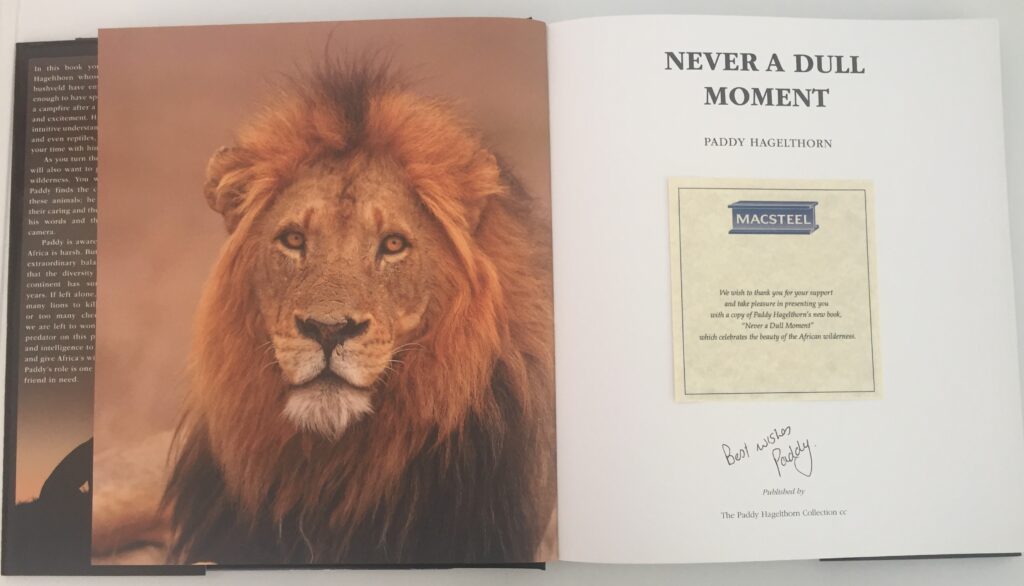
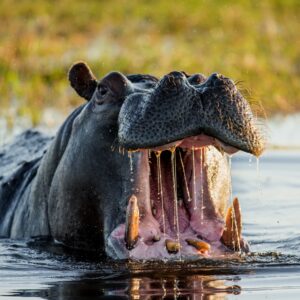
] This beautiful coffee table book is a collection of wildlife photography and stories by Paddy Hagelthorn, aptly titled “Never a dull moment”.
Not only has this book been signed by the author, but full proceeds go to the EWT as they have been generously donated to the EWT by Macsteel.
Selling for R450. To purchase this book, please go to our online shop or email Tammy Baker on tammyb@ewt.org.za