IT’S A MATTER OF PRIDE
Marnus Roodbol, EWT Carnivore Conservation Programme Field Officer, marnusr@ewt.org.za
I am living my lifelong dream. I am part of an exciting project intended to understand and protect Africa’s most iconic species, the African Lion, within the Great Limpopo Transfrontier Conservation Area (GLTFCA). The GLTFCA, which includes Kruger National Park (KNP) in South Africa, and Limpopo National Park (LNP) in Mozambique, is one of the ten remaining Lion strongholds in Africa. I have been blessed to travel through most of southern and east Africa, but Mozambique was one for the books – the multiple police and army stops along the way, the non-existent road structures, and some of the kindest and friendliest people in the world. Everybody is just trying to make a living. Arriving at Limpopo National Park, I was rather impressed by its unique beauty which is that of raw nature. Few parks in Africa still contain that rugged beauty that requires some elbow grease and sweat to see the potential. The park is directly opposite the world-famous Kruger National Park; however, it is seen and known as the ugly sister or the “underdog”. The biodiversity is the same as in the Kruger Park, yet it doesn’t attract near as many tourists as the KNP. I like supporting the underdog though, as I tend to see similar qualities in myself at times (rough around the edges but just as full of fun).
I met many people working within this biosphere, some doing conservation research, others doing rather impressive anti-poaching work, having a significant impact in some regions of the reserve. During my time I was fortunate to spend many a night out in the bush with only a tent and two rangers, there to support and protect me from the constant threat of poacher activity within the park. We worked tirelessly daily, tracking lions on foot and searching from the sky in a tiny plane known as a “bat hawk”, and we managed to find signs and occasionally catch sight of the Lions that we were looking for.
The next chapter, however, was the one that excited me the most. I was sad to leave magnificent Mozambique but was thrilled to begin my dream job working with Lions in the Kruger National Park. But as life goes, it seems that just when you settle into a rhythm and pick up speed, it gives you some obstacles to keep you grounded. A broken-down vehicle meant that I had to attempt the rather tricky and challenging feat of driving a vehicle 400 km back to Maputo with no steering support or ABS brakes. This was a challenge, but with the fantastic support of the EWT Head Office staff who arranged contacts, accommodation, and vehicle support, and I was ready to get back on the road in a couple of days.
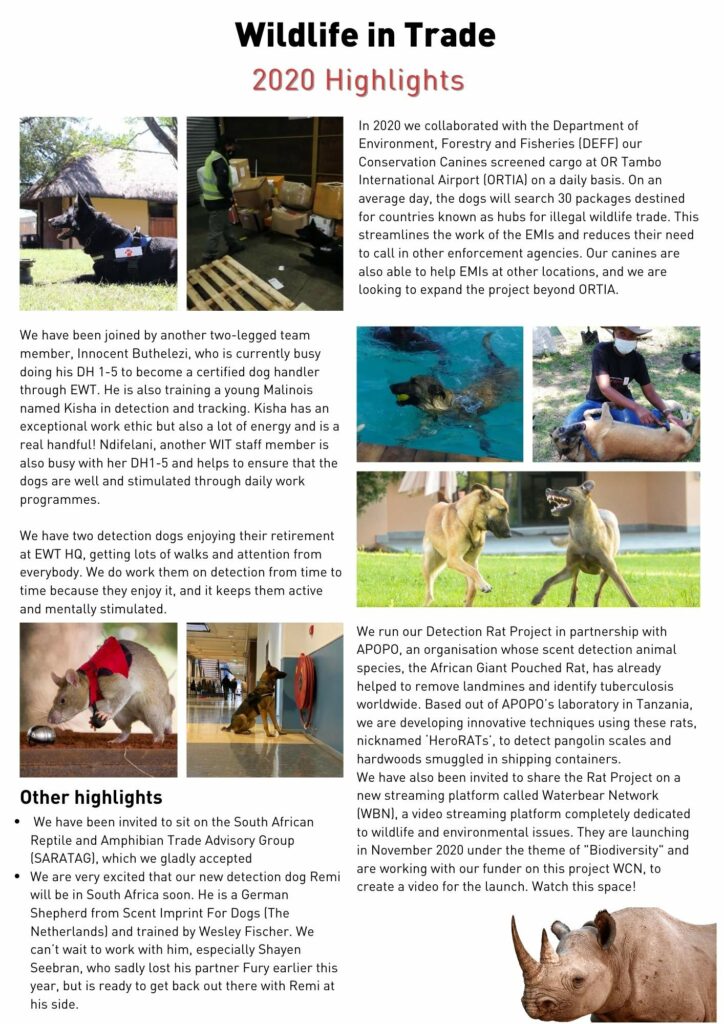
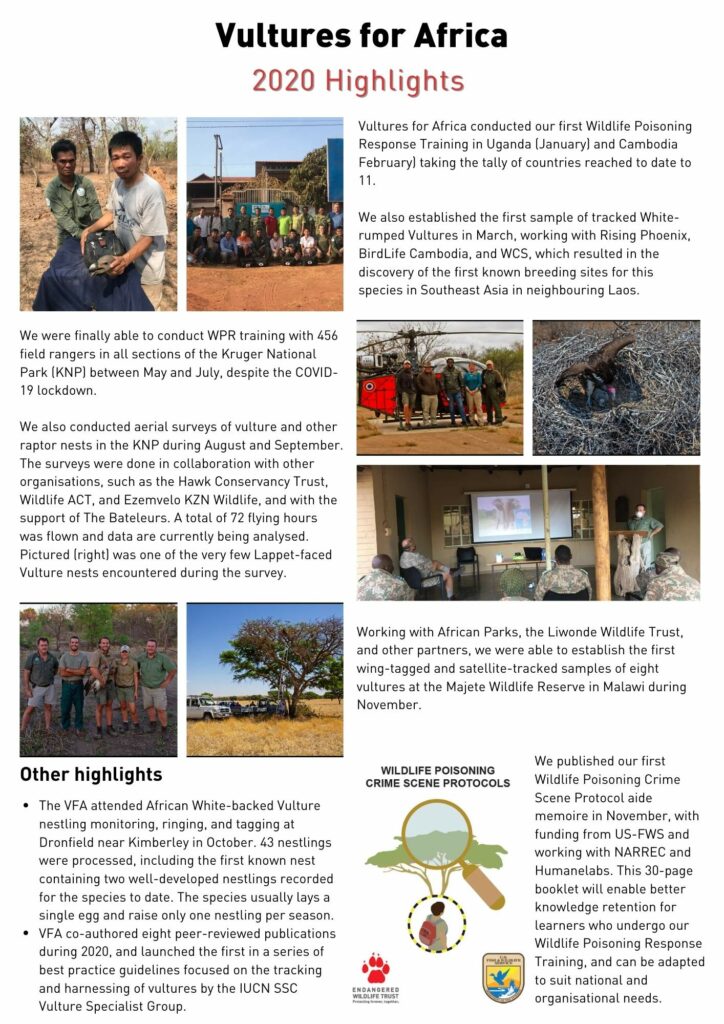
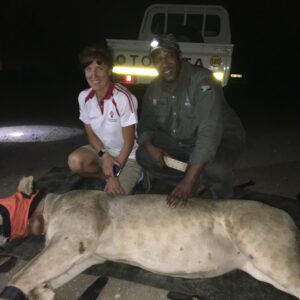
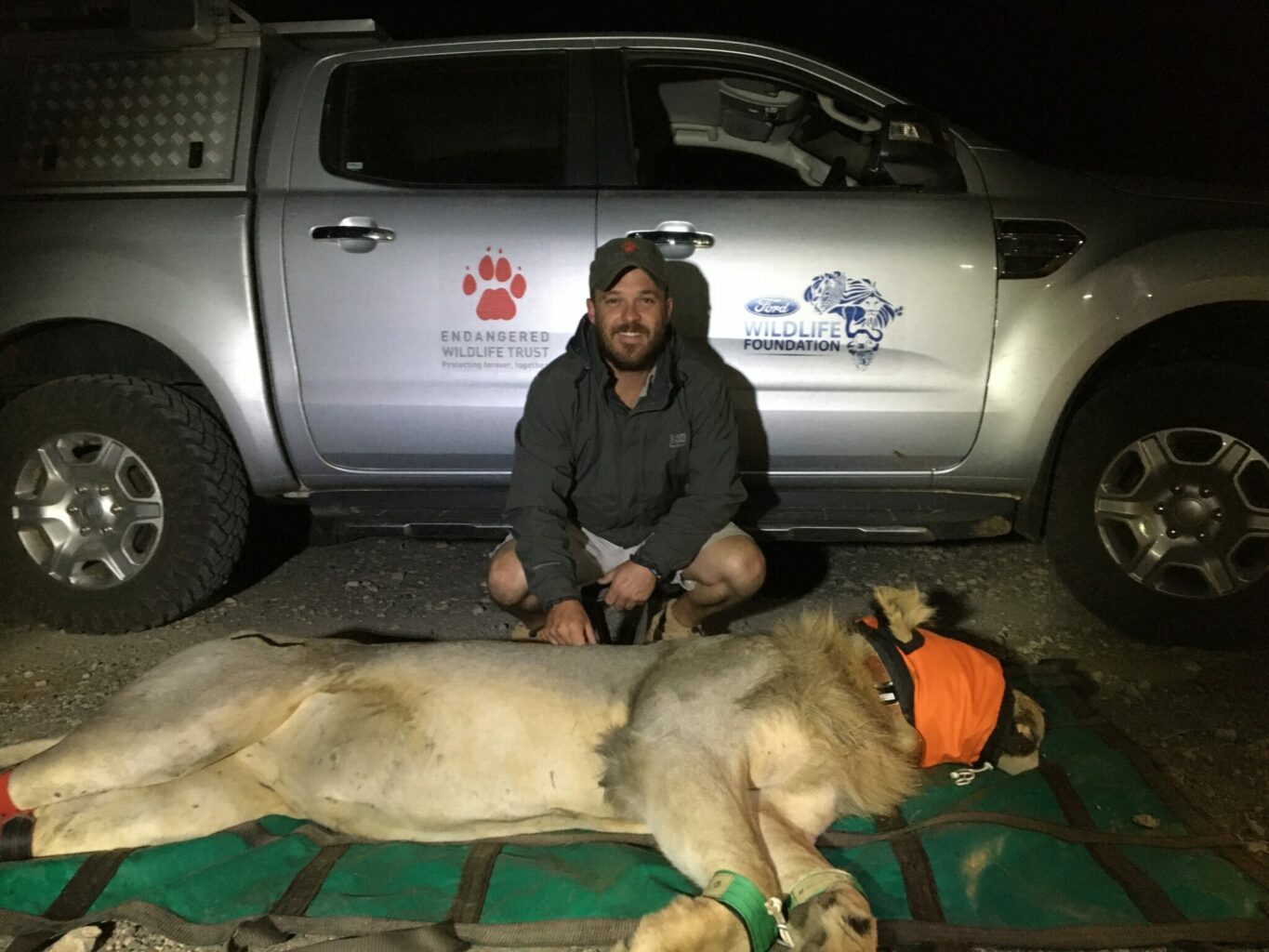
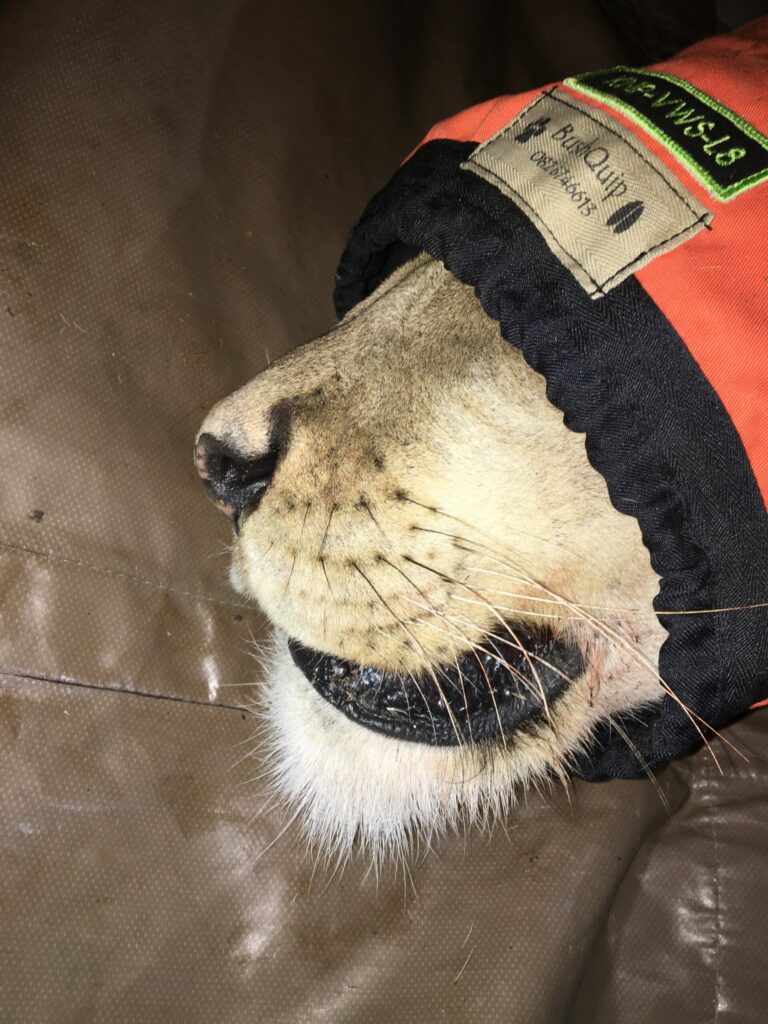
On the eagerly awaited first day of collaring Lions, I was joined by my colleagues Yolan Friedmann, David Mills, and Grant Beverley, and we were extremely fortunate to collar one large lioness in the Shingwedzi district of the Kruger Park. The following day, a much smaller team ventured out yet again during the evening but failed to collar any new lions due to heavy winds and a bit of rain. Luckily one team did manage to remove a collar that had been placed on a male lion several years before our project by a previous researcher, so this male is now free after playing his part for conservation.
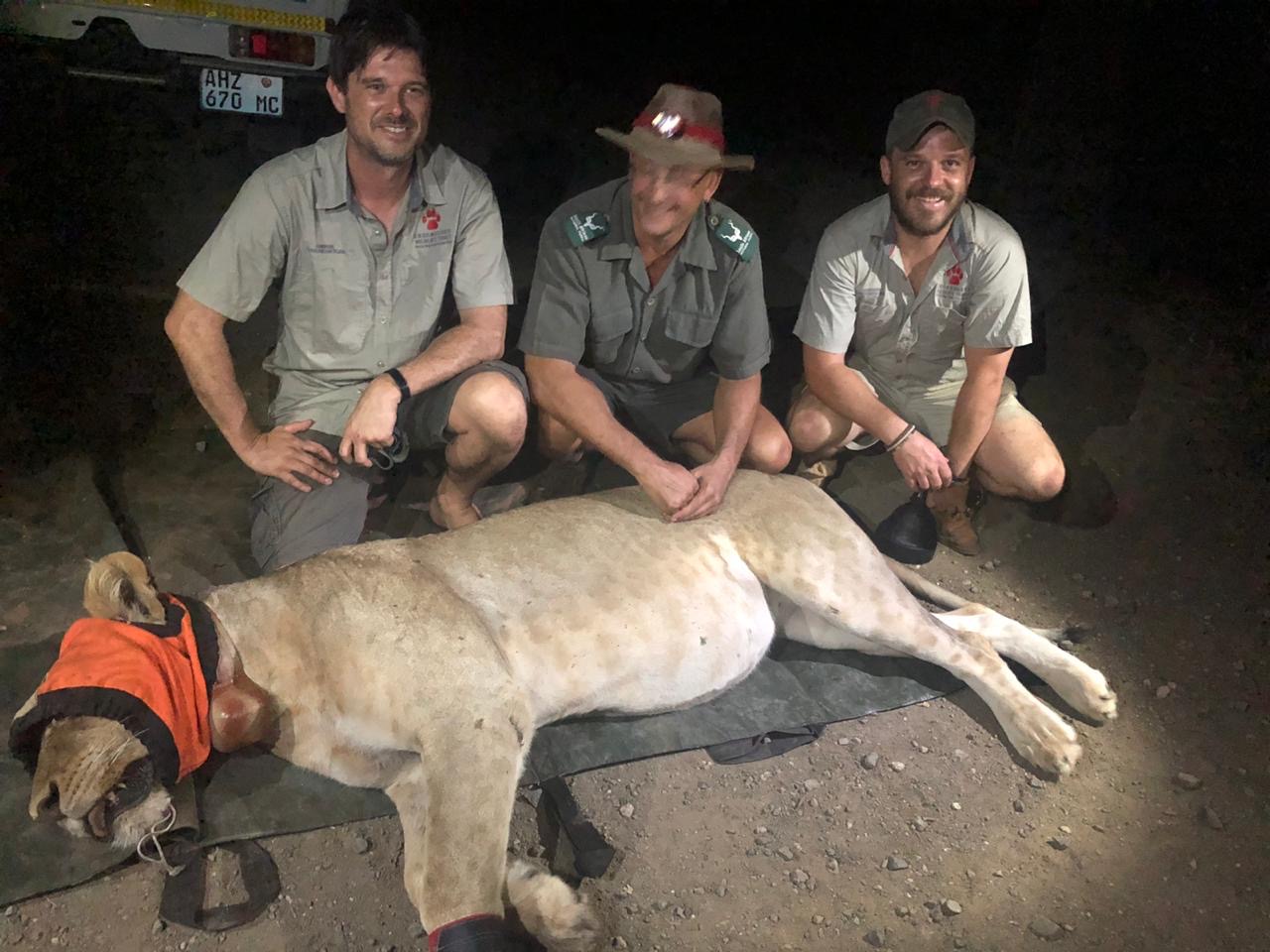
There were times when the nights felt lengthy as the evenings and early mornings melted together, and it was nearly impossible to sleep in a tent during the day time in the overwhelming heat. Nevertheless, we managed to collar several more lions over the next few days, and by the last call up, which began at 23:00, I drifted off into a light sleep as the pre-recorded sound of a distressed buffalo calf echoed through the still evening air (used to call up lions). Eventually, we called it quits around 02:00 and headed home, where we then nearly had a close encounter with a vehicle sitting next to some stationary Lions next to the gravel road. The two Shingwedzi boys were resting, on what we suspected was their mission to meet up with the female we had collared on the first evening.
All in all, the beginning of the project was successful, even though there were some glitches along the way. I guess the glitches are what build tolerance, patience, as well as wisdom, and are par for the course when working with wildlife
 This project is a partnership between the EWT, South African National Parks (SANParks), National Administration of Conservation Areas in Mozambique (ANAC), and the Peace Parks Foundation, with funding from the UK Government, through the International Wildlife Trade Challenge Fund.
A PRICKLY SITUATION
Ndzalama Chauke, EWT Wildlife and Energy Programme Field Officer, ndzalamac@ewt.org.za
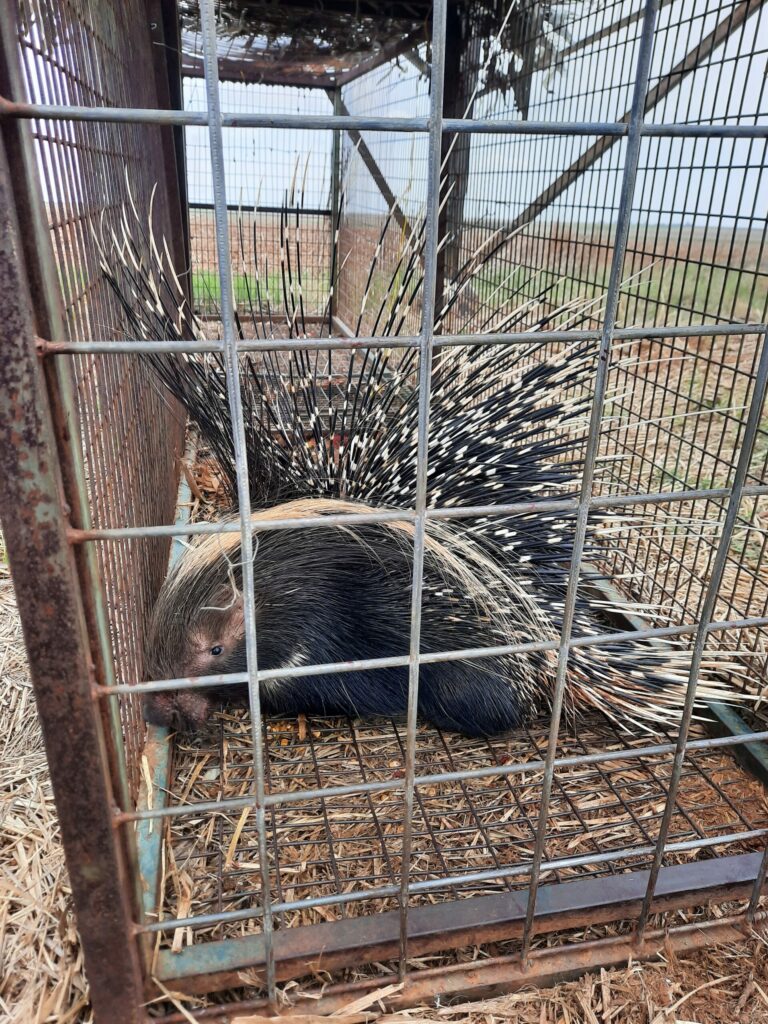
The Endangered Wildlife Trust’s Wildlife and Energy Programme (WEP) and the Eskom Transmission team (Central Grid) have been working determinedly to capture porcupines that have been burrowing close to a transmission line tower foundation near Delmas. When porcupines burrow at the foundations of transmission towers, the excavations can destabilise the structure, causing the tower to shift and eventually fall over. Amos Letsoalo and Ndzalama Chauke from the WEP team, and Reg Chadinha from transmissions, had set a cage trap under a tower where porcupine activities were taking place. A watermelon was placed inside the cage as bait a night before capture. In the early morning of 29 October 2020, during Reg’s usual rounds, he arrived on the scene, and there was a porcupine in the cage, our first catch after years of trying! The WEP team immediately rushed on-site and relocated the captured porcupine to Bezuidenhoutshoek farm in the Middelburg. On the night of 2 November 2020, we used watermelon as bait again and, we succeeded again – a porcupine was waiting in the cage the following morning! We relocated this animal to the same farm as the previous one.

CONSERVING CRANES AND COMMUNITIES
Dr. Lara Jordan, EWT African Crane Conservation Programme Field Officer, laraj@ewt.org.za
“The wind does not break a tree that bends”.
– Sukuma Proverb
We have all adapted to the new normal of social distancing and wearing face masks. As we all think about the year 2020, it might look like a dark portrait, but the picture is made beautiful by different streaks of bright colours. These bright streaks represent the generous gestures that brought hope to the lives of community members across Uganda, Kenya, and South Africa.
We are all dealing with the collective loss of the world we knew. Grieving the loss of jobs, livelihoods, physical connection with friends, loss of our daily routines etc. This has given people the world over opportunities to show our care for each other, and a little help has indeed gone a long way, not only through humanitarian efforts but also in building trust and hope across communities that we work with.
When COVID-19 struck in Africa, there were speculations that the warm, tropical weather of Africa would shield the developing countries from the virus, but to-date, the cases reported are still rising. Yet even after warnings that the African continent’s healthcare systems would not be able to bear the weight of the virus, Africa has resisted and continues to weather the storm of the pandemic. This has in no small part been a result of heroes who chose to go out of their way to help where they could.
Many families in East Africa, in the communities with which we engage, live in rural areas, and the work they are able to find is often only on a casual basis and pays enough money to feed their families for the day. When the pandemic struck, most of these families did not have a “work from home” policy, as their livelihoods depended on getting out and hustling to get their daily bread. Today, we choose to celebrate heroes that might be unnoticed but have played important roles in the lives of communities during this pandemic.
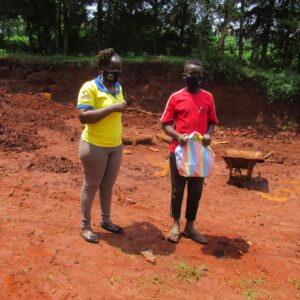
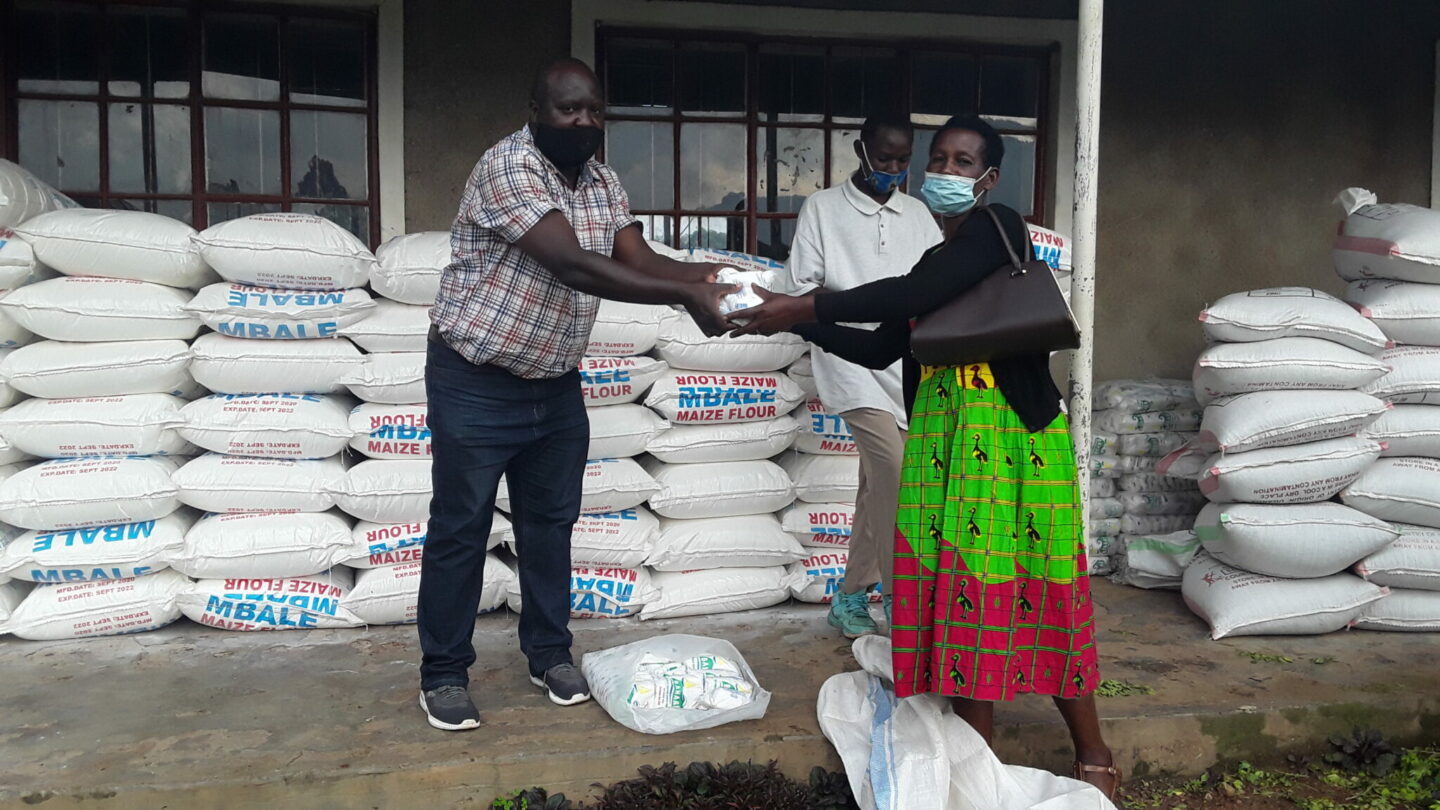
The Leiden Conservation Foundation provided generous support to families across East Africa, and as a result, many were cushioned over this difficult period.
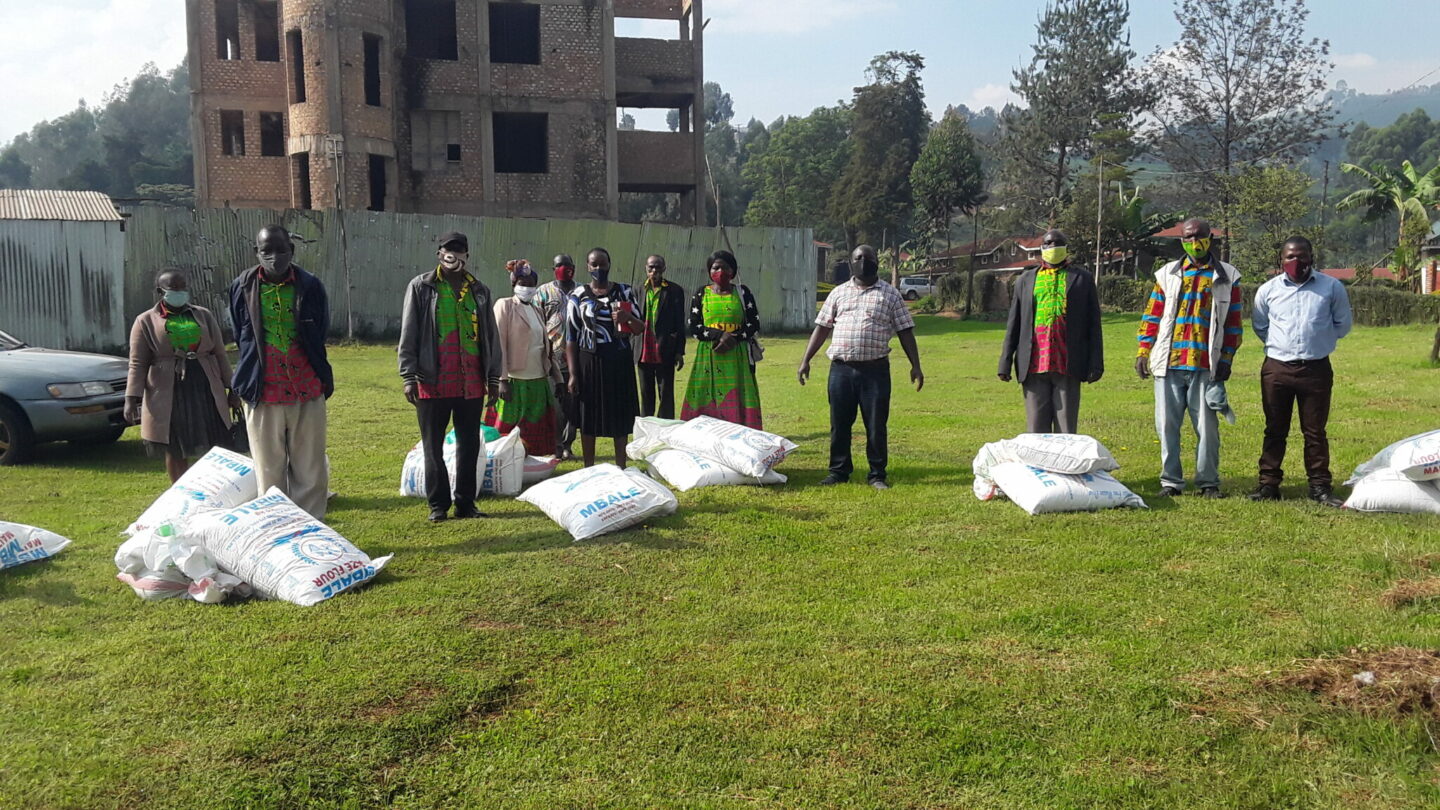
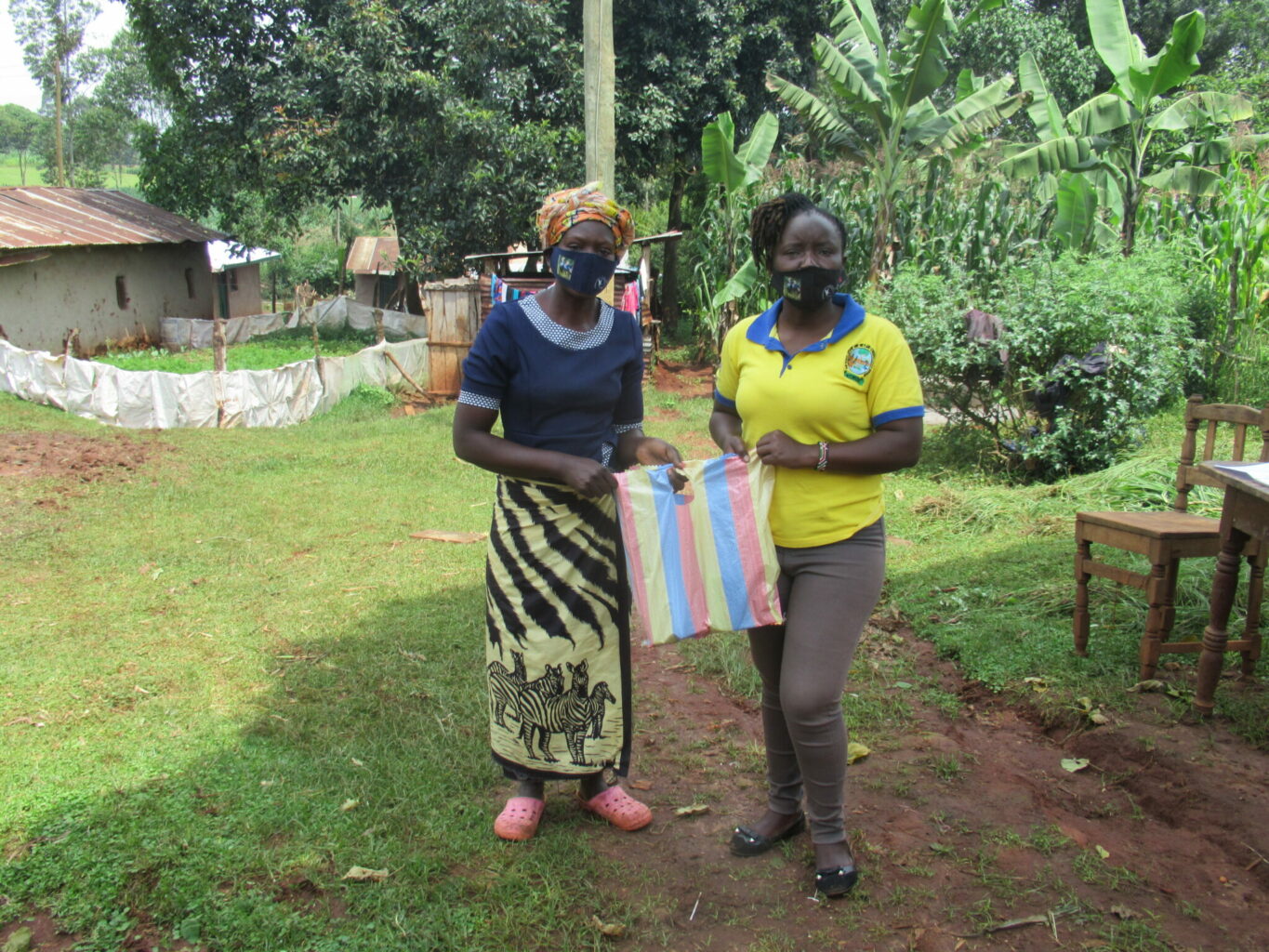
In Kenya, 238 households with an average size of 7 people were beneficiaries of masks, bar soap and handwashes (1,666 individuals). In Uganda, 34 Crane Custodians benefitted from food relief packages, including 100 kg of maize flour, 30 kg of beans, and 10 kg of salt per person. In Rwanda, face masks, soap for handwashing, cooking salt and hoes for cultivating, were distributed to 284 households, 100 fodder farmers, and 184 beekeepers (beneficiaries of conservation agreements).
In South Africa, HCI Foundation and The Lewis Foundation enabled the delivery of food parcel across four rural communities of the Eastern Escarpment, this generous donation helped beat hunger for the marginalised in the communities. An additional 299 food parcels were delivered across three communities that were so rural that it took four days to deliver the parcels, and more recently, a further 73 food parcels, weighing over 40 kg, were delivered to two rural communities. The average household size within the communities was six members, adding up to a total of 1,398 individuals that received food.

Supporting communities in this way has been vital during this period, not only for the benefits to communities but also the benefits to wildlife. Community engagement and reporting has increased during this period, despite the difficulties of lockdown, and through this support, it has become apparent that communities have embraced crane conservation, which we hope will help to steadily increase crane numbers within these vital areas. And that is how we change the world – “One random act of kindness at a time” (Nelson Mandela)
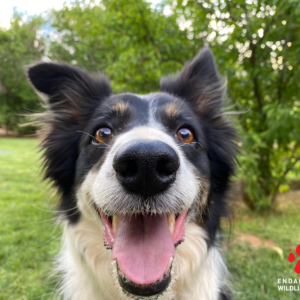
COFFEE WITH A CONSERVATION CONSCIENCE
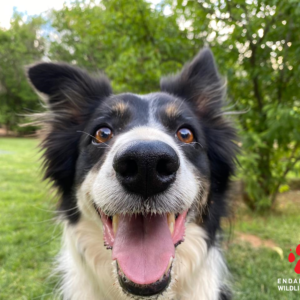
New ENDANGERED Outliers Roasters coffee blend is now available! This blend supports the EWT Drylands Conservation Programme (DCP) team’s work on the Critically Endangered Riverine Rabbit. For every bag of coffee sold, Outliers Roasters will contribute to the team’s camera trap research, Jessie the Border collie‘s fieldwork, and other conservation activities related to the species. Outliers also stocks other blends, including the ELUSIVE Pel’s Fishing Owl and RARE Cheetah blends, which are also in support of the EWT’s work on these species. The three EWT blends makes a perfect gift for friends and family!
Coffee can be bought on the Outliers online store. The new ENDANGERED blend is also available at Loxton Lekker Restaurant in Loxton and Papkuilsfontein Guest Farm in Nieuwoudtville. Do your part and buy coffee with a conscience!
WORKING WITH WILDLIFE: SOME SNAPSHOTS OF 2020
Emily Taylor, Communications Officer, emilyt@ewt.org.za The year 2020 has undoubtedly been one for the history books. While much of what made this year extraordinary was directly or indirectly a result of COVID-19, it is important to remember the full picture: the limitations, disappointments, delays, and much, much loss, but also the achievements, innovative solutions, connections, and significant technological strides that have been made across the world. These innovations have enabled the continued functioning of many businesses by making working from home possible or developing online platforms or delivery services to survive the lockdown restrictions.
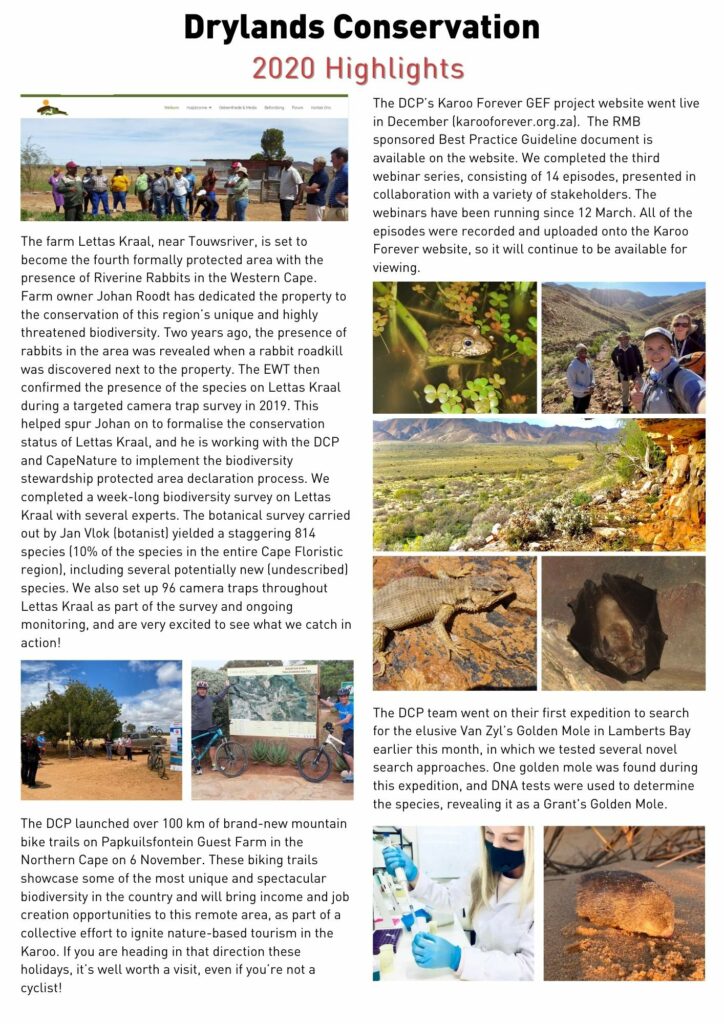
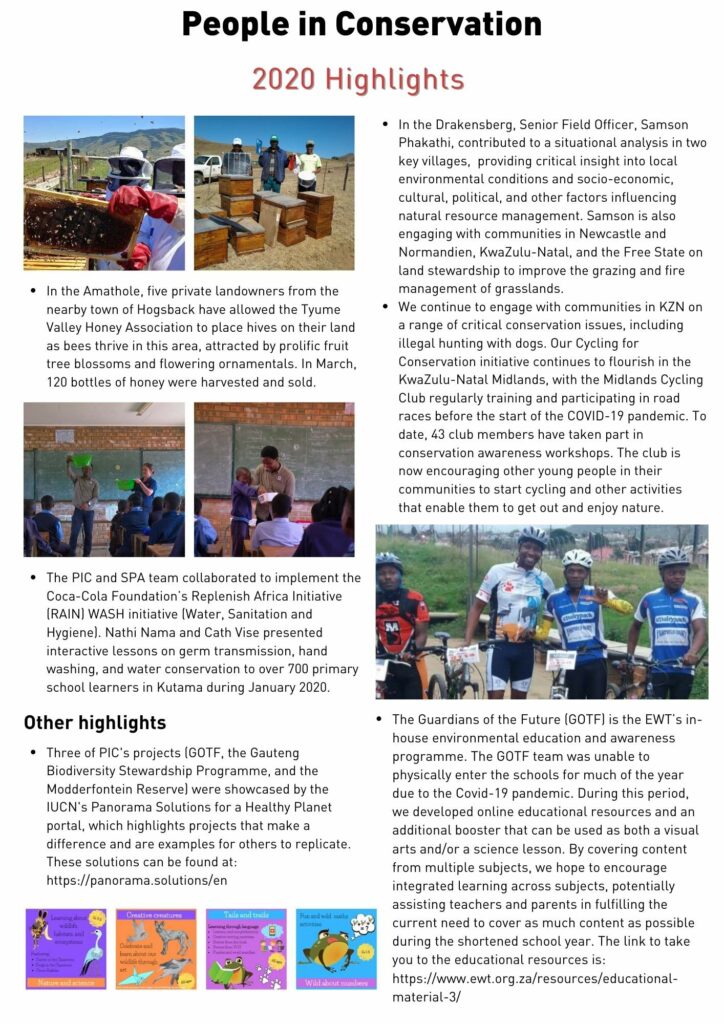
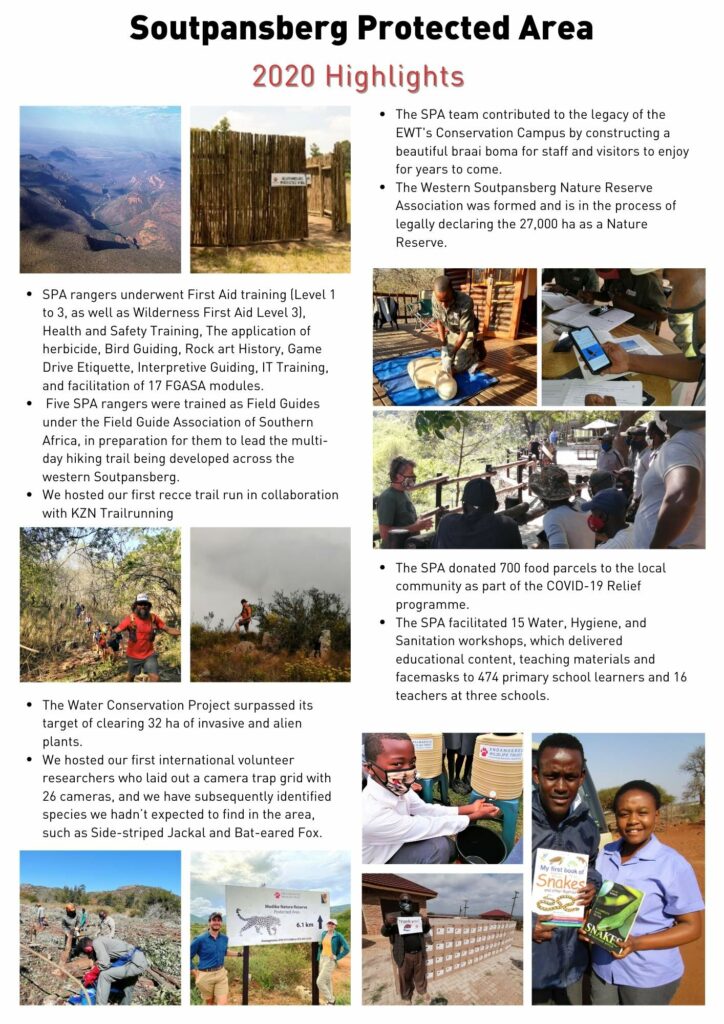
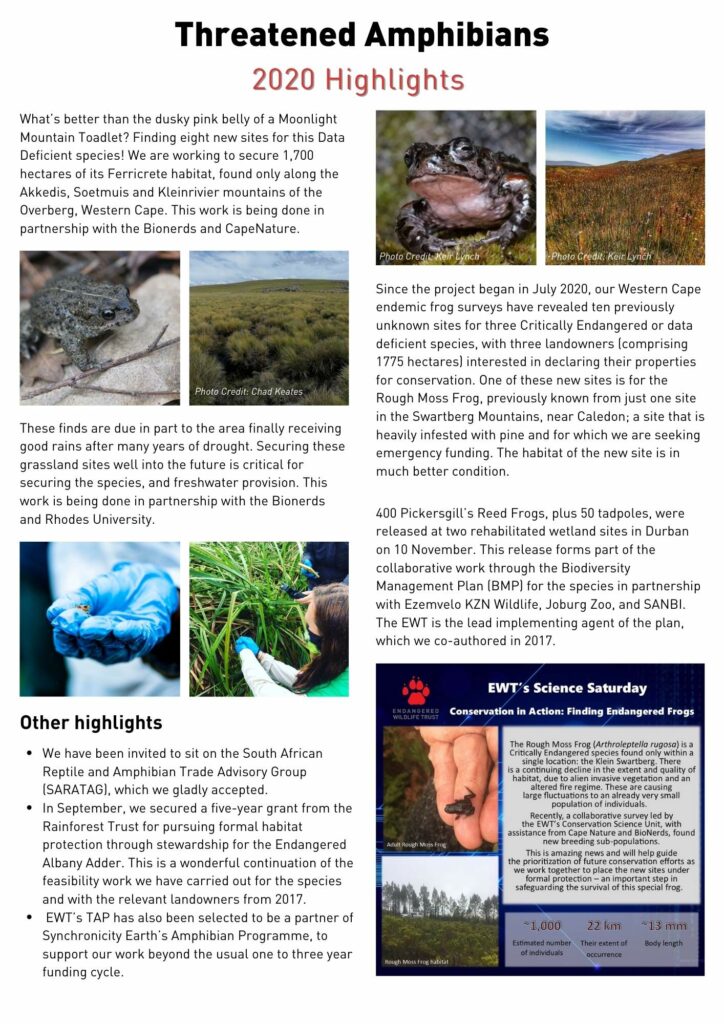
A year in the life of the EWT is never dull, and instead of slowing down during lockdown, we picked up the pace and made sure that despite the challenges, we found inventive ways to meet our conservation objectives, and we achieved great things for wildlife, landscapes, and people. Here are some snapshots from a few of our programmes’ highlights of working with wildlife in 2020