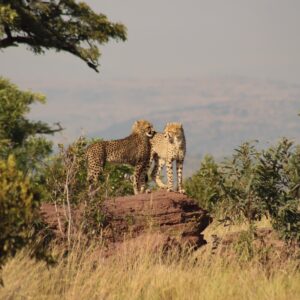
SCIENCE SNIPPETS: SUCCESSFULLY REARING ORPHANED CHEETAH IN THEIR NATURAL HABITAT
Adaptation from the article: Warmenhove C, Canning G, Davidson-Phillips S, van der Merwe V, Burger A, Davidson-Phillips P, Naude VN. 2020. Successful in situ supplementary feeding leads to the independence of orphaned cheetah cubs. Conservation Science and Practice. e353: 1-3. https://doi.org/10.1111/csp2.353
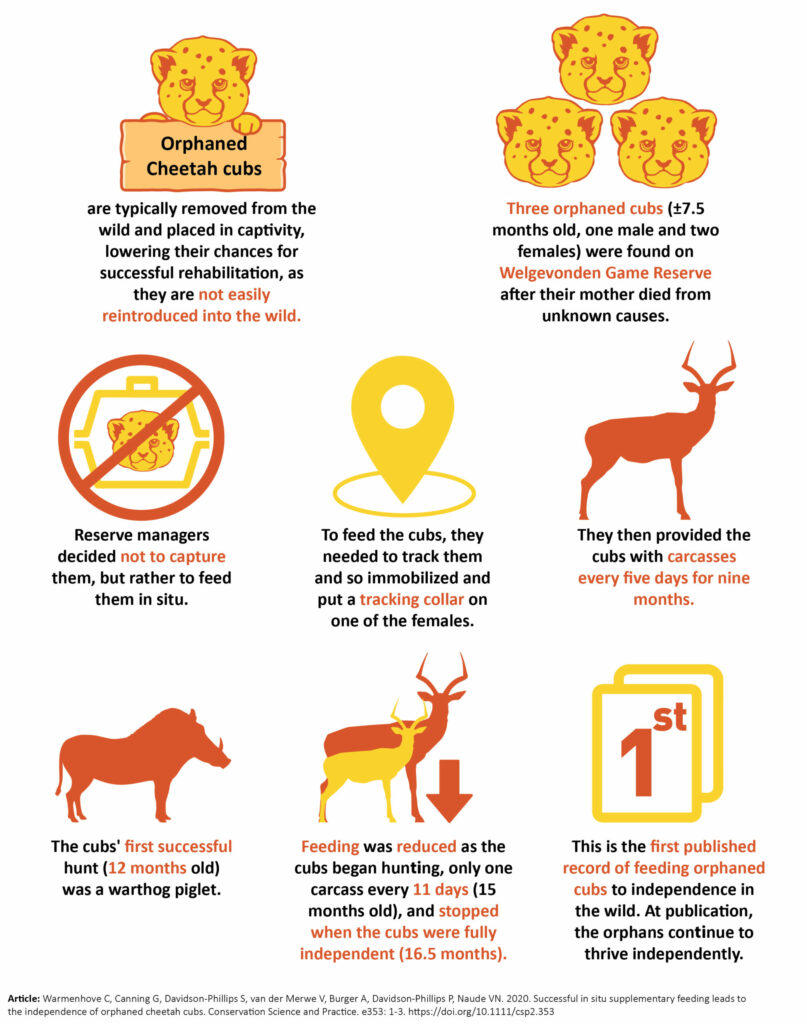
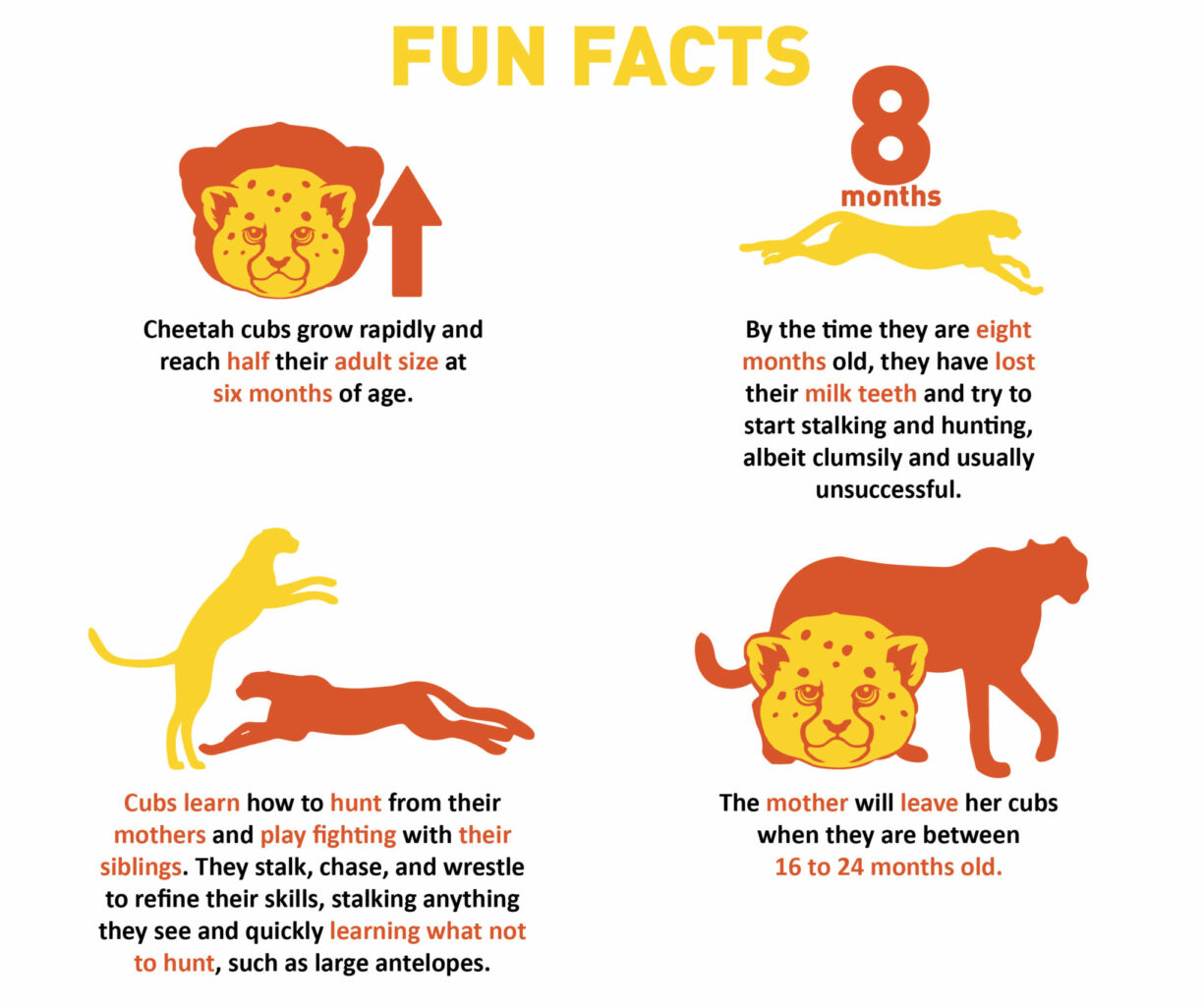
This paper provides evidence that orphaned Cheetah cubs can successfully, under certain conditions, be left in the wild with supplementary feeding from at least 7.5 months of age, and they will learn how to hunt and otherwise fend for themselves. The decision to take this approach was influenced by the low densities of other large carnivores, including Lion, Leopard, and Spotted Hyaena, and reduced predator visibility due to the terrain. While these species are present on Welgevonden Game Reserve, the low risk of interspecies competition was considered acceptable. This study reveals a credible alternative strategy for supporting orphaned cheetah in their natural habitat instead of removing them and placing them in captive facilities.


SNAPSHOTS FROM THE ROAD
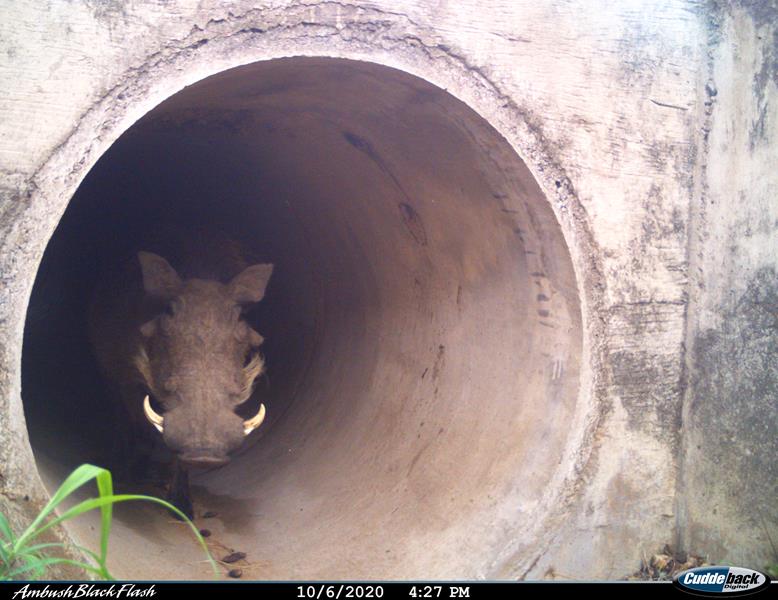
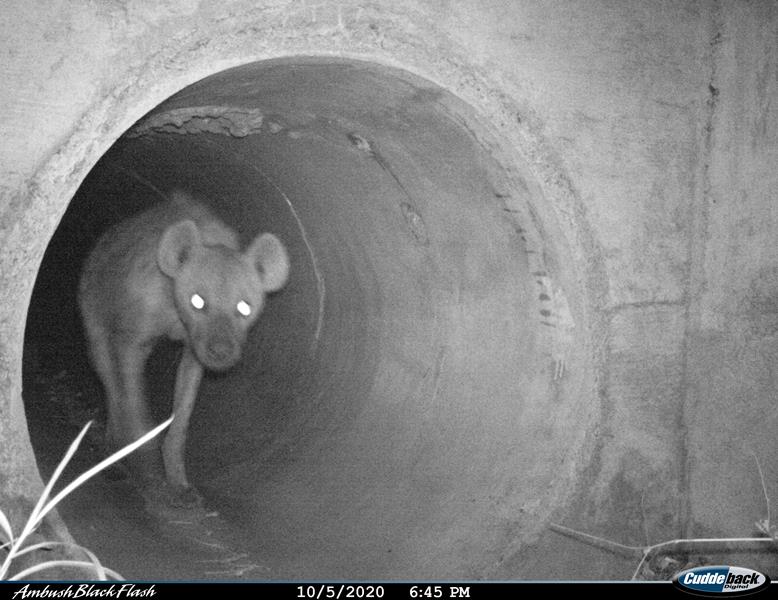
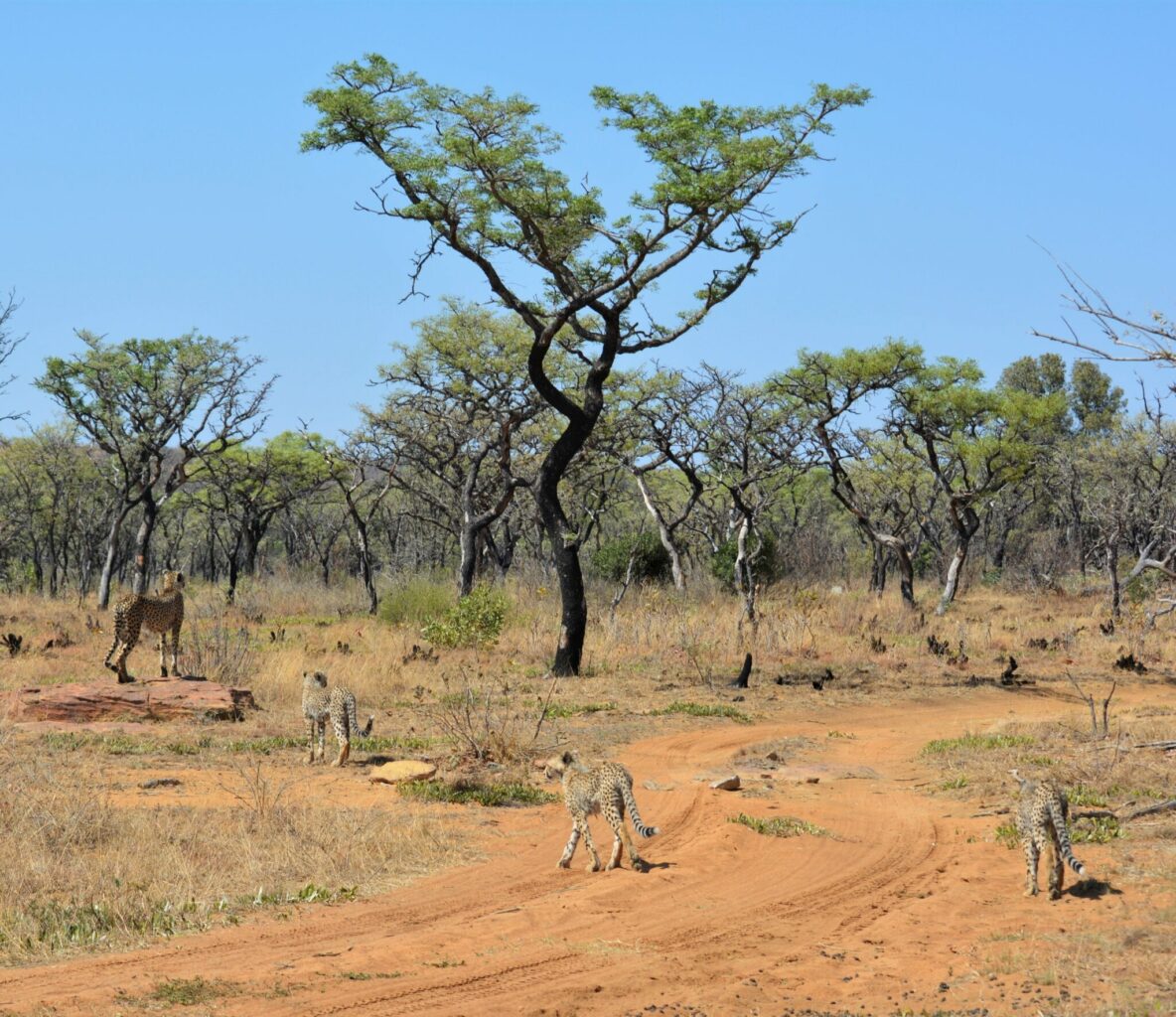
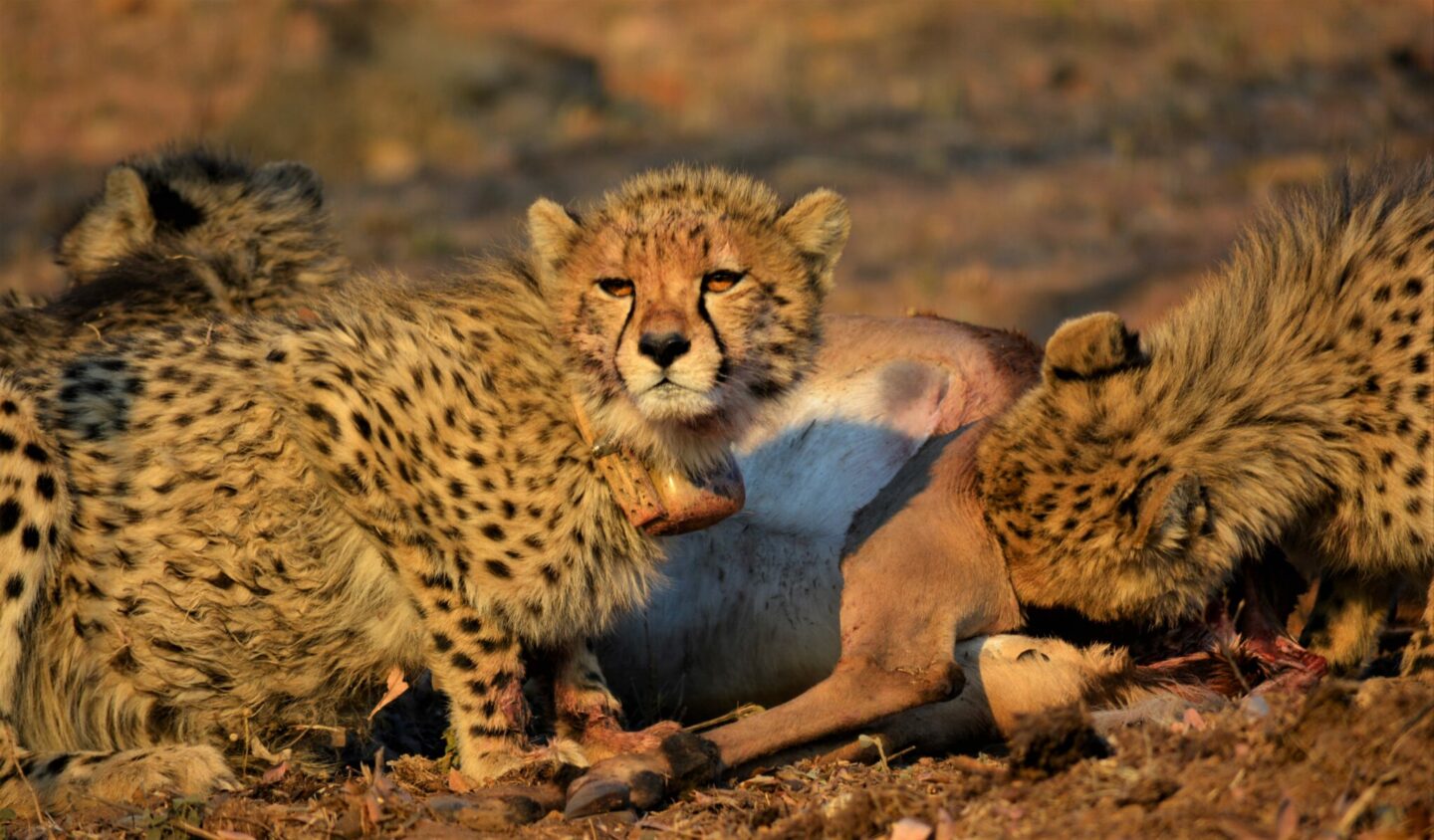
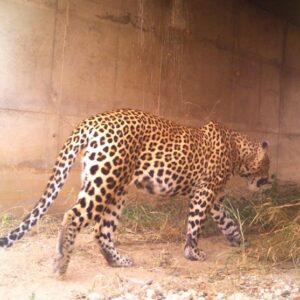
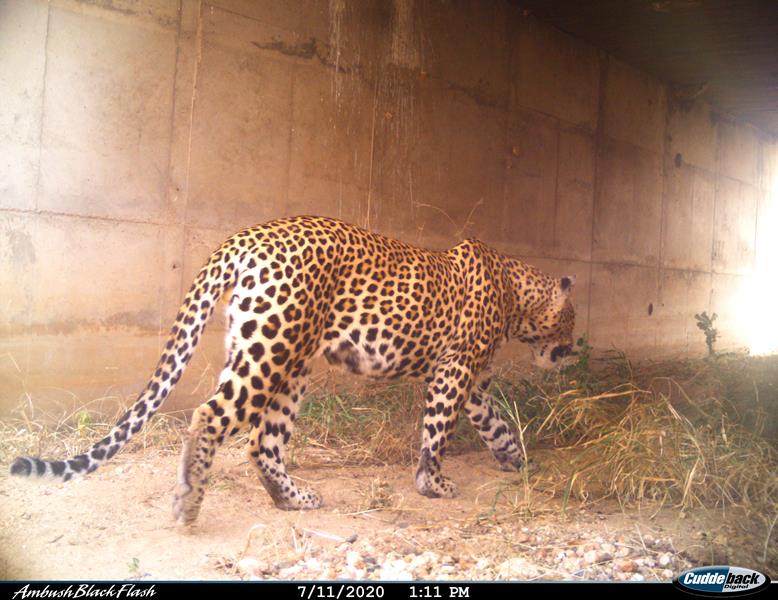
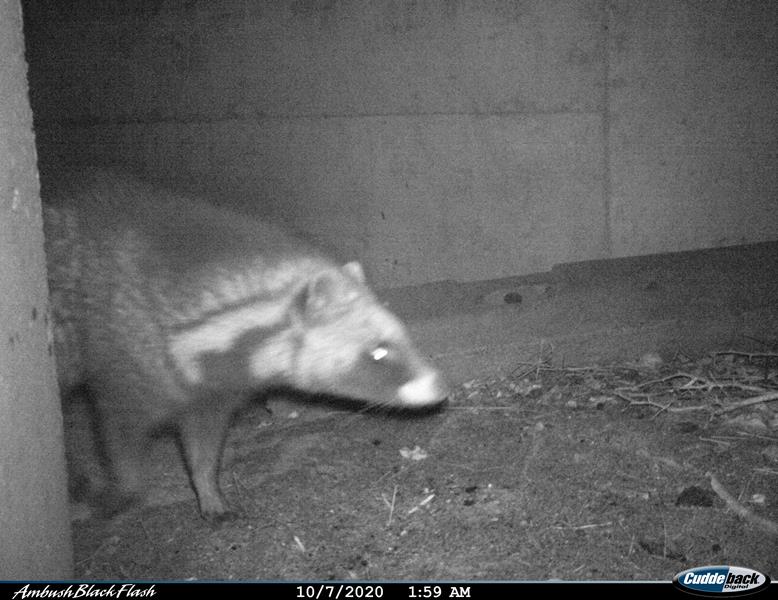
Siboniso Thela is researching rail mortalities and animal avoidance/behaviour adjacent to the railway in Balule. Here are some of the images that he has found of wildlife crossing the railway line safely using the culverts under the line. This project is supervised by Dr Lourens Swanepoel (UNIVEN) and co-supervised by Dr Mansiha Bhardwaj (Swedish University of Agricultural Sciences, Sweden), Dr Gabi Teren, Paul Allin (Transfrontier Africa-Balule), and Wendy Collinson from the EWT’s Wildlife and Transport Programme.
I WOULDN’T TRADE YOU FOR THE WORLD
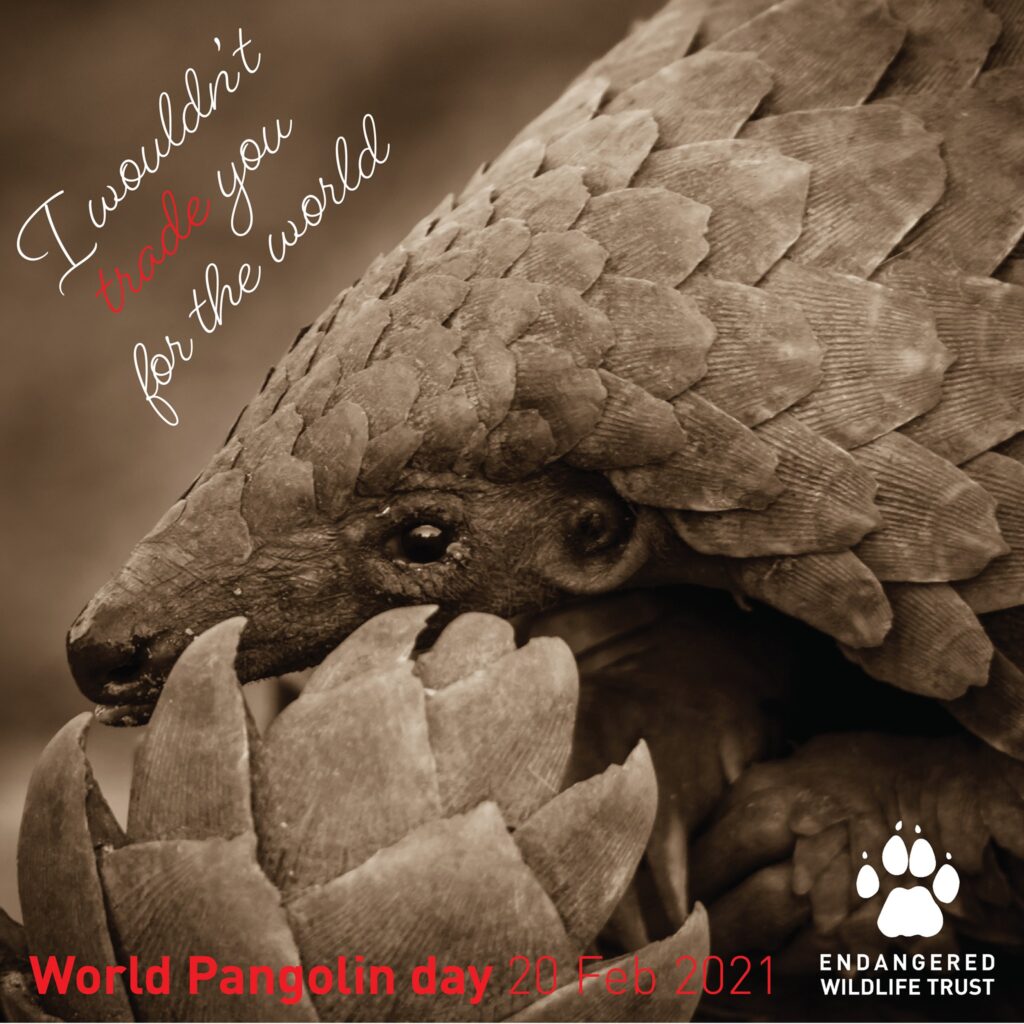
Dr Andrew Taylor, EWT’s Wildlife in Trade Programme Manager, andrewt@ewt.org.za and Ashleigh Dore, Wildlife and Law Project Manager, ashleighd@ewt.org.za On 20 February, the EWT celebrated World Pangolin Day. There are eight species of pangolins worldwide, and all are threatened with extinction and listed in the IUCN Red List of Threatened Species. The biggest threat to pangolins is illegal trade – they are the most traded mammal globally, highly prized for their scales, which are used in traditional medicine practices across Africa and Asia. Pangolins are also a source of food, as bushmeat in Africa and as a delicacy in parts of Asia. Although pangolins are shy and hard to find, they are easy to catch once discovered, making them particularly vulnerable to poachers. Add to this the fact that pangolins are uncommon, do not often survive in captivity, and have a slow reproductive rate, and we have a recipe for extinction.
The pangolin species that occurs in South Africa, Temminck’s Ground Pangolin, is currently listed as Vulnerable. We do not know the extent to which Temminck’s Ground Pangolin is trafficked out of South Africa, but there does appear to be an increasing trend in illegal catching and attempting to sell pangolins within the country because of the high prices they fetch. Pangolins and products derived from them are often trafficked around the world in air cargo or shipping containers, and these modes of transport provide an opportunity to intercept pangolin contraband. In collaboration with other conservation partners, the EWT is trying to reduce this illegal trade by placing detection dogs (aka Conservation Canines), trained to detect pangolins and their scales, in strategic sites that traffickers are likely to pass through. But they are not the only ones hot on the trail!
African Giant Pouched Rats have been used to detect landmines and even sniff out tuberculosis. Now APOPO, in partnership with the EWT, is training rats to detect pangolins. This Pangolin Day, we are incredibly excited to showcase this work through a feature film done by Waterbear. Subscribe now to watch how these African Giant Pouched Rats are doing their bit to protect forever, together.This work could not be possible without funding from the US Fish and Wildlife Service’s Combating Wildlife Trafficking Strategy and Partnerships Branch, the UK Government through the Illegal Wildlife Trade Challenge Fund, and the Wildlife Conservation Network Pangolin Crisis Fund.
This work could not be possible without funding from the US Fish and Wildlife Service’s Combating Wildlife Trafficking Strategy and Partnerships Branch, the UK Government through the Illegal Wildlife Trade Challenge Fund, and the Wildlife Conservation Network Pangolin Crisis Fund.
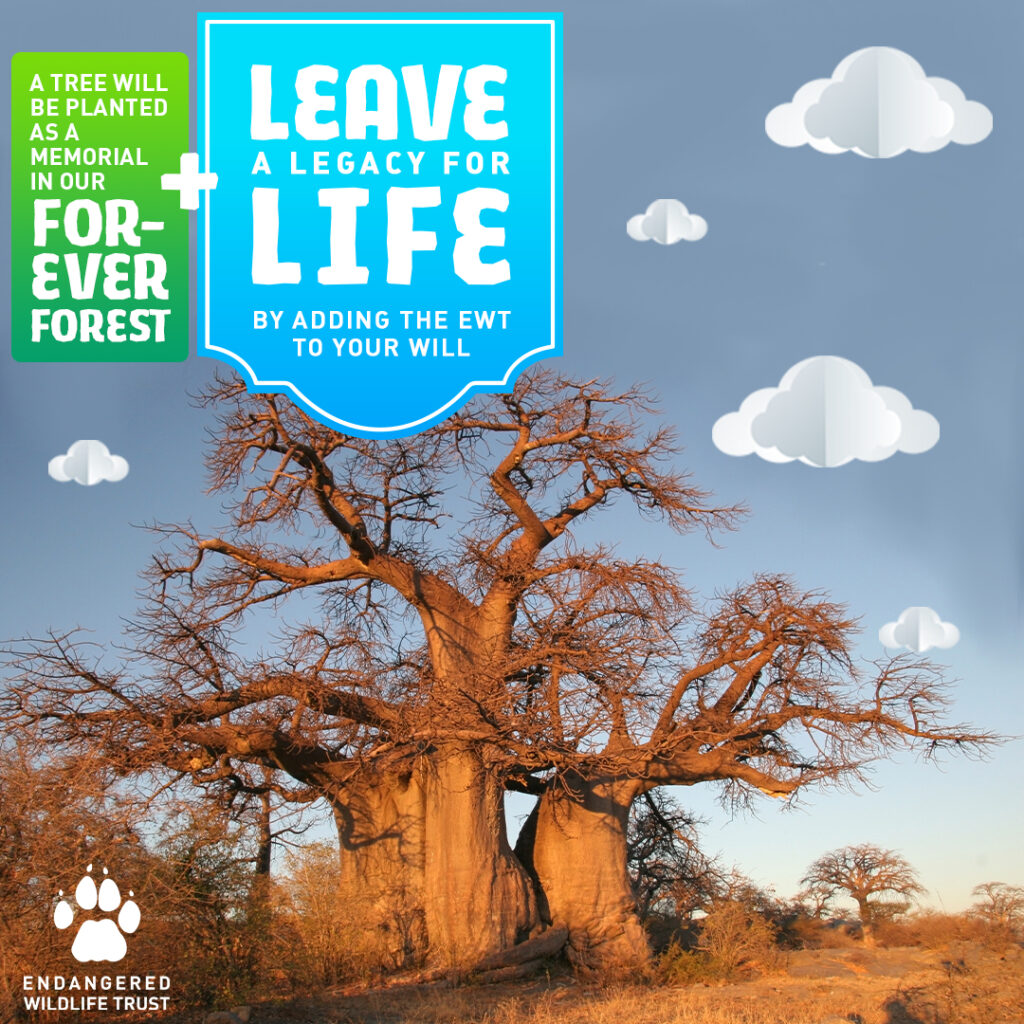
A LEGACY FOR LIFE
We were sincerely grateful to receive a moving tribute from a long-time supporter of the EWT, Greg Bond.
“I have been in communication with EWT for at least the past 20 years. This includes email education, updates on projects, donation requests, interesting presentations and their beautiful Vision editions. I have been contributing to their donation requests as they are all for a good cause as well as buying time for the future.
The continual habitat loss, stress on species and extinctions really sadden me. It is uplifting to read about the positive work and successes that EWT does and have achieved. It has been a pleasure to have helped some projects in the form of small contributions.
In this light, I have decided to leave a considerable portion of my estate to EWT, which is mentioned in my latest will.
I sincerely hope that more of your supporters do the same to help preserve and protect the environment for future generations.
Best regards, Greg.
If you too yearn for a better future for your children, leave a Legacy for Life by remembering the EWT in your will, and help us secure the health of our planet and its wildlife beyond your lifetime.
All bequests made to the EWT create legacies for life that are immeasurable and remembered through the survival of our endangered species and spaces.
A WORD FROM THE CEO
Yolan Friedmann, EWT CEO
yolanf@ewt.org.za There is not much more to say about 2020 that has not already been said. But if you are reading this then you, like us, have a lot to be grateful for despite the hardships of the year. The EWT staff and trustees have banded together in an unprecedented way to ensure that we forge ahead in a time of grave uncertainty and change and that above all else, conservation and wildlife do not suffer. The year forced us to reset our priorities and ensure that we keep our own heads above water whilst supporting the wellbeing of the communities we serve – human and wildlife – and safeguarding the most vulnerable. We have not been unaffected by the turbulence of the year, and yet we have continued to provide essential lifesaving services to thousands of people, and support the conservation of many wildlife species. The pages ahead detail just some of these triumphs and make for uplifting reading at a time when joy and gratitude are so important.
We could not have done this without the support of our followers and your help has helped to save lives. From my desk, I never take for granted how blessed I am to be part of team of people that puts each other, their work, their commitment to conservation and their desire to build a better world first. The sacrifices made by the EWT staff during this time, to keep us all moving forward together, have been extraordinary I am grateful to the EWT team that has become stronger and more united as a result. Protecting tomorrow together has never been more real or more relevant as it was this year, or as we step forward into another year of uncertainty. Thank you to the EWT staff, the Board of Trustees and to all our supporters who kept making conservation happen this year. The reset button on all of our lives has had some positive benefits and, at this time of global gratitude and joy, may these opportunities for change and to count our blessings prevail as we build this tomorrow, together.
Yolan Friedmann
