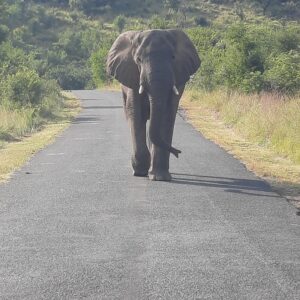
SCIENCE SNIPPETS: THE ELEPHANT IN THE ROAD
Cameron Cormac, PhD Candidate, Centre for Functional Biodiversity, School of Life Sciences, University of KwaZulu-Natal, downs@ukzn.ac.za For most drivers, it is fairly easy to spot an animal as large as an African Elephant, Cape Buffalo, or rhino on the road. However, despite these animals being highly visible because of their large size, there are still cases of drivers colliding with these large flagship species along roads near or in protected areas. Additionally, with fences being placed around the reserves that South Africa’s most iconic animals call home, aiming to protect both man and animals by keeping animals in and poachers out, the range that these large animals can roam is effectively reduced. But if large animals can be hit by cars and stopped by fences, what effect do roads and fences have on the smaller species that inhabit these protected spaces.
Globally anthropogenic land-use change, including the development of linear infrastructure, impacts species negatively. I am Cameron Cormac, a PhD student from the University of KwaZulu-Natal and working in conjunction with several supervisors, namely: Prof Colleen Downs, Dr Cormac Price (both University of KwaZulu-Natal), Dr Dave Druce, Ezemvelo KZN Wildlife, and Wendy Collinson of the Endangered Wildlife Trust. My project aims to answer questions about the effects of linear infrastructure (roads and fences) on vertebrate fauna in Hluhluwe-Imfolozi Park and the Zululand region of KwaZulu-Natal.
There are five questions that my project aims to answer. Firstly, to find out what vertebrate species are killed by vehicles along the sections of the R618 that separates the Hluhluwe and Imfolozi sections of Hluhluwe-Imfolozi Park and the section of the R22 that runs through the northern section of Isamangaliso Wetland Park. Secondly, to determine what vertebrates are dying along fences within Hluhluwe-Imfolozi Park and Phinda Private Game Reserve because the fence impedes them from entering either park. Additionally, to find out what animals are killed along the R22 that runs through multiple rural communities and compare it with the Isimangaliso section of the R22. I am particularly interested in how reptiles and amphibians in this region are affected by the roads and fences. Finally, to determine what measures can be taken to reduce the number of animals that die along the roads and fences that this project is concerned with.
To answer my project’s questions, I conduct surveys in the morning and evening, collecting information on what animals are killed on roads and fences. I also record the environmental conditions when I locate any dead animals, as weather conditions can increase roadkills,

Cameron Cormac recording roadkill
and I note whether there are traffic calming or alternative structures for use animals to use to avoid the road. The number of cars that pass by during a set time frame, the number of cars that pass through the road sections in a day, and how far from the edge of the road the animal was are also recorded. This information will provide insights into what drives animals to use the road. Information from social media pages is also being used to obtain additional information about roadkills in the study area. Information on what animals are killed along fences is kindly collected by the rangers and park workers who patrol the reserves. All information is then used to determine what measures can be taken to reduce the mortalities along these man-made structures using computer analyses.

Vervet Monkey roadkill found during road surveys
At least 137 animal deaths have been recorded along the R618 and 103 deaths along the R22 over three months so far, including 77 amphibians, 14 reptiles, 21 birds, and 27 mammals in Hluhluwe-Imfolozi Park and 63 amphibians, 14 reptiles, 17 birds, and 12 mammals in Isamangaliso Wetland Park.
You can also assist in the study. Please send pictures of any animals seen dead or alive on these roads to the Hluhluwe-Imfolozi sightings Facebook group or by using the Endangered Wildlife Trust’s road watch application, which can be found in the Google play store, as this will add to our growing understanding of the threat posed by roads in Hluhluwe-Imfolozi and Isamangaliso Wetland parks. In conclusion, please drive carefully and slow down for all animals crossing the road, not just the large iconic species, and help preserve South Africa’s incredible diversity.

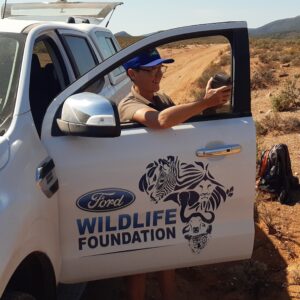
Vehicle sponsored for this research project by the Ford Wildlife Foundation
This work would not be possible without the generous loan of a vehicle by the Ford Wildlife Foundation.
A WORD FROM THE CEO
Yolan Friedmann, EWT CEO
yolanf@ewt.org.za June signals a brand-new month, the middle of the year (can you believe it?), almost mid-winter and most important, World Environment Month, with World Environment Day (WED) being celebrated on the 5th. There are Special Days on almost every day of the year, with many being quite silly, like World Television Day (21 December) and World Yoga Day (21 June), but many being critically important days for us to take stock of our lives, our loved ones, those less fortunate, those in need, our impact on others and this Earth, and how we can be better humans. World Environment Day encapsulates all of this. Since 1973, June 5th has been observed as the UN-established World Environment Day to heighten awareness of global environmental concerns, like climate change, deforestation, ocean pollution, over-harvesting and unsustainable development that harm plant and animal species and derail natural systems and processes that are essential for life on Earth.
It is not a day just about the birds and the bees, but a day in which people globally should take note of and celebrate the bountiful gifts we get from Mother Nature and how much all of our lives, present and future, depend on them to continue, regardless of who and where we are. WED is about recognising that our lives are interlinked and woven together by our dependency on, and vulnerability to, changes in nature above all else; how none of us can survive without the lifegiving ecosystem goods and services that only nature can provide; and how, despite the poor being the most vulnerable to the impact of the loss of nature’s protection and provisions, we are all vulnerable. It only takes a pandemic or a flood or an avalanche for the rich to be reminded that they, too, are at nature’s mercy. Sometimes a day is not enough for us to really take cognisance of our need to live less harmfully, and these days, the whole month of June is often marked by celebrations, campaigns, events, and tributes to our environment.
This World Environment Day, celebrate with the EWT and Hot 91.9 as we bring nature a little closer and into your homes with stories from the conservation frontlines, tips on how you can live a less impactful life, and competitions with great prizes up for grabs. Watch the EWT staff saving Endangered species on our YouTube channel and see our Conservation rats at work on the Waterbear Network. Check out our Wild Diaries blog and follow our daily updates from the field on our Facebook page.
This June 5th, and every day, do something different to live lighter, be kinder, and take care of our Earth and all the creatures we share it with. There is no Planet B.
CRANE CUSTODIANS STEP UP THEIR DRIVE TO ADDRESS CRANE POISONING IN UGANDA
Adalbert Aine-omucunguzi, Orishaba Phiona, and Gilbert Tayebwa, ICF/EWT African Crane Conservation Programme, adalberta@ewt.org.za
In 2012, the International Crane Foundation/Endangered Wildlife Trust Partnership (ICF/EWT) recruited and trained five community volunteers to safeguard breeding cranes in southwestern Uganda. This was in response to the escalating threats from crane poachers and wetland encroachment. These community volunteers were named Crane Custodians, and the approach was guided by the belief that securing a future for cranes depended on local people tolerating cranes on their farms, reporting poaching and other incidents, and receiving constant positive messages about cranes from their fellow community members. The Crane Custodians have since helped to raise community awareness about the importance of conserving cranes and have been instrumental in securing safe space for breeding cranes. The Uganda project has grown and now comprises 50 Crane Custodians, 17 females and 33 males
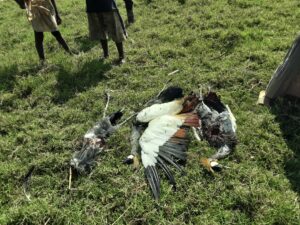
Despite this, in March and April 2021, over 60 cases of crane poisoning were reported in south-central Uganda. The poisoning is believed to have been driven by crop damaged caused by cranes. Some farmers are using agrochemicals, notably Furadan, to poison cranes that visit their crop fields. In response to escalating poisoning, our Crane Custodians have stepped up their awareness drive to educate communities so that they aware of the dangers of misusing agrochemicals, which are unfortunately readily available in local markets and can easily be purchased by anyone.
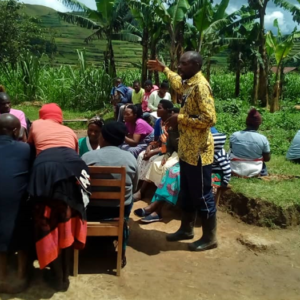
 Through various available awareness-raising activities such as community meetings, church gatherings, music composition, and moving from house to house, the custodians are sensitising community members to the consequences of poisoning cranes and the need to protect Uganda’s National Bird.The custodians have been instrumental in building the current community support and pride for cranes that we see in Uganda. The dedicated volunteers also report and monitor cranes that are breeding, contributing to increased breeding success for cranes within these communities.
The Uganda project team is heavily indebted to these unsung heroes for their dedication to crane and wetland conservation and their willingness to volunteer their time to serve nature.
CROUCHING ROCKS, HIDDEN RABBITS
Bonnie Schumann, EWT’s Drylands Conservation Programme, Senior Field Officer, bonnies@ewt.org.za
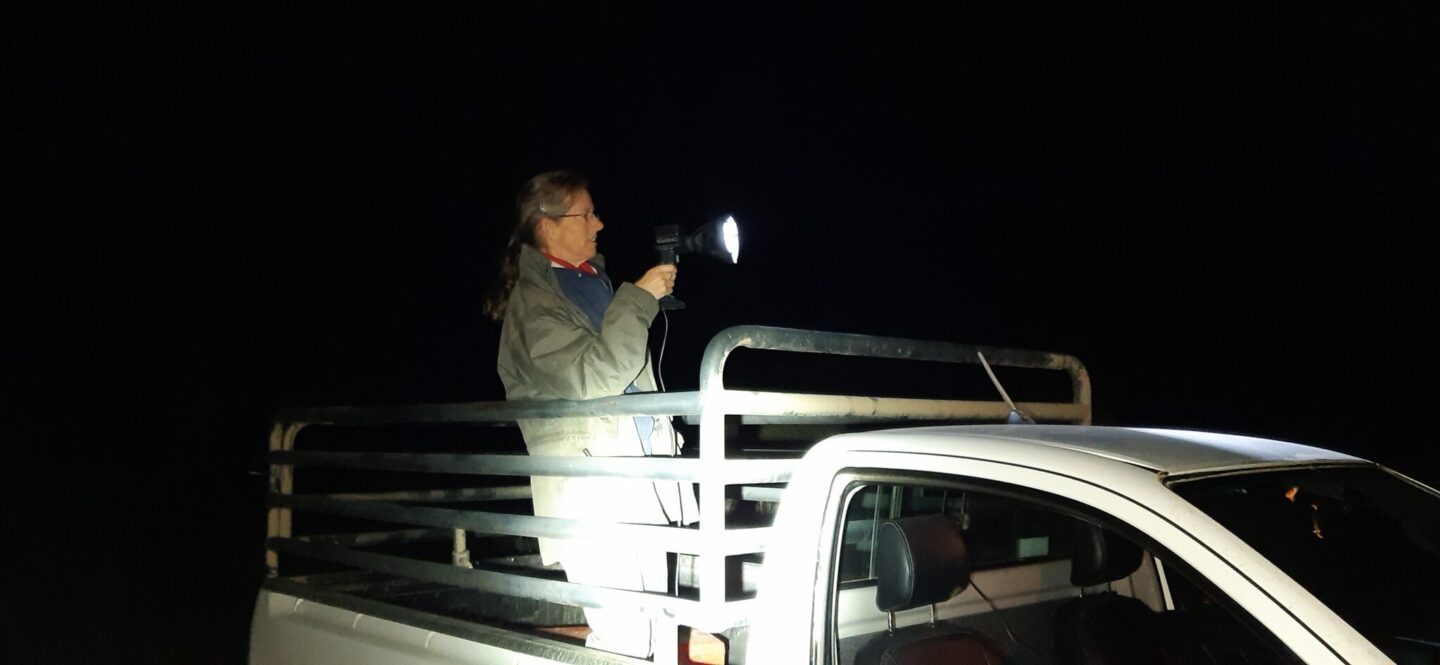
Searching for Critically Endangered Riverine Rabbits (Bunolagus monticularis) in the vast and rugged Karoo landscape is one of the hardest but most rewarding aspects of what we do. Marienne de Villiers, Faunal Ecologist with CapeNature, and I recently spotted a rabbit on a night drive on the Lettas Kraal Private Nature Reserve. This was a first for Marienne, who admitted that she was starting to doubt the existence of this mythical creature! When reflecting on our success, we realised that we had tallied up just over eight hours of searching on two rather freezing cold night drives before we got lucky and laid eyes on a live rabbit between the two of us. After a few hours of searching for all creatures great and small in the beam of a spotlight, from the back of a bakkie bumping along a dusty dirt track, one tends to get a bit cross-eyed. As a result, we had spotted many rabbits along the way, only to discover on closer inspection that they were rabbit-like rocks crouching in the veld, while the real rabbits remained safely hidden!
These bunnies are the ultimate masters of hiding in plain sight, so seeing a live Riverine Rabbit is somewhat of an achievement that few people can lay claim to. Although camera trap surveys in 2019 and 2020 revealed their presence, Riverine Rabbits had never actually been seen on Lettas Kraal. This trend is not unusual, given that the species managed to remain undetected, in two of the three landscapes in which it occurs, for over a hundred years! Following their initial discovery near Deelfontein in the Nama Karoo in 1901, they were only recorded in the Little Karoo, a distinct geographic region lying within the Succulent Karoo, for the first time in 2003. This southern population was in the Touwsriver area, and as recently as 2018, an eastern population was found in the Uniondale area. In both cases, the documenting of roadkill was what finally revealed their presence.
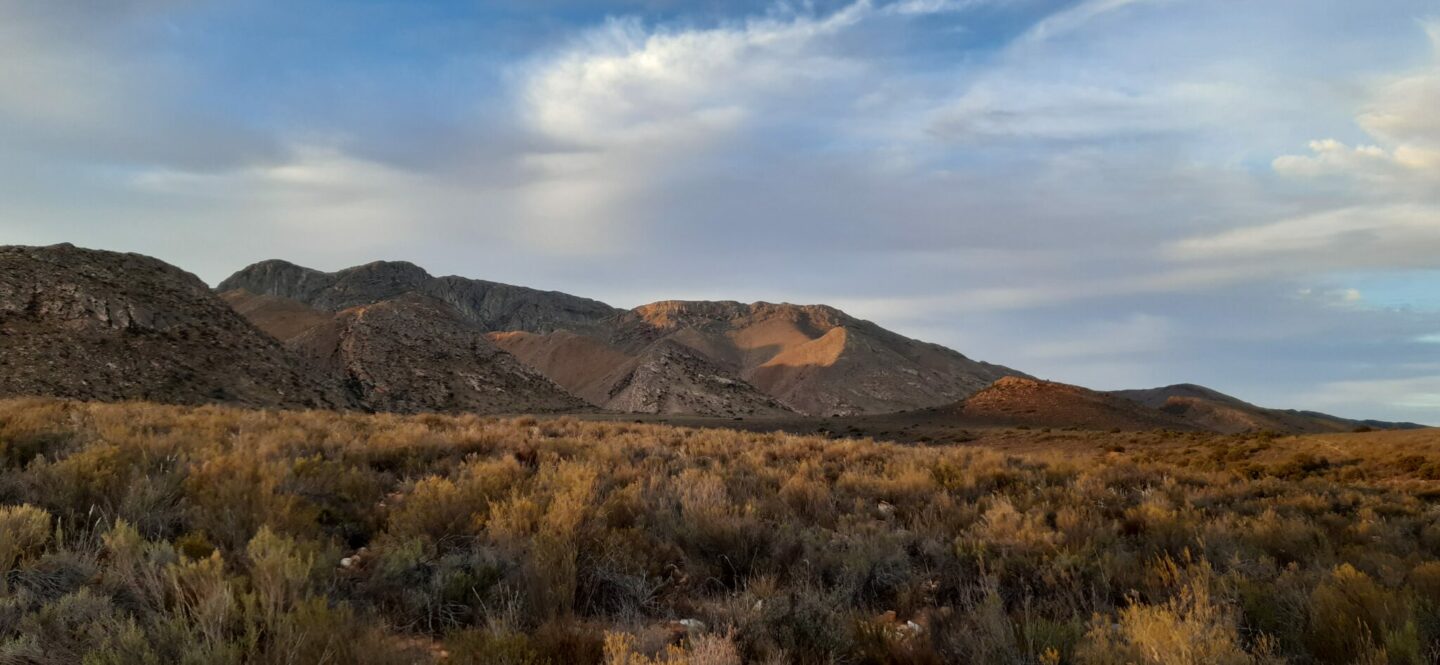
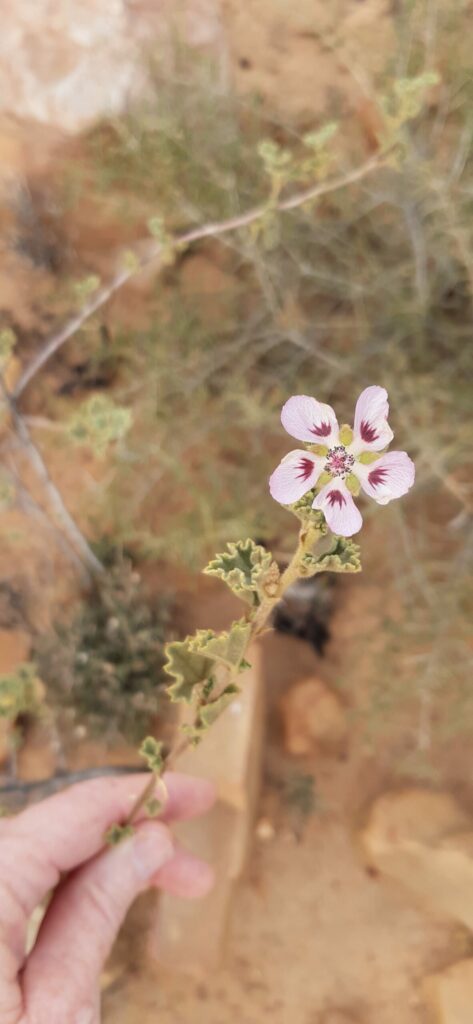
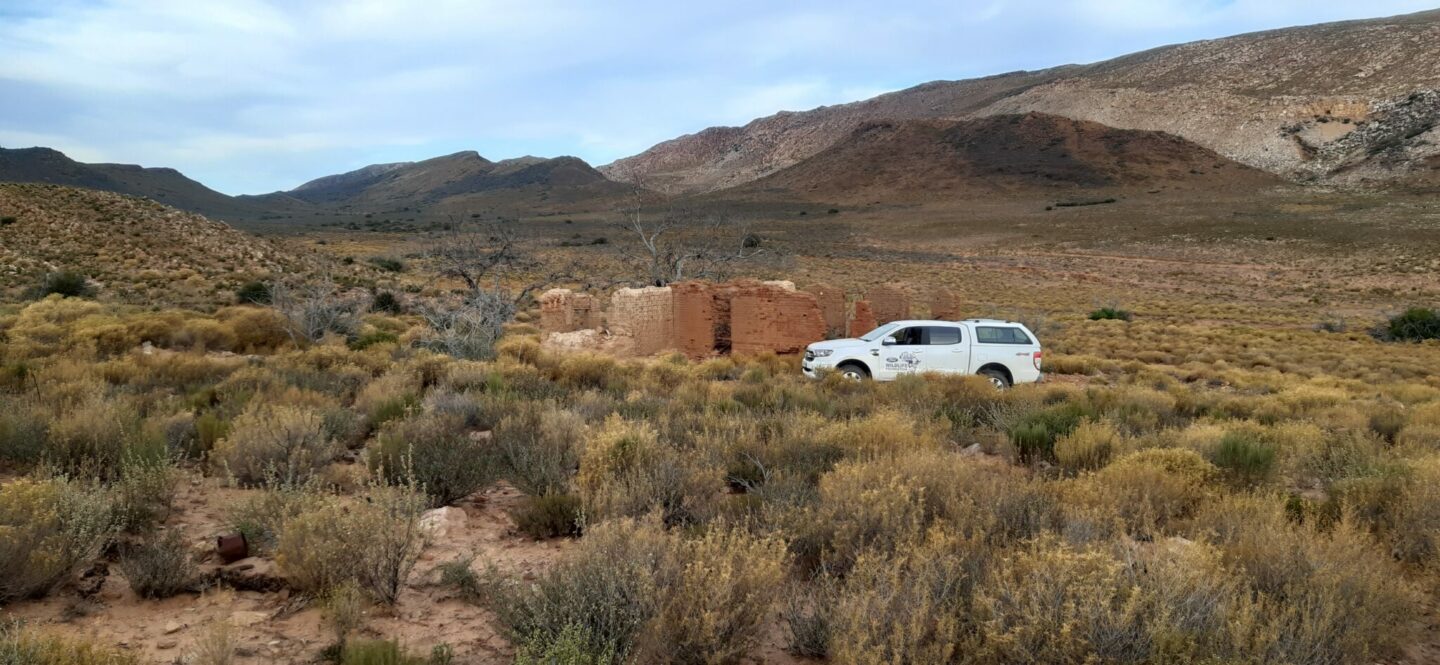
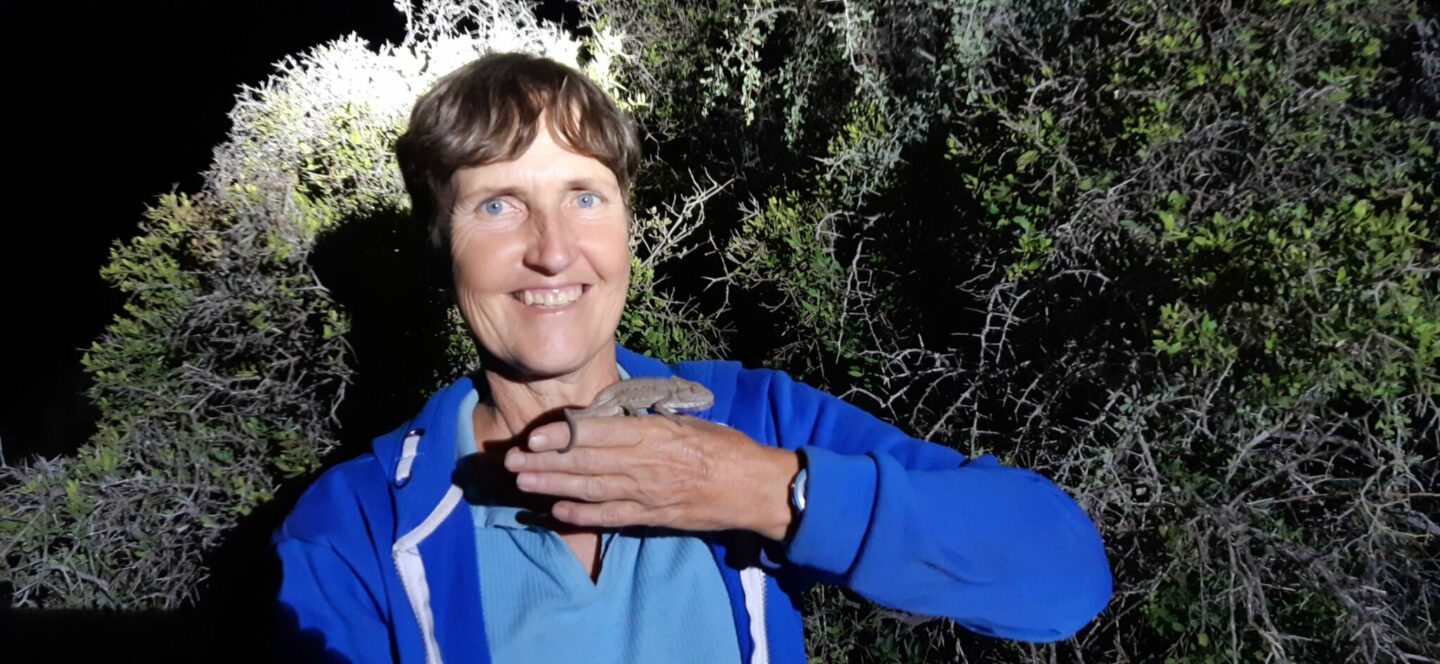
Lettas Kraal, home to many Little Karoo botanical gems, some of which have not even been described yet, is also home to a known population of Riverine Rabbits. This property is in the process of being declared a Contract Nature Reserve, which will ensure the safety and protection of the unique biodiversity there. The night drive was part of the process of documenting the biodiversity on this beautiful property. This process is already well underway, following detailed botanical and camera trap surveys in 2020. Three hours into this particular night drive, our persistence paid off when Marienne spotted a Karoo Chameleon (Bradypodium gutturale). This was an impressive demonstration of her ability to multitask, as between driving and batting (more on this later), she spotted this small creature nestled on its Gwarriebos perch as the beam of the weaving spotlight passed over the bush. Widespread habitat degradation and loss pose a severe risk to these ancient-looking little reptiles. Adding this species to the Lettas Kraal inventory was a rare feel-good moment, knowing that this species, too, is safe on Lettas Kraal, under the protective eye of Johan Roodt, the owner of Lettas Kraal. If you wondered what “batting” mentioned earlier is all about, this entails listening for and recording bat calls. Capturing recordings of bat calls is one of the most effective ways of documenting bat species presence – for which Marienne has quite a knack.
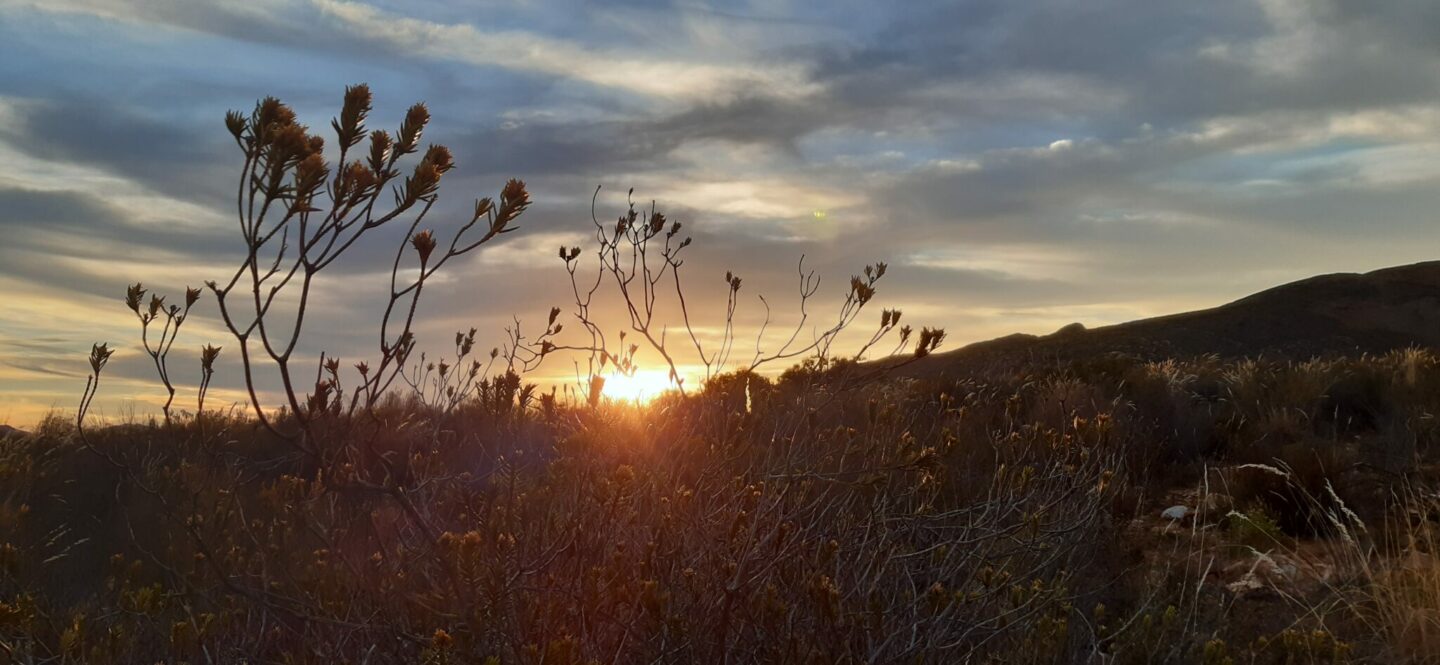
After our exciting rabbit show at the magic hour of midnight, we grabbed a few hours of sleep before we set off early again – this time with Jan Vlok, renowned Succulent Karoo botanist also working on Lettas Kraal. Jan was on a mission to supplement the botanical survey he did in Spring 2020 with what the autumn season had to offer. Despite telling us, “If it doesn’t photosynthesise, I’m not interested!” Jan is a veritable encyclopaedia on all things Karoo. Over 20 autumn species were added to the more than 800 species counted in spring.
Many more species await documenting, and getting the full picture will literally take years. Plants need to be particularly picky about when they expose themselves because expending energy and resources, particularly during the flowering and seeding process, is a risky business at the best of times. In a region where the rainfall varies between 100 mm and 450 mm per year, and summer temperatures can exceed 40⁰C, often accompanied by blistering berg winds, the risks are next level. It’s all about timing, and some species will wait years to put it all out there. It requires a lot of luck to have feet on the ground just when the conditions are, for an all too short time, favourable for plant reproduction. Having flowers and seeds makes the daunting job of identifying species accurately considerably easier. However, with over 3,200 species already recorded in the Little Karoo alone, you need to know your stuff! Jan Vlok, a co-author of “Plants of the Klein Karoo”, is one of the few people up to this task.
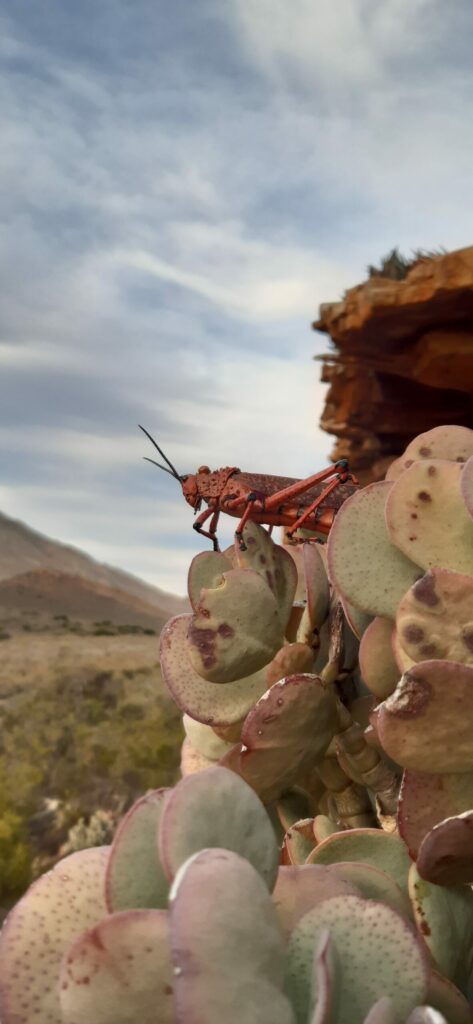
To put the value of biodiversity refuges, such as Lettas Kraal, into perspective, less than 0,5% of the Succulent Karoo biome is formally conserved. Under the guardianship of conservation-minded individuals such as Johan Roodt, properties such as this one add much-needed resource capital to the scant inventory of protected areas in this region. Riverine Rabbits find refuge here, in veld that is slowly recovering from over 200 years of being heavily impacted by livestock and ostrich farming. In some areas, diversity is lost forever. Lettas Kraal was lucky that much of its biodiversity has remained, and species very sensitive to grazing can still be found. Once abundant, these species are slowly emerging from the midst of thorny bushes and start to grow in the open again, reclaiming their space in this spectacular landscape, amongst the crouching rocks and hidden rabbits.
The biodiversity survey was funded by the Global Environment Facility and managed by the United Nations Development Programme, in partnership with the Department of Forestry, Fisheries, and Environment, and the Department of Agriculture, Land Reform and Rural Development.
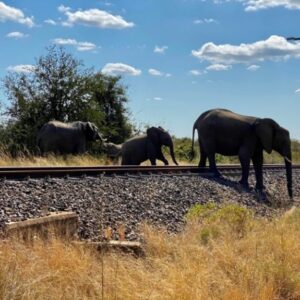
HOW DID THE ELEPHANT CROSS THE RAILWAY LINE?
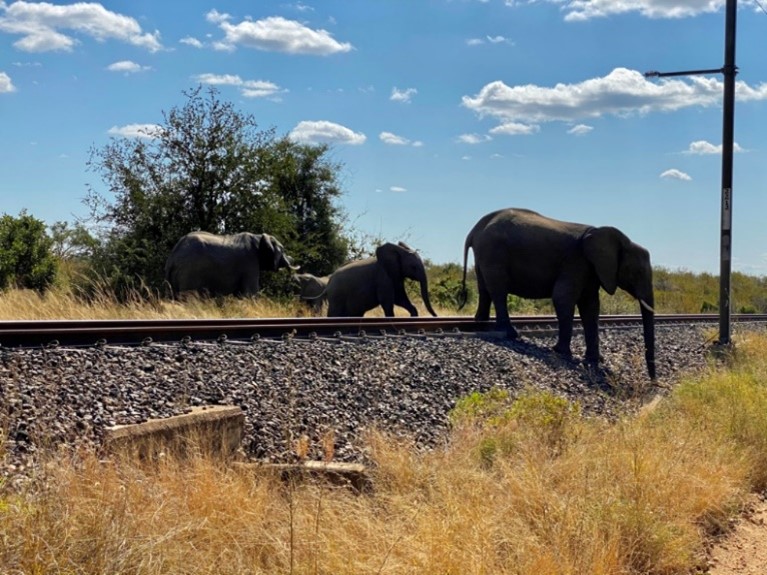
Hannah de Villiers By walking across, of course! Below you can see a breeding herd of elephant in the Balule Nature Reserve (part of the Greater Kruger) casually walking over a railway line.
Transport infrastructure plays a pivotal role in economic and social development through creating improved access to resources and associated livelihood provided. Railways are a critical component of sustainable transportation, having many environmental and economic advantages over other forms of transport, and are therefore seeing massive expansion globally. In Africa, more than 30 massive development corridors, including rail infrastructure, are planned or progressing, with the rail footprint on the continent expected to increase by 85% in the coming years. However, these corridors will pass through hundreds of protected areas containing some of Earth’s most diverse and sensitive ecosystems.
As conservationists, we are concerned about two key ecological impacts of railways: the barrier effects and resultant habitat fragmentation it may cause for local wildlife populations and the mortality it might cause through wildlife-train collisions. For some animals, like the elephants above, the railway does not create a barrier in the landscape, and they are often seen simply walking over it. But this means they are in danger of collisions with trains – which, unlike cars, cannot quickly slow down or swerve to avoid a collision.
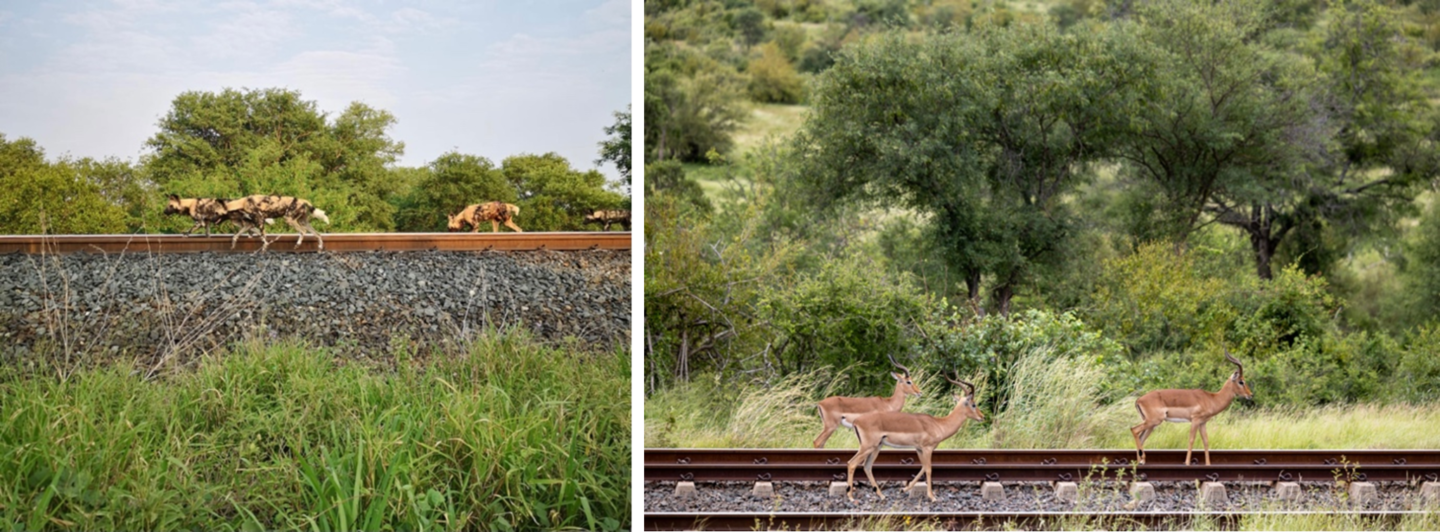
But what if animals could find a safe passage across the railway without the risk of collisions, which would increase the permeability of the rail corridor and improve habitat connectivity? Wildlife crossing structures provide just that, and luckily culverts or viaducts are a common design feature of all railways, typically built for drainage and topographical purposes. These pre-existing underpass structures can easily be modified to improve their use by wildlife, which is regarded as the most economical and feasible form of mitigation for wildlife mortality and barrier effects. The economic advantages of this approach do not stop there: train collisions with large mammals can be incredibly expensive, invariably damaging or derailing trains and often resulting in large-scale service disruptions.
Hannah is researching the use of railway underpasses and drainage culverts (such as the one seen on the left in the photo of elephants crossing the railway) by large mammals in the Balule Nature Reserve. She is putting up camera traps at the underpass entrances to understand which species use them (or don’t use them) and see how the structural dimensions, the nature of the habitat close to the structure, the surrounding landscape and mammal characteristics affect usage.
The findings of this study will help inform the design of underpasses along new railways in the African context and aid reserve management in decisions regarding economically feasible modifications to culverts along existing railway lines that would make them more attractive for large mammal use.
This project is supervised by Gabi Teren (from the EWT’s National Business and Biodiversity Network) and Francesca Parrini (University of the Witwatersrand), and advised by Wendy Collinson (EWT Wildlife and Transport Programme), Paul Allin (Transfrontier Africa, Balule), and Dr Manisha Bhardwaj (Swedish University of Agricultural Sciences).



