
A WORD FROM THE CEO
Women’s Month – a month of Gold
Yolan Friedmann, EWT CEO
yolanf@ewt.org.za What better way to kick off Women’s Month in South Africa than with outstanding performances of our lady Olympians Tatjana Schoenmaker (swimming) and Bianca Buitendag (surfing), who racked up the first South African medals of the Games, with Tatjana setting a new world record! The Olympics provide a unique and magical platform where the world comes together to recognise and celebrate extraordinary feats of human brilliance, underpinned by unfathomable dedication, commitment, hard work, and unwavering vision. And in a world shaken by the Covid-19 pandemic, the Tokyo Olympic Games also symbolise hope, triumph, and perseverance for millions of people around the globe. To add to the inspiration offered by any athlete on the start line is the number of athletes this year that are mothers, with Canadian basketball player Kim Boucher even having her three months old infant with her at the Games whom she is still breastfeeding. With 49% of the athletes in this year’s Games being women, the Tokyo Olympics claims to be the most gender-balanced Games of all times, and features nine more mixed events than at Rio 2016, raising the overall number to 18. Progress of gender equity and the rights of women in many respects.
Back home, South Africa has a very long way to go before women can not only feel equal to men in our society (in terms of pay, equity in the workplace, a voice in the media, and more) but can feel safe and free, in our country and our homes. We wish that days and months dedicated to empowering women and raising the profile of the challenges they face would not be necessary but, given that they are, that they will result in immediate, measurable, and impactful change, not just rhetoric clever campaigns. The EWT is a gender-balanced organisation with a ratio of 50:50 men to women and is one of the few in our sector that is female lead. We believe firmly in the role that women play in building not only a resilient, nurturing and compassionate society, but we also embrace and hold dear the value of the female of the species in bringing all these qualities and more to the EWT and conservation in general. The EWT’s ladies are mothers, academics, scientists, field workers, caregivers, teachers, wives, daughters, and leaders, often all in one. Importantly, we are also blessed to work with men who give high regard to the role of the ladies in their personal and professional lives and who are fundamental to creating a society that is empowering and respectful of women.
This Women’s Month, I wish that all the ladies in the EWT know how valued they are, how much they contribute, and how much impact they have on conservation, the EWT, their families, and society. It is equally my wish that all the men in the EWT also know how important they are, how invaluable is their contribution and how irreplaceable their roles as fathers, brothers, colleagues, and friends are. From all at the EWT, may you spend this Women’s month celebrating each and every woman in your life, and the many good men too, and make the changes that are necessary for a long lasting impact to come from this August that will empower and keep safe ALL the ladies in our country. May we all work this month and every month to create an equitable, safe, just and celebratory society of the gold that exists in all of us.
LATEST STORIES
Herpetological Surveys Limpopo Province: The Quest for ‘Extinct’ Reptiles
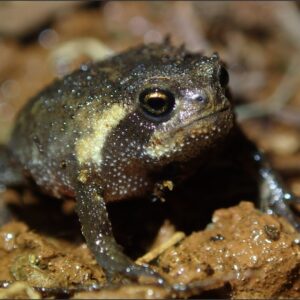
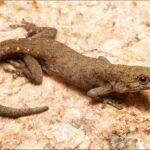
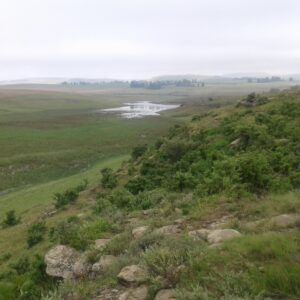
Recent herpetological surveys Limpopo Province conducted by the Endangered Wildlife Trust’s Conservation Science Unit have shed new light on the Woodbush region’s remarkable reptile and amphibian diversity. While the team’s primary goal – rediscovering the officially extinct Eastwood’s Long-tailed Seps (Tetradactylus eastwoodae) – remains unfulfilled, the expedition yielded significant findings that reshape our understanding of this ecological hotspot.
Expedition Highlights
- 50 species recorded (10 amphibians, 40 reptiles)
- Valuable DNA samples collected for 7 taxonomically uncertain species
- 208 new distribution records for the region
- Key species documented:
-
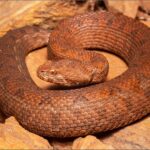
Vulnerable Methuen’s Dwarf Gecko (Lygodactylus methueni)
-
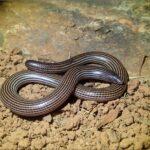
Near Threatened Woodbush Legless Skink (Acontias rieppeli)
-
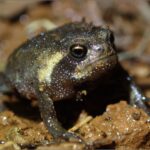
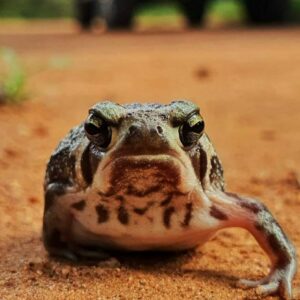
Northern Forest Rain Frog
Innovative Survey Methods
The team employed specialised trapping systems featuring:
- Drift fencing (30m per trap)
- Pitfall traps (5 per array)
- Funnel traps (6 per array)
- Daily monitoring following strict ethical protocols
“While we didn’t find our ‘Holy Grail’,” notes Dr Oliver Cowan, “we’ve significantly advanced knowledge of this understudied region and identified critical conservation priorities.”
Herpetological Surveys Limpopo Province: Conservation Implications
The surveys revealed:
-
New population data for threatened species
-
Potential cryptic species awaiting genetic confirmation
-
Habitat requirements for endemic herpetofauna
Supported by Rand Merchant Bank Foundation, this work underscores the importance of continued herpetological surveys to protect its unique biodiversity.
Carbon Offset Projects
Dr Damian Walters, EWT’s African Crane Conservation Programme, DamianW@ewt.org.za
Gasses that trap heat in the atmosphere are called greenhouse gases (GHG) and include carbon dioxide (CO2) and methane (CH4). Greenhouse gases resulting from human activities are the most significant drivers of observed climate change since the mid-20th century. The Carbon Tax Act (15) was promulgated in May 2019 to give effect to the “polluter-pays-principle”, whereby large emitters of greenhouse gasses GHGs are penalised through taxation for their emissions. The advent of the South African Carbon Tax Act (15 of 2019) has created a significant opportunity for biodiversity conservation and improved catchment management. Apart from the obvious benefits of encouraging reduced carbon emissions, the Act has created a market for those able to sequester (lock) carbon.
The Endangered Wildlife Trust works with landowners, predominantly in the Grassland biome, to develop carbon projects on their properties to sequester carbon. A carbon project entails managing the landscape (e.g., a farm) in a manner that allows for the verifiable sequestration of carbon through a tangible improvement in veld condition. The carbon is typically locked in the soil through improved grazing and fire management of grasslands and wetlands, wetland rehabilitation, and improved management of agricultural lands through reduced tillage and careful fertiliser management. The verified carbon sequestered during such projects can be converted into carbon credits that can be purchased by liable entities, usually big carbon emitters, to reduce their tax liability, thus creating a revenue stream for those who develop carbon projects.
The EWT considers carbon project development and the revenue that the projects will generate as an important tool to enhance biodiversity protection, improve catchment management, and increase water security by providing financial incentives for landowners to improve their land management practices. The EWT has committed decades of extension work to build partnerships with landowners and these trust relationships enable us to develop carbon projects by assisting them with long-term land management plans and associated ongoing extension support to improve the management of their grasslands, wetlands, and agricultural lands to better sequester precious carbon and ultimately curb the effects of global climate change. The ambitious, but achievable, goal is to create landscapes of sustainably managed grasslands, savannas, thickets and forests that not only provide agricultural and other essential products, but also provide critical ecosystem services and support the rich biodiversity that we, as South Africans, are so blessed to enjoy as fellow inhabitants of our thriving landscapes.
GUEST ARTICLE: EVERY ANIMAL MATTERS
Fraser Shilling, Director Road Ecology Centre, University of California, Davis fmshilling@ucdavis.edu
 In the 90s, I used to drive long distances to see my girlfriend in Southern California. I would see dead wildlife on my drive, and for many species, it was the first time I had seen them in the wild. Years later, as a landscape ecologist at UC Davis, I started to connect the real wildlife losses along roads with the habitat fragmentation I studied in geographic information systems on computers. In many ways, this transformed my research trajectory and brought my science closer to my concern for the Earth. Many scientists shy away from saying they are environmentalists or want to fight to protect the Earth, but that’s silly and is like being a ship’s engineer and not caring if it sinks.
My name is Fraser Shilling, and I am the director of the Road Ecology Centre at the University of California, Davis. My centre is affiliated with the Institute of Transportation Studies (ITS), both the firsts of their kind. ITS is well-known for investigating non-motorised travel, alternative fuels, and other revolutions in transportation needed to prevent climate change and improve human quality of life. My centre is best known for studying conflicts between transportation and nature, many of which can be measured as impacts on wildlife. We aren’t shy about our position that nature and wildlife matter, and we use our studies across scales from whole continents to individual animals to make this case.
This concern for wildlife and especially those needlessly killed on roads brought me into contact with the EWT and in particular, the extraordinary Wendy Collinson. We have begun an incredible project together, bringing together the “transportation ecologists” from around the world into one Congress to discuss the outstanding issues in our field. The brainchild of Wendy, the Global Congress on Linear Infrastructure and Environment (GCLIE), will have its first meeting this year, preceding the conference I organise, the International Conference on Ecology and Transportation. GCLIE will kick off with experts from around the world sharing their perspectives and include open discussions about how road, rail, canal, powerline, and fence infrastructure break habitat up into pieces, kill wildlife, and exacerbate human impacts on Nature. If you are reading this, you are welcome to join the discussion. Go to https://gclie.org for more information.
To learn more about the Road Ecology Centre, go to https://roadecology.ucdavis.edu.
LATEST STORIES
CONSERVATION CHAMPION
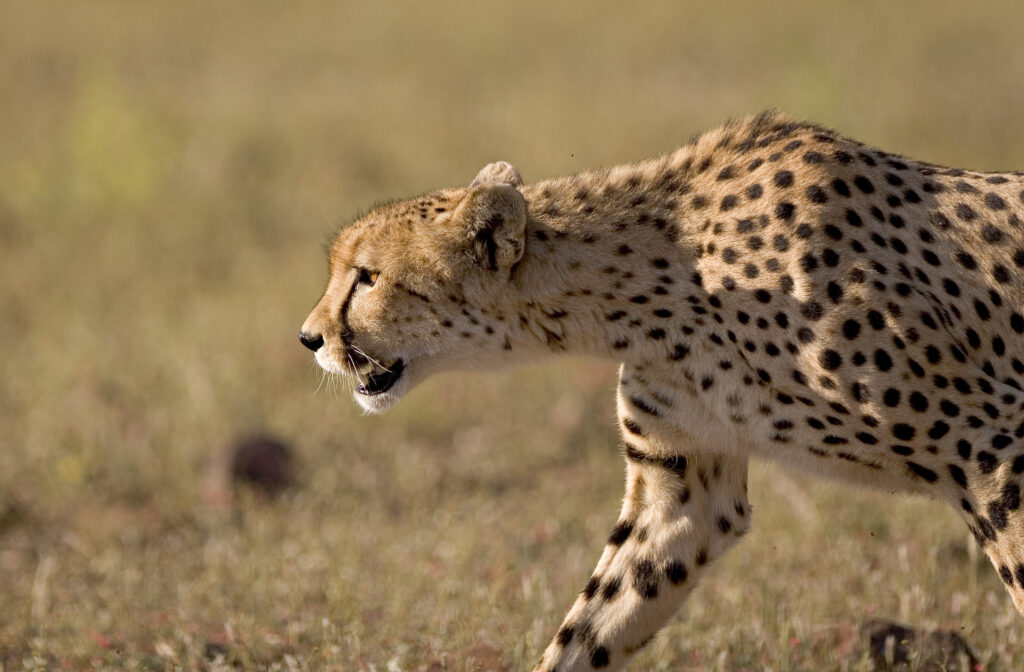
A very big thanks to PwC and the Ford Wildlife Foundation for covering the costs of capturing ten Cheetahs for relocation to the Zambezi Delta, Mozambique. This mammoth effort entailed two weeks of capture effort and 9,634 km of driving through riots, lockdown, and Springbok rugby matches. All ten Cheetahs were successfully relocated, and an additional 900,000 hectares of safe space, an area half the size of Kruger National Park, has become available for wild Cheetah conservation.

