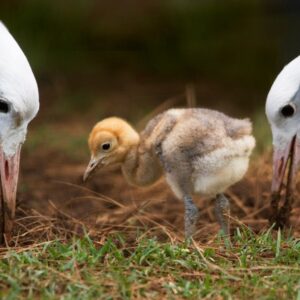
Science Snippets: Crane populations bounce back after concerted conservation effort in KwaZulu-Natal, South Africa
Erin Adams, Tamsyn Galloway-Griesel, and Lizanne Roxburgh, EWT Science and Planning Unit, erina@ewt.org.za
South Africa is home to three of the four African Crane species. These include South Africa’s national bird, the Blue Crane (listed as Vulnerable on the IUCN Red List), the Grey-crowned Crane (Endangered) and the Wattled Crane (Vulnerable). The three crane species converge within the KwaZulu-Natal province of South Africa (see map), and crane populations declined severely in this region in the 1980s. And as a result, there have since been considerable conservation efforts focused there. Annual aerial surveys have been conducted in this region by the Endangered Wildlife Trust – International Crane Foundation partnership and Ezemvelo KZN Wildlife for many years to monitor crane population sizes. In a recent publication* co-authored by EWT scientists, the results of the long-term aerial surveys were analysed in relation to the conservation initiatives. As cranes’ deaths due to collisions and electrocutions with powerlines are common, particularly amongst young birds, markers were placed on powerlines in high-risk areas to improve visibility and reduce crane mortalities. Another major threat to cranes is habitat loss, and so protecting crane habitats has been one of the major interventions in KwaZulu-Natal. This was achieved by declaring new protected areas, getting willing landowners onboard to maintain crane habitats on their property and involving the general public to become “crane custodians”, who would report any powerline collisions and any crane nest disturbances they may come across. The extent of these initiatives was monitored over 15 years (from 2003 to 2018), along with monitoring crane population numbers with standardised annual aerial surveys to determine whether they increased due to these initiatives.
Within KZN, all three crane populations have slowly but steadily increased in size since 2003. These numbers are directly correlated with the conservation initiatives in the region. The protection of crane habitats has facilitated the return of cranes to previously disturbed areas but are now protected and maintained due to the work of crane custodians. A reduction in crane mortalities due to the increased visibility of marked powerlines has also been recorded.The authors concluded that the conservation initiatives to conserve cranes in KZN have effectively increased the population numbers of these threatened species. It was not possible to determine which conservation initiative, in particular, was the most effective, but rather concluded that a combination of all of these interventions has allowed for an increase in the crane population sizes, and led to this conservation success story.
*Galloway-Griesel, T., Roxburgh, L., Smith, T., McCann, K., Coverdale, B., Craigie, J., Pretorius, M., Nicholson, S., Michael, M., Durgapersad, K., & Chetty, K. (2022). Evidence of the effectiveness of conservation interventions from long-term aerial monitoring of three crane species in KwaZulu-Natal, South Africa. Bird Conservation International, 1-16.
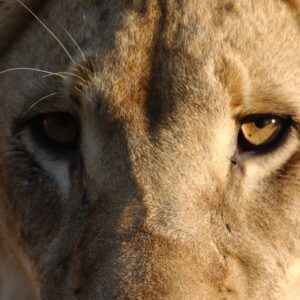
The cat’s out of the bag – understanding South Africa’s captive lion sector
Christina Hiller, EWT Wildlife in Trade Programme Consultant, tinah@ewt.org.za
South Africa is currently the only country with an extensive captive lion sector where lions in captivity significantly outnumber wild and free-roaming animals. There is an ongoing debate around the practices of keeping lions for commercial use, and captive lion hunting, the lion part trade, and human interaction such as cub-petting have been heavily criticised. However, there was a need to establish a detailed understanding of South Africa’s captive lion sector and evaluate its environmental and socio-economic impacts.

The Endangered Wildlife Trust initiated a study to close this information gap by developing an improved understanding of the sector and the trade of captive lion products and services. The research aimed to supply the South African government and the local CITES (Convention on International Trade in Endangered Species of Wild Fauna and Flora) authority with sound information to inform future policy decisions and measures to adequately address the sector’s influences on environmental, economic, and social outcomes and developments.
We conducted 51 semi-structured interviews and verified and supplemented the findings through five focus-group sessions with experts from related fields and desk review activities. Interview parties consisted of 31 captive lion facilities in four provinces, i.e., the Free State, North West, Limpopo and Gauteng and 20 key players in the sector. These actors included professional hunters of captive lions, taxidermists, lion part traders, live lion traders, veterinarians, scientists, non-governmental organisations (NGOs), and provincial environmental management inspectors (EMIs). In addition, we collected quantitative data on captive lion facilities from the South African provinces where the interviews took place to further augment the research findings.The research report describes how the sector is structured and functioning amidst influencing factors such as mainstream and social media pressure, regulatory conditions, and conflicting ideas about the meaning of sustainability and sustainable use regarding an iconic species like the lion.
We found that captive lion owners’ underlying motives and deep-seated attitudes are behind the uniqueness of every captive lion facility’s (business) model. A combination of eleven different motives underpinned the decision to establish a captive lion facility. Only four of those were income-related. It was found that facilities were seldom established primarily for financial gain, suggesting the importance of personal drivers other than income generation and profit. Furthermore, our research revealed five distinctly different sector clusters with corresponding supply chain models and typical breeding systems. Findings suggested that facilities do not specifically breed lions for their bones, so this was not considered a separate cluster. The lion bone trade rather forms part of the hunting tourism cluster.
Cluster 1: No lion revenue cluster
Cluster 2: Sanctuary cluster
Cluster 3: Guest attraction cluster
Cluster 4: Live export cluster
Cluster 5: Hunting tourism cluster (incorporating the lion part trade)
Legal trade in each cluster was organised along a distinct supply chain (except for cluster 1 without lion-related trade activities). All supply chains in the sector are separate, and research did not show an organised supply chain wherein captive lions were hunted after being used for human-lion interactions. However, a shared supply chain segment for selling lions to other South African facilities combined with a lack of traceability makes it feasible to move captive lions between clusters, especially between the guest attraction, live export, and hunting tourism clusters. It was clear that there was little transparency in the sector because of the non-existent, inefficient, or inconsistent collection, storage, and sharing of information about facilities and their trade activities.
The research data suggest that reasonable and tolerable management practices fall into five domains: financial health, legality, conservation, animal welfare, and social responsibility. Moreover, two specific areas emerged as seemingly insurmountable obstacles for managing captive lion facilities. On the one hand, the data suggest that managing a captive lion facility and animal rights are mutually exclusive. On the other hand, the interviews revealed that transformation is not happening, which is why the facilities are deemed not acceptable.
The insights of this research will support more robust decisions about the sector. We conclude that it will be critical to follow a nuanced approach to shape the sector’s future, mindful of the five clusters. Simultaneously, immediate measures ought to be taken to prevent undesired loss or harm until a clear future scenario for the sector materialises.
The report will be released soon – keep an eye on our socials and check back here in a few days for the link.
LATEST STORIES
A brighter and more sustainable future motivating Cedarville farmers to collaborate
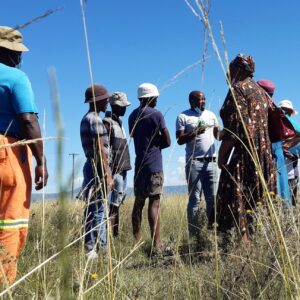
Bonnie Schumann, EWT’s Drylands Conservation Programme, bonnies@ewt.org.za South Africa’s Grassland Biome is highly productive and rich in biodiversity. However, the Grasslands are under tremendous pressure from agriculture and unsustainable mining developments. Poor planning, mismanagement, and inadequate enforcement have led to over-utilisation, degradation, and habitat loss. Altogether, 30% of the biome has already been irreversibly transformed. However, where the rangeland is still productive and extensively farmed, there are promising opportunities to reverse degradation and improve biodiversity resilience and agricultural production in the landscape. These opportunities can benefit the endemic and threatened species present and protect the livelihoods that depend on the landscape’s natural resources and ecosystem services. Farming with livestock and crops in the grasslands plays a critical role in supporting livelihoods for communities. Knowledge sharing is a powerful approach to finding solutions to challenges, particularly in diverse landscapes involving various stakeholders. With this in mind, the Endangered Wildlife Trust (EWT) engaged farmers in the biodiversity-rich grasslands of the Cedarville area in the Eastern Cape. We talked to the farmers to understand their challenges and whether they were interested in attending structured training to develop solutions to an array of sustainable land management issues together.
The Cedarville farmers face challenges primarily related to poor infrastructure on the commonages that does not support optimal grazing practices. Rangeland is grazed continuously, which does not allow the vegetation an opportunity to rest and build up reserves. Palatable species are under tremendous pressure and often disappear from the landscape, resulting in the loss of ground cover and production and an increase in undesirable plant species. Coupled with this, communities that utilise the rangeland have not had the opportunity to collaborate and coordinate their activities, limiting their abilities to manage the rangeland effectively. In addition, they cannot effectively access the highly competitive agricultural sector. Participating farmers were keen to address these issues and explore opportunities to collaborate to improve their farming practices and protect their natural resources. In February 2022, the EWT hosted an Integrated Farm Planning and Management (IFP) training course in Cedarville, attended by almost 40 farmers – double the expected turnout.
The IFP course content focuses broadly on sustainable land management principles. The original course created by the EWT was focused on the Nama Karoo Biome and is available as a free online course at https://karooforever.org.za/en/. The original course was adapted to include the Grasslands Biome content. The Cedarville course was the first IFP to be held in the grasslands, and the fourth IFP course we have presented. The EWT collaborated with Agricultural Extension officers from the Underberg Farmers Association and the Department of Agriculture and Rural Development (DRDAR), who copresented the course with staff from the EWT’s African Crane Conservation (ACCP) and the Drylands Conservation (DCP) programmes.
The Cedarville area is important for Crowned Crane conservation as the birds breed in its wetlands. Conserving Africa’s threatened crane species has benefits far beyond the cranes and their admirers. Africa’s four threatened crane species are ambassadors for conserving water catchments, including wetlands and grassland ecosystems. They are iconic and charismatic and appeal to the public, allowing us to develop relationships within communities and with other stakeholders through crane conservation activities. These grasslands supply additional non-agricultural services, such as water supply and flow regulation, carbon storage, erosion control, climate mitigation, pollination, and cultural ecosystem services. For more information on the work in the Cedarville area, contact:
Samson Phakathi, Senior Community Project Officer, Endangered Wildlife Trust’s African Crane Conservation Programme, samsonp@ewt.org.za
For resources on sustainable land management, visit:
https://karooforever.org.za/en/
The development of the original IFP Nama Karoo course was supported with funding from the UNDP GEF5 SLM Karoo Landscape Project.
The course in the Grasslands Biome in the Eastern Cape was made possible with funds from the National Lotteries Commission. The NLC relies on funds from the proceeds of the National Lottery. The Lotteries Act and regulations guide the way in which NLC funding may be allocated. The NLC wants the grants to make a difference in the lives of all South Africans, especially those more vulnerable, and to improve the sustainability of the beneficiary organisations. Available funds are distributed to registered and qualifying non-profit organisations in the fields of charities; arts, culture, and national heritage; and sport and recreation. By placing its emphasis on areas of greatest need and potential, the NLC contributes to South Africa’s development.
LATEST STORIES
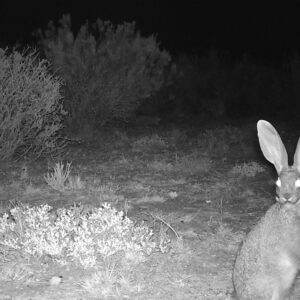
PUSHING THE BOUNDARIES FOR RIVERINE RABBITS IN THE ANYSBERG
Bonnie Schumann, the EWT’s Drylands Conservation Programme, bonnies@ewt.org.za
The ancient landscapes of the Karoo are home to one of South Africa’s most elusive and Critically Endangered species, the Riverine Rabbit. Riverine Rabbits occur in three known populations in three separate regions of the Karoo. Originally thought to only occur in the Nama Karoo, where they were first discovered in 1901, rabbits were later discovered near Touwsriver in the Succulent Karoo in 2003. This discovery completely upended the applecart on what we knew about the distribution and behaviour of this species. However, at least one other surprise was awaiting us when a third population was discovered west of the Baviaanskloof in 2018.

In the 1990s, landowners and conservationists joined forces to create Riverine Rabbit conservancies in the Loxton-Fraserburgh-Beaufort West area of the Nama Karoo to conserve the species. These conservancies still exist today. Even though many of these landowners rarely, or in some cases, have never seen a Riverine Rabbit, they are passionate about conserving them on their properties. While rabbits occur in three different regions of the Karoo, their threats are the same in all three landscapes. The most severe threats are habitat loss and damage to the remaining habitat. The floodplains of the seasonal rivers in the Karoo consist of deep alluvial soil areas that make for fertile agricultural soil in an otherwise arid landscape. These areas are largely transformed into ploughed lands, which in many cases now lie fallow and abandoned. The changing economic situations and erratic rainfall make it risky to depend on rain-fed cropping and flood irrigation. In recent decades, it has not been worthwhile to grow rain-fed crops in many places across the drylands.
 In the past, the riparian areas, often comprising floodplains a few kilometres wide, were densely vegetated and would have provided a unique habitat to a range of species, including the Riverine Rabbit. The loss of over 60% of the riparian vegetation was devastating for the Nama Karoo Riverine Rabbit population. Outside of the riparian zone, the vegetation does not provide enough cover for a species that relies on dense vegetation to avoid detection and capture by predators. Rabbits have disappeared from areas where the vegetation is overgrazed and “opened up” by livestock. They are an indicator species for ecosystem health, and If the riparian vegetation is managed sustainably, rabbits will persist. If not, they will continue to quietly vanish.
Following the initial discovery of rabbits in the Succulent Karoo, surveys for rabbits took place in the riparian areas, based on the assumption that the “southern” rabbits use the landscape similarly to their Nama Karoo counterparts, which are riparian habitat specialists. Here is where it became interesting. What is now clear is that rabbits in the Succulent Karoo can range more widely across the landscape, occurring outside of riparian areas where the vegetation on the gently sloping hills is often quite dense. They occur outside the riparian zones, and their range also extends into a third Biome, the Fynbos Biome, where they primarily favour the Renosterveld vegetation. The fact that the rabbits can persist in vegetation units outside the riparian zones in the Succulent Karoo is very fortunate, given that much of their riparian habitat has been lost to agriculture. This means that the gently sloping areas that are unsuitable for ploughing and are densely vegetated have provided critical refuges for rabbits. It is probably safe to speculate that Riverine Rabbits were once widely distributed along the valleys and hills of the Little Karoo. However, the extensive loss of habitat across this region has resulted in them remaining only in pockets of suitable intact vegetation. Conservationists are researching the genetics of the region’s rabbit populations – how closely they are related to each other and their overall genetic health – to understand how viable the populations are and if any connectivity (gene-flow) between the three populations still exists.
The spectacular Anysberg Nature Reserve was officially declared in 1990 to formally protect the incredible but highly threatened biodiversity of the Succulent Karoo, an internationally recognised biodiversity “hotspot”. Riverine Rabbits were recorded in the reserve for the first time in 2013. This was the best news of the century for rabbit conservation because the discovery meant that the reserve was the first formally protected area to boast a Riverine Rabbit population. What is doubly exciting is that landowners bordering the reserve had a vision for conservation going back 25 years. Several individuals bought properties in this area to conserve the land and wildlife. Livestock was removed, and the land has been resting and recovering ever since. In 2018, one of the landowners approached the Endangered Wildlife Trust to assist him in taking his conservation efforts to the next level by declaring the property a contractual Nature Reserve. As a result, the Endangered Wildlife Trust, CapeNature (the designated authority with statutory responsibility for biodiversity conservation in the Western Cape) and six landowners are collaborating to declare a cluster of properties as nature reserves. These contractual reserves will be formally protected and attain the same status as the Provincial Reserves, effectively expanding protected areas at a national level. This essentially means that the Anysberg Nature Reserve, also a World Heritage Site, will be buffered by an additional 20,000 hectares of protected landscapes. Several additional vegetation units, each supporting unique and, in many cases, endemic plant and animal species, not yet included in the Anysberg Nature Reserve, will now also be formally protected.This initiative is testimony to what can be achieved when stakeholders combine forces to achieve a shared vision. Many species facing severe persecution outside protected areas, including Leopard, Brown Hyaena and Honey Badger, will now be able to safely roam over an increasingly vast area. And, of course, as the largest formally protected area cluster for Riverine Rabbits, it now represents the single most important stronghold for Riverine Rabbits in South Africa. In this case, size is critical, as only a small portion of the entire area will meet the habitat requirements for rabbits, so the bigger the area, the better.
 Ecotourism, including adventure tourism and, in some cases, limited agricultural activities, provide a diversified income for the landowners around the Anysberg Nature Reserve. This is an extremely marginal area for extensive livestock production, and the reality is that the veld has been utilised to, and in some cases beyond, its limits and can no longer support herds of goats and sheep. Developing a “green” conservation-based economy can breathe new life into this region where poverty and unemployment are rife. Ecotourism provides jobs, supports livelihoods, and can help fund the restoration work that needs to be done in the degraded areas. The Anysberg is only approximately 260 kilometres from Cape Town, making it easily accessible as a weekend getaway. It is also easily accessible to international tourists looking for some peace and quiet in one of the most beautiful and safe regions of South Africa.
There are few undiscovered natural gems left out there. The Anysberg area is truly one of the most exciting and largely undiscovered gems in South Africa. The shared vision for this area is to develop an economy based on what the region has to offer in terms of unspoiled landscapes, wide-open skies, and incredible scenic beauty while conserving the unrivalled unique biodiversity of the Succulent Karoo. The project’s next phase is supported by IUCN Save Our Species and co-funded by the European Union.
For more information, visit:
www.ewt.org.za
https://www.capenature.co.za/reserves/anysberg-nature-reserve
www.karooforever.co.za
LATEST STORIES
Science Snippets:The African Vulture Crisis- what do we know?
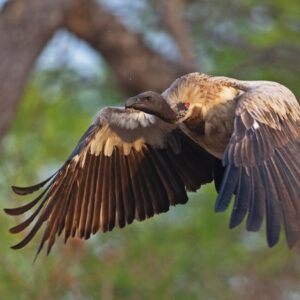
Most populations of vultures in Africa are declining rapidly, and conservationists are calling this an ‘African Vulture Crisis’1. There has been an increasing focus on the movements of vultures using tracking devices, but so far, there are very few continent-wide studies 2. To address this, a group of 35 researchers pooled their tracking data from 163 vultures to look at how vulture movements vary across Africa and how vultures are using protected areas in a new study published in Biological Conservation 3. The researchers found that breeding adult vultures had smaller ranges than non-breeding adults and immature vultures. Adult Rüppell’s Vultures had range sizes larger than 75,000 km2, while Cape Vultures and White-backed Vultures had range sizes of up to 36,000 km2. But the overlap of vultures’ ranges with protected areas was low, which poses significant challenges for conserving African vultures, particularly since the main threat to vultures, the intentional poisoning of carcasses, is widespread, and one poisoning event can kill large numbers of vultures because most species of vultures are social feeders. Successful conservation of vultures relies on reducing wildlife poisoning over vast areas, both inside and outside of protected areas, by tackling the drivers of poisoning. These drivers include human-wildlife conflict, trade in vulture parts4, and elephant poaching 5. For African vultures to survive and thrive, we need better law enforcement and anti-poaching, reduced human-wildlife conflict, and prevention of the illegal trade in vulture parts. Studies using tracked vultures should help prioritise where these interventions are needed most. Full article available here: https://doi.org/10.1016/j.biocon.2022.109516
References:
1 Ogada D. et al. (2016). Another continental vulture crisis: Africa’s vultures collapsing toward extinction. Conservation Letters 9: 89-97. https://doi.org/10.1111/conl.12182
2 Thompson L.J. et al. (2020). Variation in monthly sizes of home‐ranges of Hooded Vultures Necrosyrtes monachus in western, eastern and southern Africa. Ibis 162: 1324-1338. https://doi.org/10.1111/ibi.12836
3 Kane A. et al. (2022) Understanding continent-wide variation in vulture ranging behavior to assess feasibility of Vulture Safe Zones in Africa: Challenges and possibilities. Biological Conservation 268: 109516. https://doi.org/10.1016/j.biocon.2022.109516
4 Mashele N.M. et al. (2021). Uses of vultures in traditional medicines in the Kruger to Canyons Biosphere Region, South Africa. Journal of Raptor Research 55: 328-339. https://doi.org/10.3356/JRR-20-36
5 Mateo-Tomás P. and López-Bao J.V. (2020). Poisoning poached megafauna can boost trade in African vultures. Biological Conservation 241: 108389. https://doi.org/10.1016/j.biocon.2019.108389
LATEST STORIES



