The Endangered Wildlife Trust’s Soutpansberg Protected Area Programme has established a multi-day hiking trail across the Western Soutpansberg. The trail crosses several private properties and the Luvhondo Nature Reserve. Our team has been working with these properties’ owners in a truly collaborative effort to establish a world-class trail within the proposed Western Soutpansberg Nature Reserve.
The trail aims to establish the Soutpansberg as an ecotourism destination and bring in essential sustainable funding to support our conservation efforts. It will also help drive local economic growth and establish training and job opportunities for locals, such as becoming guides on the trail.
During the week of 9 May 2022, our SPA team and managers from the other properties did a final recce of the trail, completing the full five-day slackpacking route. Here is a first-hand account of the trail by our SPA Programme Manager Cath Vise.
This week has possibly been one of my best weeks on the job. We have been dreaming of setting up with trail for the last three years, and with thanks to the F E van Pletzen/L Steynberg Trust for a generous donation towards the project, this dream is now becoming a reality.
The Old Salt Trail Slackpacker’s Deluxe (western loop) is a 75 km, five-day trail starting at our Medike Mountain Reserve. It heads up the mountain to Leshiba, then on to Sigurwana, up to Lajuma, back to Leshiba and finally back down to Medike. It goes from the lowest point of the mountain range as it crosses the Sand River (813 m) up to the highest point of the Soutpansberg, the mighty Mount Lajuma (1,727 m), with an elevation gain of nearly 1 km and a lot of ups and downs in between.
Our hikers for this week included Kathy and Pete Straughan (Leshiba’s Managers), Peter Breedveld (Sigurwana Manager) and our EWT SPA staff Chris Joubert (Medike Manager), Rotondwa Sithagu and Shumani Makwarela (Soutpansberg Rangers and FGASA Guides) and myself. We were supported by Tharollo Mthisi (Soutpansberg Ranger), who transported all our luggage from lodge to lodge throughout the week.
Climbing up out of the Sand River Gorge on Medike
We left Medike on Monday morning and headed up the mountain. This first day really gets the lungs and legs going, as it is a steep climb to get up out of the gorge. The trail then took us into the Duluni Gorge, where we followed a mountain stream up the mountain. Pete had hiked down from Leshiba and met us in the gorge. On our way up, Pete showed us a rock art site on Medike. Pete is an expert in rock art and tree identification and possibly one of the most entertaining walking encyclopaedias out there. Our journey back in time started at this site, with Pete explaining a bit about the different Bushman and their different painting styles. We carried on up the gorge onto Leshiba, where we had to climb through the first Hiker’s Doggy Door – a cunning small swing gate (that looks like a doggy door for humans) that ensures that the gate always stays closed. On Leshiba, we were lucky enough to spot a Narina Trogon, which flew over our heads and landed briefly in a branch above. They are such beautiful birds. The first night was spent at Leshiba’s Luvhondo Camp, with Giraffe walking into the camp and Cape Vultures flying low overhead, making for an amazing end to a beautiful day.
Traversing ‘The Slabs’ in Leshiba’s Hamasha Gorge
Day two’s hike started with another walk back in time as we headed through the Bushman’s Medicine Chest (medicinal trees and shrubs), another rock art site, where the stories of the past inhabitants continued to unfold. The trail then took us through Hamasha Gorge on Leshiba. This is the most difficult and technical day of hiking but is rewarded with incredible dramatic scenery, lots of water in the stream, and great company that made it a spectacular and entertaining day. We had to do a fair amount of rock-hopping along a stream bed, cross the stream a few times, then hike at an angle up ‘The Slabs’, these magnificent red rock slabs in the gorge. After a nice lunch break next to the stream, we headed west out of the gorge on a long rocky path back up the mountain. This path is an old route believed to link back to the salt pans. We then entered Sigurwana. Near the end of the hike, a beautiful Waterberry forest and a small waterfall and rock pool made the perfect place to sit and cool our feet for a while and soak up all the beauty. Liesel and Neil Wright from Sigurwana and their staff made us feel right at home with a very warm welcome and spoilt us with a wonderful evening and boma braai.
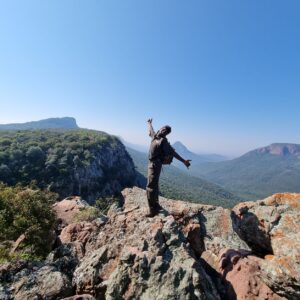
Up the mighty Mount Lajuma, looking back at what we have achieved
After a very comfortable night’s sleep in Sigurwana’s beautiful and luxurious accommodation, our team continued our journey west towards the mighty Mount Lajuma. After a climb up a rocky slope next to a waterfall, there is a long plateau on the top of Sigurwana, with open grasslands and wetlands. We visited another could rock art site, with new insights into the lives of the Bushman revealed. It was fairly easy, straightforward hiking all the way to Mount Lajuma, along both game trails and jeep tracks. We took a break at the base of Mount Lajuma to gather our strength for the climb to the top. The view from the top and the feeling of pure joy are exhilarating. What a sense of achievement as you look back across the mountain and see how far you have come. Standing on the top of Lajuma, looking back east filled me with pride and joy to see how far our Western Soutpansberg Nature Reserve stretches, with an inspiring group of landowners working together to conserve this precious mountain.
We spent the evening at Lajuma Research Centre’s Wilderness Camp, designed as student accommodation, on the edge of a cliff with beautiful views south. We spent the evening around the fire, reminiscing on the day’s adventures.
A forest wonderland with the giants
Day four was possibly the easiest hiking day, although it was the longest (19 km). We started with a scramble up ‘The Chimneys’, a rocky crevice up a cliff line to get to the plateau above. Once on the plateau, it was a long, easy hike along a trail and then jeep track, requiring us to cross a wetland and get our feet wet. It was a good opportunity to set a good pace, get into a rhythm and make up some ground on a long day. After three days of technical hiking, having this day was easy on the tired legs and a welcome break. After a short break at a stunning view spot, we entered the forest and were rendered speechless. It is an absolute wonderland, and we stared up in awe at the giant ancient Yellowwoods and Strangler Figs weaving their way between hundreds of other plants. We took our time, enjoying every minute of it and listening to the calls of the Turaco. After the forest, we hiked back down a hill on a jeep track to the Leshiba fence line. We said goodbye to Peter (from Sigurwana), who left us at this point. The final hike through Leshiba followed part of the cycling track and was a beautiful way to end a long day on the trail. We sat with our feet in the cool water of the lodge’s pool, with an ice-cold drink to cool us off, watching all the game passing through the plains below. We were spoilt again by the friendly Leshiba staff, who looked after us extremely well. The dinner conversation was full of laughter, reliving entertaining moments on the trail.
Shumi, Chris, and Rotondwa back on home turf at the top of Medike
On our final morning, we bid farewell to Kathy, who sadly had to attend to some business for the day. Pete joined us on our morning hike across Leshiba to the cliffs. We passed by about five incredible viewpoints on the edge of the mountain. We then headed back towards Medike and had to climb through another Hiker’s doggy door. Back on our home turf, the EWT team walked the final stretch. After passing by an old settlement, where we found some old pot shards, we popped out onto a small clearing and looked down into the Sand River Gorge, where our journey began five days prior. Spirits were high, and with great enthusiasm, we descended the long, steep decline to the bottom of the gorge. After a short while back on Medike’s jeep track, we were back home, and our incredible journey had come to an end.
Crossing the finish line of the Old Salt Trail
I absolutely loved this hike because every day has something completely new and different and unexpected about it. No two days are the same. We went through so many different habitats, were lucky enough to see some amazing bird and game sightings and really felt like we stepped back in time as we learnt about the Bushman gatherings on the mountain and felt like we were following their footsteps across this ancient land. Everything about the hike worked well. It is a very challenging and technical hike, requiring a good level of fitness for experienced hikers. However, your efforts on the trail are rewarded with the best hospitality on offer. What an incredible experience. I truly believe that this will become a “Bucket List” trail that you won’t want to miss!
On any given day, one can read the news or articles on the state of the environment and the sheer enormity of the threats, challenges, and losses can be overwhelming. For those of us working in conservation, it can be even harder. The species we have dedicated our lives to protect face extinction, and we see the very worst that humans can do to wildlife. I have often been asked how I work in conservation, “isn’t it depressing” people ask? On some days, yes, but others keep our hope alive, and on 10 May 2022, I had a day of hope.
I joined a colleague, Rebo Rachuene from our Birds of Prey Programme, in the field to monitor a grass owl site. Rebo and his colleagues have been monitoring this site for over ten years. We arrived at a farm situated in the Highveld region of Mpumalanga, the area recently the focus of the deadly air case. The short drive from Johannesburg to the farm showed the severity of air pollution in the area, and while the deadly air case was focused on human health and wellbeing, I couldn’t help but wonder about the effect the air pollution was having on wildlife in the area. The farm is a mix of land uses with agriculture, virgin grasslands, and a new coal mine on its border. The threats associated with human activities began to feel overwhelming.
Grass Owl nesting site in the Highveld region of Mpumalanga, South Africa. Mixed land-use is common in the area – agricultural plots, natural grasslands, and coal mines are sandwiched in between each other
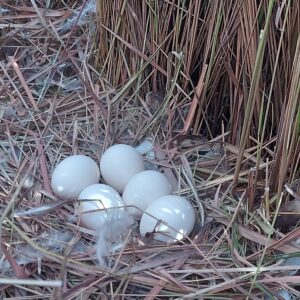
As we were approaching the nest, two birds took off – each on different sides of the wetland area the nest is in. One was a Marsh Owl, and the other, an adult Grass Owl. We found the Grass Owl nest, and instead of the fledglings we expected, we found eggs. Rebo explained that the previous eggs had probably been predated, and the Grass Owls had then laid more. In addition to natural and expected threats like predation, Grass Owls need to contend with human-related threats such as pollution, the threat of invasive species, disturbance and trampling by livestock, and habitat loss. Despite these ever-increasing threats, this species and so many others in South Africa continue to persevere. On our short walk back to the car, we came across a Brown House Snake, Serval footprints, and a Black Winged Kite – all indicators of a functional ecosystem – a safe space made possible through the incredible work of my colleagues and the conservation efforts of landowners. This is how hope is kept alive and how we can continue to promote conservation in South Africa and chip away and reduce threats from human activities. I walked away from that nest excited for the next 35 days when hopefully, the Grass Owl population will increase by five when the eggs hatch. I walked away with hope, committed to doing what I can to protect this safe space and others like it, and more committed than ever to promoting conservation in South Africa.
Grass Owl flushed from its nest. Once its eggs or chicks have been recorded and we move out, it will return to the nest.
On any given day, one can read the news or articles on the state of the environment and the sheer enormity of the threats, challenges, and losses can be overwhelming. For those of us working in conservation, it can be even harder. The species we have dedicated our lives to protect face extinction, and we see the very worst that humans can do to wildlife. I have often been asked how I work in conservation, “isn’t it depressing” people ask? On some days, yes, but others keep our hope alive, and on 10 May 2022, I had a day of hope.
I joined a colleague, Rebo Rachuene from our Birds of Prey Programme, in the field to monitor a grass owl site. Rebo and his colleagues have been monitoring this site for over ten years. We arrived at a farm situated in the Highveld region of Mpumalanga, the area recently the focus of the deadly air case. The short drive from Johannesburg to the farm showed the severity of air pollution in the area, and while the deadly air case was focused on human health and wellbeing, I couldn’t help but wonder about the effect the air pollution was having on wildlife in the area. The farm is a mix of land uses with agriculture, virgin grasslands, and a new coal mine on its border. The threats associated with human activities began to feel overwhelming.
Grass Owl nesting site in the Highveld region of Mpumalanga, South Africa. Mixed land-use is common in the area – agricultural plots, natural grasslands, and coal mines are sandwiched in between each other
As we were approaching the nest, two birds took off – each on different sides of the wetland area the nest is in. One was a Marsh Owl, and the other, an adult Grass Owl. We found the Grass Owl nest, and instead of the fledglings we expected, we found eggs. Rebo explained that the previous eggs had probably been predated, and the Grass Owls had then laid more. In addition to natural and expected threats like predation, Grass Owls need to contend with human-related threats such as pollution, the threat of invasive species, disturbance and trampling by livestock, and habitat loss. Despite these ever-increasing threats, this species and so many others in South Africa continue to persevere. On our short walk back to the car, we came across a Brown House Snake, Serval footprints, and a Black Winged Kite – all indicators of a functional ecosystem – a safe space made possible through the incredible work of my colleagues and the conservation efforts of landowners. This is how hope is kept alive and how we can continue to promote conservation in South Africa and chip away and reduce threats from human activities. I walked away from that nest excited for the next 35 days when hopefully, the Grass Owl population will increase by five when the eggs hatch. I walked away with hope, committed to doing what I can to protect this safe space and others like it, and more committed than ever to promoting conservation in South Africa.
Grass Owl flushed from its nest. Once its eggs or chicks have been recorded and we move out, it will return to the nest.
EWT Golf Fundraiser May 2022: A Success for Wildlife
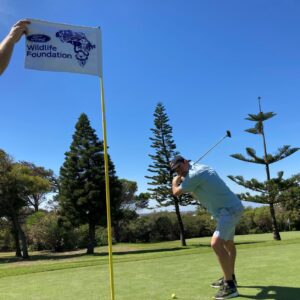
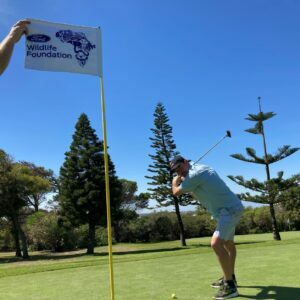
The EWT Golf Fundraiser May 2022 was a major success. Thanks to Alex Forbes, our headline sponsor, golfers gathered at Stellenbosch Golf Club on 20 May 2022. The weather was perfect, and the stunning winelands provided a beautiful backdrop. Most importantly, the event raised vital funds for the Endangered Wildlife Trust (EWT) to protect Africa’s threatened species.
We owe special thanks to Sarah Raine for her hard work. Additionally, we appreciate every golfer and sponsor who made this day possible. Because of your support, the EWT can continue its critical conservation efforts.
Gratitude to Our Sponsors & Partners
This event succeeded thanks to our generous supporters:
Alex Forbes, Painted Wolf Wines, La Motte, Warwick, Thelema, Cavalli, Remhoogte, Glenelly, Alto, Meerlust, Hill & Dale, Spier, Klein Welmoed, Stellenbosch Hills, Val du Vie, Bellevue, Stellenbosch Kitchen, Ginos, La Pineta, Java Cafe Bistro, De Stormme, Juvenate, Le Simme, Post & Pepper, Pirates, Rome in a Bite, Du Vin, Noop, Asta Italian, Arkeste, Genke, Craft Wheat & Hops, Monnneaux, Hygge Hygge, De Wingerd, Long Table, Die Wingerd, Aha Hotel & Lodge, Stellenbosch Hotel, Lanzerac Hotel & Spa, The Log Cabin, Majeka House Spa, Mooiplaas Manor, Pearl Valley, Grande Roche Hotel & Spa, Wedgeview Spa, Windsor House, Ocean Golf Guest House, Nova Constantia Boutique Residence, Studio Ngong, Q20, Spanjaard, Lighter For Nature, Canon, Miir, Peninsula Beverages, Westlake Golf Club, Stellenbosch Golf Club, Africa’s Legends.
Your support makes a real difference. The EWT Golf Fundraiser May 2022 was more than just golf—it was a step toward saving wildlife.
We look forward to future events and thank you for joining this important cause!
The funds raised from this event will go towards our critical conservation activities and help us continue saving species, conserving habitats and benefitting people.
Check out our Events page for more exciting events near you!
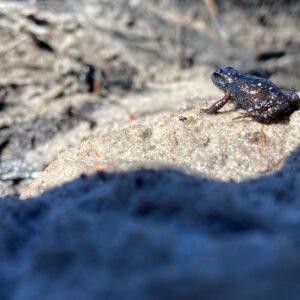
Rough Moss Frog (Arthroleptella rugosa). Photo credit: Johan du Plessis
The Rough Moss Frog (Arthroleptella rugosa) is a Critically Endangered frog species found only on a single mountain range, the Klein Swartberg, in the Overberg district of the Western Cape, South Africa. In 2020 we realized that this little frog was in big trouble. Its habitat was being degraded rapidly by alien invasive vegetation to such an extent that the survival of the only known population of this species was uncertain.
With this realization, the Endangered Wildlife Trust (EWT) approached the IUCN Save Our Species fund for support to implement a critical rapid action intervention to save this population. In 2021, the IUCN Save Our Species answered the plea for assistance with co-funding from the European Union. This support allowed us to develop a firebreak system around this original population of Rough Moss Frogs. This critical intervention supported the planning of an ecological burn in 2022 as a tool to manage an extensive pine infestation that was damaging the population’s seepage habitat. This was a novel approach to amphibian species conservation on the Klein Swartberg Mountain, not least globally.
During the surveys supported by the SOS project, an additional three populations of this species were recorded on the Klein Swartberg by project partner Bionerds PTY Ltd. This was a welcome discovery, bringing the known populations to four. Two of these newly discovered populations were in well-managed natural habitats, also good news for the species!
On 16 March 2022, the firebreaks and planning for the ecological fire were completed by our contractor, Enviro Wildfire, through the employment of an alien vegetation clearing team from the local community of Caledon. The planned ecological burn took place during the week of 28 March 2022. The ecological burn was intended to eradicate invasive pine trees and allow for the recovery of natural fynbos vegetation, not only for the conservation of the Rough Moss Frog population but also for various other Endangered plants and animals. This intervention will also benefit the local community living in the catchment zone below the Klein Swartberg by increasing the water yield from the mountain draining into the aquatic systems in the seeps and rivers and the agricultural community reliant on these water resources.
Team preparing firebreaks in the Klein Swartberg, Western Cape, South Africa. Photo credit: Johan du Plessis
The burn was successful, with very few invasive alien pine trees remaining. And those that survived will be cleared mechanically in the coming months, alongside the development of a long-term alien vegetation clearing plan covering the full extent of the mountain and supported by project partners, the Klein Swartberg Conservancy and the Fynbos Trust. In addition to the 800 ha planned for the burn, over 4,500 ha of the mountain also burnt, including the three additional Rough Moss Frog population sites discovered during the project. Post-fire monitoring by the team has happily confirmed the presence of Rough Moss Frogs at one of the burn sites. These populations will be continuously monitored over the coming breeding season (June onwards). This monitoring will include post-fire bioacoustics monitoring (recording of frog calls) to compare with pre-fire recordings to document the recovery of these populations in the coming years as habitat is restored.
Southern slope after ecological burn in the Klein Swartberg, Western Cape, South Africa. Photo credit: Johan du Plessis
The project not only achieved its objective of significantly reducing the threat of invasive vegetation to the original population but also forged partnerships, discovered previously unknown populations of a Critically Endangered species and initiated formal habitat protection processes for five properties where the species is now known to occur.
This project is supported by IUCN Save Our Species and co-funded by the European Union. The contents of this publication are the sole responsibility of the Endangered Wildlife Trust and do not necessarily reflect the views of IUCN or the European Union.
So far, we have deployed two tracking dogs in reserves and will soon be deploying a further four, including both tracking and detection dogs. We have also supported the full training of two new handlers and partial training for a third handler through our relationship with Genesis K9 Group. Furthermore, we provide ongoing support to these deployed dogs and the handlers who have recently completed their training to reinforce what they have learned.
This project is supported by IUCN Save Our Species and co-funded by the European Union. The contents of this publication are the sole responsibility of the Endangered Wildlife Trust and do not necessarily reflect the views of IUCN or the European Union.
LATEST STORIES
Thanks to this grant, the EWT supports seven reserves that have many ecologically and economically important species threatened by poaching. We are taking a three-pronged approach that includes deploying freshly trained young Conservation Canines (trained in detection or tracking), training dog handlers who will be responsible for working with and looking after these dogs and supporting these dog-handler teams in these reserves to ensure they have what they need to work effectively.
Black Rhino (Diceros bicornis) in the Eastern Cape, South Africa. The Black Rhino is threatened by the illegal trade in rhino horn products. Photo credit: the african eye
The reserves we are assisting suffered income losses during the COVID-19 pandemic due to tourist travel bans, and we aim to support them through these hard economic times. Many reserves at risk of poaching use a variety of approaches to combat it, with anti-poaching field rangers commonly the first line of defence. Certified dog-handler teams can provide invaluable support to these teams on the ground in several ways. Our dogs either track poacher incursion routes within a reserve or provide a quick and reliable method for screening vehicles for concealed firearms or wildlife contraband.
So far, we have deployed two tracking dogs in reserves and will soon be deploying a further four, including both tracking and detection dogs. We have also supported the full training of two new handlers and partial training for a third handler through our relationship with Genesis K9 Group. Furthermore, we provide ongoing support to these deployed dogs and the handlers who have recently completed their training to reinforce what they have learned.
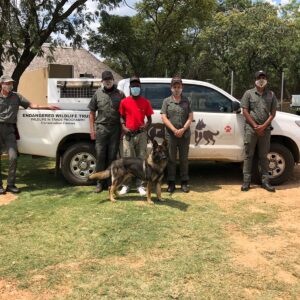
Conservation Canine Nala, a three-year old Belgian Malinois recently deployed in the Eastern Cape. Nala is a tracking dog and works with anti-poaching teams to protect threatened species.
This project is supported by IUCN Save Our Species and co-funded by the European Union. The contents of this publication are the sole responsibility of the Endangered Wildlife Trust and do not necessarily reflect the views of IUCN or the European Union.
LATEST STORIES
Conservation Canines to Save our Species from illegal wildlife trade
Dr Andrew Taylor, EWT’s Wildlife in Trade Programme Manager, andrewt@ewt.org.za
South Africa is blessed with exceptional wildlife and landscapes that attract tourists and boost our economy. Some of our country’s biggest drawcards, such as White and Black rhinos (which are Near Threatened and Critically Endangered, respectively on the IUCN Red List of Threatened Species), the African Savannah Elephant (Endangered), and the African Lion (Vulnerable), play vital roles in our ecosystems while also bringing in valuable ecotourism income. However, these species are threatened by the global illegal wildlife trade (IWT), which is a major cause of population declines in some countries. With funding from the IUCN Save Our Species Rapid Action Grant and the European Union, the Endangered Wildlife Trust (EWT) aims to reduce IWT by preventing wildlife poaching. We use our Conservation Canines to achieve this by training and deploying them to detect wildlife products and track poachers.
Newly qualified dog handler trained at Genesis K9 Newly qualified dog handler trained to reduce poaching as part of the project funded by the IUCN Save Our Species Rapid Action Grant and the European Union.
Thanks to this grant, the EWT supports seven reserves that have many ecologically and economically important species threatened by poaching. We are taking a three-pronged approach that includes deploying freshly trained young Conservation Canines (trained in detection or tracking), training dog handlers who will be responsible for working with and looking after these dogs and supporting these dog-handler teams in these reserves to ensure they have what they need to work effectively.
Black Rhino (Diceros bicornis) in the Eastern Cape, South Africa. The Black Rhino is threatened by the illegal trade in rhino horn products. Photo credit: the african eye
The reserves we are assisting suffered income losses during the COVID-19 pandemic due to tourist travel bans, and we aim to support them through these hard economic times. Many reserves at risk of poaching use a variety of approaches to combat it, with anti-poaching field rangers commonly the first line of defence. Certified dog-handler teams can provide invaluable support to these teams on the ground in several ways. Our dogs either track poacher incursion routes within a reserve or provide a quick and reliable method for screening vehicles for concealed firearms or wildlife contraband.
So far, we have deployed two tracking dogs in reserves and will soon be deploying a further four, including both tracking and detection dogs. We have also supported the full training of two new handlers and partial training for a third handler through our relationship with Genesis K9 Group. Furthermore, we provide ongoing support to these deployed dogs and the handlers who have recently completed their training to reinforce what they have learned.
Conservation Canine Nala, a three-year old Belgian Malinois recently deployed in the Eastern Cape. Nala is a tracking dog and works with anti-poaching teams to protect threatened species.
This project is supported by IUCN Save Our Species and co-funded by the European Union. The contents of this publication are the sole responsibility of the Endangered Wildlife Trust and do not necessarily reflect the views of IUCN or the European Union.

 The Endangered Wildlife Trust’s Soutpansberg Protected Area Programme has established a multi-day hiking trail across the Western Soutpansberg. The trail crosses several private properties and the Luvhondo Nature Reserve. Our team has been working with these properties’ owners in a truly collaborative effort to establish a world-class trail within the proposed Western Soutpansberg Nature Reserve.