Help African Wild Dogs 

Donate today  

CAREERS IN CONSERVATION – Jessel Naidoo

CAREERS IN CONSERVATION – Jessel Naidoo

CAREERS IN CONSERVATION – Jessel Naidoo

Jessel is the EWT’s Financial Accountant. Here is a little bit about Jessel’s journey to a career in conservation.

Job title:  Financial Accountant

Location Midrand

Where did you grow up?  Port Shepstone

What are your hobbies/things you like to do in your spare time? Tasting the world, one dish at a time and getting lost in another Netflix series.

Any pets? Not yet

Favourite animal and why?   Leopard, as the saying goes “Leopard spots are a reminder that beaty lies in uniqueness”- Unknown

Favourite food? Lamb Curry

Pet peeve? Being interrupted

Why did you want to work for the EWT? EWT’s vision and mission speaks to me on a personal level.

What are you passionate about? Learning and development

What’s the best advice you’ve ever received, and who did it come from? Listen more than you speak, High school teacher.

What is your go-to feel-good song? Fancy Like by Walker Haynes

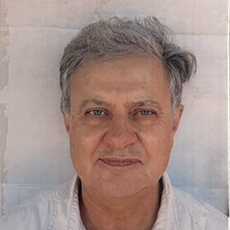
CAREERS IN CONSERVATION – Emile Honiball

CAREERS IN CONSERVATION – Emile Honiball

CAREERS IN CONSERVATION – Emile Honiball

Al is the protected areas co-ordinator for Waterberg and Wolkberg. Here is a little bit about Emile’s journey to a career in conservation.

Job title    I am the protected areas co-ordinator for Waterberg and Wolkberg.

Location    I am located in Mokopane, Limpopo province.

Where did you grow up?   I was born and grew up in Mokopane, Limpopo province.

 What are your hobbies/things you like to do in your spare time? I love anything in the outdoors, sport, fishing, horse-riding, hunting, reading, travelling, history. 

Any pets? Yes our family has 5 dogs and 6 horses.

 Favourite animal and why? The African Buffalo is my favourite animal. I grew up on a farm loving cattle. Buffalo have similar behaviour and social structure as cattle.

 Favourite food? Mediterranean food.

 Pet peeve? Dogs on the furniture and beds.

 Why did you want to work for the EWT? I decided to work for the EWT to hopefully be able to make some kind of contribution to conservation.

 What are you passionate about? I am passionate about our country and people.

 What’s the best advice you’ve ever received, and who did it come from? Best advice is from my wife to always smile.

 What is your go-to feel-good song?   Brave Heart by Johnny Clegg

CAREERS IN CONSERVATION – Catherine Kuhn

CAREERS IN CONSERVATION – Catherine Kuhn

CAREERS IN CONSERVATION – Catherine Kuhn

Catherine is the Biodiversity Disclosure Project Manager with the EWT’s National Business and Biodiversity Network. Here is a little bit about Catherine’s journey to a career in conservation.

Job title: NBBN Biodiversity Disclosure Project Manager.

What do you do in your day-day work? A lot of my role involves the administrative and project management side of the work we do with businesses and corporates – guiding them in their quest to align with the global sustainability targets and providing capacity building and awareness around the various projects that we do.

Location: Cape Town.

Where did you grow up? Call me a Southern Suburbs girl, I grew up under the foothills of Table Mountain, Kenilworth, Cape Town.

What are your hobbies/things you like to do in your spare time? Spending as much time as I can in the mountains! On a typical weekend I will be rock climbing with my husband, or hiking, kloofing, trail running, and / or walking the dogs!

Any pets? Yes, my two crazy Jack Russells, Hansel and Lappies! They make me mad on a daily basis, but I love them to absolute bits.

Favourite animal and why: A Cape Dwarf chameleon (Bradypodion pumulim). I grew up with them in my garden and used to always search for them. They are misunderstood, fascinating and beautiful creatures!

Favourite food? Any Indian food, and then of course – Chocolate!

Pet peeve? People who throw their cigarette butts on the ground or out of their car window. Any littering in general!

Why did you want to work for the EWT? EWT has been doing amazing work for many, many years, and has grown so much as an organisation. The diversity in the different projects, the passion that the individuals have to make a positive difference in the world and the potential to grow in this organisation is quite a drawcard.

What excites you about this new position? What excites me the most is the potential for positive environmental change and influence in the business sphere and facilitating the move towards businesses having a positive influence over the protection of biodiversity. And of course, all the learning that will come with that, and the potential for growth for myself in such an important sector.

What are you passionate about? My conservation passions lie in mind-set change and capacity building for communities and corporates. I am also passionate about awareness building when it comes to habitat and species protection. My conservation interests also lie in human-wildlife conflict as well as carnivore conservation efforts.

What’s the best advice you’ve ever received, and who did it come from? The best advice I have received is that they key to success is simple: Show up and be willing! The advice came from my husband, and I think Jordan Peterson said it.

What is your go-to feel-good song? ‘Crazy’ by Lost Frequencies and Zonderling.

World Migratory Bird Day 2024: Protecting Insects to Safeguard Bird Migration

World Migratory Bird Day 2024: Protecting Insects to Safeguard Bird Migration

World Migratory Bird Day 2024: Protecting Insects to Safeguard Bird Migration


To mark World Migratory Bird Day 2024 on 11 May 2024 attention was focused on the importance of insects and their impact on migratory birds. 

The theme: Protect Insects, Protect Birds highlighted the importance of insects for insectivorous migratory birds which rely on a variety of insects for their energy as they migrate north in winter. A reduction in insect populations threatens the survival of these species.

The decline in insects worldwide is being caused by not only habitat loss, but also the use of pesticides, which have the knock-on effect of increasing bird and other insectivore mortalities.

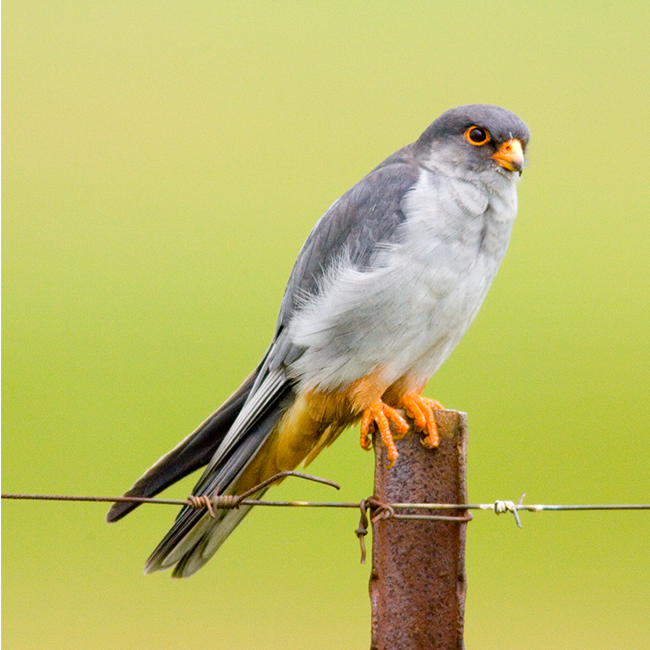
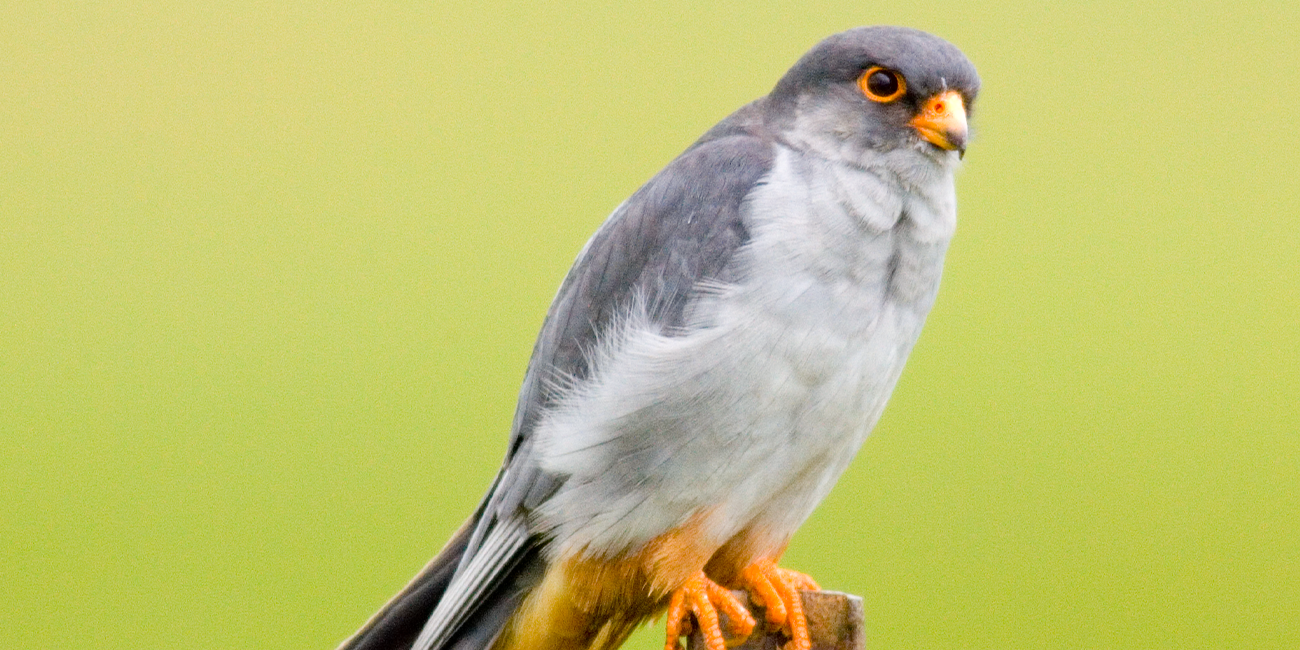
Although no official figures have been released yet, early indications are that there have been fewer Lesser Kestrels and Amur Falcons visiting South Africa this year.  While insect declines may be a contributing factor, it may also be attributed to the fact that there was exceptional rainfall further north in East Africa resulting in migratory birds remaining in areas of abundant resources instead of travelling further south for food — to South Africa, for example.    That is why there may have been lower numbers of migratory falcons and other species such as White Stork in southern Africa this past summer.

Counts conducted across South Africa by Endangered Wildlife Trust field officers, particularly in the Northern Cape, North West, Mpumalanga and KwaZulu-Natal in January and February 2024 range from thousands of Falcons and Kestrels in the Hanover area on 20 January 2024 to only a few hundred at a roost in Standerton, Klerksdorp, in Underberg, Victoria West and Beaufort West Areas.  Between 160 and 180 of the raptors were counted at De Aar in February this year.  These figures are still being collated for official publication.

The report on the Status of the World’s Migratory Species and the review of the Mid-Term Implementation Action Plan to Conserve African-Eurasian Vultures (Vulture MsAP) released at the United Nations Convention on Migratory Species in March 2024 shows that over the past 30 years, 70 CMS-listed migratory species – including the Egyptian vulture– have become more endangered.  The report highlights habitat loss, degradation and fragmentation, as well as over-exploitation alongside climate change, pollution and invasive species as having profound impacts on migratory species.

It recognises that the widespread use of pesticides in intensive agriculture is a key factor in the reported declines in insect populations. Many of these substances also have a secondary poisoning effect on birds that may feed on insects killed by the pesticides.


The decline in insect numbers can result in food shortage for a wide range of species, not least the many insectivorous migratory birds heading north from South Africa to Europe, the Middle East and Asia for the winter.

Birds play an important role in the natural environment, especially in pest control.   Besides a shortage of insects, an over-population of insects in some areas due to, for example locust plagues, can also affect migratory birds as plant health is compromised and agriculture is harmed. Extensive use of certain pesticides in locust and quelea control in Africa also has a substantial impact on non-target species, including a wide range of migratory raptors that make use of these species as a food source.

The Endangered Wildlife Trust (EWT) plays an important role in securing natural environments for migratory birds through collaboration within the United Nations Convention on Migratory Species (CMS) and projects being undertaken to restore wetlands and other habitats along migratory routes across Africa, including a focus on cranes through the EWT/International Crane Foundation partnership. 

In line with the report’s call for greater action, the EWT joins countries and communities around the world to support the need to expand efforts to not only tackle the illegal and unsustainable taking of migratory species, but also to increase efforts to tackle climate change, habitat loss for both migratory birds and insects and to address issued such as noise, chemical and plastic pollution which affects all migratory species.

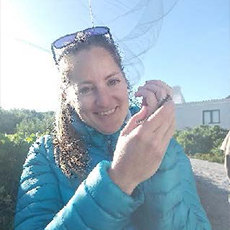
EWT Vulture Safe Zone field officer teaches herself Xhosa to better communicate with local communities

EWT Vulture Safe Zone field officer teaches herself Xhosa to better communicate with local communities

EWT Vulture Safe Zone field officer teaches herself Xhosa to better communicate with local communities

By Danielle du Toit


I am of the strong opinion that ‘we only fear that which we do not know’.

Take spiders for example, I’m sure they give most people the heebie-jeebies, but read more about them and you’ll learn that South Africa has over 2,000 species of spiders, but only three of these species can cause major health issues from a bite (that piece of information didn’t help me either, but it did give me a small comfort knowing that the likelihood of a spider trying to kill me in my sleep is next to zero).  My point is that if we approach situations in which we allow fear to blind us then we miss out on, at the very least, a learning experience, and at the most, a chance to be more than what we thought we were capable of.

Since joining the Endangered Wildlife Trust’s Birds of Prey Program, I have worked extensively in remote areas, often on my own.  In a country where safety is often a concern about a woman working alone in the field, I’m often told to avoid being in areas with no network coverage (what if I get a flat tyre and can’t call someone?), places where I’m the only woman (what if there’s only men and they threaten me?) and where I’m far off the beaten track (how can anyone help me if I’m in the world’s armpit?).

I am quite aware of the threats to my safety, especially at a time when gender-based violence is a concern.  But,  these concerns are not going to stop me from doing my job. The day I let fear stop me from doing it, is the day I hang up my khakis. So, for those who are scared, I urge you to read further, because these are my experiences; encounters I wouldn’t trade for the world.

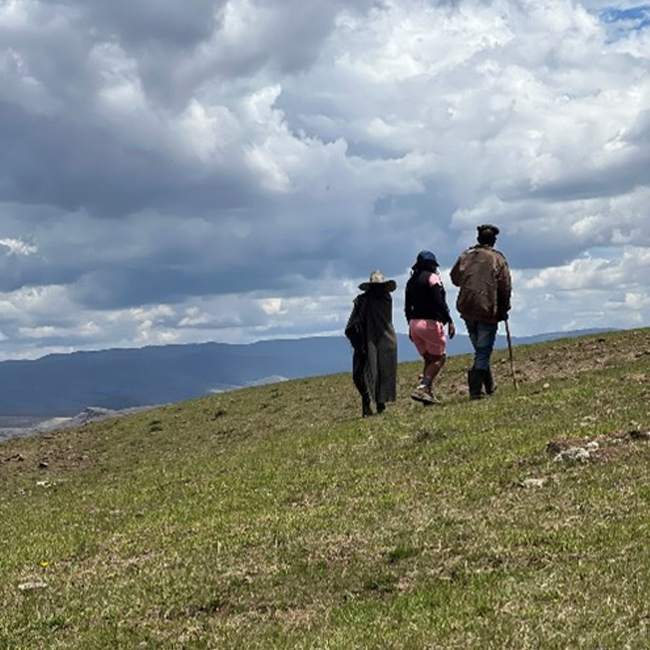
Among the  extreme remote areas I have visited and experienced include parts of the former Transkei region of the Eastern Cape, the Lesotho highlands and small towns in the Northern Cape.

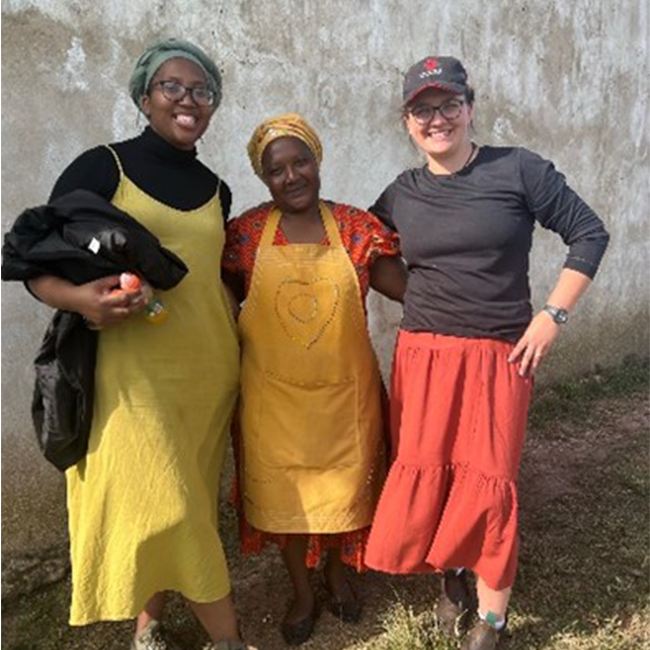
When I travelled to the Transkei for community outreach and vulture conservation awareness about birds of prey last year, I challenged myself to learn how to speak basic Xhosa so that I could better communicate with the local community.

Luckily, I have a friend that has kept me in line since Grade 6 and she taught me some ground rules about Xhosa. Most importantly is that Xhosa is a language of clicks. The ‘c’ sound is a click pronounced when the tip of the tongue is pressed against one’s teeth. The ‘x’ click is pronounced by pulling one’s tongue down from the back of your palate. The ‘q’ sound is pronounced with the tongue pulling down from middle of the palate and should make an echo sound in your skull, deafen you even, if you’re doing it right. After weeks of practicing and Hlumela sending me voice notes mostly consisting of her laughing at my ‘whiteness’ and coaching me, I was finally able to, with confidence, introduce myself to people: “Molweni. Igama lam nguDanielle. Niyawundi xolela ndyizama uthetha isiXhosa” (Hello, my name is Danielle. I must apologise to everyone; I’m trying to learn to speak Xhosa.)

Hlumela said I should add: “Ayihambi kakuhle”. It’s not going well.

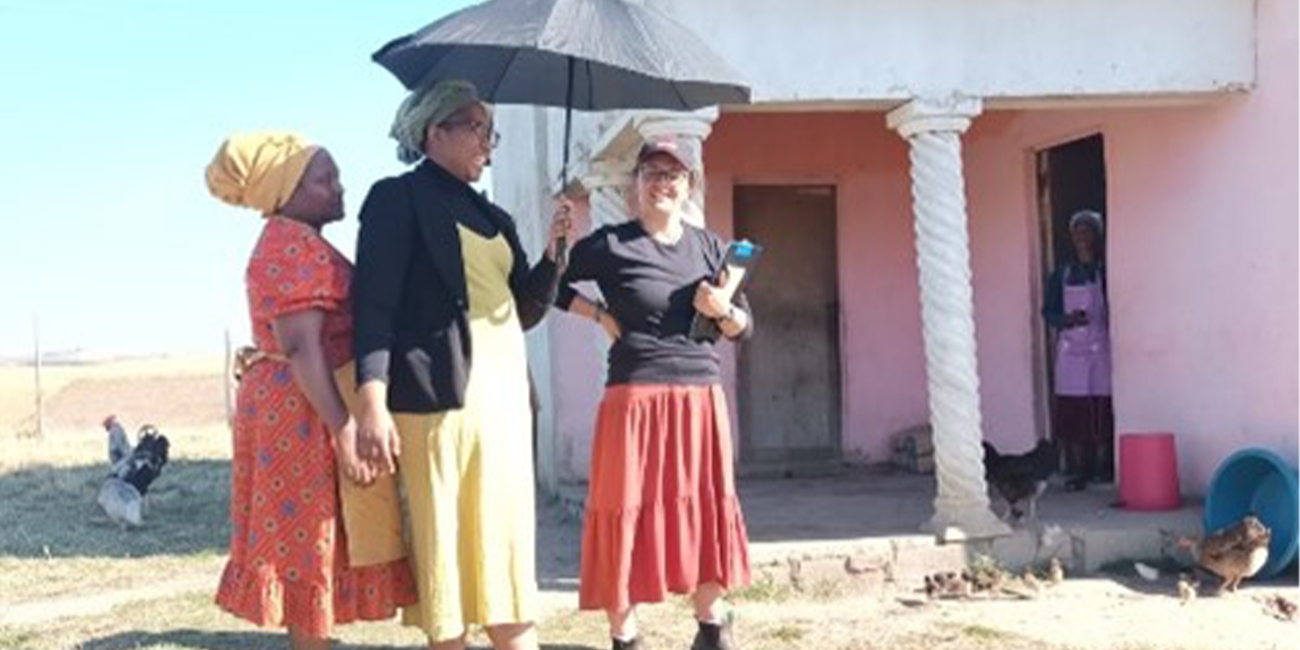
When the Endangered Wildlife Trust’s Birds of Prey team visited a local community and their chief in the former Transkei in July 2023, I was instructed to firstly, wear a skirt to the chief’s place, secondly, to listen intently while the chief or elders speak. Thirdly, I was told to NEVER say no to the bread. This was more of a private notation by one of our colleagues, Nosi, who was actually just telling me that the bread is so delicious you can’t possibly turn it down.

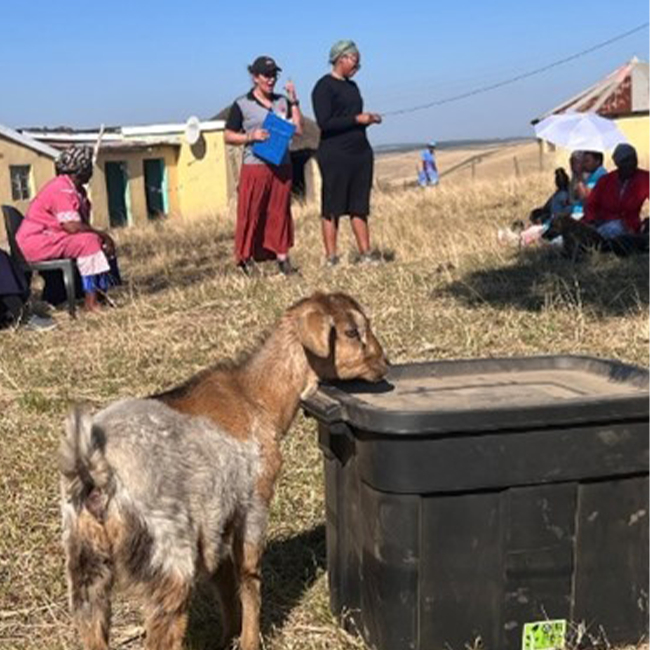
We were in the area to do community outreach and awareness raising about vulture conservation with the CEET (Conservation Exposure Education and Training) and Meat Naturally.

I was on my best behaviour until a fight broke out between the chief’s wife and one of her chickens.  The angry woman had proceeded to line that chicken up in her sights and kick it a good ten metres in a perfect arch off her stoep (verandah), her slipper following suite. I don’t know where the Springboks are recruiting their next flyhalf, but I could point them in the direction of her house. The chief, telling us to ‘hleka, hleka’ (laugh, laugh), followed this incident with an opening prayer before mentioning something about the presence of Mlungus (white people). My Xhosa is not advanced enough as yet to understand every word, but as it turned out, the chief was happy about our work in the area. In fact, he wanted us back as soon as possible.


 

The Northern Cape is a far cry from the highlands of Lesotho, or the rolling green hills of the Transkei. It is vast area known for its red sand and Camel Thorn trees. The roads are straight, cutting through an arid landscape, and the people are not to be trifled with.

My first trip to the Kalahari was with the EWT’s Ronelle ‘make a plan’ Visagie, who has been doing raptor conservation and extension work since long before I was born. We’d been monitoring White-Backed Vulture nests along the Molopo River and had time to pop in to see a local landowner she’d known for years. My first impression of Kallie had a lot more to do with the .38 revolver on his hip than anything else. He welcomed us into his kitchen for a cup of strong coffee.  There I was greeted by a black cat with half an ear and scars on his face; a CV of sorts.  Funny, I thought, how our animals so reflect their human owners. Kallie had a tough exterior. His face had been brutalised by the sun, giving it the look of weathered leather, but his eyes were laser focused. Although not a tall man, he carried himself in a manner that made him appear larger than life and, if I’m being perfectly honest, a little intimidating.

The reason we had gone to see Kallie was because he had threatened to shoot the vultures as they were a threat to his lambs. Ronelle simply said: “Ag Kallie, moenie die aasvoëls dood maak nie, asseblief” (“Oh Kallie, please don’t kill the vultures.”).  With those simple words,  that man melted like butter and it occurred to me then that as tough as someone may seem and as difficult as they may try to be, when Ronelle spoke to them in the way that she did, he felt heard and seen, and gave up the fight right there. I guess that’s what we all want.

Culturally speaking, I am a white woman who works in rural South Africa. In my line of work, I have met so many people, ranging from Xhosa Chiefs and Basotho shepherds to Kalahari boers.  The people I have met have one thing in common:  we all love nature and have a passion for its conservation and protection. South Africa is a rare place where diversity is the norm. We have 12 official languages, including sign language. This excludes the dialects, cultures and subcultures. We have a rich history that can fill libraries with tales from the lush Bushveld to the dry Kalahari, from the Cape of Good Hope to Egoli (Johannesburg). South Africa is not just one thing. Nor are South Africans. If we are so surrounded by differences in our everyday lives, why do we fear them?