Help African Wild Dogs 

Donate today  

African Conservation Forum emerges with united voice on conservation and biodiversity

African Conservation Forum emerges with united voice on conservation and biodiversity


African Conservation Forum emerges with united voice on conservation and biodiversity

By Eleanor Momberg
 

The African Conservation Forum (ACF), hosted by Kenya in June this year, was an important opportunity for the continent to develop a unified and collaborative position related to its conservation requirements ahead of the 2025 IUCN World Conservation Congress.

Endangered Wildlife Trust CEO Yolan Friedmann, Head of Conservation Ian Little, Head of the African Crane Conservation Programme Kerryn Morrison and the ICF/EWT Partnership’s East African Regional Manager Adalbert Aineo-mucunguzi were among the NGO’s representative at the International Union for Conservation of Nature (IUCN) Africa Conservation Forum.

Held in Nairobi, Kenya, under the theme “African Solutions for Nature and People: Creating transformative responses to the biodiversity and climate crisis in Africa,” the three-day forum was attended by governments, IUCN members, international and African NGO’s, business representatives, Indigenous Peoples and scientific experts gather to discuss biodiversity, conservation and the sustainable development challenges faced by the continent.

This was the first time that the three IUCN sub-regions in Africa, had gathered under one roof to discuss the significant challenges facing the continent as a result of biodiversity loss and climate change.

Speaking after the Forum, the EWT’s Dr Ian Little said within the ACF the role of governments and NGO’s are equally important. Unlike some other international conventions and forums, the NGO sector is welcomed in ACF high-level forums and are able to make a constructive contribution.

Within Africa, he said, governments play a huge role in setting policies and laws, but it is often the NGO sector that implement the work on the ground. This is largely due to a shortage of dedicated conservation funding and capacity on a continent that is faced with numerous other social challenges.

The ACF’s role in setting the global agenda for conservation has been elevated through the hosting of a united meeting for the African sub-regions. All countries that attended are members of the global IUCN, but, because Africa is usually poorly represented at many global meetings, the 2024 ACF had allowed Africa, as a continent, to consolidate its thinking and expectations ahead of such meetings.

Kerryn Morrison, who is also the International Crane Foundation’s (ICF) Africa director, agreed, saying Africa emerged from the ACF with a coordinated voice.

“In so many global organisations the African voice is lost and we often only hear the North American and European voice. Having a stronger voice that represents Africa means that the continent will play a more solid role at the table,” she said. “This Forum provided a platform for Africa to come together, talk about issues and show more cohesiveness. This could assist the continent in accessing financing and the capacity needed for conservation.”


The sub-regions did, however, hold separate meetings during the ACF in order to compare regionally relevant notes and then produce a clear position of what the continent requires to achieve the goals of the Global Biodiversity Framework, especially Target 3, which requires the conservation of at least 30 percent of terrestrial, inland water and coastal marine areas by 2030.

“We were able, as a continent to determine how one should approach trying to achieve this ambitious goal, which has strategic thinking, funding and capacity requirements. It was about formulating positions and identifying synergy and resultant partnership opportunities,” said Little.

“With regard to greater collaboration to reach our conservation goals, Africa is in a position where a significant amount of the driving force in conservation is in the NGOs, whether national or international, so it is important to pull them together, with government support, to achieve what needs to be done,” he said.

In a post forum statement, the IUCN said the ACF had concluded with a call for inclusive, cross-sector action to preserve nature and biodiversity.

Delegates had agreed that cooperation across countries, governments, communities and sectors was vital to effectively address the significant challenges facing the continent due to the dual crisis of climate change and biodiversity loss.
Among the key outcomes was a new call for action in preparation for the next IUCN World Conservation Congress to be held in the United Arab Emirates in 2025. The IUCN Congress in turn sets the global conservation agenda for the years ahead.

IUCN Vice President and Regional Councillor Imèn Meliane said: “We’ve run out of time: existing actions are inadequate and true transformation means moving from transformation rhetoric to integrated actions in the biodiversity-climate-energy nexus now.”

Dr Alfred Mutua, Kenya’s Cabinet Secretary for Tourism and Wildlife committed to the hosting of all future African Conservation Forums in Kenya.
CAREERS IN CONSERVATION – Julia Van der Riet in London

CAREERS IN CONSERVATION – Julia Van der Riet in London

CAREERS IN CONSERVATION – Julia Van der Riet in London

Julia is a Volunteer fundraiser in the UK for the EWT. Here is a little bit about Julia’s journey to a career in conservation.

Job title: Volunteer fundraiser in the UK

What do you do in your day-day work?  I’ll be meeting with UK-based potential donors to get support for different areas of the EWT, likely beginning with the Eye in the Sky project and Soutpansberg. As well as helping with marketing efforts

Location: London

Where did you grow up? Cathedral Peak, Drakensberg

What are your hobbies/things you like to do in your spare time? Hiking, running/walking with a good podcast on, painting and cooking.

Any pets? 2 rescue dogs, Monty & Phoebe who live with my parents in SA.

Favourite animal and why: Fish eagle, their call must one of the most beautiful sounds in the world. Or tortoise, for their determination and endearing characteristics.

Favourite food? Pasta

Pet peeve? Litter

Why did you want to work for the EWT? To contribute towards making a difference in the natural world – something I talk about regularly but haven’t yet put into practise in a significant way.

What excites you about this new position? The opportunity to find creative ways of getting people to care more deeply about conservation in Africa, and in turn perhaps globally.

What are you passionate about? Knowledge and expanding my own; sharing and deepening my appreciation for nature.

What’s the best advice you’ve ever received, and who did it come from? When I’m stressed, my father’s advice is to get up, go for a walk or write down your thoughts, and approach the situation with a fresh perspective.

What is your go-to feel-good song? Walk of Life by the Dire Straits or Sedona by Houndmouth

Field work for the Wildlife and Energy Programme

Field work for the Wildlife and Energy Programme


Field work for the Wildlife and Energy Programme

 One of the field officers of the Endangered Wildlife Trusts’ Wildlife and Energy Programme, Ronelle Visagie, travels a lot through the Northern Cape, Eastern Cape and the western and southern Free State to investigate powerline incidents. 

Ronelle recently travelled to a powerline 100 km southwest of Kakamas for an investigation, and also surveyed  seven powerlines in the Eastern Cape and one in the southern Free State.  Driving around our beautiful country does have its advantages and grants us as EWTers an opportunity to visit and experience different parts of our beautiful country.  

This month we share with you a few photographs of Ronelle’s recent journey to investigate powerlines.


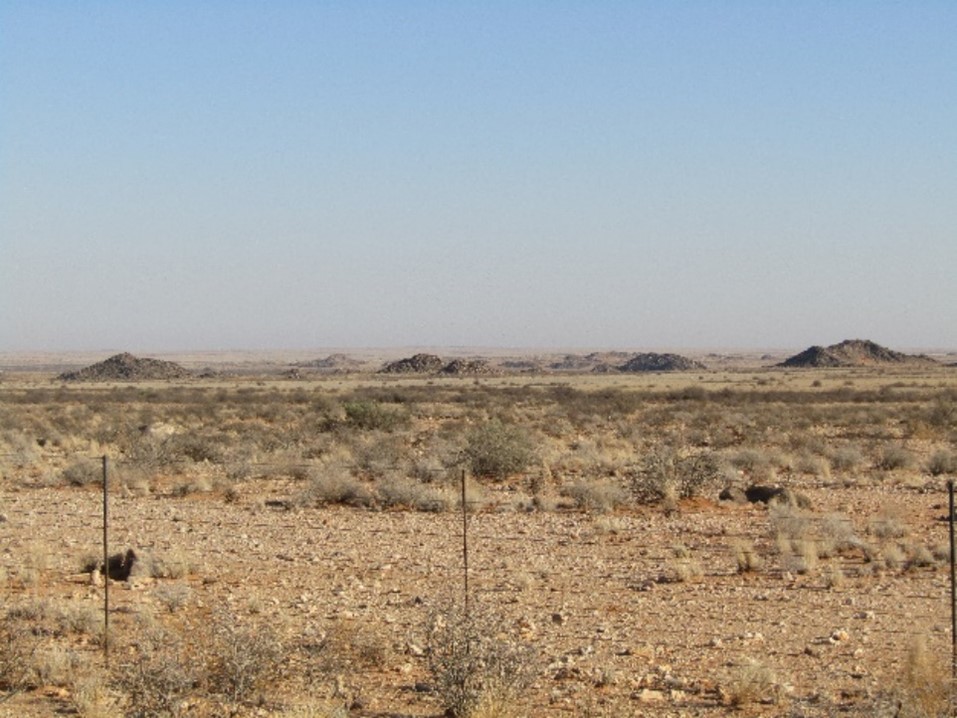
Kakamas is in Namaqualand, a desolate part of the Northern Cape. Despite being situated on the banks of the Orange River, this area is typically very dry. Most people only ever pass this area en route to Namibia or the Kgalagadi Transfrontier Park.

Believe it or not, there are White-Backed vultures in Namaqualand. This picture of three vultures sitting on an electricity pylon was taken 100 km southwest of Kakamas.

Ronelle also passed two Cape Griffon Vulture roosting sites on her journey through the Eastern Cape and Free State. The one is near Zastron in the Free State. The other was seen between Burgersdorp and Jamestown.

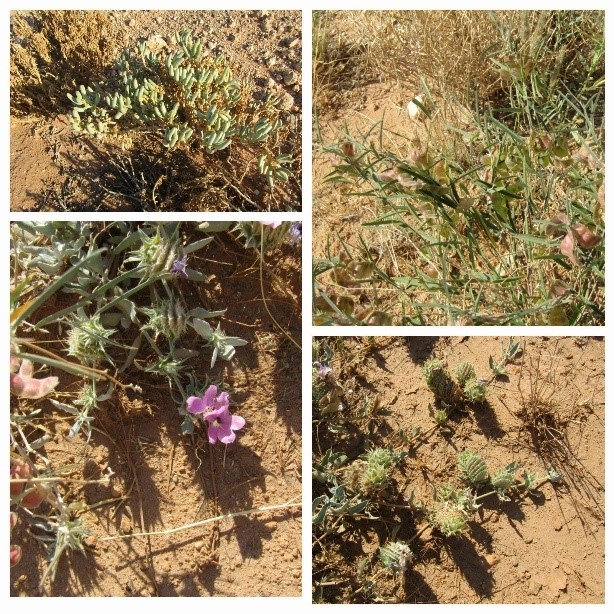
The plants in this region are something special, especially because most are unique to this part of our coutry. Even though winter was approaching, some of the veld plants in this dry habitat were flowering making this visit colourful.

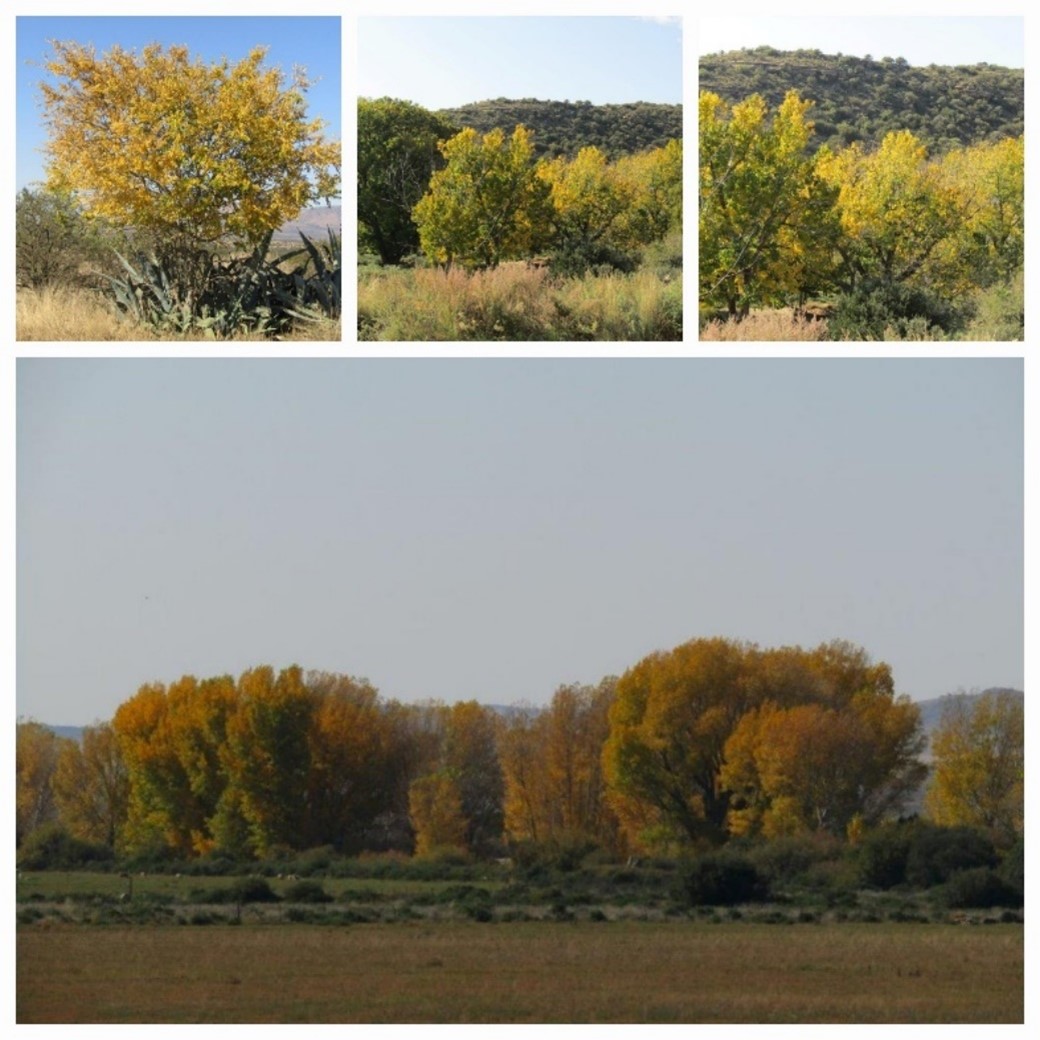
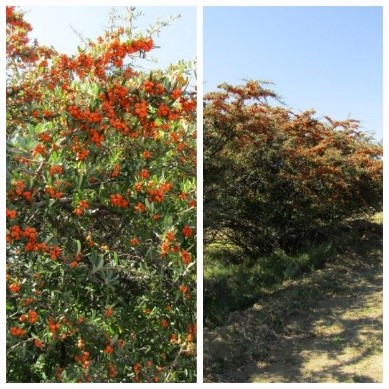
Because it was late in autumn, the Eastern Cape and Free State were beautiful. All the trees were showing off their autumn leaves, and the Orange Charmer shrubs (Pyracantha coccinia or Fire Thorn) were covered in berries. Unfortunately, the Orange Charmers are an exotic species.

A picture can tell a thousand words. Even though it was not very hot, this picture shows the importance of one tree. A flock of sheep gathered under it in the midday Sun for some shade

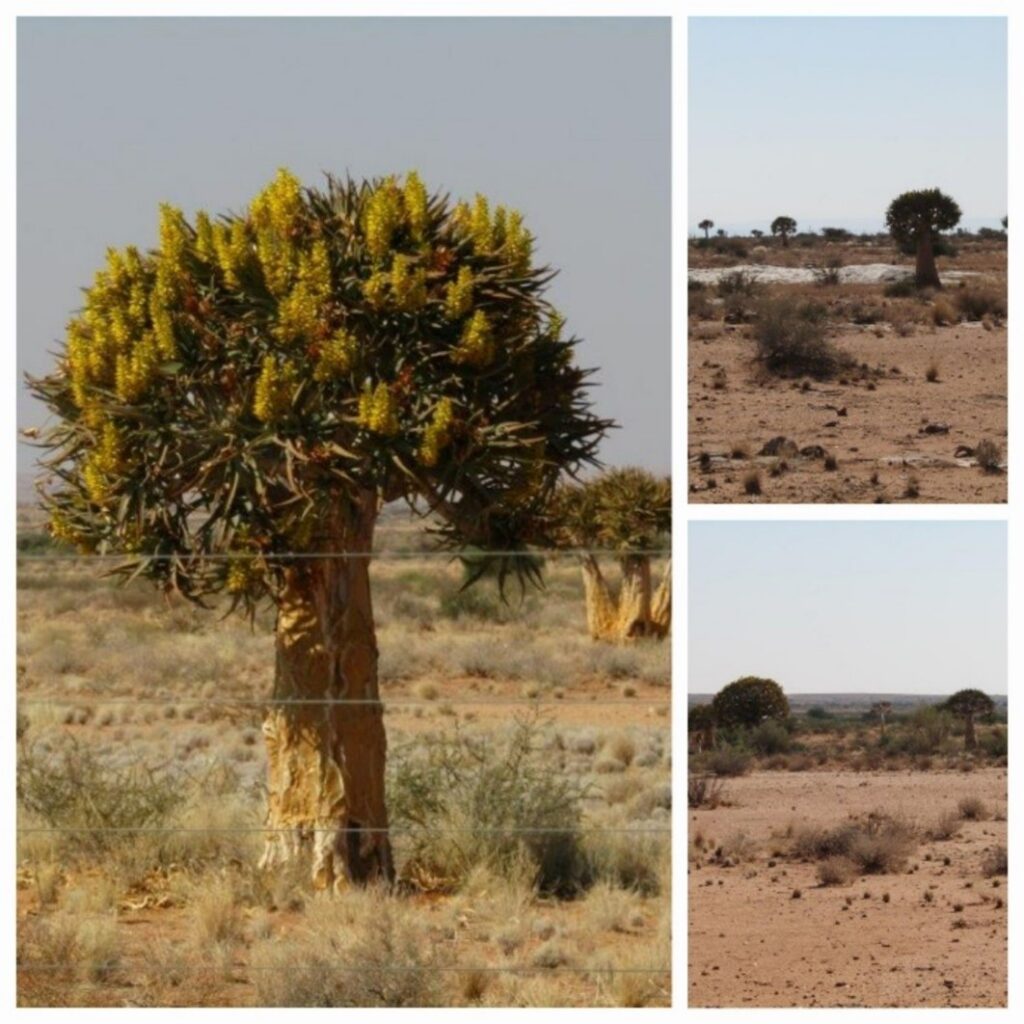
Namaqualand is well known for its Quiver Trees, which had started their annual bloom. Seeing these critically endangered giant trees flowering is a special experience, especially because they are one of South Africa’s most spectacular and rare aloe species.

The Orange Charmers were spread out in the Free State and Eastern Cape.

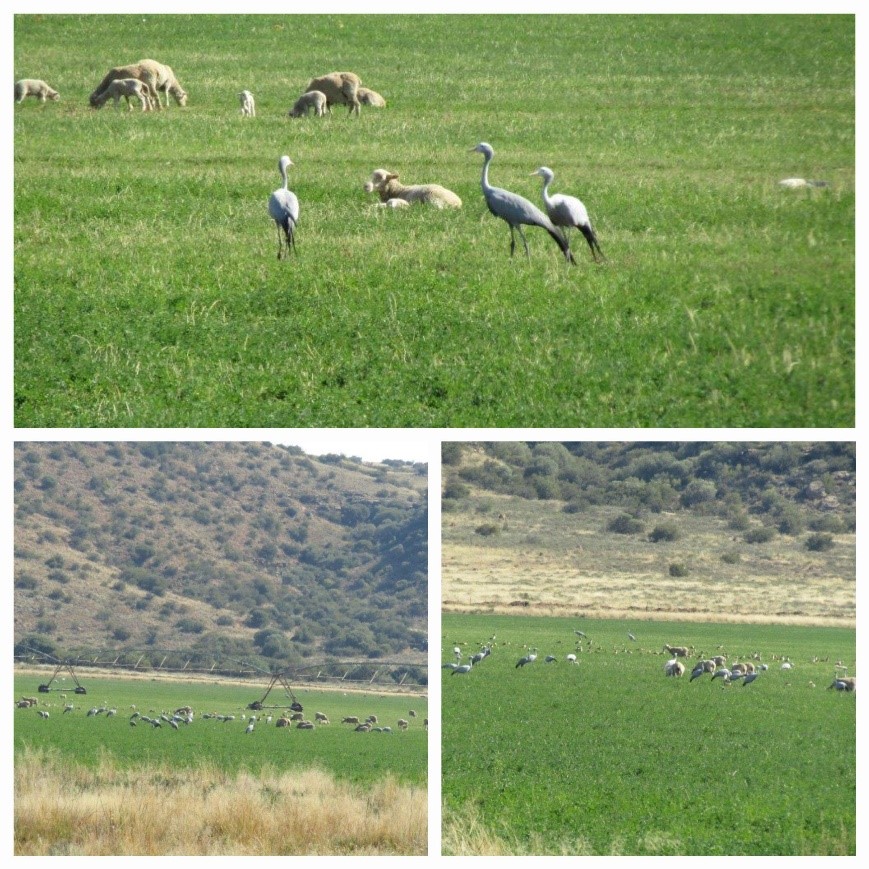
South Africa’s national bird, the Blue Crane, is the world’s most range-restricted crane. Although Ronelle did not see many Blue or Grey Crowned Cranes during her survey of the powerlines, she did come across this flock of more than 330 Blue Cranes on agricultural land near Venterstad in the Eastern Cape on her trip home.

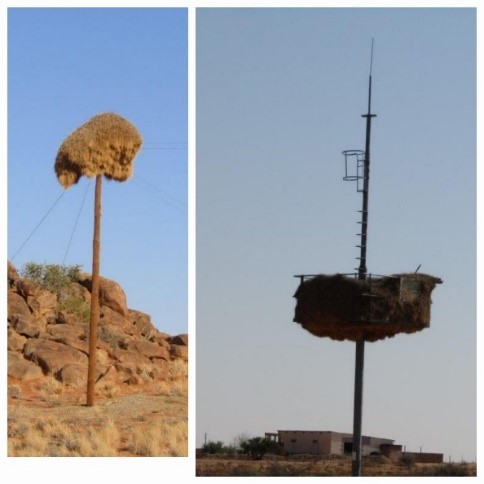
The drier western part of the Northern Cape is also very well known for its characteristic Sociable Weaver nests. Social Weavers typically build their nests in Camel Thorn trees, but also have a preference for bare manmade structures, such as telephone and electric poles. These huge nests of straw and grass can be seen for miles and are often home to colonies of more than 100 birds.

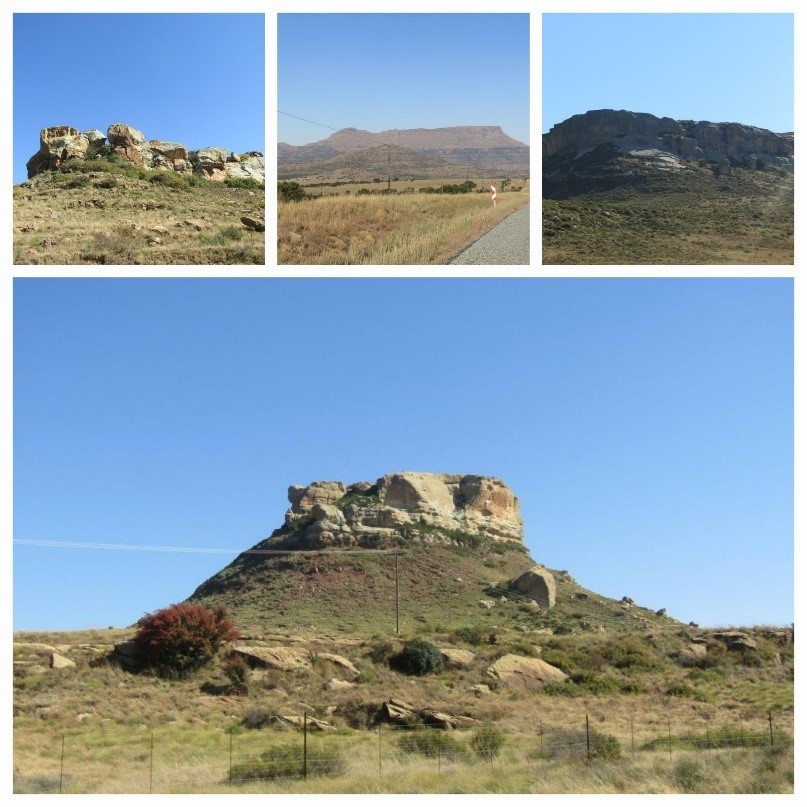
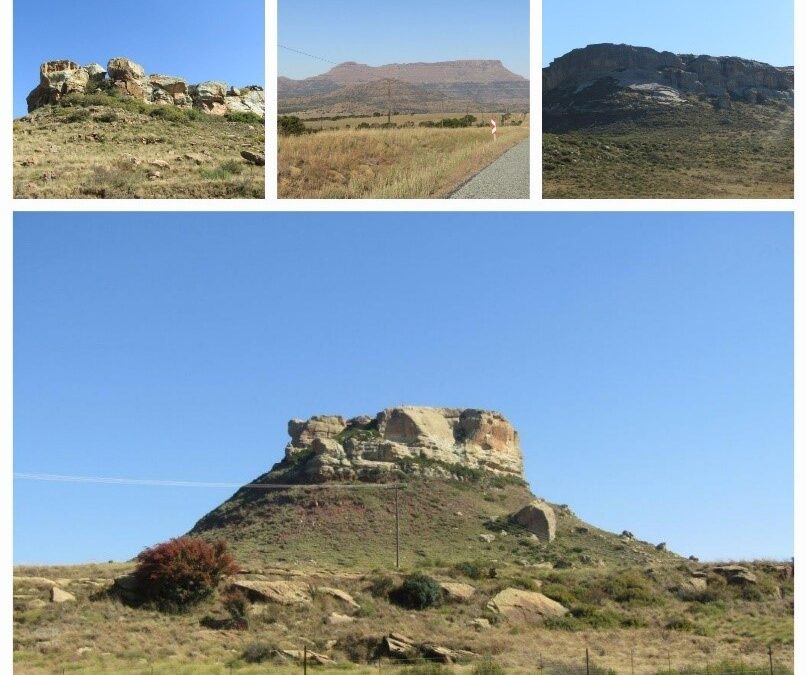
Travelling through the Eastern Cape you are able to view beautiful mountains and rock formations.

Canoeing the Kafue River for research

Canoeing the Kafue River for research


Canoeing the Kafue River for research

Kelvin Steven Floyd, Restoration Ecologist in Zambia, African Crane Conservation Programme


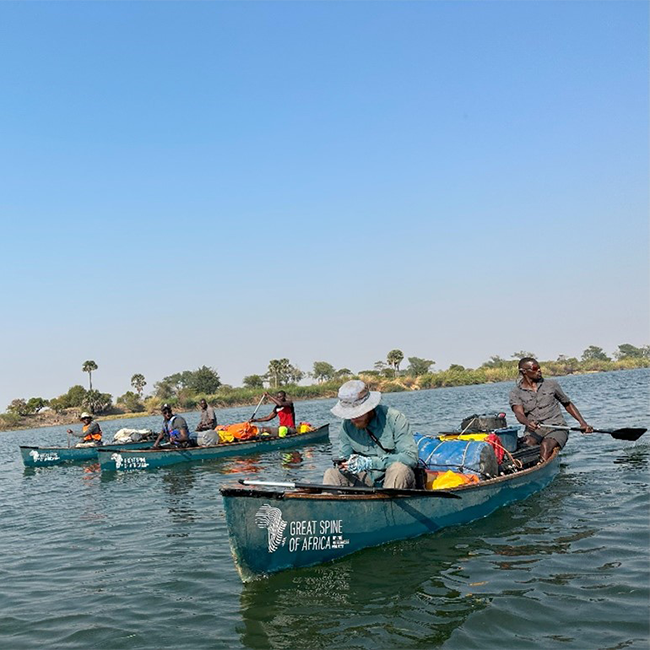
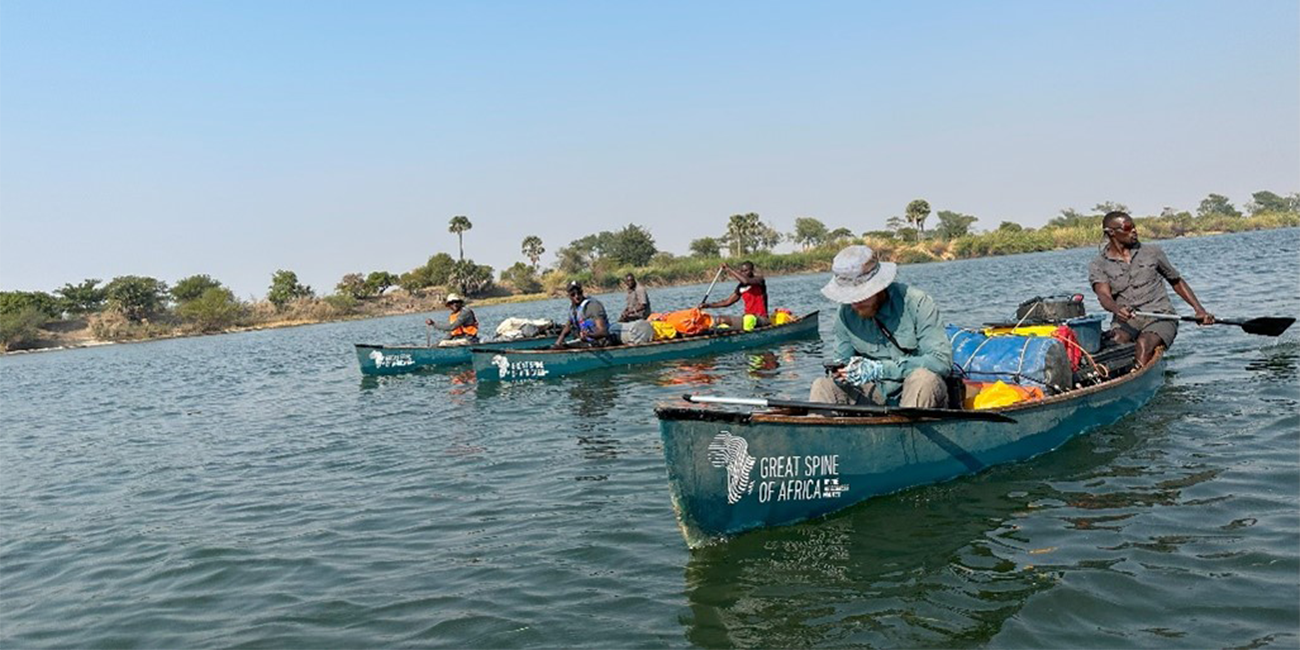
The World Bird Foundation of America has a project called the Wilderness Project to explore major rivers in Africa including the Congo, Zambezi, Luangwa, Kafue River. I was recently privileged to join one of their team exploring the Kafue River from its source to the confluence with the Zambezi River.

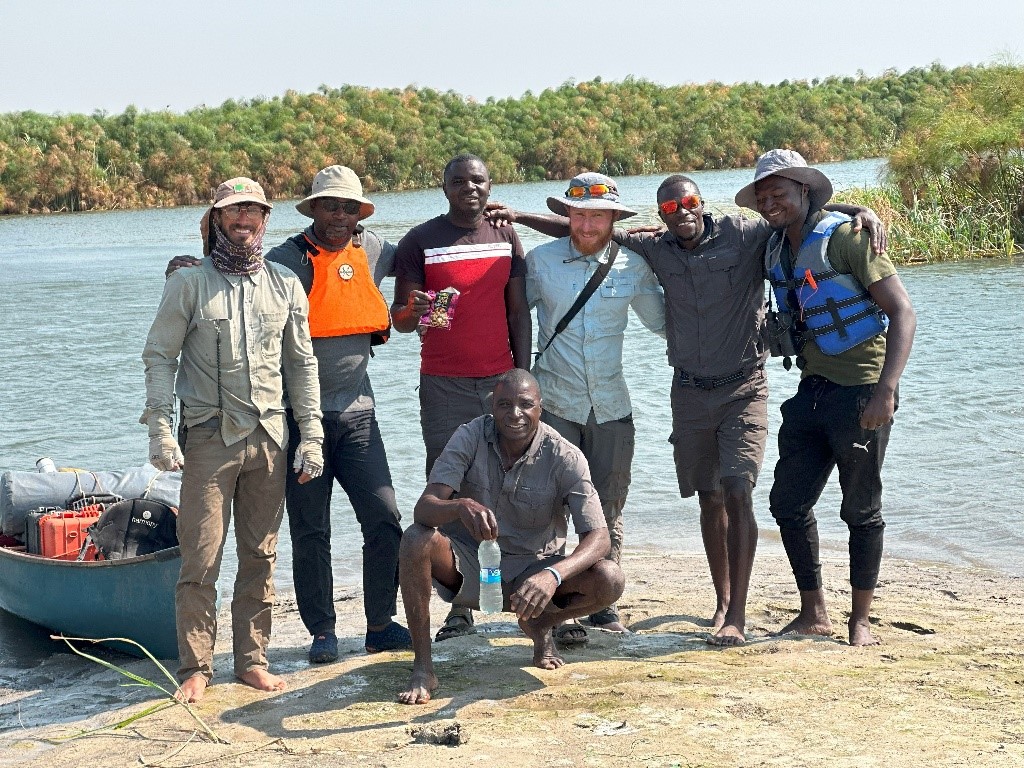
I joined the team led by Dr. Joseph Cutler, who is also a National Geographic Explorer, from Zambia’s bird-watching paradise at Itezhi-Tezhi to the Kafue bridge covering the Kafue Flats stretch of the journey.

We paddled over 350kms in 13 days enduring strong winds and huge waves which almost tipped our canoes over, this expedition had everything, it was tiring, exciting, frightening, adrenaline filling but most of all a great opportunity for knowledge generation.

Throughout the transect, we recorded all the waterbirds, herbivores, collected water samples for analysis of heavy metals, human activities, invasive species, Environmental DNA, invertebrates which will be key for our JRS Biodiversity Foundation project, which is part of our work within the International Crane Foundation/EWT Parthership focusing on research and monitoring under the Kafue Flats Restoration Partnership. The aim of the JRS project is to fully design and implement the much-needed ecological monitoring, assessment, and management plan for the Kafue Flats wetlands in Southern Zambia. 

The objective of this plan is to monitor important freshwater biodiversity indicators including threatened and endangered species (Wattled and Grey Crowned Crane), large mammals, waterbirds, wetland vegetation, and other wetland parameters, and human threats/ management challenges such as invasive species, fire, water, and livestock density. The results from the monitoring and assessment will inform and drive the adaptive management of the Kafue Flats, especially the conservation of vital wetland biodiversity in this globally important ecosystem. 

Lions roaming Phalaborwa darted and sent back to the Kruger National Park

Lions roaming Phalaborwa darted and sent back to the Kruger National Park


Lions roaming Phalaborwa darted and sent back to the Kruger National Park

by Marnus Roodbol, lion conservation senior field officer, CCP

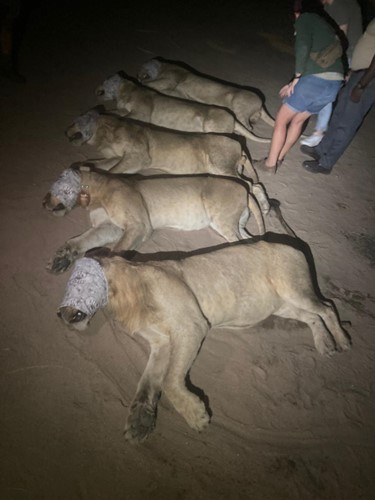
On Monday, 3 June, 2024, five young lions were spotted roaming Villa Luso in Phalaborwa. The  same lions were later spotted by the Phalaborwa horse patrols along the western boundary of the Kruger National Park, south of the Phalaborwa gate.

Later in the they moved onto the Hans Merensky Golf Course before returning to the greater Kruger area.

Although the community and stakeholders assumed that the lions had left the town and  returned to the safety of the greater Kruger, the pride was again seen in town later that night.

That was when we all sprang into action to ensure that the five lions were removed from the town limits and moved to the Kruger National Park.

Following a consultation between the Limpopo department of Economic Development, Environment and Tourism (LEDET), the Phalaborwa Heritage Foundation (PNHF), the Endangered Wildlife Trust (EWT), and the regional and section rangers of the Kruger National Park,  it was decided to capture the lions and to move them back into the safety, and security, of the greater Kruger area.

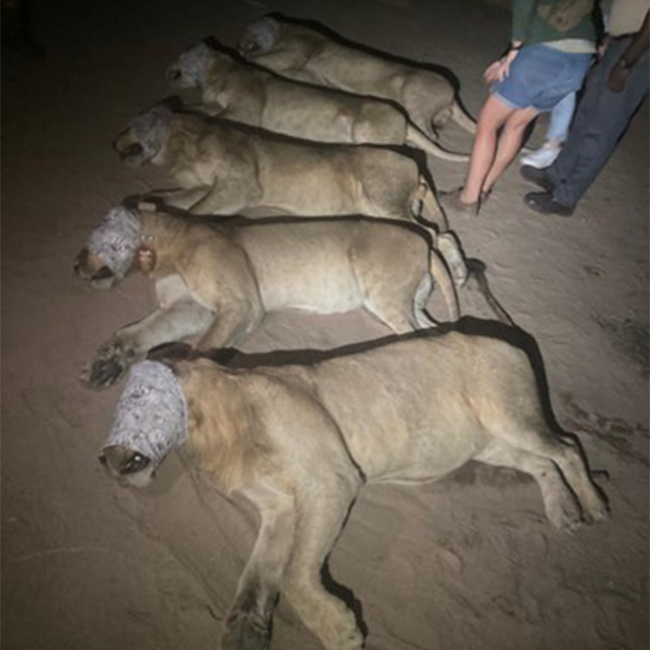
The EWT Carnivore Conservation team on site assisted in the capture and darting of the five lions – two adult females and three young males.  One of the lionesses was fitted with a GPS tracker by the EWT so that we can continue to monitor the pride’s movements.  This will also assist stakeholders should further assistance for this pride be needed in future.


The darted lions, of which one was collared, before being transported back into the Greater Kruger area.