A word from the CEO July 2024

A word from the CEO July 2024

Word from the CEO

 
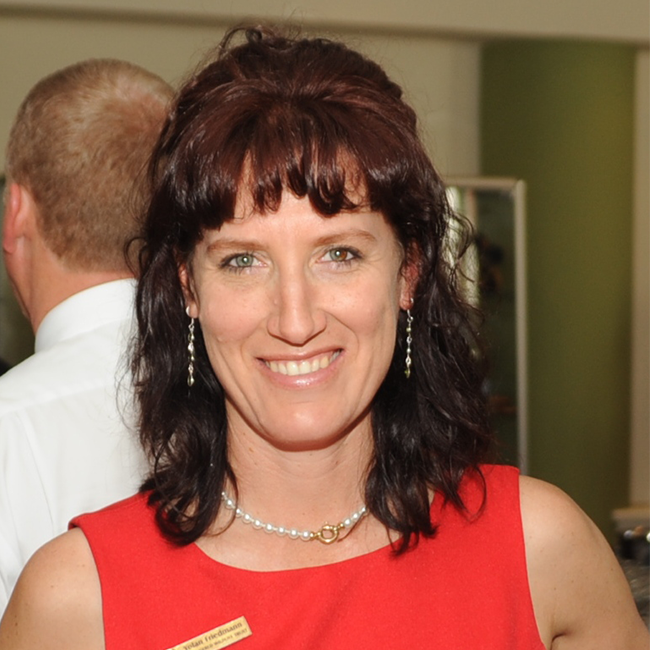
Yolan Friedmann, CEO

The 2024 Summer Olympics kicked off last week with grand fanfare and excitement, with millions of fans globally clenching thumbs and gritting their teeth as they watch their favourite sportsmen and women and wait for records to tumble. With around 300 000 spectators expected to attend the games in person, Paris is buzzing with people from across the globe and from all walks of life. Against the backdrop of political upheaval, unrest, ongoing global conflict in almost all corners of the world, economic uncertainty and a range of other manmade threats to our own futures, it fills me with a sense of hope and excitement to see fans draped in their national flags filling stadiums, and walking the streets of Paris, as they laugh, cheer, applaud and fiercely promote their national pride but all in a safe, harmonious and respectful manner. It makes me wonder why the rest of our lives and the rest of the time people cannot be like this: human beings competing as we love to do, and defending our national positions and ideologies, but in a way that inspires new generations to be better and aim higher, instead of sacrificing their futures. Humans are capable of great achievements and the Olympics is the best celebration of what focus, commitment, hard work and sacrifice can do. In a world that increasingly looks like it will implode due to the devastation of human impact, our planet can also thrive and flourish if people just focused on the RIGHT stuff.

Amidst the celebration of our sporting heroes this week, came the celebration of another group of individuals who can be likened to being environmental Olympians: champions of the earth and guardians of the voiceless. World Ranger Day on the 31st of July is always an opportunity to pause and give thanks to the brave women and men who risk their lives and dedicate their hearts, minds and bodies every day, to protecting the natural world for all of us. With Africa losing more than 64 rangers in the line of duty in the past year and with their work increasingly requiring a range of skills that qualifies them for a pentathlon event of their own, our rangers deserve cheers and glory and podiums every day of their lives. Today’s rangers need to have environmental knowledge, technical skills, self-defense and paramilitary knowledge and still be educators, community developers, managers and defenders of the weak. The EWT salutes ALL rangers everywhere for protecting our earth.

Our world is full of heroes and focusing on them inspires us all to become better and to do better. I love the Olympics and global celebratory days for this reason, and knowing that the heroes of tomorrow are still in the making, gives me hope for a future where we will all indeed be better humans.

Yolan Friedmann,

CEO, Endangered Wildlife Trust
 

How to count lions in Africa

How to count lions in Africa

Science Snippet:

How to count lions in Africa

By Lizanne Roxburgh and Erin Adams

Knowing how many individuals of a species exist in the wild is important for managing that species. It is also important to know the trend in the number of individuals in a population. Whether the number is increasing, stable or declining will have implications for what management interventions should be used to conserve that population. There are currently many methods that can be used to estimate population size, however, each have their own strengths and weaknesses.

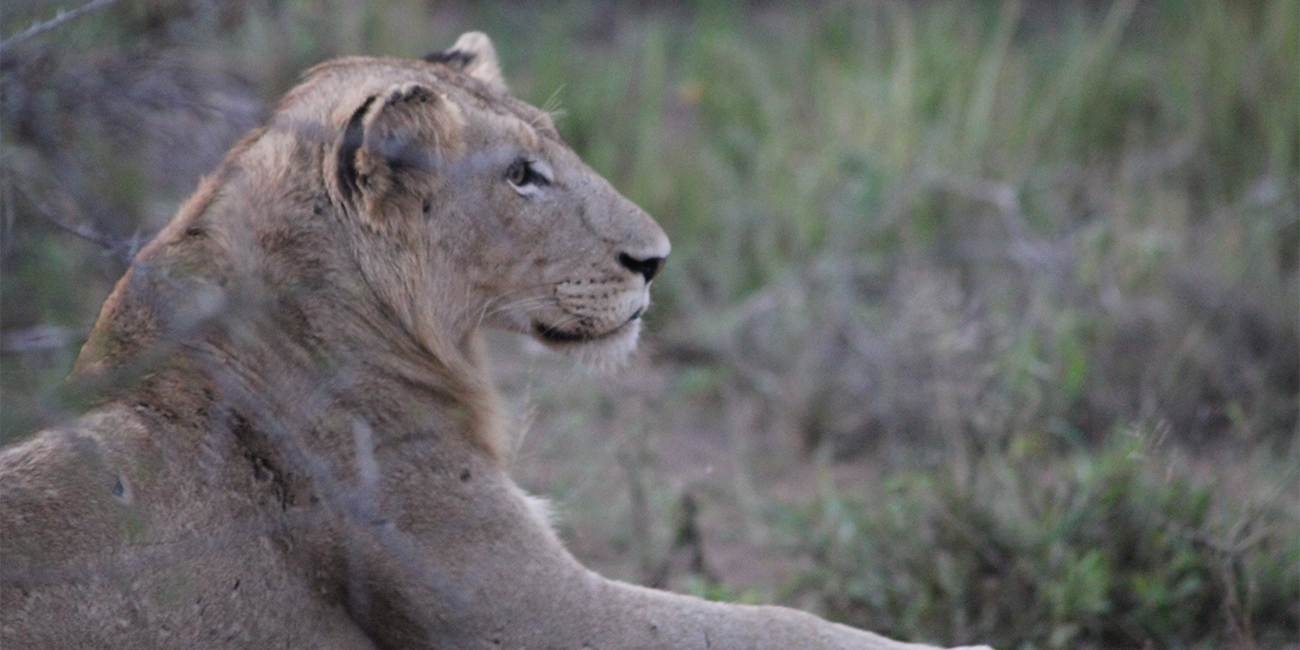
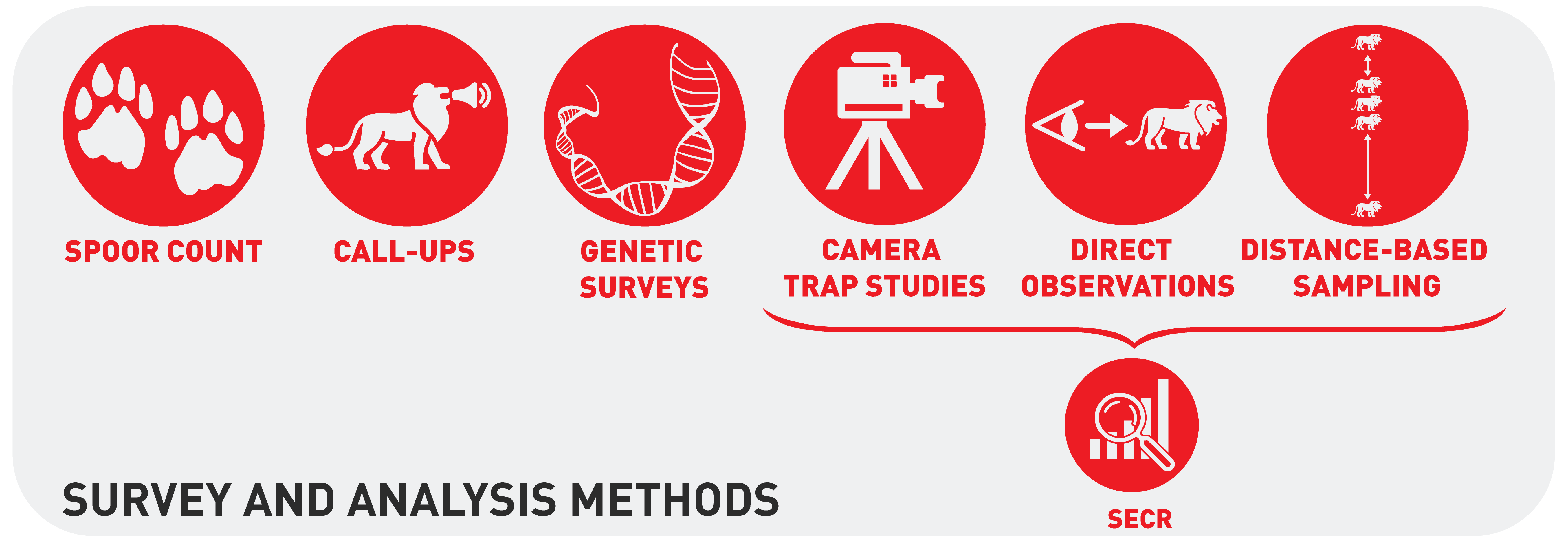
In a recent study*, scientists from the EWT, in collaboration with researchers from other institutions, reviewed all of the methods that are used to survey lion populations across Africa. They looked at 93 different studies from 1991 to 2022. Seven broad survey methods were identified. These included spoor counts, call-ups, genetic surveys, direct observations, camera trap studies, spatially-explicit capture-recapture (SECR) for both direct observations as well as camera traps, and distance-based sampling.

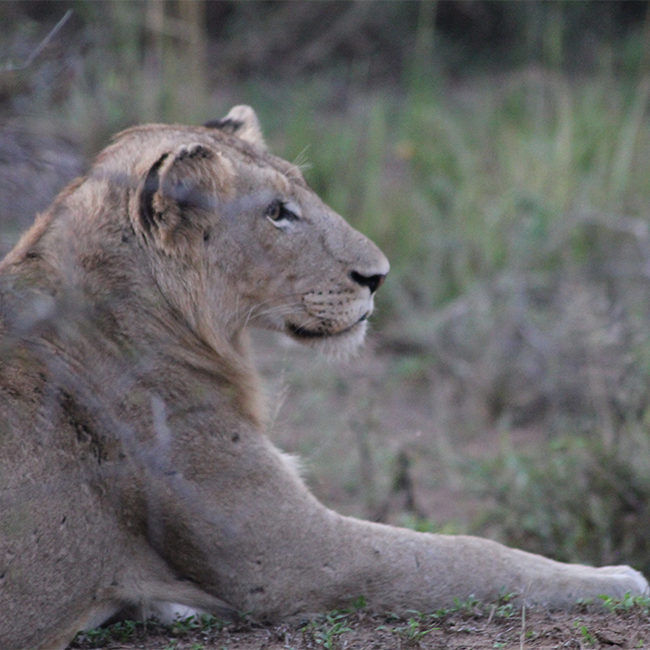
Pic: Eleanor Momberg

The scientists found that the most reliable methods for estimating lion population in Africa were those that included spatially-explicit capture-recapture (SECR) analysis. SECR is a method used to model animal capture-recapture data collected with a network of “detectors.” SECR takes into account both where the individual lions were captured by the detectors (such as camera traps or through direct observations) and where they were not captured. It’s like solving a puzzle where you piece together information about where animals were detected to estimate their overall population density. Sampling techniques such as spoor counts and call-ups were found to be less reliable, as they tended to over-estimate population size.

The scientists strongly recommended that standardized methods be developed that can produce comparable estimates of the number of lions, both within and between sites and years. These methods can then be used to survey lion populations in areas where gaps in our knowledge of lion populations exist.

*Samantha K. Nicholson, David R. Mills, Erin C. Adams, David G. Marneweck, Hans Bauer, Lizanne Roxburgh, Rob Slotow. 2024. Towards effective and harmonized lion survey methodologies: A systematic review of practice across Africa. Global Ecology and Conservation.  https://doi.org/10.1016/j.gecco.2024.e02908

CAREERS IN CONSERVATION – Caitlin Smith

CAREERS IN CONSERVATION – Caitlin Smith

Caitlin is an Intern with the EWT’s Conservation Planning & Science Unit. Here is a little bit about Caitlin’s journey to a career in conservation.

Job title:  Conservation Planning & Science Intern

What do you do in your day-day work? I will be assisting in the Mammal Red List project

Location: Cape Town

Where did you grow up? Cape Town

What are your hobbies/things you like to do in your spare time? Reading and baking

Any pets? None

Favourite animal and why: Giraffes, they are so beautiful and unique!

Favourite food? Chocolate

Pet peeve? Loud chewing

Why did you want to work for the EWT? Zoology is my first love, and getting a chance to learn more about mammals while assisting with Mammal Red List assessments is something I am very excited about.

What excites you about this new position? Learning how to put together Red List assessments

What are you passionate about? Many things; giraffes, chocolate, reading/watching Harry Potter

What’s the best advice you’ve ever received, and who did it come from? Just be yourself, my Mom

What is your go-to feel-good song? Any ABBA song!

CAREERS IN CONSERVATION – Jacquie Van der Westhuizen

CAREERS IN CONSERVATION – Jacquie Van der Westhuizen

CAREERS IN CONSERVATION – Jacquie Van der Westhuizen

Jacquie is a Field Officer in the Drakensberg. Here is a little bit about Jacquie’s journey to a career in conservation.

Job title: Drakensberg Field Officer

What do you do in your day-day work?  My day to day work takes me to the most beautiful locations looking for cranes, checking on the nests, connecting and building relationships with farmers and creating awareness about the cranes and their habitats

Location: I am based in the KZN Midlands and Drakensberg but I will travel to find cranes anywhere between here and Timbuktooooo.

Where did you grow up? I was born and grew up in Zimbabwe on a cattle ranch, where I had an idyllic childhood and where my love for conservation began.

What are your hobbies/things you like to do in your spare time? I love being outdoors and will take any opportunity to be in a game park or looking for cranes.  I also love taking photos.

Any pets? We have two very needy dogs – a German short haired pointer and a Hungarian Visla.

Favourite animal and why: My favourite animal is an elephant, reminds me of my mom who was the matriarch of our family.

Favourite food? Prawns

Pet peeve? When people put their plates next to the dishwasher instead of inside the dishwasher.

Why did you want to work for the EWT? Because I feel like I could contribute to making the environment a better place.

What excites you about this new position? Making a difference to the environment and being part of a team of like minded people.

What are you passionate about? I love my family!

What’s the best advice you’ve ever received, and who did it come from? Whatever you do in life, do it properly, don’t do a half job because life is short and you only live once!

What is your go-to feel-good song? Summer of ’69

Fired up for conservation

Fired up for conservation


News from the field:

Fired up for conservation

By Darren Pietersen, Ecology Manager, Soutpansberg Protected Area

Globally, “wildfires” are seen as terrifying, destructive, unnatural, and something to be stopped at all costs. This sentiment is understandable when the effects of runaway fires are seen – for instance the large-scale fires in Australia, and those in the Northern Cape province in the past few years that resulted in thousands of hectares of grazing being lost, countless livestock burning to death, and infrastructure being lost.

But fire is, in fact, an integral part of the ecosystem. Savannahs and grasslands rely on fire (and herbivory) for their maintenance by preventing bush encroachment, and many plant species, including many fynbos species, rely on fire to germinate their seeds. In his study comparing historical and contemporary photographs of the Soutpansberg, Dr Norbert Hahn established that the Soutpansberg overall has become much denser in the past 150 years, with the loss of most of the Soutpansberg grasslands (and their associated species) through the removal of large grazers and fire from the ecosystem. We cannot reintroduce bulk grazers to the majority of the Soutpansberg (yet), but we can ‘reintroduce’ fire.

The EWT Medike Reserve is in the process of reintroducing fire as a management tool on the Soutpansberg range. Like many properties on the Soutpansberg area, most of Medike Reserve has not burnt in a very long time – in the region of three decades, whereas historically the Soutpansberg would have probably burnt every five to ten years.

This absence of fire has resulted in the build-up of a vast quantity of moribund material such as dead grass and other plant debris, resulting in unnaturally high fuel loads and poor grazing for animals. This build-up of dead plant material can result in intense, difficult to manage wildfires – as we experienced last year when a lightning strike resulted in a fire that burnt for two weeks on farms neighbouring Medike.

In an effort to start restoring natural ecosystem functions, Medike is implementing management burns – purposefully burning a section of veld under appropriate ecological conditions, but also under conditions where the fire can be safely managed. Rangeland burns can legally only be set between September and November in Limpopo province (and only with the necessary permits), whereas all firebreaks need to legally be burnt before the end of June.


In preparation for a large (~600 ha) management burn planned for September this year, the Medike team burnt a 12 km long firebreak (with an average width of 20 m) around the block earmarked to be burnt. Firebreaks are not only a legal requirement, but will also allow us to burn the main block much more safely, posing a lower risk to the remainder of the reserve and neighbouring properties.

The management burn intends to provide improved grazing, converting the current moribund grass – which is probably about as nutritious as cardboard – into fresh, nutritious grass. In addition, the burn is also intended to open up the vegetation in general, returning its structure to a more natural, more open habitat by the remedying of bush encroachment. This will also provide additional habitat for grazers and a myriad of other species that require more open habitats. The intention is to burn the entire Medike Reserve in sections over the next four to five years, mimicking the natural fire cycle.

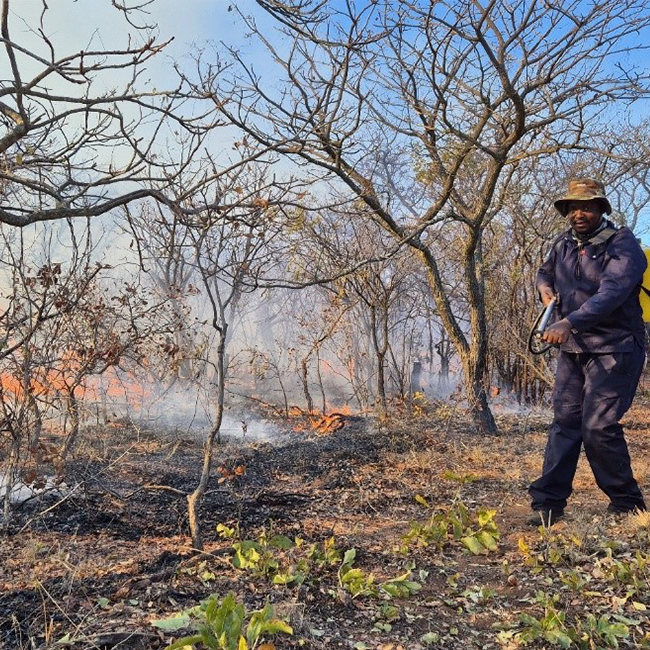
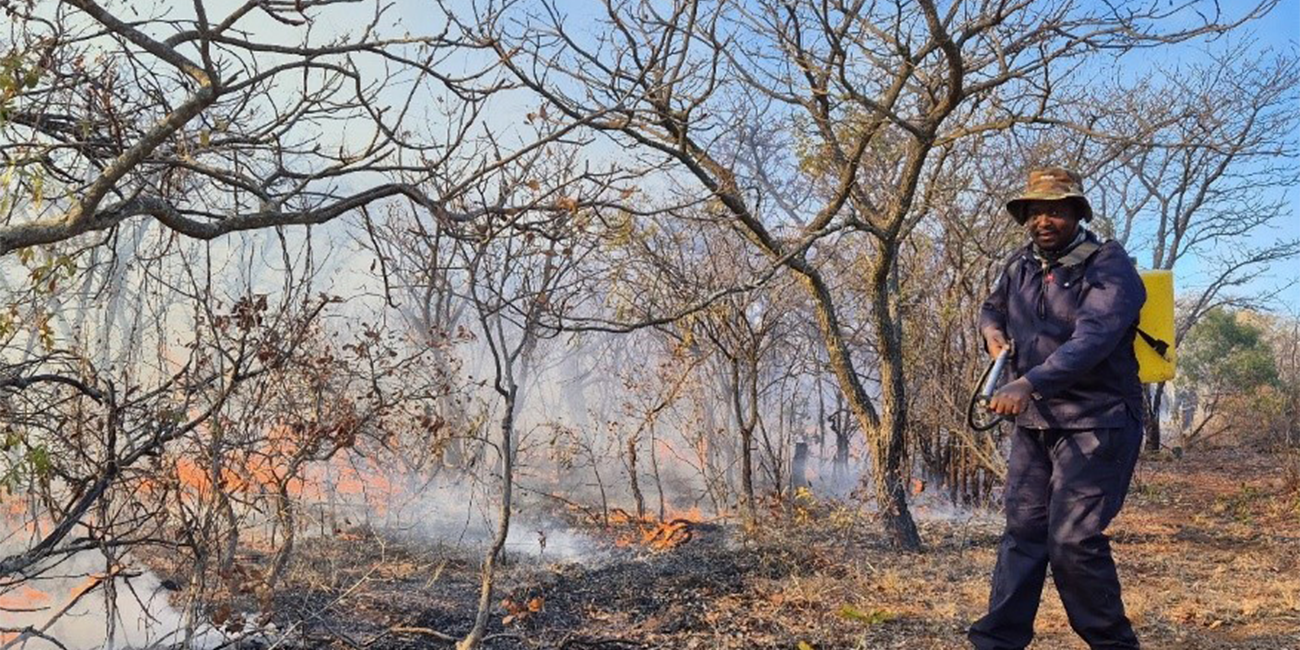
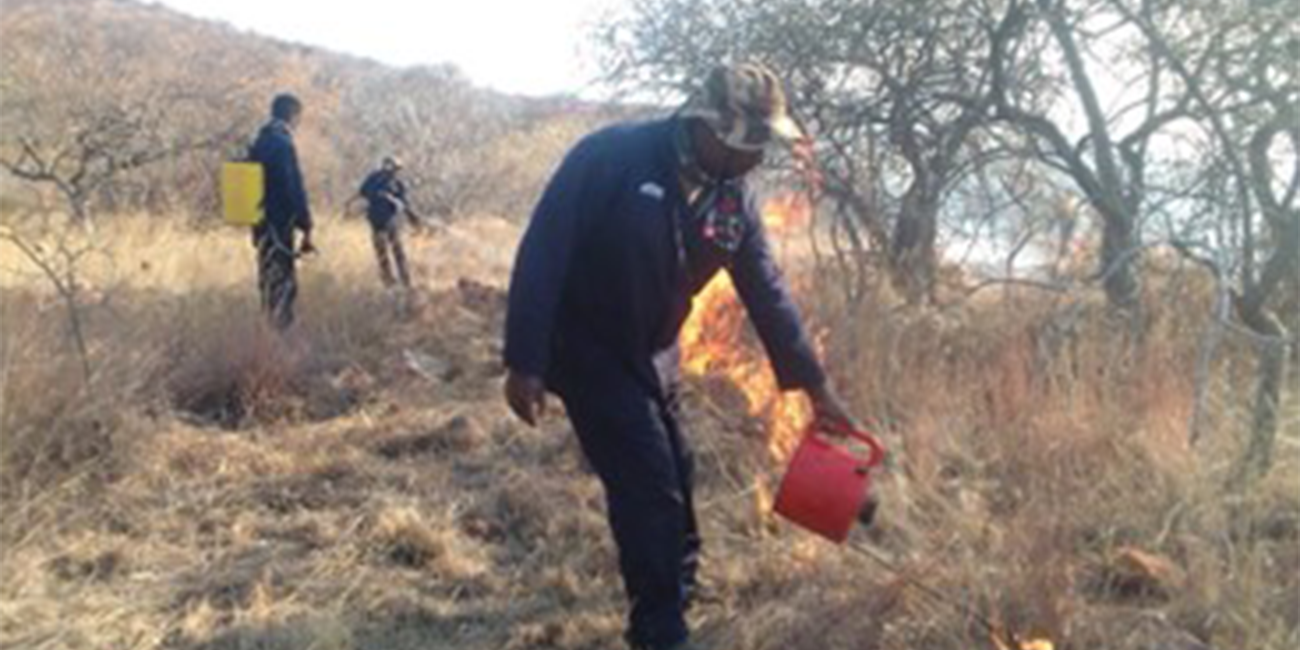
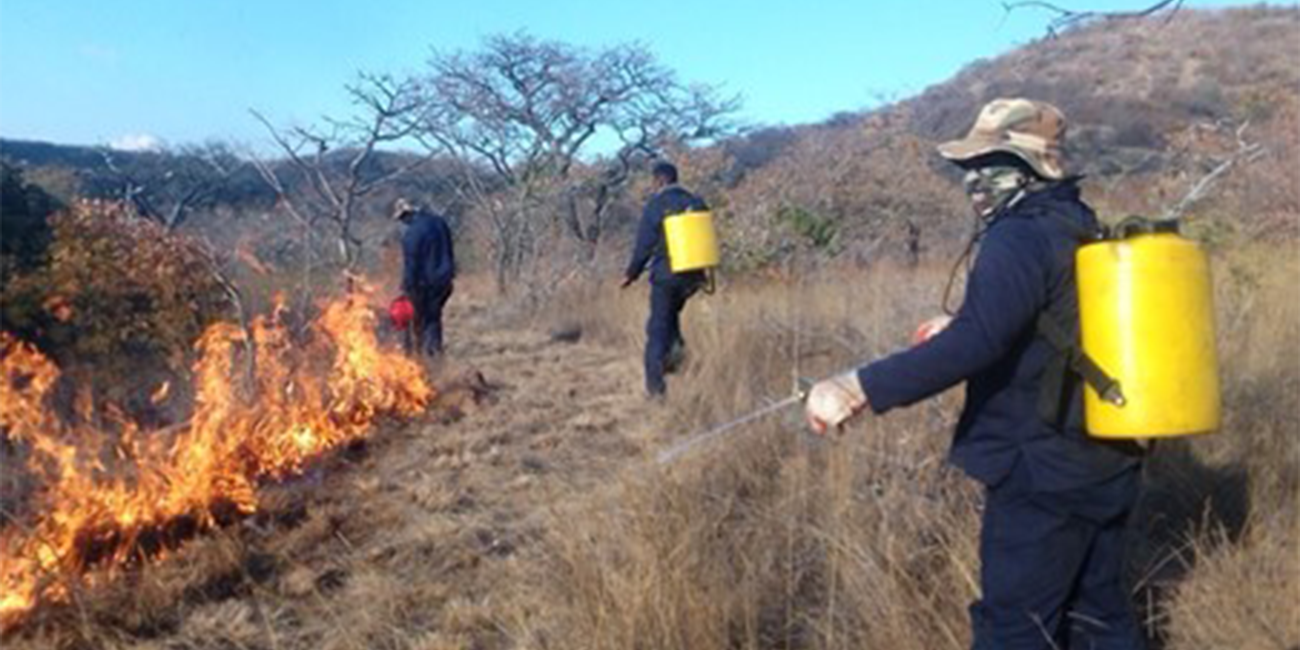
The SPA team burning firebreaks on Medike to safeguard vulnerable infrastructure against potential unplanned fires, and to prepare for a large management burn planned for later this year. The team did exceptionally well under often very difficult circumstances, and are now all accomplished firefighters.

  • We are grateful to Jonsson for sponsoring the fire-resistant overalls, which were tested to their max.