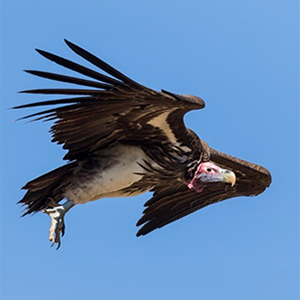
International Vulture Awareness Day is marked annually in September to raise awareness about a species that is often maligned despite their vital contribution to maintaining the health of ecosystems.
Known as nature’s cleanup crew or garbage collectors, vultures play a crucial role preserve the balance of our environment by disposing of carcasses and likely preventing the spread of disease. The benefits they provide go even further.
Vulture populations have plummeted across their range in recent years, with some species now listed as Critically Endangered. To ensure the future survival of this key species, a Multi-species Action Plan to Conserve African-Eurasian Vultures (Vulture MsAP) was released under the Convention on the Conservation of Migratory Species of Wild Animals (CMS) in 2017. Its main aims are to identify and implement key conservation actions designed to reverse recent population trends and restore the conservation status of each species to a favourable level and to provide conservation management guidelines applicable to all Range States within the plan’s scope. This includes South Africa.
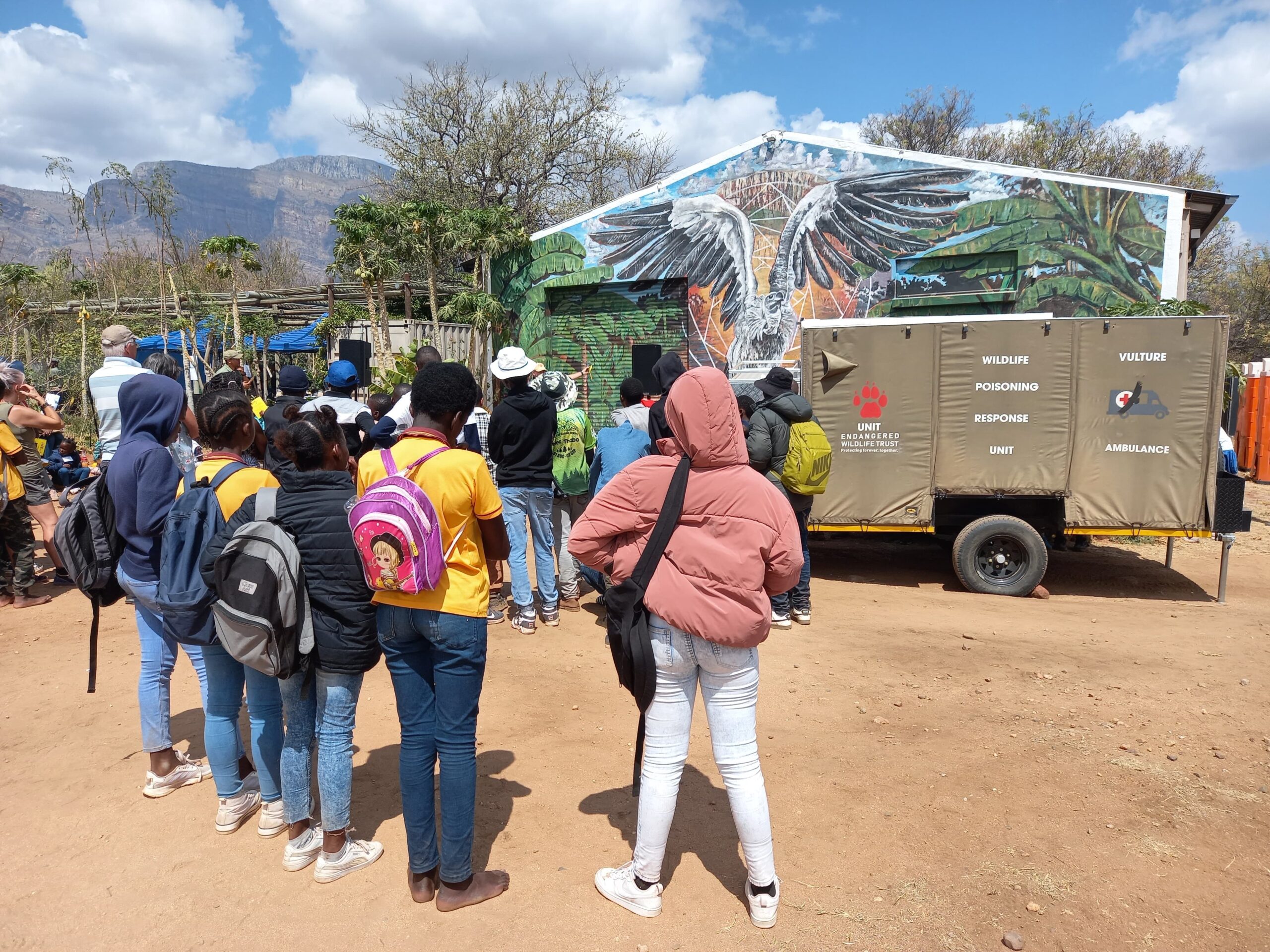
The Endangered Wildlife Trust plays an important role within South Africa, and Africa, to protect vultures for their most common threat – poisoning.
Through our work, we not only monitor and track all vulture species within the southern African region, but also implement a number of applied interventions to conserve the Old World Vulture Species found in South Africa. Of the 11 Old World Vultures found in Africa, seven are on the verge of extinction. These include the breeding resident White-backed Vulture, Hooded Vulture, White-headed Vulture, Cape Vulture, Lapet-faced and the vagrant, less common Egyptian Vulture, as well as the Rüppell’s Vulture.
Besides addressing the increasing threat of wildlife poisoning, our work keeps in mind the situation that arose in India in the 1990’s when the local vulture population plummeted by 95% after vultures fed on livestock carcasses that contained and anti-inflammatory drug used to treat pain and inflammation in animals and people. All vultures died soon after feeding on the tainted carcasses and local scientists attributed their deaths to kidney failure caused by the effects of the drug diclofenac.
The near extinction of vultures in this region led to the death of nearly half a million people in subsequent years, because without these natural scavengers, carcasses pile up, and diseases including rabies spread more prolifically.
In South Africa, wildlife poisoning has become an increasingly prevalent and destructive threat over the last decade. Although this has for a long time been an under-studied and poorly-known concern, more recently, the severity of this has become more topical, particularly with the impacts on large carnivore populations being more notable. With a shift to more targeted poisonings that have a higher impact on these the charismatic species, the conservation focus has shifted to a point where the need to respond and deal with these incidents is finally getting more attention.
A sad outcome of much of this is that many species of avian scavengers, such as vultures, Tawny Eagle and Bateleur, have become the innocent bystanders caught in the crossfire. For most of these species, wildlife poisoning has become the most significant threat to their long-term survival. Unlike many other forms of poaching, just a handful of large events may be enough to cause a sever reduction in the population, particularly if no interventions are put in place.
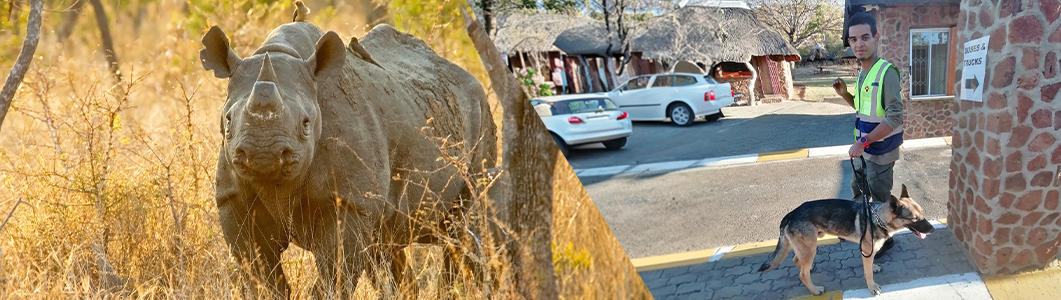
The EWT’s Birds of Prey and Vultures for Africa Programmes focusses much of their work on developing key interventions that assist in reducing the severity of these losses. Although these by no means represent an exhaustive approach to solving the issue, there is little doubt that each of these instances provides another tool to work towards the long-term protection of avian scavengers from poisoning.