Small Hands, Big Impact: A Greener Future for Lesotho

Small Hands, Big Impact: A Greener Future for Lesotho


Small Hands, Big Impact: A Greener Future for Lesotho

Children Lead the Charge in Conservation Efforts

By Danielle du Toit, Field Officer: Birds of Prey Programme


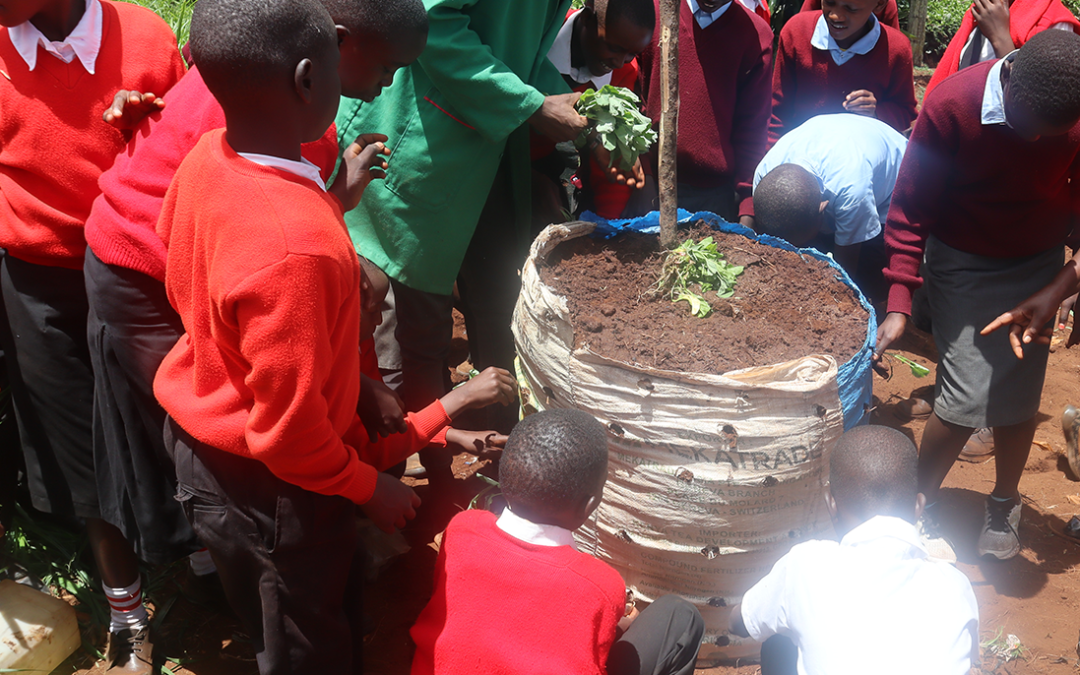
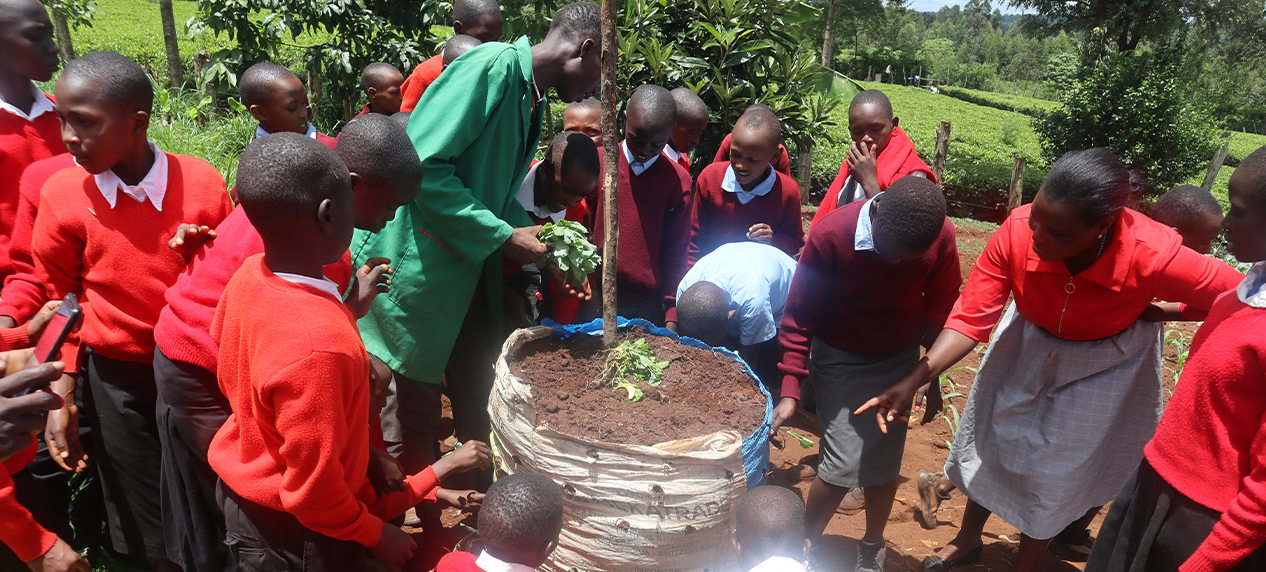
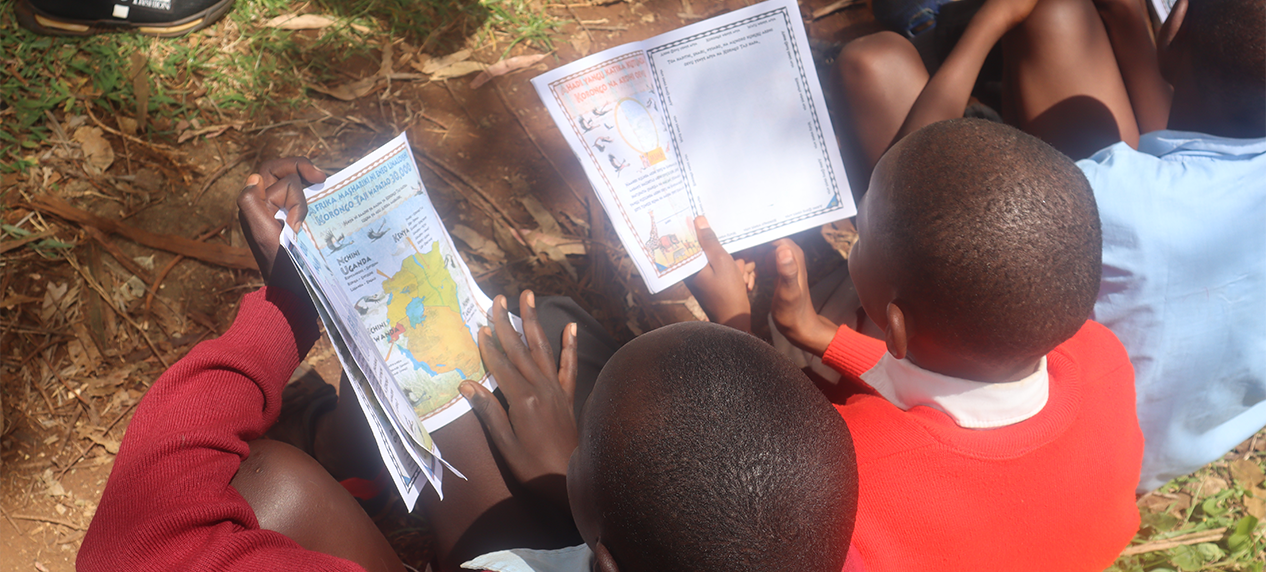
A three-day inititiative by the EWT in October brought together 65 young conservationists from grades four to six in Molumong village, Lesotho.

Led by Danielle du Toit (EWT Birds of Prey) and Mapeseka Makaoae (Bearded Vulture Recovery Programme Community Liaison), the children joined a litter cleanup aimed at fostering a cleaner, healthier environment for their community and local wildlife.

Supported by the Lesotho Highlands Development Authority (LHDA), the cleanup was initially planned to focus on rivers and waterways. However, a last-minute cancellation of transport shifted efforts to the school grounds and nearby mountain slopes, areas where litter risks flowing into rivers. Over three days, the children collected an impressive 96 bags of litter—38 on Monday, 20 on Tuesday, and 38 on Wednesday. The waste, primarily plastic packaging and tins, highlights a pressing need for proper refuse management in the village.

To address this, LHDA has committed to providing at least three rubbish bins for the school, with plans for additional bins in the broader community. Efforts are also underway to establish a regular refuse removal service to ensure long-term cleanliness.


Connecting Litter Cleanup to Vulture Conservation


The cleanup is closely tied to the broader conservation efforts for the Endangered Bearded Vulture, a species whose survival depends on the region’s health and cleanliness. In collaboration with Wildlife ACT and the Bearded Vulture Recovery Programme, a feeding site has been established to provide critical food sources for these rare birds whose diet consists largely of bones. The site, designed following strict vulture restaurant guidelines, includes fencing to deter scavengers and camera traps to monitor activity.

To complement this, a vulture hide—a small, unobtrusive structure—has been constructed to promote eco-tourism and provide researchers with a unique opportunity to study the species up close. This hide benefits the community by attracting visitors, creating opportunities for environmental education, and fostering a deeper appreciation for the role vultures play in maintaining ecosystems.


Nature’s Cleanup Crew Meets Future Conservationists


The litter cleanup served a dual purpose: improving community health by reducing waste and emphasising the ecological importance of vultures, often called nature’s “clean-up crew.” Through hands-on participation, children learned about the interconnectedness of their actions, local wildlife, and the environment, fostering a sense of responsibility and pride in protecting their natural heritage.

With such impactful initiatives, the future of conservation in Lesotho looks brighter—and it starts with small hands making a big difference.


Welgevonden Facility Expands for Cheetah Success

Welgevonden Facility Expands for Cheetah Success


Welgevonden Facility Expands for Cheetah Success


In 2021 the Carnivore Range Expansion Project in partnership with Welgevonden Game Reserve developed a state-of-the-art Wild Dog holding facility. This facility has since been the temporary home for 40 Wild Dogs during relocations within southern Africa. It has also facilitated the international export of 22 Wild Dogs and the international import of 12, thus enabling the reestablishment of the species to five protected areas. Based on this success we’ve been kindly granted funds from Paul L King to expand this facility to create an additional holding camp – this one more specifically geared towards cheetahs.

Field Officer, Eugene Greyling, worked meticulously in recent months managing the building team onsite to ensure that the facility met the highest possible standard. While the holding process is an integral part of both Cheetah and Wild Dog relocations, we strive to ensure that we can provide the best possible care and reduce stress as much as possible for each animal. The recently-completed Cheetah holding facility will do just that.

Flood Brings Frogs to Life at Medike

Flood Brings Frogs to Life at Medike


Flood Brings Frogs to Life at Medike

By Darren Pieterse, Medike Nature Reserve and Ecology Manager: Soutpansberg Protected Area

Following the recent good rains on the EWT Medike Reserve and the Soutpansberg in general, the Sand River came down in flood for the first time in two years. Almost instantly, a cacophony of amphibian calls accompanied the rising water level. Amphibians are well-known to rapidly take advantage of suitable conditions for breeding, as they never know when the next opportunity may occur, and most species’ eggs and tadpoles are reliant on water to complete their initial life stage (until they metamorphosise into terrestrial froglets that are less reliant on water). Calls are useful for researchers as each species’ call is unique, although some species, such as Tandy’s, Tremolo and Cryptic Sand Frogs, cannot be reliably told apart based on external characteristics. This means that calls or DNA are required to make a positive identification.

Amphibians play a critical role in the ecosystem. They mostly prey on insects such as the flying ants, which abounded during our survey. They, in turn, are eaten by a variety of mammals, birds and snakes. Amphibians are also a good indicator of ecosystem health. Because frog skin is very porous to allow water to be absorbed and carbon dioxide to be released (the skin of toads is less porous), frogs are sensitive to chemicals such as industrial pollutants. As such, frogs are rarely found in areas with chemical pollution.

The recent onset of frog activity was an ideal opportunity for us to assess what species occur on Medike Reserve, and to get an indication of ecosystem health. During our survey, we recorded 14 different species (although the reserve’s list currently stands at 23 species). None of the species recorded are threatened, although the relatively high species diversity does suggest that the freshwater system is still healthy. Two threatened species are expected to occur on Medike Reserve, one of which is only found on the Soutpansberg and nowhere else on earth. We will continue looking for these and additional species.

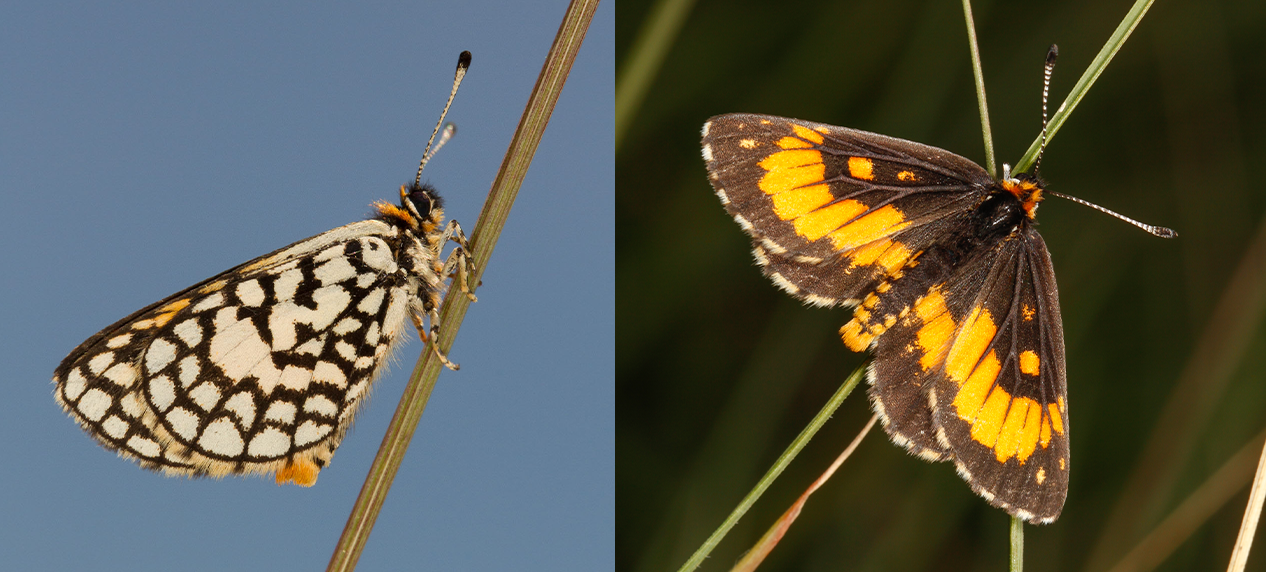
Of the species recorded, the Red-banded Rubber Frog is the most interesting, as it exudes toxins from its skin to dissuade predators from eating it. It advertises its toxic state through its bright black-and-red colouration, known as aposematic colouration. This frog exudes cardiotoxins (toxins that affect the heart) from its skin, so if you’re going to kiss a frog in the hopes that it will become a prince (or princess), it’s probably best not to kiss this frog.

Painted Reed Frog – Hyperolius marmoratus

African Bullfrog – Pyxicephalus edulis

Banded Rubber Frog- Phrynomantis bifasciatus

Plain Grass Frog – Ptychadena anchietae

Bubbling Kassina – Kassina senegalensis

Russet-backed Sand Frog – Tomopterna marmorata

Eastern Red Toad – Schismaderma carens

Southern Foam-nest Frog – Chiromantis xerampelina

Northern Pygmy Toad – Poyntonophrynus fenoulheti

Tremolo Sand Frog – Tomopterna adiastola – Pair in amplexus

Driving half a million kilometres for EWT

Driving half a million kilometres for EWT


Driving half a million kilometres for EWT

By Ronelle Visagie, Field Officer: Birds of Prey Programme & Wildlife & Energy Programme

During September 2005 I started working for the EWT’s Birds of Prey Programme in the Karoo. It was in these beginning years that I drove a Nissan 1400 bakkie for nearly 3 years. The main purpose of the Project at that time was to engage with the farmers regarding the raptors at their farms. It was also expected of field officers to do all power line investigations in our area. I used to drive to a farm and then the farmer had to take me to where I had to work.


During February 2008 I did the first raptor monitoring with the support of the Nissan 1400 in Mokala National Park near Kimberley. The vehicle was too low and too small for driving off-road, but somehow, I managed. Returning from a trip to the Kgalagadi National Park the same month, I collided with a kudu on the gravel road between Prieska and Strydenburg. Fortunately, I sustained no injuries, but there was R22,000 damage to the Nissan. I had driven 27 126 km with the Nissan before the EWT supplied with a Mazda BT50 sponsored by Mazda with 37 805 km on the clock. The very reliable Mazda retired at 431 886 km after many memory-making adventures in the Karoo and Kalahari as we crossed the landscape for 15 years. Just imagine doing vulture nest monitoring in the Kalahari sand with a 2 x 4 and getting stuck on each and every survey.


During November 2022 I received the Ford Ranger 4 X 4 and the adventures continued. At least I do not get stuck in the Kalahari sand anymore! During July 2023 a small rhino calf that was deserted by its mother hit the left back door – in case you wondered why there is a picture of a rhino alongside a vulture and an eagle on the left back door.

The 500 000 km mark was reached during the vulture ringing week in the larger Kimberley area in October 2024. As I do a lot of field work for the Birds of Prey and Wildlife and Energy Programmes, I do travel a lot in the Northern and Eastern Cape and also in the Orange Free State. Now the challenge is on for one of my colleagues at the EWT to reach half a million km!


Determining how Elephant impact on Vulture breeding sites in the Limpopo River valley: new research

Determining how Elephant impact on Vulture breeding sites in the Limpopo River valley: new research

Determining how Elephant impact on Vulture breeding sites in the Limpopo River valley: new research

By John Davies, Birds of Prey Programme project coordinator: Raptor Conservation Project


“Go to the banks of the great grey-green, greasy Limpopo River, all set about with fever trees, and find out.” These iconic words, published over 120 prior, are always in the back of my mind when travelling to this incredible part of South Africa.

It is in some ways a surprise that the Limpopo Valley, particulary the region lying to the west of the world-renowned Greater Mapungubwe Transfrontier Conservation Area, is still so poorly known. Perhaps this has been one of the saving graces for many of the species that call it home, resulting in little disturbance throughout certain areas.

A standout feature here are the large tracts of Ana trees dotting the islands and the banks of the Limpopo River, forming ancient forests that form an important habitat for breeding White-backed Vultures, Pel’s Fishing Owls, and is even one of the only breeding sites for Marabou Stalks in the country.

Recently, I had the opportunity to spend time with Dr Sarah Venter from the Baobab Foundation to do a preliminary investigation on the impacts that Elephant populations are having on these trees. I travelled up to meet Dr Venter in the Soutpansberg, before driving down to Ratho Bush camp. Following our arrival, we immediately spent the last part of the day searching for any Vulture nest trees, looking at whether the nest is active or not, and how much bark has been stripped from the trunk. Fortunately, many of the trees here, and a few on other properties, have had mesh wrapped around their trunks to protect them, and although this is an effective way of reducing bark stripping, it is of course not possible to do this for every tree. The recent drought in Botswana appears to have exacerbated the situation, and a similar trend has started to emerge throughout the area we visited, with landowners also expressing concern about this.

Over the next few days were spent our time walking significant tracts of river, and although it was an amazing experience, it was incredibly alarming to see how serious the situation is, with a large proportion of un-meshed trees having either large parts of their trunks debarked, or completely ring-barked. This is an inevitable precursor to these river giants’ eventual demise.

Considering the threats that species such as White-backed Vultures face at present, particularly with wildlife poisoning taking its toll on the population at a continental level, the risk of losing significant tracts of suitable breeding habitat is not something that can easily be ignored. Although this visit opens the conversation around the next steps to mitigate the loss of riparian forest in the region, there is still a significant amount of work lying ahead before we can start to restore this fragile habitat to its former glory.