SUBURBAN BLISS FOR BIODIVERSITY
Dominic Henry, Ecological Modelling Specialist, EWT Conservation Science Unit (CSU)
Reference: Chamberlain, D.E., Reynolds, C., Amar, A., Henry, D.A.W., Caprio, E. & Batáry. 2020. Wealth, water and wildlife: landscape aridity intensifies the urban Luxury Effect. Global Ecology & Biogeography. https://onlinelibrary.wiley.com/doi/full/10.1111/geb.13122
Biodiversity plays an important role in urban ecosystems and restricted access to it can profoundly affect human wellbeing. Unfortunately, urban dwellers rarely have equal access to biodiversity. Ecologists studying urban ecosystems have in many cases revealed a pattern whereby wealthier neighbourhoods in many cities have higher levels of biodiversity than poorer areas – a phenomenon that scientists have called the “Luxury Effect”. The Luxury Effect is indicative of environmental injustice, as the benefits associated with biodiversity are not shared equitably across society.
A new study published in Global Ecology & Biogeography by an international team of scientists from the University of Turin in Italy, the University of Cape Town and the University of Witwatersrand in South Africa, and the Centre for Ecological Research in Hungary, and co-authored by EWT staff member Dominic Henry, conducted a meta-analysis (an analysis that combines the results of multiple scientific studies) to determine the generality of the Luxury Effect and identify factors that drive variation in this pattern. The authors tested the Luxury Effect across 96 studies from around the world that examined the relationship between socioeconomic status and biodiversity.
The authors found that there was a significant positive relationship between terrestrial biodiversity (including the abundance and species richness of plants, birds, reptiles and insects) and the level of wealth in a city, confirming the existence of a global luxury effect. An interesting finding was that this relationship was far more prominent in the drier regions of the world suggesting that the Luxury Effect could partly be driven by water availability. Wealthier people living in more arid regions may invest more in water features, such as ponds or swimming pools, or in irrigation of their gardens and parks. Alternatively, wealthier areas may be associated with wetter areas within these arid landscapes, with higher property prices associated with lakes, rivers, or other wetland features.
The relevance of this finding in a South African context is profound given how city planning under the apartheid government fell along racial lines. Within cities, most black South Africans continue to live on the periphery in areas where the land is degraded, and often within close proximity to industrial sites where access to clean air and water are limited. Understanding the finer details of the mechanisms that drive and maintain the Luxury Effect can help with the creation of more equitable cities in the future. Acknowledging that access to biodiversity is an incredibly important part of our lives can help facilitate the management of urban areas to make access to the benefits of biodiversity more equal across the socioeconomic spectrum.
CONSERVATION CHAMPION: IRENE AMIET
Alison Janicke, EWT Head of Resource Development, alisonj@ewt.org.za
Irene Amiet is a freelance writer and internationally renowned photographer. A native of Basel, Switzerland, Irene currently lives Ribble Valley in Lancashire, UK.
Irene has volunteered and worked on exciting projects all over the world, including research on Leatherback Turtles in Panama and big cat density research in Limpopo, working as a correspondent for Coast Magazine and running an online blog on outdoor photography for the Galveston Daily News in Texas. In addition to a large variety of images featured internationally, Irene has also produced breath-taking collections of images, such as that entitled “Avian Ballet”, which captures the dance-like performances of wading birds’ in their natural seagrass habitats, and “Love Letters From Africa”, a coffee table book of wildlife and nature in Southern Africa, with diary extracts from Irene Amiet. All proceeds of the sale of this book will go to the Endangered Wildlife Trust, South Africa.
As a nature and wildlife photographer, I believe it’s a duty to give back a little towards conservation efforts. The regions I’ve been privileged to live and work in are closest to my heart and as I know the grassroots conservationists personally, I am convinced their work makes a difference and can assure you that any moneys raised goes directly into the right hands.
Over the years I have put signature pieces of mine up for sale with the revenue going straight to these organisations.
Irene Amiet
See here for more detail regarding these incredible collections.
CATCHMENTS: WHERE COMMUNITIES AND BIODIVERSITY MEET
Nkosinathi Nama
Nkosinathin@ewt.org.za
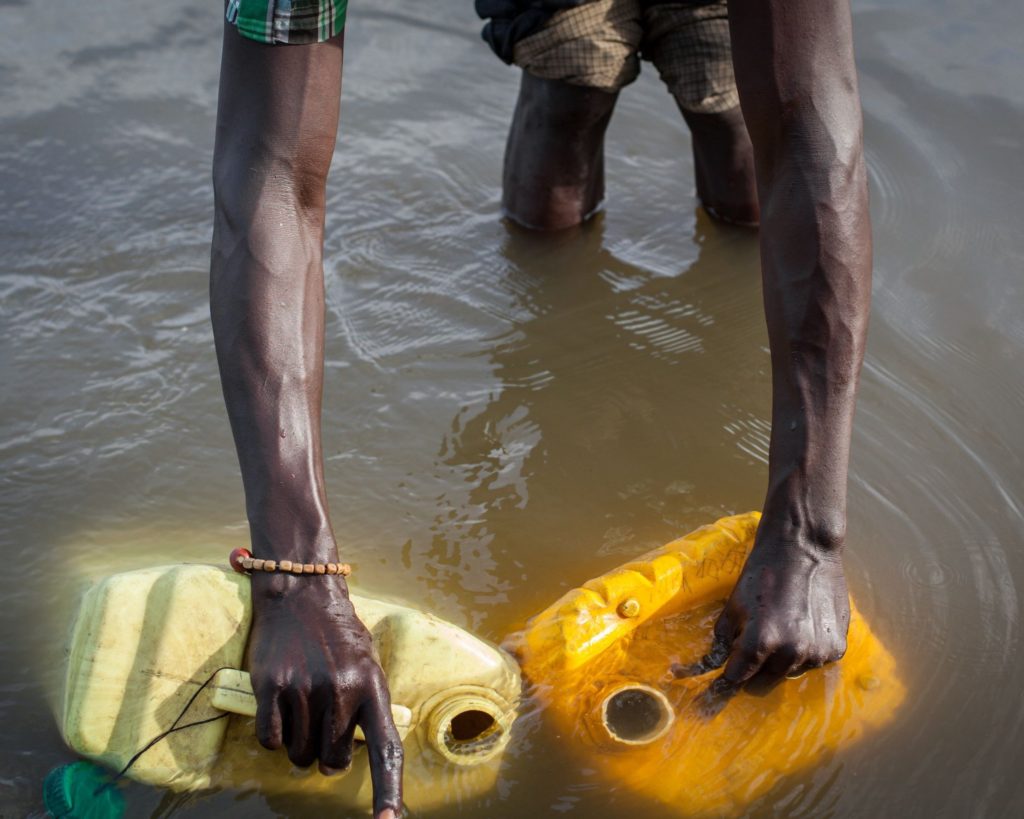
Water is a precious resource and as a water scarce country, South Africa needs to protect and manage its limited water resources, for the benefit of both people and the environment. With a rapidly growing population, emerging economy, and climate change challenges, a holistic approach to the management of our water resources is needed, encompassing social, ecological, and built infrastructure interventions to improve water availability to communities. At the same time, we need to maintain the critical services provided by rivers, wetlands and other aquatic ecosystems as well as biodiversity. These services include the mitigation of drought and floods, which can cost the country billions of Rands and lead to individual hardship and loss of life; reducing soil erosion; keeping our wetlands healthy; mitigating the impacts of pollution; and provision of food, medicine, fibre, building materials, and economic opportunities, including tourism.
Biodiversity is under threat globally with the rate of species loss higher than ever recorded before. Freshwater ecosystems, home to about 40% of fish species globally, are under threat and 20% of freshwater fish species have already gone extinct as a result of pressures such as over-extraction of water from rivers, pollution, overfishing, and climate change. In South Africa, more than 90% of our surface water is depleted or degraded by development or agriculture.
Catchment areas encompass land that is drained by a river and its tributaries, as well as other water runoff. They usually include areas with hills or mountain ranges such as the Drakensberg in KwaZulu-Natal and the Amathole Mountains in the Eastern Cape. Catchments are critical for biodiversity conservation and human survival, but are often severely impacted by mining, agriculture, forestry, and other human activities. To balance competing human needs, catchment management strategies need to take a multi-pronged and holistic approach, as mentioned above, considering both socio-economic and ecological objectives, and ensuring that the needs of communities living within the catchments are met. This approach, putting communities at the centre of biodiversity conservation within catchments, gives these ecosystems their best chance at survival, particularly if people are included in management strategies. Recognising that communities are important custodians of catchment areas, and ultimately of the biodiversity in these areas, the Endangered Wildlife Trust (EWT) has applied this approach in its projects in the Amathole (Eastern Cape Province) and Groot Marico (North West Province) water catchments, as well as through partnerships in the Mzimvubu catchment in KwaZulu-Natal.
The Amathole mountains in the Eastern Cape are recognised as a strategic water source area. Invasive alien vegetation is a significant threat to many of these ecosystems, including the Amathole, where widespread stands of species such as the Black Wattle occur. Indigenous to Australia, and without any natural control agents in South Africa, the Black Wattle is a prominent invader that is costly to manage and poses a serious threat to biodiversity and water provision. The species consumes a substantial amount of water and can alter flow rates of a river. Dense stands growing along river systems can change the ecology of the systems. For example, both water temperature and water chemistry can be altered by the shade of the trees, which in turn affects the diversity of aquatic species.
To address the impacts of Black Wattle and create much needed employment opportunities for people living in the area, the EWT collaborated with the then Department of Environment Affairs (DEA) to train and employ 150 contract workers to clear Black Wattle. The EWT also trained five local entrepreneurs as qualified Natural Resource Management contractors. They received training in computer skills, business management, plant identification, chainsaw operations, basic rangeland management, as well as health and safety, and basic first aid. Through this initiative, the EWT and the then DEA cleared 1,250 hectares of Black Wattle stands in the catchment.
To monitor the impact of alien clearing on the river health in the Amathole Catchment, the EWT implemented a biomonitoring programme in the Tyume River, one of the main rivers in the catchment. Water quality and flow rates are measured throughout the year, together with the status of indigenous and alien fish species.
Indigenous aquatic species act as good indicators of aquatic health, but many are under pressure through human activities. In the Amathole, the introduction of alien fish species such as the rainbow trout has significantly impacted indigenous fish species that they prey on. Biomonitoring has however shown early signs of improvement in the population status of two Endangered freshwater fish species, the Border Barb and the Eastern Cape Rocky, both of which only occur in this region. Local community members have also been trained in ecological monitoring techniques, equipping them to become citizen scientists. Through this and additional training, members of Tyume communities have gained insights into the dynamics of rangelands and aquatic ecosystems, as well as the need to maintain biological diversity.
As with the Border Barb and Eastern Cape Rocky, the Critically Endangered Amathole Toad is endemic, occurring only in the region. The habitat of the Amathole Toad includes Amathole Montane Grassland and Amathole Mistbelt Grassland, both of which are vegetation types that only occur in the Eastern Cape and are classified as ‘Poorly Protected’. The site also supports Drakensberg-Amathole Afromontane Fynbos, which includes patches of unique Fynbos that have not yet been mapped in the Amathole Mountains. The EWT is working with private landowners towards obtaining formal protection of this important habitat and its unique species, which also contributes to securing reliable water provision for the Eastern Cape.
To further support local livelihoods in the Amathole water catchment, the EWT also provides training on climate smart agriculture, soil erosion management, and improved management of livestock. Climate smart agriculture enables farmers to adapt to drought, seasonal fluctuations, and weather patterns, and mitigate risks to their incomes. In the Tyume valley, farmers identified improved husbandry as a critical need to build the resilience and production capacity of their herds, particularly during times of drought. These efforts all contribute to improved natural resource management.
The EWT has also trained former contract workers in beekeeping. The Tyume Valley Beekeepers Association have had four harvests to-date and are collaborating with private landowners in Hogsback to increase the amount of fodder available to the bees. Through this type of valuable local support, the beekeepers will be able to grow a much-needed micro-enterprise and provide quality honey to residents, tourist lodges and other outlets in the Amathole.
By recognising community needs and involving people who live in the Amathole Catchment in conservation management strategies, as well as sharing skills, scientific feedback, and management experiences, the EWT and its partners have developed strategic interventions for improved water and biodiversity management in the region. This critical work cannot be implemented by one organisation alone. We are grateful to the Rand Merchant Bank for financial support of the project, and extend our appreciation for our ongoing partnerships to members of the Amathole Catchment Forum, the Department of Forestry Fisheries and Environment (DFFE, formerly DEA), the Department of Water, Sanitation and Housing, the Dept of Rural Development and Agrarian Reform, and the Amathole Forestry Company, amongst many others.
A WORD FROM THE CEO
Yolan Friedmann, EWT CEO
yolanf@ewt.org.za
In recent weeks there has been a flurry of social media posts around some proposed regulatory changes that would, if implemented, have a significant impact on the future management, wellbeing, and conservation value of our wildlife resources in South Africa. As with all news that goes viral, there will be some elements that are accurate and many that are not. Humans appear to need to amplify hard facts to get the attention that they want and perhaps in this day of extreme media overload and noise, this may well be a relevant strategy. Be that as it may, the EWT prides itself on being a science and fact based organisation whose contributions are credible, meaningful and evidence based. We have been inundated lately with messages across all platforms, asking what we are doing about, and what the public can do about, a series of proposed regulatory changes and the following is a brief description of the issues, our concern and our responses:
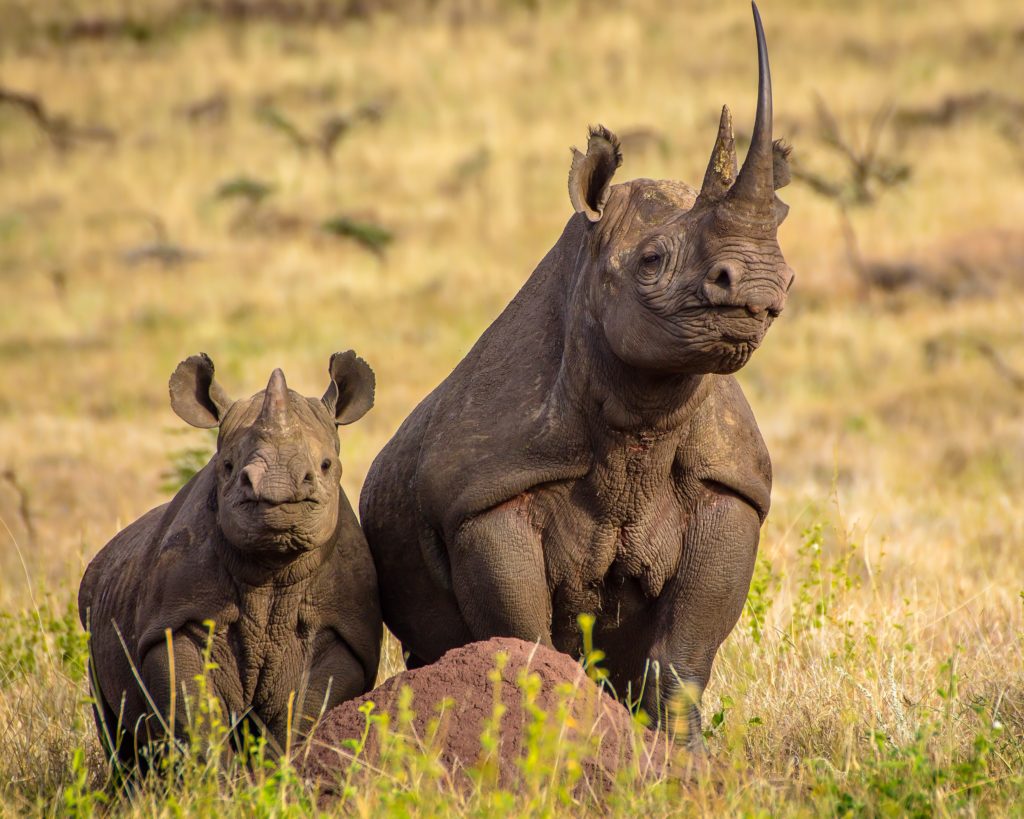
- The Animal Improvement Act – this act promotes the intensive and selective breeding and cross-breeding of animals. On 17 May 2019, a notice was published to include the following species as landrace breeds in terms of this Act: Lechwe, Giraffe, Zebra, White Rhinoceros, Black Rhinoceros, Lion and Cheetah. We have launched an application in the North Gauteng High Court, challenging and seeking the review of the decision to list wild animals in the Animal Improvement Act. Our grounds of review include legitimate concerns regarding the conservation value of breeding animals that are claimed to be genetically superior animals and the possible detrimental impact on natural selection and evolutionary processes.
- The Meat Safety Act – the amendment to the Meat Safety Act as read with the proposed regulations on game meat (if and when they are promulgated) aims to facilitate and regulate the processing of meat from game animals that have been hunted or culled. We have submitted extensive comments to the Department of Agriculture, Land Reform and Rural Development in this regard, holding that while we wholly support the move to create a legal framework to support the commercial sale of game meat from wild animals from natural free-living conditions, we do not support the intensive and selective breeding of wild animals in general, or for commercial meat production specifically.
- The Threatened or Protected Species Regulations of 2007 have been undergoing amendment since March 2015, when the public was afforded an opportunity to comment on proposed amendments. Early in 2020 we received information of the submission of a version of these regulations to the National Council of Provinces for their approval (the 2019 Amendments). We have extensively compared the 2015 version of Amendments with the 2019 version of Amendments, and found well over 200 changes between these two versions, 56 of which are substantial changes in our view. We have written to the Minister of Environment Forestry and Fisheries, raising concern about the lack of public participation in the finalization of the 2019 Amendments, considering this process has taken five years and the two versions are fundamentally different. We are awaiting feedback in this regard.
The EWT has an experienced and highly skilled team of experts who developed our submissions on all of these proposed regulations, and we are vigilantly watching the process to ensure that our concerns, as well as those of several other specialists, are considered. We will keep our readers updated. We cannot guarantee that our opinions will triumph, but our voice will be heard. Your support keeps the EWT in a position to engage with government and hopefully, improve the outcomes to the benefit of our wildlife. Please keep supporting the EWT during these times, every bit helps.Yolan Friedmann
CEO: Endangered Wildlife Trust
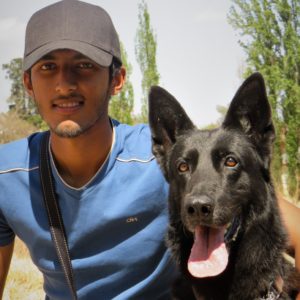
IN MEMORIAM: FAREWELL TO FURY, A CONSERVATION HERO (7 FEBRUARY 2012 – 3 JUNE 2020)
Ndifelani Mulaudzi, Trade Officer, EWT Wildlife in Trade Programme
NdifelaniM@ewt.org.za
Much-loved Conservation Canine, Fury, sadly passed away on 3 June, as a result of complications arising from a twisted spleen, despite his handler and best friend, Shay Seebran, and the vet’s every effort to save him.
Fury, a German Shepherd, was an incredible conservationist, working tirelessly to protect endangered species in many public and private game reserves in South Africa. As a detection dog, he was trained to detect wildlife products such as rhino horn and ivory, as well as arms and ammunition. Over a two-year period, he and Shay conducted 5,213 vehicle searches at 27 gates in 16 game reserves. They also conducted compound, open area and cargo searches at various airports.
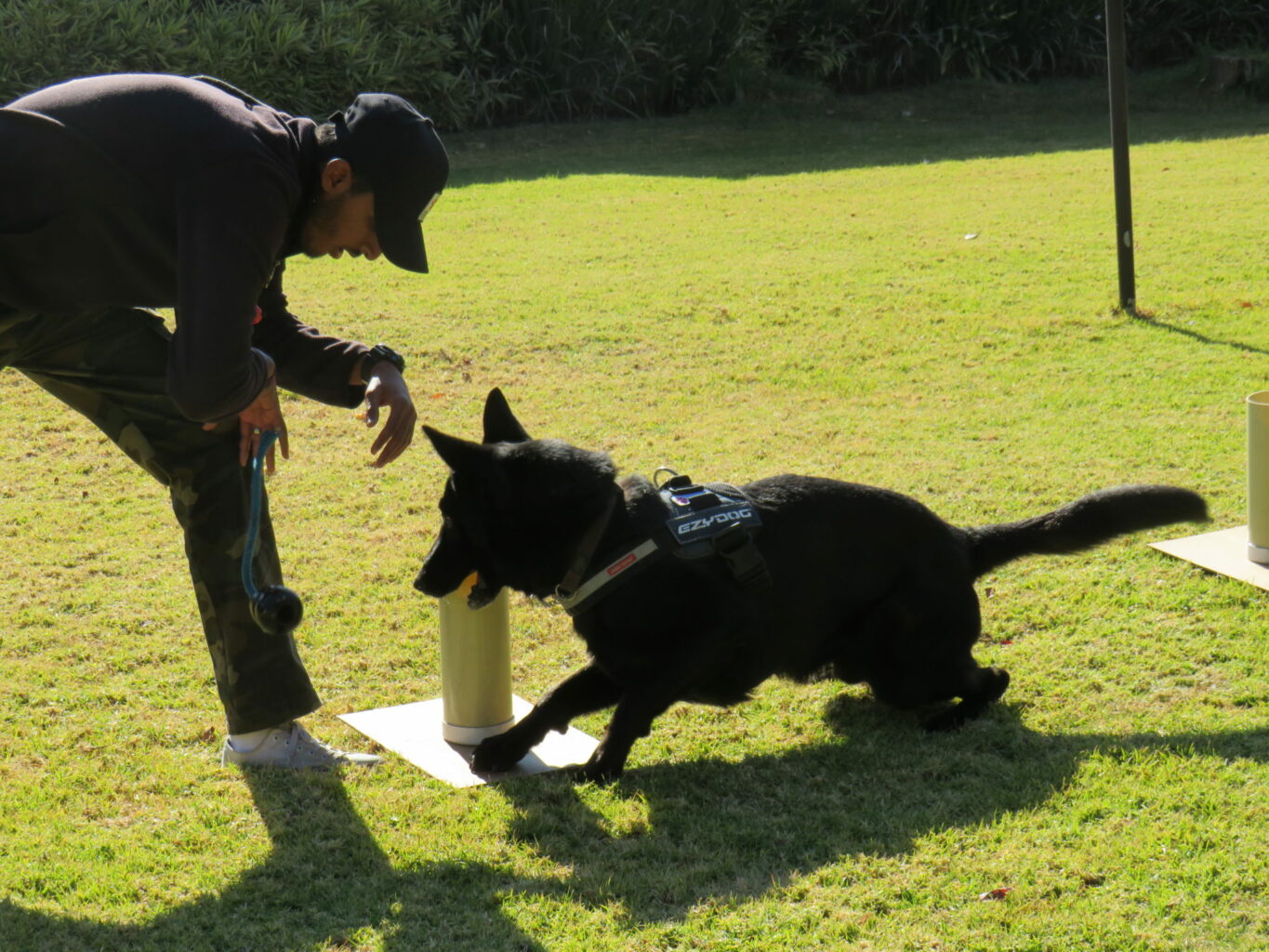
The EWT pays tribute to Conservation Canine Fury for the massive difference he has made with his successful seizures of wildlife contraband and illegal arms and ammunition, helping in the fight against illegal wildlife trade, and preventing many poaching incidents from occurring.
More than that, Fury was a constant companion and partner to Shay, whose life he saved more than once. These best friends had been working and learning together for over two years, travelling South Africa as a team, and spending every moment of their days together, trying to leave a lasting footprint in the anti-poaching world. Shay is devastated by his loss, and says, “The legend may be gone, but certainly not forgotten. I will always appreciate your service, Fury. Rest in power, son.
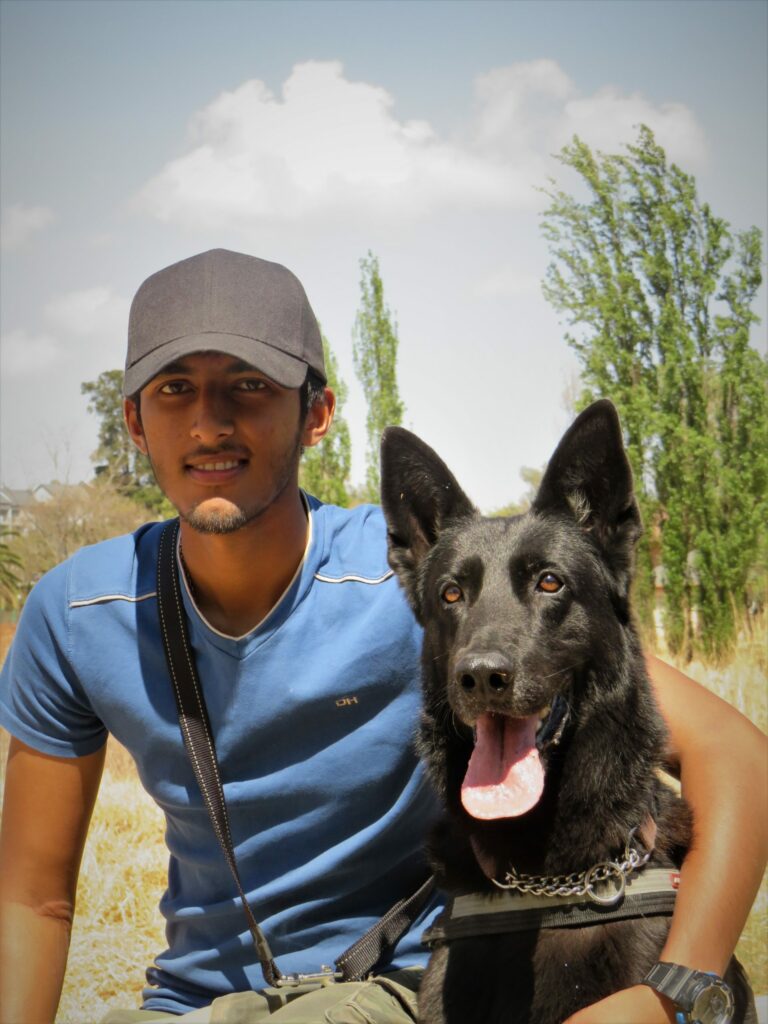
Conservation Canine Fury was indeed a legend, and well-known to many around the world. He has left an amazing legacy behind, to be carried on by many conservationists just like him. He has been laid to rest at his home, the EWT Conservation Campus.
Fury’s work was funded by U.S Fish and Wildlife Service and Tourvest, and supported by Royal Canin and Boehringer-Ingelheim.
