Help African Wild Dogs 

Donate today  

Conservation Champions – Reza Joseph

Conservation Champions – Reza Joseph

CONSERVATION CHAMPIONS – REZA JOSEPH

Tammy Baker, EWT Business Development Officer, tammyb@ewt.org.za

As a conservation NGO, we are reliant on the generosity and efforts of others to keep our staff in the field doing what they do best, conservation in action. Many of our corporate supporters are facing financial challenges as a result of Covid-19, and this affects us significantly. We need support now more than ever and appeal to you to become a Conservation Champion for the EWT by joining our fundraising pack.  

Reza Joseph is the most recent addition to our league of Conservation Champions. 

After following our work and joining our Meet the Cheetahs Wild Chat, Reza realised how important the conservation of this cat is and launched a Back A Buddy campaign to raise funds for the relocation of Cheetah back onto Rietvlei Reserve. Check out and support Rezas campaign here https://www.backabuddy.co.za/champion/project/cheetah-range-extension-project-rietvlei There are lots of ways in which you can help raise vital funds for conservation, in your own home or community. 

Host an online dinner party or wine tasting just for fun or to celebrate a special occasion donate your birthday to the EWT by asking for contributions instead of gifts, organise a virtual race, or get creative and come up with a fundraising challenge of your own. By challenging yourself, or supporting others who do so, you will help to ensure that our work continues as it should. Its free, and its fun, and you can make a real difference. We need you now more than ever to help us to continue to protect forever, together. To get started, contact Tammy Baker at TammyB@ewt.org.za 

The EWT Forever Forest

The EWT Forever Forest


THE EWT FOREVER FOREST

Over the years the EWT has been the recipient of numerous bequests or legacies.  They have been gratefully received and have often been the reason for our ability to remain so productive during some very tough years. Upon the receipt of any bequest, the EWT management and staff ensure that the surviving families are thanked and acknowledged. However, we have always felt that as an organisation, we would like to do more to celebrate the legacies of life bequeathed to us, and the contribution they make towards protecting forever, together. The purchase of our magnificent forever home, the EWT Conservation Campus, presented an opportunity for us to do more to honour those who have contributed to creating a better future for their loved ones by supporting conservation. This property has allowed us to develop what we call the Forever Forest, where we can pay tribute to those who have committed to leaving a legacy for life, by helping us to protect the incredible wildlife and places that are critical to the future of our planet.

An Uplifting Memorial

Forever Forests are beautiful, tranquil resting places for our loved ones full of trees and life! We plant an indigenous Forever tree, providing a living memorial that will be cared for and continue to grow for generations to come!

Give Back

By planting a Forever Tree, you are giving back to the environment and future generations!

Watch the Tree Grow

Come to the Forever Forest to visit a loved one’s living memorial. We are creating a beautiful, serene space for friends and family to gather, pay tribute, heal, remember, and to celebrate all life. Do you yearn for a better future for your children? Create a Legacy for Life by including the EWT in your will and help us to secure a healthy planet with abundant wildlife, for years to come.

Leading southern African vultures further towards extinction

Leading southern African vultures further towards extinction

LEADING SOUTHERN AFRICAN VULTURES FURTHER TOWARDS EXTINCTION

Lindy Thompson and John Davies, Birds of Prey Programme, Endangered Wildlife Trust

There is over a century’s worth of research on the detrimental effects of lead on animal and human health. When Nile Crocodiles ingest lead fishing weights, it affects their egg development and hatchling health. Vultures that ingest lead fragments from ammunition have been found to have elevated levels of lead in their blood, which affects their health and can cause mortalities. With regards to human health, there is no safe level of lead, it can affect every organ in our bodies, and it can cause anaemia, weakness, kidney damage, and brain damage. People who consume a lot of game meat are at higher risk for lead poisoning, for the same reason that vultures are susceptible to it; venison that was hunted may contain lead fragments from ammunition used. Some European supermarkets now label their venison with lead warnings, or with labels that say they only sell game meat that was not shot using lead ammunition. Denmark (in 1996) and the Netherlands (in 1993) have banned the use of lead shot for all hunting.

Lead poisoning in southern African vultures

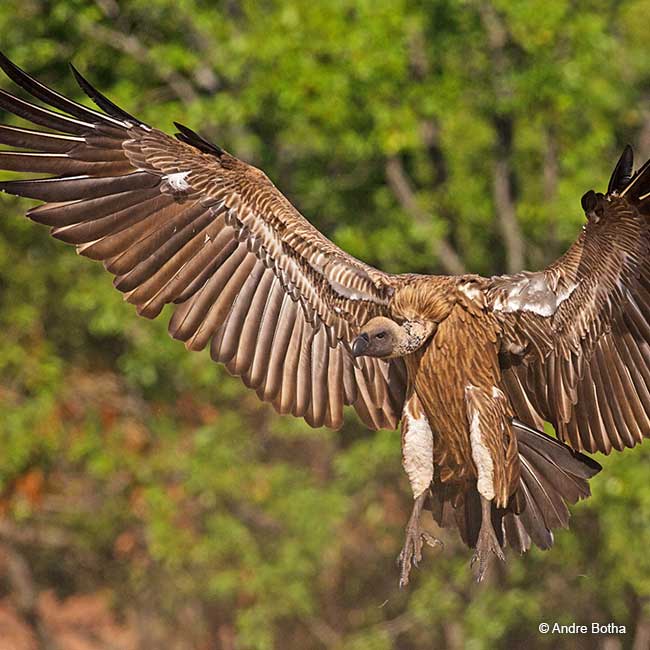
Dr Rebecca Garbett from the University of Cape Town did her PhD study on the link between hunting and elevated blood lead levels in Critically Endangered White-backed Vultures in Botswana. Rebecca looked at the levels of lead in blood, which shows recent exposure to lead. She found that vultures had higher blood lead levels when she trapped them during the hunting season and in hunting areas. Vultures that were trapped and sampled outside the hunting season, and outside hunting areas, had lower lead levels in their blood. Rebecca concluded that African vultures are ingesting fragments of lead from ammunition in carcasses. Linda van den Heever from Birdlife South Africa also did a study on lead in vultures for her Honours project in South Africa. Linda found that scavenging birds (including vultures) had higher levels of lead than non-scavenging birds, most likely because scavenging birds are exposed to lead from fragments of bullets in carcasses that they eat, whereas non-scavengers do not feed on carrion, and are therefore not exposed to lead from ammunition. Linda also found that nestling vultures have high levels of lead in their blood, and these birds have not even left their nests yet, so they are most likely getting the lead in the food that their parents bring them, which contains lead fragments from ammunition.

Regulation of lead use

The use of lead in industry and commerce is regulated, whereas the use of lead in ammunition is not, which means that lead is released into the environment via ammunition, without regulation, and the lead fragments that remain in the environment leave a toxic legacy. South Africa is a signatory to the Convention on Migratory Species, which in 2014 called on all parties to “phase-out the use of lead ammunition across all habitats, wetland and terrestrial”. The Department of Environment, Forestry, and Fisheries recently established a National Lead Task Team, with representatives from provincial conservation authorities, non-governmental nature conservation organisations, and the hunting community. These different stakeholders share a long-term interest in the conservation of wildlife, and are working together to ensure the increased use of lead-alternatives. If achieved, this will lead to more sustainable hunting and fishing, jobs based on ethical hunting and tourism, and venison that is safer to eat.

Conservation organisations are also working together to implement Vulture Safe Zones in South Africa. Vulture Safe Zones were successfully used in south-eastern Asia after the Asian Vulture Crisis of the 1990s, which resulted from just one threat. When injured or arthritic, livestock was commonly treated with Diclofenac, which turned out to be lethal to vultures who fed on the carcasses of treated animals. In Africa, vultures face numerous threats, including lead poisoning. On properties that fall within important breeding and foraging areas for vultures, and where the landowners are keen to be included in the Vulture Safe Zones, we are engaging with them to remove all anthropogenic threats to vultures on their land, including lead.

Lead poisoning is just one of the threats that vultures, and other wildlife, face, but evidence shows that we can successfully address it. If hunters and anglers no longer used lead ammunition and lead weights, it would make a significant difference to the health and survival of wild animals, including Critically Endangered scavenging birds such as vultures. Changing the tradition of using lead ammunition will be challenging and lengthy, but if we care about our wildlife and our own health, we need to do it.

References:

Garbett, R. et al. (2018) Science of the Total Environment 630:1654-1665.

Van den Heever, L. et al. (2019) Science of the Total Environment 669:471-480

 

Remembering David Haddon Mitchell

Remembering David Haddon Mitchell


REMEMBERING DAVID HADDON MITCHELL

Alison Janicke, EWT Head of Resource Development, alisonj@ewt.org.za

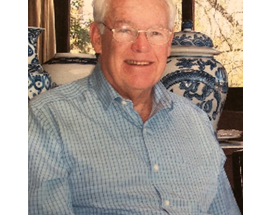
David Mitchell was born in Johannesburg on 3 September 1933 and educated at St Johns Preparatory School, Hilton College, and the University of Witwatersrand. 

David not only served as a Trustee for the Endangered Wildlife Trust from 1978 to 2013 but was Chairman of the board in the 1980s. Davids career in the building industry, combined with his passion for conservation and the work of the EWT, saw his active involvement in the building of the EWTs Johannesburg Zoo Head Office, where we spent many wonderful and memorable years.  

David was a loyal supporter and contributor to the work and achievements of the EWT, and we will be forever grateful for the legacy of life he left for conservation. We would like to extend our sincere condolences to his loved ones.  

Is there a place for gender in conservation?

Is there a place for gender in conservation?


IS THERE A PLACE FOR GENDER IN CONSERVATION?

Megan Murison, Endangered Wildlife Trust Communications Officer, meganm@ewt.org.za

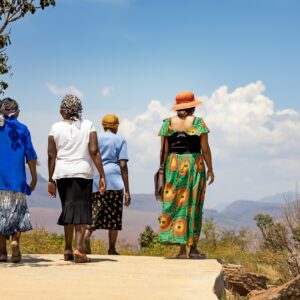
Why should we, as conservationists, be concerned about gender issues? If our mandate is species and habitat conservation, why and how do we incorporate gender without overstepping our mark? While it may appear to some as if gender and conservation are two completely isolated topics, the nexus between the two is undeniable. Gender inequality and environmental degradation have been linked – in areas where human inequality is high, so is ecological degradation. The impact that gender has on conservation should not be understated nor ignored.

So, what is gender? Unlike the biology of the different sexes, gender roles, behaviours, and the relations between women and men are dynamic. Gender is quite complicated, as it determines the socially constructed assigned roles, practices and opportunities given to certain genders by society. It is also essential to note that gender issues do not mean women issues, and we must try to understand the needs of all members of communities we work with, both men and women.

Our understanding of the connections between gender and the environment is broadening as more research is bringing women into the dialogues around resource use, indigenous knowledge, and decision-making processes. Gender plays a massive role in how women and men interact with the environment around them, concerning land, resource rights, career advancement, salary opportunities at work, and opportunities to participate in and influence decision-making processes.

But why should we, as conservation organisations, care? Long-term outcomes. Women account for 50% of the population, and their voices (knowledge, opinions, experiences, perspectives) need to be included in the conservation conversation. If we were to only listen to 50% of stakeholders, our actions would never be effective or sustainable. They may even cause other harmful effects. A study by Leisher et al. (2016) shows how the inclusivity of women in forest and fishery management groups had positive impacts on conservation targets in these sectors.

Another example is the plight of period poverty. Period poverty is a global sanitation issue and a barrier to the education of girl children. Sanitation and water use are linked, and the link with education may not be as obvious but understanding this link is vital for any progress to be made. Overall, including women and providing for and enabling equal rights and opportunities for basic education, positive progress can be made on environmental issues such as climate change and climate resilience, family planning, habitat resilience, and equality in the greater social community. As they say, knowledge is power.

Conservation initiatives should not be limited in scope and consideration to species and habitats, but also give voice to gender equality and equity issues. We as conservation organisations need to effectively include gender in all of our dialogues, as without the active, equal participation of women and men in all aspects of the work we pride ourselves on, we will never be able to move forward.