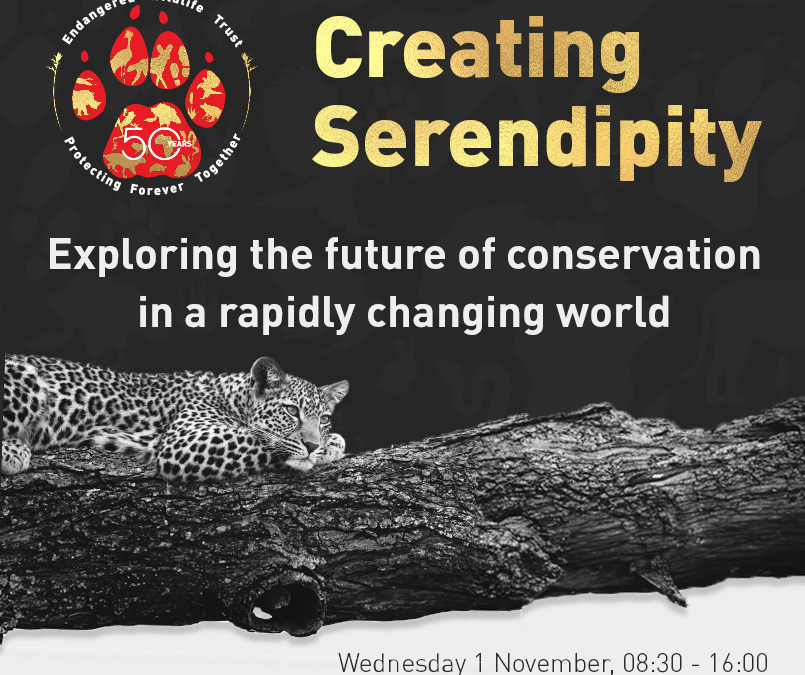
The EWT is celebrating its 50th anniversary as one of South Africa’s leading conservation NGOs and as part of the celebration, we are hosting a day of inspirational and forward-thinking discussions to spark creative ideas about the future of conservation in Africa. We have a line-up of thought-provoking presenters and panelists from a multitude of traditionally non-conservation sectors, to stimulate debate and leverage creative thinking within the conservation realm. We aim to open the minds and challenge the mindsets of conservationists attending the event and to unlock partnership opportunities to catapult us into the next era of conservation practice.
Conservationists recognise the influence of all sectors as drivers impacting the natural world. As such, we will be exploring the knowledge and experience of experts across various sectors including economics, agriculture, mining, sustainability, information technology, artificial intelligence, and innovation through the eyes of specialists and futurists. Through this assembled expertise and via facilitated discussions, we will distil a new way of thinking about the future for the strategic conservation of our wildlife and wild places over the next few decades, in a rapidly changing world.
Join us for an exploration of the possibilities, opportunities & synergies in the next era of conservation practice.
#THENEXT50
RSVP: by 20 October 2023 Click here
08:30-16:00 formal proceedings, 16:00-19:00 cocktail event
Join us afterward for some fantastic live music, great Painted Wolf wines, and beautiful art by Alice van Jaarsveld.
————-
The great minds that will spark our creative thinking
Thomas Fowler is the Chief Technology Officer at CloudSmiths and was the founder and CEO of DotModus.
Valli Moosa is the former minister of the Department of Environment and Tourism, and the former president of the IUCN. He was also the non-executive chairman of Eskom, Sun International, and Anglo America Platinum and more recently the Deputy Chairperson of the PCC.
Brian Mantlana joined the Council for Scientific and Industrial Research (CSIR) in 2017, where he now leads the Holistic Climate Change Impact area. Prior to this, he worked at SANBI and the Department of Environmental Affairs.
Toby Shapshak is editor-in-chief of Stuff and publisher of Scrolla.Africa, a Forbes senior contributor and a columnist for the Financial Mail and Daily Maverick.
Bronwyn Williams is a futurist, economist, strategist, and business trend analyst. She is also an avid reader and a published writer.
Isaah Mhlanga is the chief economist and head of research at Rand Merchant Bank.
Martin Potgieter is a Director, Natural Capitalist, Investor, and Environmentalist at Rand Merchant Bank
Lesego Rammusi has worked as the sustainability manager at Esiswe Mining Company, as the Environmental and Social Specialist at the Land and Agricultural Development Bank of South Africa, and is currently the head of environmental and Social Sustainability at ABSA.
Sameera Munshi is the Operations Manager at the global Anglo-American Foundation, which is on a mission to empower youth through catalysing green value chains and building resilience and agency.
Andrew Ardington is the founder of the Regenerative Agriculture Association of South Africa, also known as RegenAg SA.
Graeme Codrington is a futurist, global speaker and unlearner and is an expert on the future of work and the disruptive forces that are shaping it.
————-
Event Programme
| |
SPEAKERS |
AFFILIATIONS |
| |
Introduction by Yolan
|
| 09:00-09:30 |
Thomas Fowler |
AI futurist |
| 09:30-10:00 |
Vallie Moosa |
Deputy Chairperson of the Presidential Climate Commision (PCC) |
| 10:00-10:30 |
Brian Mantlana |
Holistic Climate Change Impact area lead at the CSIR |
| 10:30-11:00 |
Toby Shapshak |
Innovation in Africa |
| 11:00-11:30 |
tea and snacks
|
| 11:30-12:00 |
Bronwyn Williams |
Futurist, Economist, Trends |
| 12:00-12:30 |
Isaah Mhlanga |
RMB economist |
| 12:30-13:00 |
Martin Potgieter |
RMB – Natural Capital and sustainable finance |
| 13:00-13:30 |
Lesego Rammusi |
Head of Environmental and Social Sustainability at ABSA |
| 13:30-14:00 |
tea and snacks
|
| 14:00-14:30 |
Sameera Munshi |
Anglo – Operations Manager |
| 14:30-15:00 |
Andrew Ardington |
Regenerative Agriculture Association of Southern Africa |
| 15:00-15:30 |
Graeme Codrington |
Futurist, Unlearner, Disruption |
| 15:30-16:00 |
Panel discussion: The Next 50 – where to from here in the conservation context? |
|
Closing and thank you – Yolan and Ian
|
Looking for Lions
Marnus Roodbol, EWT Carnivore Conservation Programme, Lion Project Coordinator
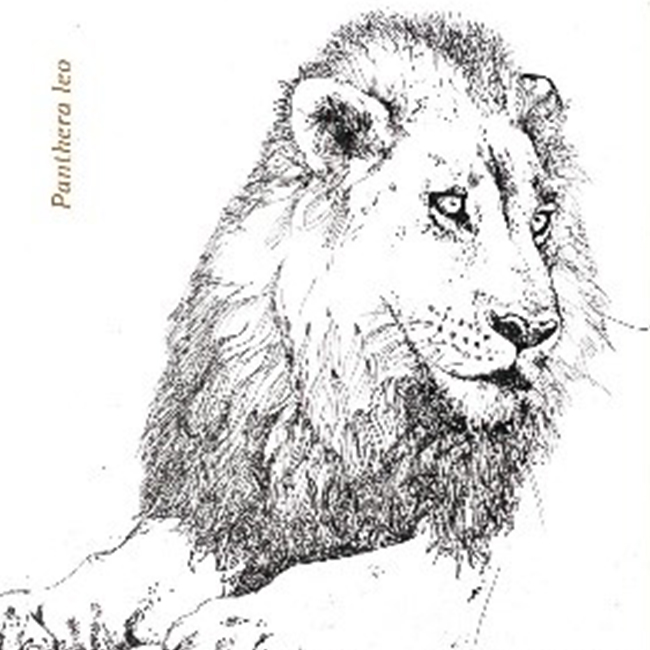
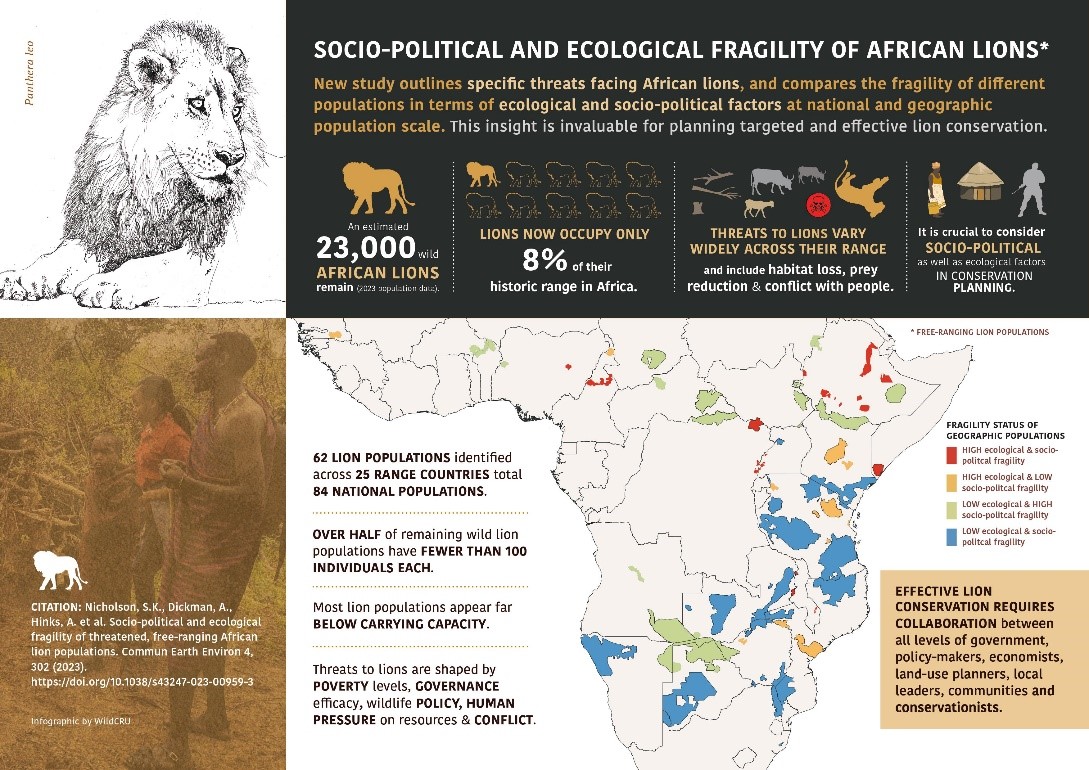
There aren’t many people who truly know how difficult it is to locate and sedate WILD Lions. The Endangered Wildlife Trust (EWT), SANParks, the National Administration of Conservation Areas in Mozambique, the Mozambique Wildlife Alliance, and Peace Parks Foundation are monitoring the distribution and movement of Lion prides across the Great Limpopo Transfrontier Conservation Area (GLTFCA) using GPS satellite collars. By monitoring prides over time, we can identify priority areas where Lions are likely to be at certain times, informing anti-poaching teams where to go to protect the Lions under their care. But to collar them, we need to find and sedate them. Not so hard, right? We are the most intelligent species, after all…
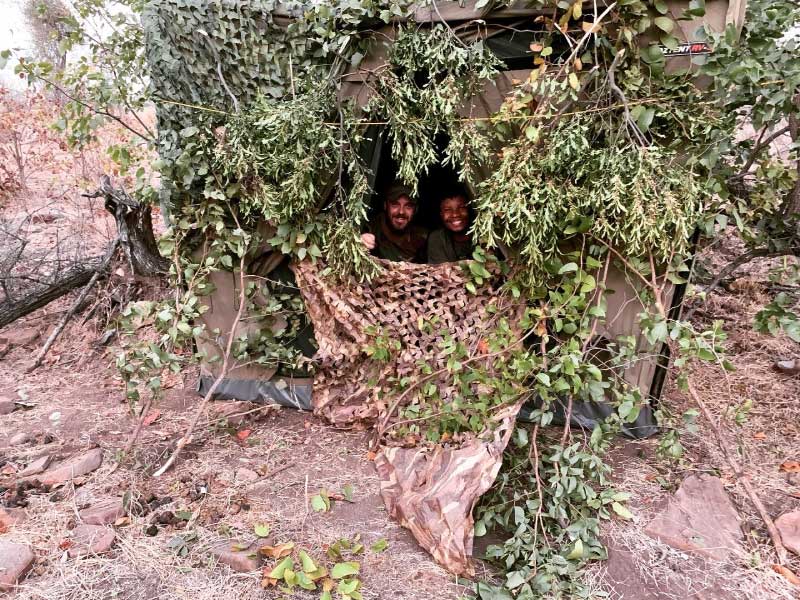
We’ve tried everything – including hiding and hoping the Lions wouldn’t know we were there so we could study them.
Alas, we have spent countless hours setting up the “perfect” trap, but these clever cats show us time after time just how intelligent they are. We searched on foot, by air, and yes – found a spoor here and there – but barely catch sight of them. My colleagues and I decided to set some bait for them, call them in using prey distress calls on a loudspeaker, and see if they were willing to participate in a feast.
We heard a Lion calling back softly, letting us know they were in the area, and we decided to head back to camp, shut off all the lights, and get an early one, so we could find them at the bait first thing. We did this so they wouldn’t feel threatened by our presence and leave the area before the vet arrived the following day. Plus, they’re always a little lazy after a meal, and we had set out a nice buffet for them.
I was woken up at 2 am by a roar near the camp. I was more excited than scared that this magnificent beast was so close by, not to mention relieved that they were indeed heading towards the bait…or so we assumed, not silly enough to leave the “safety” of my tent to check.
Early the next morning, we rose full of hope and energy and with a spring in our steps, knowing the Lions were close. We had no idea how close. We grabbed some hot coffee before sunrise and, at first light, decided to take a walk to the bait to see what transpired during the night. We took several steps, and then what had happened during the night hit us like a freight train.
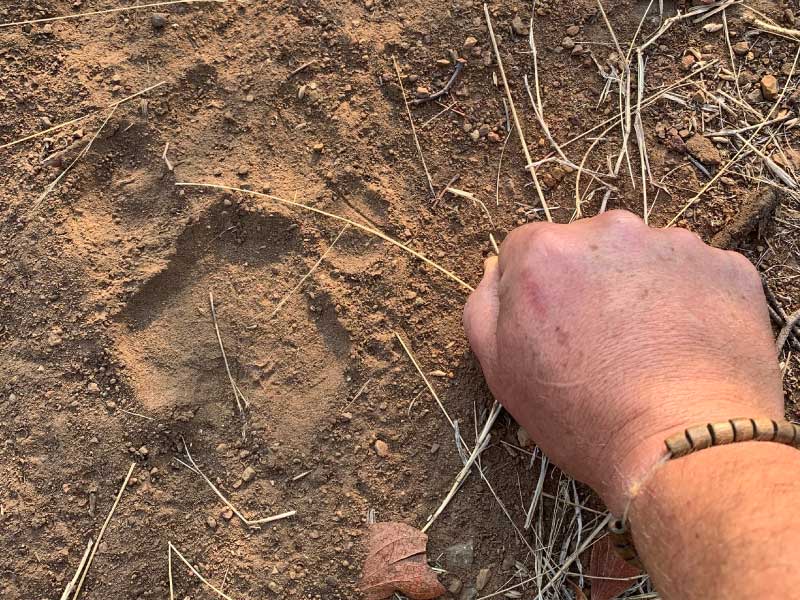
These lions came to visit US before going to the bait. One got to within 3 m of my little tent, with two others approaching from the other side. We didn’t hear their footsteps. We didn’t smell them. We had no idea they were so close! With my knees a little shaky, I was truly humbled. But, it was an experience I will treasure forever – coming so close to the species I have dedicated my life to conserving.
How long will it take us to collar one? Find out in the next instalment of this epic tale.
Donate to save Lions here
Discovering the Old Salt Trail
Cath Vise, the EWT’s SPA Programme Manager, cathv@ewt.org.za
 The Endangered Wildlife Trust’s Soutpansberg Protected Area Programme has established a multi-day hiking trail across the Western Soutpansberg. The trail crosses several private properties and the Luvhondo Nature Reserve. Our team has been working with these properties’ owners in a truly collaborative effort to establish a world-class trail within the proposed Western Soutpansberg Nature Reserve.
The trail aims to establish the Soutpansberg as an ecotourism destination and bring in essential sustainable funding to support our conservation efforts. It will also help drive local economic growth and establish training and job opportunities for locals, such as becoming guides on the trail.
During the week of 9 May 2022, our SPA team and managers from the other properties did a final recce of the trail, completing the full five-day slackpacking route. Here is a first-hand account of the trail by our SPA Programme Manager Cath Vise.
This week has possibly been one of my best weeks on the job. We have been dreaming of setting up with trail for the last three years, and with thanks to the F E van Pletzen/L Steynberg Trust for a generous donation towards the project, this dream is now becoming a reality.
The Old Salt Trail Slackpacker’s Deluxe (western loop) is a 75 km, five-day trail starting at our Medike Mountain Reserve. It heads up the mountain to Leshiba, then on to Sigurwana, up to Lajuma, back to Leshiba and finally back down to Medike. It goes from the lowest point of the mountain range as it crosses the Sand River (813 m) up to the highest point of the Soutpansberg, the mighty Mount Lajuma (1,727 m), with an elevation gain of nearly 1 km and a lot of ups and downs in between.
Our hikers for this week included Kathy and Pete Straughan (Leshiba’s Managers), Peter Breedveld (Sigurwana Manager) and our EWT SPA staff Chris Joubert (Medike Manager), Rotondwa Sithagu and Shumani Makwarela (Soutpansberg Rangers and FGASA Guides) and myself. We were supported by Tharollo Mthisi (Soutpansberg Ranger), who transported all our luggage from lodge to lodge throughout the week.

Climbing up out of the Sand River Gorge on Medike
We left Medike on Monday morning and headed up the mountain. This first day really gets the lungs and legs going, as it is a steep climb to get up out of the gorge. The trail then took us into the Duluni Gorge, where we followed a mountain stream up the mountain. Pete had hiked down from Leshiba and met us in the gorge. On our way up, Pete showed us a rock art site on Medike. Pete is an expert in rock art and tree identification and possibly one of the most entertaining walking encyclopaedias out there. Our journey back in time started at this site, with Pete explaining a bit about the different Bushman and their different painting styles. We carried on up the gorge onto Leshiba, where we had to climb through the first Hiker’s Doggy Door – a cunning small swing gate (that looks like a doggy door for humans) that ensures that the gate always stays closed. On Leshiba, we were lucky enough to spot a Narina Trogon, which flew over our heads and landed briefly in a branch above. They are such beautiful birds. The first night was spent at Leshiba’s Luvhondo Camp, with Giraffe walking into the camp and Cape Vultures flying low overhead, making for an amazing end to a beautiful day.

Traversing ‘The Slabs’ in Leshiba’s Hamasha Gorge
Day two’s hike started with another walk back in time as we headed through the Bushman’s Medicine Chest (medicinal trees and shrubs), another rock art site, where the stories of the past inhabitants continued to unfold. The trail then took us through Hamasha Gorge on Leshiba. This is the most difficult and technical day of hiking but is rewarded with incredible dramatic scenery, lots of water in the stream, and great company that made it a spectacular and entertaining day. We had to do a fair amount of rock-hopping along a stream bed, cross the stream a few times, then hike at an angle up ‘The Slabs’, these magnificent red rock slabs in the gorge. After a nice lunch break next to the stream, we headed west out of the gorge on a long rocky path back up the mountain. This path is an old route believed to link back to the salt pans. We then entered Sigurwana. Near the end of the hike, a beautiful Waterberry forest and a small waterfall and rock pool made the perfect place to sit and cool our feet for a while and soak up all the beauty. Liesel and Neil Wright from Sigurwana and their staff made us feel right at home with a very warm welcome and spoilt us with a wonderful evening and boma braai.

Up the mighty Mount Lajuma, looking back at what we have achieved
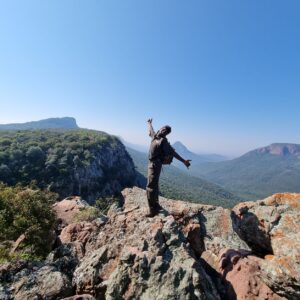
After a very comfortable night’s sleep in Sigurwana’s beautiful and luxurious accommodation, our team continued our journey west towards the mighty Mount Lajuma. After a climb up a rocky slope next to a waterfall, there is a long plateau on the top of Sigurwana, with open grasslands and wetlands. We visited another could rock art site, with new insights into the lives of the Bushman revealed. It was fairly easy, straightforward hiking all the way to Mount Lajuma, along both game trails and jeep tracks. We took a break at the base of Mount Lajuma to gather our strength for the climb to the top. The view from the top and the feeling of pure joy are exhilarating. What a sense of achievement as you look back across the mountain and see how far you have come. Standing on the top of Lajuma, looking back east filled me with pride and joy to see how far our Western Soutpansberg Nature Reserve stretches, with an inspiring group of landowners working together to conserve this precious mountain.
We spent the evening at Lajuma Research Centre’s Wilderness Camp, designed as student accommodation, on the edge of a cliff with beautiful views south. We spent the evening around the fire, reminiscing on the day’s adventures.

A forest wonderland with the giants
Day four was possibly the easiest hiking day, although it was the longest (19 km). We started with a scramble up ‘The Chimneys’, a rocky crevice up a cliff line to get to the plateau above. Once on the plateau, it was a long, easy hike along a trail and then jeep track, requiring us to cross a wetland and get our feet wet. It was a good opportunity to set a good pace, get into a rhythm and make up some ground on a long day. After three days of technical hiking, having this day was easy on the tired legs and a welcome break. After a short break at a stunning view spot, we entered the forest and were rendered speechless. It is an absolute wonderland, and we stared up in awe at the giant ancient Yellowwoods and Strangler Figs weaving their way between hundreds of other plants. We took our time, enjoying every minute of it and listening to the calls of the Turaco. After the forest, we hiked back down a hill on a jeep track to the Leshiba fence line. We said goodbye to Peter (from Sigurwana), who left us at this point. The final hike through Leshiba followed part of the cycling track and was a beautiful way to end a long day on the trail. We sat with our feet in the cool water of the lodge’s pool, with an ice-cold drink to cool us off, watching all the game passing through the plains below. We were spoilt again by the friendly Leshiba staff, who looked after us extremely well. The dinner conversation was full of laughter, reliving entertaining moments on the trail.

Shumi, Chris, and Rotondwa back on home turf at the top of Medike
On our final morning, we bid farewell to Kathy, who sadly had to attend to some business for the day. Pete joined us on our morning hike across Leshiba to the cliffs. We passed by about five incredible viewpoints on the edge of the mountain. We then headed back towards Medike and had to climb through another Hiker’s doggy door. Back on our home turf, the EWT team walked the final stretch. After passing by an old settlement, where we found some old pot shards, we popped out onto a small clearing and looked down into the Sand River Gorge, where our journey began five days prior. Spirits were high, and with great enthusiasm, we descended the long, steep decline to the bottom of the gorge. After a short while back on Medike’s jeep track, we were back home, and our incredible journey had come to an end.

Crossing the finish line of the Old Salt Trail
I absolutely loved this hike because every day has something completely new and different and unexpected about it. No two days are the same. We went through so many different habitats, were lucky enough to see some amazing bird and game sightings and really felt like we stepped back in time as we learnt about the Bushman gatherings on the mountain and felt like we were following their footsteps across this ancient land. Everything about the hike worked well. It is a very challenging and technical hike, requiring a good level of fitness for experienced hikers. However, your efforts on the trail are rewarded with the best hospitality on offer. What an incredible experience. I truly believe that this will become a “Bucket List” trail that you won’t want to miss!
For more information, visit our website: https://ewt.org/old-salt-trail/
Follow us on social media:
Facebook: https://www.facebook.com/theoldsalttrail/
Instagram: @the_old_salt_trail