BEGGING FOR BUNNIES
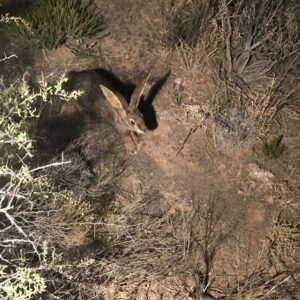
Esther Matthew, Drylands Conservation Programme Specialist Field Officer, estherm@ewt.org.za . With Easter coming up, we know you will be on the hunt for the Easter bunny, and if you see him or anyone resembling him, we want proof! The EWT’s Drylands Conservation Programme is trying to gather more information on all the South African lagomorph species (that’s rabbits and hares!). We are specifically looking at their distributions within the Northern, Western, and Eastern Cape provinces and the potential overlap of different species’ distributions in these areas. Have you seen one of our furry friends? We are looking for photos that you have taken or any camera trap images of rabbits and hares in South Africa. Become a citizen scientist by contributing your images to the study of rabbits and hares in the country. We will happily accept any images, with or without species identification, as long as it is submitted with a location, preferably a GPS point.
In the process, of course, we hope to get a few photos of our elusive Riverine Rabbits in areas where we don’t have recent records. Riverine Rabbits are Critically Endangered and very difficult to find, and we encourage the public to assist us in gathering more information on the distribution of this mysterious species. However, please note, we do not, under any circumstances, encourage the handling or capturing of any wild rabbit or hares. Please send all of your bunny photos and locations to estherm@ewt.org.za. The locations you submit will not be made available to the public to prevent poaching, but the locations will add value to datasets for research and the conservation of the species. We will use the images to identify the species and contribute to updating the distribution maps!This initiative is sponsored by The Mohamed bin Zayed Species Conservation Fund and Rand Merchant Bank.
ZOOMING TO TRAIN FARMERS
Bonnie Schumann, Nama Karoo Coordinator, EWT Drylands Conservation Programme
BonnieS@ewt.org.za
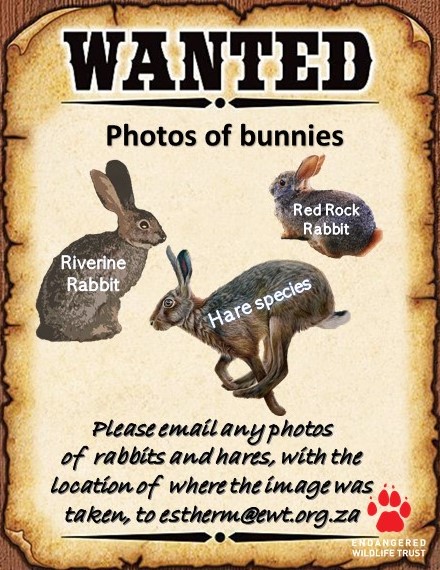
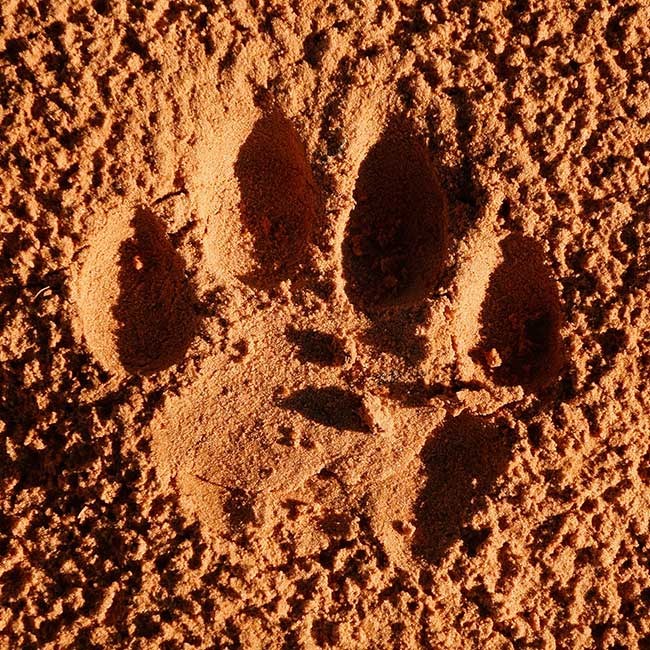
Critical work continues with the help of technology as our Drylands Conservation Programme recently held four online training webinars as part of their GEF 5 Sustainable Land Management Karoo Forever Project.
This initiative aims to share knowledge with farmers around the Karoo, without requiring them to travel. This approach not only reduces carbon footprint from travel, but at this critical time in our country, allows participants and staff to stay safe and maintain social distancing, as farmers can join in the discussions from the comfort of their homes.
Experts on different topics share information during this interactive process. The first series focused on intensive sheep farming, where the result is a reduction of pressure on the natural resources. The webinars are recorded and uploaded on the project website (http://karooforever.org.za/) so that participants can access the content again. Visitors to the website can also view the series.
This initiative is funded by the Global Environment Facility through the Department of Environmental Affairs and the United Nations Development Programme.
FINDING GOLD IN THE DUNES
JP Le Roux, Field Officer, EWT Drylands Conservation Programme
jeanpierrel@ewt.org.za
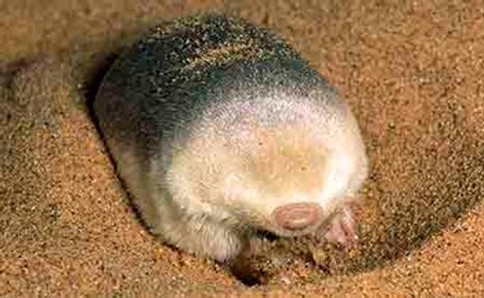
The Drylands Conservation Programme, with the help of Samantha Mynhardt from the University of Pretoria, will be taking on the exciting task of trying to find one of the most elusive animals in South Africa! The Van Zyl’s Golden Mole is known from only two locations, with the last found in 2003. More than 17 years later, we are on a quest to find them again.
We will be focusing on the Lambert’s Bay area, as this is where the species was last found. The habitat consists of mostly Succulent Karoo strand veld with low elevation, which is perfect for golden moles. On the first trip to do a reconnaissance of the area, we were amazed by the amount of activity, especially from a variety of moles. With the amazement came the realisation of the challenge we are undertaking. Finding Van Zyl’s Golden Mole in a minefield of mole activity is going to be difficult! We visited various farms around the Lambert’s Bay area, going from farm to farm trying to find specific activity associated with golden moles. Most of the mole activity in the area is linked to the Common Mole-rat, which excavates big mounds of soil along its main burrow. Because they live in colonies of up to 14 individuals, their activity can be quite extensive. The Mole-rat activity differs greatly from that left behind by the much smaller golden moles. Golden moles are solitary animals and usually dig their tunnels just below the soil surface (5-10cm deep). The activity mostly consists of a foraging trail extending out from a central point around vegetation. Some areas indicated much more activity, where it was possible to identify specific behaviour along foraging trails such as head dipping. Along with the physical signs indicating that there are golden moles in the area, other promising signs such as the presence of prey items were also found. All these findings show that there are definitely golden moles in the area, but the question still remains whether they are Van Zyl’s or one of the other mole species.
The activities of different golden mole species are relatively similar, which highlights the need for creative ideas to determine the presence of this specific species. Techniques such as scent detection, thermal imaging, and testing the soil for environmental DNA (DNA that is collected from environmental samples, such as soil, rather than from an individual organism) will be some of our methods to attempt to determine the presence of Van Zyl’s Golden Moles. If these techniques prove to be successful, it will be seen as a rediscovery of the species and will greatly benefit the conservation of the species. Golden moles face many challenges, with the main threats to the species linked to habitat loss from activities such as poor farm / land management and mining.The team’s first survey will take place in the next few months, and the progress of the project will be presented in follow up articles in Conservation Matters. So, watch this space!
Thanks to Global Wildlife Conservation, for making this project possible through their Lost Species Initiative.
DOWN TO EARTH
Esther Matthew, Specialist Conservation Officer, EWT Drylands Conservation Programme
EstherM@ewt.org.za
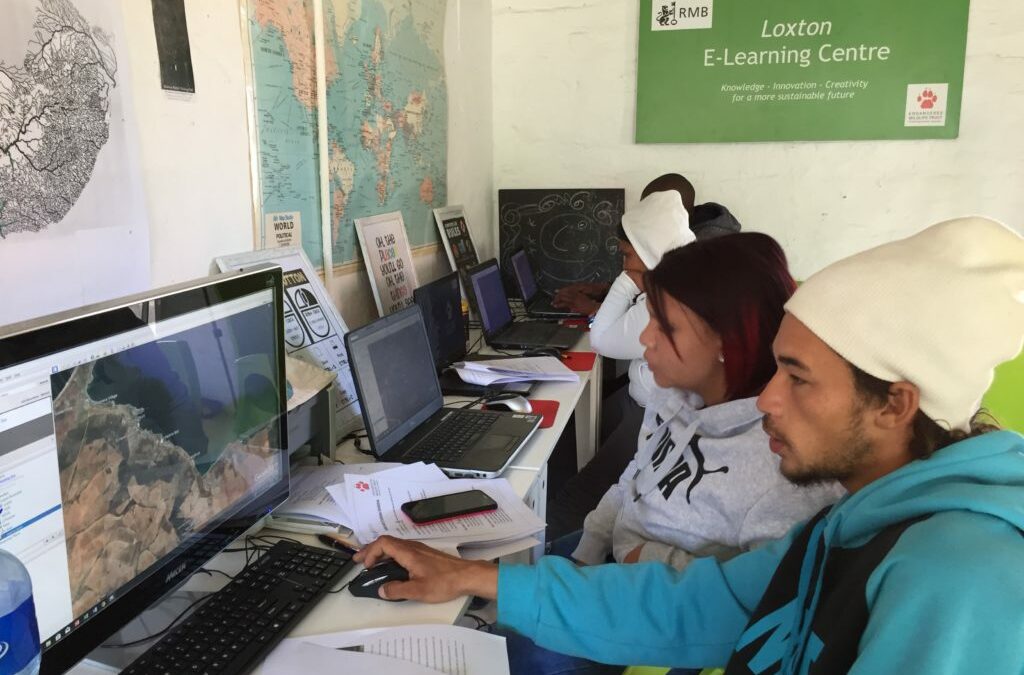
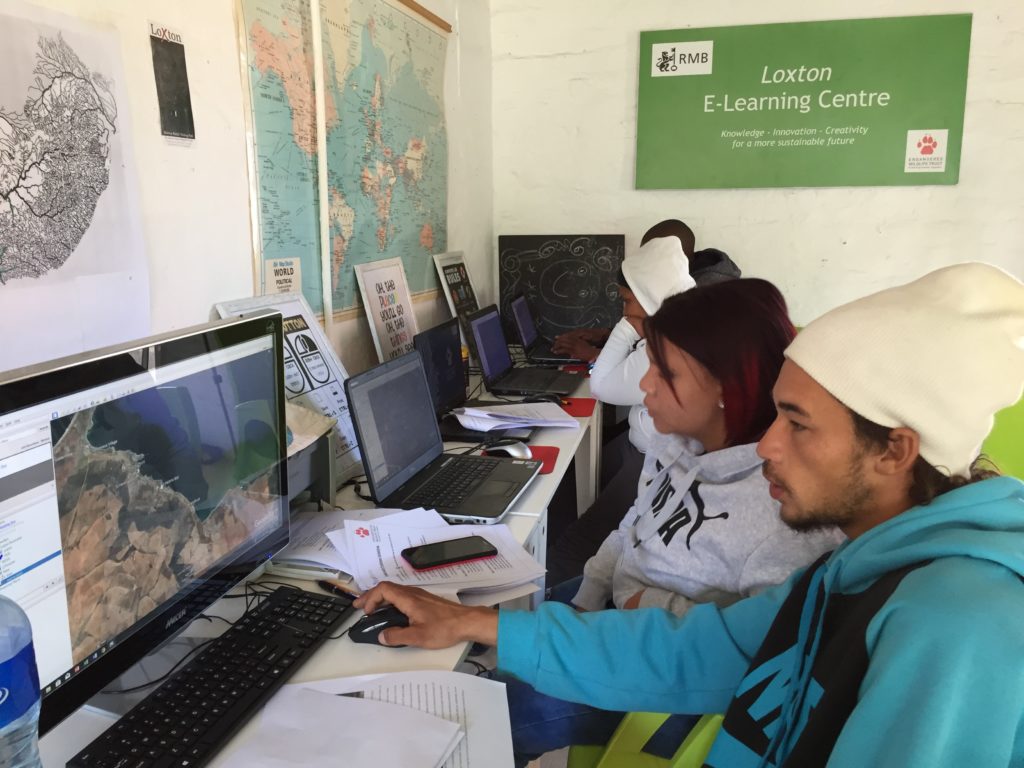
The EWT’s Drylands Conservation Programme hosted a Google Earth Pro training course at the Loxton e-learning centre, for our AgriSETA learners and two Agricultural Advisors from the Department of Agriculture, Land Reform and Rural Development working in our area. The AgriSETA students are completing their National Certificates in Animal Production through AgriSETA and facilitated by the EWT, while the International Agricultural Academy for Africa is the training implementer. The students are all part of farming families in Loxton; as such they are important entry points for access to technological literacy for these families. We referred one of the farmers back to his daughter, on the same day, when he arrived to collect her and asked us to help map his agricultural plots – we are pleased to report the impact was immediate!
This initiative forms part of the EWT’s Karoo Forever, sustainable land management, project and is funded by the Global Environment Facility through the Department of Environmental Affairs and the United Nations Development Programme.
HABITAT STUDY HELPS SOLVE THE PUZZLE
Bonnie Schumann, Nama Karoo Coordinator, EWT Drylands Conservation Programme
BonnieS@ewt.org.za
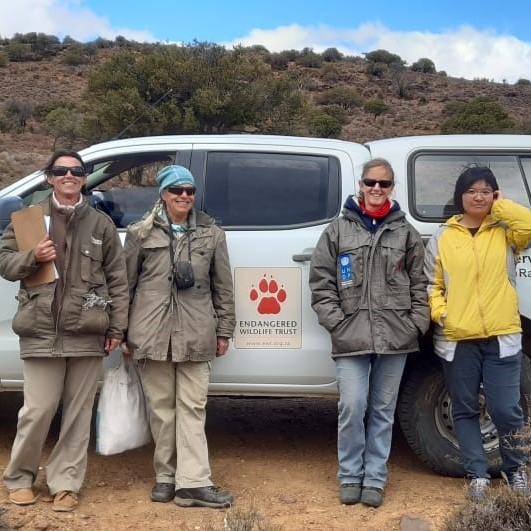
The EWT’s Drylands Conservation Programme recently joined forces with Dr Sue Milton, Karoo ecologist and botanist, to characterise Riverine Rabbit habitat in the Succulent Karoo and Renosterveld. Our aim is to understand the exact habitat requirements of Riverine Rabbits in the southern- and eastern populations.
Most of the past work done on Riverine Rabbit ecology and habitat was carried out in the northern population of rabbits, which were first described and documented in the Nama Karoo in 1901. This region has been the focus of much of the research and conservation efforts to date. As such we have a pretty good understanding of rabbit behaviour and habitat requirements here. Our understanding of the southern population, in the Succulent Karoo, is less comprehensive. This is due to the fact that Riverine Rabbits were only discovered in the Succulent Karoo in 2003. Incredibly, a third eastern population remained undetected in the western Baviaanskloof area until 2018. To understand these populations better, camera trap surveys were carried out near Touwsriver and in the Baviaanskloof, yielding excellent results in terms of detecting Riverine Rabbits.
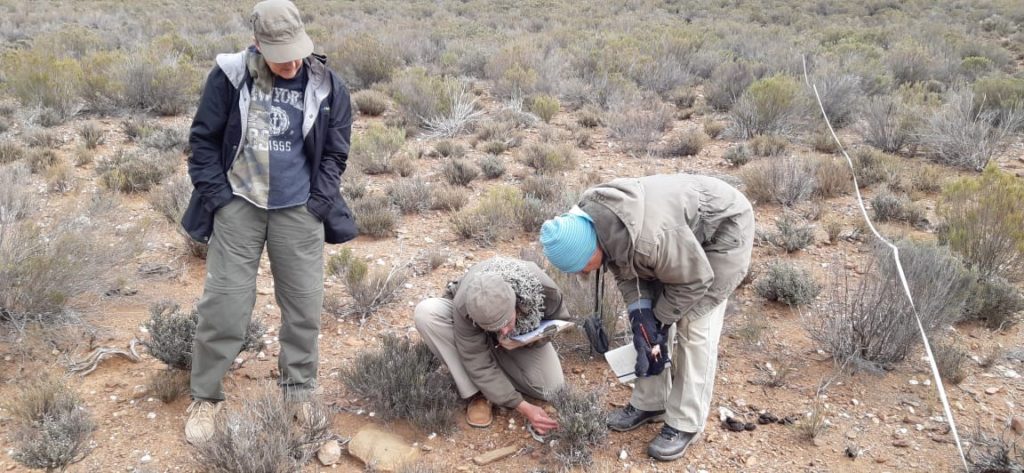
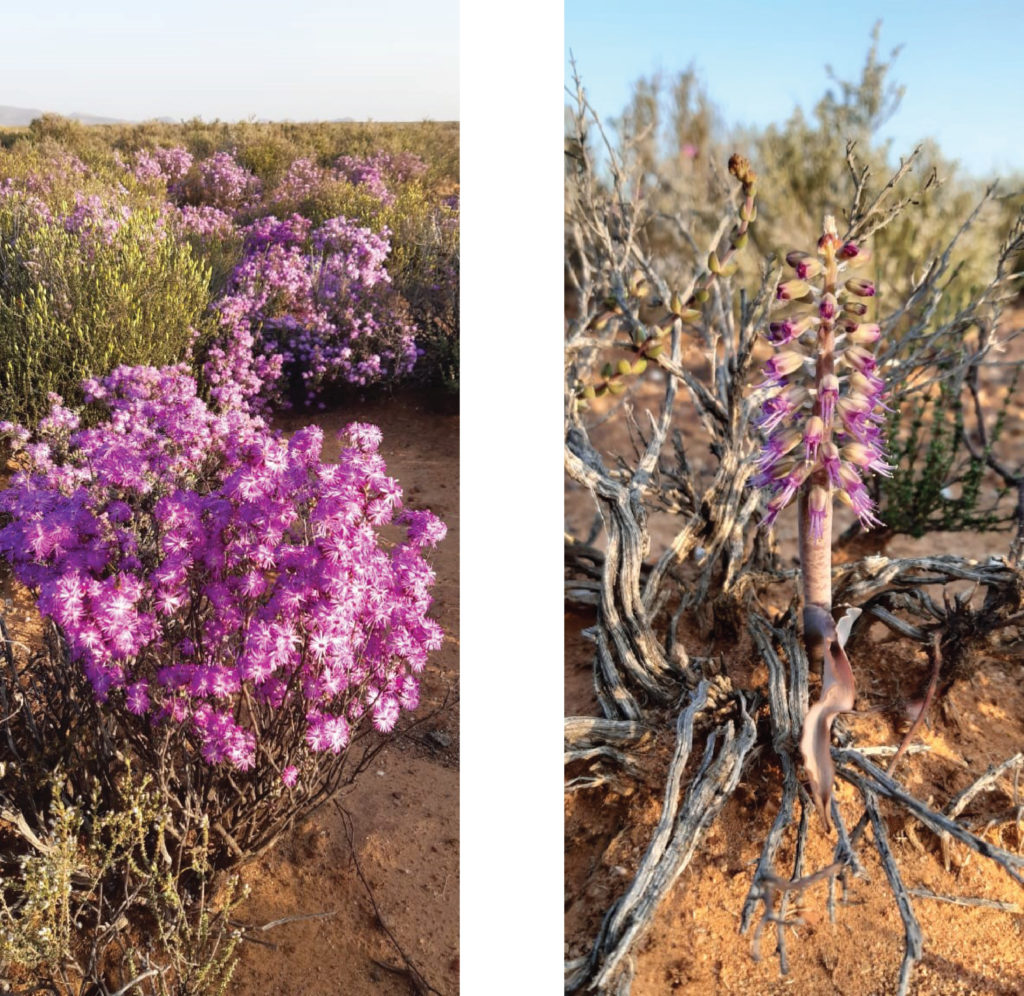
We revisited these locations in in September (spring) to describe the plant communities in the vicinity of the cameras where rabbits were detected. Plant species, the height and cover of the vegetation were recorded, as well as other factors such as slope aspect, soil type and depth and distance to nearest riparian areas. The results of this work will narrow down future search areas and assist us to identify corridors between known populations. Understanding what ideal habitat looks like will also inform how best to manage known distribution areas to maintain existing populations.
Many thanks to Dr Sue Milton (RenuKaroo) and Liesl Eichenber (Ecologist on Sanbona Nature Reserve), for their assistance and helping to complete the Riverine Rabbit puzzle.
The work was made possible with funding from Rand Merchant Bank and the Zoological Society for the Conservation of Species and Populations (ZGAP).
