KAROO FOREVER – IN CELEBRATION OF KNOWLEDGE
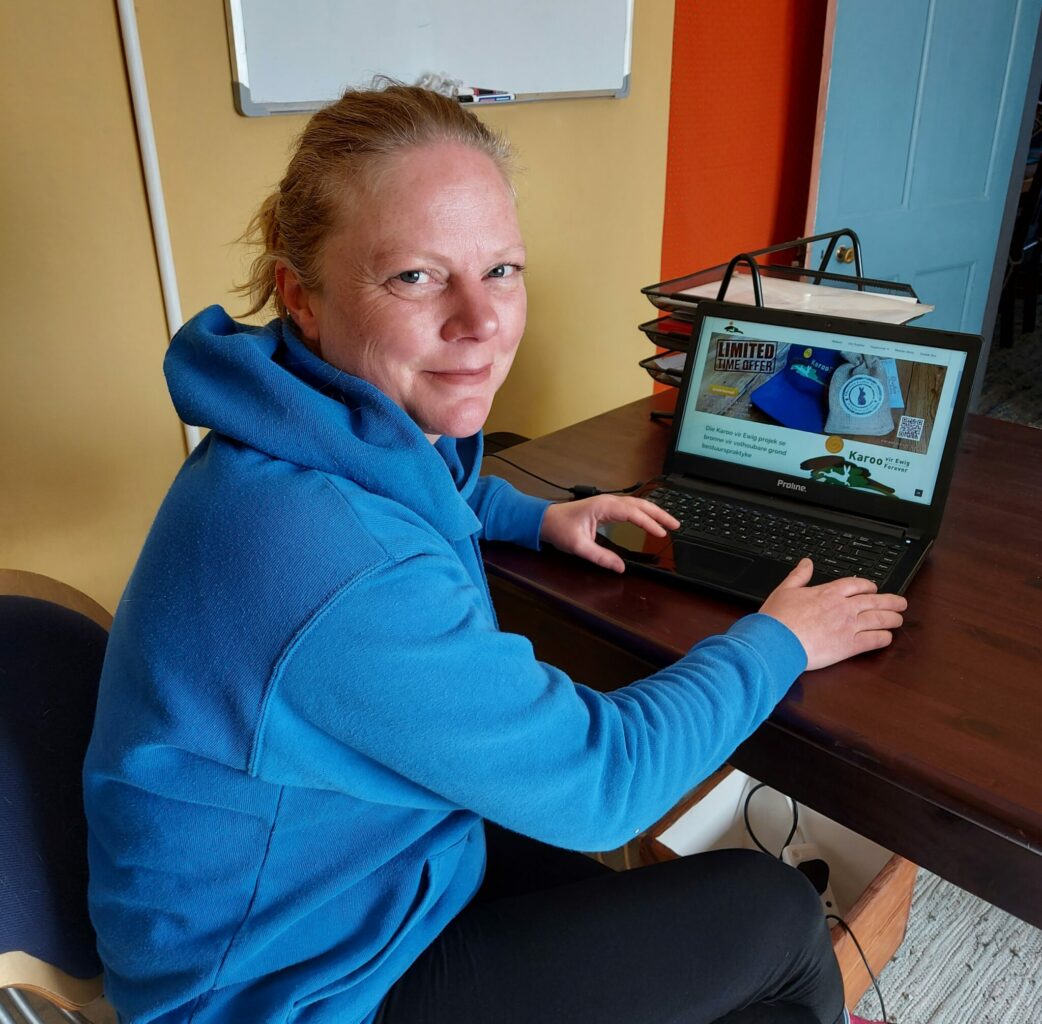
Bonnie Schumann, Nama Karoo Coordinator, EWT Dryland Conservation Programme, bonnies@ewt.org.za Would you like to know about optimising veld recovery after droughts? Or what your rights are in terms of developments near you that you do not support? Did you know about a great new app that focuses specifically on helping you to get to know your Nama-Karoo plants? You can download this app on Android and Apple devices. All this information and many more resources are available on the Karoo Forever website launched by the EWT’s Drylands Conservation Programme last year.
The website is one of the outcomes of the Karoo Forever Sustainable Land Management Project that we initiated four years ago. Throughout this project, we developed a range of resources for farmers. We realised there was a need for a dedicated platform on which to make these resources available to farmers. Sonja Berg of iXOXO – The Idea Factory took up the challenge to develop a user-friendly website providing various resources, ranging from a series of webinars to best practice guidelines for various regenerative approaches to managing Karoo farmland. By developing the digital platform, we have ensured that the great deal of valuable knowledge shared by experts during live and digital events remains available to anyone interested in learning more about sustainable land management in the Drylands. The emphasis is on the Karoo, but the content is relevant to drylands worldwide. During 2018 we developed, in collaboration with agricultural specialists, an Integrated Farm Planning and Management training (IFP) course. The course was presented twice in the Northern Cape in 2019, but due to the COVID-19 related lockdowns imposed in 2020, additional live courses scheduled weren’t presented. Fortunately, we were already well on the way to adapting the FREE course for our online platform, so it went “live” on the website in March 2020.
Interestingly, besides farmers and agricultural extension officers, we have had participants ranging from students to tour guides and conservation officials completing this “farming” course. These include several Western and Northern Cape conservation officials. The conservation officials work with landowners, mainly in a biodiversity stewardship context, and reported to us that the knowledge gained has given them a better understanding of sustainable land management principles and illuminated some of the challenges and solutions faced by farmers who farm in the drylands. This knowledge is helping to inform their approach to farmers with a view to more effectively integrating conservation and agricultural priorities.
When Sir Francis Bacon published in his work, Meditationes Sacrae (1597), the saying: “knowledge itself is power“, he most likely wanted to convey the idea that having and sharing knowledge is the cornerstone of reputation and influence, and therefore power; all achievements emanate from this. More than 400 years later, access to knowledge is merely the click of a button away. However, it is no longer so much about influence and reputation as it is about survival and how we have to start changing the way we are doing things. Sharing knowledge and having discussions around solution-based approaches will empower people to act positively and be the change that is needed. We celebrate the sharing of knowledge on the Karoo Forever website and hope to see many more users visiting the platform, completing the IFP course, and sharing their solutions through the various resources.
The content on the website was made possible through contributions from several specialists whom you will meet through the webinars and other resources. We thank them all for generously sharing their expertise and passion in the interest of promoting sustainable land management in the magnificent drylands of the Karoo.
The Karoo Forever website is brought to you by the EWT’s Drylands Conservation Programme, which focuses on promoting sustainable land management in the Karoo. The project is funded by the Global Environment Facility and managed by the United Nations Development Program in partnership with the Department of Environment, Forestry and Fisheries and Department of Agriculture, Land Reform, and Rural Development.
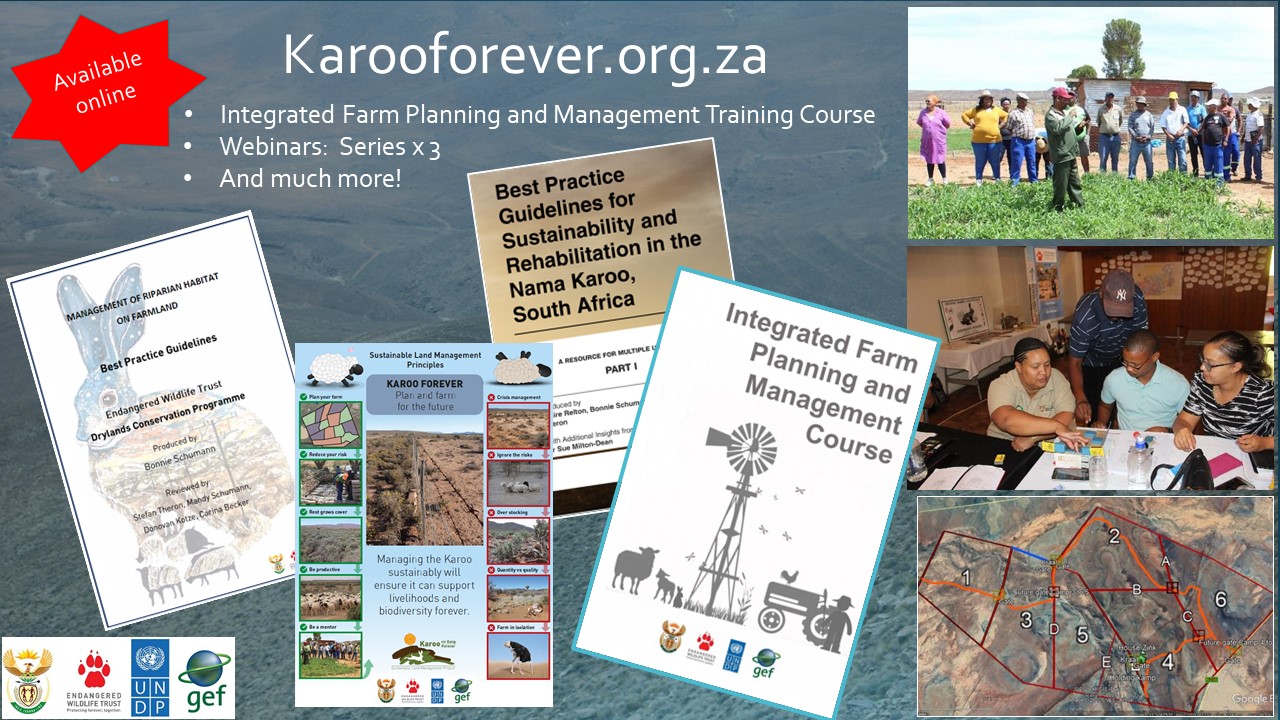
Links to:
CROUCHING ROCKS, HIDDEN RABBITS
Bonnie Schumann, EWT’s Drylands Conservation Programme, Senior Field Officer, bonnies@ewt.org.za
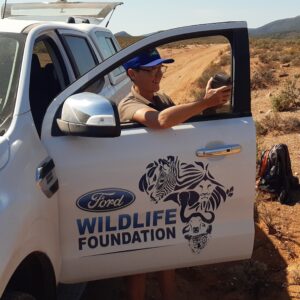
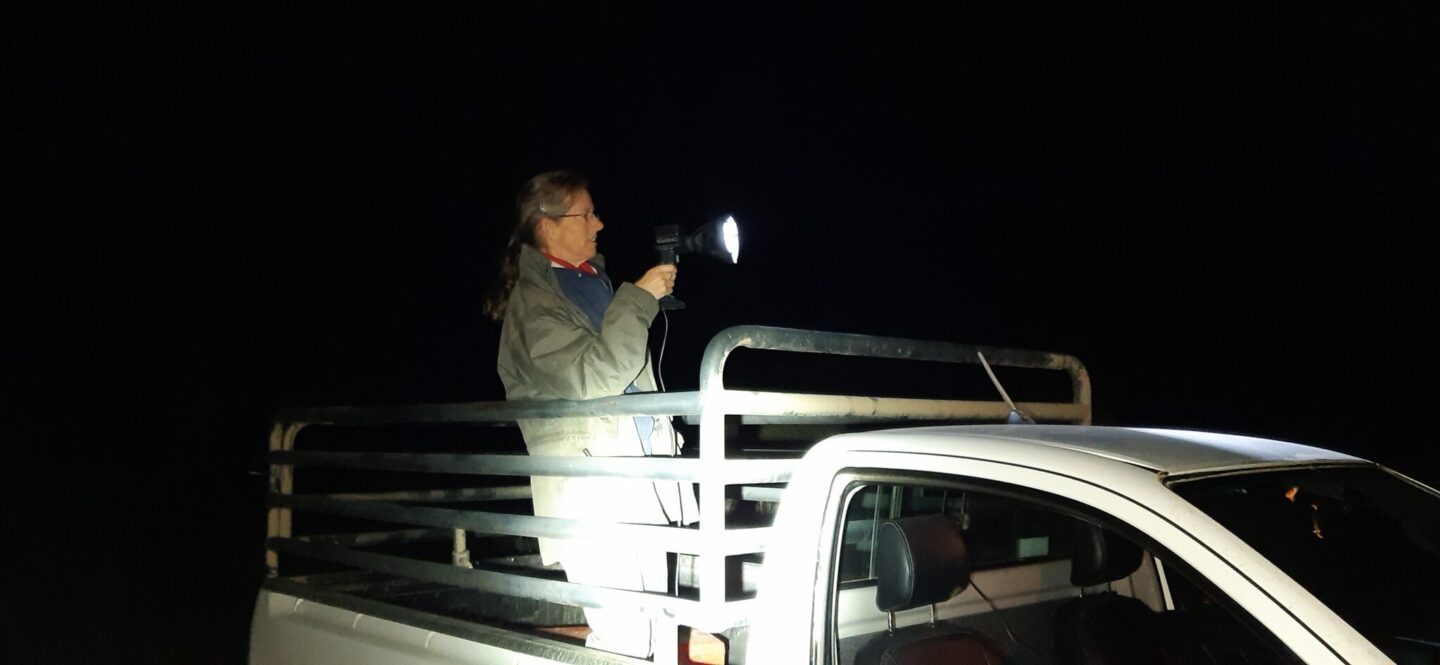
Searching for Critically Endangered Riverine Rabbits (Bunolagus monticularis) in the vast and rugged Karoo landscape is one of the hardest but most rewarding aspects of what we do. Marienne de Villiers, Faunal Ecologist with CapeNature, and I recently spotted a rabbit on a night drive on the Lettas Kraal Private Nature Reserve. This was a first for Marienne, who admitted that she was starting to doubt the existence of this mythical creature! When reflecting on our success, we realised that we had tallied up just over eight hours of searching on two rather freezing cold night drives before we got lucky and laid eyes on a live rabbit between the two of us. After a few hours of searching for all creatures great and small in the beam of a spotlight, from the back of a bakkie bumping along a dusty dirt track, one tends to get a bit cross-eyed. As a result, we had spotted many rabbits along the way, only to discover on closer inspection that they were rabbit-like rocks crouching in the veld, while the real rabbits remained safely hidden!
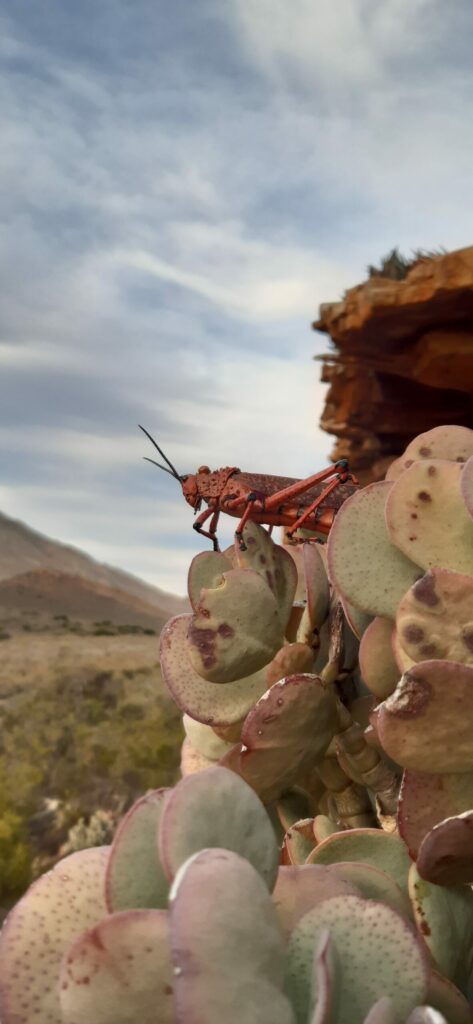
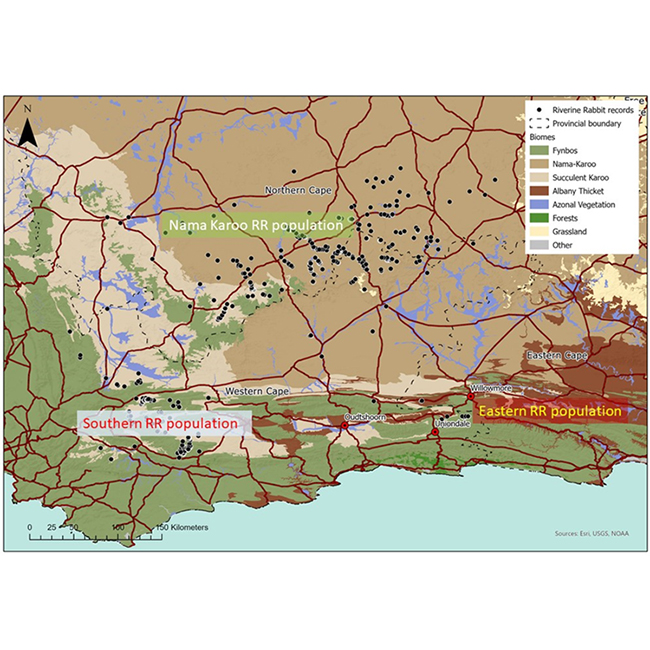
These bunnies are the ultimate masters of hiding in plain sight, so seeing a live Riverine Rabbit is somewhat of an achievement that few people can lay claim to. Although camera trap surveys in 2019 and 2020 revealed their presence, Riverine Rabbits had never actually been seen on Lettas Kraal. This trend is not unusual, given that the species managed to remain undetected, in two of the three landscapes in which it occurs, for over a hundred years! Following their initial discovery near Deelfontein in the Nama Karoo in 1901, they were only recorded in the Little Karoo, a distinct geographic region lying within the Succulent Karoo, for the first time in 2003. This southern population was in the Touwsriver area, and as recently as 2018, an eastern population was found in the Uniondale area. In both cases, the documenting of roadkill was what finally revealed their presence.
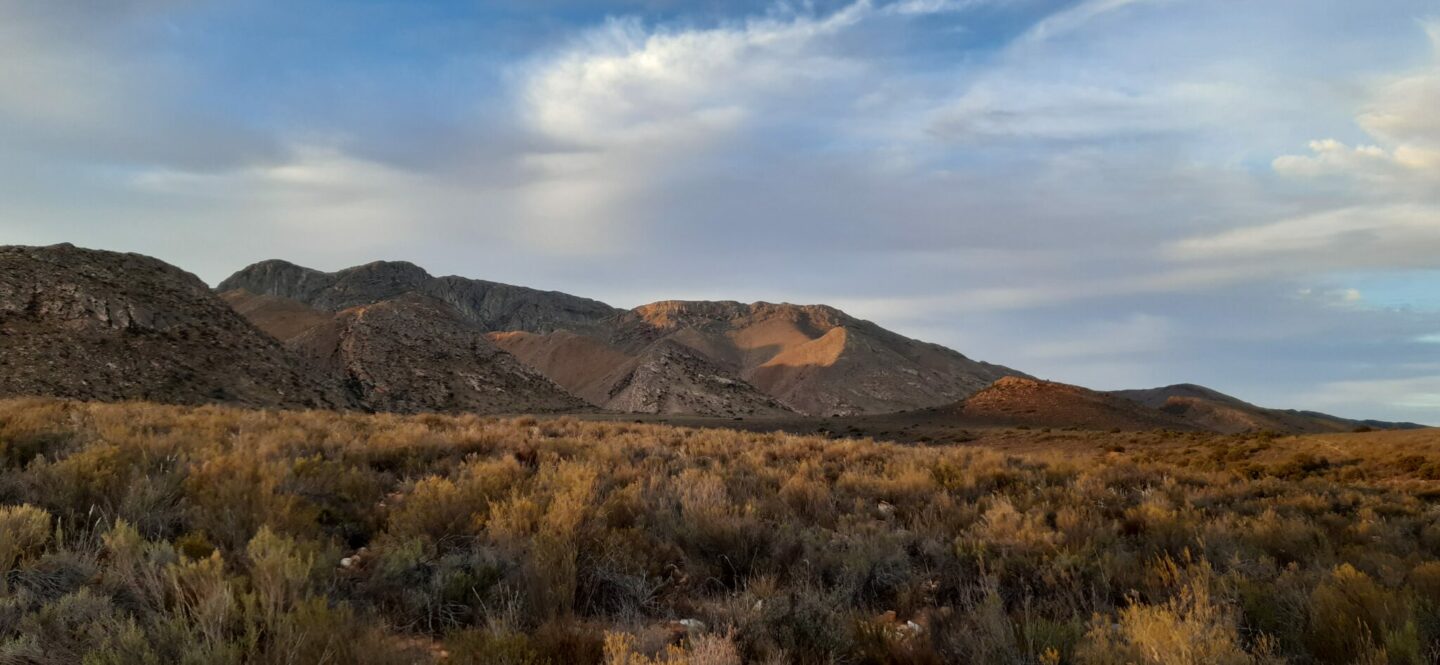
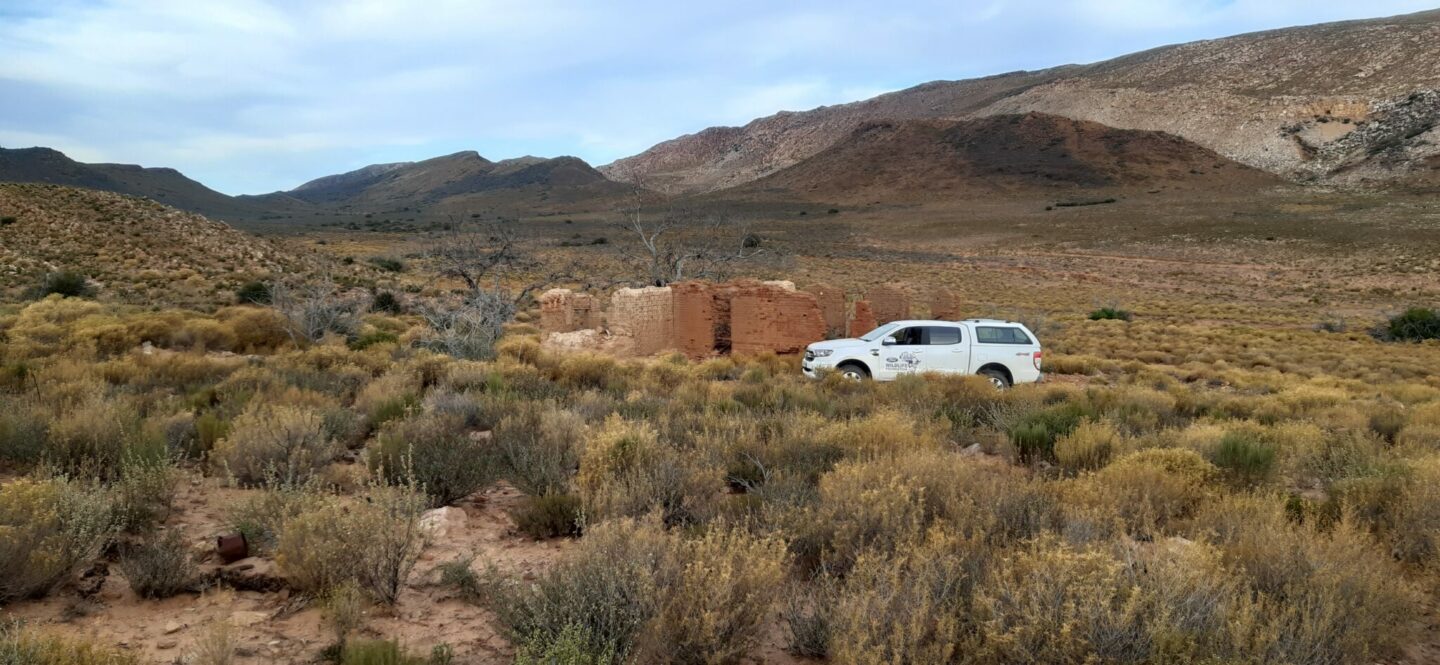
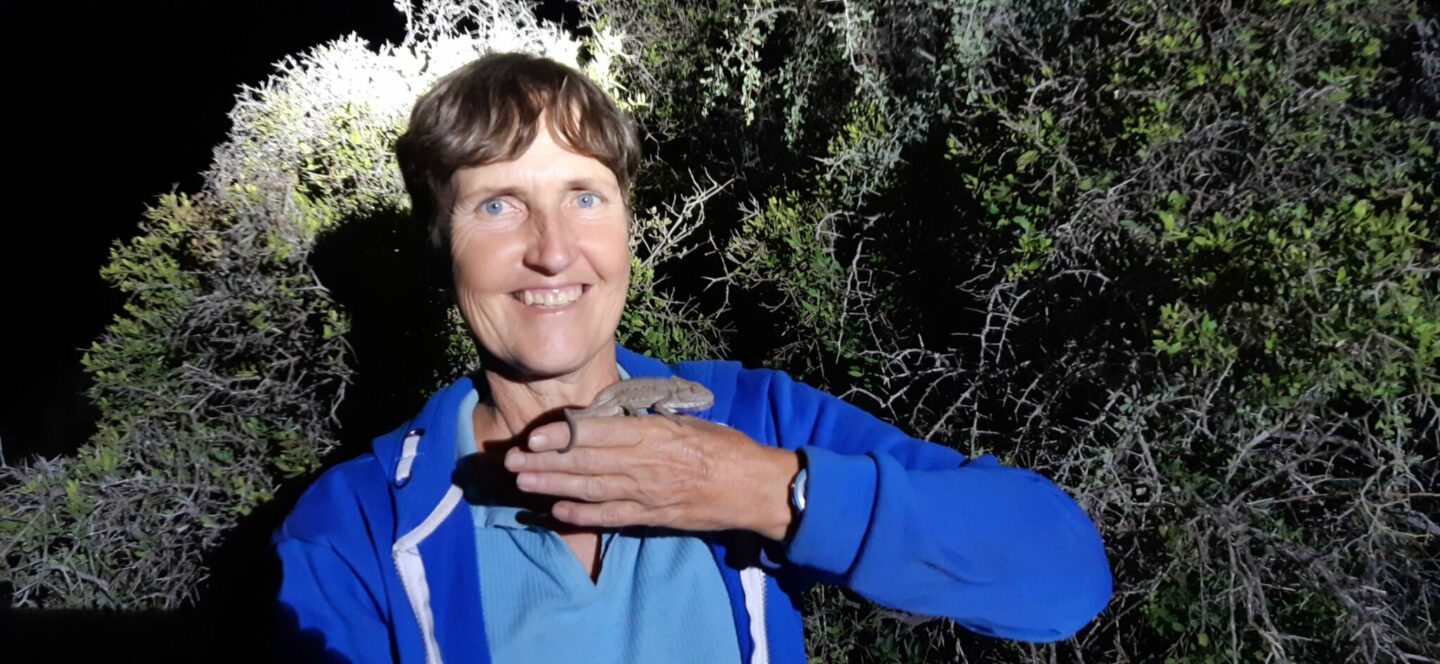
Lettas Kraal, home to many Little Karoo botanical gems, some of which have not even been described yet, is also home to a known population of Riverine Rabbits. This property is in the process of being declared a Contract Nature Reserve, which will ensure the safety and protection of the unique biodiversity there. The night drive was part of the process of documenting the biodiversity on this beautiful property. This process is already well underway, following detailed botanical and camera trap surveys in 2020. Three hours into this particular night drive, our persistence paid off when Marienne spotted a Karoo Chameleon (Bradypodium gutturale). This was an impressive demonstration of her ability to multitask, as between driving and batting (more on this later), she spotted this small creature nestled on its Gwarriebos perch as the beam of the weaving spotlight passed over the bush. Widespread habitat degradation and loss pose a severe risk to these ancient-looking little reptiles. Adding this species to the Lettas Kraal inventory was a rare feel-good moment, knowing that this species, too, is safe on Lettas Kraal, under the protective eye of Johan Roodt, the owner of Lettas Kraal. If you wondered what “batting” mentioned earlier is all about, this entails listening for and recording bat calls. Capturing recordings of bat calls is one of the most effective ways of documenting bat species presence – for which Marienne has quite a knack.
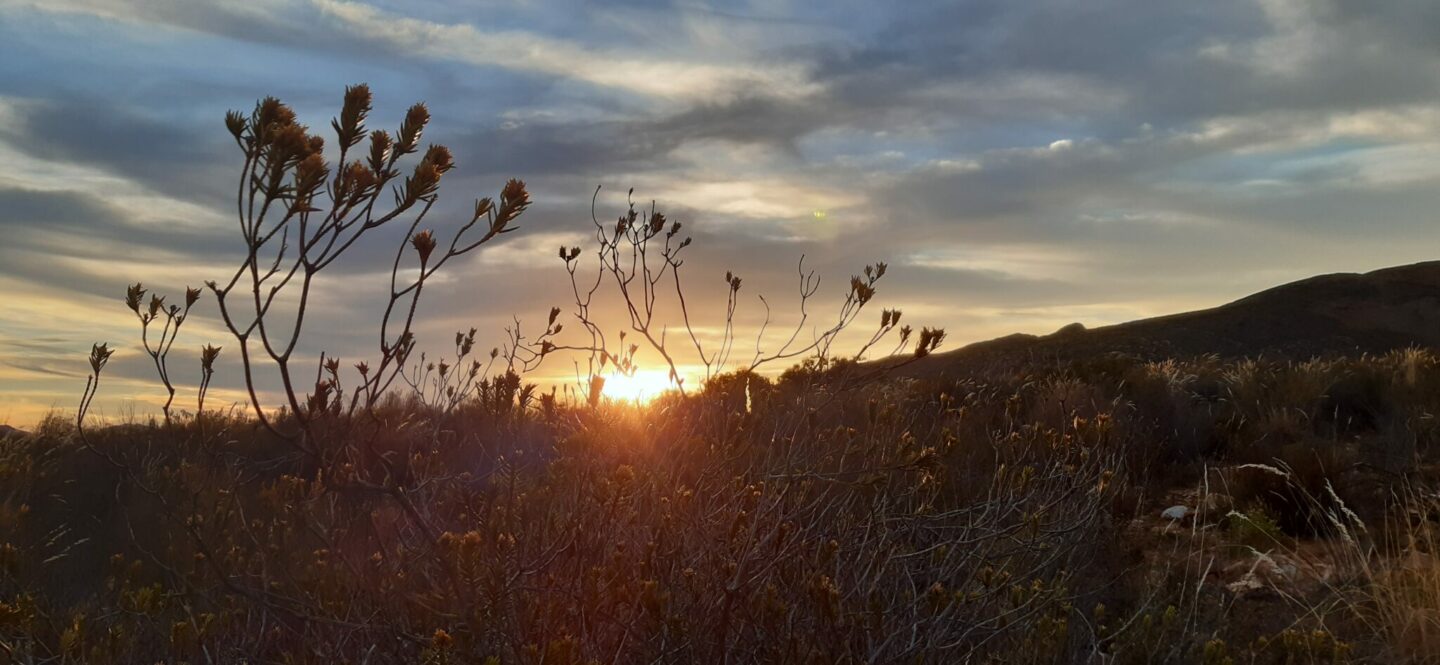
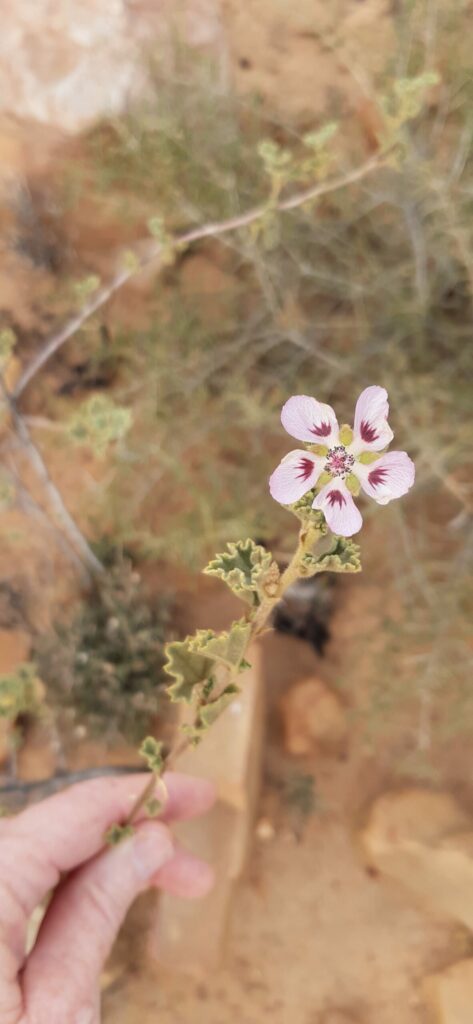
After our exciting rabbit show at the magic hour of midnight, we grabbed a few hours of sleep before we set off early again – this time with Jan Vlok, renowned Succulent Karoo botanist also working on Lettas Kraal. Jan was on a mission to supplement the botanical survey he did in Spring 2020 with what the autumn season had to offer. Despite telling us, “If it doesn’t photosynthesise, I’m not interested!” Jan is a veritable encyclopaedia on all things Karoo. Over 20 autumn species were added to the more than 800 species counted in spring.
Many more species await documenting, and getting the full picture will literally take years. Plants need to be particularly picky about when they expose themselves because expending energy and resources, particularly during the flowering and seeding process, is a risky business at the best of times. In a region where the rainfall varies between 100 mm and 450 mm per year, and summer temperatures can exceed 40⁰C, often accompanied by blistering berg winds, the risks are next level. It’s all about timing, and some species will wait years to put it all out there. It requires a lot of luck to have feet on the ground just when the conditions are, for an all too short time, favourable for plant reproduction. Having flowers and seeds makes the daunting job of identifying species accurately considerably easier. However, with over 3,200 species already recorded in the Little Karoo alone, you need to know your stuff! Jan Vlok, a co-author of “Plants of the Klein Karoo”, is one of the few people up to this task.
To put the value of biodiversity refuges, such as Lettas Kraal, into perspective, less than 0,5% of the Succulent Karoo biome is formally conserved. Under the guardianship of conservation-minded individuals such as Johan Roodt, properties such as this one add much-needed resource capital to the scant inventory of protected areas in this region. Riverine Rabbits find refuge here, in veld that is slowly recovering from over 200 years of being heavily impacted by livestock and ostrich farming. In some areas, diversity is lost forever. Lettas Kraal was lucky that much of its biodiversity has remained, and species very sensitive to grazing can still be found. Once abundant, these species are slowly emerging from the midst of thorny bushes and start to grow in the open again, reclaiming their space in this spectacular landscape, amongst the crouching rocks and hidden rabbits.
The biodiversity survey was funded by the Global Environment Facility and managed by the United Nations Development Programme, in partnership with the Department of Forestry, Fisheries, and Environment, and the Department of Agriculture, Land Reform and Rural Development.
GOING BOSSIES
Bonnie Schumann, EWT’s Drylands Conservation Programme, Senior Field Officer, bonnies@ewt.org.za
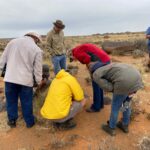
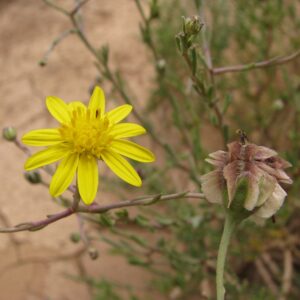
The EWT Drylands Conservation Programme, in partnership with the Grootfontein Agricultural Institute, held Karoo bossie (vegetation) identification days around Loxton this week. Altogether 32 people, mostly farmers, attended the sessions. Karoo veld generally appears rather grey and uninteresting to many passers-by, and getting to know the different species, mostly dwarf shrubs, can be very challenging at the best of times as they tend to look rather similar at first glance. For the novice, in order not to get demotivated on the first day, it is best to go in Spring and Autumn. At these times, if there has been rain, the bossies (little bushes) may be flowering and seeding, making it a lot easier to identify them. Once you spend time in the veld, you realise that there is actually a great deal of plant diversity, including over 3,000 species in the Nama Karoo. Not bad for a desert!
If you dare get up close and personal with the larger, thorny, rather formidable-looking bushes, you realise that they shelter a range of other fascinating species, which is why they are often called “mother bushes”. Despite the rather barren appearance of Karoo veld, when the veld is managed sustainably, the rangeland will provide fodder for wildlife and livestock year-round, as there is always something growing in every season. Grasses, which are less common as one travels west across the Karoo, are nonetheless an important component of the Karoo veld. Years of good early summer rainfall will result in a good grass component. On the other hand, the shrubs tend to prefer the cooler, wetter periods, providing valuable fodder during Autumn and Winter.
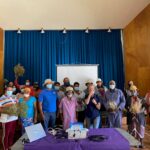
The plant identification sessions give farmers the opportunity to share their knowledge of the species growing in their area and encourage and facilitate more effective management of the veld, ensuring that the important palatable species are grazed with care, species diversity is promoted, and effective rest periods are implemented. These sessions formed part of the Karoo Forever Project, which focuses on promoting sustainable land management in the Karoo. The project is funded by the Global Environment Facility and managed by the United Nations Development Programme, in partnership with the Department of Environment, Forestry, and Fisheries, and the Department of Agriculture, Land Reform, and Rural Development.
EMPOWERING LOCAL LADIES THROUGH TECHNOLOGY
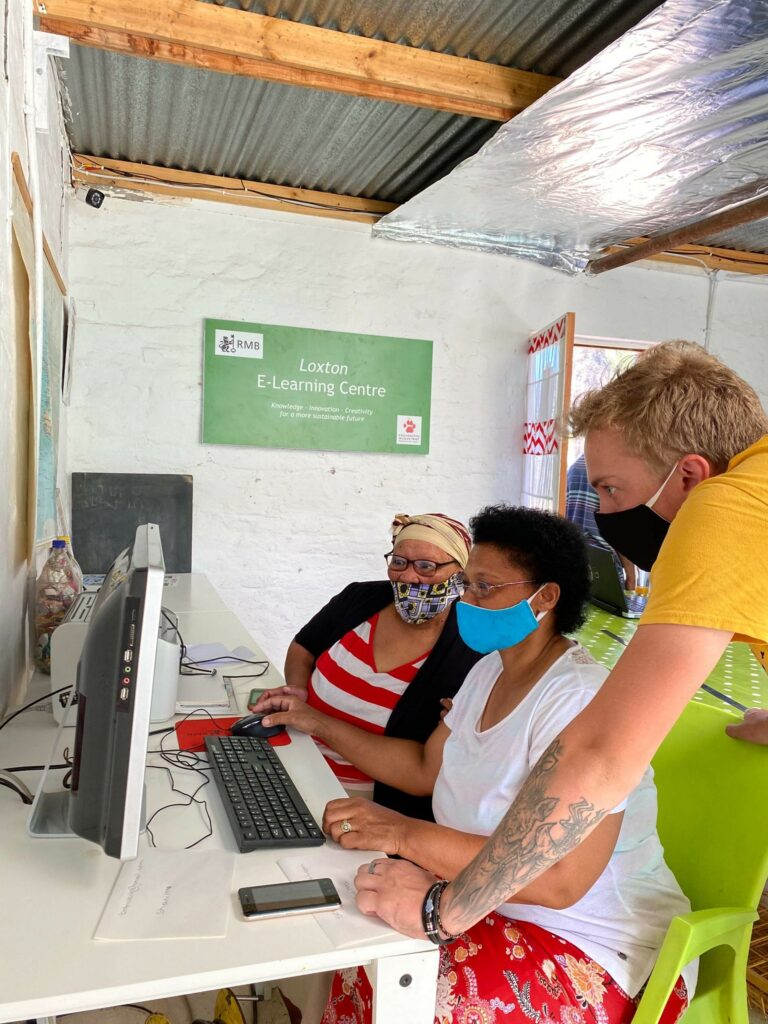
Esther Matthew, EWT’s Drylands Conservation Programme, estherm@ewt.org.zaThe Endangered Wildlife Trust (EWT) has been operating in Loxton (Northern Cape) for the past 15 years, the EWT’s Drylands Conservation Programme based in this one-primary-school-town. The Loxton school, JJ Booysen, burned down in 2017, including the school’s computer room, which has severely limited learner and community member exposure to technology. In 2018, we opened the EWT E-learning Centre, with support from Rand Merchant Bank, to fill the gap. To date, we have hosted three six-week courses for Grade 7s (11-13 years of age), two Google Earth courses for students and emerging farmers, and a photography course for teenagers that we hope to host once a year going forward. The centre was also used in 2019 to host adult literacy classes.
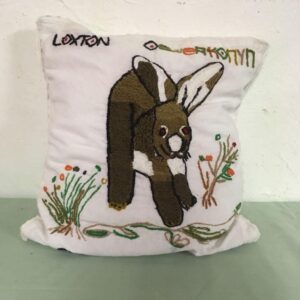
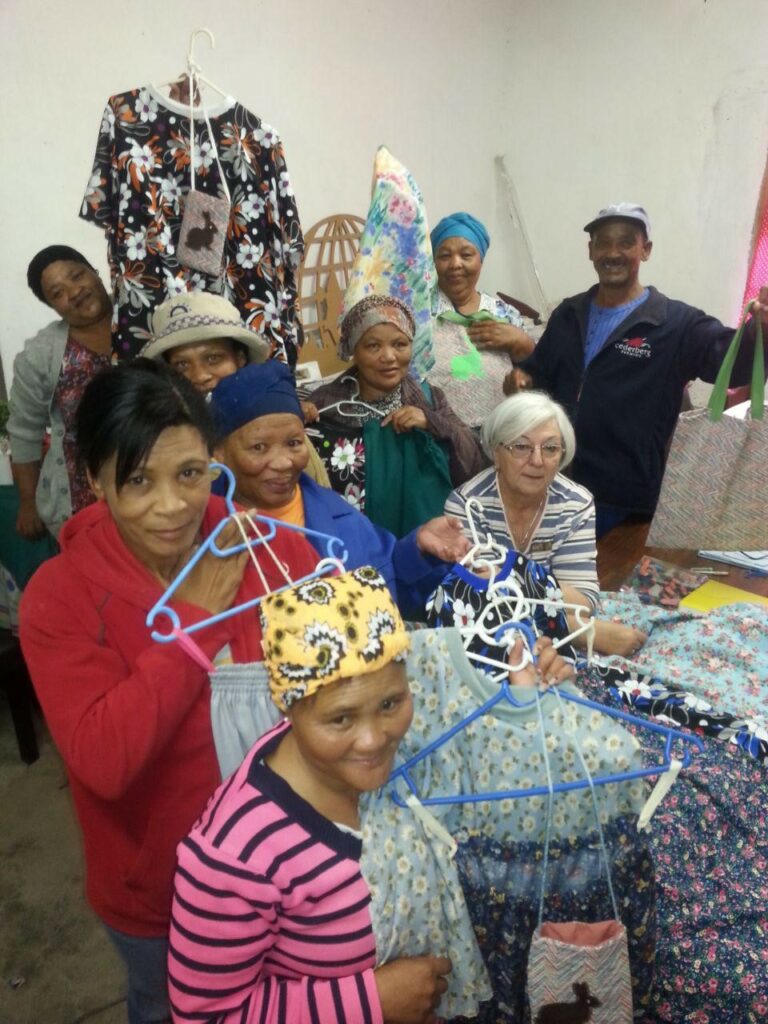
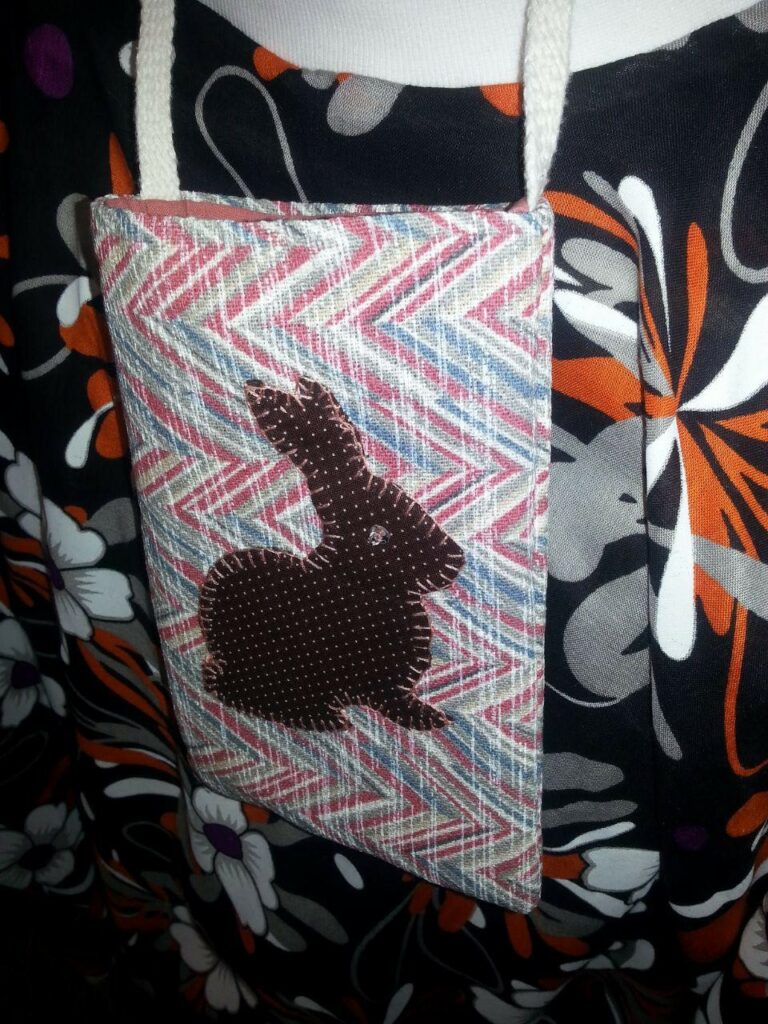
The Laslappies are a local, all-women needlework cooperative based in Loxton. Their cooperative was established in 2018, and their needlework was originally inspired by the Critically Endangered Riverine Rabbit occurring in the surrounding area. Since the start of the cooperative, the ladies have steadily grown their business and are now creating everything from curtains to face masks, both for the community and larger commercial companies.
The EWT’s Drylands Conservation Programme supports these ladies’ efforts by providing them with additional opportunities and training, and the Laslappies started their first computer skills classes this month at the EWT’s E-learning Centre in Loxton. In these classes, the ladies will learn how to create documents, send emails, scan and print documents, and other skills beneficial for their business activities. We want to give special thanks to our two local volunteers, Llewellyn and Dante, for hosting these sessions. We hope to one day expand and improve the centre to provide training to larger groups of learners and community members.
This initiative is made possible by Rand Merchant Bank.