Focussing on sustainable land management in Victoria West
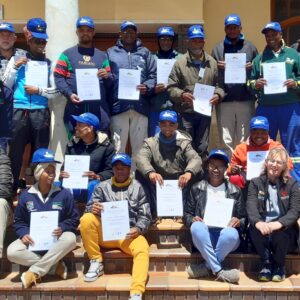
A group of emerging farmers from the Victoria West and Hutchinson area took part in an Integrated Farm Planning and Management training course held in Victoria West in October. The course was presented by the Endangered Wildlife Trust (EWT), in collaboration with the Department of Agriculture, Environmental Affairs, Land Reform and Rural Development and the Grootfontein Agricultural Institute. This was the third time the team has collaborated to present this course to farmers over the last two years: first in Loxton, then Prieska, and now in Victoria West.
The course aims to promote sustainable land management by building capacity amongst farmers, Agricultural Advisors and conservationists. It is vital that farmers are supported in their role as the custodians of the rich biodiversity found on South Africa’s farmlands. These areas fall outside formally protected areas but remain critical to ensuring the health and functioning of ecosystems across landscapes.mpleted the course. The coAltogether 12 farmers course focuses on a holistic approach to farm planning and the principles of sustainable land management. Considering the predicted impacts of climate variation, we must start changing how we are doing things to build environmental and community resilience to extreme climatic events, such as the current drought. Sedrick Visser, Agricultural Advisor (Northern Cape), took the lead in presenting this course. Visser is passionate about training farmers and has taken the lead in presenting the last two courses after he attended the first one held in Loxton as a participant. Sharing knowledge and having discussions around solution-based approaches will empower people to act positively and be the change that is needed. Courses like these enable farmers to improve their farming practices, protect natural resources and create sustainable futuresStaff from the EWT’s African Crane Conservation Programme joined the farmers on the course and underwent training to capacitate them to present the course to communities in KwaZulu-Natal early next year. The content of the course is currently being adapted to make it relevant to the grassland biome.
The training course is also available, for free, online at the www.karooforever.org.za website, created as a knowledge-sharing platform for sustainable land management. The content on the Karoo for Ever website was made possible by several specialists sharing knowledge in the form of webinars and written information. We thank them all for generously sharing their expertise and passion in the interest of promoting sustainable land management in the magnificent drylands of the Karoo.
The course was made possible with funding from the Global Environment Facility and managed by the United Nations Development Program in partnership with the Department of Environment, Forestry and Fisheries and Department of Agriculture, Land Reform and Rural Development and the National Lotteries.
For more information on the course contact:
Bonnie Schumann
Email: bonnies@ewt.org.za
Cell: 072 122 4232
or visit the website at karooforever.org.za
Reptile Awareness Day Shines Spotlight on Western Cape’s Scaled Biodiversity
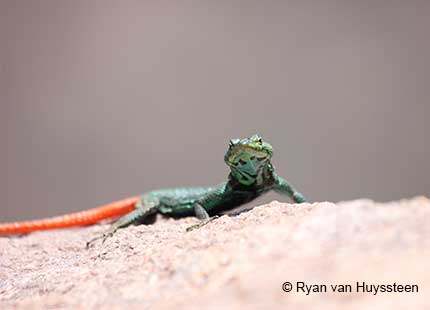
This Reptile Awareness Day, we celebrate the remarkable diversity found at Lettas Kraal Private Nature Reserve in the Anysberg region. The Western Cape boasts 155 reptile species, with 22 found nowhere else on Earth. Situated in the transitional zone between mountain fynbos and Klein Karoo veld, Lettas Kraal’s 7,000 hectares provide critical habitat for 54 reptile species – 31 of which were recorded during a 2020 survey by EWT’s Drylands Conservation Programme.
Notable Species at Lettas Kraal
The reserve protects both common and threatened reptiles including:
- Endangered Karoo Dwarf Tortoise (Chersobius boulengeri) – IUCN Red Listed
- Karoo Sand Snake (Psammophis notostictus)
- Western Sandveld Lizard (Nucras tessellata)
- Bibron’s Thick-Toed Gecko (Chondrodactylus bibronii)
- Karoo Dwarf Chameleon (Bradypodion gutturale)
Reptile Awareness Day Initiatives
Our educational event for Anysberg landowners and farmworkers covered:
Identification of local reptile families
- Venomous snake awareness and bite first aid
- Myth-busting about snake behaviour
- Dangerous arachnid recognition (spiders/scorpions)
- Hands-on encounters with common species
Why This Matters
As former EWT Field Officer Jean-Pierre Le Roux notes, Lettas Kraal’s size makes it invaluable for reptile conservation. The reserve:
- Protects vulnerable endemic species
- Provides corridors between habitats
- Offers research opportunities
- Educates local communities
This Reptile Awareness Day, we encourage everyone to appreciate these often-misunderstood creatures that play vital roles in our ecosystems.
Learn more:
Lettas Kraal Nature Reserve
EWT Drylands Programme
UNRAVELLING THE MYSTERIES OF RIVERINE RABBIT FAMILIES
Esther Matthew, Specialist Conservation Officer, EWT Drylands Conservation Programme, EstherM@ewt.org.za
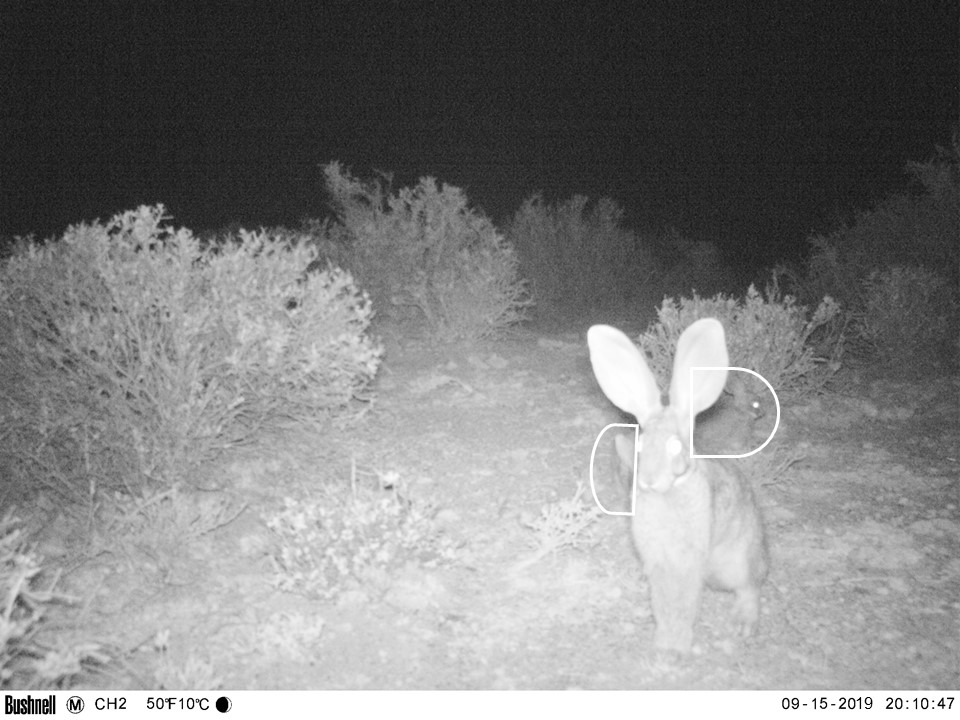
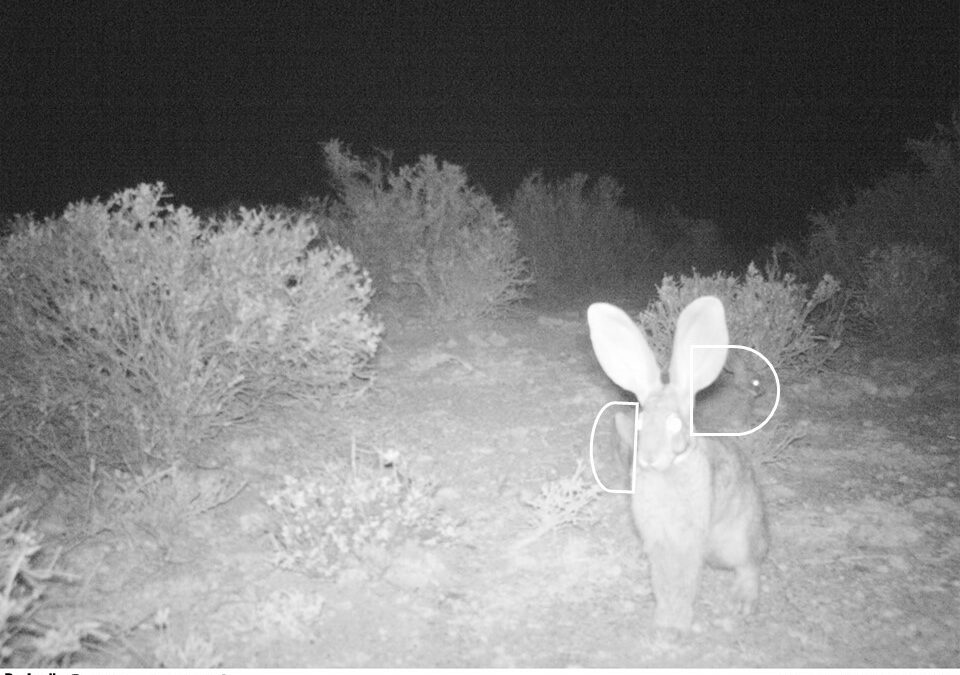
In another exciting first for conservation, the EWT has captured the first ever photographic evidence of Riverine Rabbit kits (babies) with their mother. This unbelievable image was captured on a camera trap near Loxton, and showed a mother Riverine Rabbit and two kits. This is in line with previous research that has suggested that these elusive rabbits, rather than breeding like the proverbial bunnies, tend to only have one or two kits.
To make this news even more exciting, the area where this image was captured was previously data deficient. This means that no sightings of Riverine Rabbit were previously recorded on this farm. The new discovery takes us one step closer to closing the gaps in our knowledge of the complete distribution range for the species and provides us with more information on their ecology.
The EWT’s Drylands Conservation Programme significantly increased its camera trapping activities in 2019, in both the northern and southern populations of Riverine Rabbits. This has led to several exciting developments, such as the confirmation of the new Baviaanskloof population, and a far greater understanding of the species and their use of habitat.
We would like to thank our funders, Rand Merchant Bank (RMB) and the Zoologischen Gesellschaft für Arten und Populationsschutz (ZGAP), for providing ongoing support for our innovative endeavours to uncover the secrets of the iconic Riverine Rabbit.
DEPLOYING NEW TECHNIQUES TO TRACK LOST SPECIES
Cobus Theron, Manager, EWT Drylands Conservation Programme, CobusT@ewt.org.za
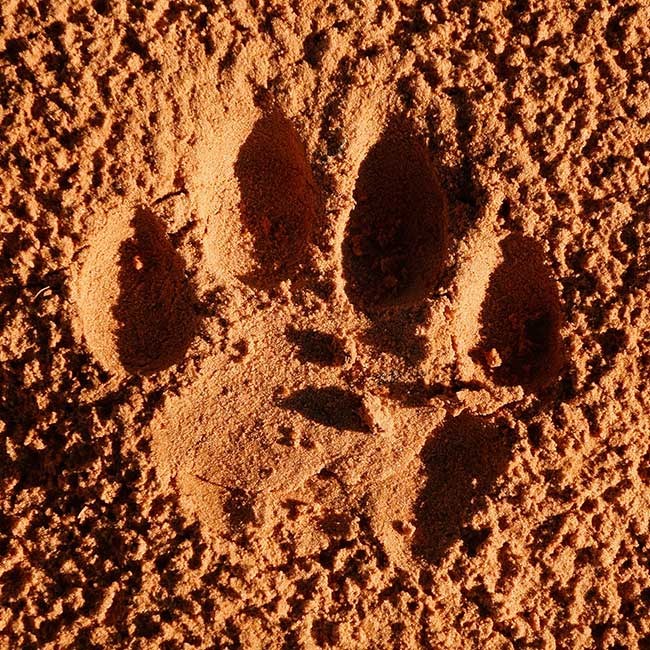
The hope of finding the De Winton’s Golden Mole is almost as transient as the mist that passes through the dunes of the West Coast. This particular mole, last seen in 1937, is considered a lost species (see Lostspecies.org). The prospect of finding this creature and proving its existence is an appealing proposition but does not come without significant challenges. The EWT’s Drylands Conservation Programme is however up for the challenge. We will be teaming up with the University of Pretoria, to use new approaches and innovative technologies to attempt to find out if this species still inhabits the dunes of the West coast.
The De Winton’s Golden Mole is listed as Critically Endangered. It’s dune habitat, in the region of Port Nolloth, is under severe pressure from mining activities. Information on the species is extremely limited and the species is easily confused with Grant’s Golden Mole (which occupies similar environments) on the West Coast. Dune dwelling moles do not leave tunnels and are thus very difficult to locate or trap. Given these challenges, new approaches are required, if we want to find this species.
In November 2019, re:Wild, through their Lost Species expedition project, made a small grant available to the EWT to investigate new approaches for finding the species. The Drylands Conservation Programme will be teaming up with the Samantha Mynhart from the University of Pretoria and will pilot the use of an Environmental DNA (E-DNA) technique to sift through sand samples collected in the dunes near Port Nolloth. If successful, E-DNA techniques will allow us to detect skin cells shed by the moles as they move through the sand. This will enable us to confirm the presence of any of the golden mole species occurring here. We will commence this project in March 2020 when we embark on a Lost Species expedition up the West Coast to collect samples for analysis. If the results are positive, we could not only rediscover the species, but we will also narrow down the search area for future conservation actions. Watch this space!
FARM PLANNING PRIORITISED IN PRIESKA
Bonnie Schumann, Nama Karoo Coordinator, EWT Drylands Conservation Programme
BonnieS@ewt.org.za
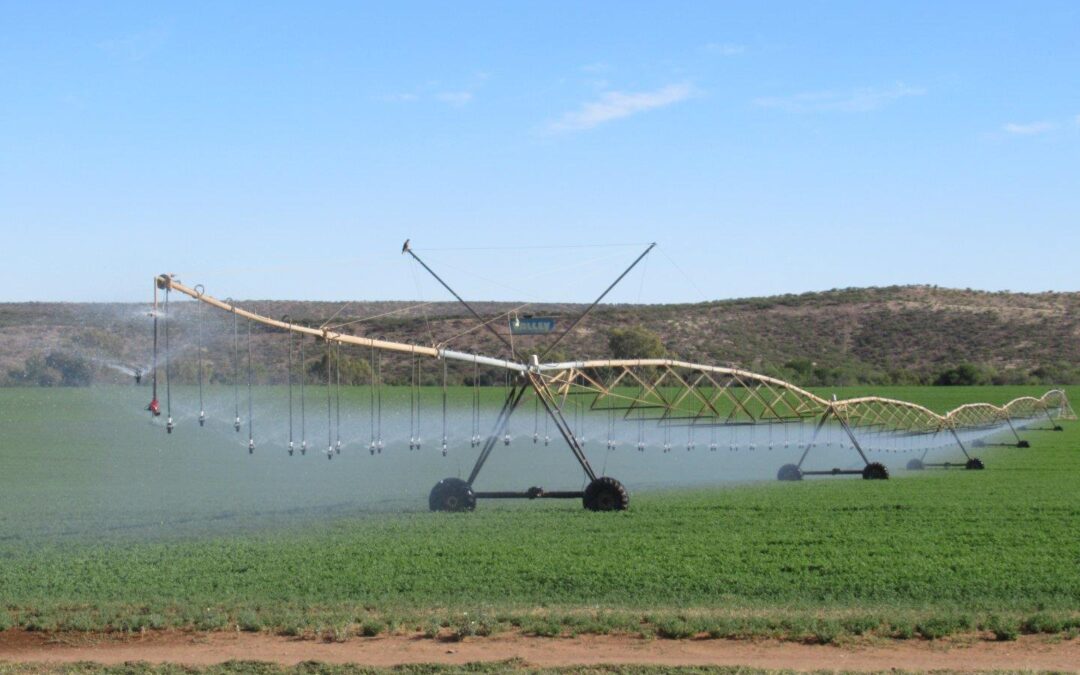
The EWT and the Department of Agriculture, Land Reform and Rural Development (DALRRD) combined forces to bring Integrated Farm Planning and Management training to emerging farmers in the Prieska area. This is the second time the course is being presented in the Northern Cape; the first one was held in Loxton in February this year.
Sedrick Visser, Agricultural Advisor with the DALRRD, was instrumental in bringing the course to Prieska. “Sedrick is dynamic, energetic and very passionate about the work he does, this was clearly demonstrated as Sedrick shouldered the majority of the presentations in Prieska,” said the EWT’s Bonnie Schumann. This is a great example of the train the trainers concept bearing fruit given that Visser and three other advisors attended the first course as part of the EWT’s train the trainer approach. “Sedrick has set a very high benchmark for his fellow advisors to follow”, said Loraine van den Berg, from the Grootfontein Agricultural College, who played a mentoring role and also lectured during the course.
Altogether 17 participants attended the course, including four agricultural advisors. Farmers who attended the course provided very positive feedback regarding the contents and value of the course to their farming moving forward. Several farmers who attended the course have undertaken to work closely with Visser to complete their farm plan and implement key objectives they identified during the week to address sustainable land management issues on their farms.
The course focus is on key principles of sustainable land management and is a great example of how collaboration between agriculture and conservation can help achieve common goals by combining resources and knowledge, with farmers, and ultimately the Karoo environment benefitting.
This initiative forms part of the EWT’s Karoo Forever project and is funded by the Global Environment Facility through the Department of Environmental Affairs and the United Nations Development Programme.
