IGNORANCE IS BLISS: THE UNNOTICED IMPACTS OF ENJOYING NATURAL SPACES AND THE ROLE WE ALL NEED TO PLAY IN CONSERVING THEM.
Joshua Weeber, Threatened Amphibian Programme, joshuaw@ewt.org.za Despite our relatively recent urbanised society, most human beings still feel an innate need to immerse themselves in nature. To marvel at the magnitude of mountains, to feel the still, earthy air of a dense forest, to listen to the gentle trickle of a mountain stream – these are experiences that add value to our lives and provide us with space to think and feel. Unfortunately, this growing realisation of our need to interact with nature is mirrored by the disappearance of natural spaces themselves, destroyed mostly by human-related development. What is left are isolated natural spaces under increasing pressure from a growing human population, all searching for the peace that only nature can provide. While the increasing use of wild spaces shows an appreciation for their importance and beauty, nature lovers need to acknowledge the cumulative impacts of our presence in these spaces and ensure we play an active role in preserving them for future generations to enjoy.
One of these spaces is the iconic and popular Table Mountain, a beacon of hope that provides a place to escape the bustling metropolis of the Mother City from which it emerges. Anyone living at the foothills of this mountain will tell you how lucky they are to have access to such a beautiful natural space, close enough for a morning run or an afternoon walk through the forest with the dogs. Looking at the sheer rock walls, endless fynbos slopes, and deep forested gorges, one might wonder how a human could possibly damage this vast mountain system. Walking with a small group of people and their pets barely leaves footprints on the rocky sandstone trail and crossing a clear mountain stream only takes a moment. This reasoning would hold true if there were not close to four million people living in Cape Town who potentially access the mountain frequently. As is often the case, we choose to view our actions in isolation, and in doing so, do not acknowledge the cumulative impact we have on the world around us.
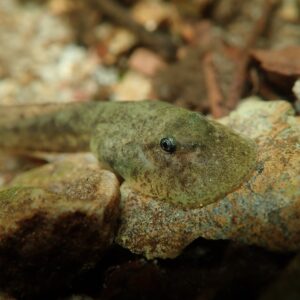
On Table Mountain, paths are used by millions of people every year, and the collective impact of individuals has begun to take a toll. In 2019, a collaborative project was initiated by the Endangered Wildlife Trust to investigate the health of Table Mountain’s perennial streams, with special emphasis on the unique and already Critically Endangered ghost frogs that rely on these streams for survival. While the seemingly larger threats of climate change, water abstraction, and invasive alien plants have also been shown to be important, the impact of path erosion emerged as a key threat to stream health. Simply put, the number of footsteps on paths within the National Park continues to increase, causing paths to widen and deteriorate. In turn, this leads to a larger surface area of exposed and unconsolidated sand transported down paths during winter rains. Problems arise when a path intersects a stream because the eroded sand is swept along the path into the stream itself. These small, rocky streams cannot deal with the abnormal sediment load and clog up, changing the stream structure, which has knock-on effects for stream species and water health. The Critically Endangered Table Mountain Ghost Frog lives in the rocky streams of Table Mountain and is totally dependent on them, occurring nowhere else in the world. Tadpoles of this secretive species spend at least twelve months living in small stream pools before beginning their incredible transformation into adult frogs. They also have very specific requirements as tadpoles and use their specialised sucker mouths to hide and feed under rocks. As paths become eroded, large quantities of sand wash into these sensitive streams, causing the rocky habitat to disappear, lost under a layer of sand and silt. A similar problem can be seen at river crossings where hundreds of feet (and paws) pound over loose rocks each month, compacting the rocky bottom and closing the small yet crucial gaps these tadpoles need to survive and thrive.
The consequences of these impacts are already being felt all over the mountain, and ghost frogs have completely disappeared from one of the nine streams in which they occur, a stream that happens to be a popular hiking and dog-walking location. These sensitive amphibians are the first animals to be affected by habitat alteration, but they will by no means be the last. Their disappearance acts as a warning of what is to come and what these beautiful natural spaces may turn into if we continue to use them without being mindful of our impact.
What is the solution to this growing problem? Is it to prohibit anyone from accessing wild spaces, to ban trail running, picnics and dog walking? Definitely not! These spaces play a crucial role in our lives and contribute to our well-being. We simply need to ensure that we return the favour. We must remind ourselves that our individual, seemingly insignificant actions of stepping on a seedling or dislodging a rock become very significant when repeated hundreds of times by other people. Just as the source of the problem is an accumulation of small, seemingly insignificant steps, so too is the solution. Simple things like being mindful of where you walk, sticking to paths and boardwalks, avoiding already eroded areas, not littering and picking up litter you see, keeping pets out of streams and cleaning up after them, and not collecting or destroying plants can help to mitigate the negative effects of our presence in natural spaces. Organisations responsible for managing these spaces also need to place nature conservation at the centre of their focus, but we must not forget how difficult it is to manage an area with no gates and thousands of visitors, particularly if those visitors refuse to adhere to simple requests like staying off closed paths and sticking to boardwalks.
Ultimately, it is up to the people who use and appreciate these wild spaces to acknowledge that their individual actions do make a difference, both in destroying and preserving nature.
This collaborative project is funded by the Table Mountain Fund, Mohammed bin-Zayed, Whitley Fund for Nature, and Synchronicity Earth, in partnership with the South African National Biodiversity Institute, South African National Parks, the University of Cape Town, and the Freshwater Research Centre
LATEST STORIES
SCIENCE SNIPPETS:
VULTURE CONSERVATION BENEFITS MORE THAN JUST VULTURES
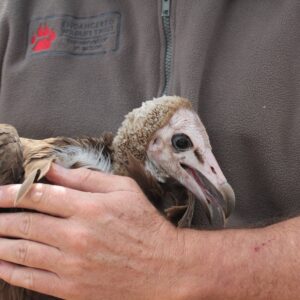
Vultures are an important component of an effective scavenger guild and have evolved a number of adaptations that allow them to locate and dispose of carcasses quickly and efficiently. (Guilds are groups of species that exploit the same resources.) A recent paper, co-authored by EWT staff*, discusses the ecosystem services provided by vultures and the consequences of the continuing decline of African vultures.
African vultures have evolved several specialisations to deal with their diet and any harmful pathogens that may be present in the carcasses they feed on. They thus play an important role in cleaning up carcasses that could cause disease in other animals, which could then be passed on to humans. The decline of African Vultures threatens the stability of the African scavenger guild, which may result in increased carcass decomposition times and, thus, the more rapid development and spread of harmful bacteria. Their absence may also result in changes in the composition of the vertebrate scavenger guild, with an increase in mammalian scavengers, which may increase the risk of viral disease transmission to humans, livestock, and other wildlife.
The economic value of vultures in terms of the sanitation or clean-up services that they provide has been evaluated for some species or countries outside of Africa (e.g., US$700 million per year for Turkey Vultures). Although they can only be deduced for Africa, they must also be substantial. For example, in East and West Africa, vultures consume up to 100 000 kg of organic waste annually, which aids local communities as they would otherwise have to pay for these services. Although the contribution of vultures to the economics of human health and veterinary care has not yet been quantified in Africa either, efforts to conserve vultures should not be deterred. Rabies is an important example of where the loss of vultures has led to substantial human health costs. 95% of global rabies cases occur in Africa and southeast Asia. In India, human health costs due to the loss of vultures were estimated at US$1.5 billion per year (Ogada et al. 2012) due to the increase in feral dogs and rabies. The authors concluded that:
Vultures play a key role in the maintenance of ecosystem health. However, the implications of the decline of African vultures are not yet fully understood and require urgent investigation. Nevertheless, there is enough anecdotal and circumstantial evidence to warrant their urgent protection. It is estimated that the ecological and human health benefits provided by vultures far outweighs the cost of their conservation. The restoration of vulture populations and the ecosystem services they provide will benefit the welfare of all humans, but particularly those who are most vulnerable to economic instability and the spill over of disease at the human-wildlife-livestock interface.
*van den Heever L, LJ. Thompson, WW. Bowerman, H Smit-Robinson, LJ Shaffer, RM Harrell and MA Ottinger. 2021. Reviewing the Role of Vultures at the Human-Wildlife–Livestock Disease Interface: An African Perspective. Journal of Raptor Research. https://doi.org/10.3356/JRR-20-22
LATEST STORIES
Wildlife Crime Impact Statements: Advocating for Nature in Southern Africa’s Courtrooms
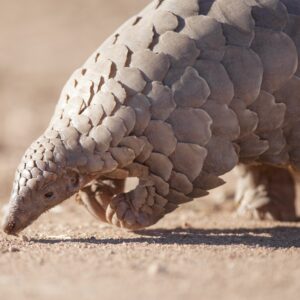
The growing use of Wildlife Crime Impact Statements marks a pivotal shift in how justice systems address environmental crimes. As Southern Africa battles illegal wildlife trade – from rhino horn poaching to reptile smuggling (EMS Foundation Report) – these documents give voiceless victims (endangered species and ecosystems) representation during trials.
Why Impact Statements Matter
- Bridge the legal gap: Animals/plants lack “victim” status despite ecological value (IUCN Report)
- Highlight cascading harm: Show how crimes affect entire ecosystems
- Inform sentencing: Used successfully in Scotland (Government Report) and Hong Kong (SVIS)
EWT’s USAID-Funded Initiative
The Endangered Wildlife Trust now coordinates Wildlife Crime Impact Statements that:
- Detail species’ ecological roles
- Document population threats
- Are authored by scientists/NGOs/government experts
- Reference precedents like India’s Lakshmi Kumari case (Scroll.in)
Addressing All Victims
While rhinos dominate headlines, lesser-known species suffer equally:
- Leopard tortoises smuggled in shoeboxes
- Endangered plants illegally harvested
- Marine species caught as bycatch
As research in the Southern African Journal of Criminal Justice notes (DOI), holistic approaches are vital for effective prosecution.
The Path Forward
These statements help courts:
- Recognise wildlife’s intrinsic value
- Impose deterrent sentences (T&F Study)
- Align with global conservation goals (USAID)
“We’re ensuring magistrates hear both the legal facts and ecological consequences,” says Carina Bruwer, EWT’s Wildlife and Law Project Officer.

A WORD FROM THE CEO
Women’s Month – a month of Gold
Yolan Friedmann, EWT CEO
yolanf@ewt.org.za What better way to kick off Women’s Month in South Africa than with outstanding performances of our lady Olympians Tatjana Schoenmaker (swimming) and Bianca Buitendag (surfing), who racked up the first South African medals of the Games, with Tatjana setting a new world record! The Olympics provide a unique and magical platform where the world comes together to recognise and celebrate extraordinary feats of human brilliance, underpinned by unfathomable dedication, commitment, hard work, and unwavering vision. And in a world shaken by the Covid-19 pandemic, the Tokyo Olympic Games also symbolise hope, triumph, and perseverance for millions of people around the globe. To add to the inspiration offered by any athlete on the start line is the number of athletes this year that are mothers, with Canadian basketball player Kim Boucher even having her three months old infant with her at the Games whom she is still breastfeeding. With 49% of the athletes in this year’s Games being women, the Tokyo Olympics claims to be the most gender-balanced Games of all times, and features nine more mixed events than at Rio 2016, raising the overall number to 18. Progress of gender equity and the rights of women in many respects.
Back home, South Africa has a very long way to go before women can not only feel equal to men in our society (in terms of pay, equity in the workplace, a voice in the media, and more) but can feel safe and free, in our country and our homes. We wish that days and months dedicated to empowering women and raising the profile of the challenges they face would not be necessary but, given that they are, that they will result in immediate, measurable, and impactful change, not just rhetoric clever campaigns. The EWT is a gender-balanced organisation with a ratio of 50:50 men to women and is one of the few in our sector that is female lead. We believe firmly in the role that women play in building not only a resilient, nurturing and compassionate society, but we also embrace and hold dear the value of the female of the species in bringing all these qualities and more to the EWT and conservation in general. The EWT’s ladies are mothers, academics, scientists, field workers, caregivers, teachers, wives, daughters, and leaders, often all in one. Importantly, we are also blessed to work with men who give high regard to the role of the ladies in their personal and professional lives and who are fundamental to creating a society that is empowering and respectful of women.
This Women’s Month, I wish that all the ladies in the EWT know how valued they are, how much they contribute, and how much impact they have on conservation, the EWT, their families, and society. It is equally my wish that all the men in the EWT also know how important they are, how invaluable is their contribution and how irreplaceable their roles as fathers, brothers, colleagues, and friends are. From all at the EWT, may you spend this Women’s month celebrating each and every woman in your life, and the many good men too, and make the changes that are necessary for a long lasting impact to come from this August that will empower and keep safe ALL the ladies in our country. May we all work this month and every month to create an equitable, safe, just and celebratory society of the gold that exists in all of us.
LATEST STORIES
Herpetological Surveys Limpopo Province: The Quest for ‘Extinct’ Reptiles
Recent herpetological surveys Limpopo Province conducted by the Endangered Wildlife Trust’s Conservation Science Unit have shed new light on the Woodbush region’s remarkable reptile and amphibian diversity. While the team’s primary goal – rediscovering the officially extinct Eastwood’s Long-tailed Seps (Tetradactylus eastwoodae) – remains unfulfilled, the expedition yielded significant findings that reshape our understanding of this ecological hotspot.
Expedition Highlights
- 50 species recorded (10 amphibians, 40 reptiles)
- Valuable DNA samples collected for 7 taxonomically uncertain species
- 208 new distribution records for the region
- Key species documented:
-
Vulnerable Methuen’s Dwarf Gecko (Lygodactylus methueni)
-
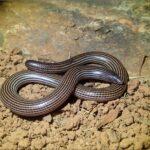
Near Threatened Woodbush Legless Skink (Acontias rieppeli)
-
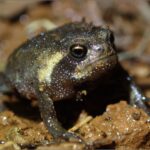
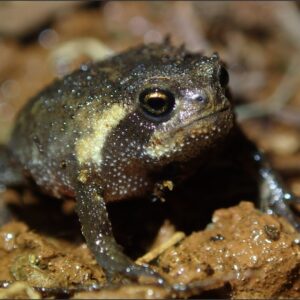
Northern Forest Rain Frog
Innovative Survey Methods
The team employed specialised trapping systems featuring:
- Drift fencing (30m per trap)
- Pitfall traps (5 per array)
- Funnel traps (6 per array)
- Daily monitoring following strict ethical protocols
“While we didn’t find our ‘Holy Grail’,” notes Dr Oliver Cowan, “we’ve significantly advanced knowledge of this understudied region and identified critical conservation priorities.”
Herpetological Surveys Limpopo Province: Conservation Implications
The surveys revealed:
-
New population data for threatened species
-
Potential cryptic species awaiting genetic confirmation
-
Habitat requirements for endemic herpetofauna
Supported by Rand Merchant Bank Foundation, this work underscores the importance of continued herpetological surveys to protect its unique biodiversity.