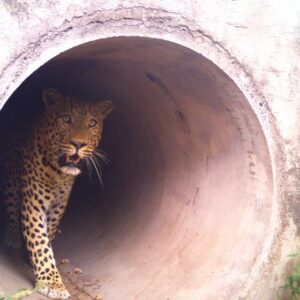
THE INAUGURAL GLOBAL CONGRESS FOR LINEAR INFRASTRUCTURE AND ENVIRONMENT
Wendy Collinson-Jonker, Endangered Wildlife Trust, wendyc@ewt.org.za The Endangered Wildlife Trust and the International Conference on Ecology and Transportation, otherwise known as ICOET, hosted the virtual Global Congress for Linear Infrastructure and Environment, on 20 and 21 September. With over 100 delegates from 24 different countries, the congress, aimed to provide a new opportunity for a global gathering that includes both the intellectual content of a scientific conference and the international reach of the United Nations and Sustainable Development Goals.
Linear infrastructure is essential for connecting society: our systems of roads, railways, pipelines, and power lines all serve to link our cities, developments and resources, and our energy and water supplies. Therefore, it is perhaps ironic that linear infrastructure does exactly the opposite for natural systems – by crisscrossing landscapes, linear infrastructure serves to fragment ecosystems, isolate populations, and reduce natural flows. Roads, railways, fences, and power lines constrain animal movements. They pose direct threats to species from collisions and indirect threats by increasing access by people to previously untapped resources.
Currently, there are five active continental conferences. The Infrastructure and Ecology Network Europe, or IENE, was established in 1996, whilst the International Conference on Ecology and Transportation, or ICOET, started in 1999, with a primary focus on the United States and North America. Both conferences presented the development of a new field of ecology. In 2009, the Australasian Network for Ecology and Transportation (ANET) commenced, followed by the Congresso Iberoamericano de Biodiversidade e Infraestrutura Viária or CIBIV in 2010 and then the newest, the African Conference for Linear Infrastructure and Ecology in 2019.
Each of these conferences has representatives from industry (e.g., planning, engineering, construction), representatives from transport, regulatory, planning, and environmental agencies at all levels of government, research institutions, non-government organisations, environmental consultants, and community groups (e.g., wildlife carers, environmental groups). While these conferences promote international participation, they are inherently focused on the work and issues important to their host continent, but they have joined forces for the Global Congress for Linear Infrastructure and Environment. GCLIE is intended to complement the existing continental conferences on transportation ecology by providing a platform that focuses on broader, higher-level, global issues and policies that can influence national and international knowledge sharing and bring about positive change. The Global Congress will facilitate truly global opportunities for conversation and debate issues that create bridges between and push the boundaries outside of our respective continental conferences, aiming to improve our understanding of world issues and influence action at this scale.
Building on the achievements of the continental conferences, the event also aims to develop tools (e.g., scientific briefs on particular topics) for influencing global decision-makers to aim for more sustainable new and existing linear infrastructure. The event is organised back-to-back with ICOET held virtually from 22-30 September 2021.
After nearly a year and a half of the global pandemic, we’re all extremely familiar with online engagement, and the online format has certainly enabled the participation of people from afar and will allow for constructive interaction among participants. By bringing together a diverse range of participants from across the world, GCLIE is fostering a community of practice that will collectively answer some of the most challenging questions of our time.
“I attended the GCLIE as a precursor to the 2021 ICOET conference. This congress was a truly comprehensive global overview of the factors fragmenting habitat, disturbing ecological functions, and impeding the necessary and natural movement of wildlife at multiple scales. Throughout the congress the conceptual framework of thinking globally and acting locally manifest in the case studies and policy level presentations and discussions. The GCLIE was an opportunity to identify commonalities, both great and small, that transcend geopolitical boundaries and align practitioners, academics, and policy-makers for success. The virtual format facilitated global participation and representation. Very well done. I look forward to the next GCLIE.”
– Chris Slesar | Environmental Resource Coordinator, Vermont Agency of Transportation, USA
“GCLIE was the first opportunity to discuss research and policy related to mitigating the impacts of linear infrastructure at a global level – involving a high diversity of researchers and practitioners with experience from all around the world. It felt reassuring to notice that different continents face similar challenges and to discuss together how we can all collaborate to overcome them.”
Dr. Fernanda Z. Teixeira, Postdoctoral researcher, Ecology Graduate Program, Federal University of Rio Grande do Sul (UFRGS)
“I had the pleasure this week to participate in the coming together of a global forum on transportation and the environment. The world is being transformed at an unprecedented speed through the construction of roads, railways, pipelines and other transportation infrastructure, and GCLIE must play a pivotal role in ensuring the infrastructure that is planned and built today has a positive impact on society and the natural environment. The need for GCLIE has never been more critical – and I am excited to see how GCLIE develops in the years ahead.”
Dr Rodney van der Ree, National Technical Executive – Ecology, WSP Australia Pty Limited
GCLIE 2021 not only provided a necessary bridge between existing continental communities of practice but begun the critical work of leveraging national and continental solutions to generate a global movement for ecologically sustainable linear infrastructure. Sarah Chiles, Landscape Infrastructure Advisor – Kenya, Ewaso Lions & Grevy’s Zebra Trust
LATEST STORIES

Water for Life: Transforming Health and Conservation in Kutama
The Water for Life initiative, a partnership between the Endangered Wildlife Trust and Coca-Cola Foundation’s RAIN programme, is tackling critical water, health and sanitation challenges in Kutama near the Soutpansberg mountains. This holistic project addresses two fundamental needs: clean water access and menstrual health education.
The Twin Crises We’re Addressing
- Water and Sanitation
- Diarrhoeal diseases caused 1.6 million deaths globally in 2017 (Our World in Data)
- Many communities lack clean water for basic handwashing
- Our school programmes teach germ transmission and proper hygiene
- Menstrual Health
- 400 secondary school girls receiving reusable sanitary pads
- Focus groups providing vital health education
- Combating stigma while reducing waste (Ecological impact research)
Water for Life: Environmental Benefits
The initiative extends beyond immediate human needs:
- Alien plant clearing improves watershed function
- Reduced sanitary waste protects ecosystems
- Healthier communities support conservation efforts
See EWT’s Work in Action
Discover more about our Soutpansberg conservation work in our Forgotten Mountain video.
For project details, contact Dr Jenny Botha: jennyb@ewt.org.za
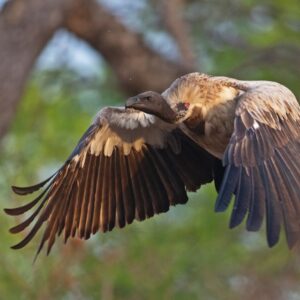
Science Snippets: Vultures’ Power – Traditional Use and Conservation Concerns
New Research on Vulture Use in Traditional Medicine
A published paper co-authored by EWT scientists* examines the complex relationship between traditional healing practices and vulture conservation in South Africa. This Science Snippets: Vultures’ Power study, titled Uses of Vultures in Traditional Medicines in the Kruger to Canyons Biosphere Region, South Africa, reveals critical insights into how cultural beliefs impact endangered vulture populations.
Key Findings from the Research
The study documents:
- Interviews with 51 traditional healers in Mpumalanga and Limpopo provinces
- Specific vulture parts used for different purposes:
- Brains: Believed to enhance clairvoyance
- Hearts: Thought to increase intelligence
- Livers: Used to promote prophetic dreams
- Mixed preparations: For employment-related purposes
Conservation Impacts
The research highlights alarming trends:
- Supply chain issues:
- Most vultures obtained through poisoning or trapping
- Single poisoning events often kill multiple birds
- Prices range from ZAR300 to ZAR1,500 per bird
- Population threats:
- Estimated 400-800 vultures used annually in the study region
- Cape vultures most sought-after for perceived potency
- Some healers report using up to 10 birds per year
Recommendations for Sustainable Coexistence
The authors propose balanced solutions:
- Developing alternatives: Promoting non-vulture ingredients for traditional medicine
- Community engagement: Educating about vultures’ ecological importance
- Policy reinforcement: Strengthening enforcement against illegal wildlife trade
- Monitoring programmes: Tracking vulture populations and trade patterns
The Way Forward
This Science Snippets: Vultures’ Power research provides crucial data to inform conservation strategies. While respecting cultural traditions, the study emphasises the urgent need to protect vulture populations that:
- Maintain ecosystem health through carcass removal
- Provide disease control by preventing pathogen spread
- Offer economic benefits to livestock farmers
Read the full study:
Journal of Raptor Research
Citation:
Mashele, N., Thompson, L.J., & Downs, C.T. (2021). Uses of Vultures in Traditional Medicines in the Kruger to Canyons Biosphere Region, South Africa. Journal of Raptor Research 55(3).
CONSERVATION CHAMPION
vc_column_text css=”.vc_custom_1633342873766{padding-top: 5px !important;padding-right: 5px !important;padding-bottom: 5px !important;padding-left: 5px !important;background-color: #ffffff !important;}”]A very big thank you to Nika Viljoen, who raised R5,600 for the EWT at her school, Potchefstroom Gymnasium, by encouraging learners to wear flip-flops for the day in exchange for a donation. This is what she had to say:
“I have always been someone who cares and who wants to make some kind of difference and this side of me started to really itch when I was 12/13. I would always try and come up with some kind of idea to do something, to help someone or make an impact, and that’s when the thought occurred to me to do a fundraiser. I came across the EWT, and everything they do immediately pulled me in. Nature and the incredible creatures God gifted us has always held a special place in my heart, and the fact that we are killing them, destroying their homes and taking away their families devastated me, and I knew I had to do something, anything to try and help, and raising funds for EWT was the perfect opportunity.”
I feel like we raised some good funds and I am eternally and incredibly grateful for the opportunity I got, but I am definitely not going to stop there. I will keep on trying to make a difference, step by step.”
“We need your help! The global covid crisis has shown us more than ever how important it is to work together to support the future of our planet – the people, the environment and the animals within it.
We will be running together and on our own over the next few months, and we will add our distances together to make up the 535 km journey from our school to Big Ben in London. We hope you will cheer us on by donating to this very worthy charity – www.ewt.org.za”
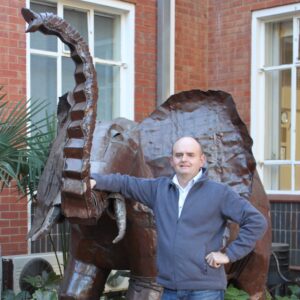
GUEST ARTICLE: MY JOURNEY IN ROAD ECOLOGY
A rewarding part of my career has been training and capacity-building and seeing people and organisations become local, regional, and world-leaders in their work. A highlight for me has been watching the growth of Wendy Collinson and the Endangered Wildlife Trust to become local and international leaders in transportation ecology.
My name is Dr Rodney van der Ree, and I first met Wendy Collinson in around 2010. Our first collaboration was to co-organise a symposium at the International Wildlife Management Congress in Durban in 2012, followed by a workshop at the EWT office in Johannesburg a couple of days later. The concept of ‘road ecology’ was explored for the first time in Africa at these two events, and participants clearly understood its importance. Wendy and the team at EWT continued to develop the program and established partnerships with local road agencies (namely Bakwena, N3TC and TRAC N4), SANParks and universities to begin collecting data and training students.
In 2015 I returned to South Africa to support another series of workshops on road ecology in Africa run by EWT at a conference in Howick (The Symposium of Contemporary Conservation Practice) and Johannesburg (The Green Mile). It was incredible to see the growth in the field since the initial visit in 2012 and participation by a larger and more diverse group of people. This was also an exciting trip for me because I brought about 30 copies of my recently published ‘Handbook of Road Ecology’ (www.handbookofroadecology.org), which included four chapters from Africa, including a Chapter by Wendy and colleagues at the EWT. The handbook has 62 chapters written by more than 100 leading transportation ecologists from around the world, and I have half-price copies available as part of the 2nd ACLIE congress (see ACLIE article) that was just held. If you are interested, please send me an email rvdr@unimelb.edu.au and I can give you a quote for postage.
I started my career as a post-doctoral researcher at The University of Melbourne Australia and very quickly became focused on quantifying and mitigating the impacts of roads and traffic on wildlife. With numerous students and collaborators (including Dr Manisha Bhardwaj, who wrote an article in this newsletter last month), this field of research and practice’s critical importance is growing rapidly. I have since moved into ecological consulting to work more closely with those who are planning, designing, building and managing the roads, railways and other linear infrastructure that is being built across Africa at a pace never seen before. In an effort to improve access to important information, I established the open-access resource hub www.TransportEcology.info earlier this year, with Wendy and Lucy Waruingi (from the African Conservation Centre) on the editorial board. The site includes blog-style summaries of relevant peer-reviewed scientific articles, as well as space for case studies and best-practise notes. You are invited to submit your articles for publication and encouraged to subscribe to receive notifications when new articles are published.
Transportation ecology in Africa has come a long way since Wendy, and I ran those initial meetings almost a decade ago. With Wendy spearheading the establishment of ACLIE and the successful online ACLIE congress in August 2021, there is now a much larger group of people involved and dozens of research and management projects across many parts of Africa. Importantly, there is a growing realisation in government of the need for applied research, comprehensive environmental impact assessments, and innovation to ensure the roads, railways, and other linear infrastructure we build today do not undermine our ecosystems’ ecological integrity and sustainability for decades to come.
LATEST STORIES
