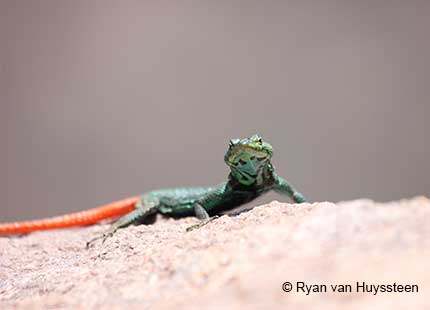
Reptile Awareness Day Shines Spotlight on Western Cape’s Scaled Biodiversity
This Reptile Awareness Day, we celebrate the remarkable diversity found at Lettas Kraal Private Nature Reserve in the Anysberg region. The Western Cape boasts 155 reptile species, with 22 found nowhere else on Earth. Situated in the transitional zone between mountain fynbos and Klein Karoo veld, Lettas Kraal’s 7,000 hectares provide critical habitat for 54 reptile species – 31 of which were recorded during a 2020 survey by EWT’s Drylands Conservation Programme.
Notable Species at Lettas Kraal
The reserve protects both common and threatened reptiles including:
- Endangered Karoo Dwarf Tortoise (Chersobius boulengeri) – IUCN Red Listed
- Karoo Sand Snake (Psammophis notostictus)
- Western Sandveld Lizard (Nucras tessellata)
- Bibron’s Thick-Toed Gecko (Chondrodactylus bibronii)
- Karoo Dwarf Chameleon (Bradypodion gutturale)
Reptile Awareness Day Initiatives
Our educational event for Anysberg landowners and farmworkers covered:
Identification of local reptile families
- Venomous snake awareness and bite first aid
- Myth-busting about snake behaviour
- Dangerous arachnid recognition (spiders/scorpions)
- Hands-on encounters with common species
Why This Matters
As former EWT Field Officer Jean-Pierre Le Roux notes, Lettas Kraal’s size makes it invaluable for reptile conservation. The reserve:
- Protects vulnerable endemic species
- Provides corridors between habitats
- Offers research opportunities
- Educates local communities
This Reptile Awareness Day, we encourage everyone to appreciate these often-misunderstood creatures that play vital roles in our ecosystems.
Learn more:
Lettas Kraal Nature Reserve
EWT Drylands Programme
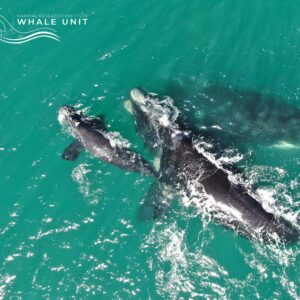
MRI Whale Unit Research: Drones Revolutionise Whale Conservation
The MRI whale unit research partnership between the Endangered Wildlife Trust and University of Pretoria is transforming how we study Southern Right Whales. Using cutting-edge drone technology, researchers can now assess whale body conditions and behaviour patterns in a cost-effective, non-invasive manner – critical for understanding climate change impacts on marine ecosystems.
Drone Technology Breakthroughs
The EWT’s licensed drone operations (SACAA-approved since 2020) are enabling groundbreaking conservation work:
- Power line safety: Attaching bird flight diverters
- Wildlife monitoring: Thermal imaging for nocturnal animal counts
- Marine research: Photogrammetry of whale populations
Southern Right Whale Research
The unit employs specialised drones to:
- Capture high-resolution aerial images
- Measure body condition indices (BCI)
- Track individual whales over time
- Compare populations across South Africa, Australia and Argentina
“Drone technology has revolutionised our research,” says Dr Els Vermeulen, MRI Whale Unit Research Manager. “We can now track body condition variations annually and observe behaviours invisible from boats.”
Climate Change Connections
The research highlights worrying trends:
- Krill populations (whales’ main food) affected by ocean warming
- Declining body conditions may indicate ecosystem stress
- Long-term data crucial for conservation planning
How to Get Involved
Contact Lourens Leeuwner (lourensl@ewt.org.za) for drone operation enquiries
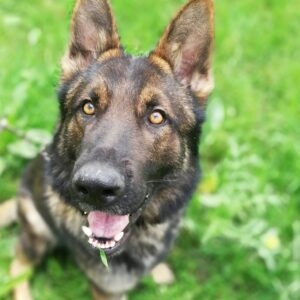
USING CONSERVATION CANINES TO SAVE OUR SPECIES FROM THE ILLEGAL WILDLIFE TRADE
Andrew Taylor, Wildlife in Trade Programme Manager, Endangered Wildlife Trust, andrewt@ewt.org.zaIllegal Wildlife Trade (IWT) is one of the biggest threats to biodiversity worldwide, and an ongoing poaching surge places particular strain on some of South Africa’s most threatened species. With funding from IUCN Save Our Species African Wildlife Initiative and the European Union, the Endangered Wildlife Trust (EWT) aims to reduce IWT by reducing the poaching of five iconic mammals. White and Black Rhinos, listed as Near Threatened and Critically Endangered respectively on the IUCN Red List of Threatened Species, are both experiencing population declines due to illegal harvesting. Temminck’s Pangolin, listed as Vulnerable, is being mercilessly targeted by poachers for local and international markets and given its rare status and slow rates of reproduction, they are almost certainly experiencing population declines, although we do not have accurate population data. The African Savannah Elephant, now listed as Endangered, is not currently under threat from poaching in South Africa but has been hugely impacted across the continent, making South African populations more important to secure. Finally, the African Lion, listed as Vulnerable, is coming under increased threat from IWT for its claws and teeth and needs protection from poachers before it’s too late.
A combination of approaches is needed to reduce poaching, each focusing on different links in the wildlife trade chain. When implemented in combination with other measures, one effective method is the use of highly trained conservation canines. These dogs are trained to detect specific wildlife products and, when working at reserve gates and other strategic locations, provide a quick and reliable method of screening vehicles entering for concealed firearms and ammunition and vehicles leaving for wildlife contraband. These dogs thus prevent poachers from using vehicles to carry their weapons into reserves or transport animal parts out. Tracking dogs provide a mechanism to locate incursion entry and exit points along reserve boundaries, track poachers inside reserves, and, if they do not catch up with poachers, can identify routes taken, providing critical data for predicting future poacher movements.
Under this grant, the EWT will support seven reserves threatened by poaching by providing them with detection or tracking dogs, training for dog handlers, as well as ongoing support for dog-handler teams. Three reserves will receive detection dogs, two will receive tracking dogs, and two, which already have dogs, will receive support for their current dogs and handlers. All seven reserves have rhinos and some of the other threatened species mentioned above, and all have experienced revenue losses because of tourist travel bans resulting from COVID-19. This has severely limited their ability to generate sufficient income to maintain functioning conservation canine units to support their anti-poaching defence.
So far, we have three dogs and one new handler undergoing initial training which will be certified before deployment. We are grateful to IUCN Save Our Species and the European Union for the generous support in our fight to protect our threatened species against poaching.


This publication was produced with the financial support of the European Union through IUCN Save Our Species. Its contents are the sole responsibility of the Endangered Wildlife Trust and do not necessarily reflect the views of IUCN or the European Union.
LATEST STORIES

Message From Our CEO: Finding Hope in Conservation’s Daily Wins
This Message From Our CEO, Yolan Friedmann, reflects on a month of meaningful celebrations and conservation progress. September brought numerous special days – from International Rhino Day to National Arbour Day – each reminding us of nature’s fragility and our collective responsibility to protect it.
September Highlights at EWT
We celebrated significant achievements:
- New hiking trails launched in the Soutpansberg Protected Area
- Conservation Canines honoured for their anti-poaching work
- Pilanesberg National Park secured critical anti-poaching funding
- Living Legacy forest planted to honour bequest donors
- New team members joined our growing conservation force
A Time for Renewed Perspective
In challenging times marked by:
- The ongoing pandemic
- Economic pressures
- Environmental threats
We must cherish each day’s opportunities to:
- Protect endangered species
- Restore habitats
- Inspire future conservationists
“In an imperfect world, we must celebrate the chances each new day brings to make things better,” notes Friedmann. “Every day should be a special day for conservation.”
As spring renews our landscapes, let it renew our commitment to safeguarding South Africa’s natural heritage.
Contact our CEO: yolanf@ewt.org.za
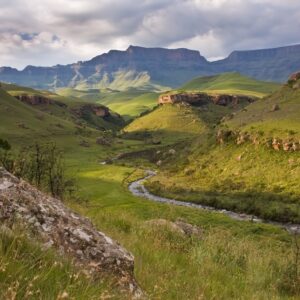
Conservation-conscious Developments: A New Era for South African Ecology
The push for conservation-conscious developments has reached a milestone with South Africa’s national Environmental Screening Tool. This digital platform, developed by the Department of Forestry, Fisheries and Environment (DFFE), helps developers identify and protect sensitive ecosystems before breaking ground – a game-changer for biodiversity protection.
How the Tool Works
The web-based system cross-references proposed sites with:
- 4,633 plant species and 425 animal species data
- Cultural and archaeological heritage sites
- Priority habitats from SANBI and BirdLife South Africa
- Real-time sensitivity mapping across all provinces
“This prevents the oversight of threatened species that often disguise themselves or appear seasonally,” explains Dr Dominic Henry of EWT, who helped develop the tool.
Conservation-conscious developments: Standardising Environmental Assessments
New protocols (gazetted October 2020) now mandate:
- Minimum data requirements for specialist studies
- Consistent impact assessment methodologies
- Clear guidelines for reporting on Species of Conservation Concern
Why This Matters Now
With South Africa:
- Ranking as the 12th largest carbon emitter
- Accelerating renewable energy projects
- Facing increased rural development pressures
The tool balances economic growth with ecological protection – ensuring conservation-conscious developments become the norm rather than the exception.
Public Participation Encouraged
Citizens can use the open-access tool to:
- Identify local species of concern
- Submit informed comments on development proposals
- Advocate for better project siting
“This is a paradigm shift,” notes SANBI’s Domitilla Raimondo. “For the first time, everyone from developers to community members can access the same biodiversity data during planning stages.”
