Help African Wild Dogs 

Donate today  

A word from the CEO April 2023

A word from the CEO April 2023

Word from the CEO
Yolan Friedmann


One of the trees most commonly associated with all things Africa is the Marula Tree, Sclerocarya birrea, a deciduous fruit-bearing tree found throughout Africa and Madagascar in various woodlands habitat types. Whilst many people associate the Marula tree with alcoholic beverages and the ‘crazy’ behaviour of monkeys and elephants after consuming large volumes of the fermented fruits in summer, their true value to the widest variety of many species is perhaps less known.

Not only does this single-stemmed, ~18m high tree provide critical shade in the blazing African sun, but every single part of the Marula tree has value and is prized by humans and animals alike. The fruits are a rich source of vitamin C, around eight times higher than an orange. Boiled marula fruit skin makes a refreshing drink, while burnt skins make a coffee substitute. Marula wood is soft and used for carving and rope, and brown dye can be made from the bark. The bark contains antihistamines and can also treat dysentery, diarrhoea, rheumatism, insect bites, and other ailments. It is also used as a preventative to malaria., while the green leaves of the marula tree are eaten to alleviate heartburn.

Caterpillars and wood-boring beetles are removed from the marula tree and roasted for consumption, and the oil is used as a skin cosmetic. Essence from the leaves is said to remedy abscesses, spider bites and burns. The tree’s large, shady respite from the Afrinca sun often serves as a village meeting place. Over centuries, dozens of wildlife species have also benefitted from this much-needed shade and derived important nutrition from the tree’s leaves, fruit, and bark. This life-giving tree is often associated with species such as elephants, rhino, baboons and monkeys, many birds, warthog, giraffe and ostriches. Over centuries, humans and wildlife have benefitted from and enjoyed the spoils of this life-giving force of nature.

A commonly asked question is, if you were a tree, what tree would you be? Would most people quickly reply with the Marula as their answer? Despite all these attributes, maybe not. Perhaps not everyone wants to be all things to all species and communities of life. However, I will bet that if the EWT staff were asked that question, the reply would be a resounding “The Marula Tree” for that very reason! For over 50 years, the EWT has been the Tree of Life for countless species, ecosystems, and communities across the African landscape. This we have done by providing refuge for species at perpetual risk of conflict with humans and nourishment for people through sustainable livelihood development with our community partners and securing safe space for wildlife populations to expand and prosper. The EWT has left its indelible footprint across  Africa’s savannahs, woodlands, wetlands, catchments, grasslands, mountains, and oceans, has benefitted communities of people, mammals, plants, birds, reptiles, insects, and amphibians, and is as much associated with all things Africa as our beloved Marula tree.

Like a tree – our power lies in our ability to convene, support, and assemble- bringing together our team’s brightest minds and most passionate hearts – and those of our partners and associates. As we forge a pathway to achieve even more over the next 50 years, it is through these people that we draw our inspiration. Inspiration for the next 50 as the race against extinction and to stem the impacts of climate change and ecosystem destruction ramp up.

To help us celebrate 50 Years of Conservation in Action, send us your thoughts on #50YearsOfEWT to help us create the next 50. Like the Marula, the EWT is here to serve our environment and has thousands more sunsets to share and sunrises to welcome. Help us craft #TheNext50 together.

Drop us a line at ewt@ewt.org.za or visit www.ewt.org.za, where you can share your vision for our planet 2073 and what the EWT will have achieved by then.

Happy Birthday, EWT.

Yolan Friedmann
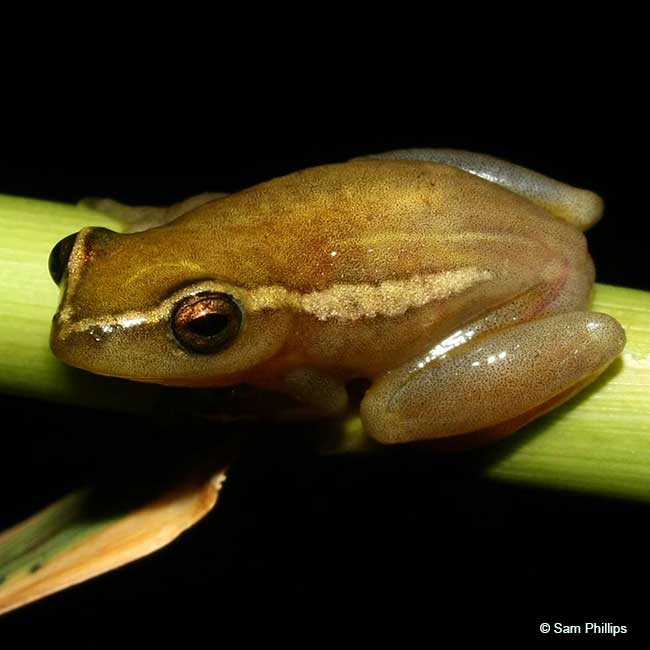
A decade of frogging keeps us leaping for joy

A decade of frogging keeps us leaping for joy

A decade of frogging keeps us leaping for joy

Jeanne Tarrant, EWT Threatened Amphibian Programme Manager

In 2012, volunteer and Public Relations expert Carmen Curtayne and I wanted to do something to highlight both the importance of amphibians in South Africa and the severe threats they face. After much brainstorming, we devised the ‘Leap Day for Frogs’ campaign.

The idea was to create an annual national awareness day on 28 February – tying together the themes of Leap Year, leaping frogs, and taking a leap of faith (doing something demonstrable for frog conservation). We wanted to bring much-needed attention to frogs and their extinction threat. We also wanted to have fun in the name of frogs, encourage the public to get involved in science (citizen science), and celebrate South Africa’s incredible variety of frog species. With almost half of the world’s amphibian species experiencing some level of decline, bringing as much attention to frogs as possible has never been more important. South Africa is home to over 130 species – from the Giant Bullfrog (the size of a dinner plate!) to the Micro Frog (the size of your thumbnail), and all shapes and sizes in between. This enormous diversity is mirrored in the wide range of landscapes that frogs inhabit – from coastal wetlands to montane grasslands, gardens, forests, and even deserts.

Frogs are not just long-limbed, leapers. These water-loving amphibians play important roles in our ecosystems by feeding a wide array of other animals and eating vast quantities of insects – i.e. incredible free pest control! They are also important bio-indicators due to their sensitive skins and bi-phasic lifestyles. In other words, if they are around, our environment is healthy. These barometers of life are now the most threatened group of species on Earth, surely a sign of a planet in trouble.

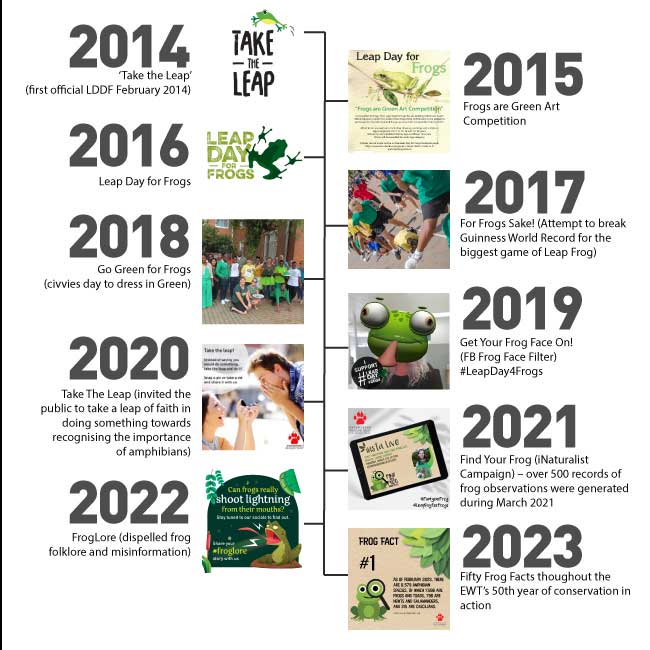
To bring awareness to these very important and beautiful yet threatened creatures, we have devised annual themes over the past ten years for Leap Day for Frogs. 

Graphic showing ten years celebrating Leap Day for Frogs

Ten years celebrating Leap Day for Frogs

We celebrated the 10th Leap Day for Frogs this year, which coincides with EWT’s 50th anniversary. As part of the latter, EWT will share a fun frog fact each Friday throughout the year.

Our theme this February was #CelebrateFrogs, and we reached over 3,000 people directly through over 15 events and outings, with over 165,000 people engaged through the social media campaign. Once again, we partnered with Kloof Conservancy and Iphithi Nature Reserve in Gillitts KZN, where over 150 people participated in various fun learning activities, despite very soggy conditions. We also gave lessons on the importance of wetlands to school learners based close to some project sites, receiving pledges from over 220 children to reduce impacts on frogs and freshwater. We also enjoyed a peaceful evening at the Mount Moreland wetlands, home to the Endangered Pickersgill’s Reed Frog, with several nature lovers, and a talk and walk at Simbithi Eco-Estate. uShaka Marine World, Joburg Zoo and the National Zoological Gardens in Pretoria hosted educational stands and activities over the weekend of 25 February, engaging over 1,800 people. Other events were held in Bloemfontein, Plettenberg Bay and Howick.

We’ve designed social media filters and run citizen science observation projects, and in total, reached well over 16,000 people directly through events run either by the EWT or through several partnering organisations, including SANBI, uShaka SeaWorld, North-West University, various KZN Conservancies, University of the Free State, Bloemfontein Botanical Garden and Johannesburg Zoo Amphibian Research Project. Occasionally, we have even had international events – from Wales to Zambia! Our online reach through social media exceeded hundreds of thousands of people and hopefully inspires the next generation of amphibian conservation biologists – or at the very least, highlights some simple behaviour changes that can benefit frogs and freshwater habitats.

Check out our Leap Day for Frogs page to catch up with your Froggie Facts!

Update on the disease killing our rabbits: Rabbit Haemorrhagic Disease Virus

Update on the disease killing our rabbits: Rabbit Haemorrhagic Disease Virus

Update on the disease killing our rabbits:

Rabbit Haemorrhagic Disease Virus

Johan du Plessis, EWT’s Drylands Conservation Programme Manager

In October 2022, a report came through to the EWT of a dead Scrub Hare in the Sutherland-Middelpos area in the Northern Cape. It was not an unusual occurrence, but it was just the first of many cases of hare and rabbit (lagomorph) deaths rapidly spreading as far as Springbok and Fraserburg in the Northern Cape and the Montagu area in the Western Cape. It was clear that something was infecting and killing rabbits much faster than normal.

We knew something very worrying was out there and feared for our indigenous lagomorph species. After testing affected carcasses at the Onderstepoort Veterinary Research Laboratory, the Department of Agriculture, Land Reform and Rural Development issued a media statement on 17 November 2022 announcing what many had begun to suspect – the culprit behind the widespread mortalities of wild hares and domestic rabbits was confirmed as Rabbit Haemorrhagic Disease Virus (RHDV) – strain RHDV2. There have been more recent reports of wild hares dying in the Merweville and Beaufort West regions and domestic rabbits in Cape Town and surrounds. The presence of RHDV in South Africa, particularly in these areas, is of great concern as our indigenous Red Rock Rabbit, the Critically Endangered Riverine Rabbit, and other indigenous hare species are all susceptible to the virus, and they are far less prolific than domestic rabbits, and we cannot afford to lose too many or the populations will be under threat.

The virus originated in China in 1984 and has since spread to many countries. This virus is highly contagious but only affects lagomorphs (rabbits and hares). It spreads very easily, normally through direct contact between animals, but the virus is most likely also carried by flies and scavengers feeding on carcasses, and on clothes, shoes, and car tyres. RHDV is a controlled animal disease. We recommend contacting your nearest state veterinarian to take samples if you encounter unnaturally large numbers of dead rabbits/hares on your property. The unnecessary transport and touching of infected carcasses should be avoided as far as possible.

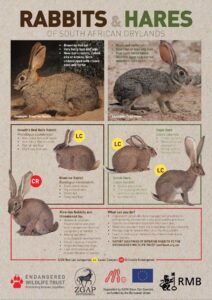
Poster identifying South African Dryland rabbits and hares

Poster identifying South African Dryland rabbits and hares

During the past few months, the EWT has tracked and mapped all known hare and rabbit deaths. While there have been many reports of dead hares and domestic rabbits, there have fortunately only been a few Red Rock Rabbit mortalities and no reported deaths of Riverine Rabbits. We continue to work closely with the department to record and map all reports and are pleased to note that the number of deaths reported has declined since December 2022.

We urge farmers to report any wild hare and rabbit deaths to ewt@ewt.org.za and include your name, farm name, cell number, and GPS location of the incidents (if possible). Please also contact your local state vet and request that necropsies be done and the specimens sent to Onderstepoort. Farmers with Riverine Rabbits on their farms are requested to monitor the riparian areas and immediately report any Riverine Rabbit deaths to the EWT.

Our Drylands Conservation Programme is also working closely with provincial and state veterinary departments to develop best practice guidelines on managing dead rabbits and hares on your property. These will be released as soon as possible. Until then, please get in touch with the local state vet for assistance with wild hares/rabbits, which can be identified with the help of the attached poster.

Western Cape contact details can be found here: https://www.elsenburg.com/veterinary-services/animal-health-and-disease-control/

Contact Dr Bertus Nel at 0273411045 or nel.bertus@yahoo.com or your closest state vet for assistance in Northern Cape.

Do you need help telling a rabbit from a hare? Here’s a quick reference on the rabbits and hares of South African Drylands

Adventurous Bateleur astounds conservationists

Adventurous Bateleur astounds conservationists

Adventurous Bateleur astounds conservationists

Andre Botha, EWT’s Vultures for Africa Programme Manager

Conservationists from the EWT and its partners, the Chuilexi Conservancy, Niassa Carnivore Project, and WCS/ANAC from the Niassa Special Reserve (NSR) in Mozambique were recently astounded when one of their tracked birds started exploring the wider Mozambique landscape.

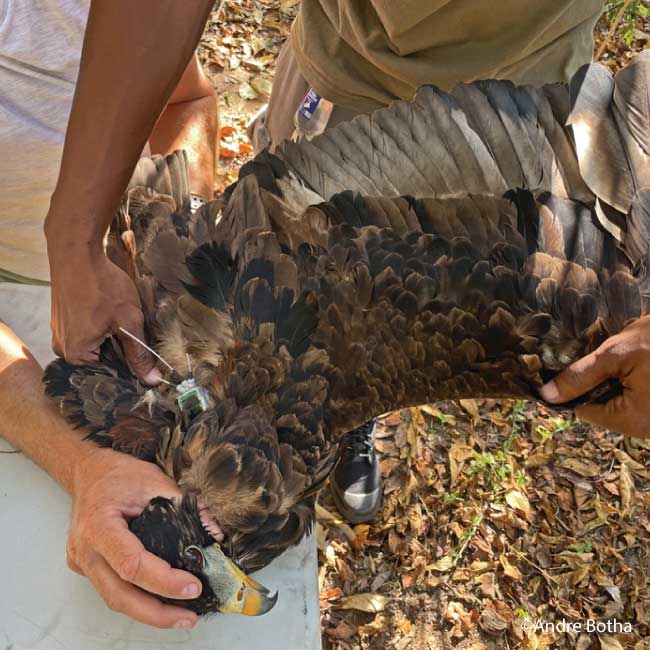
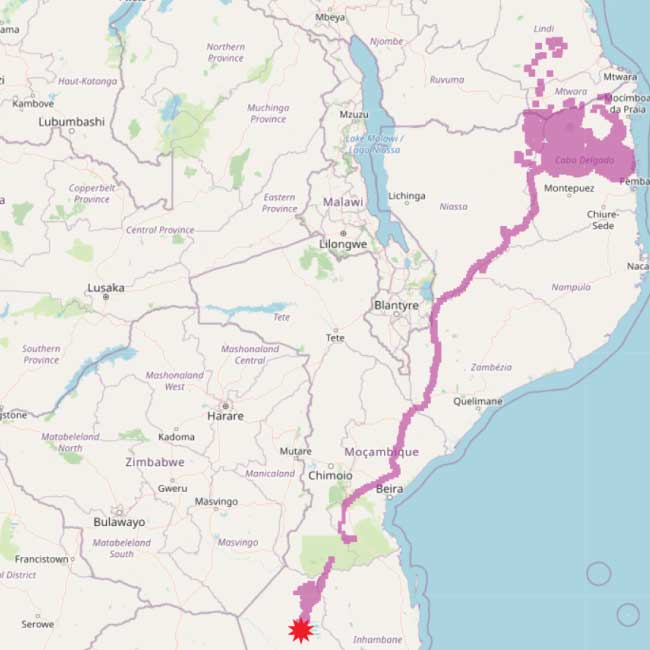
On 10 June 2022, an immature female Bateleur Eagle (Terathopius ecaudatus) was trapped and fitted with a GSM tracking unit as part of the work to establish a tracking sample of 23 vultures and other scavenging birds in this beautiful northern Mozambique landscape. Contrary to expectations that this bird would remain within the confines of the NSR, she almost immediately started venturing east from Niassa to the coast, where she spent a significant amount of time in the Quirimbas National Park northeast of the city of Pemba, and even roamed further north into southern Tanzania at times, often returning to Niassa.

In late January/early February 2023, this pattern of movement significantly altered when the bird started heading southwest, briefly skirting the Malawian border before travelling further south and passing east of Gorongosa National Park, across the Pungwe and Save rivers to where her tracking unit shows she is currently spending time in the Banhine National Park, approximately 1,200 km south of Niassa. This scale of movement is usually associated with migratory species or vultures and is rather unexpected in this less adventurous species, although adults are known to cover considerable distances within their foraging range daily.

This scale of movement emphasises how little we know about the movements of this Endangered species and the need for a more detailed study of its movement biology. As with vultures, a better understanding of Bateleur movements will enable us to identify key staging, foraging and other sites where appropriate conservation action can be focused. We will be keeping a close eye on this bold Bateleur – who knows where she may wander next?

A word from the CEO March 2023

A word from the CEO March 2023

Word from the CEO

Yolan Friedmann


When Clive Walker, Neville Anderson, and James Clarke registered the Endangered Wildlife Trust in 1973 with the sole intention, at that time, of addressing the unsustainable trade in Cheetah skins and reversing the decline in this species. They had no idea where it would go or what it would do; they just knew they had to do something to save Cheetahs. 18,250 Days later, give or take a few, the EWT now works across southern and east Africa on more than 50 species of wild animals and plants threatened with extinction and, most important, has successfully reversed the decline in Cheetah across South Africa, which is now the ONLY country in the world with an increasing population size of Cheetah.

This year the Endangered Wildlife Trust commemorates 50 years of conservation excellence. The EWT has achieved remarkable gains for many species, where downward trends in the local populations of Wattled and Grey Crowned Cranes, Piggersgill’s Frogs, the Amathole Toad, and the Riverine Rabbit have joined the Cheetah as species on a pathway to recovery. Not satisfied with just doing this well, the EWT has further trailblazed by developing a range of technologies to safeguard powerlines against bird collisions and electrocutions, to deploy drones for safe and effective conservation-based activities, and to introduce the first wildlife detection dogs for rhino horn in many points of entry and exit in South Africa. These are just the tip of the iceberg, and throughout our Golden Anniversary year, we will share many stories of success and tales of triumph.

With more than 110 staff members working across 13 countries in Africa, the EWT is arguably one of the most effective and impactful conservation organisations in the region, and we certainly work across the widest diversity of species, habitats and issues. Often recognised for our role in safeguarding charismatic species like the Wild Dog and Cheetah, the EWT was one of the first organisations to galvanise serious conservation action for the entire range of vultures found in our region, and our 50 years of working with this group of eco-cleaning scavengers have taken a continental direction where our impact has been felt in almost every range state for African vultures and across the most significant threats such as poisoning and illegal trade. Less known to many people is the key role that the EWT played in preventing the extinction of the Brenton Blue Butterfly and safeguarding the future of one of the region’s most important centres of endemism: the Soutpansberg Mountain range. In recent years we have taken on the plight of reptiles and even some highly threatened plants. Just as important are the thousands of human lives improved by the work of the EWT through job creation, education, empowerment, resource protection and provision, livelihood creation and empowerment to take control of their environment and their futures.

There is a lot to celebrate, but no time to waste. What would you do if you were Clive, James or Neville today? What species in peril would prompt YOU to start a movement and establish a giant that will, in 2073, be saving those species and so many more? Pop us a comment below or tell us on our socials what you would do for nature!

If this is what the EWT has achieved so far, imagine what we can STILL do and how much we can still achieve. This is the theme for commemorating the EWT’s five decades of conservation in action. We will reflect on our past successes as much as we imagine the world ahead and plan for the milestones we want to achieve in future celebrations. In many ways, our work has just begun, and with the world continuing to reduce wildlife populations and destroy wild places, the Endangered Wildlife Trust is needed more than ever.

With your support, we can achieve even greater things and protect all our futures together. We cannot wait to celebrate our birthday with you, so watch the EWT socials, publications, and website for all the details and ways YOU can be part of the story we write for the next fifty…..

Happy Birthday, EWT.

Yolan Friedmann