Help African Wild Dogs 

Donate today  

Finding the albany adder

Finding the albany adder

Tale from the Field: Finding the Albany Adder – Following in the footsteps of Dr John Hewitt

 
Alouise Lynch, Bionerds PTY Ltd
 

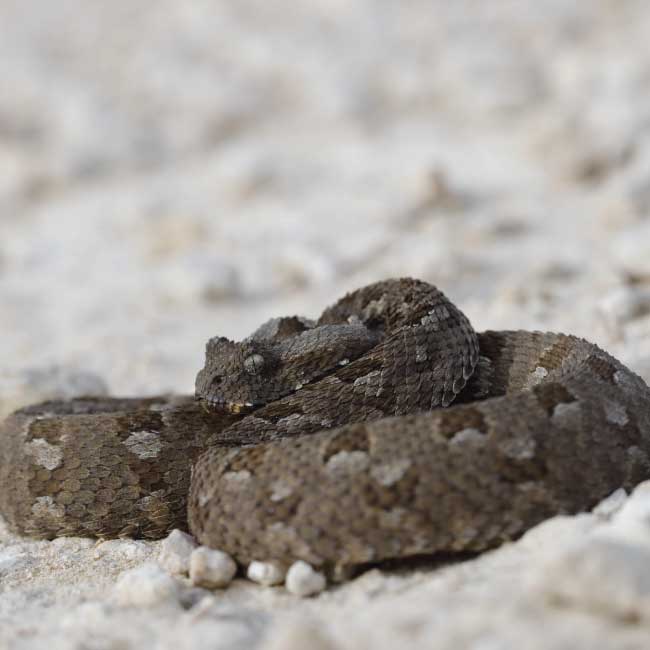
Albany Added on white sand

Dr John Hewitt was born in Dronfield, Derbyshire, England, on December 23, 1880. Between 1905 and 1908, he was the curator of the Sarawak Museum after studying natural sciences at Jesus College in Cambridge. In 1909, he was employed as an assistant curator at the Transvaal Museum in Pretoria, and in 1910, he was named Director of the Albany Museum in Grahamstown, Eastern Cape, South Africa. He was a skilled naturalist with a deep interest in herpetology, and he described, collected, and documented many of South Africa’s frogs and toads.

My husband and I recently spent a week retracing his steps on a farm outside of Grahamstown. We visited the area where he discovered, collected, and described the Albany Adder, Bitis albanica, South Africa’s most endangered snake species.

Most of us have a “bucket list,” a list of things we want to do or see before “kicking the bucket,” as it were. Some challenges are tricky, while others are as simple as trying tripe for the first (and usually last) time. Our bucket list is as nerdy as we are, a living list of 40 species we aim to see in a specific year. Discovering a needle in a haystack seems more likely than finding some of these species in the wild!

The Albany Adder, described as the holy grail of South African dwarf adders, had only been observed in the wild 12 times by 2017. That year, we collected a crew of nerds and embarked on our quest to find this uncommon snake. The Endangered Wildlife Trust discovered two specimens in the wild on a recent study trip, and we were hoping to be as fortunate as they were. NO PRESSURE!!!! We had five days to find this snake. It was cold and windy, and we had walked a long distance by day five. We had given up. We all agreed to return to the vehicles and try again the following year. I stepped around a bush to find a little brown and grey snake with tortoiseshell scallops on its back at my feet. The excitement was so great that we almost missed the snake making a “run” for it! We had discovered an Albany Adder. Number 13 in history! It was sheer enchantment.

The size of this species takes everyone we have ever shown them to by surprise. The largest adult female Albany Adder we have found was 34.6 cm long, a bit thicker than a pencil, with an extremely aggressive bity end on one end. When you are this small, you need a temper to survive in a world where everything is out to eat you. We still do not know where they shelter, how they breed, when or where they pup, or their general primary habitat use.

The Endangered Wildlife Trust allowed us to execute a research and monitoring project on the Albany Adder in 2018. We jumped at the chance and have been working on the “Averting Extinction – saving South Africa’s Most Threatened Snake” project for the last five years. The project has not only increased the known number of specimens from 13 to 43 over five years, but we have also proven that they exist in various habitat types and are working with landowners to safeguard this species in areas where we have confirmed their occurrence. This past week was a watershed point for this project.
We eventually obtained our first confirmation of prey species – a very plump Variegated Lizard – after I gathered roadkill specimens from Addo Elephant National Park. And after many years of attempting, we finally acquired access to Dr Hewitt’s old haunts. We spent three days scoping for feasible habitat in the area where he initially discovered this beautiful species. The landowners are conservation-minded and fiercely protective of their property and its fauna, which is a great plus for us because baboon spiders and snakes are indiscriminately poached in this area. We are very excited to return to this location during their next peak activity period to see if we can rediscover this species where Dr Hewitt found the first Albany Adder.

We hope to relocate these snakes at this site. If we succeed, we can begin establishing a conservation corridor from Gqeberha to Makhanda, incorporating private nature reserves, national parks, and private farmland – affording Albany Adders and many other species and habitats long-term protection.

Thanks to People’s Trust for Endangered Species (PTES), Rainforest Trust, PPC, Eastern Cape Parks and Tourism Agency (ECPTA), and Bionerds for supporting this work.
 

A word from the CEO May 2023

A word from the CEO May 2023

Word from the CEO

Yolan Friedmann

Sometimes we need to be reminded of what we know. We need this a lot. Since the discovery of PVC – the world’s third-most widely produced synthetic polymer of plastic – in 1876 and its development into a plastic compound ready for use in pipes, bottles, packaging, medical devices, cards and with wide application in building and construction industries in around 1926, PVC accounts for about 43 million metric tons of the total 390 million metric tons of plastic produced every year. This number may be a small (ish) fraction. Still, the trouble with PVC is that it is not biodegradable, which means that PVC waste can remain in the environment for hundreds of years, causing significant harm to wildlife and ecosystems. The manufacturing process of PVC is harmful, using toxic chemicals like chlorine and dioxin. But its real danger lies in the fact that it never ever breaks down, and even when disposed of, the harmful chemicals can still leach into water and soil systems, killing millions of organisms.

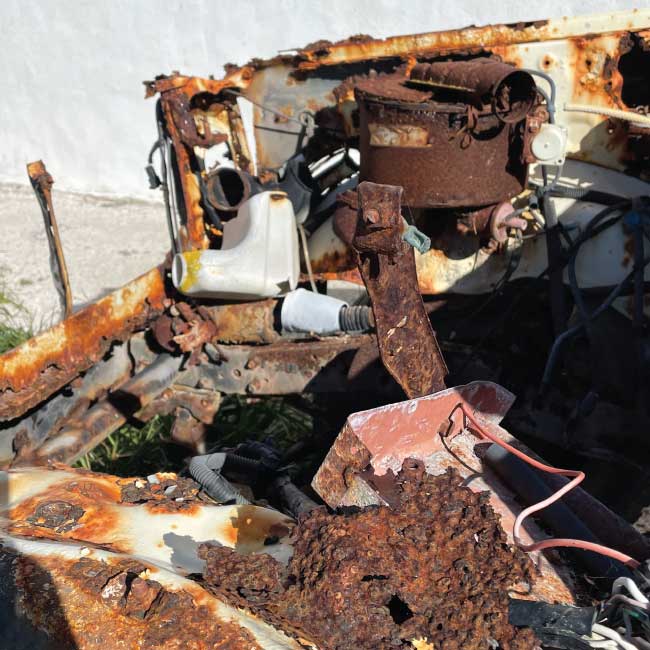
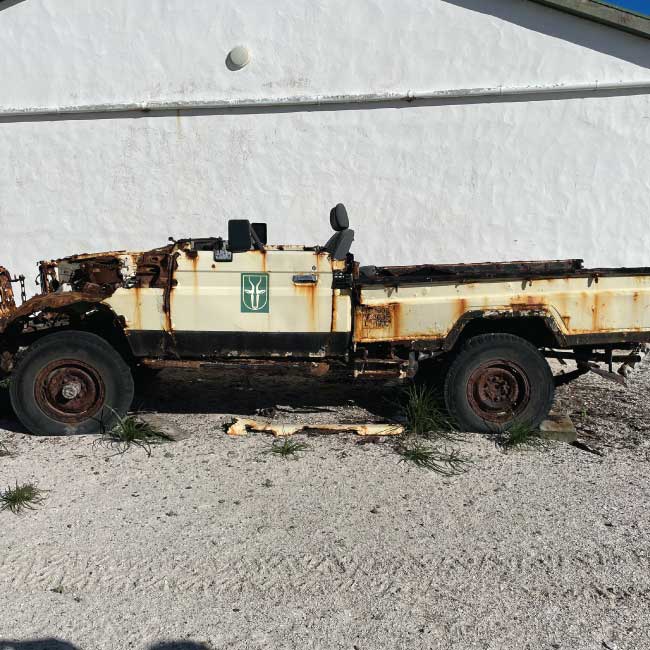
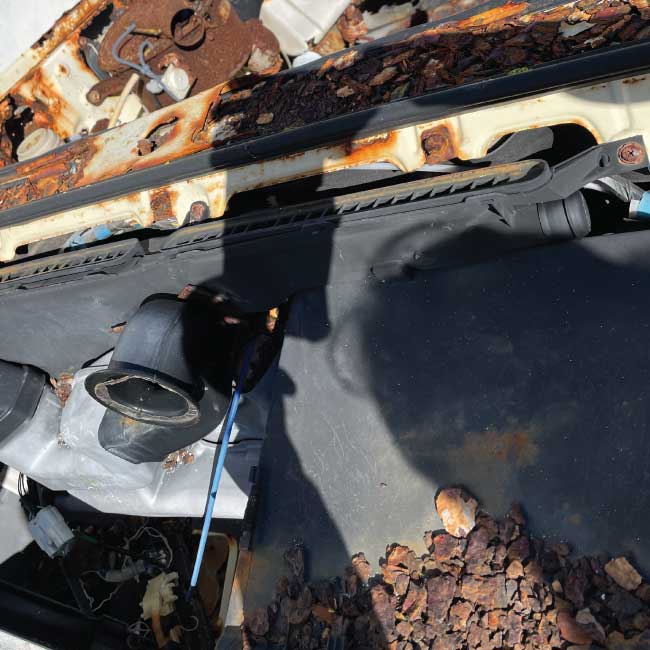
I was reminded of this stark reality on a recent trip to an island on South Africa’s west coast. Over a few decades, the sea air had taken its toll on an old pickup truck on the island and made for a fascinating photograph of how metal, paint, and iron can eventually succumb to the ravages of nature’s demolishers in the form of wind, salt, air, and water. However, lying next to what was once the car’s engine was an almost perfectly preserved, ready-to-reuse PVC water tank. Furthermore, the car’s dashboard was also almost reusable – black, shiny, and ready to go and the rubber linings were still in good nick. One may argue that this is why nearly non-destructible materials are used, as cars must be robust and safe. But the stark reality is that humans are creating toxic materials to last, which may put our futures at risk.

It is widely known that plastic, in its various forms, can be found in every ecosystem, on every surface and in every corner of the planet. To all depths of every ocean and river, in our air, forests, grasslands, and mountains, and eventually into our food and water. It leaches toxins and strangles wildlife; it chokes waterways and animals. Microplastics negatively affect all life, humans included. Yet we keep manufacturing them; worse, we keep discarding them recklessly and frivolously, as if they were leaves on the wind.

Every single human being has a role to play here. We all need to buy less plastic, use less plastic, demand less plastic, and, most important, discard it responsibly. We also ALL need to pick it up wherever we go, take (recyclable) bags with us when we walk in parks, on our beaches, through our forests, when you walk the dog and run with mates, go for a ride and paddle on our dams. Please pick it up, pick it up, and pick it up. Remove as much plastic from the environment as possible, and never ever walk over that bottle top or plastic wrapper again. That one action of NOT picking it up can lead to the direct death of an insect, a bird, a seabird or a fish. The many actions of NOT picking it all up will almost certainly lead to the end of life on earth for many species and what we need it to be for all life.

Let’s all play our part and Pick It Up. Saving one life at a time

To help us celebrate 50 Years of Conservation in Action, send us your thoughts on #50YearsOfEWT to help us create the next 50. Like the Marula, the EWT is here to serve our environment and has thousands more sunsets to share and sunrises to welcome. Help us craft #TheNext50 together.

Drop us a line at ewt@ewt.org.za or visit www.ewt.org.za, where you can share your vision for our planet 2073 and what the EWT will have achieved by then.

To help us celebrate 50 Years of Conservation in Action, send us your thoughts on #50YearsOfEWT to help us create the next 50. Like the Marula, the EWT is here to serve our environment and has thousands more sunsets to share and sunrises to welcome. Help us craft #TheNext50 together.

Drop us a line at ewt@ewt.org.za or visit www.ewt.org.za, where you can share your vision for our planet 2073 and what the EWT will have achieved by then.

Happy Birthday, EWT.

Yolan Friedmann

Raptors and human health

Raptors and human health

The connection between raptors and human well-being

Danielle du Toit & Dr Lindy Thompson, the EWT’s Birds of Prey Programme

In celebration of World Health Day on 7 April, we acknowledged the important role raptors (predatory birds that hunt other animals or feed on carrion) play in supporting humans and our well-being.

  1. Ecosystem Services

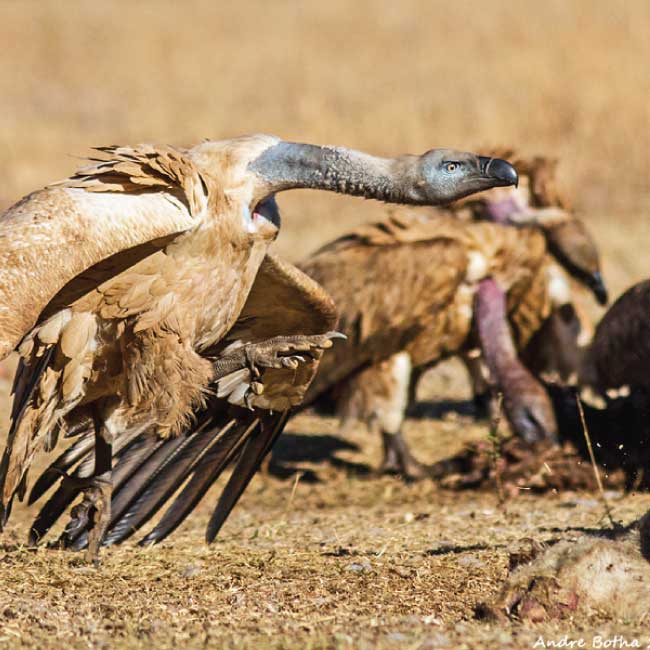
When feeding, vultures clean carcasses and reduce the spread of diseases such as anthrax and botulism. After the Asian Vulture Crisis in the late 1990s, widespread accidental poisoning caused vulture populations in India to plummet by over 90%. The loss of vultures left more food available for other scavengers, such as feral dogs, which increased in numbers, and in turn, so too did cases of rabies. Economists estimated the healthcare costs to the Indian government at US$296 million over 13 years. This study is one of a handful that tried to put a monetary value on the ecosystem services that vultures provide and the importance of their role in maintaining environmental health.

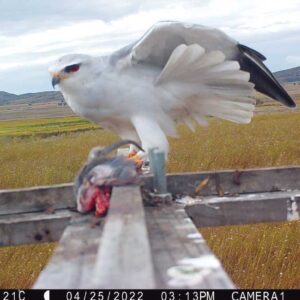
Owls and eagles provide free pest control services by hunting rodents and other species that can negatively impact human health. Barn Owls with chicks in the nest have been reported to catch up to 30 rodents in one night. Many farmers have acknowledged the importance of Verreaux’s Eagles because these birds effectively control Rock Hyrax populations, which, unchecked, could result in significant losses in crop yields.

Results of blood tests from raptors can also be used to indicate the health of an ecosystem. Recent studies in South Africa by Dr Linda van den Heever and colleagues highlighted the problem of lead poisoning in vultures and how high levels of lead in vultures’ blood most likely result from fragments of lead bullets in the carcasses the birds are eating. These microscopic lead fragments can also be found in venison eaten by people (if those carcasses were shot using lead bullets), so both vultures and people, among others, are susceptible to the same preventable health issue of lead poisoning from lead ammunition. Lead poisoning, such as that consumed from similar sources, resulted in nearly a million lives being lost in 2019 and is the cause of 30% of global intellectual disabilities in humans.

  1. Cultural Importance

For hundreds, if not thousands of years, raptors have been symbolic in different cultures worldwide. For example, the ancient Egyptian god Horus had the body of a man and the head of a falcon; the Romans believed that eagles represented power and strength, and humans in neolithic times used feathers and bones for ornamental, ceremonial, and functional purposes. Falconry, a hunting method using birds of prey, has been around for about 5,000 years, first known to have been practised by Mongolians. In South Africa, vulture body parts are used in traditional medicine.

Landowners in the Karoo region of South Africa approached the Endangered Wildlife Trust to assist in bringing Cape Vultures back to the area where they have been regionally extinct since the mid-1980s. Many of these farmers sink into nostalgia when remembering their childhoods filled with memories of being in the veld with vultures soaring above them. In the ‘Farmers for Vultures’ video,  farmers spoke of spying on vulture nests, and others recalled how they would lie dead still in the middle of the veld in hopes that vultures would circle them. These stories show that these birds’ very existence is essential in the cultures of many people and for their well-being. Not only do these farmers love reminiscing about their younger days, but they live in the hope that one day, vultures will soar across the Karoo skies once again.

Raptors are also crucial to the tourism sector. The Kruger National Park offers tourists the opportunity to see vultures and their feeding behaviour up close. Golden Gate National Park hosts one of the few Bearded Vulture populations and feeding sites, and Cape Vulture colonies across the country have been tourist destinations for decades.

  1. Raptor conservation is directly beneficial to human well-being

We know that losing vultures across a landscape can cause significant negative impacts on the physical health of humans. By adjusting our practices and using lead-free ammunition, we will reduce the threat of lead poisoning in raptors and potentially similar threats to humans. By practising responsible carcass management to limit the contamination of the environment by chemicals or veterinary medicines, we are providing safe spaces for vultures to perform their ecosystem services. By moving away from using rodenticides and allowing owls and eagles to do natural pest control, we reduce the chances of being affected by the same poisons.

Conservation of species is not only based on their importance to the health of an ecosystem or the services they provide but is often rooted in ensuring physical, mental, and emotional aspects of human well-being. By tackling threats to raptors and investing resources and time into caring for the health of these species and other wildlife, we protect our fellow species and invariably make the environment safer and healthier for people.

References

(more…)

Documenting all the Biodiversity on Papkuilsfontein

Documenting all the Biodiversity on Papkuilsfontein

Mission (im)possible: Documenting all the Biodiversity on Papkuilsfontein

Bonnie Schumann, the EWT’s Dryland Conservation Programme Senior Field Officer

The Endangered Wildlife Trust recently conducted a comprehensive biodiversity survey on the Papkuilsfontein proposed Protected Environment. Papkuilsfontein is situated near Nieuwoudtville in the Northern Cape in a region known for its rich and unique biodiversity. However, the official list of species recorded on this property contains less than 300 species, and hence our mission was to rectify this and kick-start building a list that would accurately represent the incredible biodiversity found on this property.

Papkuilsfontein, owned by the Van Wyk family, is currently being declared as a formally Protected Environment in collaboration with the EWT and the Department of Agriculture, Environment, Land Reform, and Rural Development (DAERL). Following the survey, the species list now stands at over 1,300 species, and this is just the beginning!

The Bokkeveld Plateau is an area where three biomes meet, the Fynbos, the Succulent Karoo, and the Hantam Karoo. Combined with the variation in altitude, topography, and geology, this creates ideal conditions for the incredible evolution of species and diversity in the region. Nieuwoudtville is world-famous for its bulb plant diversity and density, with over 20,000 bulbs recorded per square meter. Research on the array of invertebrates associated with plant diversity has only started to scratch the surface. So the task of recording all things great and small over approximately 7,000 ha was a formidable one and will take several years to come close to accomplishing!

The EWT enlisted the help of a group of volunteers passionate about conservation to tackle this enormous task. The Custodians of Rare and Endangered Wildflowers, ably led by Ismail Ibrahim and comprising a team of students from the University of Stellenbosch Botanical Gardens, answered the call. Retired small mammal expert, Dr Guy Palmer, was put back to work, while Handré Basson was persuaded to abandon his studies for a few days and join us, bringing his passion for invertebrates and skill at finding them to the team. We were privileged to have had Dr Michael Kuhlmann, a world-renowned expert on solitary bees, join us for two days. Thanks to Dr Kuhlmann’s dedicated work on the plateau over the years, we know that Papkuilsfontein alone has an impressive list of over 100 species of solitary bees. Many of these are not yet described, and new species are still waiting to be discovered!

The EWT supplied the transport, and the Papkuilsfontein hospitality staff kept the team well-fed on some of the best hearty farm-style meals in the Karoo. Teams worked from dawn to dusk, scouring the rugged terrain and photographing and recording as much as possible. A camera trap survey was also conducted for six weeks, and tiny amounts of soil were collected for researchers to examine for environmental DNA later. Observation gathered from all three methodologies will contribute to a comprehensive understanding of the biodiversity present on the property.

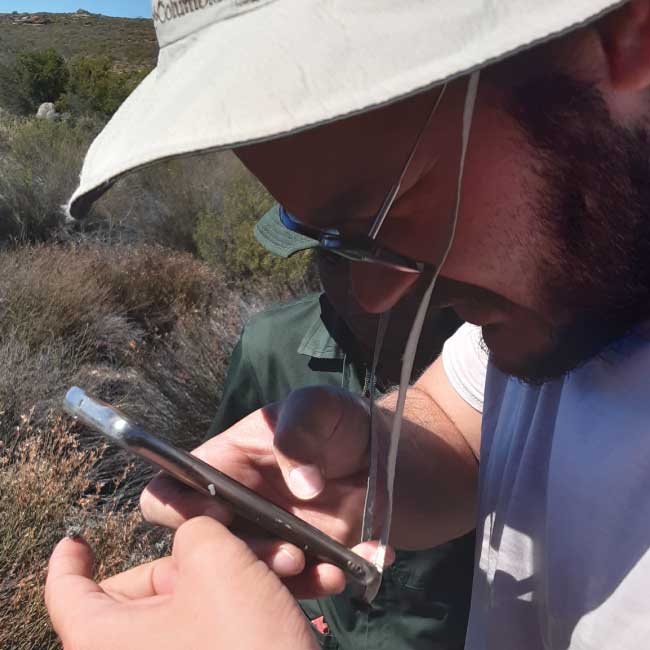
The DAERL Stewardship Unit was instrumental in making the survey a success. A member of the unit, and ex-EWT staff member, JP le Roux, set up an iNaturalist project for the study and continues to work hard in the field to make sure the list of species keeps growing. iNaturalist is an online social network platform where people interested in biodiversity can share information. Anyone who sees an interesting plant or animal can photograph and upload the sighting to the platform, and a range of specialists are available to help identify the sighting. By setting up a project on the platform, all sightings made on the property can be collated, and species lists can be exported. The four-day survey provides just a glimpse of what is on the property. By having visitors and landowners take part in recording biodiversity using iNaturalist, we can ensure that a range of wildlife is captured, including plants and invertebrates, some of which may only make their appearance briefly every few years when conditions are just right for them. This makes recording the full spectrum of biodiversity at any location more achievable.

The region is special in terms of biodiversity and natural beauty. The EWT would like to thank all the landowners on the Bokkeveld Plateau who have a long-term vision to protect these features by declaring their properties as protected areas. This requires a high level of dedication at a very personal level in a day and age where talk is often cheap. Remember that Papkuilsfontein is not just an outstanding guest farm but is also a small commercial stock and rooibos tea producer. This conservation initiative is a great example of what can be achieved when the agricultural sector joins with the conservation sector to protect our natural resources at all levels.

The work on Papkuilsfontein was made possible with generous support from the Table Mountain Fund.


 For more information:

Hunting the hunter: for the love of Mantids

Hunting the hunter: for the love of Mantids

Hunting the hunter: for the love of Mantids

Bonnie Schuman, the EWT’s Drylands Conservation Programme and Bianca Greyvenstein, Unit for Environmental Sciences and Management, North-West University

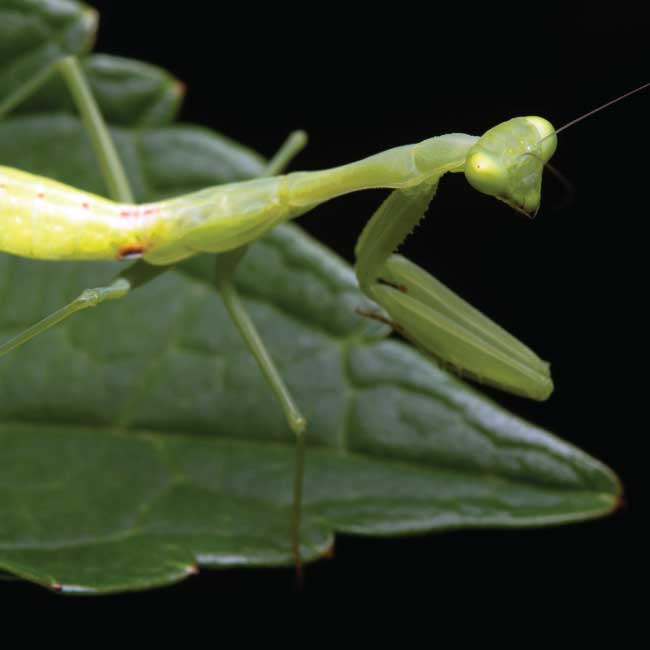
Praying mantises are weird and wonderful-looking insects that most people seem to be familiar with, with their iconic “prayer” posture and reputation for honeymoons that end badly. However, as a taxonomic group, very little is known about the Mantids regarding their ecology, behaviour, distribution or even the range of species in South Africa. Two people are working hard to change this situation and are hunting these little hunters across South Africa with a view to finding out all there is to know about these poorly understood miniature predators.

Bianca Greyvenstein, Post Doctoral Fellow, and Professor Johnnie van den Berg from the North-West University (NWU) are the leading experts in South Africa on Mantids, specialising in praying mantid (Mantodea) diversity. The Endangered Wildlife Trust (EWT) recently invited these two researchers to visit the Papkuilsfontein proposed Protected Environment on the Bokkeveld Plateau near Nieuwoudtville to document the praying mantis species on the property. The EWT, in collaboration with the landowners (the Van Wyk family) and the Department of Agriculture, Environment, Land Reform and Rural Development (DAERL), recently launched an initiative to document the incredible range of biodiversity on the property.

The Northern Cape, in particular, is extremely data deficient with regard to insect diversity, especially in the Mantodea Order, under which these charismatic mantids are grouped. For example, of the approximately 4,000 museum specimens representing 170 species that have been collected in South Africa since 1838, only 0.2% are from the Northern Cape Province. Of these 15 specimens, only one species was collected near Papkuilsfontein.

Due to the poor rainfall season experienced during the winter prior to the survey, the region was extremely dry during this visit, and the diversity of arthropods at this time of year was extremely low. However, the Bokkeveld Plateau is not known to be a biodiversity hotspot for no good reason. Despite the ongoing drought and the heatwave experienced during the survey, surprisingly high levels of mantid diversity were recorded. Sampling focussed on the Bokkeveld Sandstone Fynbos vegetation type, but the Nieuwoudtville Shale Renosterveld and the Hantam Karoo were also surveyed.

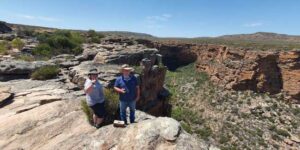
Rresearchers visit the Papkuilsfontein proposed Protected Environment near Nieuwoudtville to document the praying mantis species on the property. Photo credit: Paul Janse van Rensburg

Records reflect that eight superfamilies in the Mantodea order have been documented in South Africa so far, of which no less than six were present on Papkuilsfontein. Of the known 22 families, seven were recorded on Papkuilsfontein, which also represented ten different genera. In addition to recording the Mantids, the NWU team documented eight insect orders, 23 families and 36 species during their short visit in January 2023.

The team will return to the plateau in spring this year, and hopes are high for a good winter rainfall season. Just imagine what awaits discovery on this spectacular property following a good rainy season! The NWU team welcome sightings of Praying Mantises from across South Africa, as these can help shed light on species diversity and distribution. High-resolution photographs will go a long way in aiding the identification of any sightings.

Please share any sightings of Preying Mantises with Bianca at the Unit for Environmental Sciences and Management, North-West University, Potchefstroom, South Africa. Email: biagrey90@gmail.com

The work on Papkuilsfontein was made possible with generous support from the Table Mountain Fund

Praying Mantis

Paul Janse van Rensburg

Fun Facts about Praying Mantises

  • Praying Mantises feature prominently in mythology in many cultures, most likely due to the fact that they fold their forelegs in what appears to be a “praying” position.
  • Praying Mantises are wait-and-hunt predators. They wait patiently for prey to pass close by and then snatch the unsuspecting prey with their long, spiny forelegs.
  • Contrary to common belief, female Mantids do not always consume their male partners after breeding. If the female is well-fed, the lucky suitor will escape with his head remaining on his shoulders.
  • Turns out these little predators live on average 260 days, and some of their egg packets or ootheca can have up to 150 tiny mantids that emerge all at once! These little guys will have to shed their skin or moult between five and nine times before they become big, beautiful adult mantids.