Help African Wild Dogs 

Donate today  

Synergies and Trade-Offs in the effort to save our natural world: the Global Biodiversity Framework, the Sustainable Development Goals and the Climate Action Goals

Synergies and Trade-Offs in the effort to save our natural world: the Global Biodiversity Framework, the Sustainable Development Goals and the Climate Action Goals

Synergies and Trade-Offs in the effort to save our natural world: the Global Biodiversity Framework, the Sustainable Development Goals and the Climate Action Goals

Namita Vanmali and Ian Little

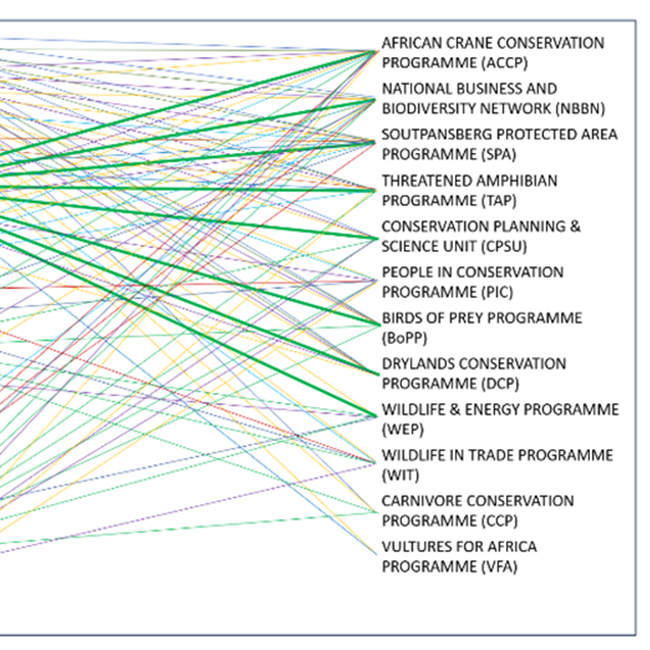
An illustration of the multiple linkages and alignment between the EWTs programmes and the Global Biodiversity Framework targets, with the specifically climate change relevant links in bold green.

Climate change is now widely recognised as a key driver of biodiversity loss, and although they are inextricably linked, historical approaches to policies addressing biodiversity loss and climate change have often treated these challenges separately. This divergence traces back to the independent conventions established during the 1992 Rio Earth Summit—namely, the Convention on Biological Diversity (CBD) and the United Nations Framework Convention on Climate Change (UNFCCC). Over time, an increasing alignment of mechanisms within these frameworks and recognition of the impacts of climate change on biodiversity has allowed for better integration of strategies and enabled a more holistic approach to addressing these associated challenges. A significant milestone in this integration occurred recently at COP27 in Sharm el-Sheikh, where specific sections were dedicated to oceans, forests, and agriculture for the first time. This cross-pollination of strategies is paramount in achieving the objectives of climate mitigation and biodiversity conservation. “Nature-based solutions” (NbS) have been put forward as a unifying mechanism for achieving conservation and climate goals, underscoring the importance of safeguarding both environmental and social interests. The IUCN defines NbS as “actions to protect, sustainably manage, and restore natural and modified ecosystems that address societal challenges effectively and adaptively, simultaneously benefiting people and nature. They target major challenges like climate change, disaster risk reduction, food and water security, biodiversity loss and human health, and are critical to sustainable economic development”.

The Global Biodiversity Framework (GBF – 2022) provides a comprehensive roadmap for biodiversity conservation for the coming decade, outlining actions to halt biodiversity loss and promote sustainable ecosystem management. Comprising 23 action-oriented global targets to be achieved by 2030, it serves as a critical milestone on the journey toward overarching biodiversity conservation goals. Targets 1-8 focus on reducing threats to biodiversity, 9-13 emphasise meeting people’s needs through sustainable use and benefit sharing, and targets 14-23 focus on providing tools and solutions necessary to implement the GBF effectively. By addressing threats to biodiversity and boosting ecosystem resilience, GBF Targets 1-8 strongly align with goals for climate change adaptation, with target eight specifically focussed on minimising the impacts of climate change on biodiversity. There is an emphasis on expanding protected areas, halting species losses and managing invasive species impacts using holistic climate strategies. GBF Targets 2, 10, 11, 15 and 16 all align with climate change adaptation goals by emphasising sustainable resource use, ecosystem restoration and improving ecosystem service provision. While GBF Targets 13-23 emphasise the integration of biodiversity considerations into various sectors, policies, and resource mobilisation efforts, which aligns with climate change mitigation and adaptation goals.

How you can help our cause:
DONATE VIA EFT:

The Endangered Wildlife Trust

FNB Rosebank (Branch code: 253305)

Account number: 50371564219

Use Reference: Climate Action

An illustration of the multiple linkages and alignment between the EWTs programmes and the Global Biodiversity Framework targets, with the specifically climate change relevant links in bold green.

While there is obvious synergy between the targets of biodiversity conservation and climate change mitigation and adaptation, there can be misalignments and tensions between the two. Conflicting land use priorities may cause trade-offs between GBF Targets and climate goals. While GBF Targets 1, 2 and 3 concentrate on spatial planning and ecosystem restoration, achieving climate goals may require land for renewable energy infrastructure and bioenergy with carbon capture and storage (BECCS) projects requiring large-scale land use, which can and does conflict with biodiversity conservation efforts. The EWT has developed a number of resources to guide and streamline decision-making to minimise these biodiversity conflicts, and strongly supports renewable energy as opposed to the continued use and extraction of fossil fuels. Further, since climate action goals prioritise carbon sequestration to meet emission reduction goals, current reforestation and afforestation practices can negatively impact biodiversity if restored ecosystems serve climate mitigation instead of biodiversity conservation. Targets 8–13, which concentrate on sustainable resource use for people, can be at odds with critical Sustainable Development Goals (SDGs). Restricting access to resources in protected areas, for instance, may impede Poverty Reduction and Zero Hunger SDGs in some communities that rely on the land for agriculture or resource extraction. This conflict is also seen within the GBF targets 5 (Ensure the sustainable use and trade of wild species) and 9 (Protect & encourage customary sustainable use), where traditional use of wildlife resources is very often difficult to manage sustainably as a result of high demand for threatened resources and socio-economic pressures on rural communities.

While GBF Targets 14-23 theoretically align with implementation methods for climate change adaptation, challenges arise in practice where socio-economic pressures and needs conflict with conservation priorities and resource allocations. These challenges include potential competition for resource allocation, funding, land use and opposing interests within various sectors. Balancing short-term economic gains with long-term environmental benefits remains a complex and nuanced task. Integrated strategies that control possible conflicts are required to navigate these trade-offs successfully. The GBF targets and climate action goals both seek a just transition towards sustainability. However, misalignment between the GBF targets, climate adaptation, and SDGs often stems from divergent priorities between emission reduction, environmental preservation and broader development objectives.

Globally the financial cost of the transition to renewable energy dwarfs the funding required for biodiversity conservation. While it is imperative that the world prioritises a move away from reliance on fossil fuels, it is equally important that we recognise the parallel importance of conserving our biodiversity assets. The global narrative around the protection of our environment and commonly used terms like “Nature-based Solutions” should not allow the energy transition agenda to overshadow the biodiversity conservation crisis in terms of financial resource allocation and ongoing global dialogue
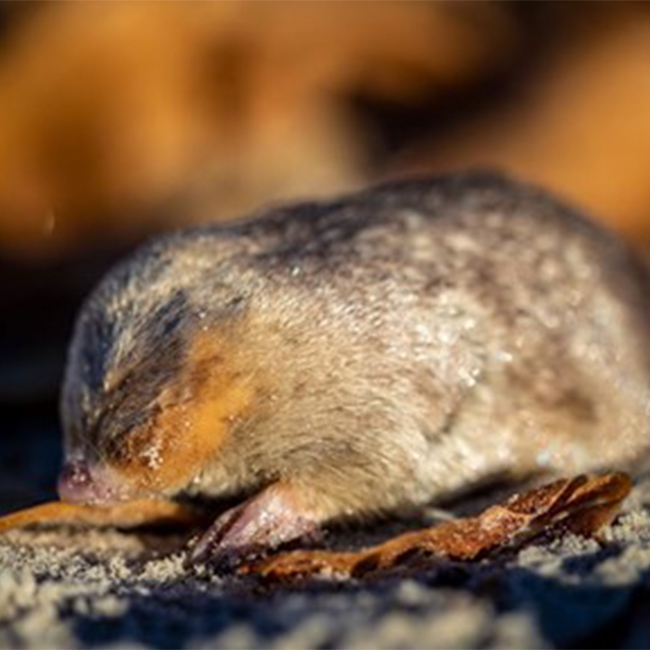


FOUND: Iridescent blind mole with super-hearing powers rediscovered ‘swimming’ through sand dunes of South Africa

FOUND: Iridescent blind mole with super-hearing powers rediscovered ‘swimming’ through sand dunes of South Africa

FOUND: Iridescent blind mole with super-hearing powers rediscovered ‘swimming’ through sand dunes of South Africa

e-DNA helped confirm De Winton’s golden mole still lives on beaches in Port Nolloth

A blind mole with an iridescent coat sheen that ‘swims’ through sand and has been lost to science since 1936 is lost no longer, thanks to a team of conservationists and geneticists from the Endangered Wildlife Trust (EWT) and the University of Pretoria. The rediscovered De Winton’s golden mole–which is from South Africa–is the 11th of the world’s most wanted lost species to be rediscovered since the Search for Lost Species launched in 2017. A research paper, “Environmental DNA from soil reveals the presence of a ‘lost’ Afrotherian species,” published Nov. 24, in the scientific journal Biodiversity and Conservation, describes the incredible lengths the team went to in order to rediscover the species.

“It was a very exciting project with many challenges,” said Esther Matthew, senior field officer with Endangered Wildlife Trust. “Luckily we had a fantastic team full of enthusiasm and innovative ideas. Which is exactly what you need when you have to survey up to 18 kilometers [11.2 miles] of dune habitat in a day.”

The EWT-led team used a burgeoning technique never used before to detect golden moles: environmental DNA (eDNA), which is the DNA that animals shed as they move through the environment, typically in the form of skin cells, hair and bodily excretions. In addition to living in largely inaccessible burrows, golden moles have extremely sensitive hearing and can detect vibrations from movement above ground, which helps them avoid being seen from the surface. They also rarely leave tunnels behind that are visible from the surface as they move under the sand.

“Extracting DNA from soil is not without its challenges, but we have been honing our skills and refining our techniques—even before this project—and we were fairly confident that if De Winton’s golden mole was in the environment, we would be able to detect it by finding and sequencing its DNA,” said Samantha Mynhardt, conservation geneticist with the Endangered Wildlife Trust and Stellenbosch University.

After collecting more than 100 soil samples in June 2021 from beaches and dunes on the northwest coast of South Africa—including Port Nolloth beach, the only place where De Winton’s golden mole had ever been found—and conducting a complex and comprehensive genetic analysis of each sample, the team determined that there were several species of golden mole living in the sand along the stretch of coast.

Two more common species—Cape golden mole and Grant’s golden mole—were found, as well as a third species, Van Zyl’s golden mole, which is endangered and rare. The fourth species the team found was De Winton’s golden mole, but it took almost another year to definitively prove that. Since De Winton’s golden mole is genetically very similar to Van Zyl’s golden mole, the team needed more genetic information about De Winton’s golden mole to confidently identify it using eDNA.

At the time, there was only one De Winton’s golden mole reference DNA sequence available. That DNA sequence represents a nuclear gene that has limited variation between De Winton’s and Van Zyl’s golden mole, meaning the team couldn’t confidently assign the fourth species to De Winton’s at that time.

Nearly a year later, the search team found exactly the information they needed to finally solve the case. A second gene sequence for a De Winton’s golden mole specimen (now housed at the Iziko South African Museum in Cape Town) became publicly available in January 2022. It was a mitochondrial gene—from a much more variable part of the genome that has much higher levels of variation between De Winton’s and Van Zyl’s. When the team compared their eDNA sequences from Port Nolloth beach to the new reference sequence, it was a clear match to De Winton’s golden mole.

“Though many people doubted that De Winton’s golden mole was still out there, I had good faith that the species had not yet gone extinct,” said Cobus Theron, senior conservation manager for EWT and a member of the search team. “I was convinced it would just take the right detection method, the proper timing, and a team passionate about finding it. Now not only have we solved the riddle, but we have tapped into this eDNA frontier where there is a huge amount of opportunity not only for moles, but for other lost or imperiled species.” [Read more about the exciting rediscovery of De Winton’s Golden Mole.]

The Endangered Wildlife Trust has been working to rediscover De Winton’s golden mole for more than two years. They began by identifying areas in South Africa where it was possible the species was living undetected and by interviewing people from local communities.

At each search site they used several different tools to locate golden moles and traces of them. A scent-detection border collie specially trained to sniff out golden moles, accompanied the team and helped lead them to trails left behind by the animals.

When the team arrived on the beach in Port Nolloth there were fresh golden mole trails in the sand, made more visible by recent rain. However, it can be very difficult to identify a species of golden mole from its physical characteristics alone, so despite seeing golden moles, they also collected soil samples for eDNA analysis to accurately determine the species that left the trails.

Since the expedition in 2021, EWT has identified four additional De Winton’s golden mole populations. They are working to protect the moles and learn more about the species with the support of the National Research Foundation’s Foundational Biodiversity Information Programme (FBIP) in South Africa, Rainforest Trust, and Prince Bernhard Nature Fund.

In addition to the De Winton’s golden mole, Re:wild, working with partners across the globe, has confirmed the rediscovery of Jackson’s climbing salamander in Guatemala, both Wallace’s giant bee and the velvet pitcher plant in Indonesia, the silver-backed chevrotain in Vietnam, the Somali sengi in Djibouti, the Voeltzkow’s chameleon in Madagascar, Fernandina giant tortoise in the Galápagos, Sierra Leone crab in Sierra Leone, the Pernambuco holly tree in Brazil and Attenborough’s long-beaked echidna in Indonesia.

Christina Biggs, manager for the Search for Lost Species, Re:wild

“The search for De Winton’s golden mole was not easy by any means, and it really speaks to how persistent, thorough and resourceful the EWT team was in the field. They left no sandhill unturned and now it’s possible to protect the areas where these threatened and rare moles live. The successful use of the eDNA technique is now a case study on how such forward-thinking technologies can be utilized to find other lost species.”


Closing the Loop: Transforming textile waste into opportunities for people with disabilities and support for Early Childhood Development

Closing the Loop: Transforming textile waste into opportunities for people with disabilities and support for Early Childhood Development

Closing the Loop: Transforming textile waste into opportunities for people with disabilities and support for Early Childhood Development

Did you know that it takes 2,700 litres of water to produce a single cotton tee shirt?[i]

And that the fast fashion is one of the highest polluting industries globally, contributing 2 – 8% (about 1,2 billion tons) of greenhouse gases annually – higher than international flight and maritime shipping emissions combined[ii].

In addition to the widespread loss of biodiversity and habitats during the production of raw materials, the industry:

  • Produces about 20% of the world’s wastewater[iii],
  • 24% of the insecticides and 11% of pesticides that are used globally[iv],
  • And is a major contributor to plastic pollution in oceans[v].

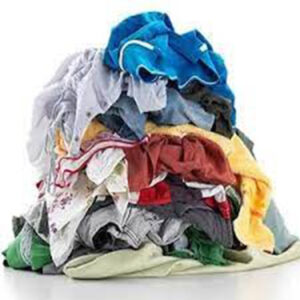
At the same time, the average number of times clothes are worn before being thrown away has dropped by 36% over the past 15 years in the United States, China, and other relatively affluent countries. Only 13% of these largely under-utilised clothes are recycled globally leading to an estimated 21 billion tonnes of textiles being sent to landfill each year[vi].

The fast fashion industry is booming and is likely to treble in size by 2050. Clearly, we need to rethink the largely “take – make – and waste” linear business model that is currently typical of this and many other industries. One way to do this is to start supporting the circular economy.

What are we doing?

The Endangered Wildlife Trust implements a range of innovative projects to reduce human impacts on biodiversity and habitats, whilst also benefitting the people who live in areas of high conservation value. As part of our 50th celebration, we teamed up with a partner NPO, Clothes to Good, to contribute to the reduction of textile waste generated while empowering people with disabilities and supporting Early Childhood Development (ECD) in Kutama, Limpopo Province. The EWT works extensively with people in this area as they live adjacent to our Medike Nature Reserve in the Western Soutpansberg.

This integrated project incorporates three legs, each of which addresses a key need in rural and peri-urban areas across South Africa, with textile waste being the common thread linking the different activities. Firstly, we aimed to build the capacity of the staff of a centre that provides daycare for children and young people with disabilities called Muthu Ndi Nnyi through training and an opportunity to supplement their financial resources through the sale of high-quality second-hand clothes. Secondly, we provided ECD training and a toy making workshop for staff from ten creches and Muthu Ndi Nnyi. The third leg of the project is to contribute to a reduction of textile waste and encourage upcycling and recycling of these and other materials, both in Kutama and further afield.

Muthu Ndi Nnyi Centre for People with Disabilities

As with many schools and facilities catering for the needs of people with disabilities across South Africa, Muthu Ndi Nnyi lacks many basic resources and regularly experiences financial shortfalls. Many parents cannot afford fees or transport to enable their children to attend the Centre. Food inflation and other costs regularly lead to financial shortfalls, which the staff make up from their own small stipends.

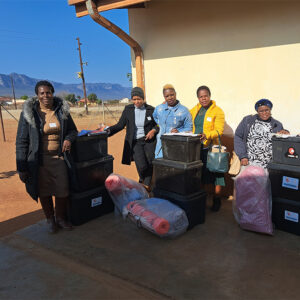
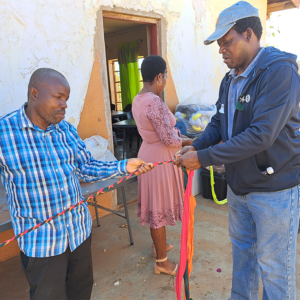
From 28 September – 3 October 2023, Clothes to Good led training and introductory workshops that were attended by 6 – 8 Muthu Ndi Nnyi staff and over 25 teachers and caregivers from creches. Jesse Naidoo from Clothes To Good provided Muthu Ndi Nnyi with basic training in the marketing and sales of clothes which, combined with the bales that were donated, will enable them to test the market and the potential viability of a micro-enterprise in this sector.

To improve the well-being and quality of lives of the young people with disabilities, Tammy Greyling, an occupational therapist from Clothes To Good, met with staff and parents to draw up personal plans for each person in their care to improve their quality of life through improved communication, physical exercise, and specific activities tailored to each of their needs and abilities.


Through this,

  • A wheelchair-bound young man with limited mobility in only one arm and a severe speech and learning disability was able to let his caregivers know that he was hot and needed his jersey removed through a simple gesture. If he is encouraged to continue this and learn additional simple signs, his ability to communicate with others could be vastly improved.


  • It was discovered that a second young man with a severe speech impairment and learning disability was able to understand English. His caregivers previously thought he could only understand Tshivenda and were unaware of his self-taught proficiency in English which he gained through watching television and interacting with others.


Early childhood development

The first three years are one of the most important developmental phases of a child’s life. In South Africa, there are still wide disparities in the quality of pre-school education provided to young children across socio-economic classes, exacerbating the learning difficulties that children face when they reach school going age.

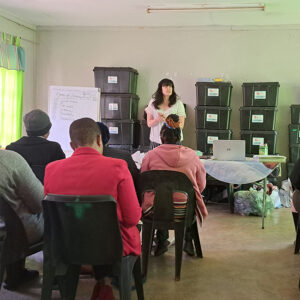
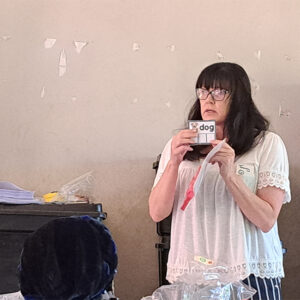
As part of this project, we held a two-day workshop for over 30 participants from Muthu Ndi Nnyi, ten local creches, and a centre providing after-school care for vulnerable children. On the first day, Tammy Greyling, Clothes To Good’s occupational therapist, introduced an ECD kit comprising over 50 activities designed to stimulate fine and gross motor skills, perceptual skills, numeracy, and literacy. Each creche and centre received one of these demonstration kits and a training manual which will enable them to reproduce the activities for the 100 – 150 children in each of their care.

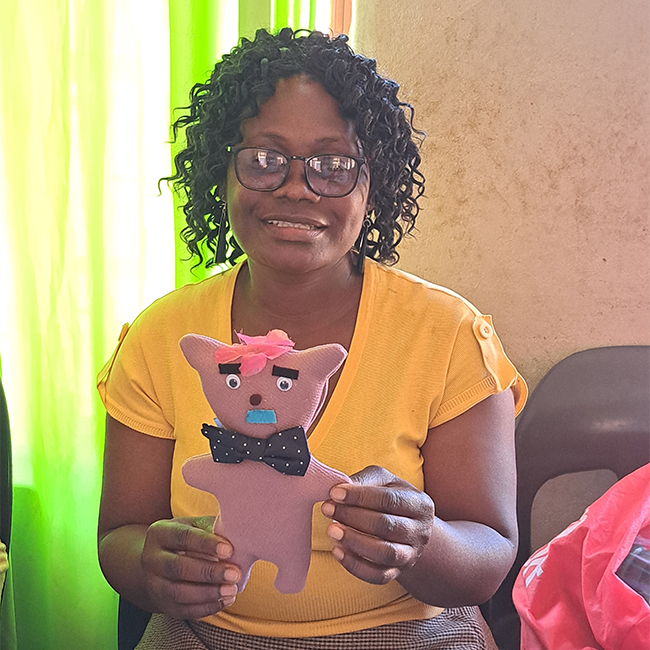
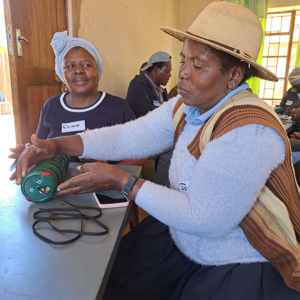
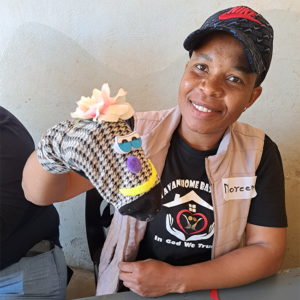
On the second day, we held a toy-making workshop to demonstrate making educational toys from recycled materials such as plastic bottle caps, cardboard, old bottles and other containers, old clothes, and other materials. The nursery schools were urged to ‘play-it-forward’ by inviting parents to toy making workshops and ensuring that their colleagues also receive training in the activity kits and toy making.


Where to from here?

This project is an exciting start to a collaborative recycling and environmental awareness outreach initiative in Kutama, building on our existing projects to develop relationships and contribute to environmental and human health beyond the borders of protected areas.

In addition to potentially improving the lives of people with disabilities and those who care for them people from Kutama will benefit through access to high quality clothing at affordable prices, as well as innovative ECD strategies that build the capacity of teachers while preparing young children for school. We are already implementing our innovative, curriculum-aligned Education for Sustainable Development project, the Guardians of the Future, in seven schools in Kutama. Through this, we are working with educators to develop curriculum-aligned interactive teaching aids and resources to stimulate a love of learning and improved understandings of topics that young learners often struggle to understand through textbook-teaching alone. Contributing to literacy, numeracy, and other ECD skills will is a valuable contribution to their future schooling and potential growth.


What can you do?

  • Choose fashion items that will last and ensure that good quality clothes are not thrown away.
  • Care for your clothes so that they last longer.
  • Support fashion brands that are reducing harmful environmental and social impacts.
  • Support fashion brands that are reducing harmful environmental and social impacts.

Patagonia, for example, recently took an almost unprecedented step by committing to channel all its excess profits into a trust dedicated to the protection of the environment and support for communities[vii].

In addition, 200 brands have signed the Fashion Pact, which commits to restoring biodiversity loss, reducing global emissions, and safeguarding oceans[viii].

  • Drop off clothes you no longer wear at H&M, who are supporting Clothes To Good collect clothes to support the above project as well as numerous others.


[i] By the Numbers: The Economic, Social and Environmental Impacts of “Fast Fashion” | World Resources Institute (wri.org)

[ii] Ellen MacArthur Foundation, A new textiles economy: Redesigning fashion’s future (2017)

[iii] UNECE 2018

[iv] https://www.unep.org/news-and-stories/press-release/un-alliance-sustainable-fashion-addresses-damage-fast-fashion

[v] Ellen MacArthur Foundation, A new textiles economy: Redesigning fashion’s future (2017)

[vi] Silvestrii 2021

[vii] https://www.patagonia.com/ownership/

[viii] https://www.cbd.int/article/sustainability-always-in-style#:~:text=End%20of%20life%3A%20Disposal%20of,pollutants%20into%20the%20surrounding%20landscape.


Closing the Loop: Transforming textile waste into opportunities for people with disabilities and support for Early Childhood Development

Tales from the Field: Clothes to Good

Clothes to Good

Dr Jennifer Botha, the EWT’s People In Conservation

Through this project, educators from ten creches and a facility catering for vulnerable children will have the opportunity to promote Early Childhood Development through a series of fun, interactive activities.

Tammy Greyling from ClothesToGood demonstrates a game to promote literacy.

Each group received an Early Childhood Development kit consisting of over 50 activities to stimulate Early Childhood Development

  • Did you know it takes 2,700 litres of water to produce a single cotton tee-shirt?[i]And that the fast fashion most of us depend on is one of the highest polluting industries globally, contributing 2 – 8% (about 1,2 billion tons) of greenhouse gases annually – higher than international flight and maritime shipping emissions combined[ii].

    In addition to the widespread loss of biodiversity and habitats during production of raw materials, the industry:

    • Produces about 20% of the world’s wastewater[iii],
    • And 24% of insecticides and 11% of pesticides globally[iv],
    • Is a major contributor to plastic pollution in oceans[v]

    At the same time, the average number of times clothes are worn before being thrown away has fallen by 36% over the past 15 years in the United States, China, and other more affluent countries – and only 13% of these largely under-utilised clothes are recycled globally. It has been estimated that 21 billion tonnes of textiles are sent to landfill each year, the bulk of which are under-utilised [vi].

    The fast fashion industry is booming and set to treble in size by 2050. Clearly, we need to rethink the largely “take – make – and waste” linear business model that is currently typical of this and many other industries.

    What are we doing?

    As part of its 50th celebration, the Endangered Wildlife Trust is implementing a series of innovative projects to reduce human impacts on biodiversity and habitats, whilst benefitting people.

    In our most recent endeavour, we teamed up with Clothes to Good to support the circular economy of the fashion industry while contributing to the well-being and development of people with disabilities and young children in Kutama, Limpopo Province. The EWT works extensively with people from Kutama as they live adjacent to the Medike Mountain Reserve, one of our flagship projects in the Western Soutpansberg.

    Through this integrated project, we aim to empower the Muthu Ndi Nyi Centre for people with disabilities by creating an opportunity for staff and parents to raise funds for the centre through the sale of high-quality second-hand clothing. The project also includes a health and well-being component through the provision of training and occupational health support to children and young people with disabilities from the centre and ECD training for ten creches and a facility that provides after-school care for vulnerable children.

    Jesse Naidoo provided business training to enable staff and parents from Muthu Ndi Nnyi to maximise the financial and social returns through the sale of clothes. In addition, Tammy Greyling, an occupational therapist from ClothesToGood met with staff and parents to work with each of them to draw up a personal development plan for each of nine children and young adults who have disabilities to improve the quality of their lives and stimulate their personal development through improved communication, physical exercise, and specific activities tailored to each of their needs and abilities.

Early childhood development

The first three years are one of the most important developmental periods of a child’s life. In South Africa, there are still wide disparities in the quality of pre-school education provided to young children across socio-economic classes, exacerbating the learning difficulties that children face when they reach school going age.

As part of this project, we held a two-day workshop for over 30 participants from Muthu Ndi Nnyi, ten local creches, and a centre providing after-school care for vulnerable children. On the first day, Tammy Greyling, ClothesToGood’s occupational therapist, introduced an ECD kit comprising over 50 activities designed to stimulate fine and gross motor skills, perceptual skills, numeracy, and literacy. Each creche and centre received one of these demonstration kits and a training manual which will enable them to reproduce the activities for the 100 – 150 children in each of their care.

On the second day, we held a toy-making workshop to demonstrate making educational toys from recycled materials such as plastic bottle caps, cardboard, old bottles and other containers, old clothes, and other materials. The nursery schools were urged to ‘play-it-forward’ by inviting parents to toy making workshops and ensuring that their colleagues also receive training in the activity kits and toy making.

What can you do?

  • Choose fashion items that will last and ensure that good quality clothes are not thrown away.
  • Care for your clothes so that they last longer.
  • Support fashion brands that are reducing their environmental and social impacts.

For example, Patagonia recently took an almost unprecedented step by committing to channel all its excess profits into a trust dedicated to the protection of the environment and support for communities[vii].

In addition, 200 brands have signed the Fashion Pact, which commits to restoring biodiversity loss, reducing global emissions, and safeguarding oceans[viii].

  • Drop off clothes you no longer wear at H&M, who are supporting ClothesToGood collect clothes to support the above project as well as numerous others.

This project is an exciting start to a creative recycling and environmental awareness initiative in Kutama but also has the potential to contribute to substantially reducing textile waste over time. In addition, people from Kutama will benefit through access to high quality, affordable clothing as well as innovative and affordable ECD strategies that build the capacity of teachers while preparing young children for school.


Making a snake puppet from old bottle lids.

Hand glove puppets easily made from old socks can bring the magic into story telling.

Teddy bears are expensive if you buy them but can be easily made from old fabric and fillers.

Few of the creches had skipping ropes – each group made a demonstration rope from fabric that they will be able to replicate for the children in the care and demonstrate to the parents of the school.

Science Snippets: Science through the 50 Years: the species we work on

Science Snippets: Science through the 50 Years: the species we work on

Science Snippets: Science through the 50 Years: The Species We Work on

Erin Adams and Lizanne Roxburgh, the EWT Conservation Planning And Science Unit

The Endangered Wildlife Trust (EWT) is celebrating its 50th anniversary, and we are reflecting on our remarkable contributions to scientific discovery over this period. Formed in 1973, the EWT was made up of species-focused working groups. These groups included the Vulture Study Group, the Carnivore Working Group, and the Elephant Survey and Conservation Programme (ESCP).
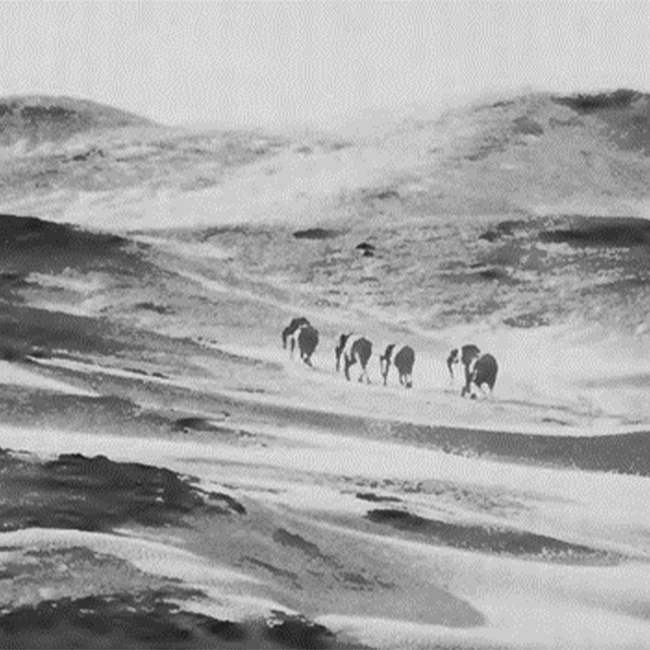
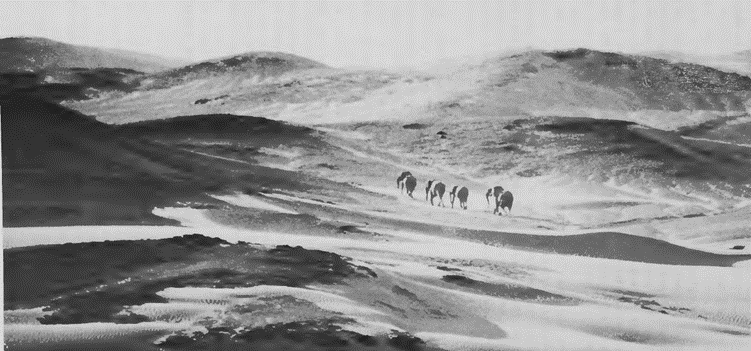
In the early 1980s, the EWT focused on elephant translocation into new reserves. The ESCP played a key role in relocating elephants from conflict areas in Namibia to the Pilanesberg National Park. Another study focused on the distribution and numbers of desert elephants in north-western Namibia. Towards the end of the 1980s, the EWT started working on cranes under the Highveld Crane Group. During the 90s, the EWT’s crane work expanded throughout South Africa’s important crane strongholds.

vintage photo of elephants in the desert

Figure 1. The desert-dwelling elephants of north-western Namibia (credit: C. Walker, 1982).

From the early 2000s, the EWT shifted its focus to carnivores, including Lions, Honey Badgers, Cheetahs, and Wild Dogs. Research on these species took place across southern Africa, including the Kalahari and Kruger National Parks. The EWT’s crane work has also expanded through a formal partnership with the International Crane Foundation, and the crane group became known as the African Crane Conservation Programme.
In the 2010s, research and publication of our results became vital for the EWT, resulting in approximately 130 publications. The species of interest expanded to include frogs, oxpeckers, Riverine Rabbits, and Ground Hornbills. The Threatened Grasslands Species Programme, which studied grassland ecosystems and its resident species such as the Blue Swallow and the Oribi, was also prominent during this time. Other important topics investigated were the threats to species, including road mortalities, livestock predation, wildlife poisoning, and bird-powerline collisions.
Even though it is only three years into the 2020s, the EWT has already recorded 96 publications, highlighting the organisation’s commitment to conducting valuable research and ensuring the dissemination of information to our audiences. The focus remains on employing robust sampling techniques to benefit the survival of threatened species. The EWT provides biodiversity data for scientific research and action and reviews environmental impact assessments in South Africa. We have also conducted studies on ranchlands to understand their biodiversity. Furthermore, the organisation has placed a greater emphasis on wildlife and law and business and biodiversity. It is also expanding into more cryptic but equally threatened species, such as Golden Moles, Dwarf Tortoises, and Colophon Beetles.
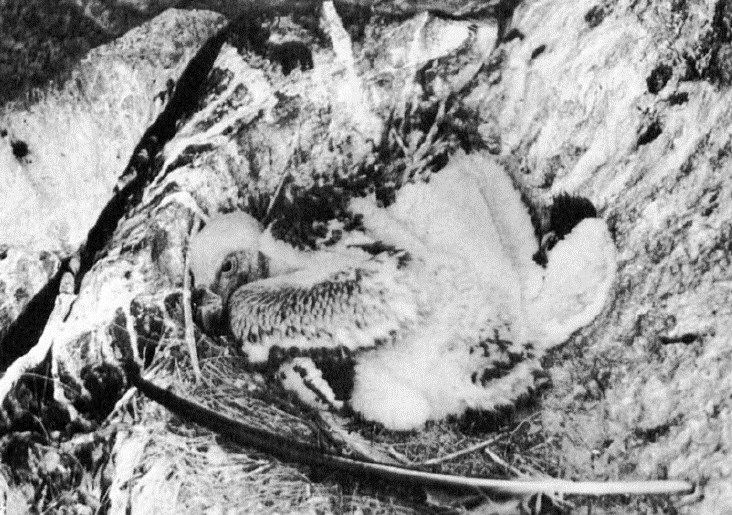
Throughout its history, the EWT has consistently prioritised the conservation of vultures. These birds remain a primary focus through the Birds of Prey and the Vultures for Africa programmes.

vintage photo of a cape vulture chick in the nest

Figure 2. A 51-day-old Cape Vulture chick (credit: P. Richardson, P. Mundy and I. Plug, 1986)