Help African Wild Dogs 

Donate today  

Using Technology Supports Wildlife Conservation, Says The Endangered Wildlife Trust

Using Technology Supports Wildlife Conservation, Says The Endangered Wildlife Trust
Using Technology Supports Wildlife Conservation, Says The Endangered Wildlife Trust

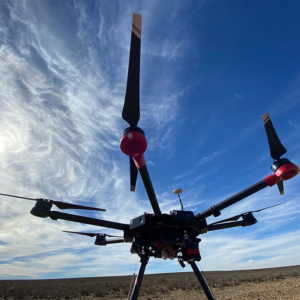
The use of technology contributes significantly to wildlife conservation, enabling researchers to access areas previously considered dangerous and impassable.

It also aids in the rediscovery of species believed to be extinct and builds on the knowledge we already have on, not only the behaviour of species, but also the impact of human development and interference on wildlife.

“Drones are helping us roam large areas and access otherwise inaccessible sites. Advanced tracking systems, real-time data analytics, and artificial intelligence-driven solutions are empowering conservationists across the globe providing unprecedented tools to help identify, monitor, track and ultimately preserve wildlife,” says the Secretary-General of the Convention on the International Trade in Endangered Species of Wild Fauna and Flora (CITES), Ivonne Higuero.

She, however, warns that as we leverage growing technological capacities, we must also revitalise our commitments to sustainable development. This includes preventing destructive ecological impacts, mitigating threats to species and livelihoods arising from the misuse of technology, and ensuring digital inclusion for all by 2030.

The use of drones, for instance, is no longer a novelty, nor is the use of GPS tracking systems to monitor wildlife. What is considered new is the use of environmental DNA in the detection of elusive species, and the mapping of species distributions, and the real-time programming algorithms linked to tracking data that enable rapid response to wildlife threats.

Drones

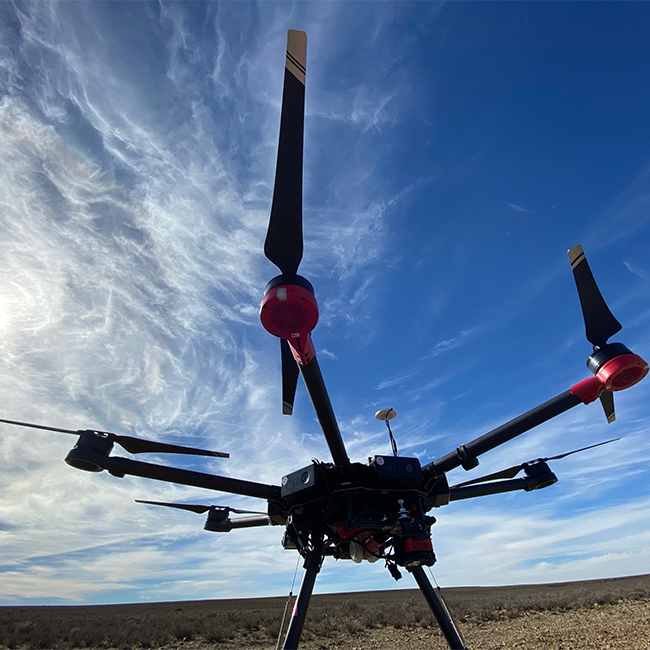
Coupled with advances in artificial intelligence (AI), drones now have some sort of role to play in most industries. Their uses and benefits are only limited by our imagination and operational battery capacity. They deliver much-needed medicine to remote communities, scan compromised infrastructure for survivors during emergency disaster responses, or facilitate smart agriculture. Of course, there are more sinister potential uses for drones, blurring the lines between science and science fiction.

But, using drones for conservation has already shaped the future of the sector. Drones have been used in a variety of scientific studies, from detecting rare animals and counting colony-nesting birds to mapping habitats and creating 3D scans of trees.

The main practical advantage of a drone is not only necessarily its ability to go places that humans and their traditional modes of transport cannot get to; the biggest benefit is the fact they can perform the same tasks safely, eliminating the need to get people into dangerous situations.

But how do wild animals respond to these flying intruders? Is it ethical to use a drone to get close to an animal when it will result in a stress response? Perhaps the better question is whether the use of a drone is less or more detrimental to the animal than it is to approach it using traditional methods. This is an intriguing question, and one that should be considered prior to undertaking any new conservation project. At the Endangered Wildlife Trust (EWT) these concerns are very seriously considered on a case-by-case basis, through a formal ethics committee, prior to any deployment of drones for conservation.

As a legal drone operator in South Africa, the Endangered Wildlife Trust (EWT) carries out surveys for birds, bird nests and mammals, does topographical and vegetation surveys, provides aerial support to conservation teams during operations, assists the authorities in locating injured animals, carcasses, poisoning and poaching incidents, and inspects and photographs electrical infrastructure for maintenance and survey purposes.  The non-profit is also using drones to attach anti-collision devices to linear electrical infrastructure and to assist specialists with surveys relating to Environmental Impact Assessments and related audits. 

GPS Tracking

Drones may be the latest innovation in wildlife monitoring, but before their advent, GPS tracking technology had already established itself as a valuable tool for studying the movement, behaviour, and habitats of wild animals, particularly birds, over many years.

Birds of prey face unique conservation challenges, primarily due to their ability to traverse vast distances unhindered by physical barriers. This lack of confinement poses significant obstacles to traditional conservation methods. For instance, species like the White-backed Vulture and Cape Vultures routinely cover extensive distances, ranging from 80km to over 500km per day while foraging.

As a result, effective bird conservation heavily relies on technological advancements to comprehend species threats and implement appropriate conservation strategies. Vultures, for example, confront various hazards such as wildlife poisoning, power line collisions, and disturbance to nesting sites, all of which impact population numbers and breeding success.

The Endangered Wildlife Trust’s (EWT) Birds of Prey Programme has long utilised GPS tracking technology to establish a robust conservation framework for these species. These lightweight, solar-powered tracking units transmit precise location and movement data via cellular or satellite networks, offering unprecedented insights into the spatial biology of a diverse array of species. These data serve as a foundation for strategic conservation planning across expansive geographic regions.

Moreover, GPS technology enables researchers to concentrate efforts on critical areas for species survival. The EWT’s initiative to establish raptor safe zones, for instance, strategically targets properties frequented by birds for foraging and nesting, guided by behavioural data to mitigate human-induced threats effectively.

Fortunately, avian tracking technology continues to advance rapidly. Future developments hold promise for increased affordability, potentially revolutionizing data collection and enhancing the effectiveness of current conservation practices.”

eDNA

Most recently, the EWT has led the pack in the development and use of environmental DNA (eDNA) in terrestrial systems, which led to the rediscovery of the elusive De Winton’s golden mole – a species previously thought extinct.

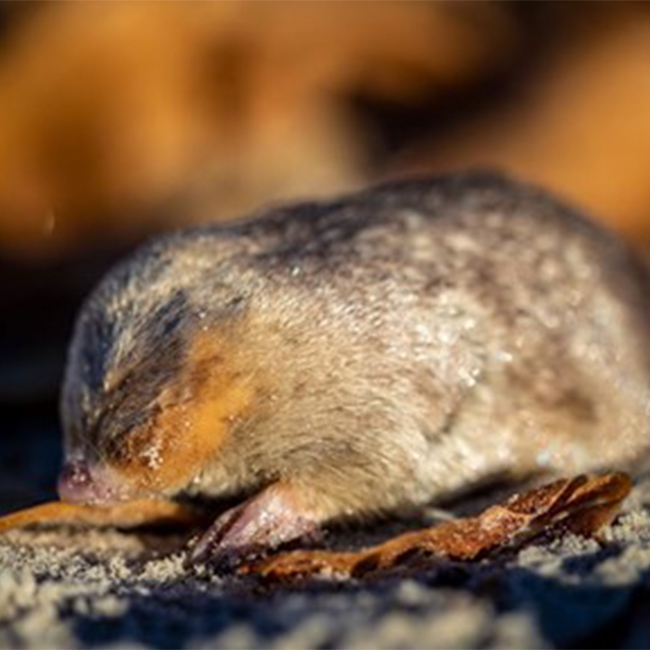
With the help of this technology, the EWT team was able to detect and effectively rediscover the Critically Endangered De Winton’s golden mole (Cryptochloris wintoni) on the west coast of South Africa. This species had been lost to science for over 80 years.

Because detection and distribution mapping of elusive species is one of the major challenges of biodiversity surveys, the EWT’s Drylands Conservation Programme (DCP) has been working on eDNA sampling techniques to detect the presence of elusive and/or threatened terrestrial vertebrates.

Environmental DNA (eDNA) is genetic material that is shed by organisms into their environment, typically in the form of skin cells, hair or excretions, and may be sampled from environmental sources such as water, soil, or sediments. Isolation of this DNA from the environment can facilitate detection of organisms in the absence of obvious signs of their presence, and provide genetic information that can be used to identify, study and/or monitor species across time and space without having to catch, handle, or in some cases, even observe them.

The Drylands Conservation Programme used this technology to survey a range of elusive golden mole species across South Africa’s west coast, collecting soil from the linings of their subterranean burrows, and using genetic barcode markers to identify species. Through mapping species distributions, it facilitates conservation management of threatened species.

The EWT’s scientists are now also applying the eDNA approach in the detection of Endangered Riverine Rabbits, and threatened tortoises in the arid Karoo region of South Africa. For Riverine Rabbits, eDNA is collected from pellets (droppings) gathered in the field, rather than soil.

The application of eDNA has the potential to revolutionize conservation science and practice. Although there are many challenges associated with using this approach in broad biodiversity surveys or monitoring projects, with careful consideration of the challenges and potential limitations, the application of this technique can open many doors to answering research questions and finding new solutions to conservation challenges, including assessing potential impacts as a result of proposed developments in sensitive areas.

Through the use of technology, scientists are able to ensure that species being researched and surveyed are largely undisturbed.  It could also contribute to a greater base of information about species in remote areas informing conservation planning and practice.

** World Wildlife Day is celebrated annually on 3 March. The theme for 2024 was People and Planet: Exploring Digital Innovation in Wildlife Conservation.
Powerlines May Be A Cause Of Ludwig’s Bustard Population Declines

Powerlines May Be A Cause Of Ludwig’s Bustard Population Declines

Powerlines May Be A Cause Of Ludwig’s Bustard Population Declines

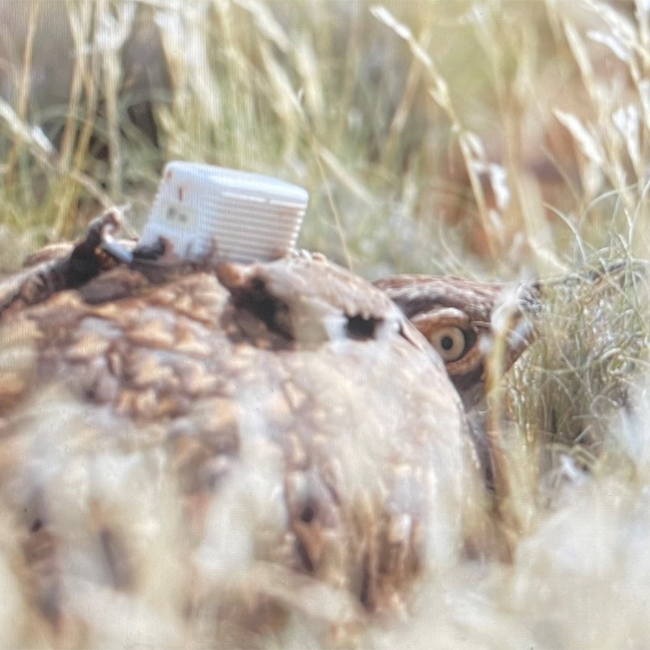
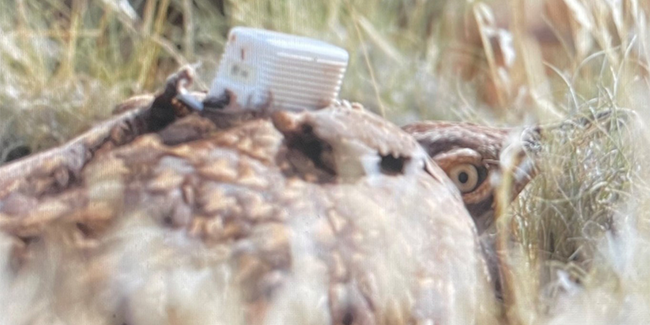
Figure 1: An incubating Ludwig’s Bustard female, fitted with a white GPS tracking device, sits tightly on her nest.

Collisions with overhead power line cables are thought to be the main driver of apparent population declines of the Ludwig’s Bustard (Neotis ludwigii).

Endangered Ludwig’s Bustard populations are assumed to be decreasing, with a  more than 50% reduction expected over the next three generations.

At present, transmission line collision mortality rates of 1.12 bustards per kilometre per year are alarmingly high given the extent of these lines throughout their range. The species remains a research priority for the partnership between the Endangered Wildlife Trust and South Africa’s power utility, Eskom.  The Partnership has found after a 10-year transmission line marking experiment that mitigation is ineffective for the Ludwig’s Bustard and for bustards in general.

Bustards are the one group of birds for which effective mitigation measures are yet to be demonstrated in southern Africa. Conservation options are limited to the  further development and testing of new marker types and to burying overhead power line cables. A new power line marking experiment, for which four novel marker types are being tested, is showing some very positive results: no new Ludwig’s Bustard mortalities having been recorded since the marking of experimental sections of a transmission line in the Karoo in February 2022.

A well-informed estimate of the extent to which power line collisions affect the survival of the species is needed to justify significant future investment in conservation efforts. Such an estimate requires better information about Ludwig’s Bustard breeding biology, movement ecology and population dynamics. Some of the most basic parameters of these aspects have not yet been answered empirically, as the species is notoriously shy and difficult to study in the field. Luckily, advances in certain technologies present new tools that may enable us to fill these knowledge gaps.

To help us answer some of these questions, a Ludwig’s Bustard GPS-tracking study, the ‘Karoo Ludwig’s Bustard Project’, was initiated in 2022. Extensive trapping efforts resulted in a sample of 16 adult birds being captured and fitted with GPS trackers in the past two years. Our goal has been to focus on female birds to obtain information about their breeding parameters.

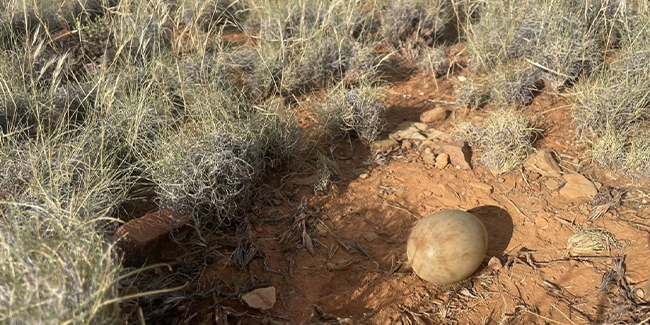
Since the first birds were captured in August 2022, we have been following up on GPS signals that may indicate nesting activity. This was unsuccessful until 2 February 2023 when one of the GPS-tagged females was found incubating a single large egg. The bird was well camouflaged and we only managed to detect her at a distance of less than three metres. 

When she flushed from her nest, we were able to install a remote camera to monitor the nesting. We are now very eager to retrieve the camera to view the photographs captured in the field.

We hope to encounter more nesting attempts to collect the data required for a population viability analysis. Through this exercise we will hopefully be able to model the impact that power line collision mortalities have on the survival of the South African Ludwig’s Bustard population —  information that will help direct the focus of our current and future research.


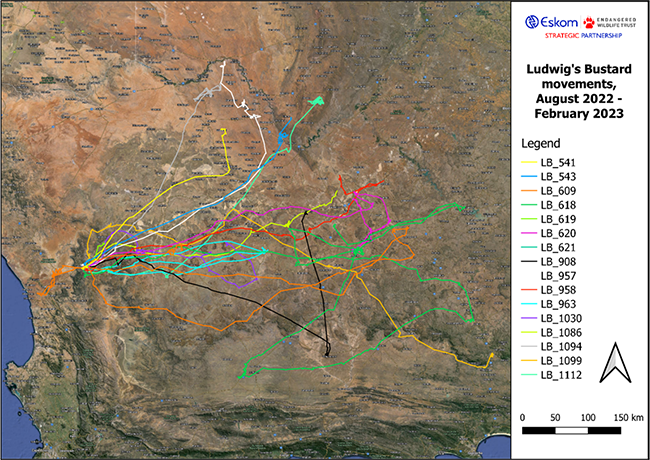
Figure 2: The movements of 16 GPS-tagged Ludwig’s Bustards, August 2022 – February 2024.

Figure 1: An incubating Ludwig’s Bustard female, fitted with a white GPS tracking device, sits tightly on her nest.

To help us answer some of these questions, a Ludwig’s Bustard GPS-tracking study, the ‘Karoo Ludwig’s Bustard Project’, was initiated in 2022. Extensive trapping efforts resulted in a sample of 16 adult birds being captured and fitted with GPS trackers in the past two years. Our goal has been to focus on female birds to obtain information about their breeding parameters.

Since the first birds were captured in August 2022, we have been following up on GPS signals that may indicate nesting activity. This was unsuccessful until 2 February 2023 when one of the GPS-tagged females was found incubating a single large egg. The bird was well camouflaged and we only managed to detect her at a distance of less than three metres. 

When she flushed from her nest, we were able to install a remote camera to monitor the nesting. We are now very eager to retrieve the camera to view the photographs captured in the field.

We hope to encounter more nesting attempts to collect the data required for a population viability analysis. Through this exercise we will hopefully be able to model the impact that power line collision mortalities have on the survival of the South African Ludwig’s Bustard population —  information that will help direct the focus of our current and future research.

Figure 3: A single, large Ludwig’s Bustard egg.

A quest for gold – the rediscovery of De Winton’s Golden Mole

A quest for gold – the rediscovery of De Winton’s Golden Mole

A quest for gold – the rediscovery of De Winton’s Golden Mole

by Samantha Mynhardt

On 29 November 2023, the Endangered Wildlife Trust (EWT) and Re:wild announced the re-discovery of De Winton’s Golden Mole (Cryptochloris wintoni), and the story was received with great excitement all over the world as it steadily became one of the biggest conservation stories for 2023. This small mammal had eluded detection for over 80 years, was listed on the International Union for the Conservation of Nature (IUCN) Red List as “Critically Endangered; Possibly Extinct”, and on Re:wild’s list of Top 25 Most Wanted “Lost” Species, until its rediscovery last year. The research findings were published in Biodiversity and Conservation on 24 November 2023 and can be read here.

Golden moles are elusive little animals that spend nearly their entire lives underground, thus they are very seldom seen by humans. Some species will occasionally come to the surface to forage, typically only at night. In most cases, the only sign of golden mole activity or presence is a raised ridge on the surface of the ground, representing their shallow underground foraging tunnels. However, for the sand-dwelling species, such as De Winton’s golden mole, even these ridges are hard to spot, since the subsurface tunnels collapse in the soft sand.

De Winton’s golden mole has been severely impacted by mining activities and other threats on the South African west coast. We suspect that the population has experienced a substantial decline over the past century. The species was last detected at the type locality (the origin of the specimen from which the species was described), Port Nolloth, in 1937, and since then has eluded scientists, likely due to difficulties in locating and trapping these animals and/or the presence of the similar-looking and more abundant Grant’s golden mole, Eremitalpa granti.

As a postdoctoral fellow at the University of Pretoria at the time, working alongside Profs. Nigel Bennet and Paulette Bloomer on small mammal genetics research, I had been looking into alternative non-invasive means of studying golden moles, having faced the immense challenge of finding them in the wild, and trapping them to collect genetic samples. The Drylands Conservation Program (DCP) of the EWT received funding from Re:wild to go in search of De Winton’s Golden Mole, and invited me to join them on their quest, despite the views of many, including experts, that the species was extinct.

In 2020 we conducted a pilot study at Lambert’s Bay, the type locality of the sister species, van Zyl’s golden mole, Cryptochloris zyli (also Endangered), to trial some novel approaches for detecting golden moles, including thermal imaging drones, a scent-detection dog, and environmental DNA (eDNA). The pilot study was very successful. The thermal imaging showed some promise in facilitating our search for golden mole presence, although this was perhaps overshadowed by our scent-detection dog’s remarkable ability to sniff out the moles, and the unmatched power of eDNA technology to identify the species present, once the burrows had been located.

In July of the following year, we began our expedition along the west coast to Port Nolloth. We surveyed multiple sites along a 300km stretch of coastline, from the Groen River mouth northwards to Alexander Bay. Our team of five, including myself, Cobus Theron, JP le Roux, Esther Matthew and her trained scent-detection border collie, Jessie, conducted surveys on foot for a week, exploring, on average, 18km of dune habitat per day. Jessie had obviously never encountered a De Winton’s golden mole before, and therefore she was not trained on the scent of this species. However, she had been trained on the scent of the two more common species in the area, Grant’s- and Cape golden mole. She therefore assisted us in finding golden mole tracks, and we knew she would indicate to us if she found the more common species. When she didn’t indicate, we had a good idea that we had found something “new”.

We collected over 100 soil samples on the expedition. Wherever we found signs of golden mole activity, we collected small soil samples from the inner linings of their subsurface tunnels. Animals shed their DNA into their environment, typically in the form of skin cells, hair, and excretions and secretions. This is known as environmental DNA (eDNA) and is present at a molecular level and therefore completely invisible. We were essentially collecting eDNA samples from the soil in the underground burrows. This eDNA would later be extracted in the lab, and a particular fragment of DNA, called a DNA barcode, would enable us to identify the species.

We found evidence of De Winton’s golden mole, not only at Port Nolloth, but at multiple additional sites, indicating that the species may be more widespread than previously thought. Golden mole activity was particularly abundant on the beach at McDougal’s Bay, Port Nolloth, indicating that there is likely a healthy population persisting there. Unfortunately, we are not able to estimate the population size at this stage, however future research should aim to do so.

While we aim to conduct further surveys for this Critically Endangered species to better understand its distribution, it is important that we protect the populations we do know of. We are therefore working towards improved habitat protection and management for the population at McDougal’s Bay, as well as nearby sites where the species has been detected, and to identify additional suitable sites for protection.

Crane Festival Unites Communities to Safeguard Uganda’s Grey Crowned Cranes

Crane Festival Unites Communities to Safeguard Uganda’s Grey Crowned Cranes

Crane Festival Unites Communities to Safeguard Uganda’s Grey Crowned Cranes

By Patrick Engoru, Uganda Country Manager: African Crane Conservation Programme

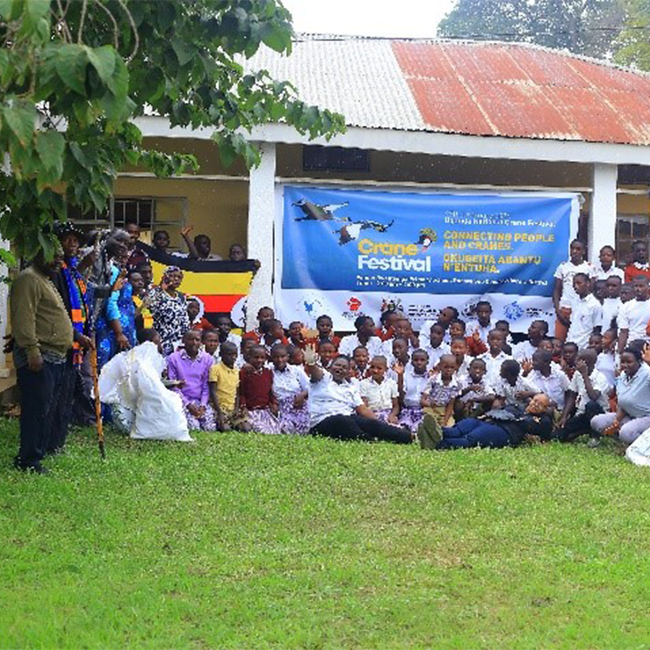
In a powerful display of unity and conservation, the annual Crane Festival brought together communities, conservationists, and policymakers to celebrate and protect Uganda’s iconic Grey Crowned Cranes. The event, held on February 27th, 2024, at Rwantsinga Primary School playground in Rubaya sub-county, Mbarara District, was a joint initiative by the International Crane Foundation (ICF) and the Endangered Wildlife Trust (EWT) in partnership with the Ministry of Tourism and Wildlife and Antiquities (MoTWA) and Mbarara District Local Government.

Expanding Reach, Amplifying Impact

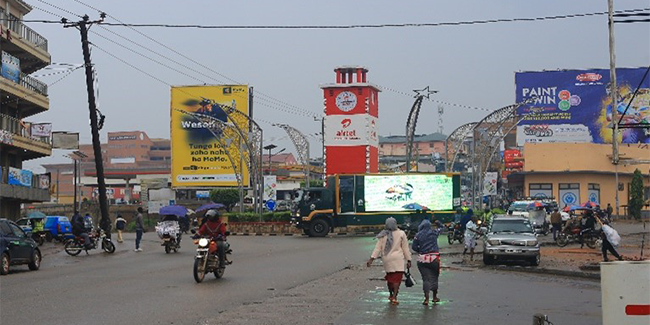
This year’s festival marked a significant milestone as it made its debut in the Rwizi catchment area, a new area of operation for the ICF/EWT partnership. This expansion signifies the partnership’s growing conservation footprint across Uganda, building upon the success of previous editions in Rukiga, Ssembabule, and Lwengo districts, where solid interventions are now in place. The collaborative communication efforts of ICF and EWT teams in Uganda, South Africa, and the USA successfully propelled the event onto previously unreachable local and international platforms, inspiring audiences worldwide.

Dire Need for Intervention

Uganda’s wetlands, crucial for both human survival and Grey Crowned Crane habitats, face immense pressure from rapid population growth and agricultural expansion. Over the past 25 years, the crane population has plummeted by a staggering 80%, primarily due to habitat loss, human disturbance, and illegal trade. These endangered birds often found on private lands, struggle to breed successfully as they are forced into increasingly marginal habitats. The Crane Festival serves as a clarion call for urgent action to protect these majestic creatures and their fragile ecosystems.


Fostering Coexistence Through Engagement

The festival’s theme, “Connecting People and Cranes,” aligned perfectly with the national and global Wildlife Day theme, “Connecting People and the Planet: Exploring Digital Innovation in Wildlife Conservation.” By engaging diverse stakeholders – schools, communities, policymakers, conservationists, and the media – the event fostered a deeper understanding of the interdependence between humans and cranes.

A multitude of activities, including joint awareness campaigns with the Uganda Wildlife Education Centre (UWEC), Uganda Wildlife Authority (UWA), and the Ministry of Tourism and Wildlife and Antiquities (MoTWA), community cleaning events focusing on plastic waste, art competitions by schoolchildren, school drama and running competitions, brass band marches, music, dance, and drama by Crane Custodians and Community Conservation Groups, exhibitions, and speeches from dignitaries, captivated audiences and inspired them to become advocates for sustainable coexistence.

Hon. Col. Tom R. Butime, Minister of Tourism, Wildlife and Antiquities, delivered a powerful speech as the chief guest, emphasizing the urgency of reflecting on the impact of human actions on habitats and species. “If the current situation does not change, our grandchildren may never see cranes in the coming years,” he warned, underscoring the need for immediate and collective action.

A Beacon of Hope for Grey Crowned Cranes

The Crane Festival represents a beacon of hope for the survival of Uganda’s Grey Crowned Cranes and their vital wetland habitats. By uniting communities, fostering environmental stewardship, and harnessing the power of digital innovation, this annual celebration paves the way for a future where these majestic birds can thrive alongside human populations.

The EWT and ICF remain committed to this mission, working tirelessly to secure the future of Grey Crowned Cranes and the precious ecosystems they call home. Through events like the Crane Festival, these organizations are not only raising awareness but also inspiring action and cultivating a deep appreciation for the natural world that sustains us all.

**  The EWT/ICF Partnership would like to thank all our donors who contributed to a successful Crane Festival.   This includes the Mbarara District Local Government, Coca-Cola Beverages Uganda Limited, Brighter Smiles Dental Clinic, the Uganda Wildlife Education Centre (UWEC), Uganda Wildlife Authority (UWA) and the Ministry of Tourism and Wildlife and Antiquities (MoTWA)


EWT leads in vulture conservation at 14th COP to the Convention on the Conservation of Migratory Species of Wild Animals

EWT leads in vulture conservation at 14th COP to the Convention on the Conservation of Migratory Species of Wild Animals

EWT leads in vulture conservation at 14th COP to the Convention on the Conservation of Migratory Species of Wild Animals

By Johan Botha and Eleanor Momberg

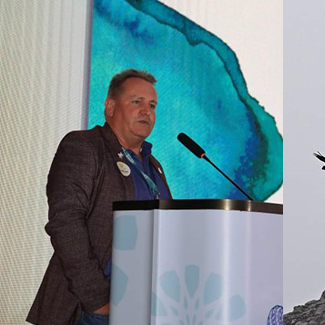
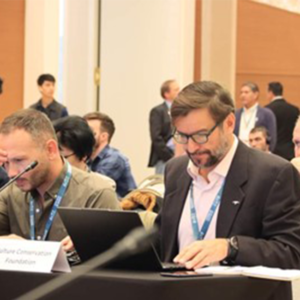
The 14th Conference of the Parties to the Convention on the Conservation of Migratory Species of Wild Animals (CMS), recently held in Uzbekistan, saw the launch of a number of reports, most notably the first analysis on the Status of the World’s Migratory Species and the review of the Mid-Term Implementation Action Plan to Conserve African-Eurasian Vultures (Vulture MsAP).


The landmark UN report on the World’s Migratory Species showed that animals are on the decline increasing the global extinction risk. The report provides a global overview of the conservation status and population trends of migratory animals, combined with the latest information on their main threats and successful actions to save them.


It reveals that while some of the 1,189 migratory species listed under CMS are improving, nearly half (44 per cent) are showing population declines, and that more than one-in-five (22 per cent) of CMS-listed species are threatened with extinction. Globally, 399 migratory species that are threatened or near threatened with extinction are not listed under CMS.

Over the past 30 years, 70 CMS-listed migratory species – including the steppe eagle, Egyptian vulture and the wild camel – have become more endangered. This contrasts with just 14 listed species that now have an improved conservation status – these include blue and humpback whales, the white-tailed sea eagle and the black-faced spoonbill.


“The extinction risk is growing for migratory species globally, including those not listed under CMS. Fifty-one percent of Key Biodiversity Areas identified as important for CMS-listed migratory animals do not have protected status, and 58 per cent of the monitored sites recognized as being important for CMS-listed species are experiencing unsustainable levels of human-caused pressure,” the report states.

It adds that the two greatest threats to both CMS-listed and all migratory species are overexploitation and habitat loss due to human activity. Three out of four CMS-listed species are impacted by habitat loss, degradation and fragmentation, and seven out of ten CMS-listed species are impacted by overexploitation (including intentional taking as well as incidental capture). Climate change, pollution and invasive species are also having profound impacts on migratory species.

Until now, no such comprehensive assessment on migratory species has been carried out. The report provides a global overview of the conservation status and population trends of migratory animals, combined with the latest information on their main threats and successful actions to save them.

The report’s findings underline the need for greater action, for all migratory species. Among the recommendations are the strengthening and expansion of efforts to tackle illegal and unsustainable taking of migratory species, as well as incidental capture of non-target species; increased actions to identify, protect, connect and effectively manage important sites for migratory species; and the need to not only urgently address those species most in danger of extinction, but also scaling up efforts to tackle climate change, as well as light, noise, chemical and plastic pollution.


It was in the compilation of the review of the Mid-Term Implementation Action Plan to Conserve African-Eurasian Vultures (Vulture MsAP) that the Endangered Wildlife Trust (EWT) played a significant role after the organisation was contracted through a CMS Raptors Memorandum of Understanding in April 2023 to lead the process. The EWT’s Vultures for Africa Program Manager, Andre Botha being appointed as project leader. He was joined by the EWT’s Jane Doherty, representatives from BirdLife International, the Royal Society for the Protection of Birds and the Vulture Conservation Foundation, supported by the Coordinating Unit of the CMS Raptors MoU. Jane Doherty was appointed as project intern in the employ of the EWT and was invaluable during the engagement with focal points, analysis of data and drafting of the report.


The Vulture MsAP was tabled by Andre Botha at a side-event attended by about 60 delegates from Range States, Observer Groups as well as 6 members of the drafting team on 14 February 2024.

Among its key findings are that although the threats affecting vultures have not changed in recent years problems related to intentional poisoning for belief-based use, bushmeat and trade is a more severe problem than appreciated in the past, especially in West Africa. It also found that collision risk for vultures will increase as the global shift to renewable energy increases and that mortalities from electrocution partly associated the switch to green energy is also on the rise.

Among the new threats identified are climate change, Highly Pathogenic Avian Influenza which can seriously impact critically endangered and endangered species already under pressure from other known threats.

Although some vulture populations are increasing in Europe, many are declining at a precipitous rate in Africa where data remains scant.

The report states that the amount of work done towards achieving the Results envisaged by the Vulture MsAP is testament to the efforts of many stakeholders, including the many NGOs working in the field.

The main recommendations emerging for Range States, donors and other stakeholders from this report are:

  1. Strengthen political engagement and financial support
  2. Build capacity to implement conservation actions
  3. Focus on the implementation of Essential Actions
  4. Enable the establishment of the Implementation Framework proposed by the Vulture MsAP
  5. Continue facilitating the Vulture Working Group and monitoring the Vulture MsAP
  6. Commence the review and update of the CMS Vulture MsAP – 2028/2029

The MsAP was adopted at the CMS CoP12 and is now halfway through its 12-year implementation timeframe. It is set to conclude in 2029.

The side-event was also used to announce the West African Vulture Conservation Action Plan that specifically focuses on reducing the impact of the threat of belief-based use poisoning of vultures in 15 countries in West Africa where this is the most important driver of vulture declines. The plan follows a process of engagement subsequent to the mass-poisoning of more than 2,000 vultures in Guinea-Bissau in March 2020 and a regional workshop that was held in Nigeria in 2022.

There were also a number of vulture-focused resolutions tabled for consideration, discussion and adoption by the plenary of COP14 and all of these resolutions were adopted after deliberation in the Avian Working Group of CMS.

Additionally, Botha represented the EWT at two side-events focused on mobilising conservation resources and sustained funding where he delivered presentations on achieving financial viability over time from a range of donors and other funding institutions and also reflected on the benefits, challenges and lessons learnt from four EWT projects that benefitted from funding granted by the SOS Fund.

“The COP also afforded an opportunity to meet formally and informally with a range of stakeholders from Range States, NGO’s and other institutions and also afforded the MsAP-team to discuss future plans such as the review and update of the CMS Vulture MsAP for another 12-year timeframe from 2029. These discussions often lead to opportunities for future projects and other engagements,” said Botha at the conclusion of the CoP.

Future work is mostly focused on supporting and promoting the action of the CMS Vulture MsAP in Africa and beyond with fieldwork and training that will be conducted in Chad, Malawi, Namibia, Zimbabwe, Zambia, Mozambique and Ethiopia in the coming months. The next wider international engagement will be the attendance of a workshop focused on the establishment of a population of critically endangered Rüppell’s Vultures in southern Europe which will be held in Málaga, Spain in mid-May 2024.

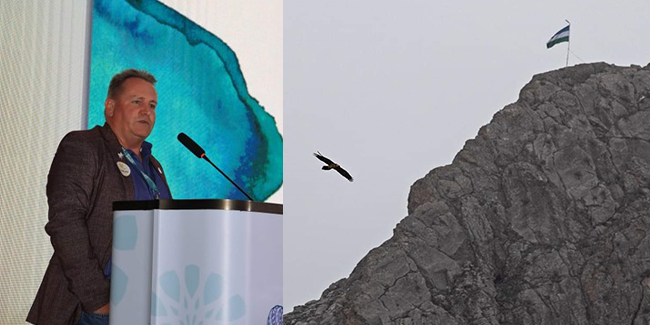
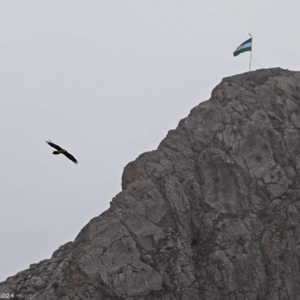
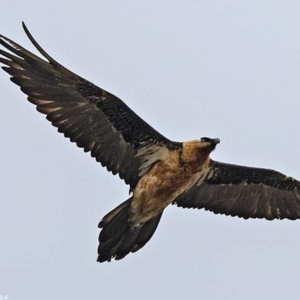
Botha said after the CMS CoP that about 20 delegates arranged their own field trip which saw them travel into the mountains to the south of Samarkand “where we enjoyed a number of views of Bearded Vultures and also saw Eurasian- and Himalayan Griffon, as well as Cinerous Vulture and Golden Eagle among an array of birds”.

A couple of shots of one of the Bearded Vultures we found on the field-trip yesterday. This bird was circling over the town of Kitob and obligingly approached us to circle above us after gliding by a distant cliff-face with the Uzbekistan flag planted on top. It was amazing to see these birds seemingly successfully living and breeding in close proximity to human settlements. Still can’t help but liken the effortless flight of these large birds to that of albatrosses over the ocean.