Help African Wild Dogs 

Donate today  

The EWT calls for a revision and republication of a completed Draft Biodiversity Economy Strategy for public comment

The EWT calls for a revision and republication of a completed Draft Biodiversity Economy Strategy for public comment

The EWT calls for a revision and republication of a completed Draft Biodiversity Economy Strategy for public comment

By Eleanor Momberg
 

The Endangered Wildlife Trust (EWT) has called for a revision and the republication for public comment, for a period of 30 days, of the government’s National Biodiversity Economy Strategy (NBES).

The Strategy was published for a 14-day public comment period on 8 March 2024. The comment period was later extended to 16 April 2024.

The EWT submitted extensive comments in two parts to the Department of Forestry, Fisheries and the Environment (DFFE) on 16 April 2024 outlining its general arguments regarding the NBES and detailed comment on specific issues contained in the document.

An initial NBES was published for implementation by the Department in 2016 outlining the steps necessary to ensure the success of the commercial wildlife and bioprospecting industries, as well as the transformation of both sectors of the South African economy. The 14-year plan’s aim was to provide a basis for addressing constraints to growth, ensuring sustainability, identifying clear stakeholder’s responsibilities and monitoring progress of the Enabling Actions. In terms of the first NBES, the goal has been to achieve an average annualised GDP growth rate of 10% per annum by 2030 in the biodiversity economy.


The Draft National Biodiversity Economy Strategy gazetted in March 2024 (link to the gazette) is a revision of the existing NBES and aims to “optimise biodiversity-based business potentials” across most economic sectors “for thriving people and nature”.

“In reviewing the NBES, the Strategy has been broadened to respond to the White Paper on Conservation and Sustainable Use of South Africa ‘s Biodiversity (the White Paper) as well as the Kunming-Montreal Global Biodiversity Framework (GBF), whilst incorporating the outcomes of the National Operation Phakisa Oceans and Biodiversity Labs, and addressing opportunities associated with all ecosystems,” the NBES Executive Summary states.

By broadening the terms of the Strategy, it has been “completely reconceptualised as a broad strategy to guide the whole of the biodiversity economy”.

The EWT, in its comments on the latest iteration of the NBES (link to the laws document), recognises the value that ecological sustainable use of wildlife brings to South Africa, and supports conservation practices that, within the scope of the law in the country, promote the ecologically sustainable use of wild animals in natural free-living conditions to the benefit of all.


While the EWT upholds the provisions of the environmental right contained in the Constitution, it does not support the industrial-scale production and management of South Africa’s wildlife when these activities are not in line with the principles of ecologically sustainable use, animal well-being and do not benefit the conservation of the species in the wild.

“These practices may also result in environmental harm and wildlife well-being concerns,” the EWT submission states.

In welcoming the opportunity to play a constructive role in developing an appropriate and equitable biodiversity economy strategy as part of the broader development of a sustainable green economy, while ensuring the enhanced protection of the country’s biodiversity, the EWT submits that the NBES itself is lacking in both content and clarity. Unless revised, it risks impeding ecologically sustainable use.

More information is required on the business cases underpinning the actions listed, and the economic information that has been considered in motivation for these activities.

“Critically, the NBES as it stands lacks SMART objectives, objectives that are specific, measurable, achievable, realistic and time bound.”

Detailed comments by the EWT deal with the goals outlined in the NBES highlighting various shortcomings requiring attentions. In almost all instances, the EWT points out a lack of clarity on the goals proposed, whether these can be justified, or considered realistic.

The EWT’s response to the first goal related to leverage biodiversity-based features to scale inclusive ecotourism industry growth in seascapes and in sustainable conservation land-use, points out the lack of explanation to justify targets provided, as well as the lack of clarity on what type of ecotourism infrastructure is to be developed in the buffer zones.


Similarly, with the goal to prioritise infrastructure development and viable enterprises in community reserves and areas adjacent to fauna/ Biq 5 areas. Here the EWT states the prioritising infrastructure development on the edge of protected areas undermines the principles of establishing ecological buffers around protected areas, a core principle for retaining the integrity of these areas as illustrated by the spatial structure of biosphere reserves, as well as Ecological Support Areas surrounding Critical Biodiversity Areas. These projects in must comply with environmental regulations to mitigate potential negative impacts on ecosystems, habitats, or protected areas, ensuring compliance with relevant laws and regulations and avoiding residual impacts where possible.


The EWT points out that the second goal of consumptive use of game from extensive wildlife systems at scale that drives transformation and expanded sustainable conservation compatible land-use lacks clarity. It is unrealistic and could potentially undermine sustainable management efforts to expect consumptive use of game from extensive systems at scale to “drive” transformation.

Questioning how realistic the hunting targets proposed are, the EWT points out that the NBES is silent on whether there is in fact a market for the degree of hunting indicated, adding that the quota targets have not been justified with an economic motivation that explains their contribution towards national tourism and or socio-economic revenue. The same applies to the actions related to so-called traditional hunting. If these hunting methods are illegal, unsustainable or do not ensure the well-being of the animal, the EWT cannot supported the action, even if it is considered traditional.

Regarding legislation to guide the implementation of the game meat industry, the EWT states that while it supports initiatives to advance game meat consumption, “we are wholly opposed to the slaughter of wild animals in abattoirs as this fundamentally infringes on their well-being”.

Until the Game Meat Regulations are promulgated and the exception to section 11(1)(i) of the Meat Safety Act 40 of 2000 becomes effective, game meat production as an economic opportunity is not viable. Game meat production can only be commercialised if the legislation governing the slaughter, processing and sale is promulgated, implemented and enforced.

The NBES is also silent on how the well-being of the individual animals will be considered and ensured. It is critical that the well-being of the animals utilised have been addressed with respect to their nutritional, environmental, physical, behavioural and mental health, when placed within these areas for ecologically sustainable harvesting.


The EWT adds that while it recognises the importance of a more inclusive fisheries sector, most of the country’s commercial marine harvesting is already at capacity and there is very little room to sustainably expand this without compromising the stocks and detrimentally impacting vulnerable ecosystems and threatened species. Thus, any strategy developed around sustainable marine harvesting would also need to account for maintaining fish stocks at a viable level to sustain species dependant on them such as the African Penguin.

The organisation also argues that abalone poaching cannot be attributed to “non-transformation of the sector,” stating that enhanced regulation and stringent enforcement is required to curb these illegal activities.

With regard to identifying mechanisms to scale cultivation of indigenous medicinal plants for sustainable use within the traditional medicine sector, the EWT submits that without the inclusion of market evaluations and financial data, it is difficult to evaluate how the number of nurseries identified in the NBES is warranted and can be sustained.

With regard to the resolution of outstanding land claims, the EWT submits that this is a critical barrier to protected area exapansion and proposes that a target be included for provincial proclamations of protected areas It would be beneficial, the EWT statesm if all undeveloped governmentproperties are collated and published for more insight and a review into the realistic opportunity for long-term conservation security.

Clarity is sought to what the NBES regards as “large community owned conservation areas”, as without this it would not be possible to determine whether this objective has been achieved or not.

Commenting on the enabler related to financing of the biodiversity economy, the EWT expressed its concern with the suggestion that this action would pay for conservation alone, without an assessment of the contribution of the full value chain of biodiversity and for the value of all ecosystem services towards the national economy and for human well-being being considered.

Alternative and more creative means of finance needed to be sourced and implemented to ensure the success of the biodiversity economy, and related Strategy.

Although the EWT supports the intention of DFFE to explore and develop economic opportunities relating to the ecologically sustainable and ethical use of biodiversity resources, the draft NBES requires extensive amendment. It is hoped that through the public comments received the present draft NBES would be enhanced before being published for a new round of public participation.

“The NBES needs to be revised, fully completed and republished for public comment for a minimum of 30 days,” the EWT submission reads.
Financial Support and Collaboration Key to Saving Species from Extinction

Financial Support and Collaboration Key to Saving Species from Extinction

Financial Support and Collaboration Key to Saving Species from Extinction

By Eleanor Momberg

Greater financial support and collaboration between all stakeholders is needed to save the world’s endangered species from extinction.

That was the message from participants in the first World Species Congress Satellite Event on 14 May 2024 co-hosted by the Endangered Wildlife Trust (EWT), South African National Biodiversity Institute (SANBI), Department of Forestry, Fisheries and the Environment (DFFE), the Botanical Society of South Africa (BotSoc), BirdLife SA and the Two Oceans Aquarium Foundation.

The World Species Congress is a virtual 24-hour congress hosted by Reverse the Red. It offers a forum for collaboration and the chance to develop a roadmap for success for anyone striving to create a healthier planet.

The South African event held ahead of the 24-hour World Species Congress on 15 May 2024 showcased a number of examples of species recovery. Participants in the virtual event also discussed the country’s global commitments towards species recovery, including the Kunming-Montreal Global Biodiversity Framework. For South Africa, the inputs received are an important contributor to the national targets to be set in the National Biodiversity Strategy and Action Plan.

Mukondi Matshusa of the DFFE said the South African event provided the government with an opportunity to shape and quantify its collective conservation efforts through collaboration, inclusiveness and partnership.

Collaboration between government, NGOs and communities as the people who live with the species is what was needed for conservation and recovery to make implementation of the White Paper, and the development of the GBF, workable, she said.

Target 4 of the GBF aims to Halt Species Extinction, Protect Genetic Diversity, and Manage Human-Wildlife Conflicts. This means ensuring urgent management actions to halt human induced extinction of known threatened species and for the recovery and conservation of species, in particular threatened species. The aim is to significantly reduce extinction risk, as well as to maintain and restore the genetic diversity within and between populations of native, wild and domesticated species to maintain their adaptive potential. This can be done through in situ and ex situ conservation and sustainable management practices, and effectively manage human-wildlife interactions to minimise human-wildlife conflict for coexistence.

Domitilla Raimondo, SANBI’s Programme Manager of the Threatened Species Unit, pointed out the conservation in South Africa is a whole of society approach. South Africa is unique in the number of citizens, including community members and traditional healers, that help to monitor species, assisting scientists with data on the health of species.

“We do things together and will continue to do things like that,” she said.

Raimondo stated that in South Africa a landscape approach is used to conserve species. The country has intricate spatial biodiversity planning and in that targets are set for every type of ecosystem which allows for the conservation of common and threatened species. By doing this, unchecked development can be halted to protect vulnerable and threatened species.

The Red List assessments done for 12 taxonomic groups in SA indicate that 25 species are faced with extinction. The highest level of threat is to 30% of freshwater fish for which a huge increase in funding is required to intervene in their conservation and management. Eleven amphibian species, including the Desert Rain Frog which is facing collapse because of climate change and mining, 14 mammal species of which 50% are small mammals, 16 bird species including the Botha’s Lark, Blue Swallows and Vultures, as well as numerous marine species and 109 plant species, are in need of urgent recovery.

“We will require significant upscaling of investment to reach Target 4. We have the know-how, we have the people, we just need the financing, said Raimondo.

The EWT’s Senior Manager Sustainable Financing and Business Partnerships Kishaylin Chetty said although the landscape approach is central to species conservation, and there is a focus on stewardship and large intact areas, the EWT remains a species-focused conservation NGO.

“We understand that funding is absolutely critical for us to take our work forward, and that collaboration is key. For us to achieve conservation impact at a national and international scale we need to collaborate with the right types of partners to make sure that we have action on the ground,” he said.

The EWT has a vision in terms of a healthy planet, and an equitable world that values and sustains the diversity of all life. It is mainly dedicated to conserving threatened species in southern and East Africa to the benefit of all. With 12 programmes and over 110 employees the EWT’s paw print has touched 21 countries within the African continent. Although species-led, the EWT equally recognises the value of conserving habitats and benefiting people.

Reaching the Global Biodiversity Framework targets of conserving 30 percent and land and water by 2030 and 50% by 2050 is still within reach. While parts of the world, the African continent and parts of South Africa have been highly impacted by environmental destruction, there are also parts that are still largely intact.


But, to achieve these goals, would require reversing species decline by determining which opportunities exist to restore what has been lost, and to focus on conserving what we have, and more specifically reversing declines. To address this, the EWT has a multitude of programmes directed at reducing habitat loss, engaging in regards to poaching, trying to adequately address the issues and concerns around disease and poison, particularly around impacts to vultures, the intersection between human-wildlife conflict and how we can actively and positively work with communities. Also being addressed pro-actively and reactively is the illegal wildlife trade.

Chetty said because developing infrastructure is a key to the development of the South African economy, the EWT works to ensure this is done responsibly through support to entities within this space.

Proactively, the EWTs Conservation and Science Planning Unit contributes towards helping and guiding South Africa minimise or mitigate the impact of development on species. This is done through the National Environmental Screening Tool which the EWT provides with information about species. This has included the development of a threatened species node mapping tool, and Red List work related to mammals. In progress is the development of a tool for the renewable energy sector linked to support for the just transition and the approach towards mitigation against climate change. By utilising a tool that looks at landscape planning and the intersection between conservation, agriculture and renewable energy will actively support renewable energy development across the country.

One of the other tools that is critical is protected area expansion. The EWT is working across the country looking at the intersection between the National Environmental Management Protected Areas Act and the opportunities that exist in terms of conservation stewardship or conservation servitudes and Other Effective Conservation Measures (OECMs). The EWT has secured large portions of protected areas and are in the process of trying to secure more land to protect species.

“A lot of our focus of late has been around buffer areas and trying to work with entities like SANParks to better help them to create those buffer areas around the national parks,” he said.

Chetty said the EWT’s selection of species for conservation and research was based on science. Besides looking at the global threat to a species, whether it is locally threatened, endemic and whether another organisation is already addressing concerns around a species, a decision to work to conserve a species also takes into account what the conservation impact for the species would be.

Collaboration, said Chetty, is “absolutely key” when it comes to species conservation.

The EWT works very closely with DFFE, the provinces, a lot of conservation agencies and a number of NGOs to ensure that it can actively contribute toward species conservation in southern Africa.

One of the greatest challenges faced by the NGO is unlocking new funding for conservation. The GBF highlighted that there is a biodiversity financing gap of close to $711 billion. The EWT supports the country’s biodiversity agenda and has been trying to contribute towards enabling the country to become a nexus between socio-economic development and conservation so that. The organisation has thus had to brush up on the green economy, the wildlife economy, sustainable use, the circular economy and the just transition to ensure that it has a good take of how these areas can be utilised to drive species conservation.

“We have also looked at conservation market-based instruments … quantity based and market friction instruments to ensure that we can be innovative in this space and really try to bring in different types of funding to stimulate the growth of our species conservation work in South Africa and throughout Africa,” he said.

In order to drive conservation around particularly Wild Dogs and Lions, the EWT is working with Rand Merchant Bank to develop Wildlife Bonds for both species with the aim of bringing in between R100 million to R150 million in funding for the conservation of Wild Dogs and Lions, including the collaborative work on Lion being done with the Peace Parks Foundation.

A Wildlife Bond is a sustainable finance instrument that enables large funding to come from asset management investment to drive outcomes-based conservation that speaks to species-related work.

“Hopefully this can be the catalyst for further Wildlife Bonds in South Africa.”

A word from the CEO – 50th Celebration

A word from the CEO – 50th Celebration

Word from the CEO

 
Yolan Friedmann, CEO

On behalf of the Endangered Wildlife Trust Board of Trustees may I welcome you all, on this chilly autumn evening, to this prestigious event, a celebration of 50 years of conservation in action.

Good evening Minister Creecy, Minister for Fisheries, Forests and the Environment. Welcome to David Freeman, First Secretary for Environment, Science, Technology, Health, and Minerals, U.S. Embassy Pretoria.

Good evening to the EWT founders that are here with us tonight Clive Walker and James Clarke and our previous CEOs Dr John Ledger and Prof Nick King, all the way from the United Kingdom.

To our Board of Trustees and the Chairman of the Board, Muhammad Seedat and

To all past Trustees who have played such a pivotal role in forming the EWT, some of whom have travelled many miles to be with us tonight.

Welcome to the many donors, associates, colleagues, friends, members of the media and our highly valued partners who are with us tonight.

And last but never ever least: welcome to the staff of the Endangered Wildlife Trust, past and present. Our greatest assets.

You are all welcome.

Tonight has been in the making for 50 years. I used to think that 50 years was an inordinate amount of time until I too turned 50 just before the EWT did. I can now assure you that 50 is the new 21 and this is not a celebration of a coming of age, but of a youthful spirit, blended with wisdom, a touch of maturity, a dash of streetsmarts, a helping of hope and a LOT of energy still to be spent to realise dreams that are still big enough to scare us, in the words of Ellen Johnson Sirleaf.

 Tonight has been a very special gathering of many remarkable people and a celebration of many remarkable achievements.

The EWT prides itself on instilling hope, and sharing a vision of what our future can be. We do not like to instil a sense of fear, loss or hopelessness when we talk about our natural world. Instead, we prefer to show, with evidence, the difference we can all make when we work together. You’ve seen firsthand how our work, and with your support, has turned South Africa into the only country in Africa with an increasing population of Cheetah. How Wild Dogs now flourish in Malawi and Mozambique where they had previously gone extinct. How lost species like the Amatola Toad and de Winton’s Golden Mole have been rediscovered and can now be protected. How rivers can flow when invasive plants are removed and how communities can use this water for their livelihoods, their crops and their general wellbeing.

How populations of Blue Cranes and Cape Vultures have been downlisted due to concerted and targeted conservation effort, and how the Brenton Blue Butterfly was the first species to trigger the declaration of a nature reserve to save just one species. How communities now run conservation-friendly enterprises on their land, and rangers, ecowarriors and businesswomen have been borne out of rural children and their mothers. How hundreds of thousands of hectares of critical habitat are now protected, spanning biomes from the Succulent Karoo to the Soutpansberg and covering the lifegiving rivers, grasslands, wetlands, forests and deserts in between.

In 1973, the world had a human population of 3.9 billion. We have now come to remember the 1970s as a time of activism and the birth of multiple social movements that galvanised action and created momentum for stimulating social change for the decades to come. The environmental movement benefited from this period of awakening and the United Nations Environmental Programme was born, as was CITES, the global wildlife trade convention, the RAMSAR convention for the protection of wetlands and the landmark Endangered Species Act that was passed in the USA. World Environment Day was kickstarted and of course the globally significant UN Conference on the Human Environment was held, catapulting the world towards a slew of environmental agreements that would attempt to safeguard our natural resources and our climate for decades to come.

President Richard Nixon said it for us all when he stated in 1973 that “Nothing is more priceless and more worthy of preservation than the rich array of animal life with which America has been blessed.” It was at this time that way down on the southern tip of Africa, the Endangered Wildlife Trust was born.

Despite all this activity, fast forward to 2024 and the WWF tells us that populations of globally monitored mammals, fish, birds, reptiles, and amphibians have declined by an average of 68%. In Africa alone, the percentage is 66. Our Freshwater systems show the worst, and most rapid decline in quality and species loss. 2023 was the hottest year on record, with extreme weather events causing devastation, globally.

And the world human population has reached 8.1 billion, and is still growing. That is a more than 200% increase in the number of humans and a more than 2 thirds decrease in the number of wild animals left on our planet today. The EWT has done well over the past 50 years. But we have to do more.  

Right now, in the safe havens of our national parks and in our remote wilderness areas and mountain ranges, snares are being set, poisons are being planted and rifles are being loaded. From the African savannahs and deep into our oceans, land is being ploughed up and plastic is being dumped. Rivers are being choked and skyways are stolen from the winged creatures that really do own them.

Every night the EWT staff go to bed dreaming up ways to do more to stop the harm and reverse the trends. Every day they get up and channel every heartbeat into actions that will fight extinction. For 50 years, we have pushing back the tide and finding solutions; this is the thread that binds us and which continues to blur the generational lines, to form one united EWT.

As you have witnessed, the EWT staff, volunteers and trustees have, for 50 years, been the most tenacious, innovative and energetic, and we are defined by an unbreakable spirit that binds us like a steel thread and ignites our purpose. We have literally saved species and changed lives.

To the EWT staff past and present: you are all a force of nature!  Thankyou for the years of unimaginable hard work, sacrifice and souldeep commitment that comes from place that makes you special people, and a privilege for me to serve. Having stepped into the EWT myself, around midway into its story, I look both backwards and forwards from this halfway mark and see many extraordinary people on both sides, that have not just shaped the EWT’s life but my own too. Thankyou to you all.

To those extraordinary EWTers that will come next and to what we have termed #TheNextFifty. The world will not be an easier place for much of the planet’s human and wildlife populations. The EWT needs to write a new chapter now, and this book will come with new challenges and opportunities. Many of us here tonight will not be here to witness the commemoration of the EWT’s centenary but our impact MUST still be felt. We owe it to the next generations of brilliant EWTers to continue in the footsteps of our giant founders and to stay connected to the dreams of what we know can be achieved tomorrow, as we sit here tonight.

This we can all do by leaving our future teams a legacy that goes beyond another doubling of the human population and the loss of more species, but through the establishment of a Fund for the Future that will secure the EWT, our people and our impact, for the wildlife and the communities that they will serve, for decades to still come and for generations not yet born.  

The EWT is launching – in its 50th year – our Fund for the Future to ensure that the EWT never faces the risk of shutting its doors and ending our story, which in many ways, has just begun. On behalf of the EWT’s FirstFifty founders, CEOs and Chairs of our Board, we invite you to join us to continue our story and make your pledge tonight to the Fund, to secure forever, together. Pledge cards are on your tables and can be handed to any EWT staff member.

Thankyou to the Meterman, The Elizabeth Wakeman Henderson Charitable Fund, Trappers and the Oppenheimer Family for already making their pledges to this fund.

A powerful, impactful conservation strategy, underpinned by financial security and implemented by high performing teams of the best talent. This is the three-pronged approach that will define the next few decades for the EWT and we are developing what we are calling our Future Fit strategy for the NextFifty. This strategy will ensure that we channel our efforts into achieving targets that stretch us and will achieve high impact; that will galvanise cohesive, collective action towards achieving global, and national conservation priorities and which will benefit a maximum range of species, and humans, realistically.

Our Future Fit strategy will simplify our approaches, catalyse new science, engage new partners and embrace a new way of thinking. It will take the EWT into new regions where we will support new partners, and scale our impact. And building on our strengths, our Future Fit strategy will remain firmly rooted in the core principles of the EWT which are to save species, conserve habitats and benefit people.

We will build resilient systems, and develop nature-friendly businesses; we will safeguard the habitats that protect all life, we will prevent more extinctions and we will bring peace to human-wildlife conflict. We WILL halt the loss of biodiversity. 

Our planet may be ailing, but our spirits are not. We are powerful, passionate and energetic. We have solutions and knowledge and we CAN turn the tide.

In the words of António Guterres, Solidarity is humanity. Solidarity is survival.

In the words of the EWT: together we CAN protect forever.

Thankyou for making our birthday so special and for being part of our story.


Yolan Friedmann,

CEO, Endangered Wildlife Trust


A word from the CEO April 2024

A word from the CEO April 2024

Word from the CEO

 
Yolan Friedmann, CEO

The Endangered Wildlife Trust was well-represented at the inaugural Biodiversity Economy and Investment Indaba, themed: “Collective Action for Thriving Nature and People” in Gauteng from 25 to 27 March 2024.  As the EWT’s CEO, I was invited to participate in a panel discussion under the theme of leveraging biodiversity-based features to scale inclusive ecotourism industry growth in seascapes and in sustainable conservation landuse. Along with fellow panellists from the WWF-SA, WildTrust, iSimangaliso Wetland Park and Nature Speaks and Heals, the focus was on what is required to establish mega-living conservation landscapes through voluntary involvement in suitable state, private and community areas.

The crux of the message that I conveyed was that we already have a Biodiversity Economy in South Africa because no economy can exist without food, air, water, energy, soil, plants, animals and all the components of biodiversity that give us life. Our human-constructed financial economy depends entirely on the natural environment and cannot be seen as separate and biodiversity already IS what makes our economy work. Second, I emphasised that humans are a component of biodiversity and also cannot be separated out; we are an integral part of nature, and we need to start talking about humans, biodiversity and our economy in an integrated, interdependent fashion. Third, I emphasised the significance of the responsibility of the current generation which is, to quote Jarred Diamond, the most privileged generation to potentially ever live. The current generation has all the benefits of modern communication, technology, transport, medicine, and cheap food, among others, and whilst the generations to come may benefit more from advancements in these components of life, they will bear the brunt of the disasters of climate change, biodiversity loss, soil erosion, desertification and air pollution, again, among others. We therefore cannot ignore the intergenerational rights enshrined in our constitution which remind us that we are simply the custodians of our environment and are managing it for the generations yet to come. We cannot destroy it all in the pursuit of short-term gains and inequitable financial wealth. For equitable benefit sharing in a sustainably managed environment in which no species go extinct, ecosystems flourish and nature thrives, we need to think creatively about how to invest in nature-positive development options that drive equitable prosperity for all and this should be the crux of the inaugural Biodiversity Economy and Investment Indaba.

After the panel discussions, breakaway sessions were held to unpack options for nature-based job creation, the financing of entrants into the Biodiversity Economy, finding ways to expand investment in the wildlife, biotrade and eco-tourism sectors, as well as the need for skills development and transfer, the acknowledgement and integration of traditional knowledge systems into contemporary conservation practices, and developing a robust strategy to engage and involve communities meaningfully, in policy development and the cocreation of protected areas of the future, to underpin the successful expansion of South Africa’s economy.

The EWT congratulates the Minister of Forestry, Fisheries and the Environment, and her Department, for putting on a highly successful Biodiversity Economy and Investment Indaba

Yolan Friedmann,

CEO, Endangered Wildlife Trust


Energy-saving cooking in Rwanda

Energy-saving cooking in Rwanda

Energy-saving cooking in Rwanda

By DR Adalbert Aineo-mucungizi

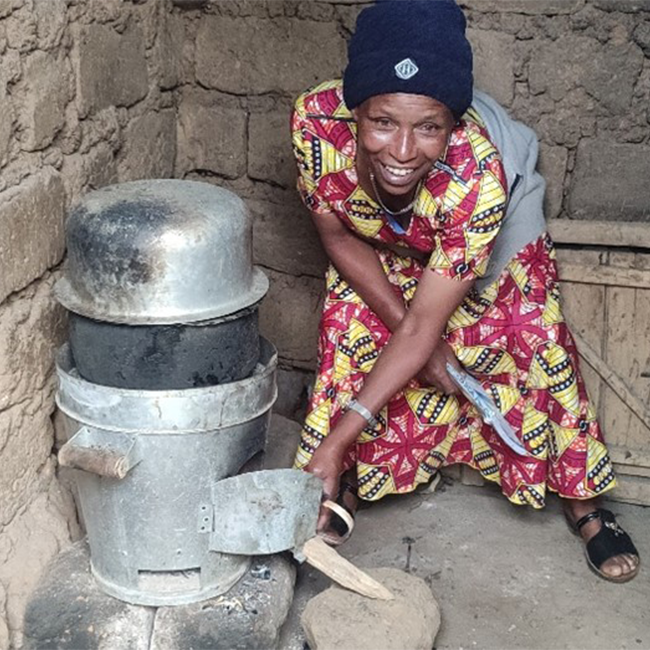
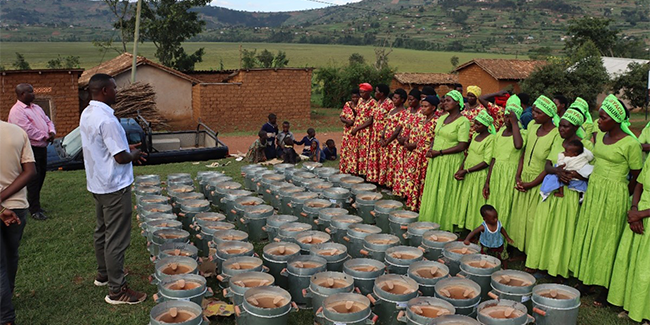
Energy-saving stoves being handed to households in Rwanda

With funding from Kansas City Zoo and Aquarium, International Crane Foundation/Endangered Wildlife Trust sourced and distributed 80 energy saving stoves for women from 40 households. Each household received two stoves.

The energy-saving stoves are made of clay liners, a metal casing, and vermiculite cement, which maintains heat during cooking. These stoves were supplied to women who had been cooking using the traditional three-stone open fire system, which encourages the loss of heat into the atmosphere, resulting in the use of a lot of fuel wood. Just to cook a meal, it used to take a woman and her children several hours to search for wood for fuel.

Some beneficiaries have indicated that using the energy-saving stoves has reduced wood consumption from 15-20 kg to 2-3 kg per day. This is because the beneficiary households can use pruned branches instead of entire felled trees for their fires.

The families not only use considerably less firewood, but the food is also being prepared faster. For example, one of the beneficiaries has reported that she has reduced her cooking time for beans from three hours to one. With the time saved, the women are now able to spend more time working in their gardens growing food for their families, and even for sale. This has boosted their household income and reduced the demand for wood.

Our immediate plan is to raise substantial funding to scale up this intervention to reach an additional 500 households in order to reduce pressure on the Rugezi Marsh and its catchment.

Using an energy-saving stove supplied by the African Crane Conservation Programme

Energy-saving stoves being handed to households in Rwanda

Traditional cooking methods used by the women