Help African Wild Dogs 

Donate today  

World Migratory Bird Day 2024: Protecting Insects to Safeguard Bird Migration

World Migratory Bird Day 2024: Protecting Insects to Safeguard Bird Migration

World Migratory Bird Day 2024: Protecting Insects to Safeguard Bird Migration


To mark World Migratory Bird Day 2024 on 11 May 2024 attention was focused on the importance of insects and their impact on migratory birds. 

The theme: Protect Insects, Protect Birds highlighted the importance of insects for insectivorous migratory birds which rely on a variety of insects for their energy as they migrate north in winter. A reduction in insect populations threatens the survival of these species.

The decline in insects worldwide is being caused by not only habitat loss, but also the use of pesticides, which have the knock-on effect of increasing bird and other insectivore mortalities.

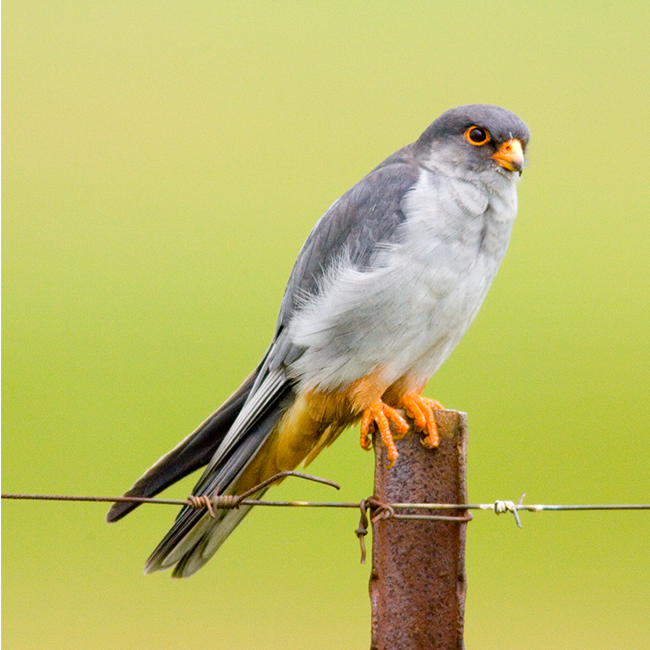
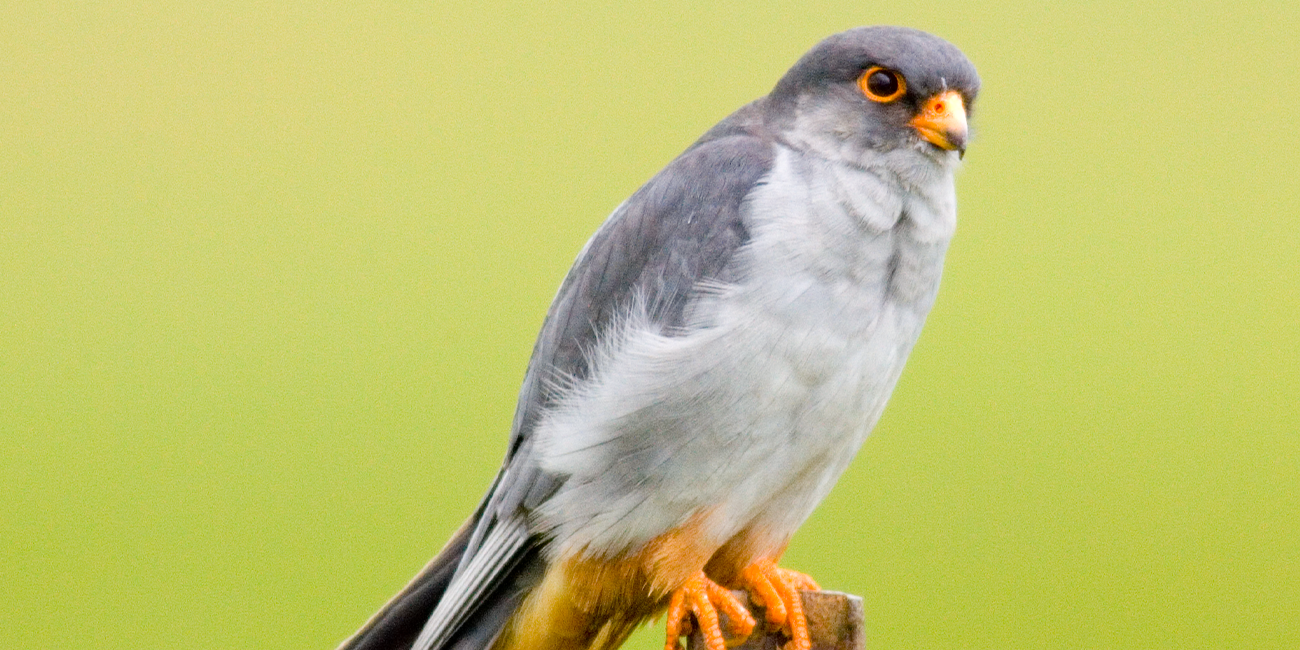
Although no official figures have been released yet, early indications are that there have been fewer Lesser Kestrels and Amur Falcons visiting South Africa this year.  While insect declines may be a contributing factor, it may also be attributed to the fact that there was exceptional rainfall further north in East Africa resulting in migratory birds remaining in areas of abundant resources instead of travelling further south for food — to South Africa, for example.    That is why there may have been lower numbers of migratory falcons and other species such as White Stork in southern Africa this past summer.

Counts conducted across South Africa by Endangered Wildlife Trust field officers, particularly in the Northern Cape, North West, Mpumalanga and KwaZulu-Natal in January and February 2024 range from thousands of Falcons and Kestrels in the Hanover area on 20 January 2024 to only a few hundred at a roost in Standerton, Klerksdorp, in Underberg, Victoria West and Beaufort West Areas.  Between 160 and 180 of the raptors were counted at De Aar in February this year.  These figures are still being collated for official publication.

The report on the Status of the World’s Migratory Species and the review of the Mid-Term Implementation Action Plan to Conserve African-Eurasian Vultures (Vulture MsAP) released at the United Nations Convention on Migratory Species in March 2024 shows that over the past 30 years, 70 CMS-listed migratory species – including the Egyptian vulture– have become more endangered.  The report highlights habitat loss, degradation and fragmentation, as well as over-exploitation alongside climate change, pollution and invasive species as having profound impacts on migratory species.

It recognises that the widespread use of pesticides in intensive agriculture is a key factor in the reported declines in insect populations. Many of these substances also have a secondary poisoning effect on birds that may feed on insects killed by the pesticides.


The decline in insect numbers can result in food shortage for a wide range of species, not least the many insectivorous migratory birds heading north from South Africa to Europe, the Middle East and Asia for the winter.

Birds play an important role in the natural environment, especially in pest control.   Besides a shortage of insects, an over-population of insects in some areas due to, for example locust plagues, can also affect migratory birds as plant health is compromised and agriculture is harmed. Extensive use of certain pesticides in locust and quelea control in Africa also has a substantial impact on non-target species, including a wide range of migratory raptors that make use of these species as a food source.

The Endangered Wildlife Trust (EWT) plays an important role in securing natural environments for migratory birds through collaboration within the United Nations Convention on Migratory Species (CMS) and projects being undertaken to restore wetlands and other habitats along migratory routes across Africa, including a focus on cranes through the EWT/International Crane Foundation partnership. 

In line with the report’s call for greater action, the EWT joins countries and communities around the world to support the need to expand efforts to not only tackle the illegal and unsustainable taking of migratory species, but also to increase efforts to tackle climate change, habitat loss for both migratory birds and insects and to address issued such as noise, chemical and plastic pollution which affects all migratory species.

My daunting first Vulture poisoning as a new EWT field officer

My daunting first Vulture poisoning as a new EWT field officer

My daunting first Vulture poisoning as a new EWT field officer

By Kyle Walker, field officer in the Birds of Prey Programme and Carnivore Conservation Programme


It’s my first week working for the Endangered Wildlife Trust in April 2023 and I’ve just moved to the Lowveld from the Cape. The temperature in the Mopani veld is beyond uncomfortable and much to my surprise, I’m missing the Cape winds.

Having just secured a field officer position with the EWT, I am aware that it is only a matter of time before a vulture poisoning event occurs. It will be my job to respond to these events in future, although, up to this point I have only ever seen photos and videos posted on social media. My days of being an arm-chair warrior are about to change.

Mid-way through my morning meeting I’m told that the rangers in Kruger National Park’s, Mooiplaas section (or Beautiful Farm in English), have discovered a poisoning scene with an unknown number of dead vultures. The information trickles in throughout the next hour as we race up north with our mobile veterinary trailer, the EWT’s Vulture Ambulance, in tow. It sounds as if only a couple birds are still alive, but we are prepared to treat as many survivors as possible. It’s a long drive and I have time to reflect upon what I’m about to see. Thoughts like – how am I going to hold the vulture? Will I get bitten? What happens if I come in to contact with the poison? Will I cope with seeing a lot of dead animals? Will I get there in time to save a few survivors? All these thoughts consume my mind, but I sit back and concentrate on the drive ahead. After all, what’s the use if I don’t arrive at the scene in one piece.

We drive through the Phalaborwa gate with a quick wave to the guards. This is not the first time they’ve seen this vehicle.  John Davies, our Raptor Conservation and Research Project coordinator, as well as my predecessors, have been attending vulture poisonings in this area since 2014 and there are not many people better equipped to handle the situation ahead.

Unlike the slow-moving cars filled with eager-eyed tourists, ours darts past with little time spared to view the herds of Elephant and Buffalo. It’s a strange feeling knowing that I’m no longer on a tourist permit and that the lives of a few animals now hang in the balance of our arrival. Up the H14 road towards Mopani, hook right towards Letaba and a further 15 km along the dirt road to the scene.

We arrive at what looks to be a very peaceful dam. An Elephant bull is slowly wading through the water and a Marabou Stork is perched atop a Leadwood tree. Our vehicle pulls up to the ranger’s vehicle and we jump out to greet everyone and get the lowdown. The area adjacent to the dam is completely open and as I get my bearings I start seeing the aftermath of the poison.

Strewn around the area are small, feathered carcasses. A Tawny Eagle below the giant Green Thorn tree, three White-backed Vultures below another tree, a Lappet-faced Vulture facedown in the open.


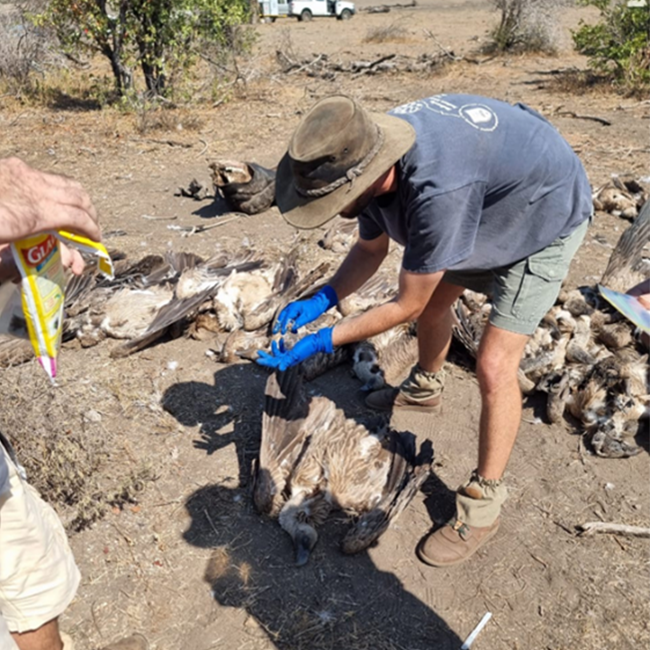
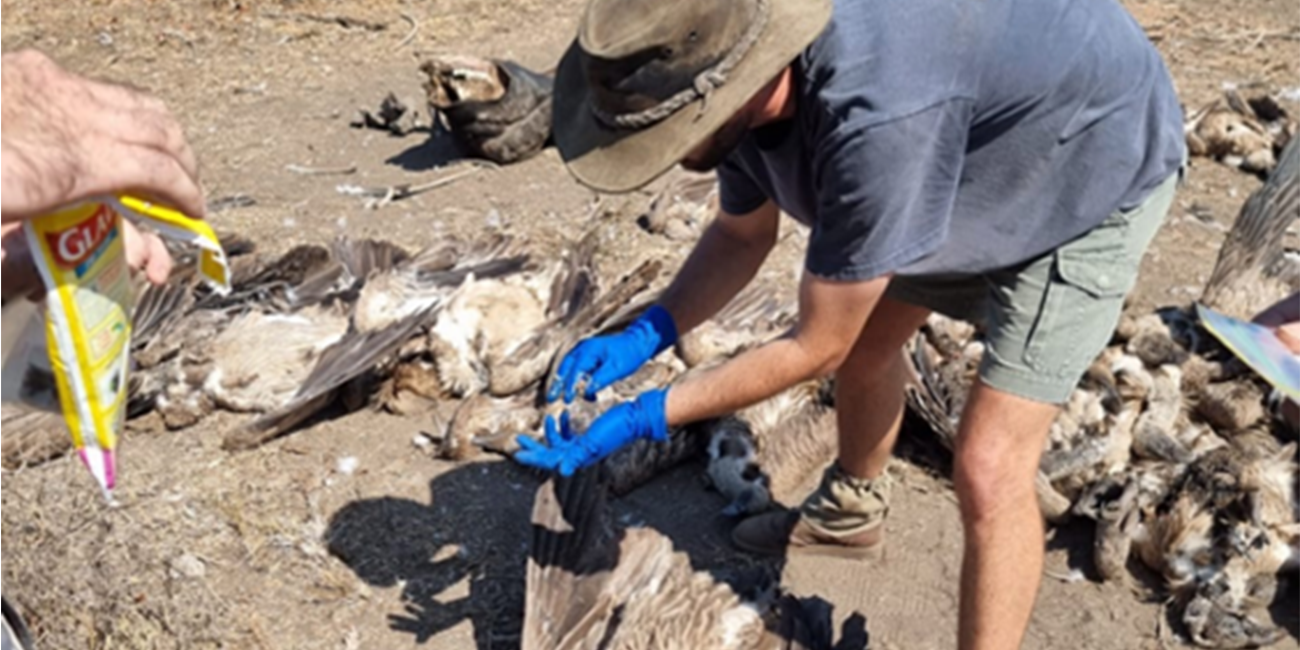
But, first things first, there are two very weak White-backed Vultures lying in the shade in front of us. John sets about mixing an activated charcoal mixture while instructing me on how to hold the vultures safely. Holding birds is not new to me, but never have I held one this size. With the vulture cradled in my arm and its head firmly in my hand, we begin administering fluids. The fluids are used to flush the remaining poison from the bird’s system. It is not the final solution, but it does allow us time to transport them back to a veterinary facility where they will receive the necessary care and attention. With both birds safely stowed in travel boxes, we move on to the cleanup, intermittently checking in to keep the survivors hydrated.

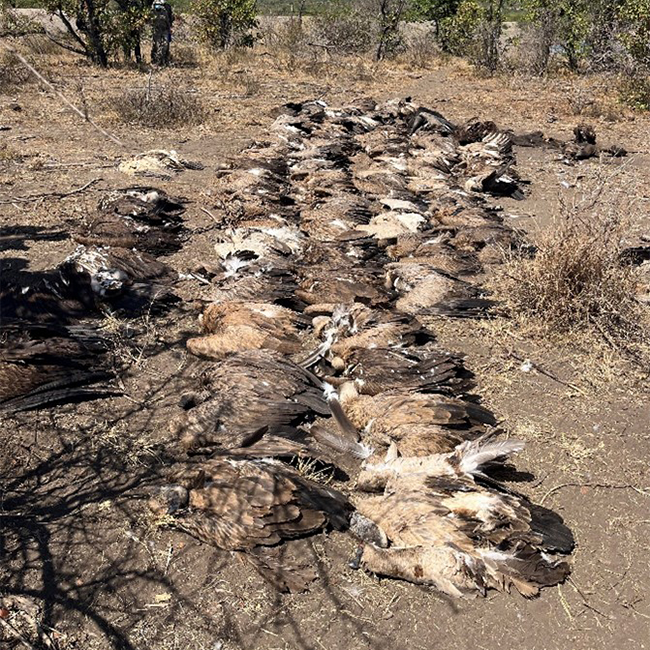
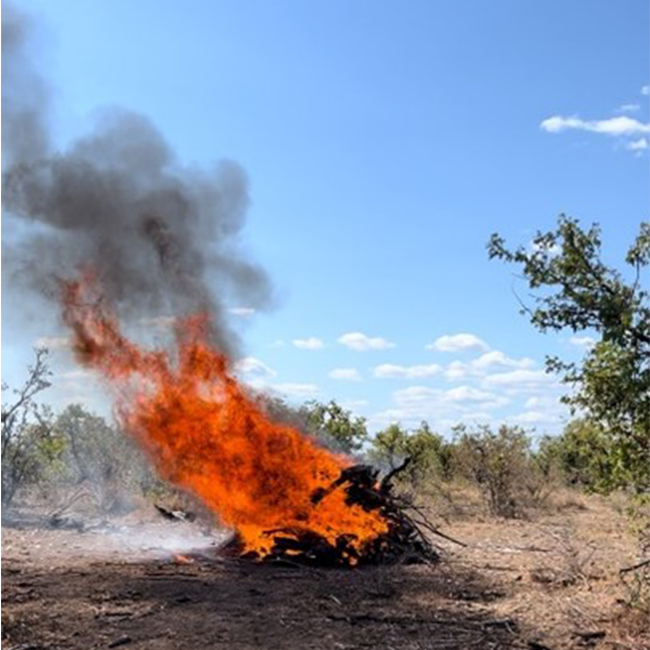
The scene was worse than expected.  A 500 metre radius around the poisoned Buffalo carcass was searched and the field rangers are now unloading carcasses by the wing-load. We line the birds up and group them by species. It’s a hammer blow to the senses. Everything smells rancid. Some carcasses are fresh, and others are a few days old. One by one we photograph each of the 80 dead birds before pilling them up to dispose of everything. Wood, diesel and carcasses make for one big bonfire, but its not the type I enjoy watching.

With the area cleaned up we head home with the two rescued vultures. I’m burnt, dehydrated and emotionally drained. The only thing keeping my spirits intact is the hope that these two vultures make a recovery and return to the African sky.

One month later and I’m standing in Moholoholo Rehabilitation Center with our two vultures looking fit and healthy. They have made a full recovery and it’s finally time to release them. We fit each bird with a GPS satellite tracking device which we will monitor to help locate future poisoning events in the Greater Kruger National Park region.

Scenes like these have become an all-too-common feature of conservation throughout Africa. Although there have been significant inroads made regarding the treatment of poisoned wildlife, the locating of poison sources, and the management of poisoning scenes, there is still significant work to do. One positive is that, should the severity of these poisonings be controlled, and their frequency reduced, we can still maintain viable populations of avian scavengers throughout these vast landscapes.

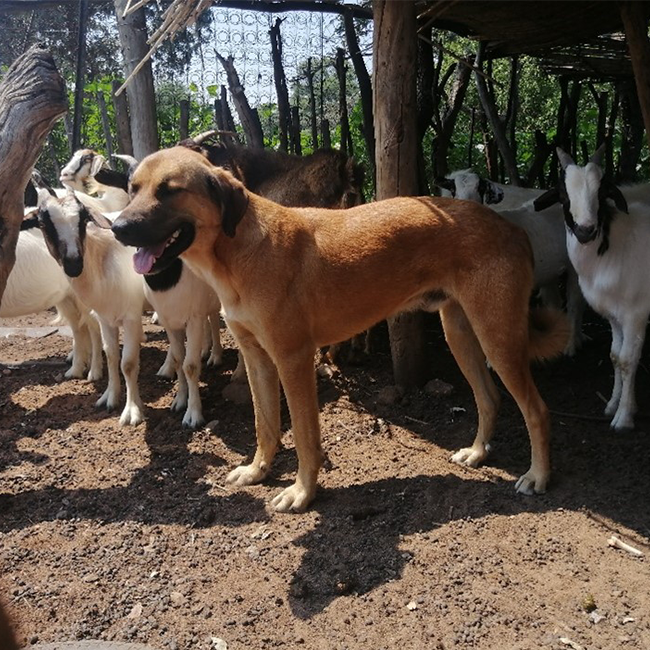
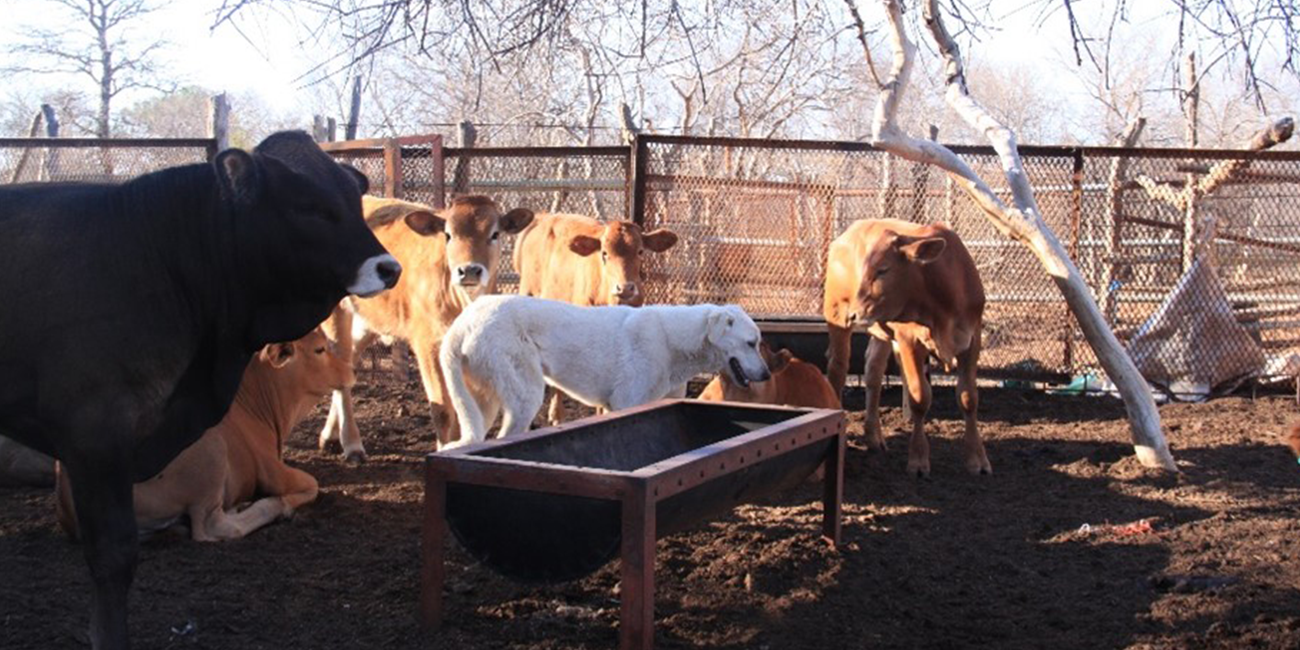
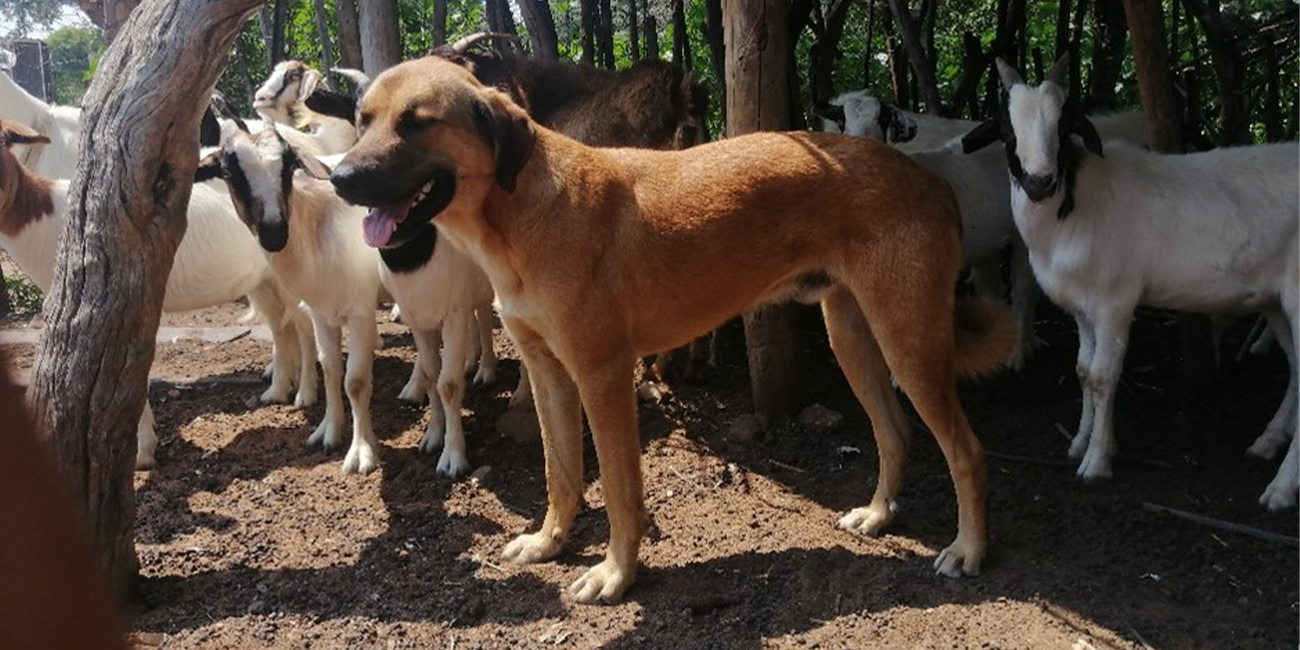
The Endangered Wildlife Trust’s Livestock Guardian Dogs protect farmed animals from predation.

The Endangered Wildlife Trust’s Livestock Guardian Dogs protect farmed animals from predation.

The Endangered Wildlife Trust’s Livestock Guardian Dogs protect farmed animals from predation.


In South Africa, poor livestock husbandry practices negatively impact livestock farmers through predation and threatened carnivores through persecution.

In 2008, the Endangered Wildlife Trust’s (EWT) created a Livestock Guardian Dog Project in its Carnivore Conservation Programme (CCP) to provide non-lethal solutions to livestock farmers who had experienced unsustainable losses due to predation by free roaming carnivores.  This includes Jackals, Caracals, Cheetah, African Wild Dogs, Leopards and other small carnivores.

Through the project, guarding dogs are placed with livestock as puppies and grow up with the herd. This enables them to bond with the herd animals and thus protect them from carnivores that may try to predate on them.  The provision of guardian dogs to farmers ultimately reduces and prevents the retaliatory killing of carnivores.

To achieve the goal of non-lethal intervention, we work together with farmers to, as far as possible, integrate this conflict mitigation methods with their farming practices.

Working with local farmers it had become clear that many lack the skills, knowledge or capacity to employ best-practice livestock husbandry methods to protect their livestock from naturally occurring large carnivores. Instead, they use lethal mitigation methods, such as snaring, shooting, gin-trapping, poisoning and hunting predators with dogs.  Most lethal methods used are non-specific which means that any number of other species, and not the target species, are killed.  This includes Critically Endangered White-backed Vultures, Hooded Vultures and other wildlife, such as Jackal, Caracal, Cheetah, Leopard and African Wild Dogs.

Since the inception of the project by the EWT in 2008, it became clear that among the farming practices implemented, and which increasingly put livestock at risk of predation, included letting calves that are too young into the fields with the rest of the herd, not kraaling livestock at night and even using inadequate basic livestock husbandry practices.

We have, therefore, been educating farmers and communities about the ecological and economic benefits of co-existing with carnivores. Through workshops hosted by the CCP, communities and farmers are informed about the impacts of killing key species, such as Leopard and Cheetah, and how the use of non-lethal mitigation methods prevent conflict. In the case of livestock husbandry, we reach out to our network of vets and animal technicians to advise and teach farmers how to take care of their livestock.


In order to receive a Livestock Guardian Dog, a farmer must be able to show that unsustainable losses have been suffered and that there is potential conflict between the farmer and wild species predating on his or her  livestock.

Our field staff will then conduct a site visit to confirm predation issues and assess the suitability of the farm to host a guardian dog to ensure that the dog’s welfare is prioritised. Once the farmer enters into an agreement with the EWT, a Livestock Guardian Dog is provided to protect his or her animals for 12 months.  Within this time, we will, on a monthly basis, provide the farmer with high quality dog food, ensure the dog is treated for both ectoparasites and endoparasites.  Any veterinary needs are taken care of by the EWT, at no cost to the farmer.

A field officer visits the guardian dog once a month to check on its well-being and its effectiveness.  This provides us with an opportunity to address any issues that may have arisen during the month.  Once the farmer and the field officer are happy that the dog is effectively doing its job and that it is well taken care of, the EWT signs the dog over to the farmer and it becomes his or her responsibility.

Although the Livestock Guardian Dog is then no longer our responsibility, farmers are encouraged to continue keeping contact with us for any help regarding any conflict-related issues that may arise, such as conflict between the dog and carnivores.   Additional free support is provided to communities to ensure that their dogs are spayed and vaccinated. This reduces the spread of disease and stops the overpopulation of dogs.

Since the inception of the Livestock Guardian Dog project, we have placed 241 guard dogs with over 200 commercial and community farms throughout South Africa, dramatically reducing the level of predation and human-wildlife conflict.  The dogs placed as puppies on farms are mostly Anatolian Shepherds and Maluti Shepherds.More than Eighty percent of dogs placed develop into successful Livestock Guardian Dogs. These dogs have reduced predation on farms by up to 90 percent in most cases. This makes this project the most successful mitigation method that we have to deal with livestock predation.

TORTOISE CONSERVATION – A RACE AGAINST TIME

TORTOISE CONSERVATION – A RACE AGAINST TIME

TORTOISE CONSERVATION – A RACE AGAINST TIME

Bonnie Schumann, Nama Karoo Coordinator

Note: Chelonians includes all tortoise, turtle, and terrapin species. For the purposes of this article, we will use the term “tortoises”.

South Africa is one of the most biodiversity-rich countries in the world and is home to no less than two of the world’s most well-known botanical biodiversity hotspots, the Succulent Karoo and Fynbos Biomes. However, few people are aware that South Africa also holds the title as the tortoise capital of the world. The country is home to no less than 13 tortoise species, most of which are endemic.

Tortoises in one form or another have been around pretty much forever if you consider that the earliest known turtle lived 260 million years ago. This little lizard-like creature had a unique characteristic: its ribs curved backwards and were exceptionally thick, forming an armoured dome under its skin. Eunotosaurus was to become the ancestor of all tortoises, turtles and terrapins. Scientists put their secret to outliving even the dinosaurs, which disappeared approximately 65 million years ago, to their conservative morphology and time-tested adaptations.

Incredibly, despite their over 200-million-year track-record of survival, globally tortoises are struggling to persist in the modern world under mankind’s relatively short but deadly reign. The statistics are damning, showing that over 60% of the 357 recognised species have either become extinct or are threatened. Approximately 52% of all assessed tortoise taxa have been classified as Critically Endangered, Endangered or Extinct.

What is driving this global spiral to extinction? Here there are no surprises. The litany of causes is familiar: habitat loss and importantly the degradation of remaining habitat, the impacts of climate change, illegal trade, and a few more locally specific ones, such as uncontrolled fires and electric fencing. However, a relatively new threat that has emerged globally is that of hyperpredation by airborne predators, primarily crows and ravens (part of a group collectively known as corvids).

A recent article by Patrick Moldowan, published in Herpetological Monographs (2023), chronicles the impact of corvid hyperpredation on tortoises globally. Unfortunately, this impact has been poorly documented in many countries, but the evidence is mounting rapidly to demonstrate that without interventions, we will see the extinction of many more tortoise species within our lifetime.

Crows are extremely intelligent, highly adaptable and will eat virtually anything. Crows and ravens have joined the ranks of what are known as subsidised species. Simply put, they are thriving globally on the wide selection of resources human activity has inadvertently provided for them. Their populations are increasing exponentially and expanding into new areas, where they become native invaders.

Hyperpredation occurs when subsidised species exert excessive pressure on prey populations. This effect has been particularly catastrophic for tortoises for several reasons. They are very long-lived but grow and mature slowly and reproduce at a slow rate. Smaller species, like the dwarf tortoises, produce only 1 – 3 eggs a year from the age of around twelve. For a population to remain stable, mature individuals need to reproduce for decades to produce enough offspring that survive to adulthood.

When it comes to crow predation, size matters, as in the case of dwarf tortoises where even adult tortoises are highly vulnerable to crow predation. Crows use their powerful bills to peck through the shells of young tortoises and can fly up with adult dwarf tortoises and drop them onto rocks to break their shells open. The loss of adult tortoises makes the recovery efforts of dwindling populations that much more challenging.

The Endangered Wildlife Trust (EWT), in partnership with Dwarf Tortoise Conservation (DTC) and the Turtle Conservancy (TC) launched a dwarf tortoise project two years ago to locate viable populations and implement conservation action for two species of dwarf tortoises in the Karoo.

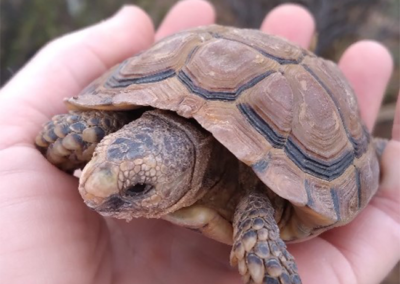
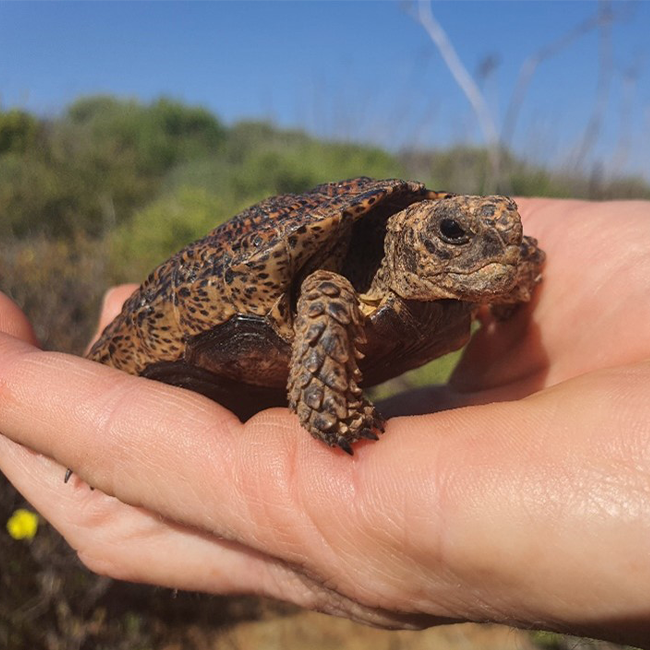
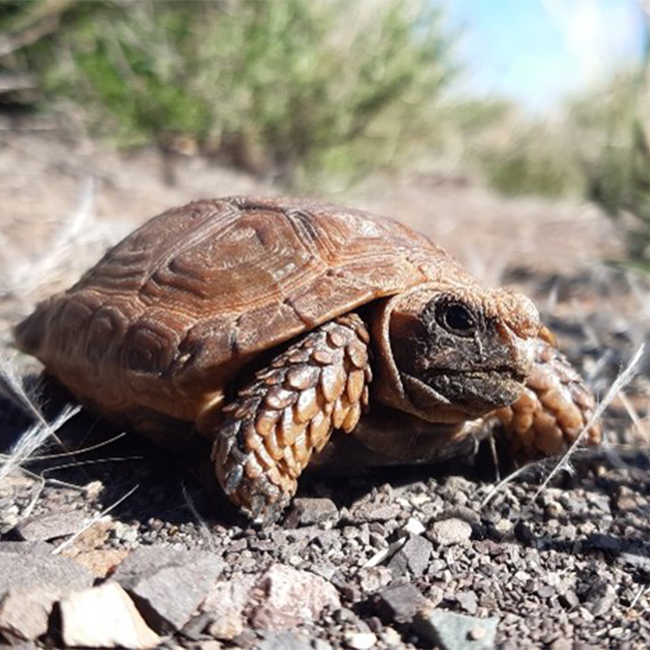
The Karoo is home to nine of the 13 tortoise species found in South Africa. There are five species of dwarf tortoise globally, four of which occur in the South African Karoo and one in Namibia. As their name implies, dwarf tortoises rank amongst the smallest of the tortoise species. In fact, the Speckled Dwarf Tortoise (Chersobius signatus), endemic to Namaqualand, is the world’s smallest tortoise species, reaching a maximum length of about 10cm. Dwarf tortoise conservation champion and researcher Victor Loehr has spent most of his life unravelling the secret life of these diminutive reptiles, contributing much of what is known about them to the scientific world. Up to 20 years ago scientists regularly surveyed tortoise populations and during Victor’s early work on Speckled Dwarf Tortoises, they were abundant. However, follow-up work at his study sites 10 years later and his most recent research on the Karoo Dwarf Tortoise (Chersobius boulengeri) has demonstrated an alarming decline in population numbers for both species.

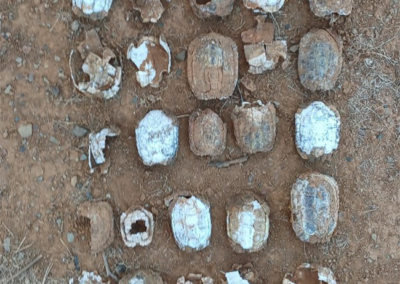
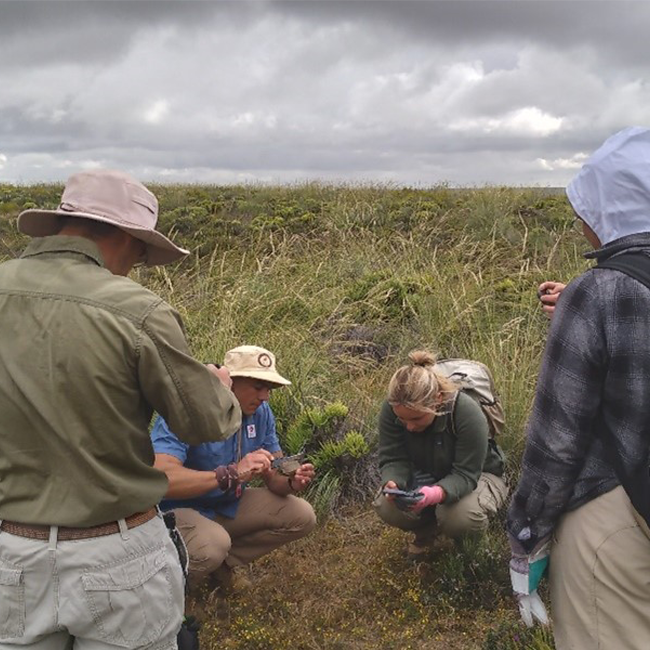
Certainly, the EWT team has struggled to find a single viable population of the Karoo or the Speckled Dwarf Tortoise over the last two years of extensive surveys; these two species are the focus of the initial conservation project. Over 20 surveys have yielded depressingly few live animals; in most cases only shell fragments are to be found. During the most recent survey near Calvinia in April this year, the EWT team recorded the largest number of dead Speckled Dwarf Tortoises at a single location. A total of 45 carcasses were documented under and around a crow’s nest in a dead tree, with another 10 carcasses recorded on the adjacent slope. Five more were recorded elsewhere on the property, bringing the total to 60 dead Speckled Dwarf Tortoises on one property, many of which were mature tortoises. In stark contrast the team found only two live tortoises. It is important to understand that although tortoises occur in some of South Africa’s protected areas, this does not mean we can pack up and go home. If the causes of decline, including hyperpredation by crows, are not clearly understood and addressed, their survival in protected areas is not guaranteed and may have already been compromised.

Currently the only species of tortoise in South Africa with a dedicated conservation project is the Critically Endangered Geometric Tortoise (Psammobates geometricus). We urgently need to implement concerted conservation efforts for the other tortoise species, including all the dwarf tortoise species and other relatively small species such as the tent tortoises. The outlook for all these species is grim without specific conservation interventions. The EWT is collaborating closely with local and international tortoise experts, landowners, and provincial conservation authorities, in a race against time to come up with a strategy to protect South Africa’s remaining dwarf tortoise populations. 20 Years of research in the Mohave Desert, aimed at understanding the raven-tortoise conflict, and to come up with innovative solutions, is helping inform the way forward in South Africa. What is clear though, is that time is running out fast and we cannot afford to be timid in our approach. Tough decisions are going to need to be made when it comes to protecting tortoises from crow predation and any further loss of habitat.

The EWT tortoise conservation work is supported by Turtle Conservancy, Dwarf Tortoise Conservation, Rainforest Trust and the IUCN NL. A special word of thanks to the tortoise survey volunteers, especially the Conservation Biology students from the University of Western Cape and UNISA, and the Ford Wildlife Foundation.

How you can help:

  • Manage grazing responsibly.
  • Include the ecology of sensitive species in your fire management plan.
  • Deter crows; remove unused windmills and telephone poles.
  • Raise electric strands at least 25cm above ground, switch power off during the day and install offset wire for larger tortoise spp.
  • Drive with care, especially when in the veld.
  • Combat wildlife crime by reporting suspicious persons.
  • Verify people claiming to do research with the organization the claim to be from.
  • Support local conservation initiatives.

All tortoises are protected species and listed under the Convention on International Trade in Endangered Species (CITES) as well as provincial legislation, such as the CapeNature Conservation ordinance of 1974 and National Environmental Management: Biodiversity Act 10 of 2004. It is illegal to collect any tortoise species in South Africa, and they may not be kept as pets without a permit.


First comprehensive meta-analysis shows conservation action contributes to reversing and halting biodiversity loss

First comprehensive meta-analysis shows conservation action contributes to reversing and halting biodiversity loss

First comprehensive meta-analysis shows conservation action contributes to reversing and halting biodiversity loss

By Eleanor Momberg

A new study published in the scientific journal Science provides the strongest evidence yet that environmental conservation is not only successful, but that scaling up conservation interventions will contribute to reversing and halting biodiversity loss.

“We have shown that across a full suite of conservation actions and intervention types, multiple levels and metrics of biodiversity, and over a century of action, conservation has improved the state of biodiversity—or at least slowed its decline—compared with no conservation action,” the report states.

The findings of the first-ever comprehensive meta-analysis of the impact of conservation action are critical as more than 44,000 species are listed as being at the risk of extinction. This holds tremendous consequences for ecosystems that stabilise the climate and which provide millions of people worldwide with a number of ecosystem services, including clean water and supporting livelihoods.

The research, funded through the International Union for Conservation of Nature (IUCN) by the Global Environment Facility, points to the recent adoption by government of the Global Biodiversity Framework aimed at reversing and halting biodiversity loss adding this made it even more critical to understand whether conservation actions are working.

Lead author of the study and executive vice president of Re:wild, Penny Langhammer, said: “If you look only at the trend of species declines, it would be easy to think that we’re failing to protect biodiversity, but you would not be looking at the full picture. What we show with this paper is that conservation is, in fact, working to halt and reverse biodiversity loss. It is clear that conservation must be prioritised and receive significant additional resources and political will globally, while we simultaneously address the systemic drivers of biodiversity loss, such as overconsumption and production.”

The report in Science indicates that although many papers look at individual conservation projects and interventions and their impact compared to no action taken, these papers have never been pulled into a single analysis to see how and whether conservation action is working overall.

Lauren Waller, the EWT’s Regional Planning Coordinator in the Conservation and Science Planning Unit said a meta-analysis of 186 case studies, including more than 665 trials, was conducted to determine the impact of the various conservation interventions undertaken globally. These were compared with what would or could have happened without any conservation interventions.

“The study showed that conservation improved the state of biodiversity, or slowed the decline in biodiversity loss. It also showed that species-targeted interventions were particularly effective,” said Waller, who is also the IUCN SSC Conservation Planning Specialist Group (CPSG) Regional Resource Centre Convenor for Southern and East Africa.

Among the key findings are that in two-thirds of cases, conservation either improved the state of biodiversity or at least slowed declines and that interventions targeted at species and ecosystems, such as invasive species control, habitat loss reduction and restoration, protected areas, and sustainable management, are highly effective and have large effect sizes. This provides the strongest evidence to date that conservation actions are successful but require transformational scaling up to meet global targets, the report states.

Robust impact assessment using a counterfactual approach revealed that conservation action has prevented extinctions and reduced extinction risk for species across taxonomic groups compared with an absence of conservation action. There has been an increase over the last decade in studies evaluating the impact of specific conservation actions from global to local scales using counterfactual comparisons, including effects of protected areas, payments for environmental services, invasive alien species (IAS) eradications and sustainable management of ecosystems.

“This paper is not only extremely important in providing robust evidence of the impact of conservation actions. It is also extremely timely in informing crucial international policy processes, including the establishment of a 20-year vision for IUCN, the development of an IPBES assessment of biodiversity monitoring, and the delivery of the action targets toward the outcome goals of the new Kunming-Montreal Global Biodiversity Framework,” Thomas Brooks, IUCN chief scientist and co-author of the study, said.

The paper also argues that there must be more investment specifically in the effective management of protected areas, which remain the cornerstone for many conservation actions. Consistent with other studies, this study finds that protected areas work very well on the whole. And what other studies have shown is that when protected areas are not working, it is typically the result of a lack of effective management and adequate resourcing. Protected areas will be even more effective at reducing biodiversity loss if they are well-resourced and well-managed.

Protected areas have been shown to be effective in reducing conversion of natural land cover, terrestrial habitat loss, coral loss, tropical forest fires, species extinction risk, and in increasing biomass and density of marine organisms. The results, however concur that while their effectiveness is not universal, protected areas are an important tool for achieving conservation outcomes. Well-resourced and well-managed protected areas are needed to effectively reduce biodiversity loss, the paper states.

Dr Sam Ferreira, SANParks large mammal ecologist said at the South African National Satellite Event of the World Species Congress, that the global biodiversity crisis, driven primarily by human activity, was accelerating at unprecedented rates.

Human-driven threats such as poaching, habitat destruction, and human-wildlife conflict are increasing with growing human populations, leading to alarming declines in animal populations and ranges. This crisis, irreversible in nature, poses one of the most serious environmental threats to the planet. The interconnectedness of species within ecosystems underscores the significance of biodiversity, with the extinction of one species disrupting the delicate balance of entire ecosystems. For instance, the decline of bee pollinators due to habitat loss, pesticide use, and climate change threatens not only plant species but also other species dependent on them, illustrating the cascading effects of species loss on the web of life, including humans.

“Urgent action is needed to mitigate these threats and preserve biodiversity for the health of ecosystems and human well-being,” said Ferreira.

The meta-analysis adds that although the state of biodiversity is declining across the globe in absolute terms, conservation actions work most of the time. The challenge now is to expand these to the scale necessary to reverse the global biodiversity crisis. That is, conservation interventions are working but there are simply not enough conservation actions implemented or in the right places.

Realising the highly ambitious vision of the GBF will require ongoing assessment of the impact of specific conservation interventions to inform adaptive management with evidence. Importantly, it will require substantially scaled-up funding and commitment for implementation of demonstrably effective conservation interventions—a real transformational change—which in turn depends on increased political will and investment.

Such an increase in conservation action and associated outcomes will require expanded implementation and significant additional investment across many sectors of society, particularly beyond the traditional conservation sector, the report said.

The authors of a meta-analysis contend that more and better counterfactual studies are needed for a wider range of conservation interventions and geographic regions. Particular gaps include assessments of pollution control, climate change adaptation, sustainable use of species, habitat loss reduction (beyond protected areas), actions targeting species and genetic diversity, and conservation actions in the Global South.