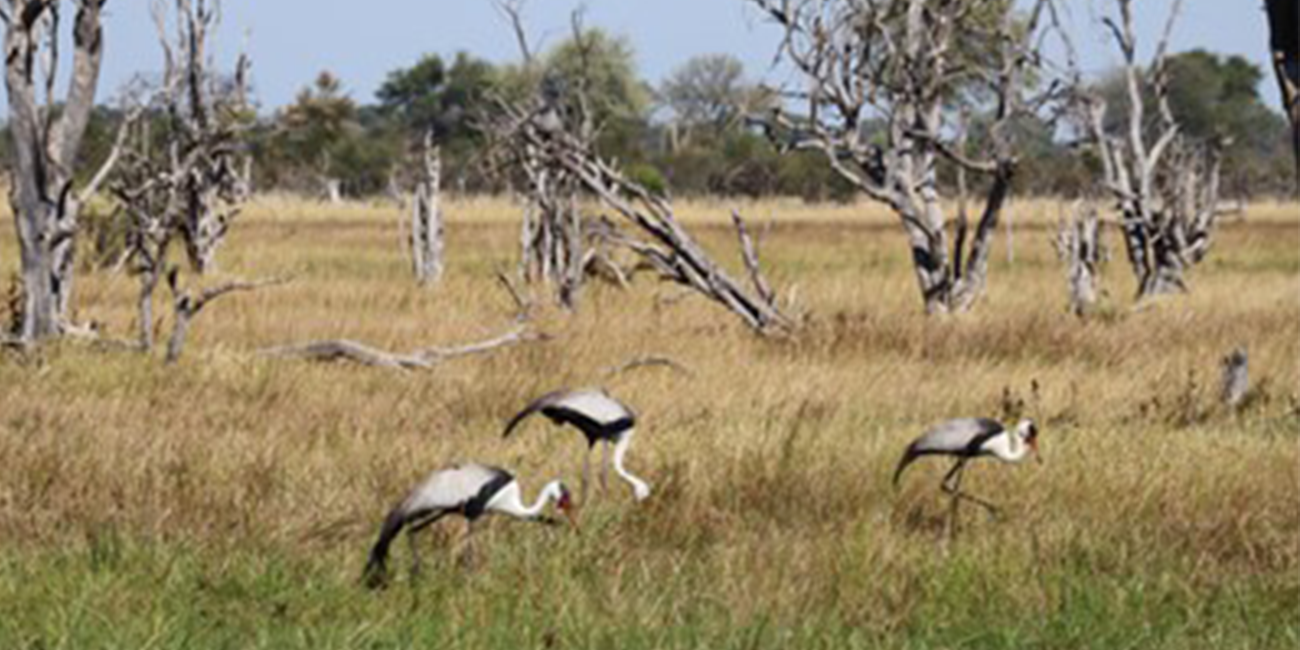
Wattled Cranes are globally Vulnerable. They move with the available waters in large floodplains across south-central Africa through several countries including Botswana, Zambia, Angola, Zimbabwe, Tanzania and Malawi. It is this movement that is vital for conservationists to understand so that conservation goals can be impactful.
Wattled Cranes are notoriously difficult to catch as they have excellent vision and they are not easily coerced into an area, which most capture techniques rely on.
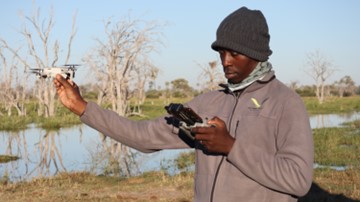
Charles Mpofu of Botswana Wild Bird Trust (WBT)/Okavango Wilderness Project recently approached the EWT for assistance in capturing and handling cranes. Given the synergies between our work, we accepted and I travelled to Botswana to start work on a project that will take some time to complete.
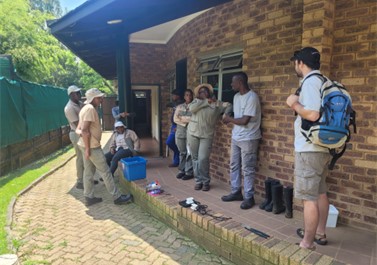
Our first step on the journey was to test the transmitter and harness design by trialling them on captive Wattled Cranes. Out of this work some modifications were made to the transmitter by its developer SpoorTrack to design the dimension specifically for the species. The second step was to understand the best technique to capture Wattled cranes in the Okavango Delta. As the environment is a wilderness with multiple natural dangers, we spoke to the only people who had attempted to catch the species in the Delta — Pete Hancock and Ralph Bousefield in Maun, and Kevin Mcann who had joined the team based in South Africa.
After much discussion the main technique advised was light trapping at a roost site. This approach allows for opportunistic capture in a dynamic and changing environment and allows a capture team to avoid predatory dangers. We had not previously used this technique and learning a new procedure in the wilderness was never going to be easy.
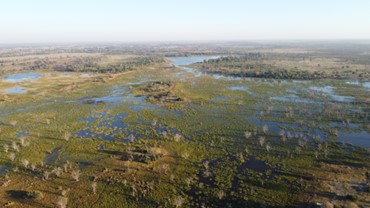
The third step was to find the birds in the vast flood plains of the delta. Charles narrowed this down with aerial surveys to identify a flock in accessible reach, and he spoke to lodge owners and field guides in that area.
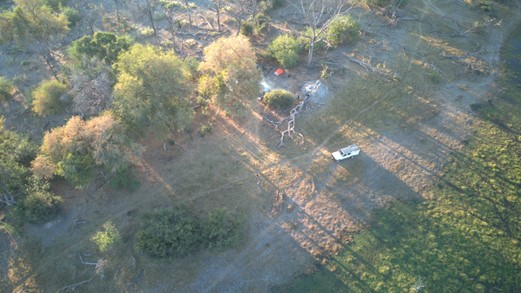
On 13 May we started a two-week expedition on the Gomoti River, amply equipped with two Mokoros (a traditional canoe for traveling on the shallow flood plains), two Landcruisers, solar charging battery and remote camping equipment. The first two days were spent ground surveying for Wattled Cranes and learning from a local NPO ‘Connect Trust’ where the accessible roads and river crossings were. Travelling from base camp to the capture site took three to four hours a day due to the difficulty of sandy roads. Understanding where the cranes roosted was vital, and because we were losing important hours on the road, we moved to a new camp in the bush from where we could easily monitor the cranes dawn to dusk. Despite the campsite move the Wattled Cranes were incredibly elusive in sharing details of their roost sites. Flying in and out of foraging grounds in the dark, a mechanism to protect them from predators.
After a few days of 6am mornings and 9pm evenings we had identified a daylight foraging space to which the birds returned to every day. This site had recently been burned and would mark our capture attempts for the remaining expedition. Establishing safe passage across the river for night capture we set up a system using the mokoros so that we could reach the grounds safely. At this site we made numerous attempts to capture the cranes using bird hides, toe noose matts, and using the flashlight technique. Although we came within a few meters of the cranes, numerous difficulties were encountered. Lechwe hampered our attempts to capture during daylight hours by threatening to beat the cranes into the traps.