Battle of the Bullets: The Lead-free awareness drive by South Africans for South Africans.
Battle of the Bullets: The Lead-free awareness drive by South Africans for South Africans.
Danielle du Toit, Vulture Safe Zone Officer, Birds of Prey Programme.
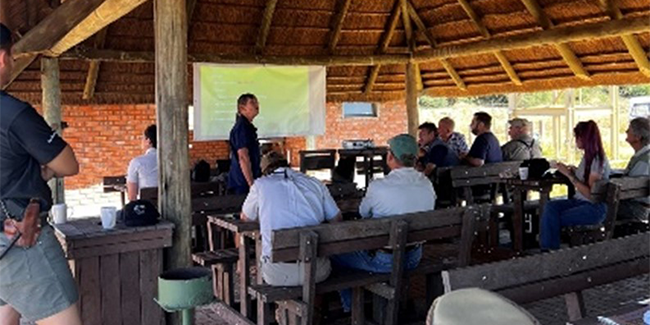
Ronelle Visagie speaking to delegates about vulture conservation
The EWT Vulture Safe Zone project objectives include reducing and ultimately eliminating the threats to vultures within project areas. Among many other dangers is lead poisoning; a serious threat to vulture populations and other species across the globe.
Poisoning in its many forms is the leading cause of population decline in vulture species. Although both intentional and unintentional poisonings have resulted in huge knocks to vulture numbers in single incidents, lead poisoning can be considered a quiet killer. It is a silent destroyer of which few people appreciate the serious impact it has on, for example, scavenging species like vultures.
Lead poisoning is caused when lead is ingested and allowed to enter the blood stream reaching vital organs and the animal’s bones. It can cause an array of ailments including, but not limited to, decreased coordination, decreased fertility, bone fragility, organ disease and failure and eggshell fragility.
Vultures are usually slowly poisoned by lead when carcasses of animals shot with lead ammunition are fed on by these scavenging birds, either in the veld, at carcass dump sites or vulture restaurants. The skulls of animals harvested through head shots and which have been thrown into these dump sites are of particular concern as lead fragments are highly concentrated in those parts.
Vultures are also susceptible because their entire digestive system is highly acidic (unlike humans, which have alkaline mouths and saliva). This causes the lead to break down easily into smaller particles which are quickly taken up into the bloodstream. Studies have shown that the lead causing this poisoning is indeed from lead ammunition.
(For more on this, read: van den Heever, L., Elburg, M.A., Iaccheri, L. et al. Identifying the origin of lead poisoning in white-backed vulture (Gyps africanus) chicks at an important South African breeding colony: a stable lead isotope approach. Environ Sci Pollut Res 30, 15059–15069 (2023). https://doi.org/10.1007/s11356-022-23209-z )
The EWT’s Vulture Safe Zone project came up with Battle of the Bullets initiative to address what we call ‘the threat behind the threat’. It was established to not be prescriptive in its nature, but has rather taken the form of a round table where all role players within the ammunition and conservation circles are brought together to determine how all can benefit, or be benefitted by, opening a conversation around the latest science in conservation and lead-free bullet ballistics.
In February 2023, the EWT and partners, BirdLife South Africa and SA Hunters, with major input from our ballistics specialist, Kobus du Plessis, hosted the 3rd Battle of the Bullets at the Rooifontein Shooting Range in Kimberley. This location was chosen because lead poisoning of the resident vulture populations was shown to be some of the highest in the country.

Attendees at Battle of the Bullets in Kimberley
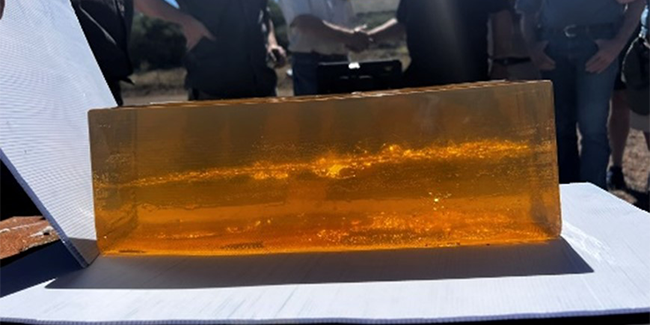
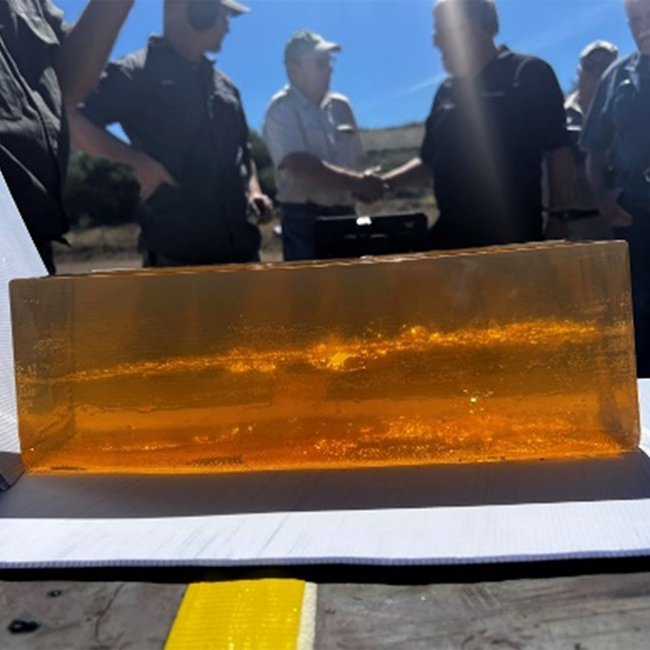
Gelatin targets are used to visibly show the bullet energy transferrence and trajectory
Ronelle Visagie presenting speaking to delegates about vulture conservation
The day started with presentations from the EWT’s Ronelle Visagie who spoke about her work in vulture conservation in the Northern Cape, followed by Linda van den Heever of Birdlife SA who presented her study on lead poisoning in vulture species. Schalk van der Merwe, formerly of the Endangered Species Unit, discussed what to do if one came across a potential poisoning.
Linda van den Heever’s presentation was hugely important as it not only simplified the jargon used in science for the average person, but also revealed just how bad the lead poisoning situation is. This then begged the question, if lead is so bad, what are the alternatives?
For many years, lead free ammunition and bullets have been assumed to be unreliable, costly, and inaccessible. Many have complained that the bullet does not perform according to what the user needs. However, we are now seeing a steep increase in the quality of lead-free ammunition. South African manufacturers are testing, retesting and constantly improving their products for the South African hunter and shooter — for South African conditions.
Kriek Bullets and Impala Bullets demonstrated different ammunitions on different targets to show just how well they performed under various circumstances – from distance, to accuracy, to impact. They tested lead ammunition versus lead free ammunition in each demonstration. It was easy to see that the bullets were performing well in every scenario presented and showed that users can have peace of mind when choosing to use lead free alternatives.
The Battle of the Bullets not only provides the latest information and science on lead poisoning and lead free bullets to attendees, but also highlights the link between vulture conservation and the hunter. February’s event once again proved that by leaving assumptions at the metaphorical door, and entering into the day with an open mind, we could all learn something new while supporting conservation efforts and local manufacturers.
Special thanks to Ekapa Mining, Esther van der Westhuizen, Ruan Maré and their team for hosting the day at Rooifontein Shooting Range and for your support of our event.
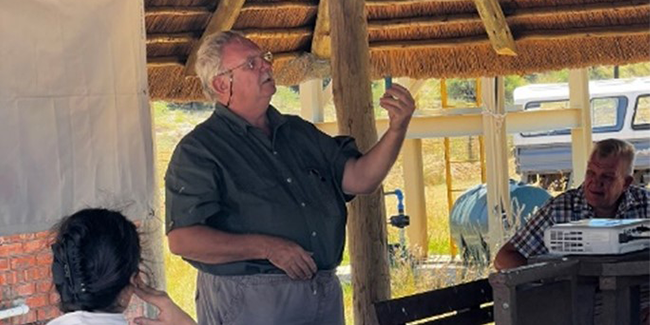
Cobus du Plessis discussing the various types of ammunition