Two rehabilitated Vultures released by the Birds of Prey Programme in Mokala National Park

Two rehabilitated Vultures released by the Birds of Prey Programme in Mokala National Park

Two rehabilitated Vultures released by the Birds of Prey Programme in Mokala National Park

By Ronelle Visagie, Birds of Prey Programme.
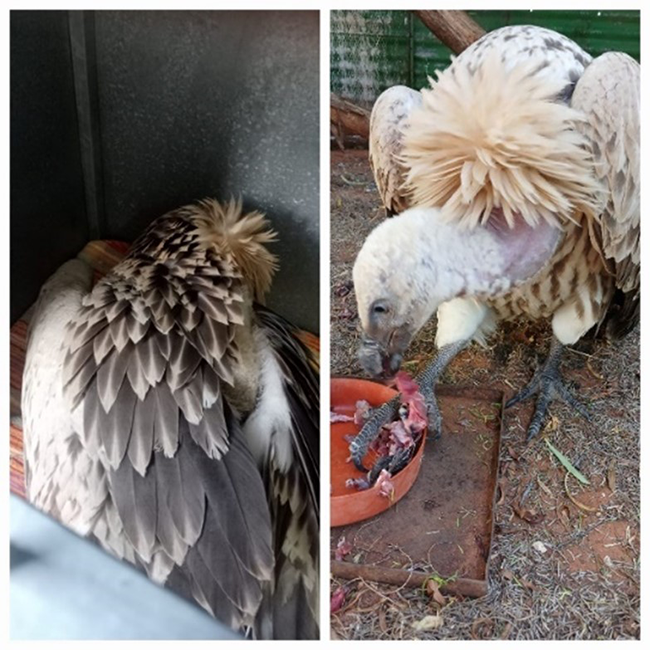
Neska on the day she was confiscated (13 January 2024) and a week later.

In December 2023, I fetched an injured White-backed Vulture from Kimberley Veterinary Clinic.  The bird was found somewhere in town and had a broken leg.  The bird was in an excellent condition and was eating well.  Its leg was pinned by Dr Burger.  From the start this vulture was very feisty so we decided to call her “Kwaaitjie” (bad girl).

Once home we put her in a deep crate as the orders from the vet were to keep her still. Two days later she was able to sit on the side of the crate and was ready to jump down so we moved her to a  small aviary where she could be on the ground and still not move too much.  Kwaaitjie must have decided it was too boring for her to be confined and not move around too much, so she took it upon herself to remove the pin from her leg – only eight days since the operation.

Because of this I contacted the Kimberley Vet Clinic and explained the situation.  Following a discussion, it was agreed that Kwaaitjie be left where she is as the risk of injury was too big if we transported or handled her.  I had also promised to take her to the Clinic if something happened to her leg.

An X-Ray of her leg two weeks later showed she was on the mend.  After being kept in a small enclosure for another two weeks, she was moved to the large aviary where she started to fly.

Barely a month later, in January 2024, I fetched a Cape Griffon from the Kimberley Veterinary Clinic that had been confiscated by police in a township near the Northern Cape town.  The police had taken the bird to Dronfield to be released. It was then that Aneska Almendro, working for De Beers at Dronfield, saw that the bird needed veterinary care and took her to the Clinic.  The Griffon was in a severely stressed condition, and the vets had to put her on at least two drips to save her life.
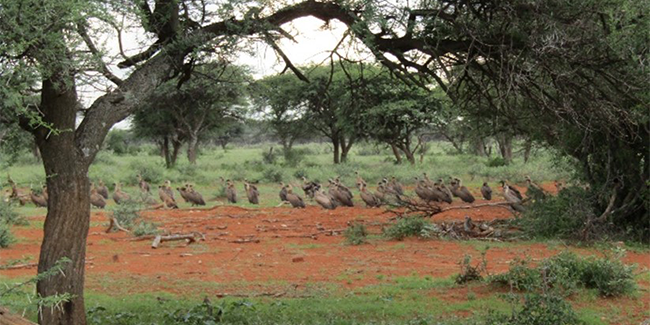
 

Part of a large group of vultures at the waterpoint.

Neska on the day she was confiscated (13 January 2024) and a week later.

After collecting her, I put the Griffon, which we had named Neska, in a large aviary so that she could walk and stretch her wings.  But, she refused to move for the first two days. This might be because of the way she was treated before she was confiscated.  It was exciting to see her finally start walking around and stretching her wings. She was also eating well after her ordeal.

Both vultures recovered very well prompting our decision to release them back into the wild as soon as possible.  Kwaaitjie and Neska were ringed before being transported to their new home —  Mokala National Park.

On our arrival at the watering hole where vultures usually bath and drink, we were met by more than 100 of raptors at the water and in the trees.  Most of them were White-backed Vultures and at least three Cape Griffons were also seen.

When we opened the transport crates, the two birds walked out, stood for a few minutes to take in their new surrounds and took flight.

** We would like to appeal to members of the public not to keep Birds of Prey as pets.  If you see an injured or poisoned bird, call your nearest veterinarian so they can receive the treatment needed.
Battle of the Bullets: The Lead-free awareness drive by South Africans for South Africans.

Battle of the Bullets: The Lead-free awareness drive by South Africans for South Africans.

Battle of the Bullets: The Lead-free awareness drive by South Africans for South Africans.

Danielle du Toit, Vulture Safe Zone Officer, Birds of Prey Programme.

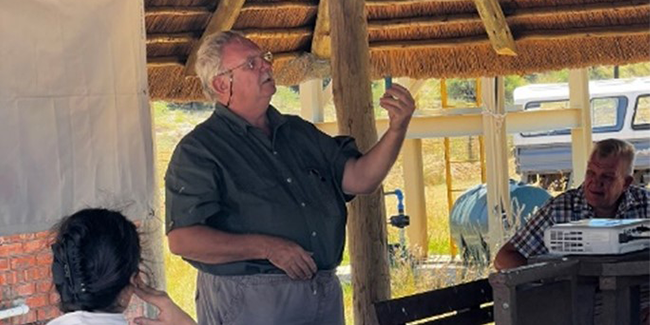
Ronelle Visagie speaking to delegates about vulture conservation

The EWT Vulture Safe Zone project objectives include reducing and ultimately eliminating the threats to vultures within project areas. Among many other dangers is lead poisoning; a serious threat to vulture populations and other species across the globe.

Poisoning in its many forms is the leading cause of population decline in vulture species. Although both intentional and unintentional poisonings have resulted in huge knocks to vulture numbers in single incidents, lead poisoning can be considered a quiet killer.  It is a  silent destroyer of which few people appreciate the serious impact it has on, for example, scavenging species like vultures.

Lead poisoning is caused when lead is ingested and allowed to enter the blood stream reaching vital organs and the animal’s bones. It can cause an array of ailments including, but not limited to, decreased coordination, decreased fertility, bone fragility, organ disease and failure and eggshell fragility.

Vultures are usually slowly poisoned by lead when carcasses of animals shot with lead ammunition are fed on by these scavenging birds, either in the veld, at carcass dump sites or vulture restaurants. The skulls of animals harvested through head shots and which have been thrown into these dump sites are of particular concern as lead fragments are highly concentrated in those parts.

Vultures are also susceptible because their entire digestive system is highly acidic (unlike humans, which have alkaline mouths and saliva). This causes the lead to break down easily into  smaller particles which are quickly taken up into the bloodstream. Studies have shown that the lead causing this poisoning is indeed from lead ammunition.

(For more on this, read: van den Heever, L., Elburg, M.A., Iaccheri, L. et al. Identifying the origin of lead poisoning in white-backed vulture (Gyps africanus) chicks at an important South African breeding colony: a stable lead isotope approach. Environ Sci Pollut Res 30, 15059–15069 (2023). https://doi.org/10.1007/s11356-022-23209-z )

The EWT’s Vulture Safe Zone project came up with Battle of the Bullets initiative to address what we call ‘the threat behind the threat’. It was established to not be prescriptive in its nature, but has rather taken the form of a round table where all role players within the ammunition and conservation circles are brought together to determine how all can benefit, or be benefitted by, opening a conversation around the latest science in conservation and lead-free bullet ballistics.

In February 2023, the EWT and partners, BirdLife South Africa and SA Hunters, with major input from our ballistics specialist, Kobus du Plessis, hosted the 3rd Battle of the Bullets at the Rooifontein Shooting Range in Kimberley. This location was chosen because lead poisoning of the resident vulture populations was shown to be some of the highest in the country.


Attendees at Battle of the Bullets in Kimberley

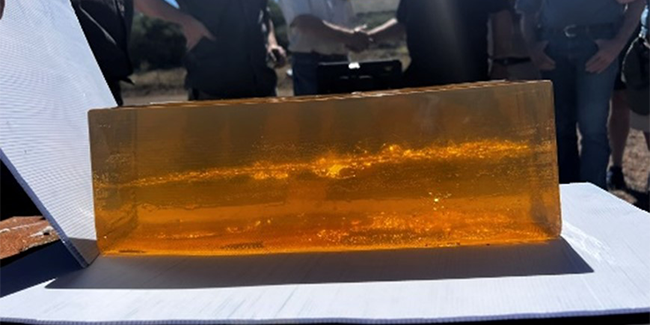
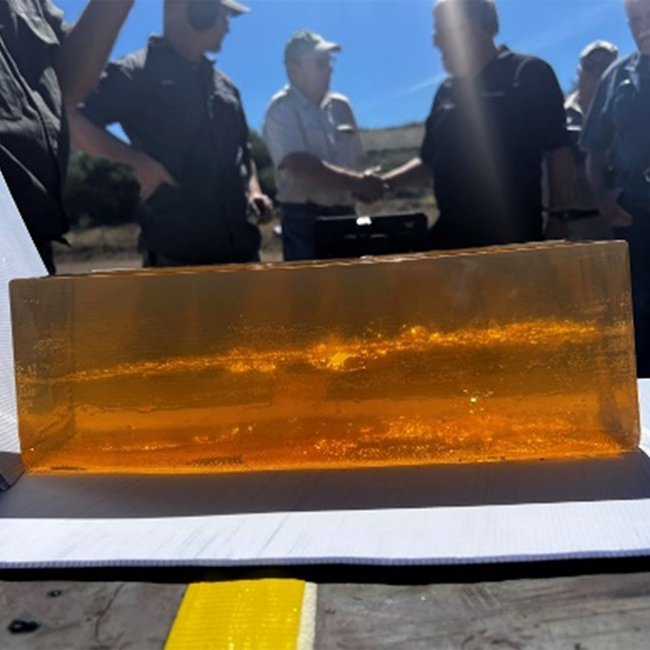
Gelatin targets are used to visibly show the bullet energy transferrence and trajectory

Ronelle Visagie presenting speaking to delegates about vulture conservation

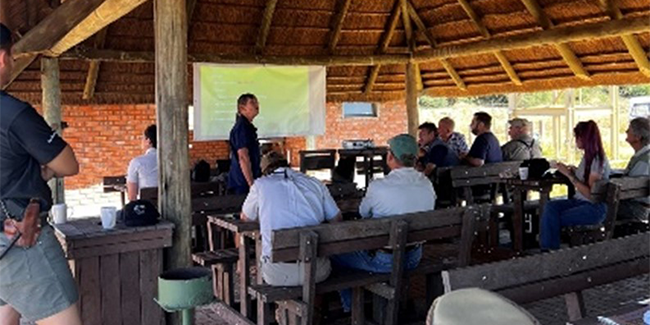
The day started with presentations from the EWT’s Ronelle Visagie who spoke about her work in vulture conservation in the Northern Cape, followed by Linda van den Heever of Birdlife SA who presented her study on lead poisoning in vulture species. Schalk van der Merwe, formerly of the Endangered Species Unit, discussed what to do if one came across a potential poisoning.

Linda van den Heever’s presentation was hugely important as it not only simplified the jargon used in science for the average person, but also revealed just how bad the lead poisoning situation is. This then begged the question, if lead is so bad, what are the alternatives?

For many years, lead free ammunition and bullets have been assumed to be unreliable, costly, and inaccessible. Many have complained that the bullet does not perform according to what the user needs. However, we are now seeing a steep increase in the quality of lead-free ammunition. South African manufacturers are testing, retesting and constantly improving their products for the South African hunter and shooter — for South African conditions.

Kriek Bullets and Impala Bullets demonstrated different ammunitions on different targets to show just how well they performed under various circumstances – from distance, to accuracy, to impact. They tested lead ammunition versus lead free ammunition in each demonstration. It was easy to see that the bullets were performing well in every scenario presented and showed that users can have peace of mind when choosing to use lead free alternatives.

The Battle of the Bullets not only provides the latest information and science on lead poisoning and lead free bullets to attendees, but also highlights the link between vulture conservation and the hunter.  February’s event once again proved that by leaving assumptions at the metaphorical door, and entering into the day with an open mind, we could all learn something new while supporting conservation efforts and local manufacturers.


Special thanks to Ekapa Mining, Esther van der Westhuizen, Ruan Maré and their team for hosting the day at Rooifontein Shooting Range and for your support of our event. 

Cobus du Plessis discussing the various types of ammunition

Crane Festival Unites Communities to Safeguard Uganda’s Grey Crowned Cranes

Crane Festival Unites Communities to Safeguard Uganda’s Grey Crowned Cranes

Crane Festival Unites Communities to Safeguard Uganda’s Grey Crowned Cranes

By Patrick Engoru, Uganda Country Manager: African Crane Conservation Programme

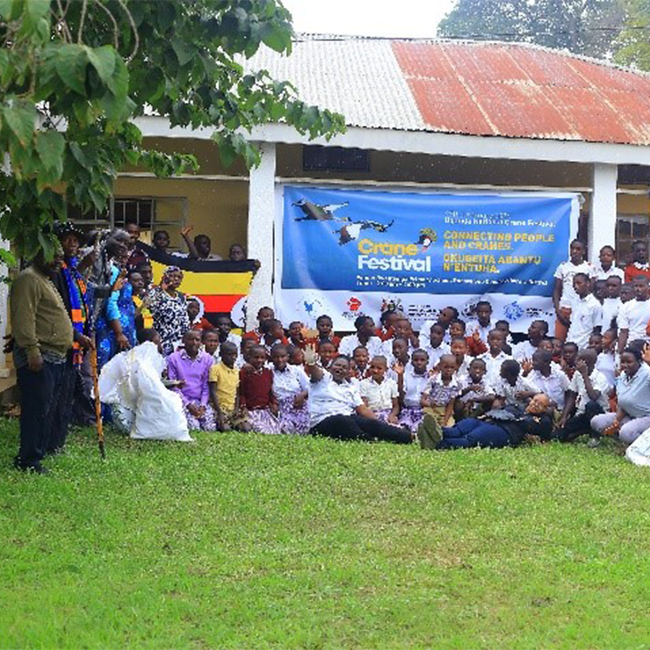
In a powerful display of unity and conservation, the annual Crane Festival brought together communities, conservationists, and policymakers to celebrate and protect Uganda’s iconic Grey Crowned Cranes. The event, held on February 27th, 2024, at Rwantsinga Primary School playground in Rubaya sub-county, Mbarara District, was a joint initiative by the International Crane Foundation (ICF) and the Endangered Wildlife Trust (EWT) in partnership with the Ministry of Tourism and Wildlife and Antiquities (MoTWA) and Mbarara District Local Government.

Expanding Reach, Amplifying Impact

This year’s festival marked a significant milestone as it made its debut in the Rwizi catchment area, a new area of operation for the ICF/EWT partnership. This expansion signifies the partnership’s growing conservation footprint across Uganda, building upon the success of previous editions in Rukiga, Ssembabule, and Lwengo districts, where solid interventions are now in place. The collaborative communication efforts of ICF and EWT teams in Uganda, South Africa, and the USA successfully propelled the event onto previously unreachable local and international platforms, inspiring audiences worldwide.

Dire Need for Intervention

Uganda’s wetlands, crucial for both human survival and Grey Crowned Crane habitats, face immense pressure from rapid population growth and agricultural expansion. Over the past 25 years, the crane population has plummeted by a staggering 80%, primarily due to habitat loss, human disturbance, and illegal trade. These endangered birds often found on private lands, struggle to breed successfully as they are forced into increasingly marginal habitats. The Crane Festival serves as a clarion call for urgent action to protect these majestic creatures and their fragile ecosystems.


Fostering Coexistence Through Engagement

The festival’s theme, “Connecting People and Cranes,” aligned perfectly with the national and global Wildlife Day theme, “Connecting People and the Planet: Exploring Digital Innovation in Wildlife Conservation.” By engaging diverse stakeholders – schools, communities, policymakers, conservationists, and the media – the event fostered a deeper understanding of the interdependence between humans and cranes.

A multitude of activities, including joint awareness campaigns with the Uganda Wildlife Education Centre (UWEC), Uganda Wildlife Authority (UWA), and the Ministry of Tourism and Wildlife and Antiquities (MoTWA), community cleaning events focusing on plastic waste, art competitions by schoolchildren, school drama and running competitions, brass band marches, music, dance, and drama by Crane Custodians and Community Conservation Groups, exhibitions, and speeches from dignitaries, captivated audiences and inspired them to become advocates for sustainable coexistence.

Hon. Col. Tom R. Butime, Minister of Tourism, Wildlife and Antiquities, delivered a powerful speech as the chief guest, emphasizing the urgency of reflecting on the impact of human actions on habitats and species. “If the current situation does not change, our grandchildren may never see cranes in the coming years,” he warned, underscoring the need for immediate and collective action.

A Beacon of Hope for Grey Crowned Cranes

The Crane Festival represents a beacon of hope for the survival of Uganda’s Grey Crowned Cranes and their vital wetland habitats. By uniting communities, fostering environmental stewardship, and harnessing the power of digital innovation, this annual celebration paves the way for a future where these majestic birds can thrive alongside human populations.

The EWT and ICF remain committed to this mission, working tirelessly to secure the future of Grey Crowned Cranes and the precious ecosystems they call home. Through events like the Crane Festival, these organizations are not only raising awareness but also inspiring action and cultivating a deep appreciation for the natural world that sustains us all.

**  The EWT/ICF Partnership would like to thank all our donors who contributed to a successful Crane Festival.   This includes the Mbarara District Local Government, Coca-Cola Beverages Uganda Limited, Brighter Smiles Dental Clinic, the Uganda Wildlife Education Centre (UWEC), Uganda Wildlife Authority (UWA) and the Ministry of Tourism and Wildlife and Antiquities (MoTWA)


Healthy wetlands are critical for crane conservation, says the Endangered Wildlife Trust

Healthy wetlands are critical for crane conservation, says the Endangered Wildlife Trust

Healthy wetlands are critical for crane conservation, says the Endangered Wildlife Trust

World Wetlands Day, celebrated annually on 2 February, provides an opportunity to celebrate wetlands, which are critical for people, the environment, and biodiversity – including South Africa’s National Bird, the Blue Crane.

Wetlands come in all shapes and forms, from estuaries along our beautiful coastlines and high-altitude inland wetlands within the grasslands of Mpumalanga, to the hard-working wetlands within our urban landscapes. Much of our conservation effort within the EWT is centred around the protection, restoration, and management of wetlands and the catchments that feed them, and we encourage South Africans to celebrate World Wetlands Day with us each year.

Two of South Africa’s three crane species, the Grey Crowned and Wattled Cranes, are completely dependent on wetlands for their survival – yet both are threatened with extinction. Their threatened status mirrors the loss of wetlands in our country, with an estimated 50% of wetlands completely transformed in South Africa. The African Crane Conservation Programme (ACCP), a partnership between the EWT and the International Crane Foundation (ICF), has used these charismatic, long-lived birds as “flagship” species for wetland protection, restoration, and management. By securing conservation attention for conserving cranes, we not only succeed in conserving the cranes, but we simultaneously conserve the wetlands that provide cranes, people, and other species, with essential ecosystem goods and services.

Cranes are large and long-lived, elegant, birds, and their trumpeting calls and carefree, bounding courtship dances are iconic and wonderful to watch. Some people see cranes as symbols of peace, happiness, and longevity because of their lifelong devotion to their mates. But sadly, despite the love that people have for cranes, crane populations have declined globally, and in South Africa, particularly in the face of habitat change and loss. Without careful management, many crane species are doomed to extinction. Ten of the world’s 15 crane species are threatened: all four of sub-Saharan Africa’s resident crane species – Blue Crane, Grey Crowned Crane, Wattled Crane, and Black Crowned Crane – are threatened by habitat loss and disturbance, illegal wildlife trade, collisions with power lines, electrocutions, and poisoning. If we can secure their wetlands, we can improve the prospects of these species and ensure they have a viable future.

In South Africa, numerous successful partnerships have been forged by the EWT with landowners, conservation authorities and other conservation NGOs to conserve wetlands. Examples of these are areas such as the Upper Wilge Protected Environment (UPWE), the Greater Lakenvlei Protected Environment and Cedarville Protected Environment as well as in the Karkloof and Hlatikhulu Valleys where the EWT/ICF African Crane Conservation Programme has had a long-term partnership with landowners.

The EWT/ICF partnership spans more than 30 years and spans beyond South Africa’s borders to southern and East Africa. While the ICF kickstarted community-based crane conservation work in East Africa and Zambia, the EWT focussed on cranes in South Africa. However, from around 1999, ICF and the EWT started collaborating more on crane conservation efforts across the continent, and in 2005 an official Memorandum of Understanding was concluded between the two organisations.


The EWT/ICF partnership is presently operational in the Kafue Flats of Zambia, and in the wetlands of western Kenya, in northern Rwanda, and across southern and southwestern Uganda, where human activity is also placing increasing pressure on wetlands.

In Zambia, for instance, the Kafue Flats in southern Zambia is not only an internationally recognised floodplain that has been designated a Wetland of International Importance (Ramsar Site) but is also a UNESCO Man and Biosphere Reserve in recognition of the human benefits drawn from its ecological condition. The Flats is home to 30% of the world’s population of Vulnerable Wattled Cranes, as well as Endangered Grey Crowned Cranes.

But the Kafue Flats is under severe and increasing pressure from wildlife poaching, human settlements deep inside the floodplain, unregulated livestock grazing and fishing, alien invasive vegetation, drought/water stress, and other threats. Thus, the importance of the work being done through the partnership to conserve not only threatened crane species, but also the wetlands through the clearance of invasive Mimosa pigra plants under the leadership of the EWT/ICF’s African Crane Conservation Programme. This has seen the Wattled and Grey Crowned Cranes and numerous other plants and animals starting to return to the area. We have also formed 20 Conservation Clubs, including 800 pupils and 82 teachers from 13 schools near the flats, and we are deploying newly trained community scouts to protect its wildlife and create jobs.

Further afield, the wetlands of Uganda are used as a critical nesting habitat by the Endangered Grey Crown Crane, Uganda’s National Bird. These wetlands are not only critical to prevent the extinction of Endangered species, but also necessary for the health and wellbeing of the people who live in and rely on the wetland for food and water security, livelihoods, and to slow the increasing number and scale of floods, a further impact of climate change.

You can join this valuable work for cranes and other wetland species, by making a difference to our wetlands all year round in a number of ways, including:

  1. Plan a wetland cleanup in your community with local schools and parents.
  2. Reducing your waste, reusing bottles and containers you would normally throw away, use reusable shopping bags, and recycle! Our water resources like rivers and wetlands are heavily impacted by litter and waste, so these small actions can make a huge difference.
  3. Reporting any illegal dumping in wetlands and rivers to your local municipality or police station.
  4. Supporting the efforts of organisations like the EWT in protecting wetlands on your behalf.

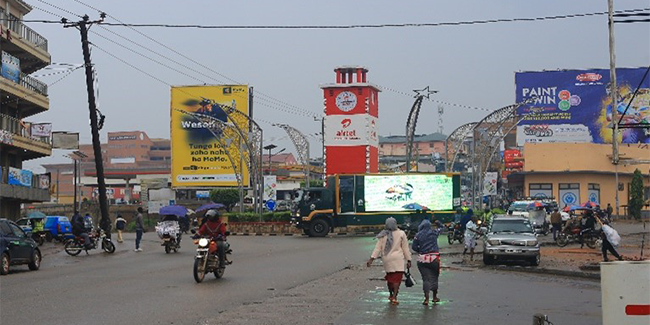
On 27 February 2024, Uganda will host a National Crane Festival to foster awareness and education about Crane Conservation. The event, led by the EWT and ICF is an important lead-up to World Wildlife Day on 3 March. The celebrations, being held under the theme “Connecting People and Cranes” will feature diverse activities, bringing together stakeholders from various sectors — schools, local communities, policymakers, the private sector, and the media. Key partners are the Uganda Wildlife Education Centre (UWEC), Uganda Wildlife Authority (UWA) and the Ministry of Tourism and Wildlife and Antiquities (MoTWA).


FOUND: Iridescent blind mole with super-hearing powers rediscovered ‘swimming’ through sand dunes of South Africa

FOUND: Iridescent blind mole with super-hearing powers rediscovered ‘swimming’ through sand dunes of South Africa

FOUND: Iridescent blind mole with super-hearing powers rediscovered ‘swimming’ through sand dunes of South Africa

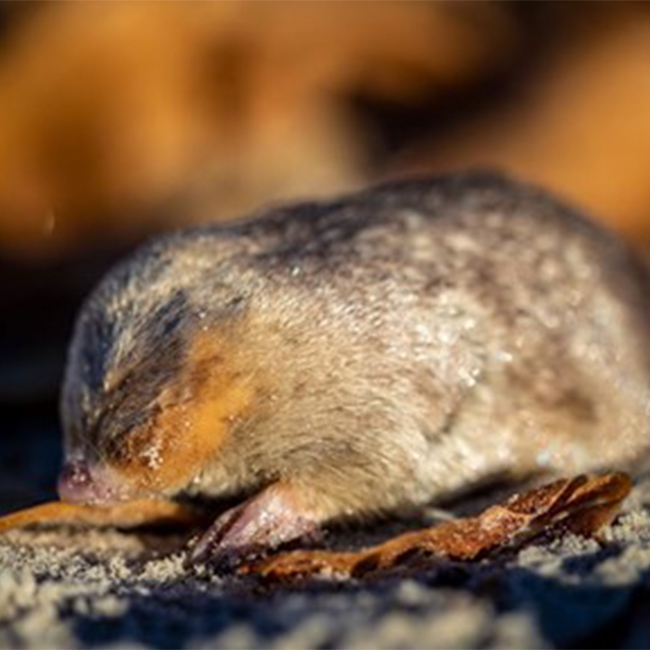
e-DNA helped confirm De Winton’s golden mole still lives on beaches in Port Nolloth

A blind mole with an iridescent coat sheen that ‘swims’ through sand and has been lost to science since 1936 is lost no longer, thanks to a team of conservationists and geneticists from the Endangered Wildlife Trust (EWT) and the University of Pretoria. The rediscovered De Winton’s golden mole–which is from South Africa–is the 11th of the world’s most wanted lost species to be rediscovered since the Search for Lost Species launched in 2017. A research paper, “Environmental DNA from soil reveals the presence of a ‘lost’ Afrotherian species,” published Nov. 24, in the scientific journal Biodiversity and Conservation, describes the incredible lengths the team went to in order to rediscover the species.

“It was a very exciting project with many challenges,” said Esther Matthew, senior field officer with Endangered Wildlife Trust. “Luckily we had a fantastic team full of enthusiasm and innovative ideas. Which is exactly what you need when you have to survey up to 18 kilometers [11.2 miles] of dune habitat in a day.”

The EWT-led team used a burgeoning technique never used before to detect golden moles: environmental DNA (eDNA), which is the DNA that animals shed as they move through the environment, typically in the form of skin cells, hair and bodily excretions. In addition to living in largely inaccessible burrows, golden moles have extremely sensitive hearing and can detect vibrations from movement above ground, which helps them avoid being seen from the surface. They also rarely leave tunnels behind that are visible from the surface as they move under the sand.

“Extracting DNA from soil is not without its challenges, but we have been honing our skills and refining our techniques—even before this project—and we were fairly confident that if De Winton’s golden mole was in the environment, we would be able to detect it by finding and sequencing its DNA,” said Samantha Mynhardt, conservation geneticist with the Endangered Wildlife Trust and Stellenbosch University.

After collecting more than 100 soil samples in June 2021 from beaches and dunes on the northwest coast of South Africa—including Port Nolloth beach, the only place where De Winton’s golden mole had ever been found—and conducting a complex and comprehensive genetic analysis of each sample, the team determined that there were several species of golden mole living in the sand along the stretch of coast.

Two more common species—Cape golden mole and Grant’s golden mole—were found, as well as a third species, Van Zyl’s golden mole, which is endangered and rare. The fourth species the team found was De Winton’s golden mole, but it took almost another year to definitively prove that. Since De Winton’s golden mole is genetically very similar to Van Zyl’s golden mole, the team needed more genetic information about De Winton’s golden mole to confidently identify it using eDNA.

At the time, there was only one De Winton’s golden mole reference DNA sequence available. That DNA sequence represents a nuclear gene that has limited variation between De Winton’s and Van Zyl’s golden mole, meaning the team couldn’t confidently assign the fourth species to De Winton’s at that time.

Nearly a year later, the search team found exactly the information they needed to finally solve the case. A second gene sequence for a De Winton’s golden mole specimen (now housed at the Iziko South African Museum in Cape Town) became publicly available in January 2022. It was a mitochondrial gene—from a much more variable part of the genome that has much higher levels of variation between De Winton’s and Van Zyl’s. When the team compared their eDNA sequences from Port Nolloth beach to the new reference sequence, it was a clear match to De Winton’s golden mole.

“Though many people doubted that De Winton’s golden mole was still out there, I had good faith that the species had not yet gone extinct,” said Cobus Theron, senior conservation manager for EWT and a member of the search team. “I was convinced it would just take the right detection method, the proper timing, and a team passionate about finding it. Now not only have we solved the riddle, but we have tapped into this eDNA frontier where there is a huge amount of opportunity not only for moles, but for other lost or imperiled species.” [Read more about the exciting rediscovery of De Winton’s Golden Mole.]

The Endangered Wildlife Trust has been working to rediscover De Winton’s golden mole for more than two years. They began by identifying areas in South Africa where it was possible the species was living undetected and by interviewing people from local communities.

At each search site they used several different tools to locate golden moles and traces of them. A scent-detection border collie specially trained to sniff out golden moles, accompanied the team and helped lead them to trails left behind by the animals.

When the team arrived on the beach in Port Nolloth there were fresh golden mole trails in the sand, made more visible by recent rain. However, it can be very difficult to identify a species of golden mole from its physical characteristics alone, so despite seeing golden moles, they also collected soil samples for eDNA analysis to accurately determine the species that left the trails.

Since the expedition in 2021, EWT has identified four additional De Winton’s golden mole populations. They are working to protect the moles and learn more about the species with the support of the National Research Foundation’s Foundational Biodiversity Information Programme (FBIP) in South Africa, Rainforest Trust, and Prince Bernhard Nature Fund.

In addition to the De Winton’s golden mole, Re:wild, working with partners across the globe, has confirmed the rediscovery of Jackson’s climbing salamander in Guatemala, both Wallace’s giant bee and the velvet pitcher plant in Indonesia, the silver-backed chevrotain in Vietnam, the Somali sengi in Djibouti, the Voeltzkow’s chameleon in Madagascar, Fernandina giant tortoise in the Galápagos, Sierra Leone crab in Sierra Leone, the Pernambuco holly tree in Brazil and Attenborough’s long-beaked echidna in Indonesia.

Christina Biggs, manager for the Search for Lost Species, Re:wild

“The search for De Winton’s golden mole was not easy by any means, and it really speaks to how persistent, thorough and resourceful the EWT team was in the field. They left no sandhill unturned and now it’s possible to protect the areas where these threatened and rare moles live. The successful use of the eDNA technique is now a case study on how such forward-thinking technologies can be utilized to find other lost species.”