On any given day, one can read the news or articles on the state of the environment and the sheer enormity of the threats, challenges, and losses can be overwhelming. For those of us working in conservation, it can be even harder. The species we have dedicated our lives to protect face extinction, and we see the very worst that humans can do to wildlife. I have often been asked how I work in conservation, “isn’t it depressing” people ask? On some days, yes, but others keep our hope alive, and on 10 May 2022, I had a day of hope.
I joined a colleague, Rebo Rachuene from our Birds of Prey Programme, in the field to monitor a grass owl site. Rebo and his colleagues have been monitoring this site for over ten years. We arrived at a farm situated in the Highveld region of Mpumalanga, the area recently the focus of the deadly air case. The short drive from Johannesburg to the farm showed the severity of air pollution in the area, and while the deadly air case was focused on human health and wellbeing, I couldn’t help but wonder about the effect the air pollution was having on wildlife in the area. The farm is a mix of land uses with agriculture, virgin grasslands, and a new coal mine on its border. The threats associated with human activities began to feel overwhelming.

Grass Owl nesting site in the Highveld region of Mpumalanga, South Africa. Mixed land-use is common in the area – agricultural plots, natural grasslands, and coal mines are sandwiched in between each other
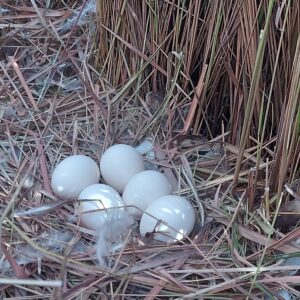
As we were approaching the nest, two birds took off – each on different sides of the wetland area the nest is in. One was a Marsh Owl, and the other, an adult Grass Owl. We found the Grass Owl nest, and instead of the fledglings we expected, we found eggs. Rebo explained that the previous eggs had probably been predated, and the Grass Owls had then laid more. In addition to natural and expected threats like predation, Grass Owls need to contend with human-related threats such as pollution, the threat of invasive species, disturbance and trampling by livestock, and habitat loss. Despite these ever-increasing threats, this species and so many others in South Africa continue to persevere. On our short walk back to the car, we came across a Brown House Snake, Serval footprints, and a Black Winged Kite – all indicators of a functional ecosystem – a safe space made possible through the incredible work of my colleagues and the conservation efforts of landowners. This is how hope is kept alive and how we can continue to promote conservation in South Africa and chip away and reduce threats from human activities. I walked away from that nest excited for the next 35 days when hopefully, the Grass Owl population will increase by five when the eggs hatch. I walked away with hope, committed to doing what I can to protect this safe space and others like it, and more committed than ever to promoting conservation in South Africa.
Grass Owl flushed from its nest. Once its eggs or chicks have been recorded and we move out, it will return to the nest.
On any given day, one can read the news or articles on the state of the environment and the sheer enormity of the threats, challenges, and losses can be overwhelming. For those of us working in conservation, it can be even harder. The species we have dedicated our lives to protect face extinction, and we see the very worst that humans can do to wildlife. I have often been asked how I work in conservation, “isn’t it depressing” people ask? On some days, yes, but others keep our hope alive, and on 10 May 2022, I had a day of hope.
I joined a colleague, Rebo Rachuene from our Birds of Prey Programme, in the field to monitor a grass owl site. Rebo and his colleagues have been monitoring this site for over ten years. We arrived at a farm situated in the Highveld region of Mpumalanga, the area recently the focus of the deadly air case. The short drive from Johannesburg to the farm showed the severity of air pollution in the area, and while the deadly air case was focused on human health and wellbeing, I couldn’t help but wonder about the effect the air pollution was having on wildlife in the area. The farm is a mix of land uses with agriculture, virgin grasslands, and a new coal mine on its border. The threats associated with human activities began to feel overwhelming.
Grass Owl nesting site in the Highveld region of Mpumalanga, South Africa. Mixed land-use is common in the area – agricultural plots, natural grasslands, and coal mines are sandwiched in between each other
As we were approaching the nest, two birds took off – each on different sides of the wetland area the nest is in. One was a Marsh Owl, and the other, an adult Grass Owl. We found the Grass Owl nest, and instead of the fledglings we expected, we found eggs. Rebo explained that the previous eggs had probably been predated, and the Grass Owls had then laid more. In addition to natural and expected threats like predation, Grass Owls need to contend with human-related threats such as pollution, the threat of invasive species, disturbance and trampling by livestock, and habitat loss. Despite these ever-increasing threats, this species and so many others in South Africa continue to persevere. On our short walk back to the car, we came across a Brown House Snake, Serval footprints, and a Black Winged Kite – all indicators of a functional ecosystem – a safe space made possible through the incredible work of my colleagues and the conservation efforts of landowners. This is how hope is kept alive and how we can continue to promote conservation in South Africa and chip away and reduce threats from human activities. I walked away from that nest excited for the next 35 days when hopefully, the Grass Owl population will increase by five when the eggs hatch. I walked away with hope, committed to doing what I can to protect this safe space and others like it, and more committed than ever to promoting conservation in South Africa.
Grass Owl flushed from its nest. Once its eggs or chicks have been recorded and we move out, it will return to the nest.
The cat’s out of the bag – understanding South Africa’s captive lion sector
Christina Hiller, EWT Wildlife in Trade Programme Consultant, tinah@ewt.org.za
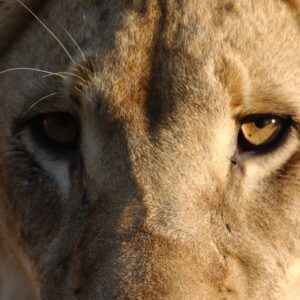
South Africa is currently the only country with an extensive captive lion sector where lions in captivity significantly outnumber wild and free-roaming animals. There is an ongoing debate around the practices of keeping lions for commercial use, and captive lion hunting, the lion part trade, and human interaction such as cub-petting have been heavily criticised. However, there was a need to establish a detailed understanding of South Africa’s captive lion sector and evaluate its environmental and socio-economic impacts.
The Endangered Wildlife Trust initiated a study to close this information gap by developing an improved understanding of the sector and the trade of captive lion products and services. The research aimed to supply the South African government and the local CITES (Convention on International Trade in Endangered Species of Wild Fauna and Flora) authority with sound information to inform future policy decisions and measures to adequately address the sector’s influences on environmental, economic, and social outcomes and developments.
We conducted 51 semi-structured interviews and verified and supplemented the findings through five focus-group sessions with experts from related fields and desk review activities. Interview parties consisted of 31 captive lion facilities in four provinces, i.e., the Free State, North West, Limpopo and Gauteng and 20 key players in the sector. These actors included professional hunters of captive lions, taxidermists, lion part traders, live lion traders, veterinarians, scientists, non-governmental organisations (NGOs), and provincial environmental management inspectors (EMIs). In addition, we collected quantitative data on captive lion facilities from the South African provinces where the interviews took place to further augment the research findings.The research report describes how the sector is structured and functioning amidst influencing factors such as mainstream and social media pressure, regulatory conditions, and conflicting ideas about the meaning of sustainability and sustainable use regarding an iconic species like the lion.
We found that captive lion owners’ underlying motives and deep-seated attitudes are behind the uniqueness of every captive lion facility’s (business) model. A combination of eleven different motives underpinned the decision to establish a captive lion facility. Only four of those were income-related. It was found that facilities were seldom established primarily for financial gain, suggesting the importance of personal drivers other than income generation and profit. Furthermore, our research revealed five distinctly different sector clusters with corresponding supply chain models and typical breeding systems. Findings suggested that facilities do not specifically breed lions for their bones, so this was not considered a separate cluster. The lion bone trade rather forms part of the hunting tourism cluster.
Cluster 1: No lion revenue cluster
Cluster 2: Sanctuary cluster
Cluster 3: Guest attraction cluster
Cluster 4: Live export cluster
Cluster 5: Hunting tourism cluster (incorporating the lion part trade)
Legal trade in each cluster was organised along a distinct supply chain (except for cluster 1 without lion-related trade activities). All supply chains in the sector are separate, and research did not show an organised supply chain wherein captive lions were hunted after being used for human-lion interactions. However, a shared supply chain segment for selling lions to other South African facilities combined with a lack of traceability makes it feasible to move captive lions between clusters, especially between the guest attraction, live export, and hunting tourism clusters. It was clear that there was little transparency in the sector because of the non-existent, inefficient, or inconsistent collection, storage, and sharing of information about facilities and their trade activities.
The research data suggest that reasonable and tolerable management practices fall into five domains: financial health, legality, conservation, animal welfare, and social responsibility. Moreover, two specific areas emerged as seemingly insurmountable obstacles for managing captive lion facilities. On the one hand, the data suggest that managing a captive lion facility and animal rights are mutually exclusive. On the other hand, the interviews revealed that transformation is not happening, which is why the facilities are deemed not acceptable.
The insights of this research will support more robust decisions about the sector. We conclude that it will be critical to follow a nuanced approach to shape the sector’s future, mindful of the five clusters. Simultaneously, immediate measures ought to be taken to prevent undesired loss or harm until a clear future scenario for the sector materialises.
The report will be released soon – keep an eye on our socials and check back here in a few days for the link.
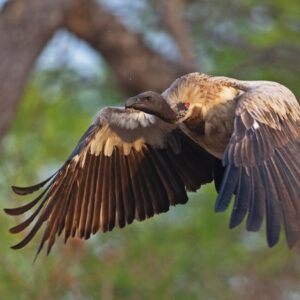
Most populations of vultures in Africa are declining rapidly, and conservationists are calling this an ‘African Vulture Crisis’1. There has been an increasing focus on the movements of vultures using tracking devices, but so far, there are very few continent-wide studies 2. To address this, a group of 35 researchers pooled their tracking data from 163 vultures to look at how vulture movements vary across Africa and how vultures are using protected areas in a new study published in Biological Conservation 3. The researchers found that breeding adult vultures had smaller ranges than non-breeding adults and immature vultures. Adult Rüppell’s Vultures had range sizes larger than 75,000 km2, while Cape Vultures and White-backed Vultures had range sizes of up to 36,000 km2. But the overlap of vultures’ ranges with protected areas was low, which poses significant challenges for conserving African vultures, particularly since the main threat to vultures, the intentional poisoning of carcasses, is widespread, and one poisoning event can kill large numbers of vultures because most species of vultures are social feeders. Successful conservation of vultures relies on reducing wildlife poisoning over vast areas, both inside and outside of protected areas, by tackling the drivers of poisoning. These drivers include human-wildlife conflict, trade in vulture parts4, and elephant poaching 5. For African vultures to survive and thrive, we need better law enforcement and anti-poaching, reduced human-wildlife conflict, and prevention of the illegal trade in vulture parts. Studies using tracked vultures should help prioritise where these interventions are needed most. Full article available here: https://doi.org/10.1016/j.biocon.2022.109516
References:
1 Ogada D. et al. (2016). Another continental vulture crisis: Africa’s vultures collapsing toward extinction. Conservation Letters 9: 89-97. https://doi.org/10.1111/conl.12182
2 Thompson L.J. et al. (2020). Variation in monthly sizes of home‐ranges of Hooded Vultures Necrosyrtes monachus in western, eastern and southern Africa. Ibis 162: 1324-1338. https://doi.org/10.1111/ibi.12836
3 Kane A. et al. (2022) Understanding continent-wide variation in vulture ranging behavior to assess feasibility of Vulture Safe Zones in Africa: Challenges and possibilities. Biological Conservation 268: 109516. https://doi.org/10.1016/j.biocon.2022.109516
4 Mashele N.M. et al. (2021). Uses of vultures in traditional medicines in the Kruger to Canyons Biosphere Region, South Africa. Journal of Raptor Research 55: 328-339. https://doi.org/10.3356/JRR-20-36
5 Mateo-Tomás P. and López-Bao J.V. (2020). Poisoning poached megafauna can boost trade in African vultures. Biological Conservation 241: 108389. https://doi.org/10.1016/j.biocon.2019.108389
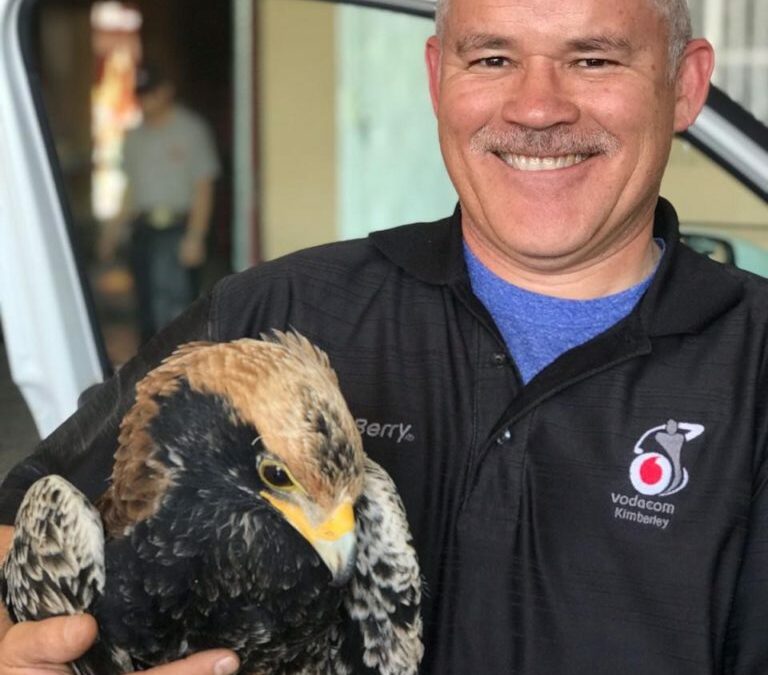
RonelleV@ewt.org.za Early on a Friday morning I received a call from Gavin Williams, who works for Vodacom. He was at a mast near De Aar and saw an injured Verreaux’s Eagle under a Sentech mast, but he could not reach the eagle as it was in the camp of the Sentech mast and the gates were locked. I called a contact who works for Sentech and he helped us to reach the injured bird. We discovered that it was the chick from the nest on the mast, and had probably fallen out of the nest and injured its leg.
After spending time with a falconer, who will help this special bird to get fit and train it to hunt, it will be released back into the wild. Well done to Gavin for going out of his way to save this eagle!