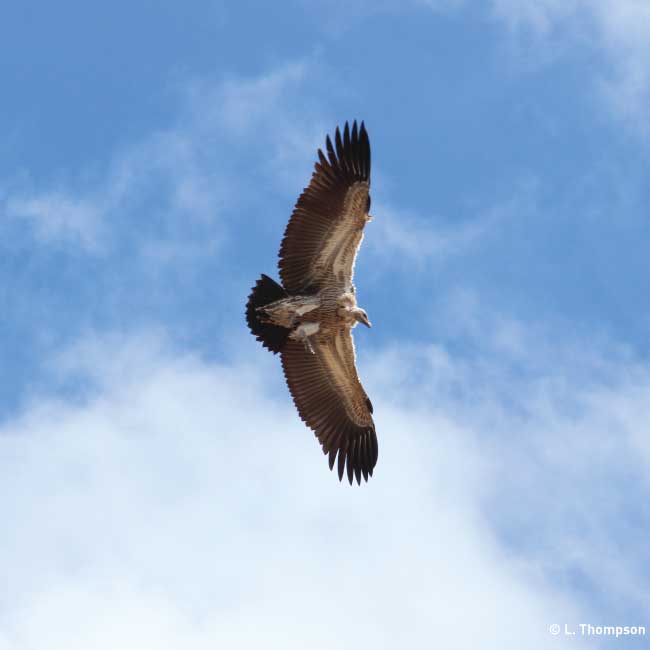
Poisoning poses a deadly risk to vultures in West Africa
Dr Lindy Thompson, the EWT’s Birds of Prey Programme
African vulture numbers are declining at an alarming rate, and their key threat throughout Africa is believed to be poisoning. One of the reasons people poison vultures is to obtain body parts, both for consumption and use in African Traditional Medicine. Dr Clément Daboné (from the Universities of Tenkodogo and Joseph Ki-Zerbo, both in Burkina Faso) collected information on incidents of mass vulture killings to learn more about the risk that poisoning poses to vultures in West Africa.
Dr Daboné conducted 730 interviews with butchers, veterinarians, foresters, and abattoir guards at numerous sites across Burkina Faso. His results revealed that vultures were killed in motor vehicle collisions and electrocutions at electricity poles, but poisoning was the deadliest threat to vultures in Burkina Faso. Out of 879 known vulture deaths, 779 were due to poisoning. Interestingly, Dr Daboné found that more vultures were more likely to be killed using poisoned baits closer to the country’s borders, suggesting that poisoning was being done by people from neighbouring countries. He concluded that the recent intentional vulture poisoning events in Burkina Faso were linked to the increasing demand for vulture parts in West Africa.
Dr Daboné and his team highlighted the need for awareness campaigns in local communities to teach people about the risks of using poison. They also mentioned the need for improved legislation and stronger commitment by West African governments to stop the trade in vulture body parts and prevent the extinction of these highly threatened birds and the services they provide.
Vultures face similar threats in southern Africa, and the Great Limpopo Transfrontier Conservation Area is a wildlife poisoning hotspot. For this reason, the EWT’s Birds of Prey Programme has assisted in drafting South Africa’s new national Vulture Biodiversity Monitoring Plan, and we are providing Wildlife Poisoning Response Training to rangers so that they know how to identify, detect, and respond effectively to wildlife poisoning events by containing the crime scene and sampling carcasses for investigative purposes. Rangers are also trained on methods to save as many surviving birds as possible and decontaminate the scene to prevent further poisoning of animals or people. Together, we can make a difference.
The study was titled ‘Trade in vulture parts in West Africa: Burkina Faso may be one of the main sources of vulture carcasses’, and you can access it here: https://doi.org/10.1017/S095927092100054X
References:
Daboné, C., Ouéda, A., Thompson, L.J., Adjakpa, J.B. & Weesie, P.D.M. (2022) Trade in vulture parts in West Africa: Burkina Faso may be one of the main sources of vulture carcasses. Bird Conservation International. https://doi.org/10.1017/S095927092100054X
Gore, M.L., Hübshle, A., Botha, A.J., Coverdale, B.M., Garbett, R., Harrell, R.M., Krueger, S., Mullinax, J.M., Olson, L.J., Ottinger, M.A., Smit-Robinson, H., Shaffer, L.J., Thompson, L.J., van den Heever L. & Bowerman, W. (2020) A conservation criminology-based desk assessment of vulture poisoning in the Great Limpopo Transfrontier Conservation Area. Global Ecology and Conservation 23:e01076. https://doi.org/10.1016/j.gecco.2020.e01076
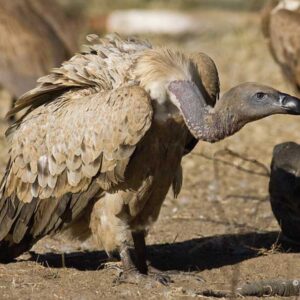
A conservation success story – the return of the majestic Cape Vulture
Lindy Thompson and Danielle du Toit, the EWT Birds of Prey Programme
Cape Vultures (Gyps coprotheres) are endemic to southern Africa. They are one of South Africa’s larger vulture species, weighing up to 11 kg. They forage in open vegetation types such as Fynbos, Kalahari, Karoo, grassland, and open woodland. Breeding pairs are monogamous and usually raise one chick.
The majestic Cape Vulture was listed as Endangered on the IUCN’s Red List of Threatened Species, but in 2021 it was ‘down listed’ to Vulnerable. This is a remarkable conservation success story and testament to the tireless efforts of multiple generations of conservationists in southern Africa. Removing the Cape Vulture from the list of Endangered species in 2021 received very little media attention, despite being an important case study that can provide hope and inspiration to current and future conservationists. This achievement resulted from a concerted effort by various organisations, including the Endangered Wildlife Trust (EWT), BirdLife South Africa, and wildlife rehabilitation centres such as Moholoholo, VulPro, and others. A team of 31 contributors, which included the EWT’s Samantha Page-Nicholson) supplied information and justified why this species should (or should not) stay classed as ‘Endangered’. Threats to the species include unsafe wind energy developments, poisoning events, unsafe power lines, and food availability may play a large role in the successful breeding and population trends of this species. Current conservation actions for the Cape Vulture include systematic monitoring, education and awareness programmes, protection by national and international legislation, the expansion of formally protected areas (such as the Soutpansberg), and the creation and growth of Vulture Safe Zones.
The importance of Vulture Safe Zones in Cape Vulture conservation
In India in the 1990s, vulture populations suffered drastic declines. Scientists were baffled as to why until the study of carcasses revealed the presence of the veterinary non-steroidal anti-inflammatory drug, Diclofenac. They concluded that this drug was the root cause of the mass fatality and had cost about 90% of the vulture population in the area in the space of a decade. This became known as “The Indian Vulture Crisis.” The disappearance of Vultures led to the ecological tipping of scales. Mammalian scavengers such as jackals and feral dogs took advantage of the increased food supplies, and their populations increased. The high number of mammals on carcasses inadvertently led to an increase in the spread of pathogens. India faced, and still faces, a rabies epidemic that costs 30,000 human lives per year and billions of dollars in health fees.
The urgent need for action to stop the rapid decline of vulture species in Eurasia and Africa led to the development of the Multi-Species Action Plan to Conserve African-Eurasian Vultures (commonly referred to as the Vulture MsAP). It is a comprehensive and strategic plan which covers ranges across two continents. Vulture Safe Zones are an activity recognised in the Vulture MsAP to encourage the responsible management of the environment by actively reducing threats to vultures in identified areas. They are specified geographic areas where conservationists and landowners use targeted conservation measures adapted for the vulture species present. These measures include safeguarding electrical infrastructure to minimise collisions and electrocutions, reducing the use of poisons, covering or altering reservoirs to prevent vulture drownings, and using NSAIDs responsibly. The most important thing to remember is the responsible management of resources that vultures use, such as the availability of safe perches, water for drinking and bathing, and food. Vulture Safe Zones also promote responsible disposal of carcasses on which vultures scavenge to reduce poisoning through pesticides and lead fragments that remain in a carcass after an animal is shot.
The Karoo Vulture Safe Zone
Landowners in the karoo region of South Africa established the Karoo Vulture Safe Zone (KVSZ) to increase the area’s Cape Vulture populations that have been decimated by persecution resulting from misinformation and a general misunderstanding of their role in the ecosystem. Landowners in the mid-20th century believed that it was vultures killing their small livestock when they would find the birds feeding on them during the day. Unbeknownst to them at the time, the jackal population in the area was beginning to take advantage of the easy prey and kill them during the night. Now, the landowners in the area are admirably working to fix these past mistakes. In August 2020, the first landowner signed up to proclaim his property a Vulture Safe Zone. Since then, the KVSZ has grown to 730,000 hectares owned by 94 landowners committed to making their properties Vulture Safe. The project continues to encourage the responsible management of properties across the karoo landscape through landowner engagements and environmental education, which focus on sustainable and safe practices of managing predators and water resources and the safe disposal of carcasses. The KVSZ team also works through the strategic partnership between the EWT and Eskom to make problem powerlines safe for vultures.
Cape Vulture sightings within the project area are reported to the KVSZ team, and it is exciting to receive reports of up to 70 birds roosting on cliffs that were previously void of these magnificent birds. Monitoring efforts by the team to better understand the populations traversing the Eastern Cape skies have shown an increase in breeding pairs in known sites and the possible development of new breeding sites. All of these give the team more motivation to make the Karoo and the larger Eastern Cape a safe space for Cape Vultures.
The Vulture Safe Zone process is long, and it will take time until the area is completely vulture safe. In the interim, we continue to encourage vulture safe management and measures and spread awareness of the need for areas like this.
You can help raise important funds for Cape Vulture conservation by supporting the Rhino Peak Challenge ambassadors, who aim to complete a 21 km course to ascend the famous Rhino Peak in the Maloti Drakensberg World Heritage Site. The Rhino Peak Challenge raises awareness and funds, for Wildlife ACT, the EWT, and Ezimvelo KZN Wildlife (EKZN), for projects focused on vultures, rhinos and cranes. The EWT’s Cath Vise will participate in the Rhino Peak Challenge this year. Cath manages the Protected Area Programme in the Soutpansberg, where there is a colony of nesting Cape Vultures. Please consider supporting Cath and the other Rhino Peak Challenge ambassadors by clicking this link:
https://rhinopeakchallenge.co.za/participants.aspx?participant=576715fb-a8b2-431e-807a-909ea6c39db4
References:
Benson, P.C. and McClure, C.J. (2019). The decline and rise of the Kransberg Cape Vulture colony over 35 years has implications for composite population indices and survey frequency. Ibis 162: 863-872. https://doi.org/10.1111/ibi.12782
BirdLife International (2021). Gyps coprotheres. The IUCN Red List of Threatened Species 2021: e.T22695225A197073171. https://dx.doi.org/10.2305/IUCN.UK.2021-3.RLTS.T22695225A197073171.en accessed on 25 August 2022.
Howard, A., Hirschauer, M., Monadjem, A., Forbes, N. and Wolter, K. (2020). Injuries, mortality rates, and release rates of endangered vultures admitted to a rehabilitation centre in South Africa. Journal of Wildlife Rehabilitation 40: 15-23.
Mbali Mashele, N., Thompson, L.J. and Downs, C.T. (2022). Trends in the admission of raptors to the Moholoholo Wildlife Rehabilitation Centre, Limpopo province, South Africa. African Zoology 57: 56-63. https://doi.org/10.1080/15627020.2021.2016073
Thompson, L.J. and Blackmore, A.C. (2020). A brief review of the legal protection of vultures in South Africa. Ostrich 91: 1-12. https://doi.org/10.2989/00306525.2019.1674938
Poisoning Risk to Vultures: A West African Crisis with Continental Implications
The poisoning risk to vultures has reached catastrophic levels in West Africa, where 89% of recorded vulture deaths result from deliberate poisoning. Dr Clément Daboné’s groundbreaking research in Burkina Faso reveals this alarming trend, with 779 of 879 documented vulture fatalities attributed to poisoned baits – particularly near national borders, suggesting transnational trafficking of vulture parts for traditional medicine.
Key Findings from Burkina Faso
- 730 interviews with butchers, veterinarians and abattoir staff
- Poisoning accounts for 89% of vulture deaths
- Border areas highest risk – indicating cross-border trade
- Secondary poisoning kills hundreds per incident
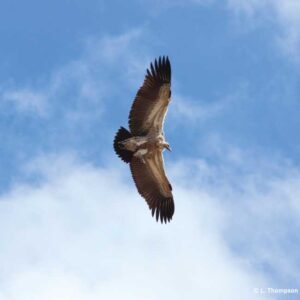
A Critically Endangered White-backed Vulture, Gyps africanus, photographed in South Africa’s Limpopo Province © L. Thompson.
Poisoning Risk to Vultures: Southern African Parallels
The crisis mirrors threats in the Great Limpopo Transfrontier Conservation Area, where the EWT’s Birds of Prey Programme is taking action:
- Drafting South Africa’s Vulture Biodiversity Monitoring Plan
- Training rangers in Wildlife Poisoning Response
- Teaching crime scene preservation and carcass sampling
- Developing protocols to save surviving birds
“Each poisoning event can wipe out entire vulture colonies,” explains Dr Lindy Thompson. “We’re racing to build capacity before it’s too late.”
Urgent Conservation Measures Needed
-
Community awareness campaigns on poisoning impacts
-
Stronger legislation against vulture part trade
-
Cross-border cooperation to combat trafficking
-
Alternative livelihoods for traditional healers
With African vulture populations declining by up to 90% for some species, addressing the poisoning risk to vultures is critical to preventing ecological collapse across the continent.
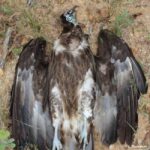
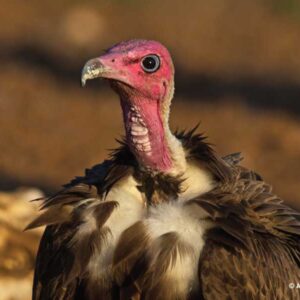
A Critically Endangered subadult Hooded Vulture, which was poisoned, along with 64 other birds of prey, in South Africa’s Limpopo Province in 2015. © L. Thompson.
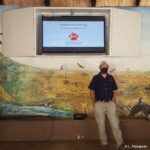
John Davies from the EWT’s Birds of Prey Programme talking about wildlife poisoning at Moholoholo Wildlife Rehabilitation Centre in South Africa’s Limpopo Province in 2020. © L. Thompson.
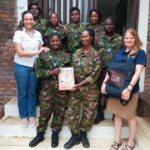
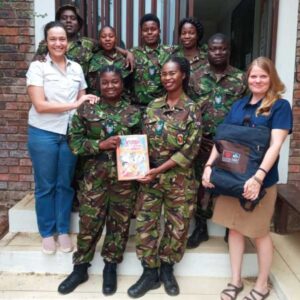
Dr Lindy Thompson (right), from the EWT’s Birds of Prey Programme, presented Wildlife Poisoning Response Training for the Black Mambas, an all-female anti-poaching force, in South Africa’s Limpopo Province.
The study was titled ‘Trade in vulture parts in West Africa: Burkina Faso may be one of the main sources of vulture carcasses’, and you can access it here: https://doi.org/10.1017/S095927092100054X
References:
Daboné, C., Ouéda, A., Thompson, L.J., Adjakpa, J.B. & Weesie, P.D.M. (2022) Trade in vulture parts in West Africa: Burkina Faso may be one of the main sources of vulture carcasses. Bird Conservation International. https://doi.org/10.1017/S095927092100054X
Gore, M.L., Hübshle, A., Botha, A.J., Coverdale, B.M., Garbett, R., Harrell, R.M., Krueger, S., Mullinax, J.M., Olson, L.J., Ottinger, M.A., Smit-Robinson, H., Shaffer, L.J., Thompson, L.J., van den Heever L. & Bowerman, W. (2020) A conservation criminology-based desk assessment of vulture poisoning in the Great Limpopo Transfrontier Conservation Area. Global Ecology and Conservation 23:e01076. https://doi.org/10.1016/j.gecco.2020.e01076
Dr Lindy Thompson, the EWT’s Birds of Prey Programme
Science Snippets
Using an Ethogram as a guide to understanding Hooded Vulture breeding behaviour
Lindy Thompson, the EWT’s Birds of Prey Programme
Most vulture species are highly threatened, and their populations are declining. Researchers have been focusing more on vultures in recent years, and certain topics, such as their movements, are becoming well studied. However, other topics, such as how diseases affect vultures, and behavioural studies on vultures, have not been as popular. These areas need more attention because understanding all aspects of a species’ behaviour can help inform conservation efforts.
Studies on an animal’s behaviour can be enhanced using an ‘ethogram’. An ethogram clearly defines, describes, and classifies distinct behaviours commonly exhibited by a species. Researchers use ethograms as templates to record and understand the species’ behaviour. Importantly, ethograms can help to standardise data collection across different studies, which increases objectivity, and allows comparisons of results from different researcher teams.
Researchers from the Endangered Wildlife Trust and the University of KwaZulu-Natal recently produced the first ethogram describing the nesting and breeding behaviours of the Critically Endangered Hooded Vulture (Necrosyrtes monachus). They gleaned information from 14 Hooded Vulture nests in South Africa’s Lowveld region, from direct observations and over 400,000 camera photographs. The team described 28 behaviours exhibited by Hooded Vultures at their nests, and they grouped these behaviours into five categories: ‘Body Care’, ‘Movement’, ‘Nesting’, ‘Resting’ and ‘Social’. In their ethogram, the researchers also provided photographic records of each behaviour for researchers to use as references. Many of the behaviours exhibited by Hooded Vultures may be common to other tree-nesting vulture species, so this ethogram should be helpful for other research teams studying the breeding of other vulture species globally. It will also be used for further investigating the behaviour of Hooded Vultures in South Africa, and the next step is to look at activity budgets.
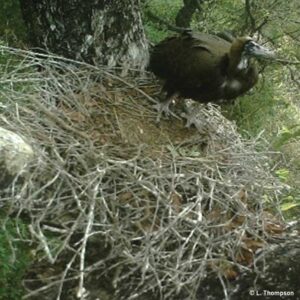
A juvenile Hooded Vulture on its nest in a Jackalberry tree. © L. Thompson/UKZN
The research team comprised the EWT’s Dr Lindy Thompson (the camera trap photos we used were collected during Lindy’s postdoctoral studies on Hooded Vultures), Prof. Colleen Downs (who supervised Lindy’s postdoc from the University of KwaZulu-Natal), and Fiona Fern, who is soon to start her PhD on raptor health with the EWT’s Birds of Prey Programme.
The study was funded by the Rufford Small Grants Foundation, GreenMatter, and the National Research Foundation (ZA).
The study was titled ‘An ethogram for the nesting and breeding behaviour of the Hooded Vulture Necrosyrtes monachus’, and you can access it here: https://doi.org/10.2989/00306525.2022.2072965
Battle of the Bullets: lead-free in the lead
Danielle Du Toit, EWT’s Birds of Prey Programme Karoo Vulture Safe Zone and Sustainable Land Management Coordinator, danielled@ewt.org.za
Battle of the Bullets was an event conceptualised during a brainstorming session in Langebaan in early 2022. The event aimed to promote a lead-free environment within the Karoo Vulture Safe Zone. Lead poisoning occurs in many ways, but in this case, the Endangered Wildlife Trust’s Birds of Prey Programme focused on poisoning from the ingestion of lead ammunition by vultures and other animals scavenging on carcasses and entrails. Vultures that ingest lead fragments from ammunition have been found to have higher levels of lead in their blood, which affects their health and can kill them. For more about how lead ammunition affects vultures, read this article.
Similarly, people who eat a lot of game meat are also at risk of lead poisoning when venison is hunted using lead ammunition. We saw Battle of the Bullets as an opportunity to engage with industry stakeholders and people on the ground who use ammunition to raise awareness of the impact of lead bullets and the available lead-free alternatives. Furthermore, we wanted to practically demonstrate how these alternatives can do the job just as well as lead bullets.
To unpack the impact of lead ammunition on the environment and vultures, we started the event with some presentations on the topic. Lizanne Nel, Conservation Manager of the SA Hunters and Game Conservation Organization, opened with a talk on the conservation impacts associated with lead ammunition and how their members can help by reducing its use.

Presentations on the impact of lead ammunition on vultures
The EWT’s Danielle du Toit, the EWT’s Karoo Vulture Safe Zone and Sustainable Land Management Coordinator, spoke about the importance of reducing the presence of lead bullets in the environment to create a vulture safe zone and benefit nature as a whole. Linda van den Heever of BirdLife South Africa dove deeper and enthralled the attendees with the science and research into lead poisoning in vultures across South Africa. Her talk was followed by an in-depth talk by Kobus du Plessis of Impala Bullets on the ballistic science behind lead- and lead-free ammunition.

Kobus du Plessis from Impala Bullets talking about ballistic science
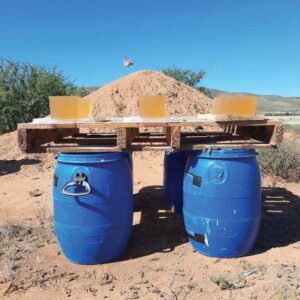
After the presentations and a hearty lunch, we asked the bullet manufacturers to demonstrate their lead-free ammunition to show its suitability as an alternative to lead bullets. To do so, Chris Strydom of Balistix Bullets, Wessel Landman of GS Customs, and Kobus du Plessis from Impala Bullets all took turns shooting from 100 m into dummy targets made from gelatin. Gelatin targets slow and trap the energy dispersion of the bullet upon impact and along its trajectory. They are a useful educational tool to show how a bullet performs in practice. Ammunition, like many other things, is designed and manufactured according to its purpose. In a hunting bullet, one needs specific ballistic characteristics for the area in which the bullet is used and for the prey being hunted. A target shooting bullet must perform well through various challenges, including long-distance, gong shooting, and paper targets. Those present were shown how lead-free ammunition (also known as monolithic ammunition) is similarly designed, crafted, and tested for its end purpose in mind and witnessed how it performs in different scenarios.
After the demonstrations, attendees were invited to shoot at several other dummy targets themselves and join in for a few rounds of clay target shooting hosted by the Graaff-Reinet Gun Club. The afternoon was warm and calm, and those who didn’t take part in shooting sat and chatted about one thing: ammunition and what to do about it. Evening rolled around, but the day wasn’t over. Lucky draw prizes were kindly donated by Karoo Guns (two R250 gift vouchers and a hat), Boomsticks (R500 gift voucher), Nommerpas (R1,000 gift voucher), and Balistix Bullets (a bullet puller for all calibres, valued at R500). The fire was lit as the lucky draw happened, and meat began to sizzle on the grill.
The day ended with a delicious meal of classic Karoo Lamb chops, other meat, and salads, prepared to perfection by Andre and Annette Nagel and thoroughly enjoyed by all. The event achieved its objective of bringing together industry professionals and their clients, conservation officials, landowners, and local shooting enthusiasts, for an open and productive conversation about lead and lead-free ammunition and how to work together to create a lead-free environment to benefit animal and human health. Those who attended were given a well-rounded introduction to the risks to vultures and people of using lead ammunition and witnessed first-hand how lead-free ammunition performs in practice. Feedback from attendees was positive, and a shift in mindset was visible. All parties agreed that it’s time we start thinking about lead-free ammunition as a natural next step rather than an alternative.
A hearty thanks and congratulations to everyone who was part of the day. We hope to see you all again soon and continue this important conversation!
