Help us  
 lost species

Donate today  

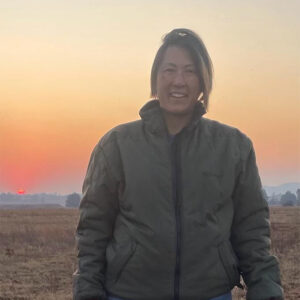
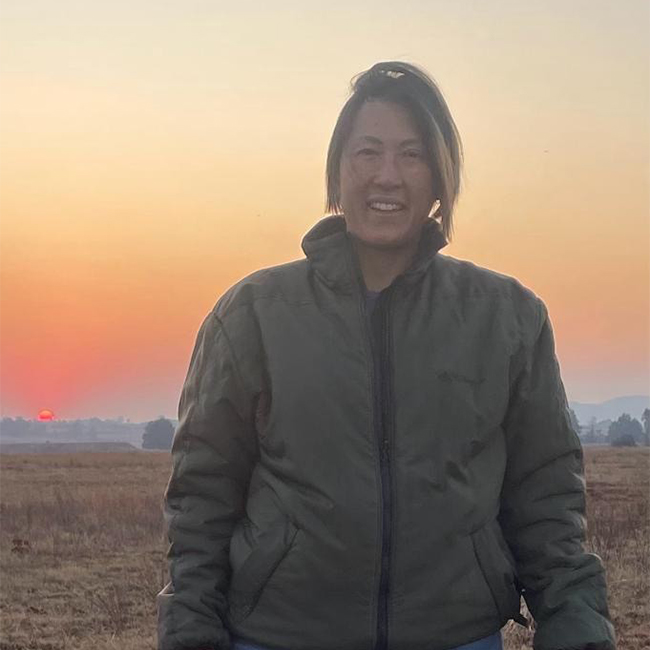
Careers in Conservation – Cliantha Kay

Careers in Conservation – Cliantha Kay

CAREERS IN CONSERVATION – Cliantha Kay

Cliantha is a Conservation Canine Assistant with the EWT’s Conservation Canine Unit. Here is a little bit about Cliantha’s journey to a career in conservation with the EWT.

Job title: Conservation Canine Assistant


What do you do in your day-day work?

I work hands on with our canines that are based at the head office conservation campus, assist in keeping those active minds stimulated and always ready to detect the next contraband item. We swim them, walk them, exercise them, and train them – and of course give them lots of love.

Location: Midrand Campus, but travel extensively

Where did you grow up? Johannesburg

What are your hobbies/things you like to do in your spare time? Catch up with friends and family, go walkabouts with my trusty doggos, a great day out on the lake brings me calm, reading, and hiking

Any pets? all the dogs! My beautiful German Shepherd princess Calla, and two other accomplices

Favourite animal and why:  I’d be lying if i didn’t say dog.

Pet peeve?  Rude People

Why did you want to work for the EWT? The EWT is a vibrant and dynamic organisation that provides wonderful opportunities to make meaningful differences to people’s lives and to conservation. And of course all the doggos.

What are you passionate about?  Changing the perception of the relationship between farming and conservation. I think that in the past, a few bad apples ruined it for many conservation-orientated farmers who manage their land in a way that is super beneficial to biodiversity and food security. I also really love finding different ways to approach and overcome challenges and seeing how we, as an organisation, can leave a positive and lasting impact on our environment and its people.

What’s the best advice you’ve ever received, and who did it come from? If you can’t control it – let it go. Life is short – worrying makes us old.

My parents and grandparents taught me that, and I still live by it. I always remind myself that I’m capable of anything I put my mind to, so long as I’m open to learning (and probably failing a few times) along the way! 

What is your go-to feel-good song? Robin S – Show me love

What excites you about this new position? constant learning, and the diverse and wonderful people I meet from all different walks of life. Working with Canines is a gift beyond measure.

What are you passionate about?  Being kind and genuine in everything I do – it costs nothing, yet is priceless.

International Vulture Awareness Day 2023

International Vulture Awareness Day 2023

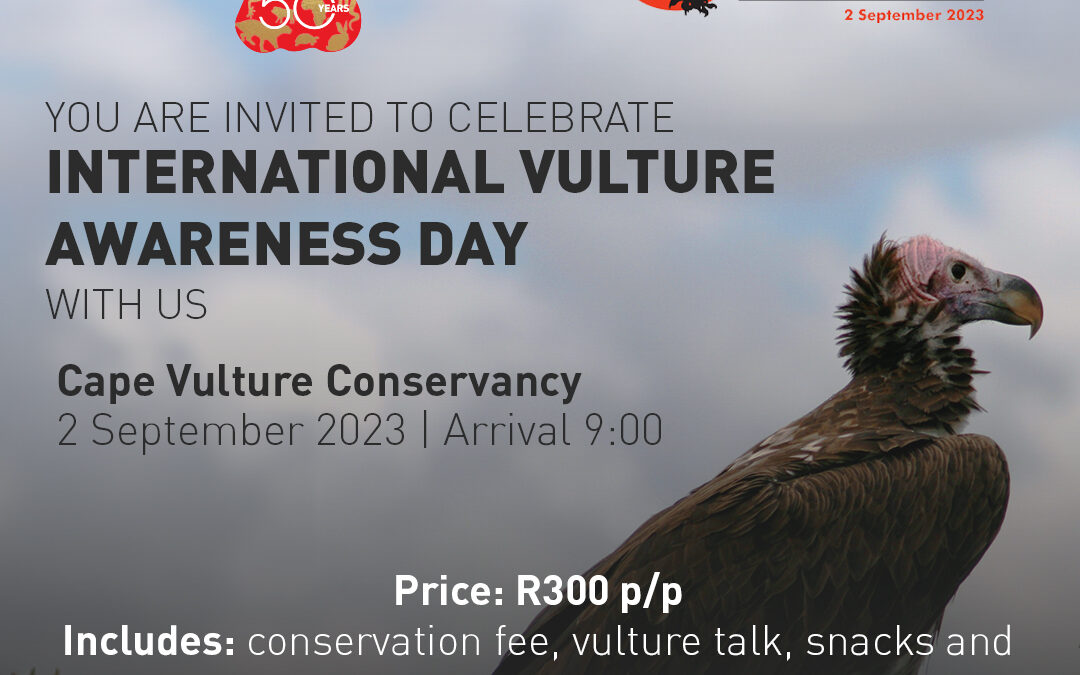
The first Saturday in September each year is International Vulture Awareness Day.

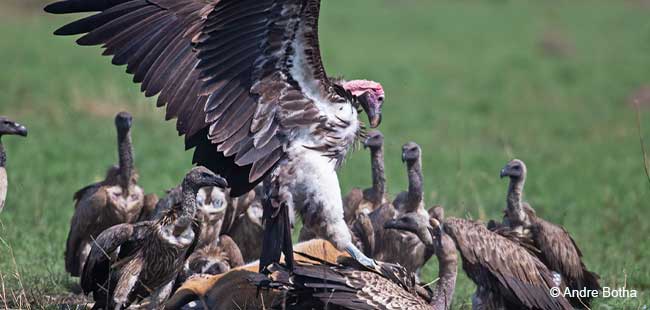
Vultures are an ecologically vital group of birds that face a range of threats in many areas that they occur. Populations of many species are under pressure and some species are facing extinction.

The International Vulture Awareness Day has grown from Vulture Awareness Days run by the Birds of Prey Programme of the Endangered Wildlife Trust in South Africa and the Hawk Conservancy Trust in England, who decided to work together and expand the initiative into an international event.

The coordinated international day promotes the conservation of vultures to a wider audience and highlights the important work being carried out by the world’s vulture conservationists.

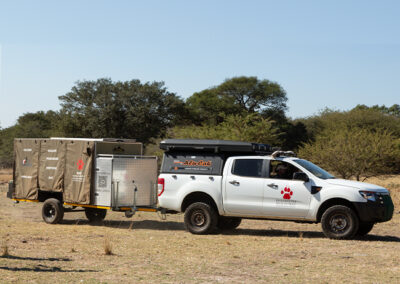
On the first Saturday in September, each participating organisation carries out their own activities that highlight vulture conservation and awareness. This year, the EWT is hosting an event at the Cape Vulture Conservancy in the Lowveld to showcase vultures and reveal the EWT’s new Vulture Ambulance, which has already been used when responding to various wildlife emergencies around the Lowveld.

The Cape Vulture Conservancy will be providing delicious snacks and drinks, which are included in the entrance fee of R300, which also covers the conservation fee that goes to the Cape Vulture Conservancy, as well as drive to view the vultures on the Conservancy, where once can see the Cape Vultures that are breeding on the cliffs, and maybe even catch a glimpse of a Verreaux’s Eagle! We hope that this day will be a wonderful celebration of South Africa’s majestic vultures – which are an irreplaceable part of our country’s natural heritage.

RSVP here

Sign up here to let us know how you are celebrating vultures this weekend!

Careers in Conservation – Danielle du Toit

Careers in Conservation – Danielle du Toit

CAREERS IN CONSERVATION – Danielle du Toit

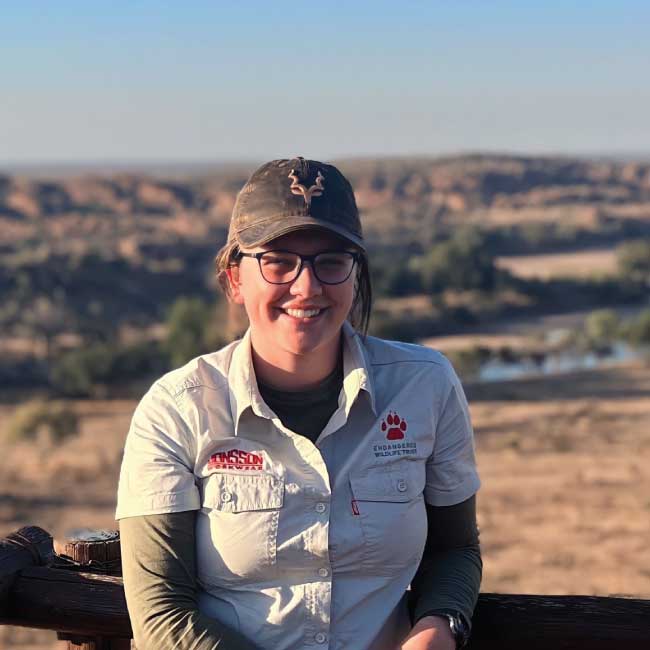
Danielle is a Field Officer with the EWT’s Birds of Prey Programme. Here is a little bit about Danielle’s journey to a career in conservation with the EWT.

Job title: Field Officer

What do you do in your day-day work?

image of Danielle du Toit

I meet with farmers and other landowners to sign them on and assist them in making their land safe for vultures. I also work to mitigate threats to vultures and address the reasons behind the threats so we can ensure the longevity of the threat-free landscape. These include addressing livestock loss to predation through implementing non-lethal ways of predation management (mobile kraaling, livestock guardian dogs etc.), minimising potential lead poisoning from lead ammunition used by hunters, awareness campaigns, and working with ammunition industry professionals to promote a reliable and affordable alternative to lead ammunition. 

Location: I’m based in Graaff-Reinet (in the Eastern Cape) but work across the broader Eastern Cape and in the Beaufort West area. 

Where did you grow up? I grew up on a farm outside Graaff-Reinet 

What are your hobbies/things you like to do in your spare time? Anything that gets me outside and busy with my hands. I love to try my hand at gardening, woodwork and super basic home renovation projects – none of which I’ve quite mastered yet!

Any pets? One precious dog and three cats. 

Favourite animal and why:  This changes all the time. Although I’m supposed to say vultures, I think I’ll go with Meerkats (Suricates). They’re feisty things for their size. I just love their attitude. 

Favourite food? I love a good hearty meal – rys, vleis and aartappels, as my Ouma used to say. 

Pet peeve?  Jeans with fake pockets. Please, can the fashion industry stop selling me dreams?

Why did you want to work for the EWT? The EWT is a forward-thinking organisation with plenty of room to grow personally and professionally. 

What are you passionate about?  Changing the perception of the relationship between farming and conservation. I think that in the past, a few bad apples ruined it for many conservation-orientated farmers who manage their land in a way that is super beneficial to biodiversity and food security. I also really love finding different ways to approach and overcome challenges and seeing how we, as an organisation, can leave a positive and lasting impact on our environment and its people.

What’s the best advice you’ve ever received, and who did it come from? “There’s no such thing as can’t. You either don’t want to or don’t know how to. Either way, it’s your decision.” 

My parents and grandparents taught me that, and I still live by it. I always remind myself that I’m capable of anything I put my mind to, so long as I’m open to learning (and probably failing a few times) along the way! 

What is your go-to feel-good song? Feel it Still – Portugal, the Man. 

Poisoned vultures take to the sky

Poisoned vultures take to the sky

Poisoned vultures take to the sky

Emily Taylor, the EWT’s Communications Manager

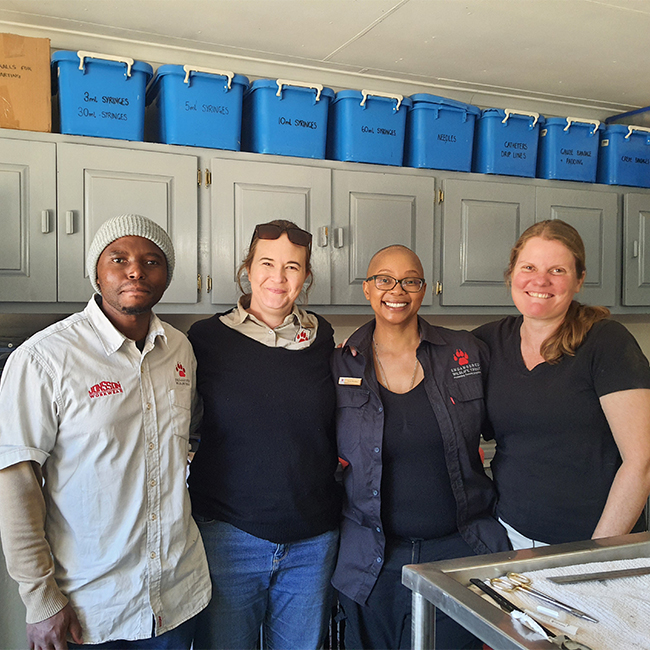
While we endeavour to bring our audiences positive conservation news, it is important that we also bring attention to conservation challenges and grave news. As the Endangered Wildlife Trust’s Communications Manager, I hear the good and the bad, and it’s my job to pass on the information to our supporters and to ensure that we increase awareness around the challenges our threatened species face and how we can all overcome them. The Endangered Wildlife Trust’s Support Service staff don’t get to go out into the field as often as we would like, but this time, my colleagues Sizie Modise (Head of Marketing) and Lesego Moloko (Governance Manager) and I did, and I could write the story first-hand. While I was not present at the events leading up to the moments I witnessed, they were devastating and in need of urgent attention, so I will give some background before I tell my tale.

Background

It can be bad out there, and our field officers are on the frontline of a critical battle we are fighting against the indiscriminate poisoning of our wildlife. The Great Limpopo Transfrontier Conservation Area (GLTCA), which includes the Kruger National Park and surrounding reserves, is a landscape rich in biodiversity, and vultures play an integral role in the functioning of its ecosystems. It is also a high-risk area for wildlife poisoning, with at least 796 vultures across five threatened species killed in the area since January 2019. In the GLTFCA, vultures are often poisoned and harvested for their body parts for use in traditional medicine. They also regularly fall as the unintended victims for poisons left out for other wildlife such as lions, hyaenas and leopards, which are also targeted and slaughtered for their body parts, or because they threaten local livestock.

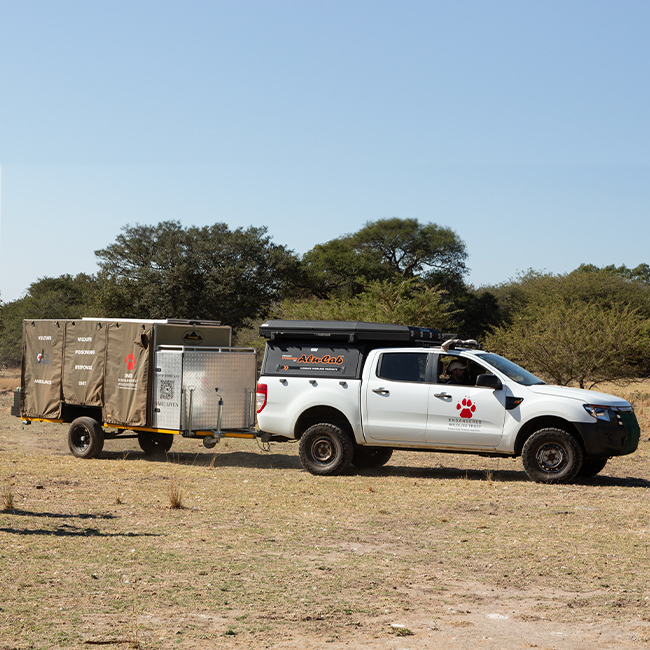
At 14:50, on Youth Day (16 June), the Endangered Wildlife Trust (EWT) Birds of Prey Programme Lowveld team, John Davies and Dr Lindy Thomson, responded to a call regarding a wildlife poisoning incident on a reserve in the Greater Kruger area. They were on the road in ten minutes and arrived just before sunset at a dismal scene with one dead and two live White-backed Vultures in grave condition. The team loaded the two surviving birds into crates in the EWT’s custom-made Vulture Ambulance and rushed them to Moholoholo Wildlife Rehabilitation Centre near Hoedspruit – arriving at 11 pm.

The rescue

Determined that there were more lives to save, John and Lindy returned with the ambulance at 4 am the following day and, joined by SANParks rangers, Honorary Rangers, and Dr Joel Alves and Isabella Grünberger from WildScapes Veterinary and Conservation Services, they scoured the area for six hours, discovering and bringing more survivors back to the ambulance for treatment as they were found.

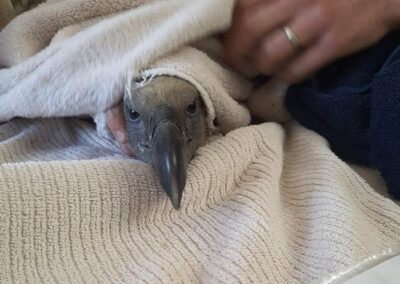
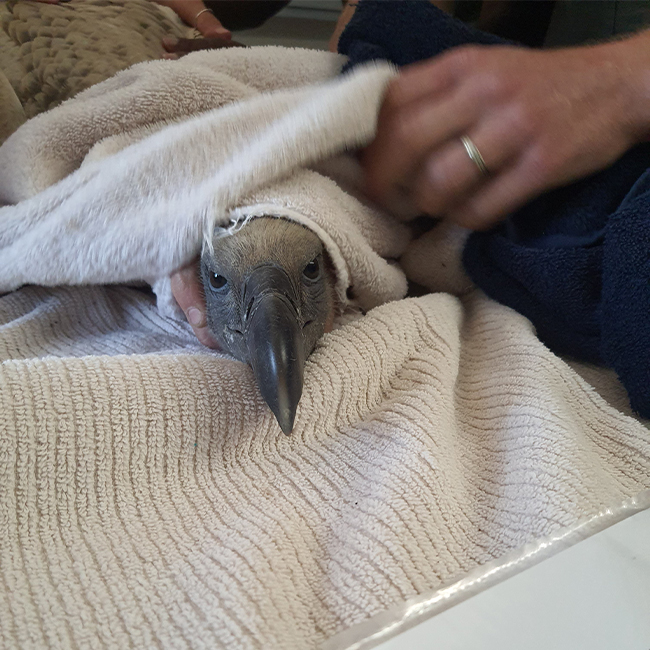
The main poisoning scene was deep in the bush, and after the vet, Dr Joel Alves and the EWT’s John Davies treated each bird on site, a team member then carried the birds 3 km to where the Vulture Ambulance was parked. Another six vultures (one Hooded, one Lappet-faced, and four White-backed vultures) were critical but still alive. Sadly 45 vultures, a Bateleur Eagle, a lion, and three lion cubs did not survive the poisoning. The surviving birds were safely delivered to the Moholoholo Wildlife Rehabilitation Centre for treatment and rehabilitation in the capable hands of Dr Jess Briner and the Moholoholo Clinic team.

The release

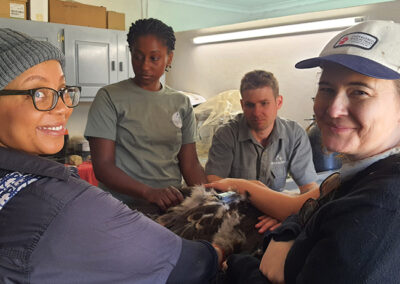
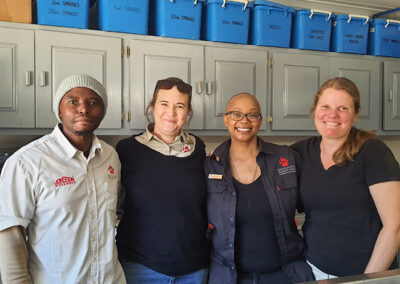
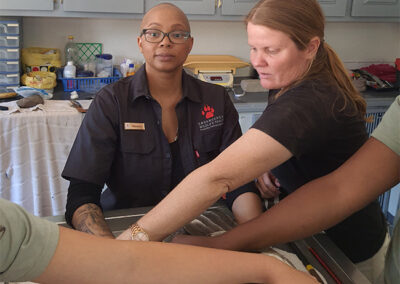
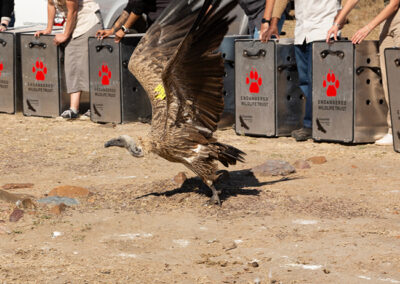
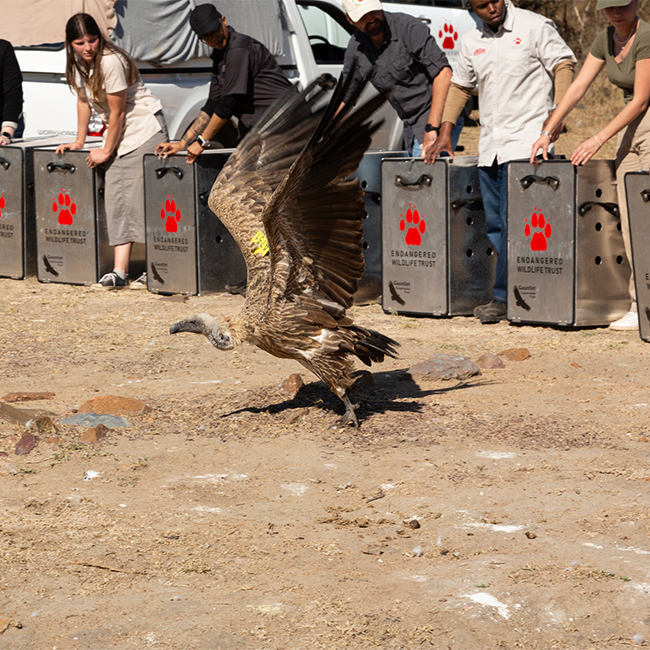
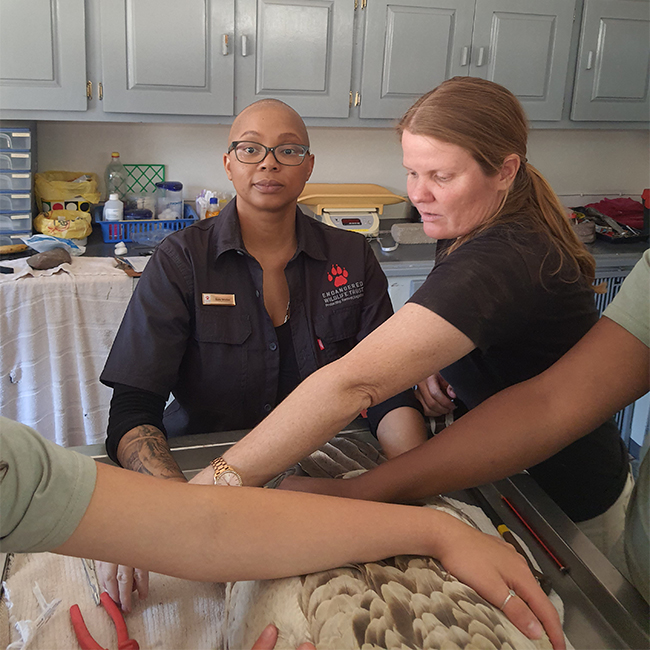
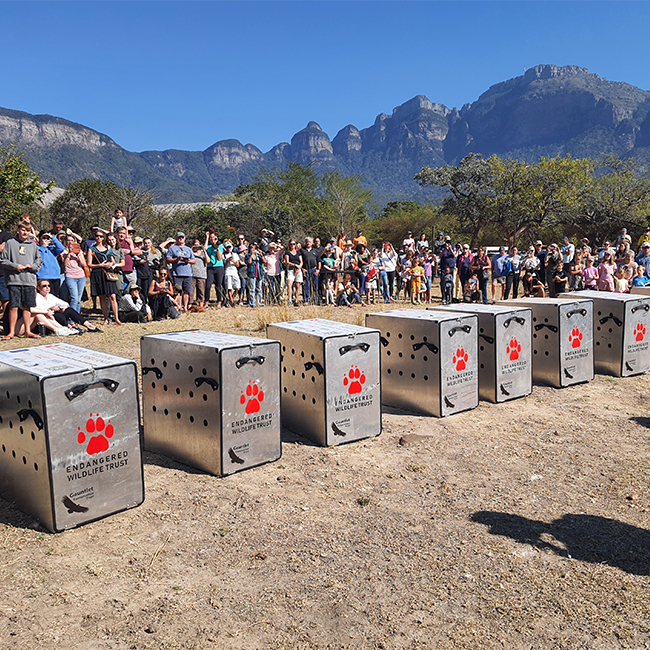
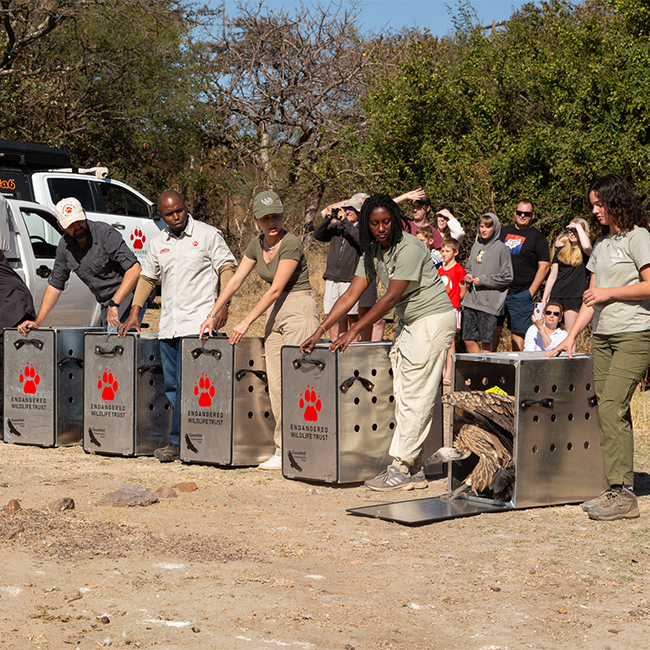
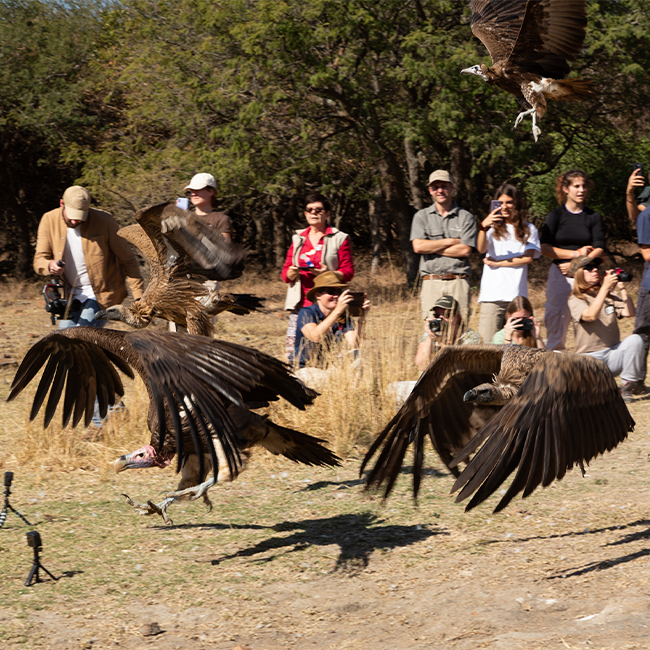
The eight rescued vultures that survived a mass poisoning incident in June, including six White-backed Vultures, one Lappet-faced Vulture, and one Hooded Vulture, were released back into the wild on 1 July 2023 after being successfully treated and rehabilitated over two weeks. I was honoured to be at the release of these rehabilitated birds in person on Saturday, 1 July 2023. It is humbling to see not only the resilience and grace of these magnificent birds but also the passion, determination, and care the EWT and the Moholoholo Clinic team show while saving their lives. We got there at around 10 am and were shown to the clinic where the vultures were being prepared for their return to the skies. We all got stuck in – immersing ourselves in as much of the process as possible to truly understand and appreciate it. It’s not easy work, and we got to see the easiest part.

One after the other, the birds were brought through to the clinic, fitted with leg rings for identification purposes and their tracking devices – lightweight, solar-powered devices that have been custom-made for the EWT to ensure they are long-lasting, do not cause the birds any discomfort, and are able to transmit accurate location and flight path data of the birds post-release. This data will allow the EWT to monitor their movements and safety once they are released.

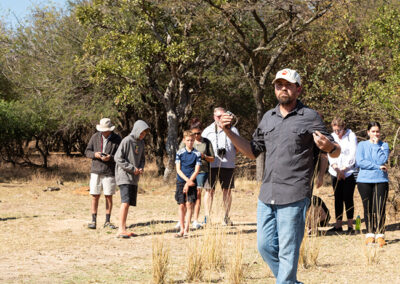
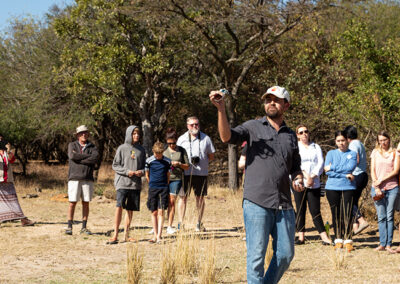
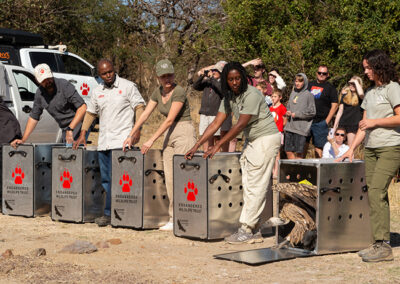
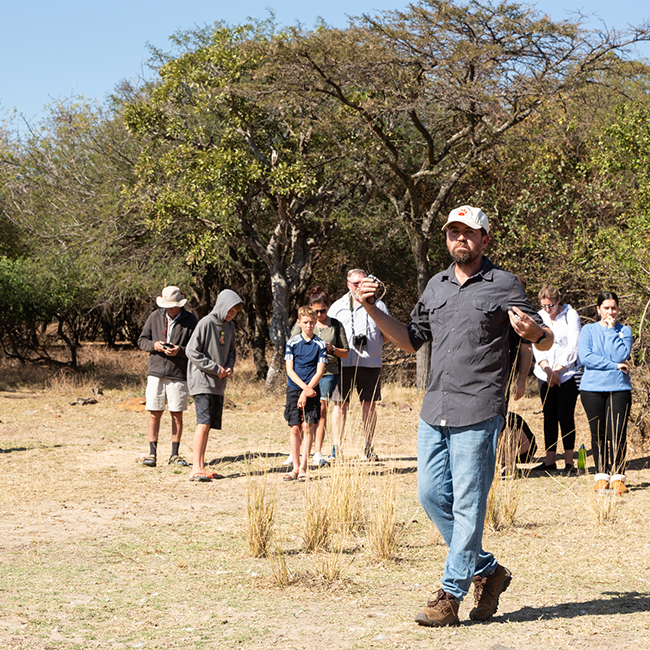
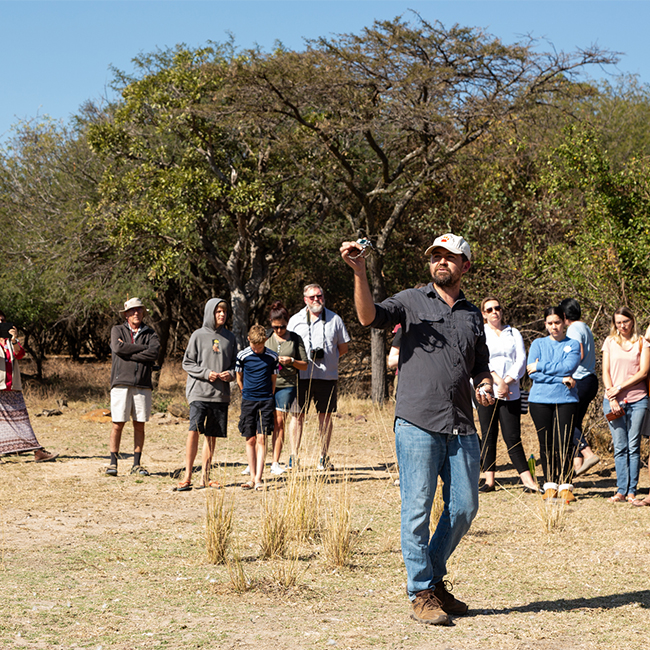
When all of the birds were prepared and loaded into the vulture ambulance, we headed to the Moholoholo Vulture Restaurant nearby, where we would send the birds on their way. These events are important opportunities for education and awareness raising, and so there were invited guests to witness the release. John Davies from the EWT’s Birds of Prey Programme gave a talk on the essential role vultures play in ecosystems, the threats they face, and the necessary role of organisations like the EWT and Moholoholo Wildlife Rehab Centre in the long-term survival of our wildlife.

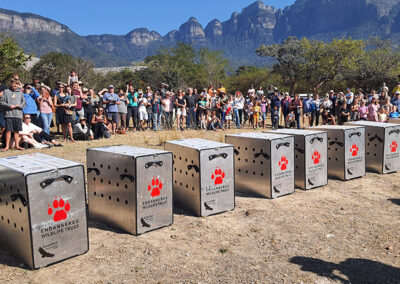
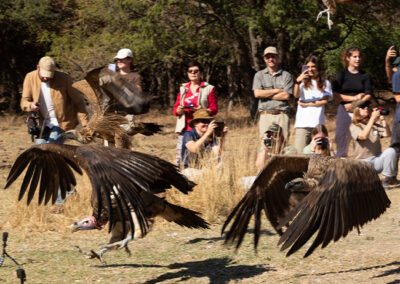
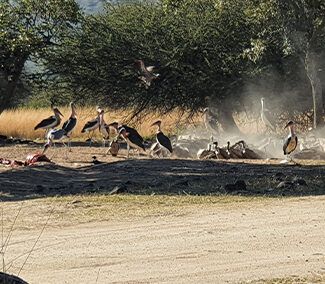
We then put meat out nearby to attract wild birds before unloading the crates and lining them up in sight of the food. One by one, we opened the crates, and in the blink of an eye, they were out. I opened one of the crates, and I could feel the wind from their powerful wings as they took to the sky.

I think that it must be quite stressful being in a cage for a few weeks when you’ve been a wild bird all your life. So I think they do get a little bit stressed, but with this release, what we did today at the Moholoholo Vulture Restaurant, we put food down and waited for the wild birds to come down and then opened the crates so that the released birds can see their buddies flying in the sky dropping down towards the food, and they join them.

Dr Lindy Thompson, the EWT Birds of Prey Programme

It is not only the release of the vultures that is critical. It is also important to monitor their movements using their tracking devices. The GPS data allows us to see where the birds are travelling and respond to any indication of unusual behaviours, such as immobility, for longer than normal periods, particularly in areas we know are at high risk for wildlife poisoning.

We have to evolve with the threats to vultures and with the situation around us, and technology and innovation are absolutely critical to this. From tracking birds across vast expanses using GPS telemetry to ensuring more poisoned birds make it to the rehabilitation centre in time using the vulture ambulance, which in the past has just not been available to people in severe situations dealing with many birds.

John Davies, the EWT Birds of Prey Programme

The tracking devices fitted to these vultures started transmitting immediately, and when we downloaded the data just a few days after the birds were released, we were astounded. It’s incredible to see the distance the vultures can travel in such a short time, especially when these birds were gravely ill from poisoning just three weeks ago! You can see a video showing these movements here.

From seeing the passion and dedication on the faces of our colleagues to feeling the wind from their wings as birds take flight – these experiences are what inspire us, give us hope, and keep us going in the fight against threats to our wildlife.

Birds of Prey Conference

Birds of Prey Conference

In celebration of our 50th Anniversary, the Endangered Wildlife Trust (EWT) is thrilled to announce the return of the EWT Birds of Prey Programme Conference. This conference will be held at the beautiful Swadini Forever Resort, near Hoedspruit, from 20–24 November 2023.

Join the Endangered Wildlife Trust’s Birds of Prey Programme and others in the raptor conservation sector for a week of exciting presentations, practical workshops, and field excursions. This event aims to celebrate the work and people involved in conserving birds of prey.

1. REGISTER FOR THE CONFERENCE

To register for the conference, click here (Opens 30 June, closed 30 September)

2. TO PRESENT A TALK OR POSTER AT THE CONFERENCE

To apply for a presentation slot, submit your abstract here (Opening on 6 June, closes on 15 September). Abstract requirements are indicated on the submission form.

3. WHAT’S HAPPENING?

Monday, 20 November: Arrival and a welcoming pizza dinner (please remember to note your dietary restrictions on the registration form)
Keep an eye out for announcements of keynote speakers, presenters, excursions, and practical sessions here.

Tuesday, Wednesday, and Thursday: Talks and poster sessions

Friday 24 November: Departure

IMPORTANT DATES: 
Conference registration: opens 30 June and closes 30 September 2023
Abstract submission: opens 6 June and closes 15 September 2023

4. COSTS AND PRICING

Registration Fee R2,850 Covers attendance from Tuesday to Thursday;
Covers a dinner on Monday night;
Covers lunch and tea from Tuesday to Thursday
NOT INCLUDED IN THE REGISTRATION FEE
BOPPCON T-shirt  R300  Option to include one is on the registration form
BOPPCON Cap  R300 Option to include it is on the registration form 
Meals  Breakfasts and Dinners are supplied privately by the on-site restaurant. For meal prices and menu, please see below. 
Accommodation  Accommodation is to be organised and paid for by the attendees. Please contact Cindy on 082 043 2392 or swadinibanq@foreversa.co.za for enquires or to book.
Excursions  Cape Vulture Lodge site visit – entry 
Boat Cruise 
Moholoholo Vulture Restaurant site visit 

5. WHERE TO STAY

Swadini: A Forever Resort here
Accommodation can be organised through Cindy at Swadini.
Cindy Heine (Groups and Conference coordinator)
Tel: 015 795 5141 extension 4505
Cell: 082 043 2392
E-mail: swadinibanq@foreversa.co.za

Meals: The conference registration fee includes dinner on Monday evening and lunches on Tuesday, Wednesday, and Thursday. All other meals must be paid for by the participants themselves and can be self-catered (depending on the type of accommodation that participants book for themselves). Participants can make use of the on-site restaurant and/or shop – for a peak at the menus, see the dinner one here and the breakfast one here.

Please note that the conference centre falls within a malaria area, and we ask attendees to please take necessary precautions before, during and after their visit!

6. CONTACT US

For questions regarding the conference events & schedule, email boppcon@ewt.org.za

For questions regarding accommodation and the conference location, contact Cindy on 082 043 2392 or swadinibanq@foreversa.co.za