Help us  
 lost species

Donate today  

Saving Vultures from poisoning and other threats

Saving Vultures from poisoning and other threats

Saving Vultures from poisoning and other threats

By John Davies, Project Coordinator: Raptor Conservation & Research

International Vulture Awareness Day is marked annually in September to raise awareness about a species that is often maligned despite their vital contribution to maintaining the health of ecosystems.

Known as nature’s cleanup crew or garbage collectors, vultures play a crucial role preserve the balance of our environment by disposing of carcasses and likely preventing the spread of disease. The benefits they provide go even further.

Vulture populations have plummeted across their range in recent years, with some species now listed as Critically Endangered. To ensure the future survival of this key species, a Multi-species Action Plan to Conserve African-Eurasian Vultures (Vulture MsAP) was released under the Convention on the Conservation of Migratory Species of Wild Animals (CMS) in 2017. Its main aims are to identify and implement key conservation actions designed to reverse recent population trends and restore the conservation status of each species to a favourable level and to provide conservation management guidelines applicable to all Range States within the plan’s scope. This includes South Africa.

The Endangered Wildlife Trust plays an important role within South Africa, and Africa, to protect vultures for their most common threat – poisoning.

Through our work, we not only monitor and track all vulture species within the southern African region, but also implement a number of applied interventions to conserve the Old World Vulture Species found in South Africa. Of the 11 Old World Vultures found in Africa, seven are on the verge of extinction. These include the breeding resident White-backed Vulture, Hooded Vulture, White-headed Vulture, Cape Vulture, Lapet-faced and the vagrant, less common Egyptian Vulture, as well as the Rüppell’s Vulture.

Besides addressing the increasing threat of wildlife poisoning, our work keeps in mind the situation that arose in India in the 1990’s when the local vulture population plummeted by 95% after vultures fed on livestock carcasses that contained and anti-inflammatory drug used to treat pain and inflammation in animals and people. All vultures died soon after feeding on the tainted carcasses and local scientists attributed their deaths to kidney failure caused by the effects of the drug diclofenac.

The near extinction of vultures in this region led to the death of nearly half a million people in subsequent years, because without these natural scavengers, carcasses pile up, and diseases including rabies spread more prolifically.

In South Africa, wildlife poisoning has become an increasingly prevalent and destructive threat over the last decade. Although this has for a long time been an under-studied and poorly-known concern, more recently, the severity of this has become more topical, particularly with the impacts on large carnivore populations being more notable. With a shift to more targeted poisonings that have a higher impact on these the charismatic species, the conservation focus has shifted to a point where the need to respond and deal with these incidents is finally getting more attention.

A sad outcome of much of this is that many species of avian scavengers, such as vultures, Tawny Eagle and Bateleur, have become the innocent bystanders caught in the crossfire. For most of these species, wildlife poisoning has become the most significant threat to their long-term survival. Unlike many other forms of poaching, just a handful of large events may be enough to cause a sever reduction in the population, particularly if no interventions are put in place.

The EWT’s Birds of Prey and Vultures for Africa Programmes focusses much of their work on developing key interventions that assist in reducing the severity of these losses. Although these by no means represent an exhaustive approach to solving the issue, there is little doubt that each of these instances provides another tool to work towards the long-term protection of avian scavengers from poisoning.


Eye in The sky

One of the most crucial aspects is the early detection of poisoning events, something that historically has posed a significant challenge in most conservation areas. We developed a pioneering rapid poisoning detection system called Eye in the Sky that harnesses vultures’ natural sentinel and foraging behaviour and pairs it with novel GPS tracking technology. This system closely monitors the behavioural signatures in GPS-tracked vultures to remotely detect the presence of poison sources and feeding events associated with potentially poisoned-laced carcasses. This system was built to enhance law enforcement and response team capacity and efficiency, while reducing the impact of wildlife poisoning in southern Africa.

With our partners, including the North Carolina Zoological Society and Contemplate Wild, we are also developing monitoring and technology solutions to make our alert system practical on the frontline. The system has been programmed to send notifications and near real-time information to monitoring software platforms (e.g. EarthRanger, SMART Conservation) used by those on the ground. In concert with this, we have set up an ever-growing network of GPS-tracked vultures across poisoning hotspots in southern and East Africa, actively surveying extensive wilderness areas that would otherwise be impossible to monitor.


Rapid Response and Treatment

With this early detection, comes the need to have skilled individuals to assist in the treatment of any live animals that may be found at these sites. As such, we have embarked on developing several approaches to make this a much more effective and efficient intervention.

First and foremost has been the training of over 2000 individuals across Africa in wildlife poisoning response and the inclusion of wildlife veterinarians that are able to assist when needed with the treatment of live patients. A vast number of veterinarians have little to no real-world experience working with birds of prey, especially Vultures, and as such, their involvement with these situations has been limited previously. The EWT has embarked on a process of upskilling key veterinarians working in key focal areas to become another layer of support when needed. Many large poisoning events are spread out over a large geographic area and having several individuals able to treat live patients, greatly improves the outcome for patients, particularly considering the time constraints associated with this.

Perhaps one of the most significant limitations to this work has been the effective transport and housing of patients. That is why the EWT developed the first transport and treatment solution for these specific events, which we call our Vulture Ambulance, launched in 2023. This has been developed from the ground up to be a complete solution to teams working in the field, to not only house patients that have been found, but also additional equipment that may be needed in the field during assisting with these events.

By creating a single solution that is permanently kept ready to go, takes a large amount of the preparation and planning away from the responders. To date, this novel solution has been used to assist in excess of 30 vultures and has improved the survival of live patients found at poisoning sites to 98% over the last year. This is a significant improvement from previously, where some animals may have succumbed due to the ineffective housing and transport to a rehabilitation facility.

As a newer addition to this, we have developed emergency treatment kits that are specifically designed to have all needed items for the in-field treatment of birds at poisoning events. These kits contain all the materials necessary to effective respond to emergencies, including headlamps, backup batteries and radios. These are all items that we have found through field experience to be necessary for an effective and efficient response. We’re currently working towards expanding this equipment to more areas, adding yet another dimension to assisting people who respond to these events.

By understanding the process and having teams that understand how to work effectively, as well as having all the required equipment needed on site, we know that we can give vultures and other avian scavengers have a fighting chance. The only way to achieve this is through large-scale collaborations, and we look forward to developing these even further in future.


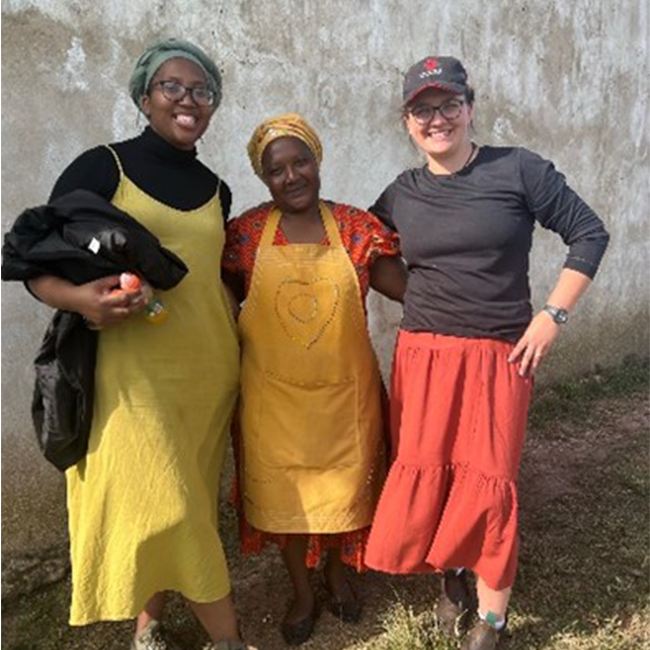
EWT Vulture Safe Zone field officer teaches herself Xhosa to better communicate with local communities

EWT Vulture Safe Zone field officer teaches herself Xhosa to better communicate with local communities

EWT Vulture Safe Zone field officer teaches herself Xhosa to better communicate with local communities

By Danielle du Toit


I am of the strong opinion that ‘we only fear that which we do not know’.

Take spiders for example, I’m sure they give most people the heebie-jeebies, but read more about them and you’ll learn that South Africa has over 2,000 species of spiders, but only three of these species can cause major health issues from a bite (that piece of information didn’t help me either, but it did give me a small comfort knowing that the likelihood of a spider trying to kill me in my sleep is next to zero).  My point is that if we approach situations in which we allow fear to blind us then we miss out on, at the very least, a learning experience, and at the most, a chance to be more than what we thought we were capable of.

Since joining the Endangered Wildlife Trust’s Birds of Prey Program, I have worked extensively in remote areas, often on my own.  In a country where safety is often a concern about a woman working alone in the field, I’m often told to avoid being in areas with no network coverage (what if I get a flat tyre and can’t call someone?), places where I’m the only woman (what if there’s only men and they threaten me?) and where I’m far off the beaten track (how can anyone help me if I’m in the world’s armpit?).

I am quite aware of the threats to my safety, especially at a time when gender-based violence is a concern.  But,  these concerns are not going to stop me from doing my job. The day I let fear stop me from doing it, is the day I hang up my khakis. So, for those who are scared, I urge you to read further, because these are my experiences; encounters I wouldn’t trade for the world.

Among the  extreme remote areas I have visited and experienced include parts of the former Transkei region of the Eastern Cape, the Lesotho highlands and small towns in the Northern Cape.

When I travelled to the Transkei for community outreach and vulture conservation awareness about birds of prey last year, I challenged myself to learn how to speak basic Xhosa so that I could better communicate with the local community.

Luckily, I have a friend that has kept me in line since Grade 6 and she taught me some ground rules about Xhosa. Most importantly is that Xhosa is a language of clicks. The ‘c’ sound is a click pronounced when the tip of the tongue is pressed against one’s teeth. The ‘x’ click is pronounced by pulling one’s tongue down from the back of your palate. The ‘q’ sound is pronounced with the tongue pulling down from middle of the palate and should make an echo sound in your skull, deafen you even, if you’re doing it right. After weeks of practicing and Hlumela sending me voice notes mostly consisting of her laughing at my ‘whiteness’ and coaching me, I was finally able to, with confidence, introduce myself to people: “Molweni. Igama lam nguDanielle. Niyawundi xolela ndyizama uthetha isiXhosa” (Hello, my name is Danielle. I must apologise to everyone; I’m trying to learn to speak Xhosa.)

Hlumela said I should add: “Ayihambi kakuhle”. It’s not going well.

When the Endangered Wildlife Trust’s Birds of Prey team visited a local community and their chief in the former Transkei in July 2023, I was instructed to firstly, wear a skirt to the chief’s place, secondly, to listen intently while the chief or elders speak. Thirdly, I was told to NEVER say no to the bread. This was more of a private notation by one of our colleagues, Nosi, who was actually just telling me that the bread is so delicious you can’t possibly turn it down.

We were in the area to do community outreach and awareness raising about vulture conservation with the CEET (Conservation Exposure Education and Training) and Meat Naturally.

I was on my best behaviour until a fight broke out between the chief’s wife and one of her chickens.  The angry woman had proceeded to line that chicken up in her sights and kick it a good ten metres in a perfect arch off her stoep (verandah), her slipper following suite. I don’t know where the Springboks are recruiting their next flyhalf, but I could point them in the direction of her house. The chief, telling us to ‘hleka, hleka’ (laugh, laugh), followed this incident with an opening prayer before mentioning something about the presence of Mlungus (white people). My Xhosa is not advanced enough as yet to understand every word, but as it turned out, the chief was happy about our work in the area. In fact, he wanted us back as soon as possible.


The Northern Cape is a far cry from the highlands of Lesotho, or the rolling green hills of the Transkei. It is vast area known for its red sand and Camel Thorn trees. The roads are straight, cutting through an arid landscape, and the people are not to be trifled with.

My first trip to the Kalahari was with the EWT’s Ronelle ‘make a plan’ Visagie, who has been doing raptor conservation and extension work since long before I was born. We’d been monitoring White-Backed Vulture nests along the Molopo River and had time to pop in to see a local landowner she’d known for years. My first impression of Kallie had a lot more to do with the .38 revolver on his hip than anything else. He welcomed us into his kitchen for a cup of strong coffee.  There I was greeted by a black cat with half an ear and scars on his face; a CV of sorts.  Funny, I thought, how our animals so reflect their human owners. Kallie had a tough exterior. His face had been brutalised by the sun, giving it the look of weathered leather, but his eyes were laser focused. Although not a tall man, he carried himself in a manner that made him appear larger than life and, if I’m being perfectly honest, a little intimidating.

The reason we had gone to see Kallie was because he had threatened to shoot the vultures as they were a threat to his lambs. Ronelle simply said: “Ag Kallie, moenie die aasvoëls dood maak nie, asseblief” (“Oh Kallie, please don’t kill the vultures.”).  With those simple words,  that man melted like butter and it occurred to me then that as tough as someone may seem and as difficult as they may try to be, when Ronelle spoke to them in the way that she did, he felt heard and seen, and gave up the fight right there. I guess that’s what we all want.

Culturally speaking, I am a white woman who works in rural South Africa. In my line of work, I have met so many people, ranging from Xhosa Chiefs and Basotho shepherds to Kalahari boers.  The people I have met have one thing in common:  we all love nature and have a passion for its conservation and protection. South Africa is a rare place where diversity is the norm. We have 12 official languages, including sign language. This excludes the dialects, cultures and subcultures. We have a rich history that can fill libraries with tales from the lush Bushveld to the dry Kalahari, from the Cape of Good Hope to Egoli (Johannesburg). South Africa is not just one thing. Nor are South Africans. If we are so surrounded by differences in our everyday lives, why do we fear them?


My daunting first Vulture poisoning as a new EWT field officer

My daunting first Vulture poisoning as a new EWT field officer

My daunting first Vulture poisoning as a new EWT field officer

By Kyle Walker, field officer in the Birds of Prey Programme and Carnivore Conservation Programme


It’s my first week working for the Endangered Wildlife Trust in April 2023 and I’ve just moved to the Lowveld from the Cape. The temperature in the Mopani veld is beyond uncomfortable and much to my surprise, I’m missing the Cape winds.

Having just secured a field officer position with the EWT, I am aware that it is only a matter of time before a vulture poisoning event occurs. It will be my job to respond to these events in future, although, up to this point I have only ever seen photos and videos posted on social media. My days of being an arm-chair warrior are about to change.

Mid-way through my morning meeting I’m told that the rangers in Kruger National Park’s, Mooiplaas section (or Beautiful Farm in English), have discovered a poisoning scene with an unknown number of dead vultures. The information trickles in throughout the next hour as we race up north with our mobile veterinary trailer, the EWT’s Vulture Ambulance, in tow. It sounds as if only a couple birds are still alive, but we are prepared to treat as many survivors as possible. It’s a long drive and I have time to reflect upon what I’m about to see. Thoughts like – how am I going to hold the vulture? Will I get bitten? What happens if I come in to contact with the poison? Will I cope with seeing a lot of dead animals? Will I get there in time to save a few survivors? All these thoughts consume my mind, but I sit back and concentrate on the drive ahead. After all, what’s the use if I don’t arrive at the scene in one piece.

We drive through the Phalaborwa gate with a quick wave to the guards. This is not the first time they’ve seen this vehicle.  John Davies, our Raptor Conservation and Research Project coordinator, as well as my predecessors, have been attending vulture poisonings in this area since 2014 and there are not many people better equipped to handle the situation ahead.

Unlike the slow-moving cars filled with eager-eyed tourists, ours darts past with little time spared to view the herds of Elephant and Buffalo. It’s a strange feeling knowing that I’m no longer on a tourist permit and that the lives of a few animals now hang in the balance of our arrival. Up the H14 road towards Mopani, hook right towards Letaba and a further 15 km along the dirt road to the scene.

We arrive at what looks to be a very peaceful dam. An Elephant bull is slowly wading through the water and a Marabou Stork is perched atop a Leadwood tree. Our vehicle pulls up to the ranger’s vehicle and we jump out to greet everyone and get the lowdown. The area adjacent to the dam is completely open and as I get my bearings I start seeing the aftermath of the poison.

Strewn around the area are small, feathered carcasses. A Tawny Eagle below the giant Green Thorn tree, three White-backed Vultures below another tree, a Lappet-faced Vulture facedown in the open.


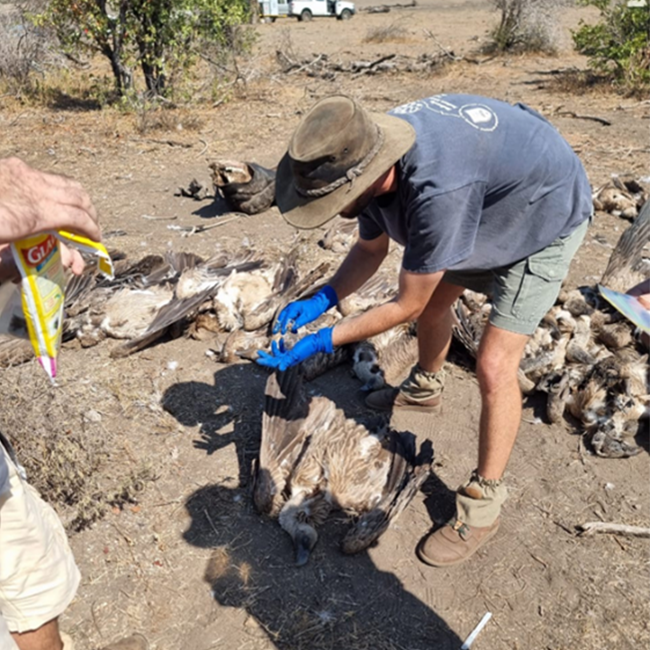
But, first things first, there are two very weak White-backed Vultures lying in the shade in front of us. John sets about mixing an activated charcoal mixture while instructing me on how to hold the vultures safely. Holding birds is not new to me, but never have I held one this size. With the vulture cradled in my arm and its head firmly in my hand, we begin administering fluids. The fluids are used to flush the remaining poison from the bird’s system. It is not the final solution, but it does allow us time to transport them back to a veterinary facility where they will receive the necessary care and attention. With both birds safely stowed in travel boxes, we move on to the cleanup, intermittently checking in to keep the survivors hydrated.

The scene was worse than expected.  A 500 metre radius around the poisoned Buffalo carcass was searched and the field rangers are now unloading carcasses by the wing-load. We line the birds up and group them by species. It’s a hammer blow to the senses. Everything smells rancid. Some carcasses are fresh, and others are a few days old. One by one we photograph each of the 80 dead birds before pilling them up to dispose of everything. Wood, diesel and carcasses make for one big bonfire, but its not the type I enjoy watching.

With the area cleaned up we head home with the two rescued vultures. I’m burnt, dehydrated and emotionally drained. The only thing keeping my spirits intact is the hope that these two vultures make a recovery and return to the African sky.

One month later and I’m standing in Moholoholo Rehabilitation Center with our two vultures looking fit and healthy. They have made a full recovery and it’s finally time to release them. We fit each bird with a GPS satellite tracking device which we will monitor to help locate future poisoning events in the Greater Kruger National Park region.

Scenes like these have become an all-too-common feature of conservation throughout Africa. Although there have been significant inroads made regarding the treatment of poisoned wildlife, the locating of poison sources, and the management of poisoning scenes, there is still significant work to do. One positive is that, should the severity of these poisonings be controlled, and their frequency reduced, we can still maintain viable populations of avian scavengers throughout these vast landscapes.

Two rehabilitated Vultures released by the Birds of Prey Programme in Mokala National Park

Two rehabilitated Vultures released by the Birds of Prey Programme in Mokala National Park

Two rehabilitated Vultures released by the Birds of Prey Programme in Mokala National Park

By Ronelle Visagie, Birds of Prey Programme.

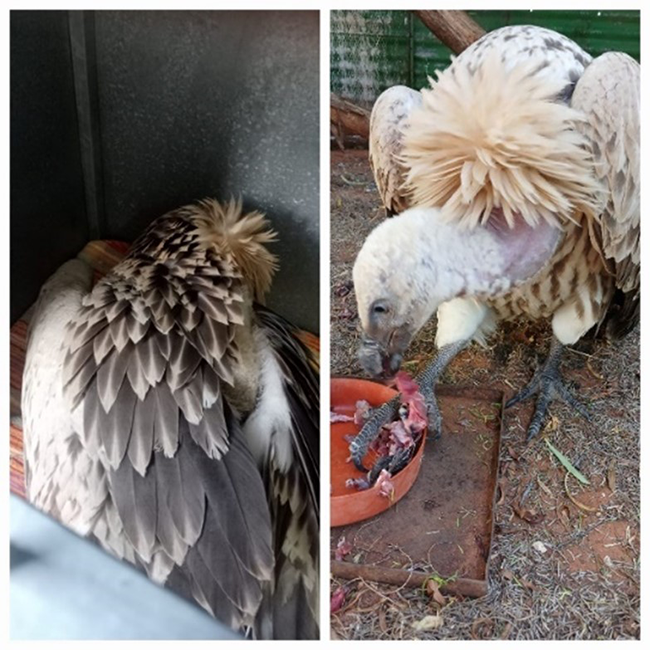
Neska on the day she was confiscated (13 January 2024) and a week later.

In December 2023, I fetched an injured White-backed Vulture from Kimberley Veterinary Clinic.  The bird was found somewhere in town and had a broken leg.  The bird was in an excellent condition and was eating well.  Its leg was pinned by Dr Burger.  From the start this vulture was very feisty so we decided to call her “Kwaaitjie” (bad girl).
Once home we put her in a deep crate as the orders from the vet were to keep her still. Two days later she was able to sit on the side of the crate and was ready to jump down so we moved her to a  small aviary where she could be on the ground and still not move too much.  Kwaaitjie must have decided it was too boring for her to be confined and not move around too much, so she took it upon herself to remove the pin from her leg – only eight days since the operation.

Because of this I contacted the Kimberley Vet Clinic and explained the situation.  Following a discussion, it was agreed that Kwaaitjie be left where she is as the risk of injury was too big if we transported or handled her.  I had also promised to take her to the Clinic if something happened to her leg.

An X-Ray of her leg two weeks later showed she was on the mend.  After being kept in a small enclosure for another two weeks, she was moved to the large aviary where she started to fly.

Barely a month later, in January 2024, I fetched a Cape Griffon from the Kimberley Veterinary Clinic that had been confiscated by police in a township near the Northern Cape town.  The police had taken the bird to Dronfield to be released. It was then that Aneska Almendro, working for De Beers at Dronfield, saw that the bird needed veterinary care and took her to the Clinic.  The Griffon was in a severely stressed condition, and the vets had to put her on at least two drips to save her life.


Part of a large group of vultures at the waterpoint.

Neska on the day she was confiscated (13 January 2024) and a week later.

After collecting her, I put the Griffon, which we had named Neska, in a large aviary so that she could walk and stretch her wings.  But, she refused to move for the first two days. This might be because of the way she was treated before she was confiscated.  It was exciting to see her finally start walking around and stretching her wings. She was also eating well after her ordeal.

Both vultures recovered very well prompting our decision to release them back into the wild as soon as possible.  Kwaaitjie and Neska were ringed before being transported to their new home —  Mokala National Park.

On our arrival at the watering hole where vultures usually bath and drink, we were met by more than 100 of raptors at the water and in the trees.  Most of them were White-backed Vultures and at least three Cape Griffons were also seen.

When we opened the transport crates, the two birds walked out, stood for a few minutes to take in their new surrounds and took flight.

** We would like to appeal to members of the public not to keep Birds of Prey as pets.  If you see an injured or poisoned bird, call your nearest veterinarian so they can receive the treatment needed.

Battle of the Bullets: The Lead-free awareness drive by South Africans for South Africans.

Battle of the Bullets: The Lead-free awareness drive by South Africans for South Africans.

Battle of the Bullets: The Lead-free awareness drive by South Africans for South Africans.

Danielle du Toit, Vulture Safe Zone Officer, Birds of Prey Programme.

Ronelle Visagie speaking to delegates about vulture conservation

The EWT Vulture Safe Zone project objectives include reducing and ultimately eliminating the threats to vultures within project areas. Among many other dangers is lead poisoning; a serious threat to vulture populations and other species across the globe.

Poisoning in its many forms is the leading cause of population decline in vulture species. Although both intentional and unintentional poisonings have resulted in huge knocks to vulture numbers in single incidents, lead poisoning can be considered a quiet killer.  It is a  silent destroyer of which few people appreciate the serious impact it has on, for example, scavenging species like vultures.

Lead poisoning is caused when lead is ingested and allowed to enter the blood stream reaching vital organs and the animal’s bones. It can cause an array of ailments including, but not limited to, decreased coordination, decreased fertility, bone fragility, organ disease and failure and eggshell fragility.

Vultures are usually slowly poisoned by lead when carcasses of animals shot with lead ammunition are fed on by these scavenging birds, either in the veld, at carcass dump sites or vulture restaurants. The skulls of animals harvested through head shots and which have been thrown into these dump sites are of particular concern as lead fragments are highly concentrated in those parts.

Vultures are also susceptible because their entire digestive system is highly acidic (unlike humans, which have alkaline mouths and saliva). This causes the lead to break down easily into  smaller particles which are quickly taken up into the bloodstream. Studies have shown that the lead causing this poisoning is indeed from lead ammunition.

(For more on this, read: van den Heever, L., Elburg, M.A., Iaccheri, L. et al. Identifying the origin of lead poisoning in white-backed vulture (Gyps africanus) chicks at an important South African breeding colony: a stable lead isotope approach. Environ Sci Pollut Res 30, 15059–15069 (2023). https://doi.org/10.1007/s11356-022-23209-z )

The EWT’s Vulture Safe Zone project came up with Battle of the Bullets initiative to address what we call ‘the threat behind the threat’. It was established to not be prescriptive in its nature, but has rather taken the form of a round table where all role players within the ammunition and conservation circles are brought together to determine how all can benefit, or be benefitted by, opening a conversation around the latest science in conservation and lead-free bullet ballistics.

In February 2023, the EWT and partners, BirdLife South Africa and SA Hunters, with major input from our ballistics specialist, Kobus du Plessis, hosted the 3rd Battle of the Bullets at the Rooifontein Shooting Range in Kimberley. This location was chosen because lead poisoning of the resident vulture populations was shown to be some of the highest in the country.


Attendees at Battle of the Bullets in Kimberley

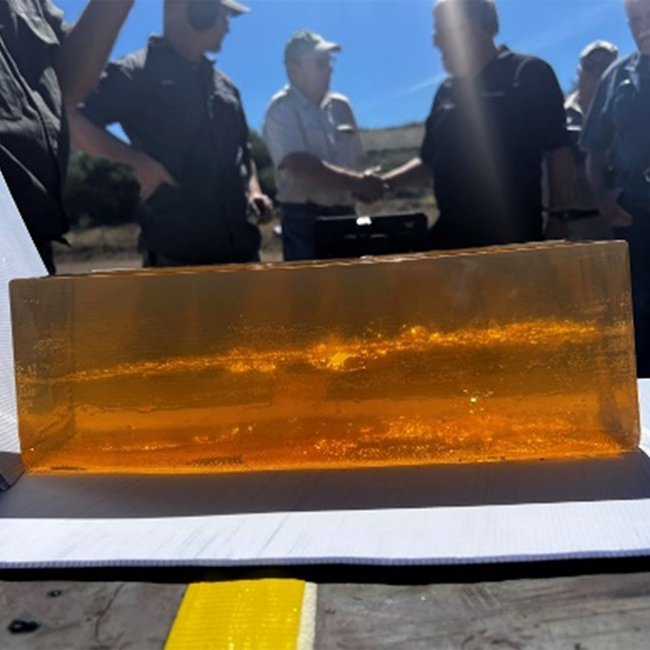
Gelatin targets are used to visibly show the bullet energy transferrence and trajectory

Ronelle Visagie presenting speaking to delegates about vulture conservation

The day started with presentations from the EWT’s Ronelle Visagie who spoke about her work in vulture conservation in the Northern Cape, followed by Linda van den Heever of Birdlife SA who presented her study on lead poisoning in vulture species. Schalk van der Merwe, formerly of the Endangered Species Unit, discussed what to do if one came across a potential poisoning.

Linda van den Heever’s presentation was hugely important as it not only simplified the jargon used in science for the average person, but also revealed just how bad the lead poisoning situation is. This then begged the question, if lead is so bad, what are the alternatives?

For many years, lead free ammunition and bullets have been assumed to be unreliable, costly, and inaccessible. Many have complained that the bullet does not perform according to what the user needs. However, we are now seeing a steep increase in the quality of lead-free ammunition. South African manufacturers are testing, retesting and constantly improving their products for the South African hunter and shooter — for South African conditions.

Kriek Bullets and Impala Bullets demonstrated different ammunitions on different targets to show just how well they performed under various circumstances – from distance, to accuracy, to impact. They tested lead ammunition versus lead free ammunition in each demonstration. It was easy to see that the bullets were performing well in every scenario presented and showed that users can have peace of mind when choosing to use lead free alternatives.

The Battle of the Bullets not only provides the latest information and science on lead poisoning and lead free bullets to attendees, but also highlights the link between vulture conservation and the hunter.  February’s event once again proved that by leaving assumptions at the metaphorical door, and entering into the day with an open mind, we could all learn something new while supporting conservation efforts and local manufacturers.


Special thanks to Ekapa Mining, Esther van der Westhuizen, Ruan Maré and their team for hosting the day at Rooifontein Shooting Range and for your support of our event. 

Cobus du Plessis discussing the various types of ammunition