Help us  
 lost species

Donate today  

Taking Flight over the Karoo Vulture Safe Zone: 5 years later

Taking Flight over the Karoo Vulture Safe Zone: 5 years later


Taking Flight over the Karoo Vulture Safe Zone: 5 years later

By Danielle du Toit, field officer Birds of Prey, Endangered Wildlife Trust.
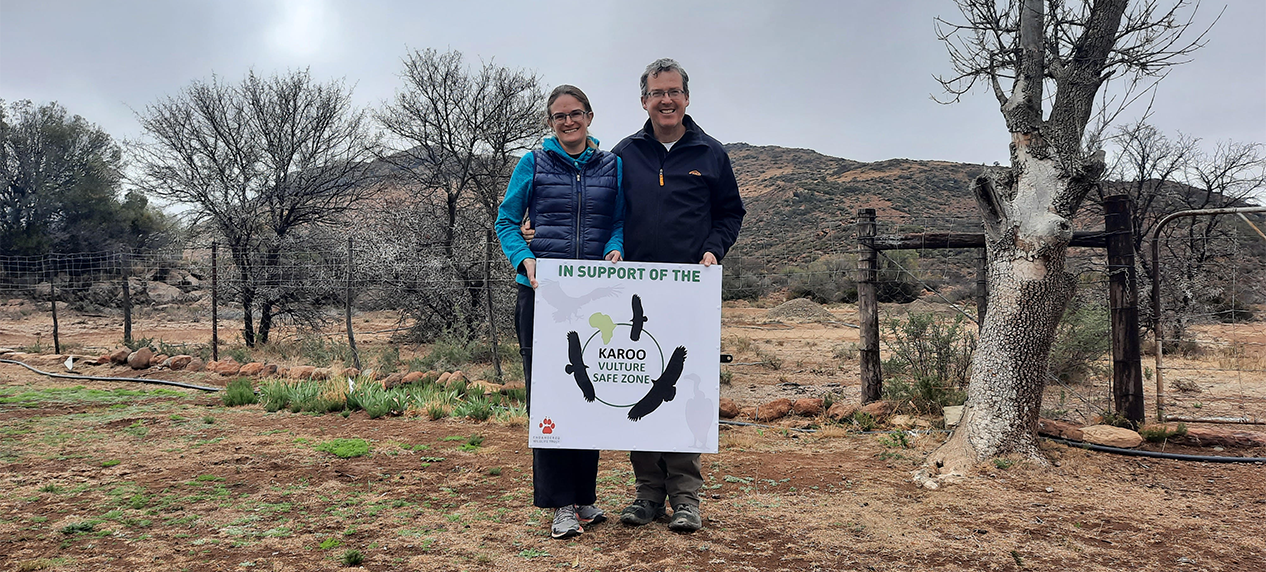
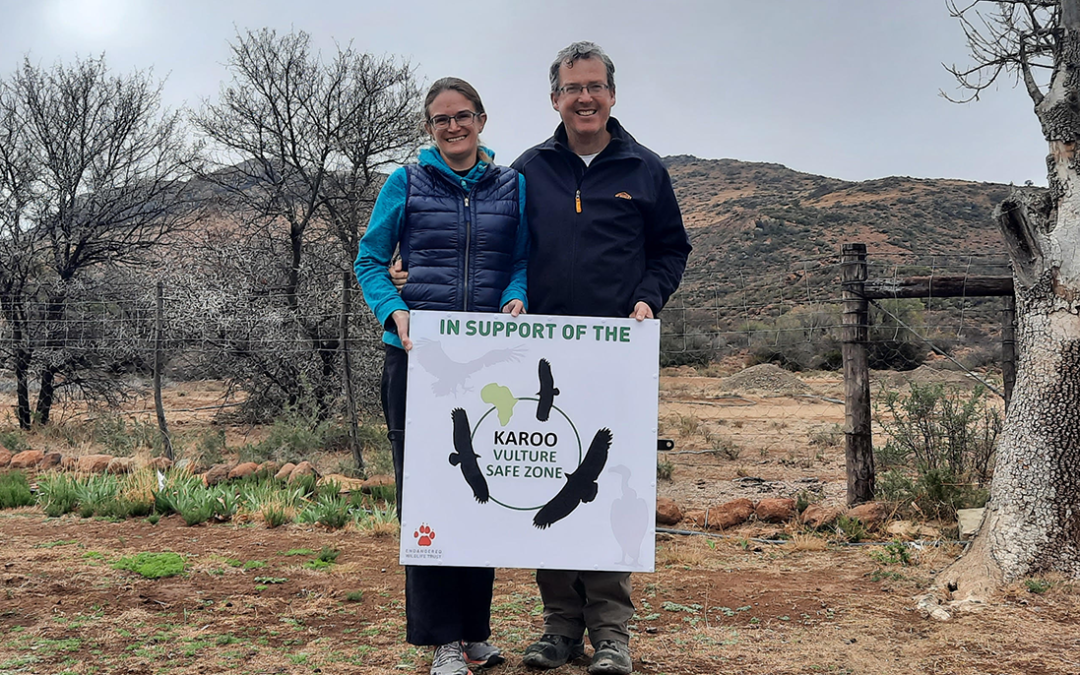
Returning Cape Vultures (Gyps coprotheres) to their historic breeding and roosting sites has been a dream of Karoo farmers for many years.

It was through interaction with the Endangered Wildlife Trust that the Karoo Vulture Safe Zone came into being in 2019. The project, which is a practical example of landscape conservation of a species, aims to cover 23,000 square kilometers. It includes three national parks and the largest protected environment in South Africa, the Mountain Zebra Camdeboo Protected Environment. It was implemented in partnership with SANParks, the Mountain Zebra Camdeboo Protected Environment and SANParks Honorary Rangers, and has received seed funding from the Rupert Nature Foundation and further funding from Cennergi and the Charl van der Merwe Trust.

To date, 95 farmers have dedicated their properties to becoming Vulture Safe Zones, creating an area of more than 700,000 ha for vulture conservation. Dedicating or signing up one’s property for a Vulture Safe Zone means that they are committed to reducing, as far as possible, threats to vultures within the confines of land under their ownership.

In creating the Vulture Safe Zone, two options were considered—reintroducing Cape Vultures to the Karoo or creating an area that is safe for the raptors. Unfortunately, reintroduction was not an option at the time due to the exceedingly high cost of physically bringing in the birds and habituating them, without any assurance that they would stay. More importantly, however, was the need to ensure safe breeding, roosting and foraging ranges for them outside of protected areas.

Vultures are referred to as nature’s ‘clean-up crew’, and because of the importance of their role in the ecosystem and the benefit to human health, they are often used as a flagship or umbrella species through which we can conserve biodiversity. By implementing conservation interventions to support the survival of vultures across large areas, we can benefit all species. This includes other birds, mammals, reptiles, amphibians, invertebrates and even plants.

The need for large areas to be conserved and mitigated of threats as far as possible is integral to the conservation of Cape Vultures due to their characteristically wide-ranging behaviour. Studies and GPS tracking data of fledglings have shown an average maximum distance travelled per day to be well over 250km from their nests. This age group is most likely to fall victim to threats as they are not yet experienced fliers and must compete with adults for food and roosting spaces. This is why having large safe spaces, even if it is a conglomerate of private properties, communal land and protected areas, is so important to the survival of the species.
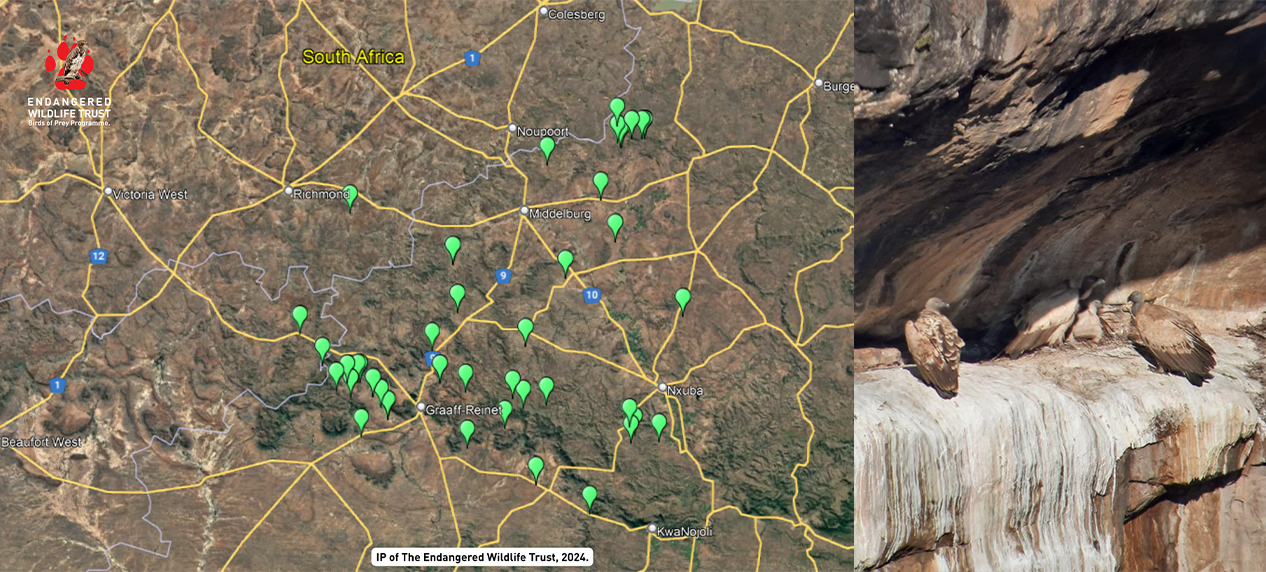
 

Left: Cape Vulture Sightings. Right: Cape Vultures on nest.

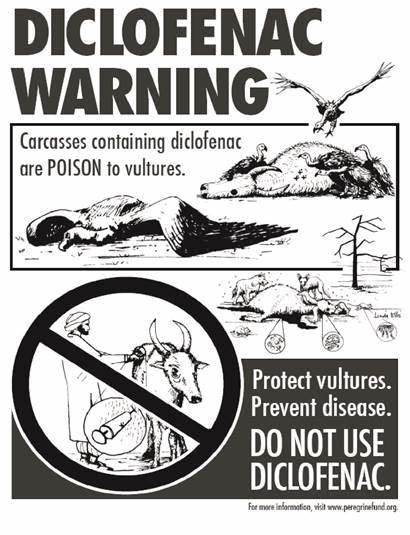
The project focuses on “working with people, mitigating threats, saving vultures”. This can only be achieved through community engagement, landowner buy-in and active mitigation of threats. These initiatives include covering or safe-proofing reservoirs to prevent drowning; changing to less ecologically harmful ways of predator control; removing dangerous chemicals from the property; and reporting wildlife injuries or mortalities caused by electrical infrastructure so that they can be mitigated. Some landowners have moved away from using lead ammunition as the fragments in the entrails or carcasses of animals shot with lead bullets can be harmful to scavenging species. Others have changed the active ingredient in their non-steroidal anti-inflammatory veterinary drugs (NSAIDs) to ensure that carcasses of animals that have been treated prior to their death are not contaminated with drugs that can harm scavenging bird species, like these vultures.

Besides the ecological importance of the Cape Vulture, this area also holds a special place for farmers and residents in the heart of the Karoo. Historically, Cape Vultures roamed the Karoo in large numbers. Many farmers have childhood stories focused solely on them. Whether it be how they would seek out their nests on horseback, climbing up the mountains that hugged the borders of their properties, or how they would simply looked up into the sky in search of a rain cloud and instead found these magnificent birds littering the air in the hundreds, stories are littered with memories of vultures.

The Karoo covers around 400,000 square kilometers of brittle ecosystems. It is an area known for its rich biodiversity with large varieties of plants, birds, insects and mammals that occur naturally on private and public land.

Through the Vulture Safe Zone relationships created between the EWT, private landowners and national parks, the project has been able to bridge the gap between agriculture, tourism and conservation. This promotes a sustainable business model for all sectors and decreases the potential of human-wildlife conflict through targeted conservation measures and holistic approaches.

The project is still in its infancy, but has already seen successes including an increase in sightings, repopulation of historic summer roosts and the willingness and eagerness of people to take part in this project in whichever way they can. The hope remains that through landscape- and farm-level threat mitigation, collaboration with all stakeholders and role players, and a multi-pronged approach driven by robust science and understanding of the species, region and people, the Cape Vultures will once again call the Karoo home.

For more information, please contact the Karoo Vulture Safe Zone Field Officer: Danielle du Toit, email: danielled@ewt.org or Gareth Tate, Birds of Prey Manager at garetht@ewt.org
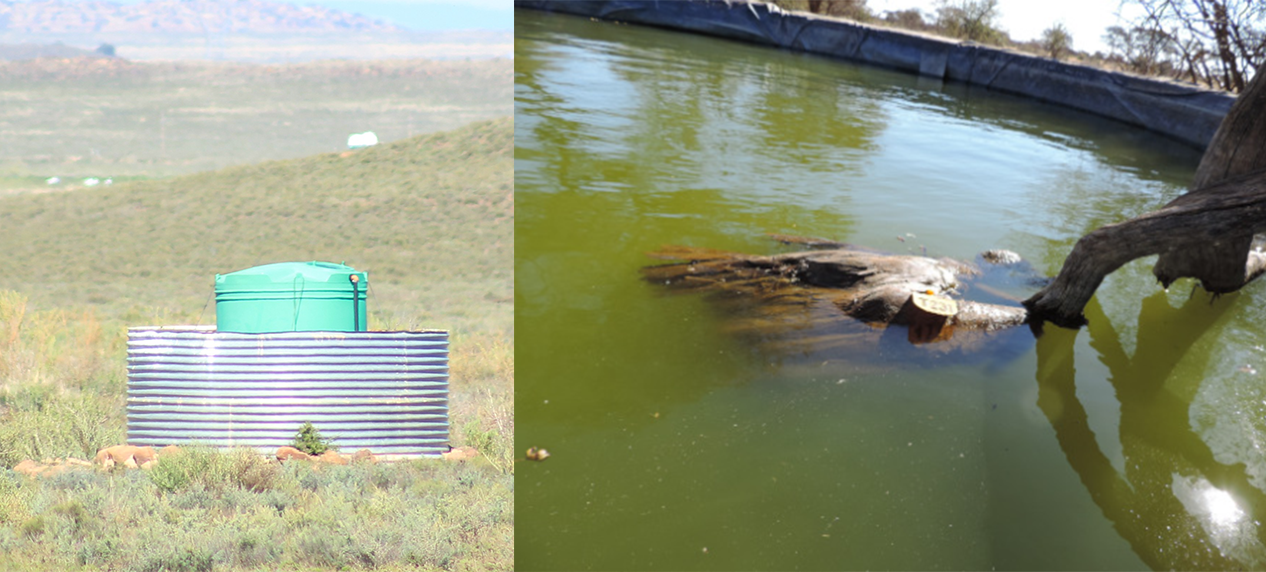
 

Left: reservoir mitigation – tanks in dams. Right: drowned vulture in Namibia
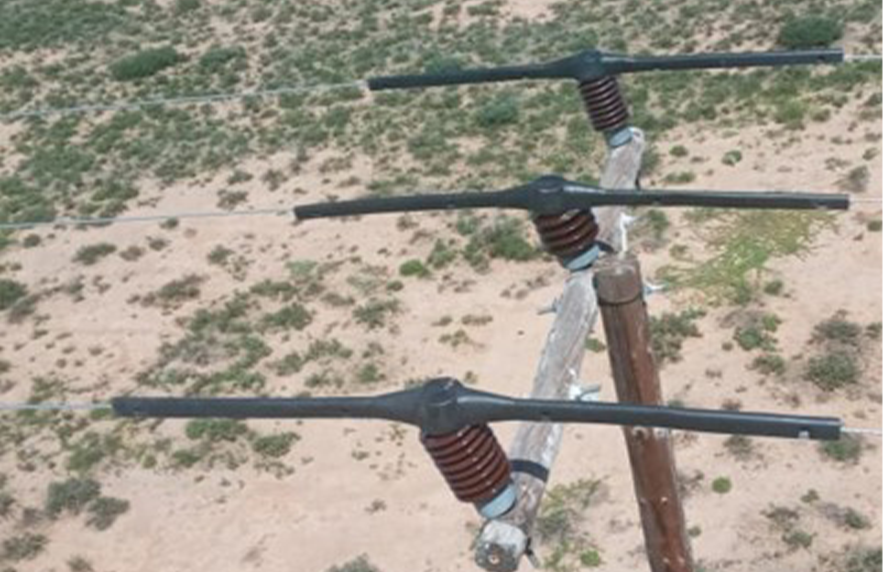
Raptor protector on powerline
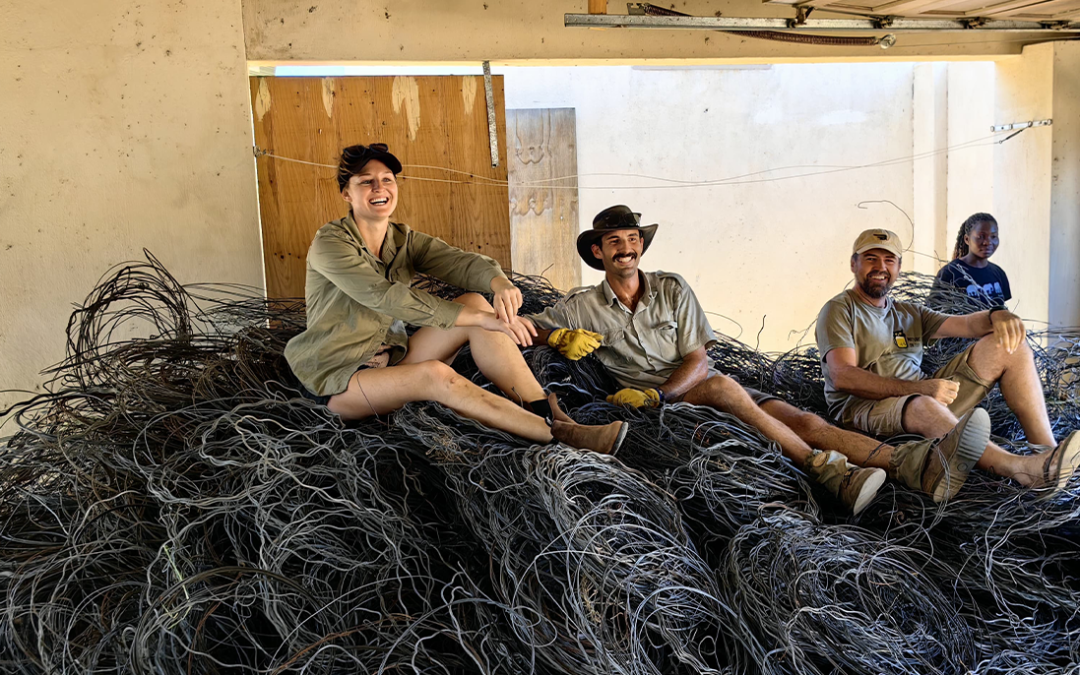
Turning Traps into Hope: Poacher’s Snares Repurposed for Conservation

Turning Traps into Hope: Poacher’s Snares Repurposed for Conservation


Turning Traps into Hope: Poacher’s Snares Repurposed for Conservation

By John Davies


Across much of Africa, snaring of wildlife is on the rise, driven by a combination of poverty, bushmeat demand, and organized wildlife crime. With economic hardships pushing more people toward illegal hunting for sustenance or profit, snares have become the weapon of choice—they are cheap, easy to set, and devastatingly effective. However, they do not discriminate, often trapping unintended species, including elephants, lions, and wild dogs. Many animals suffer prolonged, agonising deaths, while those that survive can be left with severe injuries that compromise their ability to hunt or evade predators.

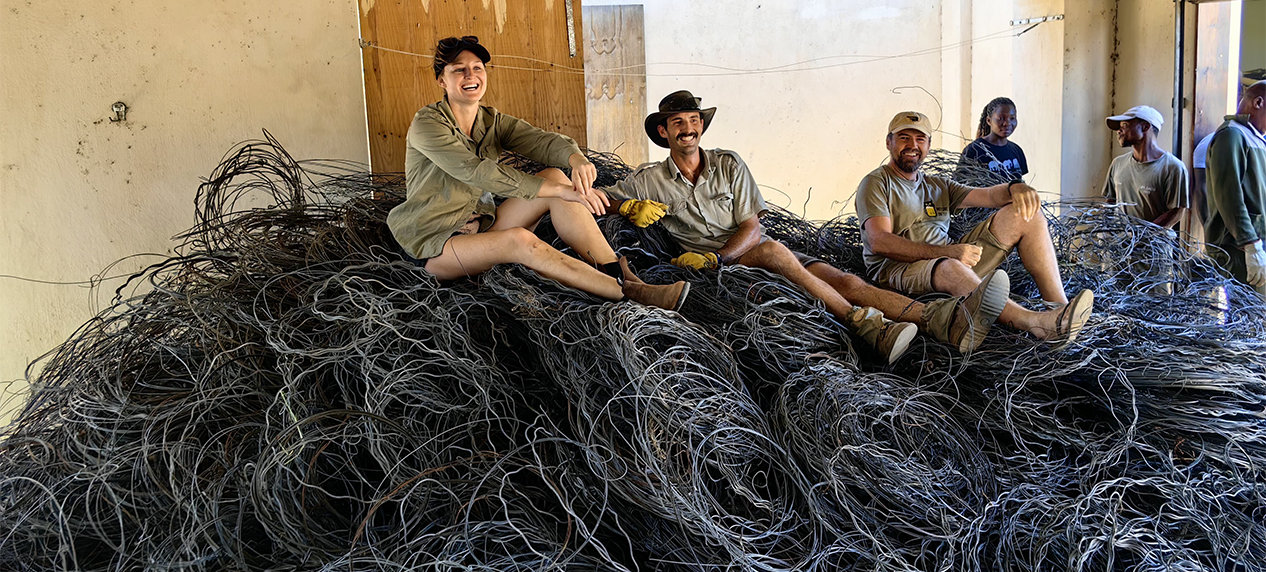
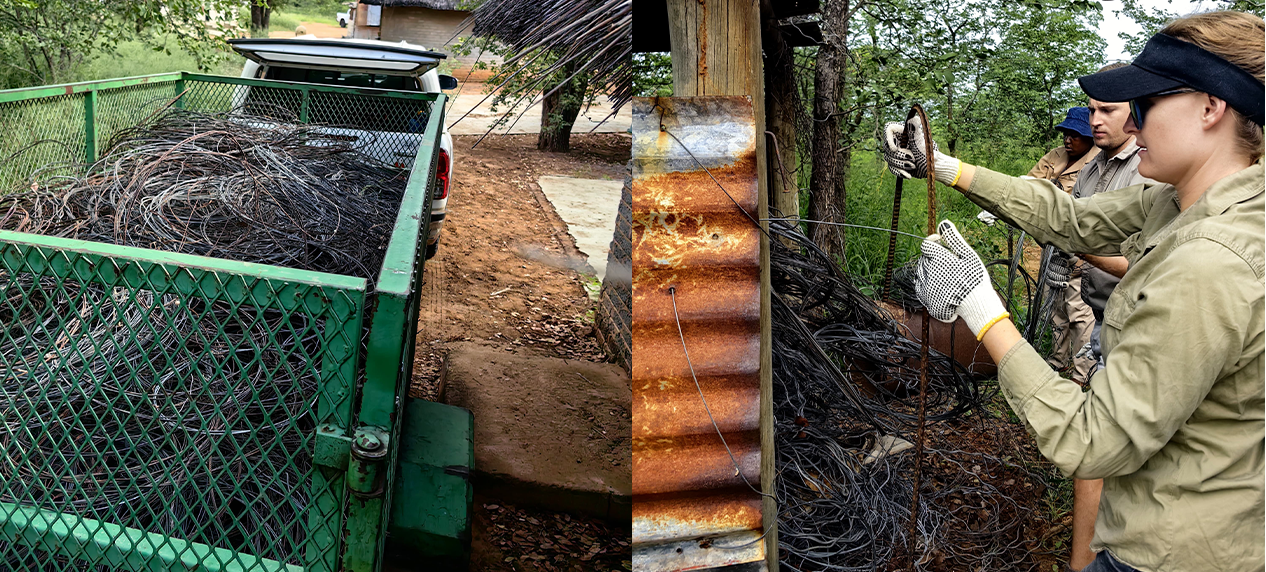
In a significant step toward protecting South Africa’s wildlife, the Endangered Wildlife Trust (EWT) recently removed 3.5 tons of wire snares from a protected area in the Lowveld region of South Africa, forming a critical buffer zone along Kruger National Park’s western boundary. These snares had been stockpiled over the last five years and had been removed during routine patrols by reserve anti-poaching teams.

Instead of being discarded, the snares have been given a second life through a partnership with Down2theWire, a local initiative that transforms confiscated poaching materials into handcrafted jewellery. This innovative project not only raises awareness about the devastating effects of snaring, but also provides funding for conservation efforts generated through the sale of jewellery and other products made from snares. Profits from the jewellery sales will be reinvested into anti-poaching initiatives, supporting rangers, education programs, and community-driven conservation efforts.

This initiative underscores the importance of sustainable solutions in wildlife conservation, proving that even the most destructive tools can be reshaped into symbols of resilience and protection.

As wildlife crime continues to challenge conservationists, creative collaborations like this offer a beacon of hope. Consumers can now play a direct role in the fight against poaching—one bracelet at a time.


Small Hands, Big Impact: A Greener Future for Lesotho

Small Hands, Big Impact: A Greener Future for Lesotho


Small Hands, Big Impact: A Greener Future for Lesotho

Children Lead the Charge in Conservation Efforts

By Danielle du Toit, Field Officer: Birds of Prey Programme


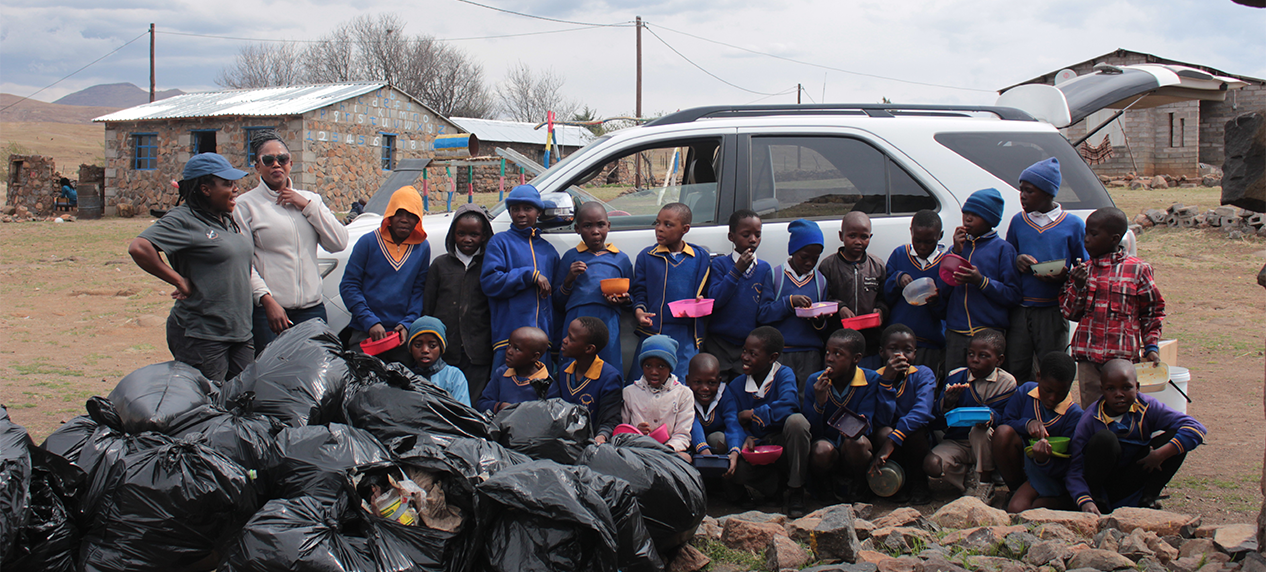
A three-day inititiative by the EWT in October brought together 65 young conservationists from grades four to six in Molumong village, Lesotho.

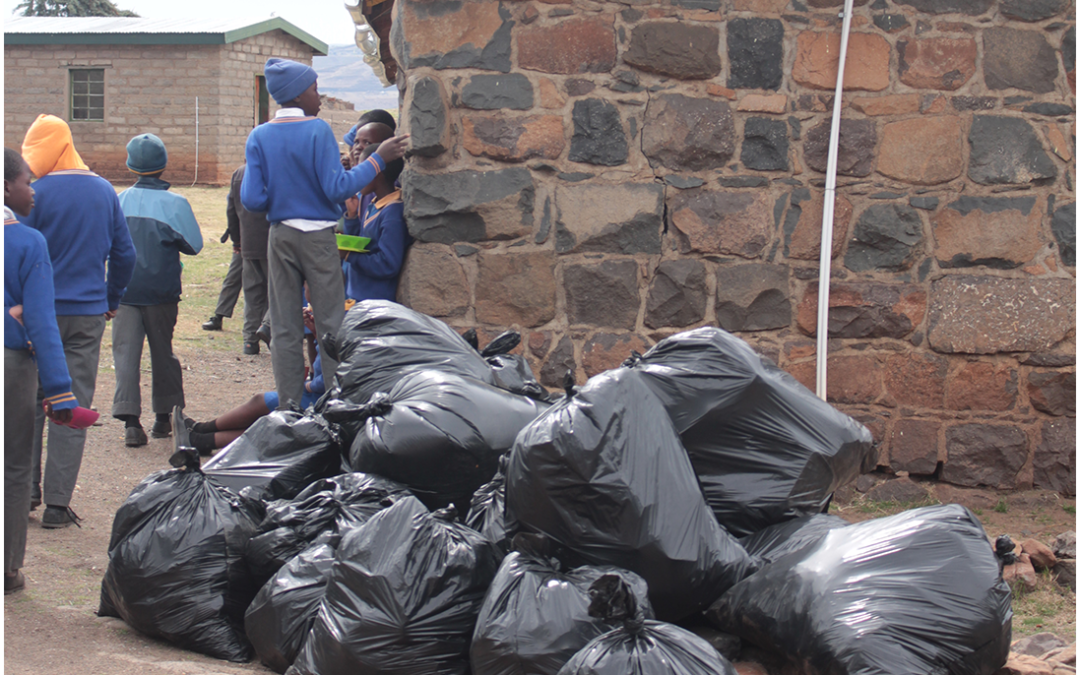
Led by Danielle du Toit (EWT Birds of Prey) and Mapeseka Makaoae (Bearded Vulture Recovery Programme Community Liaison), the children joined a litter cleanup aimed at fostering a cleaner, healthier environment for their community and local wildlife.

Supported by the Lesotho Highlands Development Authority (LHDA), the cleanup was initially planned to focus on rivers and waterways. However, a last-minute cancellation of transport shifted efforts to the school grounds and nearby mountain slopes, areas where litter risks flowing into rivers. Over three days, the children collected an impressive 96 bags of litter—38 on Monday, 20 on Tuesday, and 38 on Wednesday. The waste, primarily plastic packaging and tins, highlights a pressing need for proper refuse management in the village.

To address this, LHDA has committed to providing at least three rubbish bins for the school, with plans for additional bins in the broader community. Efforts are also underway to establish a regular refuse removal service to ensure long-term cleanliness.


Connecting Litter Cleanup to Vulture Conservation


The cleanup is closely tied to the broader conservation efforts for the Endangered Bearded Vulture, a species whose survival depends on the region’s health and cleanliness. In collaboration with Wildlife ACT and the Bearded Vulture Recovery Programme, a feeding site has been established to provide critical food sources for these rare birds whose diet consists largely of bones. The site, designed following strict vulture restaurant guidelines, includes fencing to deter scavengers and camera traps to monitor activity.

To complement this, a vulture hide—a small, unobtrusive structure—has been constructed to promote eco-tourism and provide researchers with a unique opportunity to study the species up close. This hide benefits the community by attracting visitors, creating opportunities for environmental education, and fostering a deeper appreciation for the role vultures play in maintaining ecosystems.


Nature’s Cleanup Crew Meets Future Conservationists


The litter cleanup served a dual purpose: improving community health by reducing waste and emphasising the ecological importance of vultures, often called nature’s “clean-up crew.” Through hands-on participation, children learned about the interconnectedness of their actions, local wildlife, and the environment, fostering a sense of responsibility and pride in protecting their natural heritage.

With such impactful initiatives, the future of conservation in Lesotho looks brighter—and it starts with small hands making a big difference.


Determining how Elephant impact on Vulture breeding sites in the Limpopo River valley: new research

Determining how Elephant impact on Vulture breeding sites in the Limpopo River valley: new research

Determining how Elephant impact on Vulture breeding sites in the Limpopo River valley: new research

By John Davies, Birds of Prey Programme project coordinator: Raptor Conservation Project


“Go to the banks of the great grey-green, greasy Limpopo River, all set about with fever trees, and find out.” These iconic words, published over 120 prior, are always in the back of my mind when travelling to this incredible part of South Africa.

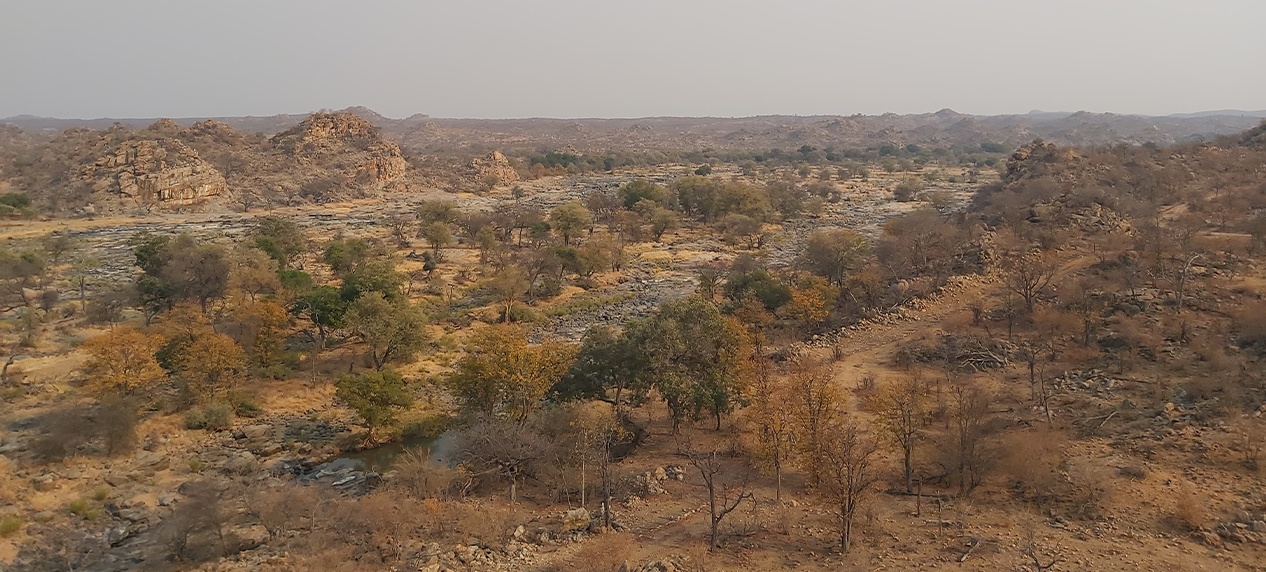
It is in some ways a surprise that the Limpopo Valley, particulary the region lying to the west of the world-renowned Greater Mapungubwe Transfrontier Conservation Area, is still so poorly known. Perhaps this has been one of the saving graces for many of the species that call it home, resulting in little disturbance throughout certain areas.

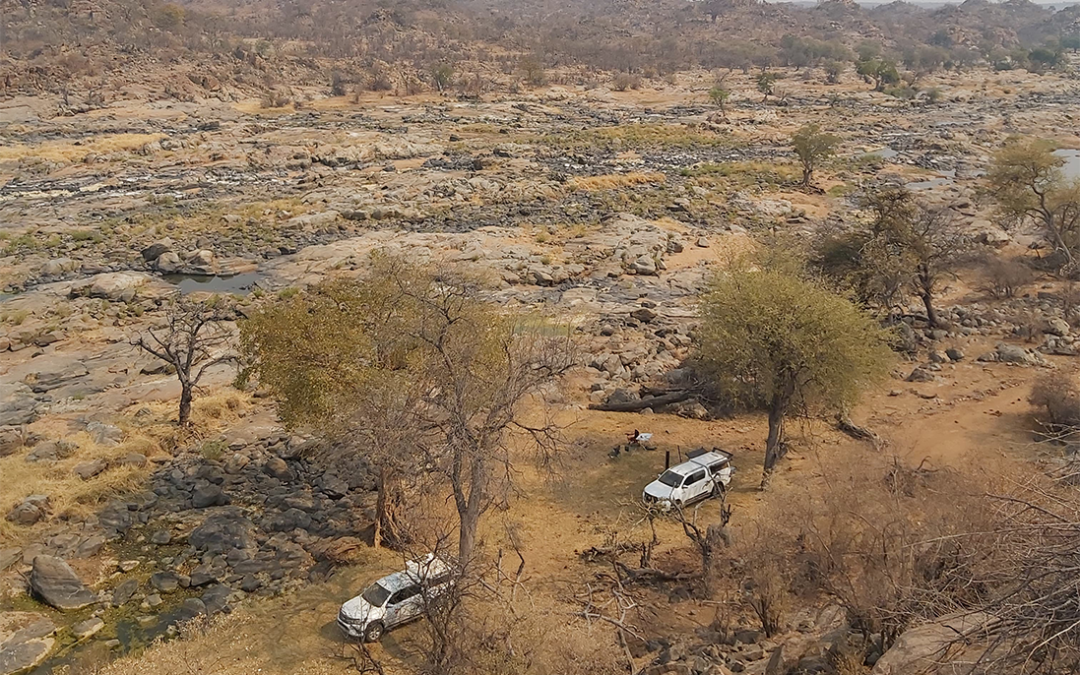
A standout feature here are the large tracts of Ana trees dotting the islands and the banks of the Limpopo River, forming ancient forests that form an important habitat for breeding White-backed Vultures, Pel’s Fishing Owls, and is even one of the only breeding sites for Marabou Stalks in the country.

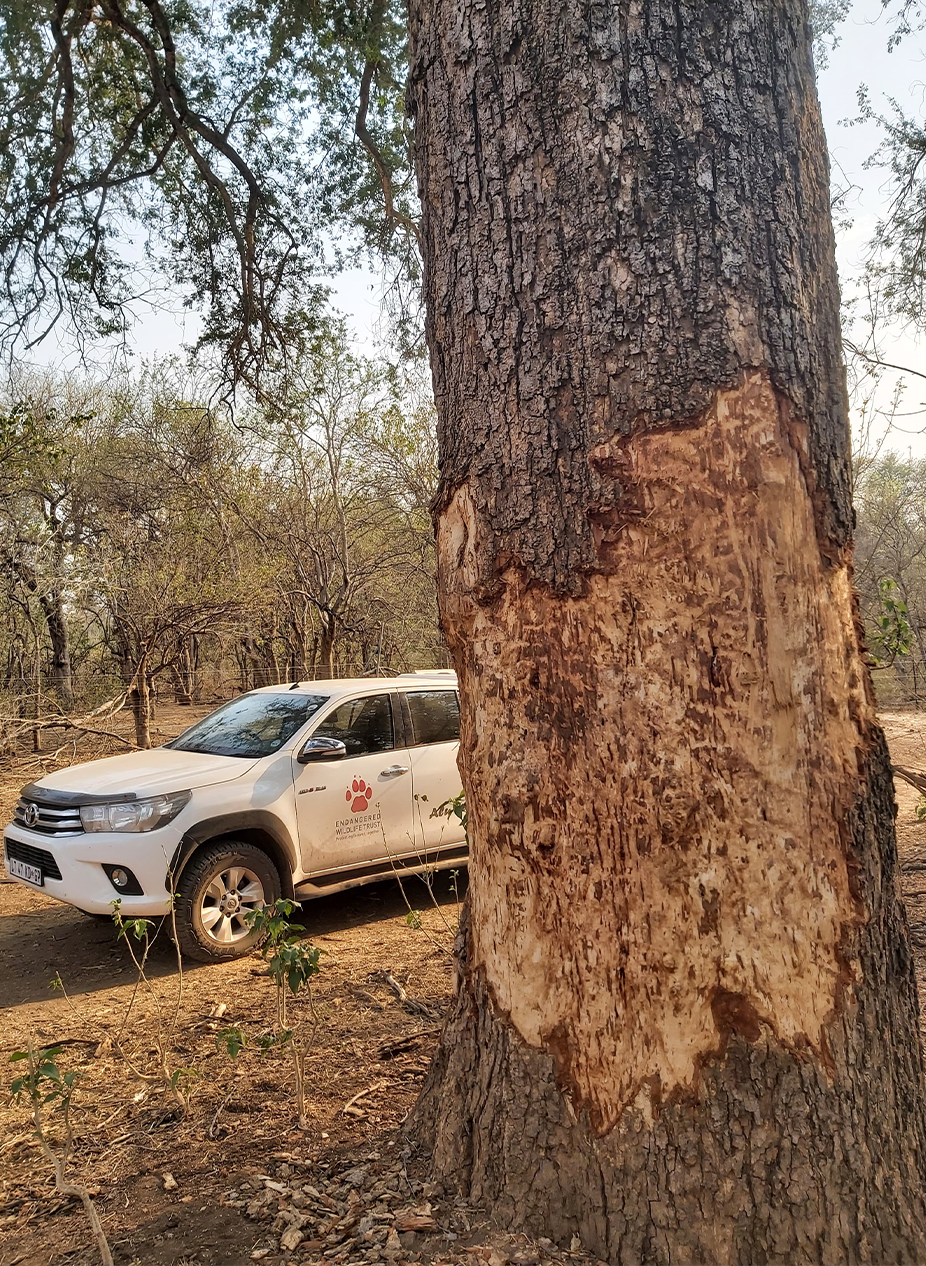
Recently, I had the opportunity to spend time with Dr Sarah Venter from the Baobab Foundation to do a preliminary investigation on the impacts that Elephant populations are having on these trees. I travelled up to meet Dr Venter in the Soutpansberg, before driving down to Ratho Bush camp. Following our arrival, we immediately spent the last part of the day searching for any Vulture nest trees, looking at whether the nest is active or not, and how much bark has been stripped from the trunk. Fortunately, many of the trees here, and a few on other properties, have had mesh wrapped around their trunks to protect them, and although this is an effective way of reducing bark stripping, it is of course not possible to do this for every tree. The recent drought in Botswana appears to have exacerbated the situation, and a similar trend has started to emerge throughout the area we visited, with landowners also expressing concern about this.

Over the next few days were spent our time walking significant tracts of river, and although it was an amazing experience, it was incredibly alarming to see how serious the situation is, with a large proportion of un-meshed trees having either large parts of their trunks debarked, or completely ring-barked. This is an inevitable precursor to these river giants’ eventual demise.

Considering the threats that species such as White-backed Vultures face at present, particularly with wildlife poisoning taking its toll on the population at a continental level, the risk of losing significant tracts of suitable breeding habitat is not something that can easily be ignored. Although this visit opens the conversation around the next steps to mitigate the loss of riparian forest in the region, there is still a significant amount of work lying ahead before we can start to restore this fragile habitat to its former glory.


International Vulture Awareness Day, Cape Vulture Conservancy

International Vulture Awareness Day, Cape Vulture Conservancy


International Vulture Awareness Day, Cape Vulture Conservancy


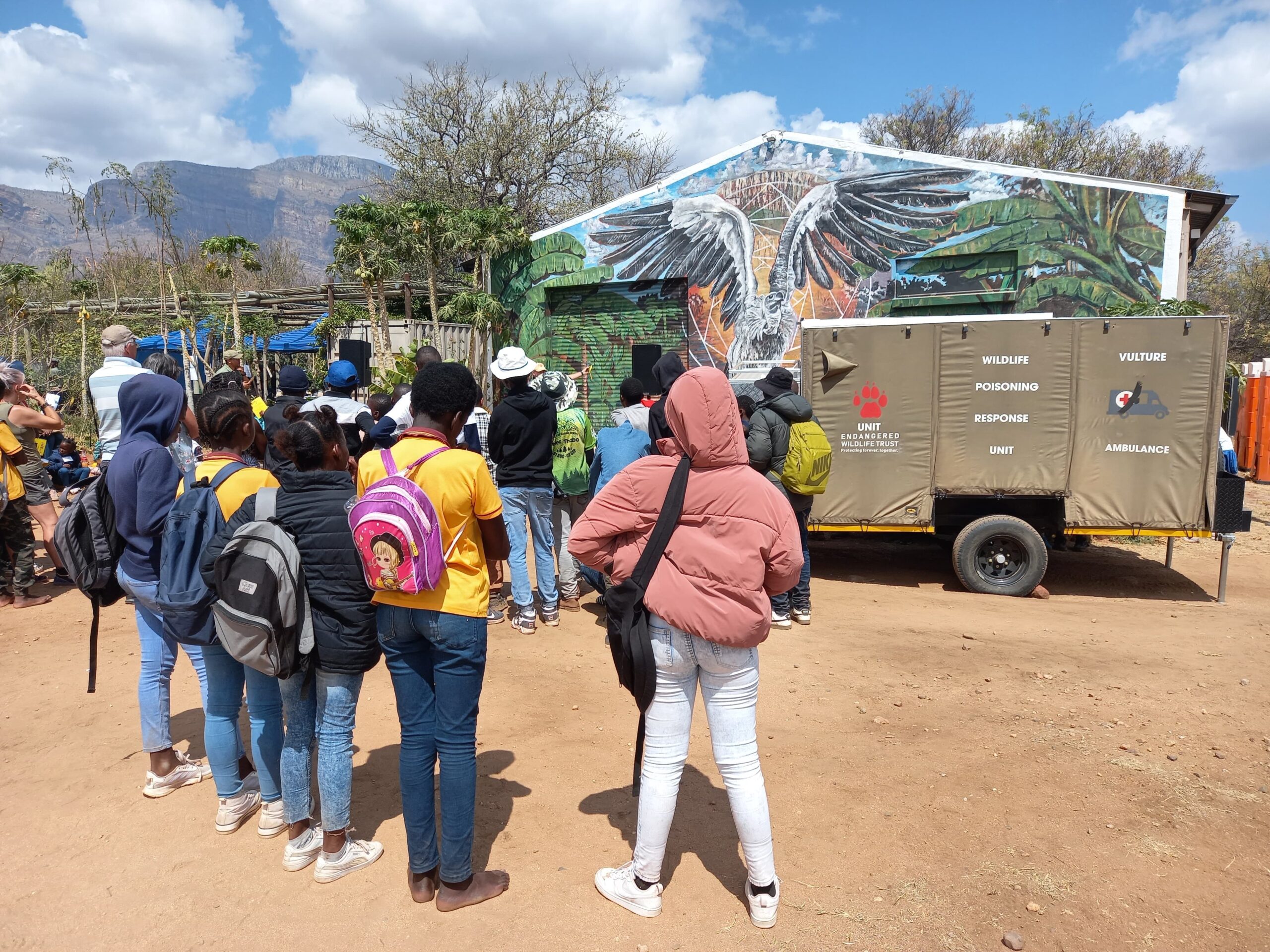
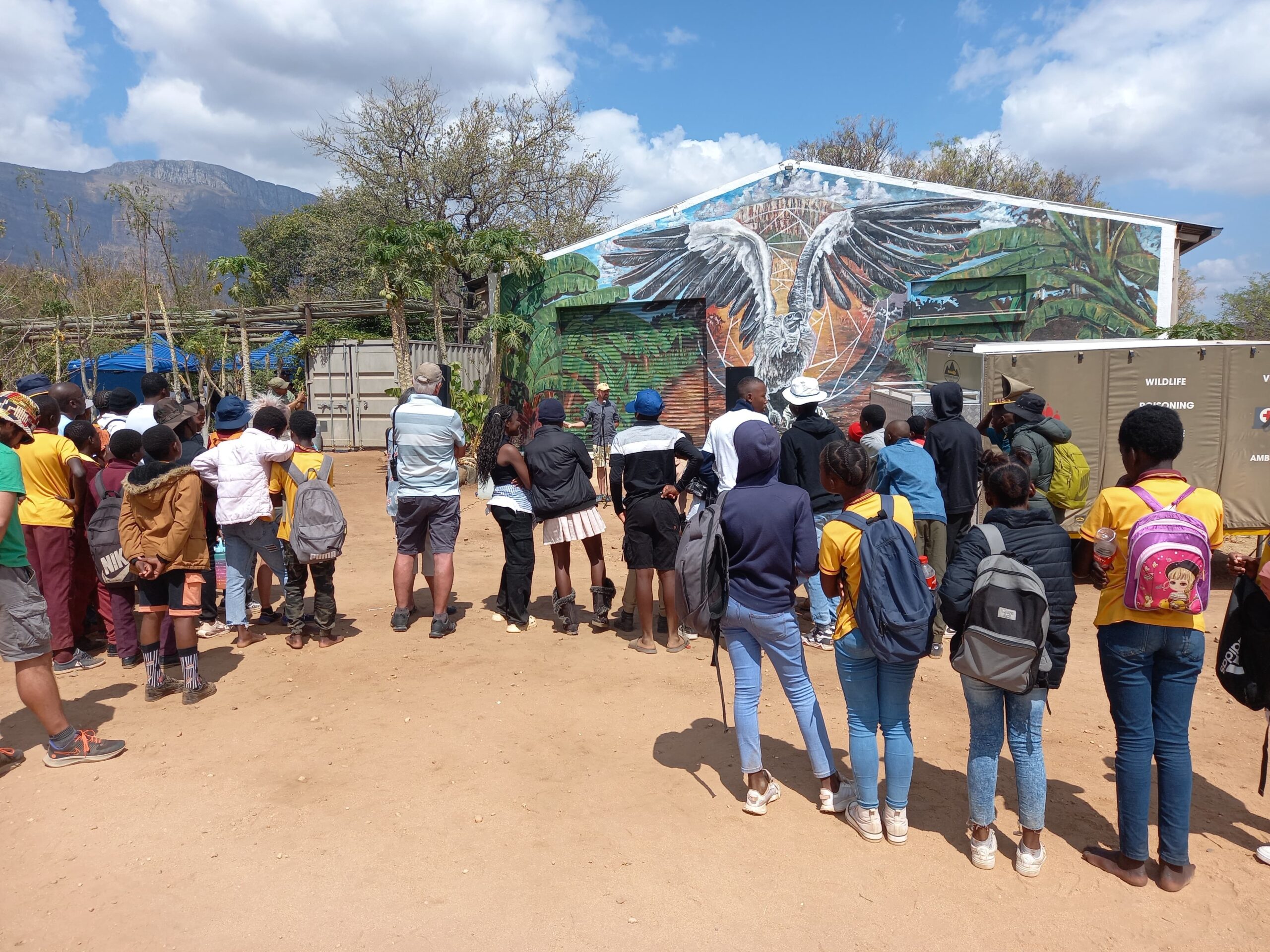
Every year, people from all around the world, come together on the first Saturday of September to celebrate internation vulture awareness day. Originally started by the Endangered Wildlife Trust and the Hawk Conservancy Trust in 2006, it has grown since inception into a global platform to celebrate a group of birds that don’t always get the attention and publicity that they deserve. This year, the Endangered Wildlife Trust in the lowveld region of eastern South Africa, joined up with the Cape Vulture Conservancy, to share knowledge and education about vultures in general, along with the threats they face, and how we can collectively work together to create a better future where the skies are filled with vultures.

Cape Vulture Conservancy plays host to the second largest colony of Cape Vultures Gyps coprotheres globally, and as an organisation, they have prioritised the long-term conservation of the colony, and really making this the core of what they do. With over 700 breeding pairs nesting along the cliff faces of the Drakensberg escarpment, it makes for a wonderful backdrop, and a perfect venue for celebrating such an important event.


This year, one of the major aims was to include youth from surrounding areas and the greater Hoedspruit community and afford the chance to not only get to know the property better, but also educate people regarding the plight of these special birds. With roughly 300 school kids attending, and with some travelling from as far as Selwane, to the north-west of Phalaborwa, it undoubtedly was an event that stood out as one of the highlights of the year. The day started with a fun walk covering a 5km section of the property, after which everyone could explore the permaculture gardens, several stalls from organisations such as Daktari Bush School & Wildlife Orphanage, Moholoholo Wildlife and Rehabilitation Centre, and Animal Relief for Rural Communities. After some introductory presentations from Frikkie Kotze, the manager of Cape Vulture Conservancy, and John Davies from the Endangered Wildlife Trust, everyone got treated to a snake demonstration from the Hoedspruit Reptile Centre, which was a real hit and a great way of ending the day.

The Endangered Wildlife Trust would like to thank the wonderful team from Cape Vulture Conservancy for taking the initiative to not only host and drive this event, but also commit to the long term conservation of these magnificent birds within the region.