Small Hands, Big Impact: A Greener Future for Lesotho

Small Hands, Big Impact: A Greener Future for Lesotho


Small Hands, Big Impact: A Greener Future for Lesotho

Children Lead the Charge in Conservation Efforts

By Danielle du Toit, Field Officer: Birds of Prey Programme
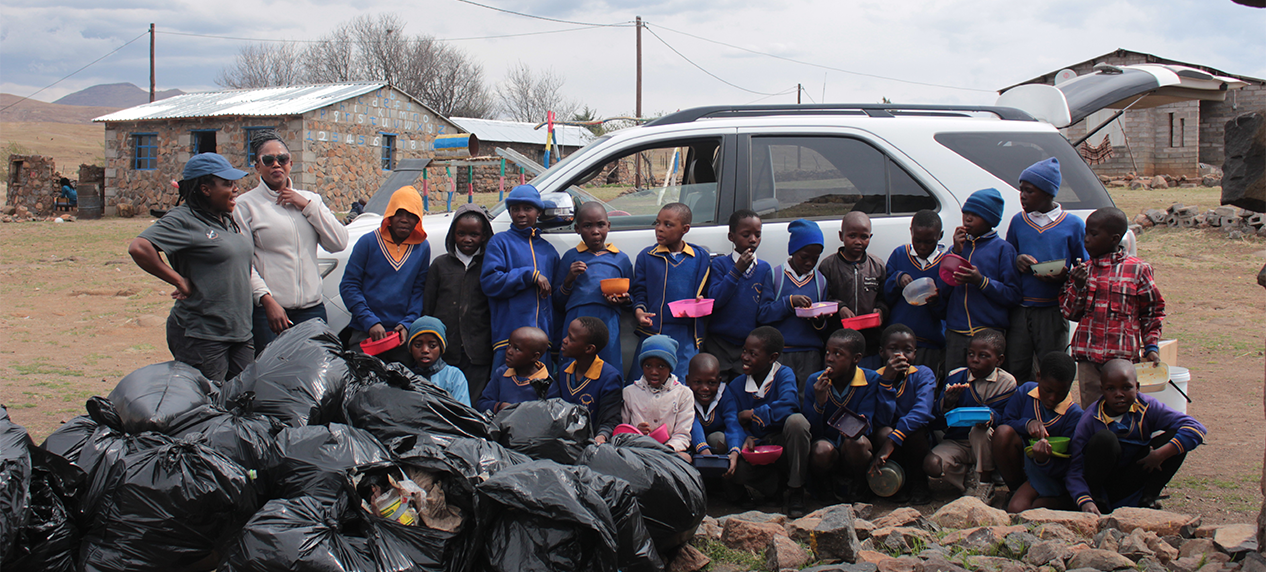
 

A three-day inititiative by the EWT in October brought together 65 young conservationists from grades four to six in Molumong village, Lesotho.

Led by Danielle du Toit (EWT Birds of Prey) and Mapeseka Makaoae (Bearded Vulture Recovery Programme Community Liaison), the children joined a litter cleanup aimed at fostering a cleaner, healthier environment for their community and local wildlife.

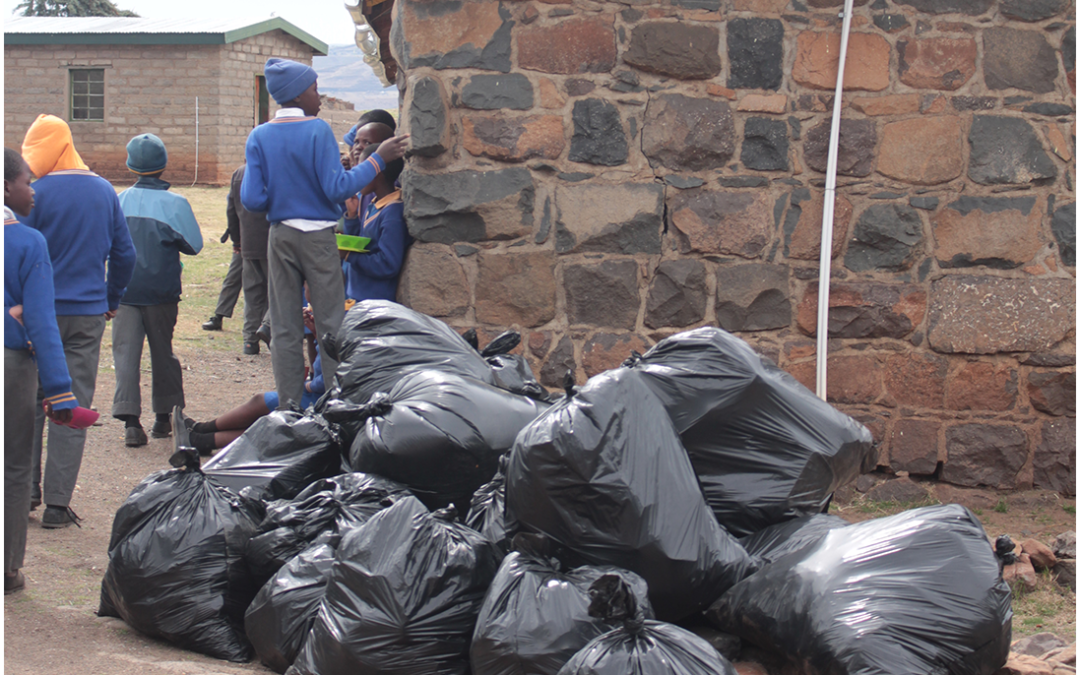
Supported by the Lesotho Highlands Development Authority (LHDA), the cleanup was initially planned to focus on rivers and waterways. However, a last-minute cancellation of transport shifted efforts to the school grounds and nearby mountain slopes, areas where litter risks flowing into rivers. Over three days, the children collected an impressive 96 bags of litter—38 on Monday, 20 on Tuesday, and 38 on Wednesday. The waste, primarily plastic packaging and tins, highlights a pressing need for proper refuse management in the village.

To address this, LHDA has committed to providing at least three rubbish bins for the school, with plans for additional bins in the broader community. Efforts are also underway to establish a regular refuse removal service to ensure long-term cleanliness.


Connecting Litter Cleanup to Vulture Conservation


The cleanup is closely tied to the broader conservation efforts for the Endangered Bearded Vulture, a species whose survival depends on the region’s health and cleanliness. In collaboration with Wildlife ACT and the Bearded Vulture Recovery Programme, a feeding site has been established to provide critical food sources for these rare birds whose diet consists largely of bones. The site, designed following strict vulture restaurant guidelines, includes fencing to deter scavengers and camera traps to monitor activity.

To complement this, a vulture hide—a small, unobtrusive structure—has been constructed to promote eco-tourism and provide researchers with a unique opportunity to study the species up close. This hide benefits the community by attracting visitors, creating opportunities for environmental education, and fostering a deeper appreciation for the role vultures play in maintaining ecosystems.


Nature’s Cleanup Crew Meets Future Conservationists


The litter cleanup served a dual purpose: improving community health by reducing waste and emphasising the ecological importance of vultures, often called nature’s “clean-up crew.” Through hands-on participation, children learned about the interconnectedness of their actions, local wildlife, and the environment, fostering a sense of responsibility and pride in protecting their natural heritage.

With such impactful initiatives, the future of conservation in Lesotho looks brighter—and it starts with small hands making a big difference.
 

Flood Brings Frogs to Life at Medike

Flood Brings Frogs to Life at Medike


Flood Brings Frogs to Life at Medike

By Darren Pieterse, Medike Nature Reserve and Ecology Manager: Soutpansberg Protected Area

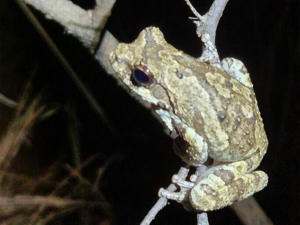
Following the recent good rains on the EWT Medike Reserve and the Soutpansberg in general, the Sand River came down in flood for the first time in two years. Almost instantly, a cacophony of amphibian calls accompanied the rising water level. Amphibians are well-known to rapidly take advantage of suitable conditions for breeding, as they never know when the next opportunity may occur, and most species’ eggs and tadpoles are reliant on water to complete their initial life stage (until they metamorphosise into terrestrial froglets that are less reliant on water). Calls are useful for researchers as each species’ call is unique, although some species, such as Tandy’s, Tremolo and Cryptic Sand Frogs, cannot be reliably told apart based on external characteristics. This means that calls or DNA are required to make a positive identification.

Amphibians play a critical role in the ecosystem. They mostly prey on insects such as the flying ants, which abounded during our survey. They, in turn, are eaten by a variety of mammals, birds and snakes. Amphibians are also a good indicator of ecosystem health. Because frog skin is very porous to allow water to be absorbed and carbon dioxide to be released (the skin of toads is less porous), frogs are sensitive to chemicals such as industrial pollutants. As such, frogs are rarely found in areas with chemical pollution.

The recent onset of frog activity was an ideal opportunity for us to assess what species occur on Medike Reserve, and to get an indication of ecosystem health. During our survey, we recorded 14 different species (although the reserve’s list currently stands at 23 species). None of the species recorded are threatened, although the relatively high species diversity does suggest that the freshwater system is still healthy. Two threatened species are expected to occur on Medike Reserve, one of which is only found on the Soutpansberg and nowhere else on earth. We will continue looking for these and additional species.

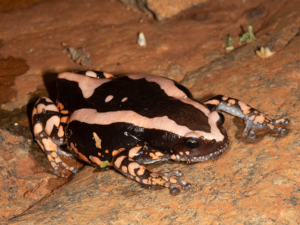
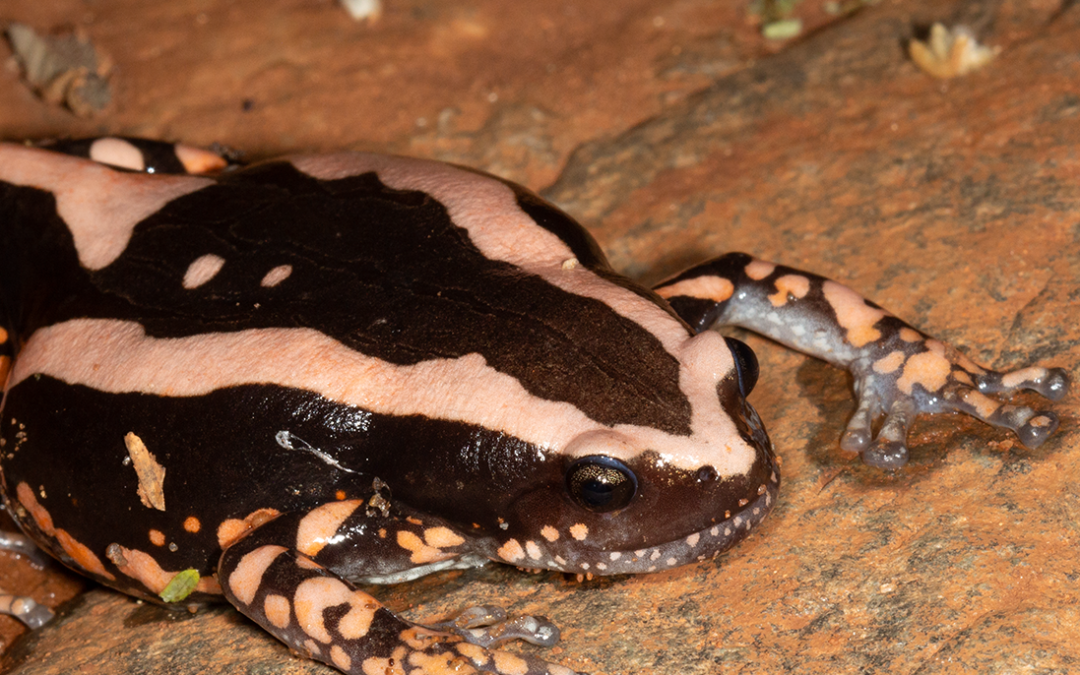
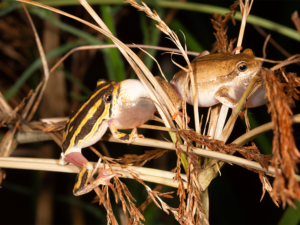
Of the species recorded, the Red-banded Rubber Frog is the most interesting, as it exudes toxins from its skin to dissuade predators from eating it. It advertises its toxic state through its bright black-and-red colouration, known as aposematic colouration. This frog exudes cardiotoxins (toxins that affect the heart) from its skin, so if you’re going to kiss a frog in the hopes that it will become a prince (or princess), it’s probably best not to kiss this frog.

Painted Reed Frog – Hyperolius marmoratus

African Bullfrog – Pyxicephalus edulis

Banded Rubber Frog- Phrynomantis bifasciatus

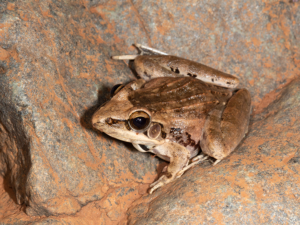
Plain Grass Frog – Ptychadena anchietae

Bubbling Kassina – Kassina senegalensis

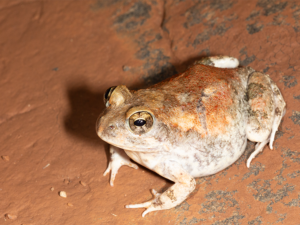
Russet-backed Sand Frog – Tomopterna marmorata

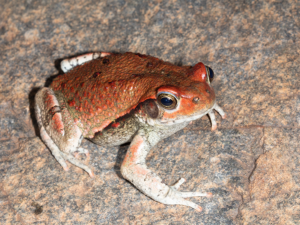
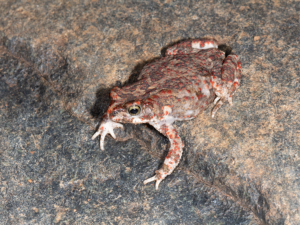
Eastern Red Toad – Schismaderma carens

Southern Foam-nest Frog – Chiromantis xerampelina

Northern Pygmy Toad – Poyntonophrynus fenoulheti

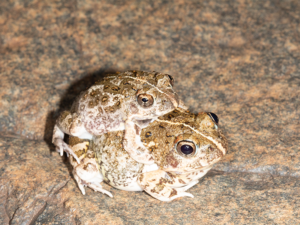
Tremolo Sand Frog – Tomopterna adiastola – Pair in amplexus

Driving half a million kilometres for EWT

Driving half a million kilometres for EWT


Driving half a million kilometres for EWT

By Ronelle Visagie, Field Officer: Birds of Prey Programme & Wildlife & Energy Programme

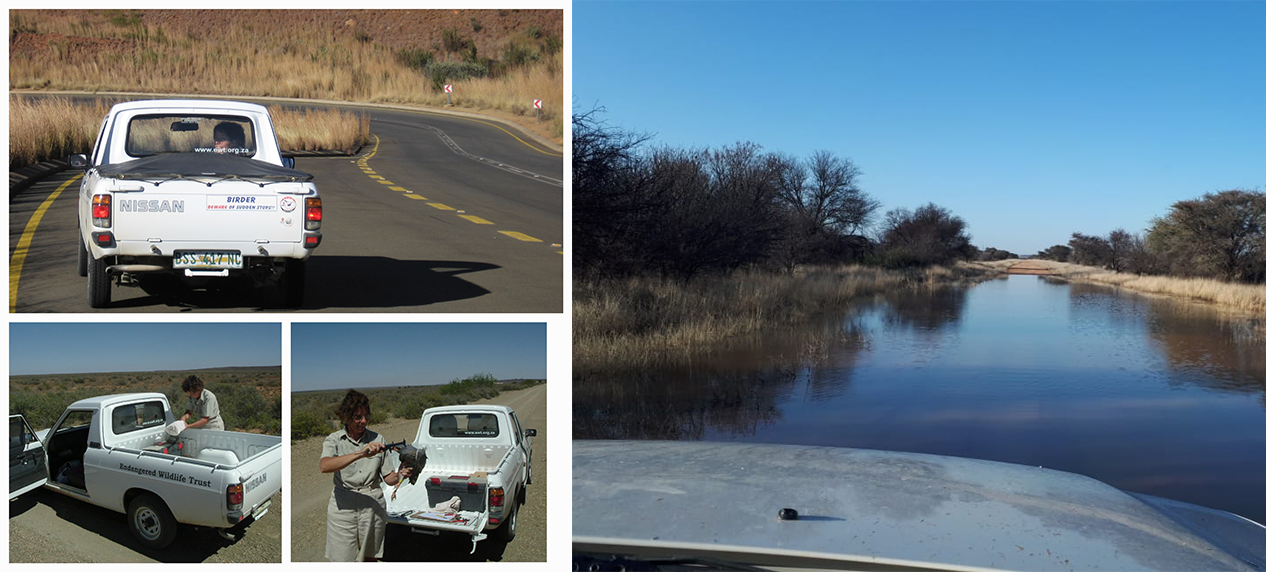
During September 2005 I started working for the EWT’s Birds of Prey Programme in the Karoo. It was in these beginning years that I drove a Nissan 1400 bakkie for nearly 3 years. The main purpose of the Project at that time was to engage with the farmers regarding the raptors at their farms. It was also expected of field officers to do all power line investigations in our area. I used to drive to a farm and then the farmer had to take me to where I had to work.


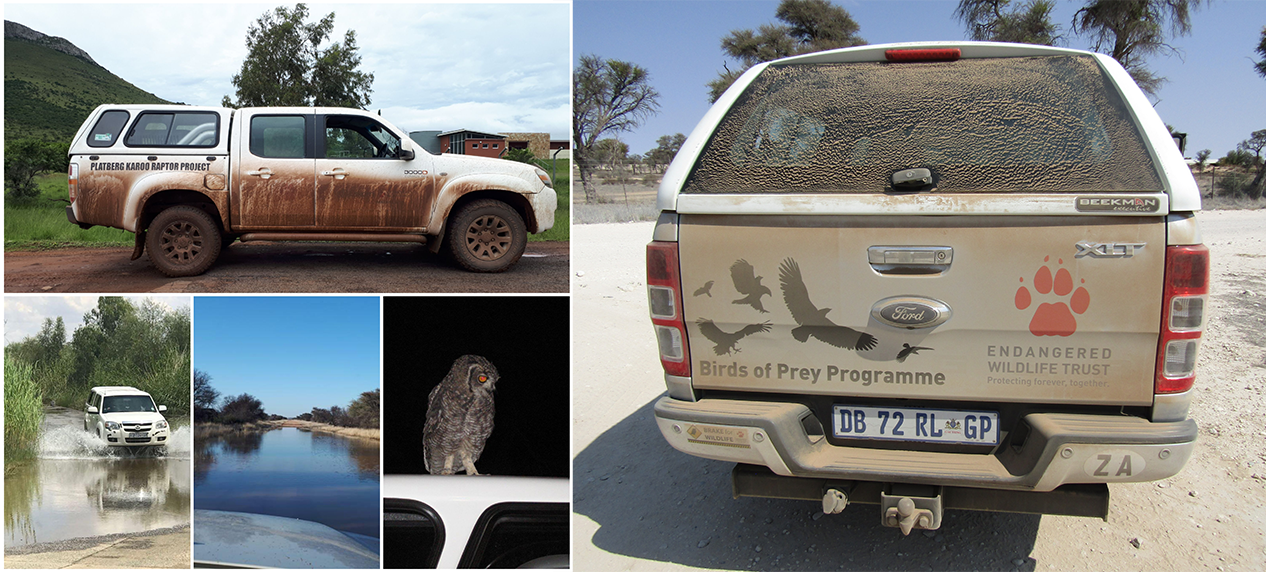
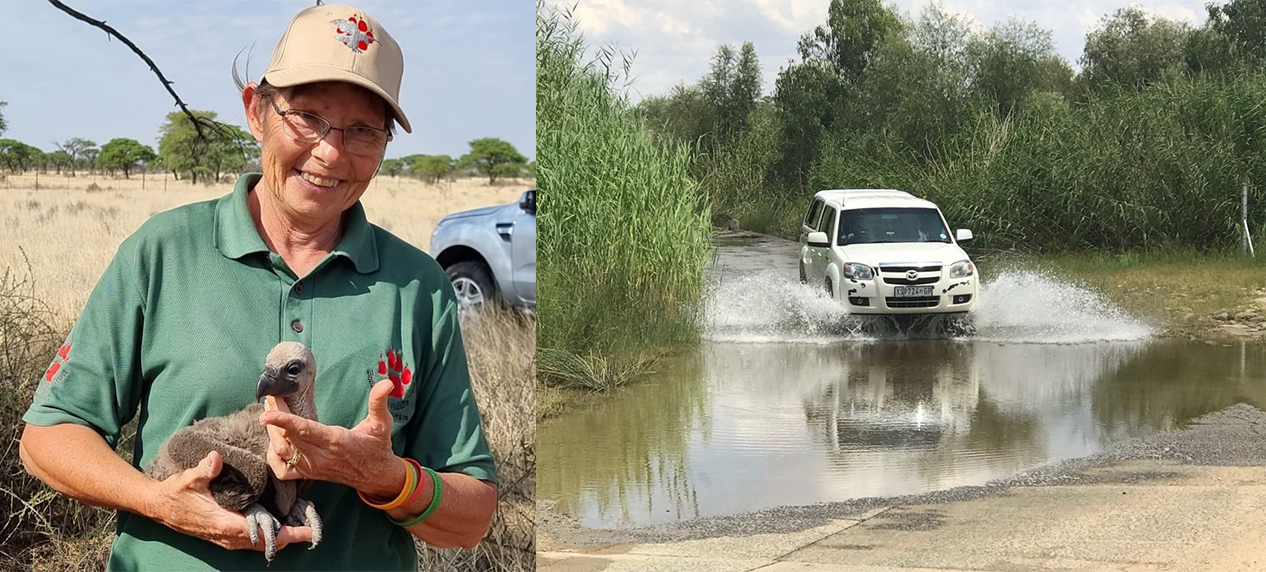
During February 2008 I did the first raptor monitoring with the support of the Nissan 1400 in Mokala National Park near Kimberley. The vehicle was too low and too small for driving off-road, but somehow, I managed. Returning from a trip to the Kgalagadi National Park the same month, I collided with a kudu on the gravel road between Prieska and Strydenburg. Fortunately, I sustained no injuries, but there was R22,000 damage to the Nissan. I had driven 27 126 km with the Nissan before the EWT supplied with a Mazda BT50 sponsored by Mazda with 37 805 km on the clock. The very reliable Mazda retired at 431 886 km after many memory-making adventures in the Karoo and Kalahari as we crossed the landscape for 15 years. Just imagine doing vulture nest monitoring in the Kalahari sand with a 2 x 4 and getting stuck on each and every survey.


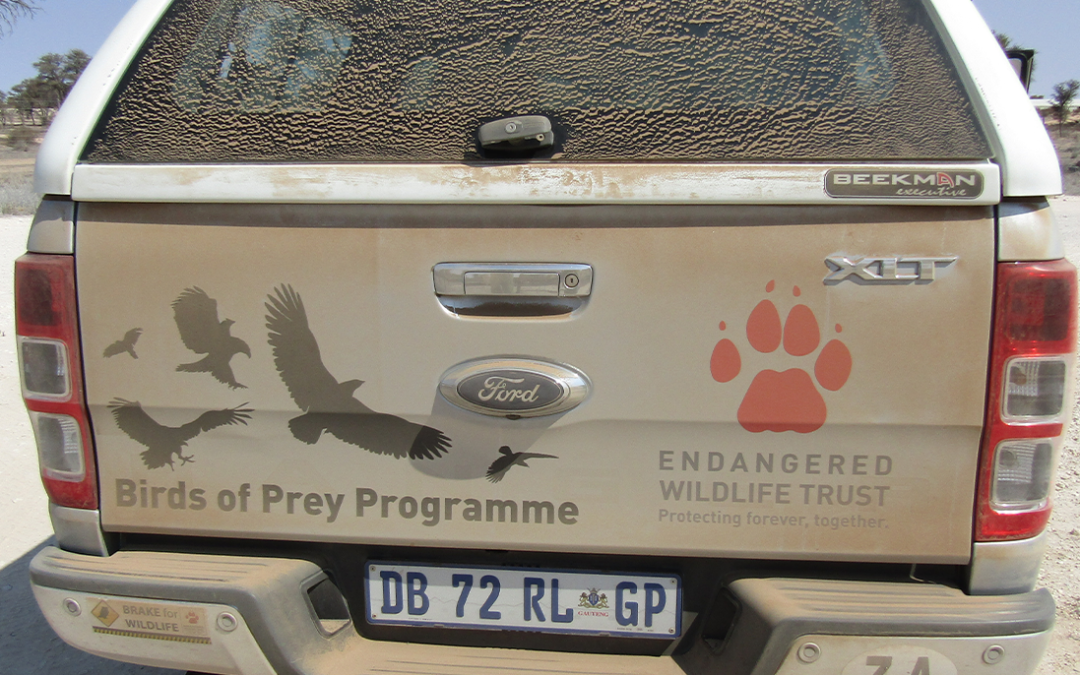
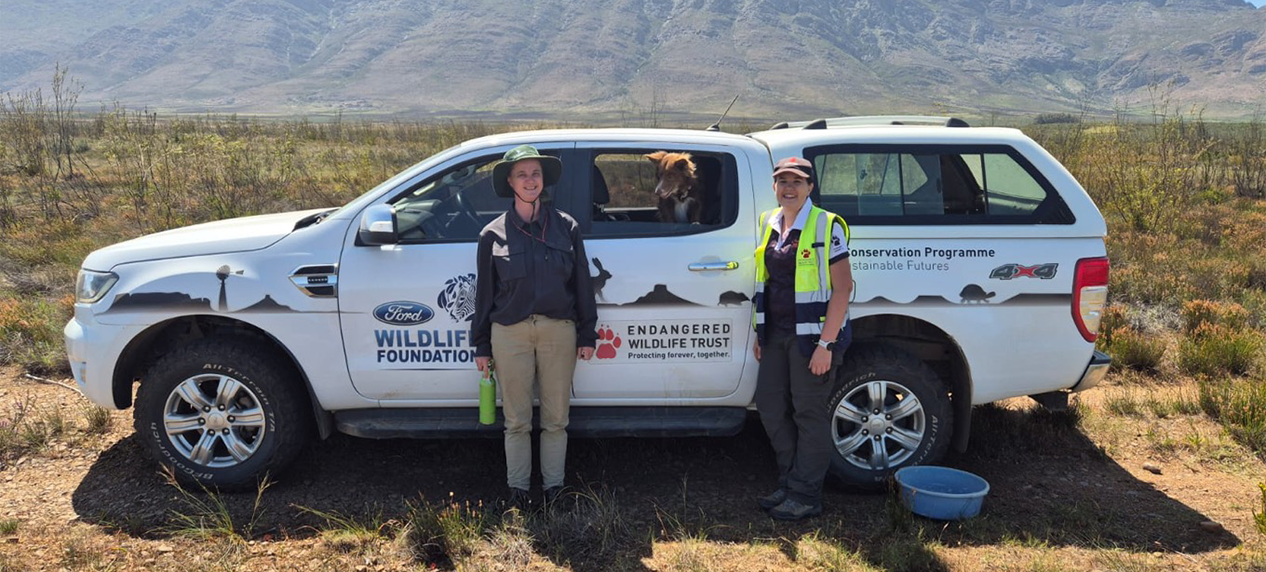
During November 2022 I received the Ford Ranger 4 X 4 and the adventures continued. At least I do not get stuck in the Kalahari sand anymore! During July 2023 a small rhino calf that was deserted by its mother hit the left back door – in case you wondered why there is a picture of a rhino alongside a vulture and an eagle on the left back door.

The 500 000 km mark was reached during the vulture ringing week in the larger Kimberley area in October 2024. As I do a lot of field work for the Birds of Prey and Wildlife and Energy Programmes, I do travel a lot in the Northern and Eastern Cape and also in the Orange Free State. Now the challenge is on for one of my colleagues at the EWT to reach half a million km!


EWT TORTOISE CONSERVATION CANINES – NOSY FOR NATURE

EWT TORTOISE CONSERVATION CANINES – NOSY FOR NATURE


EWT TORTOISE CONSERVATION CANINES – NOSY FOR NATURE

By: Esther Matthew – Specialist Officer | Drylands Conservation Programme

Chelonians includes all tortoise, turtle, and terrapin species. For the purposes of this article, we will use the term “tortoises”.


South Africa is one of the most biodiversity-rich countries in the world and is home to no less than two of the world’s most well-known botanical “biodiversity hotspots”, the Succulent Karoo and Fynbos Biomes. However, few people are aware that South Africa also holds the title as the tortoise capital of the world. South Africa is home to no less than 13 tortoise species, most of which are endemic to the country.

The Endangered Wildlife Trust (EWT), in partnership with the Turtle Conservancy (TC) launched tortoise conservation research projects over the last two years to locate viable populations and implement conservation action for three of South Africa’s most Endangered tortoises in the dryland areas of South Africa, including the Karoo, which is home to nine of the 13 tortoise species found in South Africa.

There are five species of dwarf tortoise globally, four of which occur in the South African Karoo and one in Namibia. As their name implies, dwarf tortoises rank amongst the smallest of the tortoise species. South Africa also has one Critically Endangered tortoise species, called the Geometric Tortoise. Unfortunately, over the last 20 years researchers have started to notice an alarming decline in population numbers for all of three of the country’s Endangered tortoise species. This significant impact can be attributed to factors like habitat loss, poaching, and crow predation that has been specifically being observed.

Certainly, the human teams have struggled to find a single viable population of both the Karoo and the Speckled Dwarf Tortoise over the last two years of extensive surveys. More than 20 surveys have yielded depressingly few live animals, and in most cases only shell fragments are to be found. All these species are elusive and well camouflaged, making it difficult for even the well-trained eye to spot. As such, it has been vital for us to look at other survey methods, such as using scent detection dogs.

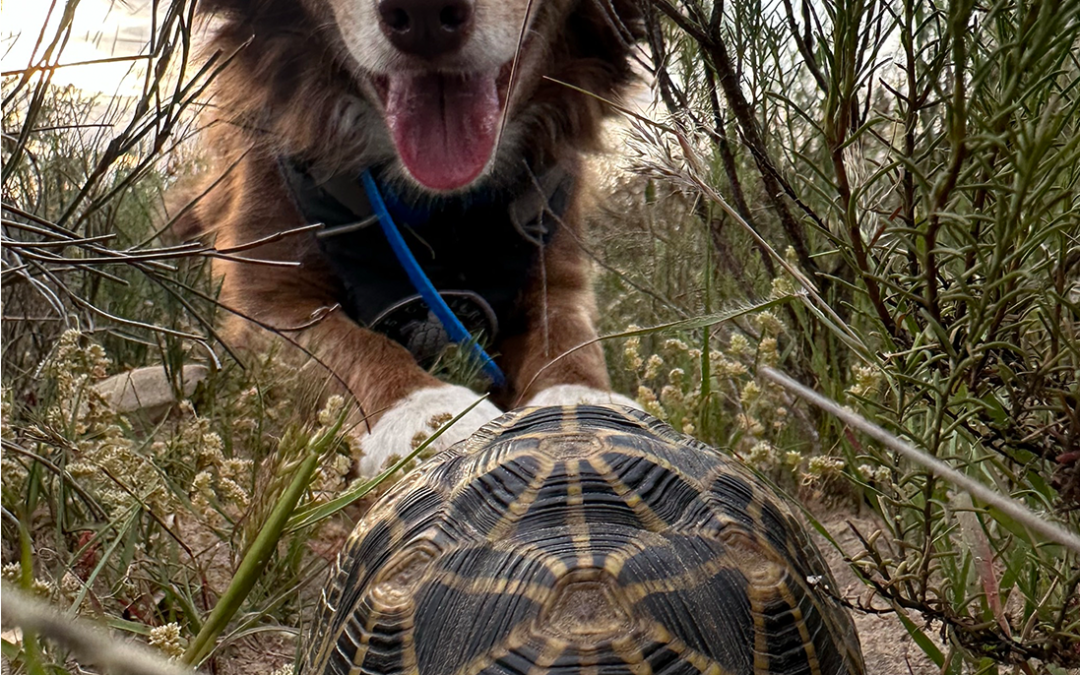
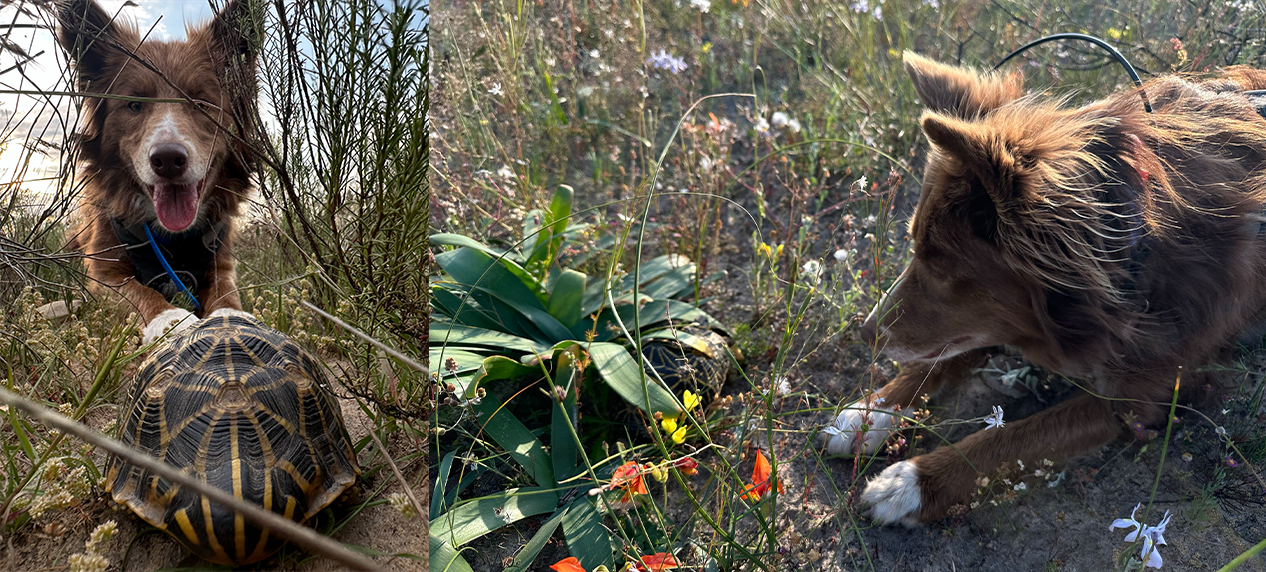
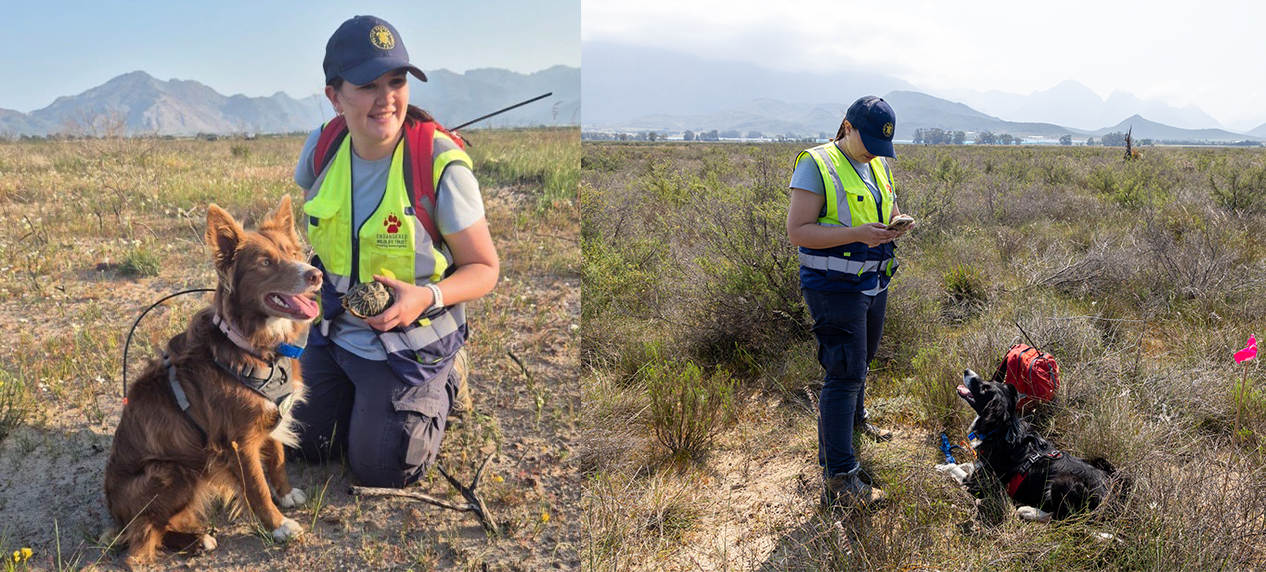
The EWT’s Drylands Conservation Programme, therefore, started training scent detection dogs to assist with tortoise fieldwork projects. Two Border collies, Delta and Dash, have been assisting our team in the field to help locate tortoises with a little guidance from their handler Esther Matthew. Delta has been contributing to this research for the last two years, while Dash only recently started helping after passing his certification. The dogs have helped increase the number of finds, with Delta almost setting a record of six tortoises found in 50 minutes for one of the species. The detection dogs make our search efforts a lot more efficient as we are able to move faster and find hidden tortoises we would likely have missed. Their assistance in the field contributes to data collection for species distribution mapping and monitoring the survival of species in the wild. We can’t wait to see how their “nose work” will continue to benefit the conservation of these unique tortoise species.

The EWT tortoise conservation work is supported by Turtle Conservancy, Dwarf Tortoise Conservation, Rainforest Trust and the IUCN NL. A special word of thanks to Ford Wildlife Foundation for the vehicles that safely gets our staff and working dogs to the remote locations across the Western- and Northern Cape, where we conduct our vital tortoise surveys.


Please note, that landowner permission and valid permits from relevant conservation authorities in each province are always required for the use of conservation detection dogs. Additionally, all tortoises are protected species and listed under the Convention on International Trade in Endangered Species (CITES) as well as provincial legislation such as the CapeNature Conservation Ordinance of 1974 and National Environmental Management: Biodiversity Act 10 of 2004. As such, it is illegal to collect any tortoise species in South Africa, and they may not be kept as pets without a permit. However, please report sightings of these rare species to us at ewt@ewt.org.za.


Environmental Education and Butterflies – Start them Young

Environmental Education and Butterflies – Start them Young


Environmental Education and Butterflies – Start them Young

By Renier Basson (Senior Field Officer), Drylands Conservation Programme


When you first think of threatened or endangered species, you might immediately picture Rhinos, African Wild Dogs, Pangolins, or even some other charismatic bird, reptile, or amphibian. However, did you know that many insect species in South Africa are also threatened? Most of these insects are found in in the Western Cape, particularly in the Fynbos biome. Among these, butterfly and beetles receive far more attention than any other insect group. All 23 Cape stag beetle species (family Lucanidae, genus Colophon) are currently threatened, primarily due to climate change, habitat destruction, and illegal poaching – yes, even insects are poached!

Regarding butterflies, the most threatened species belong to the families Lycaenidae (coppers, opals and skollies) and Hesperiidae (skippers and rangers). These butterflies are all relatively small and inconspicuous, with tiny, isolated populations scattered throughout the landscape. Some threatened butterflies inhabit areas smaller than 100 square meters! Habitat destruction, mainly caused by alien invasive vegetation and landscape transformation, poses a significant threat to these species in the Western Cape.

To help conserve these butterflies, the Drylands Conservation Programme, in collaboration with Bionerds, has launched projects funded by Disney and Table Mountain Fund. These initiatives aim to protect six butterfly species in the Lycaeinidae family: the Moorreesburg Opal (Chrysoritis thysbe schloszae), Dickson’s Copper (Chrysoritis dicksoni), Bearded Skolly (Thestor barbatus), Dickson’s Skolly (Thestor dicksoni warren), Kaplan’s Skolly (Thestor kaplani), and Strutt’s Skolly (Thestor strutti). All of these are listed as Critically Endangered, and their populations are rapidly declining. Protecting our threatened butterflies requires safeguarding their habitats, which includes habitat protection activities such as clearing alien invasive vegetation. While physically protecting habitats is crucial, educating the public is equally important!

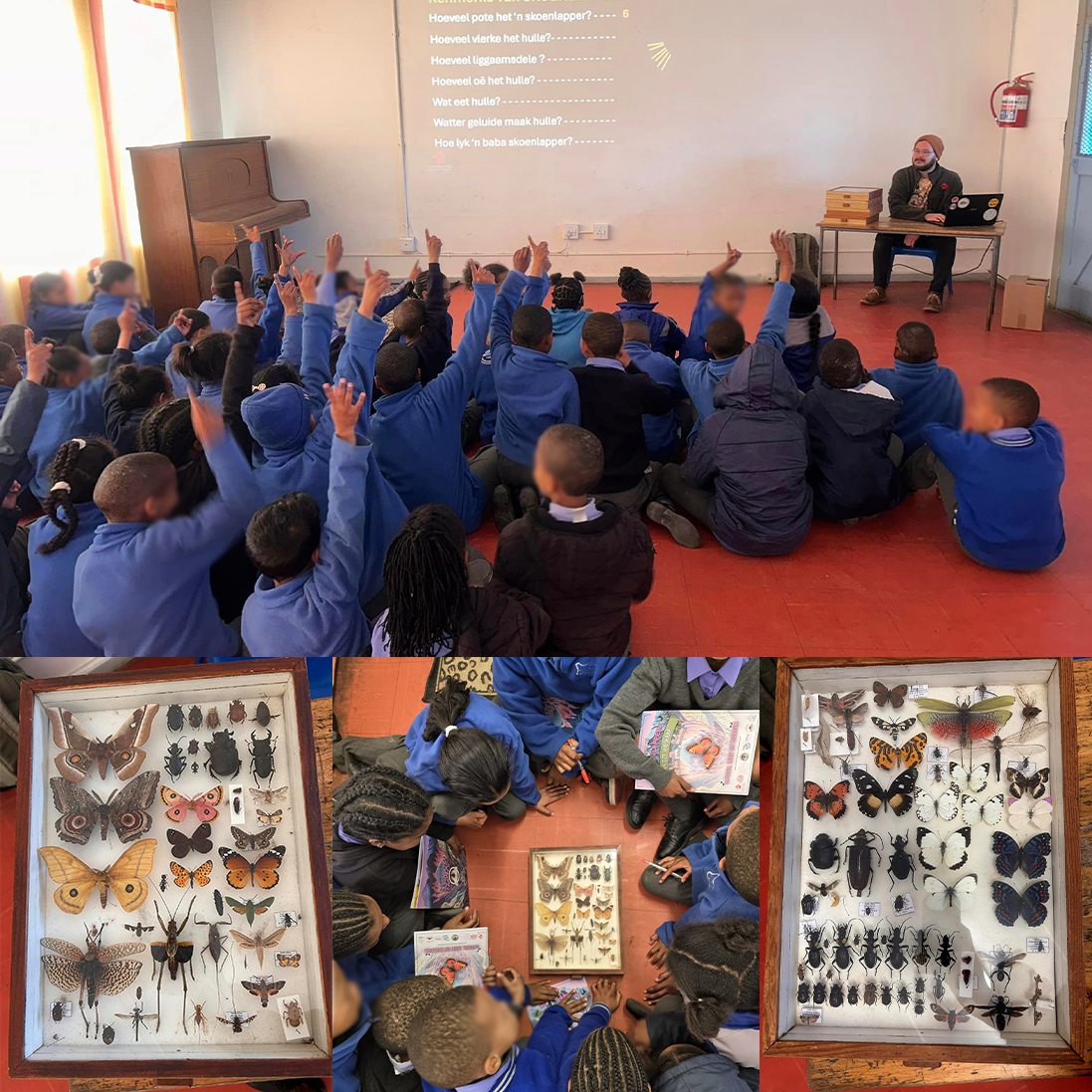
One key component of the project is environmental education aimed at schools near the six butterfly populations. Bionerds has created a colourful, interactive booklet titled “Threatened Butterflies of the Western Cape” for learners from grades 4 to 7. On September 19, Field Officer Renier Basson visited W.F. Loots Primary in Wolseley to present on the ecological importance of butterflies and the threats they face. The Strutt’s Skolly, found in the area, was a focal point of the presentation. Renier began by explaining, “What is a butterfly?” covering topics from taxonomic classification and morphology to metamorphosis, pollination, and threats. The 51 learners from grades 5 and 6 were engaged and inquisitive, asking numerous questions.

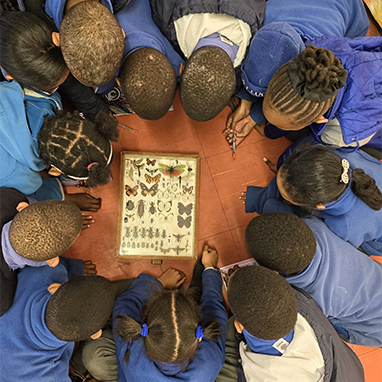
After the presentation, Renier handed out the booklets , and the students eagerly participated by reading important sections aloud. They also answered questions from the first few pages, which sparked curiousity and encouraged them to share their newfound insights. Questions included broad topics like “What do adult butterflies eat?” and “Where do butterflies lay their eggs?” To further engage the students, Renier showcased pinned and framed insects. With five display boxes filled with insects, the learners were divided into groups to maximise their time exploring each box. They had to identify butterflies in the boxes, which proved challenging as some moths closely resemble butterflies. The students were also encouraged to ask questions about the insects they observed. The excitement on their faces as they received new boxes was priceless!

Incorporating environmental education for children into all conservation programmes is essential. Children are curious, enthusiastic, and passionate about nature, making them open to listening about the natural world. Start them young!

A special thanks to our partner Bionerds. This project is made possible through Disney Conservation Fund and the Table Mountain Fund.