
Raptors in Decline: What One Researcher’s Roadside Observations Revealed
By Ronelle Visagie, Birds of Prey Unit
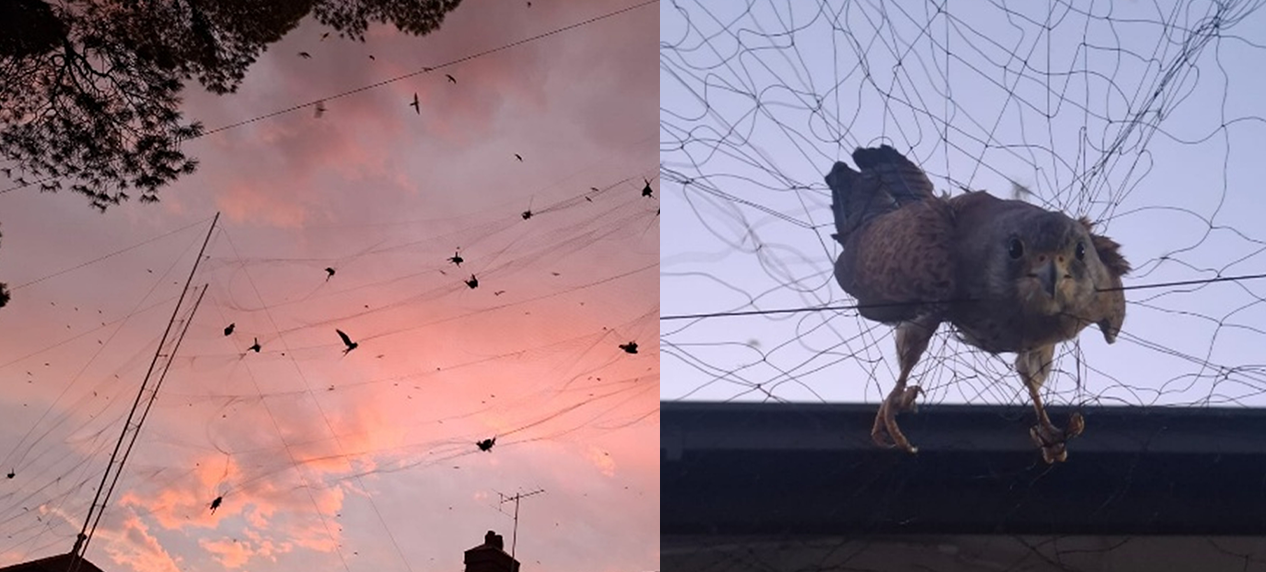
Left: Jackal Buzzards in Middelburg district. Right: Data tracking
A study of long-term road surveys undertaken by Ronelle Visagie, field officer in the Birds of Prey Unit, has been referenced in a new research report revealing widespread declines in South Africa’s raptors and other large birds. Ronelle co-authored the report published by the University of Cape Town.
How did the survey come about? Here is Ronelle’s story:
I was recently asked to share the story behind a study I co-authored that revealed widespread declines in raptor numbers across South Africa. The data behind the research came from an unexpected source: the many kilometres I’ve driven while working for the Endangered Wildlife Trust (EWT).
My work involves a lot of time on the road. I regularly travel long distances to investigate power line incidents involving birds, and in 2019 I began monitoring 400 vulture nests in the Kalahari. From my home to Askam—where that fieldwork begins—is about 600 km. Much of the monitoring takes place along the Kuruman and Molopo Rivers and near Van Zylsrus. I’ve also spent years travelling through the region for the Vulture Safe Zone project.
Because I often drove the same long routes, I started looking for something productive to do while travelling. I realised that I could record the raptors I saw along the roads. Using the CyberTracker app on my phone, I began logging every bird of prey I encountered. The system is simple and effective: it allows you to record the species, age class and behaviour of each bird, while automatically storing the GPS coordinates.
From that point on, every work trip became an opportunity to collect data. Whenever I drove anywhere, I recorded the raptors I saw along the way. I also noted roadkills, which can provide insight into wildlife populations and threats. Interestingly, I’ve noticed that roadkills seem to have decreased over time, possibly because people increasingly collect them for food.
Over the years, the kilometres added up. Between 2009 and 2025, I drove over 500,000 km for my work with the EWT. Along the way, I built up a large dataset of roadside raptor observations.
A few years ago, I presented this dataset at the EWT’s Birds of Prey Conference in Swadini, Limpopo. In the audience was Assistant Professor Arjun Amar from the University of Cape Town. After the talk, he approached me and asked whether one of his students, Santiago Zuluaga, could analyse the data and develop it into a scientific paper.
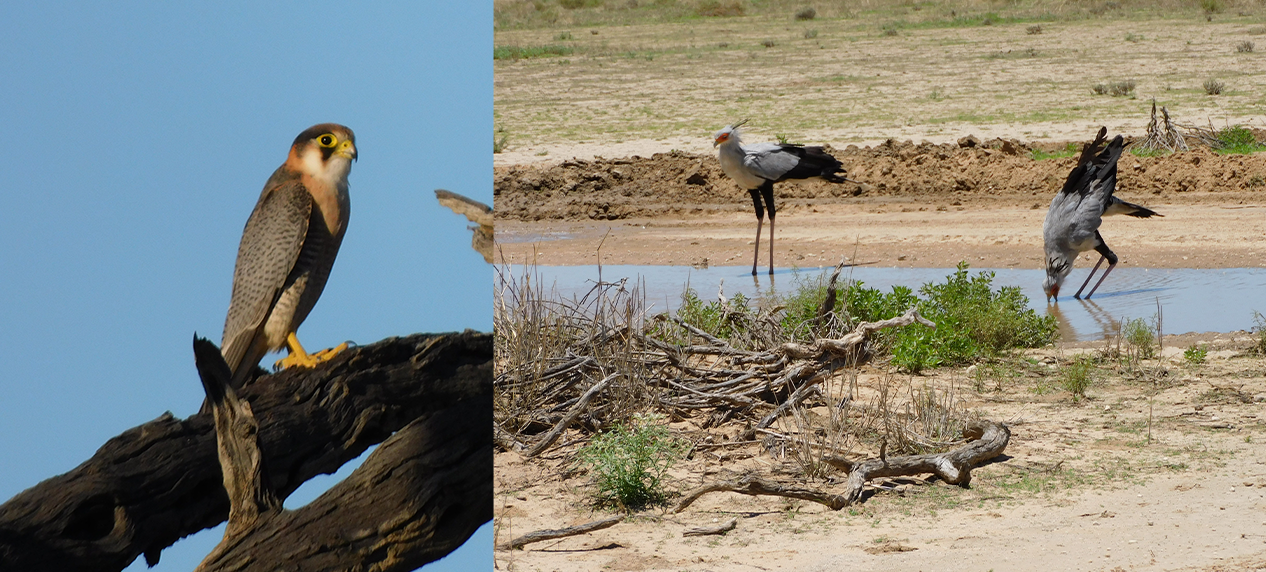
Left: Red-necked Falcon in KNP. Right: Secretary birds drinking water in the road
The results were sobering. The analysis showed that half of the raptor species I recorded had declined over the study period.
This matters because raptors play a critical role in ecosystems. They help regulate populations of animals such as rodents and dassies, preventing these species from becoming overly abundant. Vultures perform an equally essential service by removing carcasses from the landscape, helping to limit the spread of disease.
Some of the declines we observed are likely linked to human activities. In parts of the Northern Cape and Free State, certain raptors are persecuted because they occasionally catch chickens or lambs. Poisoning is also a growing threat, and unfortunately poisons are often easy to obtain. Owls appear to be particularly affected by this.
Addressing these challenges requires working with the people who share the landscape with these birds. When I travel through farming areas, I spend time talking with farmers to understand their concerns and look for ways to help reduce conflict. I also visit schools to talk to children about why raptors are important and the threats they face.
Studies like this help highlight the scale of the problem. Raptors are declining, and yet they provide vital services that keep ecosystems functioning. The more we understand these trends, the better we can work together to protect these remarkable birds.
The article can be accessed here: https://doi.org/10.1016/j.biocon.2026.111764.
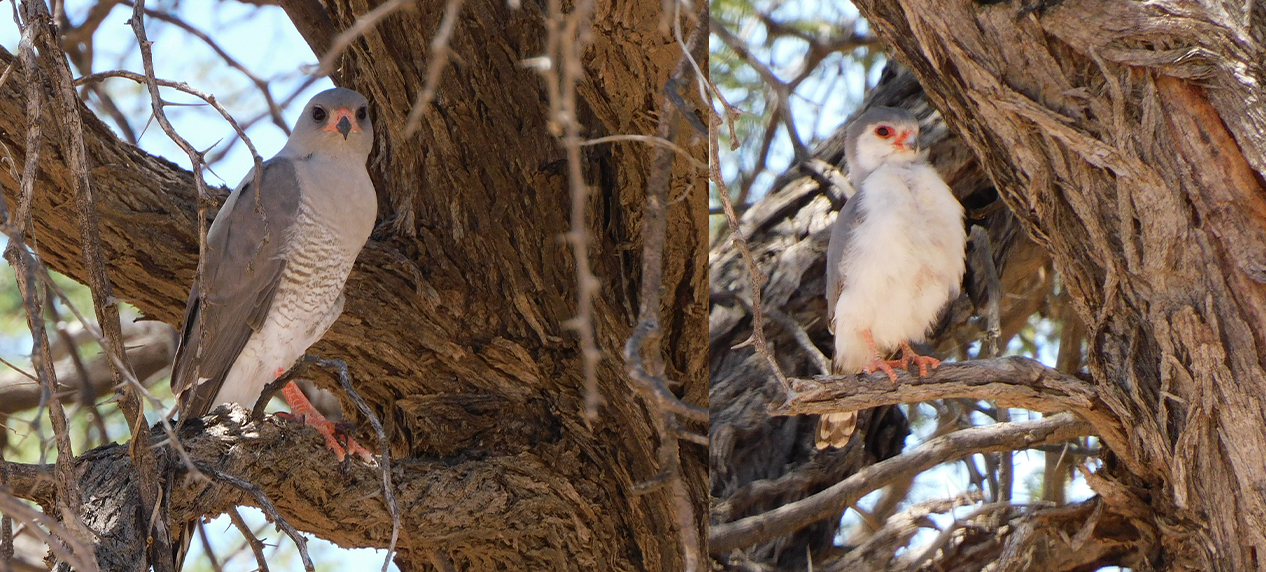
Left: Gabar Goshawk in KNP. Right: Pygmy Falcon in KNP