
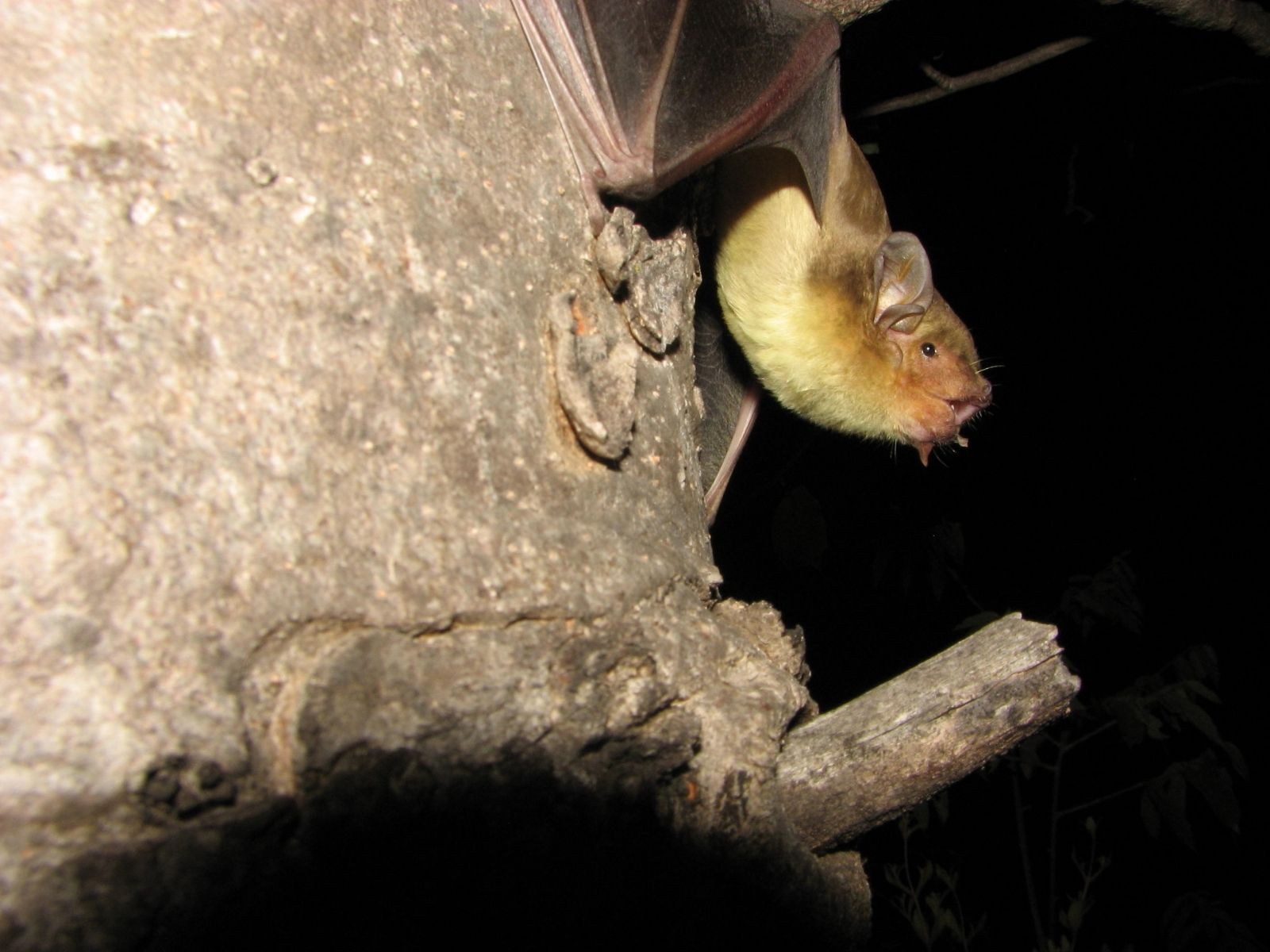
Yellow House Bat
Scotophilus dinganii

2025 Red list status
Least Concern

Regional Population Trend
Stable

Change compared
to 2016
No Change
Overview
Scotophilus dinganii – (A. Smith, 1833)
ANIMALIA – CHORDATA – MAMMALIA – CHIROPTERA – VESPERTILIONIDAE – Scotophilus – dinganii
Common Names: Yellow House Bat, Yellow-bellied House Bat, African Yellow Bat, African Yellow House Bat (English), Geel Dakvlermuis (Afrikaans)
Synonyms: Vespertilio dinganii (Smith 1833), Nycticejus planirostris (Peters 1852), Scotophilus nigrita colias (Thomas 1904), Scotophilus nigrita herero (Thomas 1906), Scotophilus nigrita dingani (Kershaw 1921), Scotophilus nigrita pondoensis (Roberts 1951)
Taxonomic Note:
The entire genus needs revision (Demos et al. 2018; Monadjem et al. 2020). This species was referred to as Scotophilus nigrita until Robbins (1978) clarified the appropriate name for the smaller specimens is S. dinganii. The specific status of S. dinganii has not been in dispute since the multivariate analysis of the Scotophilus species by Robbins et al. (1985). There are three subspecies listed for the southern African region by Meester et al. (1986) but the validity of these is uncertain (Monadjem et al. 2020). Molecular and echolocation evidence has suggested that S. dinganii is a species complex (Jacobs et al. 2006; Trujillo et al. 2009), with at least two cryptic species in East and West Africa. A more recent molecular study has suggested that there may be up to 15 species of Scotophilus occurring in Africa (Demos et al. 2018). Monadjem et al. (2020) suggest that S. dinganii is a southern African endemic. Certainly, finer scale geographical sampling is needed to test for cryptic species in southern Africa (Trujillo et al. 2009; Monadjem et al. 2020).
Red List Status: LC – Least Concern (IUCN version 3.1)
Assessment Information
Assessors: Lotter, C.1, Richardson, E.J.2 & da Silva, J.M.3
Reviewer: Richards, L.R.4
Institutions: 1Inkululeko Wildlife Services (Pty) Ltd, 2Independent Consultant at Richardson & Peplow Environmental, 3South African National Biodiversity Institute, 4Durban Natural Science Museum
Previous assessors and Reviewers: Monadjem, A., Jacobs, D., Cohen, L., MacEwan, K., Richards, L.R., Schoeman, C., Sethusa, T. & Taylor, P.
Previous Contributors: Raimondo, D. & Child, M.F.
Assessment Rationale
Taxonomic resolution of the genus is desperately needed to delineate geographical boundaries more accurately. This species is currently listed as Least Concern in view of its wide distribution within the assessment region, its tolerance of a broad range of habitats including human habitation and modified habitats, its presumed large population, and it being recorded in several protected areas (including the Great Limpopo Transfrontier Park, Greater Mapungubwe Transfrontier Conservation Area and iSimangaliso Wetland Park). The increasing number of operational wind farms in the Eastern Cape and proposed wind farms in Mpumalanga present a potential threat to this species, which has been categorised as having a “Medium-High” risk of collision with wind turbines (MacEwan et al. 2020) based on its wing morphology and clutter-edge foraging behaviour (Monadjem et al. 2020). However, there have been no known or reported fatalities of this species at operational wind farms to date (Doty & Martin 2013; MacEwan 2016; Aronson 2022; Inkululeko Wildlife Services, unpubl. data).
Regional population effects: It has high wing-loading (Norberg & Rayner 1987; Schoeman & Jacobs 2008), and thus dispersal capacity is assumed to be good. It also occurs in Greater Mapungubwe Transfrontier Conservation Area and Great Limpopo Transfrontier Park, among others, and thus its habitat is connected across regions. Rescue effects are thus possible.
Reasons for Change
Reason(s) for Change in Red List Category from the Previous Assessment: No change
Red List Index
Red List Index: No change
Recommended ciation: Lötter C, Richardson EJ & da Silva JM. 2025. A conservation assessment of Scotophilus dinganii. In Patel T, Smith C, Roxburgh L, da Silva JM & Raimondo D, editors. The Red List of Mammals of South Africa, Eswatini and Lesotho. South African National Biodiversity Institute and Endangered Wildlife Trust, South Africa.
Regional Distribution and occurrence
Geographic Range
This species is widely distributed in sub-Saharan Africa, where it has been recorded from most biotic zones and countries. It ranges from Senegal and the Gambia in the west, through West Africa and parts of Central Africa, to Sudan, Eritrea, Djibouti and Ethiopia in the east. From there it ranges south through much of East Africa and southern Africa. Within the assessment region, it has been recorded in South Africa’s Eastern Cape, KwaZulu-Natal, Mpumalanga, Gauteng, and Limpopo provinces. It is absent from the Western Cape, the Karoo regions of South Africa and the Kalahari (Monadjem et al. 2020). The estimated extent of occurrence is 674,609 km2.
It also occurs in Eswatini, Zimbabwe, eastern and northern Botswana, northern Namibia, Zambia and Malawi (Monadjem et al. 2020; Inkululeko Wildlife Services unpubl. data).
Elevation / Depth / Depth Zones
Elevation Lower Limit (in metres above sea level): 3 m asl (Monadjem et al. 2024)
Elevation Upper Limit (in metres above sea level): 1,910 m asl (Monadjem et al. 2024)
Depth Lower Limit (in metres below sea level): N/A
Depth Upper Limit (in metres below sea level): N/A
Depth Zone: N/A
Map
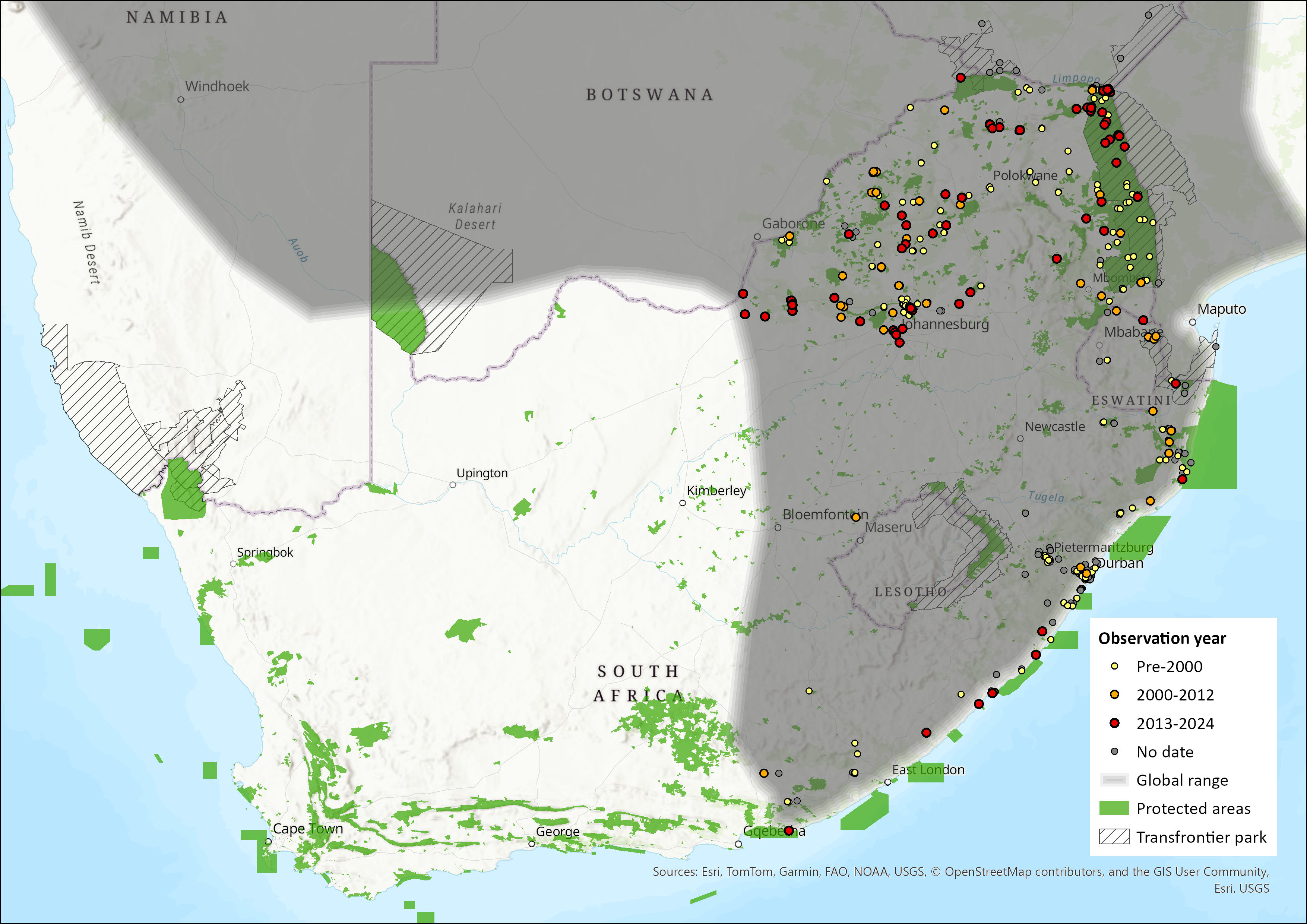 Figure 1. Distribution records for Yellow House Bat (Scotophilus dinganii) within the assessment region (South Africa, Eswatini and Lesotho). Note that distribution data is obtained from multiple sources and records have not all been individually verified.
Biogeographic Realms
Biogeographic Realm: Afrotropical
Occurrence
Countries of Occurrence
| Country | Presence | Origin | Formerly Bred | Seasonality |
| Angola | Extant | Native | – | – |
| Benin | Extant | Native | – | – |
| Botswana | Extant | Native | – | – |
| Burkina Faso | Extant | Native | – | – |
| Burundi | Extant | Native | – | – |
| Cameroon | Extant | Native | – | – |
| Central African Republic | Extant | Native | – | – |
| Congo | Extant | Native | – | – |
| Congo, The Democratic Republic of the | Extant | Native | – | – |
| Côte d’Ivoire | Extant | Native | – | – |
| Djibouti | Extant | Native | – | – |
| Eritrea | Extant | Native | – | – |
| Eswatini | Extant | Native | – | – |
| Ethiopia | Extant | Native | – | – |
| Gambia | Extant | Native | – | – |
| Ghana | Extant | Native | – | – |
| Guinea | Extant | Native | – | – |
| Guinea-Bissau | Extant | Native | – | – |
| Kenya | Extant | Native | – | – |
| Liberia | Extant | Native | – | – |
| Malawi | Extant | Native | – | – |
| Mali | Extant | Native | – | – |
| Mozambique | Extant | Native | – | – |
| Namibia | Extant | Native | – | – |
| Nigeria | Extant | Native | – | – |
| Rwanda | Extant | Native | – | – |
| Saudi Arabia | Extant | Native | – | – |
| Senegal | Extant | Native | – | – |
| Sierra Leone | Extant | Native | – | – |
| Somalia | Extant | Native | – | – |
| South Africa | Extant | Native | – | – |
| Sudan | Extant | Native | – | – |
| Tanzania, United Republic of | Extant | Native | – | – |
| Togo | Extant | Native | – | – |
| Uganda | Extant | Native | – | – |
| Yemen | Extant | Native | – | – |
| Zambia | Extant | Native | – | – |
| Zimbabwe | Extant | Native | – | – |
Large Marine Ecosystems (LME) Occurrence
Large Marine Ecosystems: N/A
FAO Area Occurrence
FAO Marine Areas: (Not specified)
Climate change
Bats may be more susceptible to extreme weather events than to climate shift (see, for example, Matthew et al. 2020). Bats of this species have been recorded leaving their roof roosts and hanging exposed on the exterior walls of houses during extremely hot days (Bats KZN data), suggesting that parts of their current range might become too warm for their continued existence there. Jacobs et al. (2012) examined the use of torpor in this species when roosting in buildings and concluded that their roosting behaviour meant the roosts offered little or no thermal buffering from ambient temperatures. Globally, there have been documented declines in bat populations, species richness and distributions in relation to water availability with increasing global aridity which may become a growing concern as heat waves and maximum temperatures are expected to increase over much of South Africa (Adams & Hayes 2021; Mbokodo et al. 2020).
Population Information
Little information is available on the abundance or population size of this species but, as many records of this bat exist within the assessment region, it appears to be relatively common. The Yellow House Bat roosts singly or in small groups of up to 30 individuals (Skinner & Chimimba 2005), so population size is presumed to be large. Additionally, it is well represented in museums, with over 700 records examined in Monadjem et al.(2020), which is partly due to its habit of roosting in fabricated structures, including roofs of houses, making it easy to collect.
Current population trend: Stable
Continuing decline in mature individuals: No
Extreme fluctuations in the number of subpopulations: (Not specified)
Continuing decline in number of subpopulations: (Not specified)
All individuals in one subpopulation: (Not specified)
Number of mature individuals in largest subpopulation: Unknown
Number of Subpopulations: Cannot be determined at present on account of uncertainty regarding cryptic species.
Quantitative Analysis
Probability of extinction in the wild within 3 generations or 10 years, whichever is longer, maximum 100 years: Given the uncertain taxonomic status of the species (or species complex), this cannot be ascertained until the situation is resolved
Probability of extinction in the wild within 5 generations or 20 years, whichever is longer, maximum 100 years: As above, this cannot be determined at present
Probability of extinction in the wild within 100 years: As above, this cannot be determined at present
Population Genetics
A phylogenetic study uncovered several instances of cryptic diversity within the genus Scotophilus which could influence our current understanding of the distribution of S. dinganii (Demos et al. 2018). Further taxonomic assessments integrating the findings of Demos et al. (2018) with phenotypic, distributional, and ecological data are needed to verify the validity of the putative species. Additionally. population-level surveys and genetic work are needed to better understand the structure and diversity within the assessment region.
Habitats and ecology
South of the Sahara, this species has been predominantly recorded from both dry and moist woodland savannah throughout the Savannah Biome (Monadjem et al. 2020), but as an urban exploiter it is also found in suburbs and other situations with available roost sites and food resources (Schoeman 2016). The habitat of this wide-ranging species is not easy to classify, but it appears to be tied to the presence of trees and appropriate buildings (Monadjem et al. 2020), and thus its absence from open habitats may reflect the lack of roost sites. It roosts in hollow trees, such as the Leadwood Tree, Combretum imberbe (Monadjem et al. 2020), roofs (Monadjem et al. 2020), and other dark places in houses. It may roost in buildingsto avoid inter-specific competition with sympatric Scotophilus species (Jacobs & Barclay 2009). Although it may roost singly, small groups up to 30 bats are not uncommon (Happold et al. 1987; Skinner & Chimimba 2005). It is a clutter-edge forager, feeding mainly on medium-sized Coleoptera but also other insect species (Monadjem et al. 2020).
Ecosystem and cultural services: As this species is insectivorous, it may contribute to controlling insect species that damage crops (Boyles et al. 2011; Kunz et al. 2011). Ensuring a healthy population of insectivorous bats can thus decrease the need for pesticides.
IUCN Habitats Classification Scheme
| Habitat | Season | Suitability | Major Importance? |
| 2.1. Savanna -> Savanna – Dry | – | Suitable | Yes |
| 2.2. Savanna -> Savanna – Moist | – | Suitable | Yes |
| 14.4. Artificial/Terrestrial -> Artificial/Terrestrial – Rural Gardens | – | Marginal | – |
| 14.5. Artificial/Terrestrial -> Artificial/Terrestrial – Urban Areas | – | Suitable | – |
Life History
Generation Length: (Not specified)
Age at Maturity: Female or unspecified: 12 months (Bat Interest Group of KwaZulu-Natal data)
Age at Maturity: Male: (Not specified)
Size at Maturity (in cms): Female: Forearm mean = 5.37 ±0.19 cm (Monadjem et al. 2020)
Size at Maturity (in cms): Male: Forearm mean = 5.36 ±0.20 cm (Monadjem et al. 2020)
Longevity: (Not specified)
Average Reproductive Age: (Not specified)
Maximum Size (in cms): Female: 5.72 cm; Male: 5.80 cm
Size at Birth (in cms): Fa 2.0 cm (Bat Interest Group of KwaZulu-Natal data)
Gestation Time: (Not specified)
Reproductive Periodicity: Females give birth in November or December but there is no data available on whether each female births every year.
Average Annual Fecundity or Litter Size: 1, very rarely 2-3 (Monadjem et al. 2020)
Natural Mortality: (Not specified)
Breeding Strategy
Does the species lay eggs? No
Does the species give birth to live young: Yes
Does the species exhibit parthenogenesis: No
Does the species have a free-living larval stage? No
Does the species require water for breeding? No
Movement Patterns
Movement Patterns: Unknown
Congregatory: Although it may roost singly, small groups up to 30 bats are not uncommon (Happold et al. 1987; Skinner & Chimimba 2005).
Systems
System: Terrestrial
General Use and Trade Information
This species is not known to be utilised or traded.
|
Subsistence: |
Rationale: |
Local Commercial: |
Further detail including information on economic value if available: |
|
Yes |
– |
– |
– |
National Commercial Value: Yes. Bats of this species have been shown to curb insect pest populations in macadamia orchards (Taylor et al. 2011; Taylor et al. 2013; Weier et al. 2019) and thus impact agricultural output.
International Commercial Value: Yes. As above, Scotophilus dinganii impact macadamia nuts grown for export.
End Use: None reported
Is there harvest from captive/cultivated sources of this species? None reported
Harvest Trend Comments: N/A
Threats
There appears to be no major current threats to this species as a whole. Local threats may include the removal of roosting trees for fuelwood, such as in the Soutpansberg Mountains of Limpopo (Munyati & Kabanda 2009; Taylor et al. 2013), and homeowners killing bats in roofs either accidentally or deliberately (Bat Interest Group of KwaZulu-Natal data). Although no carcasses of this species were reported by Aronson (2022) from data that were collated from 25 operational wind farms in South Africa for the period 2011-2020, this species could be impacted given its classified Medium-High risk of fatality from turbines (MacEwan et al. 2020).
Conservation
The species is recorded from many protected areas within the assessment region (at least 27 across its range), including Kruger and Mapungubwe National Parks, Hluhluwe-iMfolozi Game Reserve and iSimangaliso Wetland Park. Future work should focus on quantifying the occurrence/numbers of fatalities of this species at operational wind farms in South Africa. Aside from this, no direct conservation measures are currently needed for this species in the assessment region except for protecting large trees such the Leadwood Tree (Combretum imberbe), to limit disturbance of key roost sites for this (and other bat) species.
Recommendations for land managers and practitioners:
- The occurrence/numbers of fatalities of this species at operational wind farms in South Africa should be quantified.
- Protect large (especially hollow) trees (such the Leadwood Tree, Combretum imberbe) as roosting sites.
Research priorities:
- Taxonomic resolution through molecular and morphometric research, occurrence data, and echolocation call analysis is desperately needed for the genus Scotophilus.
- Possible future wind farm carcasses of this species could be used to obtain greater insight into the biogeography, genetics, reproductive biology, ecology (e.g. diet), and ecosystem services of this species in eastern southern Africa
Encouraged citizen actions:
- Report sightings on virtual museum platforms (for example, iNaturalist and MammalMAP), especially outside of protected areas.
- Deposit any dead specimens with the Durban Natural Science Museum or Ditsong Museum of Natural History.
Bibliography
ACR. 2023. African Chiroptera Report 2015. Pretoria, South Africa.
Adams, R.A. and Hayes, M.A. 2021. The importance of water availability to bats: climate warming and increasing global aridity. 50 years of bat research: foundations and new frontiers, pp.105-120.
Aronson, J. 2022. Current state of knowledge of wind energy impacts on bats in South Africa. Acta Chiropterologica 24: 221-238.
Boyles, J.G., Cryan, P.M., McCracken, G.F. and Kunz, T.H. 2011. Economic importance of bats in agriculture. Science 332: 41–42.
Demos, T.C., Webala, P.W., Bartonjo, M. and Patterson, B.D. 2018. Hidden Diversity of African Yellow House Bats (Vespertilionidae, Scotophilus): Insights From Multilocus Phylogenetics and Lineage Delimitation. Frontiers in Ecology and Evolution 6: https://doi.org/10.3389/fevo.2018.00086.
Doty, A.C. and Martin, A.P. 2013. Assessment of bat and avian mortality at a pilot wind turbine at Coega, Port Elizabeth, Eastern Cape, South Africa. New Zealand Journal of Zoology 40: 75–80.
Driver, A., Sink, K.J., Nel, J.N., Holness, S., van Niekerk, L., Daniels, F., Jonas, Z., Majiedt, P.A., Harris, L. and Maze, K. 2012. National Biodiversity Assessment 2011: An Assessment of South Africa’s Biodiversity and Ecosystems. Synthesis Report. South African National Biodiversity Institute and Department of Environmental Affairs, Pretoria, South Africa.
Happold, D.C.D., Happold, M., Hill, J.E. 1987. The bats of Malawi. Mammalia 51: 337–414.
Jacobs, D.S. and Barclay, R.M. 2009. Niche differentiation in two sympatric sibling bat species, Scotophilus dinganii and Scotophilus mhlanganii. Journal of Mammalogy 90: 879–887.
Jacobs, D.S., Eick, G.N., Schoeman, M.C. and Matthee, C.A. 2006. Cryptic species in an insectivorous bat, Scotophilus dinganii. Journal of Mammalogy 87: 161–170.
Jacobs, D.S., Kelly, E.J., Mason, M. and Stoffberg, S. 2007 Thermoregulation in two free-ranging subtropical
insectivorous bat species: Scotophilus species (Vespertilionidae) Canadian Journal of Zoology 85: 883–890
Kunz, T.H., Braun de Torrez, E., Bauer, D., Lobova, T. and Fleming TH. 2011. Ecosystem services provided by bats. Annals of the New York Academy of Sciences 1223: 1–38.
MacEwan, K.L. 2016. Fruit bats and wind turbine fatalities in South Africa. African Bat Conservation News 42: 3–5.
MacEwan, K., Sowler, S., Aronson, J. and Lötter, C. 2020. South African Best Practice Guidelines for Pre-construction Monitoring of Bats at Wind Energy Facilities. Edition 5. South African Bat Assessment Association. South Africa.
Matthew, M. et al. 2022. Estimating flying-fox mortality associated with abandonments of pups and extreme heat events during the austral summer of 2019–20. Pacific Conservation Biology 28, 124-139
Mbokodo, I., Bopape, M.J., Chikoore, H., Engelbrecht, F. and Nethengwe, N. 2020. Heatwaves in the future warmer climate of South Africa. Atmosphere, 11(7), p.712.
Meester, J.A.J., Rautenbach, I.L., Dippenaar, N.J. and Baker, C.M. 1986. Classification of southern African mammals. Transvaal Museum Monographs 5: 1–359.
Monadjem, A., Raabe, T., Dickerson, B., Silvy, N. and McCleery, R. 2010. Roost use by two sympatric species of Scotophilus in a natural environment. South African Journal of Wildlife Research 40: 73– 76.
Monadjem, A., Taylor, P.J., Cotterill, F.P.D. and Schoeman, M.C. 2020. Bats of Southern and Central Africa: A Biogeographic and Taxonomic Synthesis. 2nd Edition. University of the Witwatersrand Press, Johannesburg, South Africa.
Monadjem, A., Montauban, C., Webala, P.W., Laverty, T.M., Bakwo-Fils, E.M., Torrent, L., Tanshi, I., Kane, A., Rutrough, A.L., Waldien, D.L. and Taylor, P.J. 2024. African bat database: curated data of occurrences, distributions and conservation metrics for sub-Saharan bats. Scientific Data 11(1):1309.
Munyati, C. and Kabanda, T.A. 2009. Using multitemporal Landsat TM imagery to establish land use pressure induced trends in forest and woodland cover in sections of the Soutpansberg Mountains of Venda region, Limpopo Province, South Africa. Regional Environmental Change 9: 41–56.
Norberg, U.M. and Rayner, J.M. 1987. Ecological morphology and flight in bats (Mammalia; Chiroptera): wing adaptations, flight performance, foraging strategy and echolocation. Philosophical Transactions of the Royal Society B: Biological Sciences 316: 335–427.
Robbins, C.B., Vree, F de. and Cakenberghe, V van. 1985. A systematic revision of the African bat genus Scotophilus (Vespertilionidae). Musee Royal de l’Afrique Centrale. Sciences Zoologiques (Tervuren, Belgium) 246: 51–84.
Robbins, C.B. 1978. Taxonomic identification and history of Scotophilus nigrita (Schreber) (Chiroptera: Vespertilionidae). Journal of Mammalogy 59: 212–213.
Schoeman, M.C. 2016 Light pollution at stadiums favors urban exploiter bats. Animal Conservation 19: 120–130
Schoeman, M.C. and Jacobs, D.S. 2008. The relative influence of competition and prey defenses on the phenotypic structure of insectivorous bat ensembles in southern Africa. PLoS One 3: e3715.
Skinner, J.D. and Chimimba, C.T. 2005. The Mammals of the Southern African Subregion. Cambridge University Press, Cambridge, UK.
Taylor, P.J., Bohmann, K., Steyn, J.N., Schoeman, M.C., Matamba, E., Zepeda-Mendoza, M., Nangammbi, T. and Gilbert, M.T. 2013 Bats eat pest green vegetable stinkbugs (Nezara viridula): diet analyses of seven insectivorous species of bats roosting and foraging in macadamia orchards at Levubu, Limpopo Province, South Africa. South African Macadamia Growers’ Association Yearbook; 21:37-43.
Taylor, P.J., Mkhari, D, Mukwevho, T., Monadjem, A., Schoeman, M.C., Schoeman, C. and Steyn, J.N. 2011 Bats as potential biocontrol agents in an agricultural landscape, Levubu Valley: diet, activity and species composition of bats in macadamia orchards and neighbouring natural habitats. South Afr. avocado growers’ Assoc. Yearbook; 34:54-64.
Taylor, P.J., Sowler, S., Schoeman, M.C. and Monadjem, A. 2013. Diversity of bats in the Soutpansberg and Blouberg Mountains of northern South Africa: complementarity of acoustic and non-acoustic survey methods. South African Journal of Wildlife Research 43: 12–26.
Trujillo, R.G., Patton, J.C., Schlitter, D.A. and Bickham, J.W. 2009. Molecular phylogenetics of the bat genus Scotophilus (Chiroptera: Vespertilionidae): perspectives from paternally and maternally inherited genomes. Journal of Mammalogy 90: 548–560.
Weier, S.M., Moodley, Y., Fraser, M.F., Linden, V.M., Grass, I., Tscharntke, T. and Taylor, P.J. 2019. Insect pest consumption by bats in macadamia orchards established by molecular diet analyses. Global Ecology and Conservation, 18, p.e00626